TagStantec(27)
-
 2019-11-27
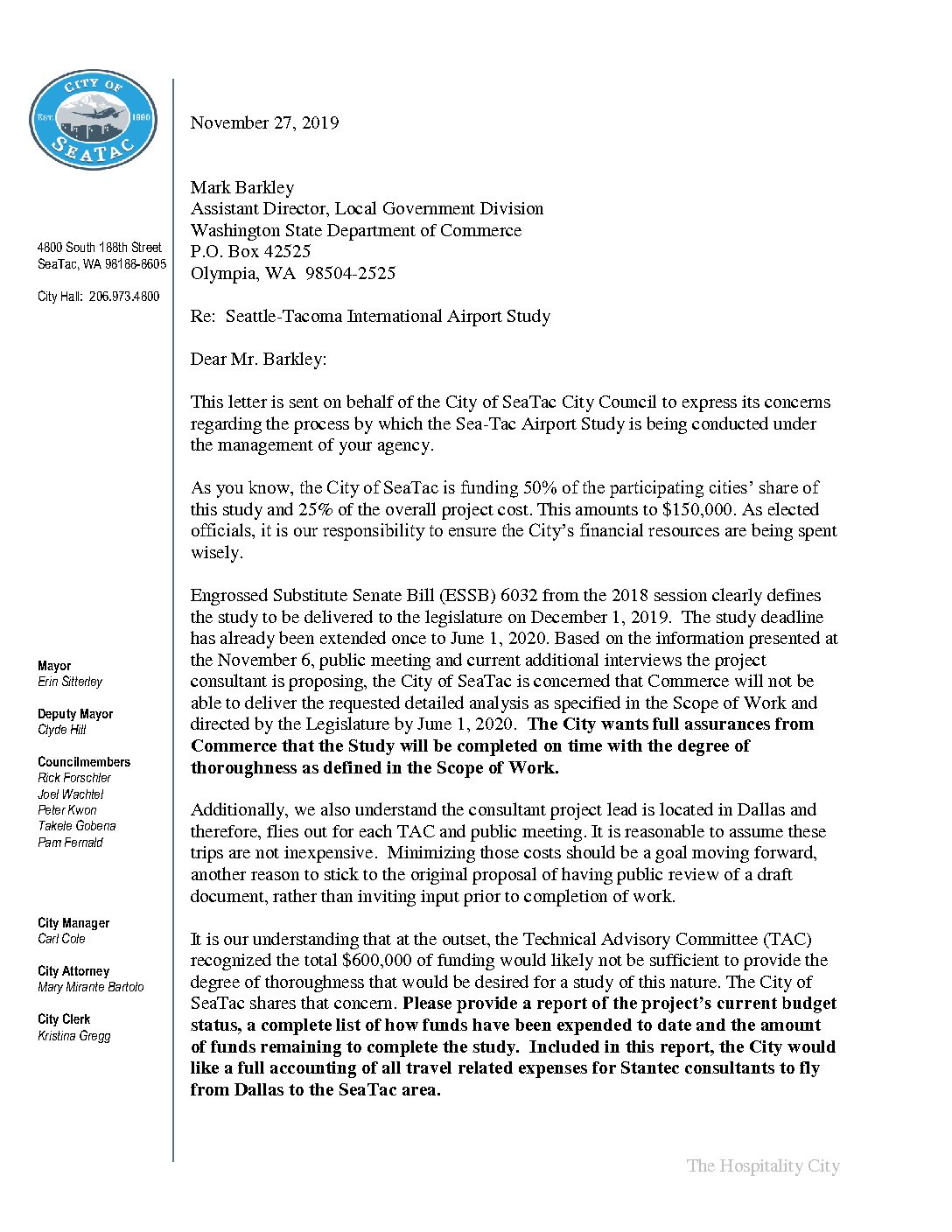
Letter from City of Sea-Tac Mayor Erin Sitterley to Mark Barkley Regarding Seattle-Tacoma International Airport Study
In a November 2019 letter to the Washington State Department of Commerce, SeaTac Mayor Erin Sitterley raised concerns about the management of the state-mandated Seattle-Tacoma International Airport Study, which SeaTac was funding to the tune of $150,000. The city questioned whether the study's consultant, Stantec, had strayed from the original technical scope of work, cited worries about monitoring stations placed outside the defined study area, and expressed doubt that the study could be completed on time and within budget. The letter demanded a full accounting of project expenditures—including consultant travel costs from Dallas—and requested that public input be limited until after a draft report was reviewed by the Technical Advisory Committee. -
 2019-11-27
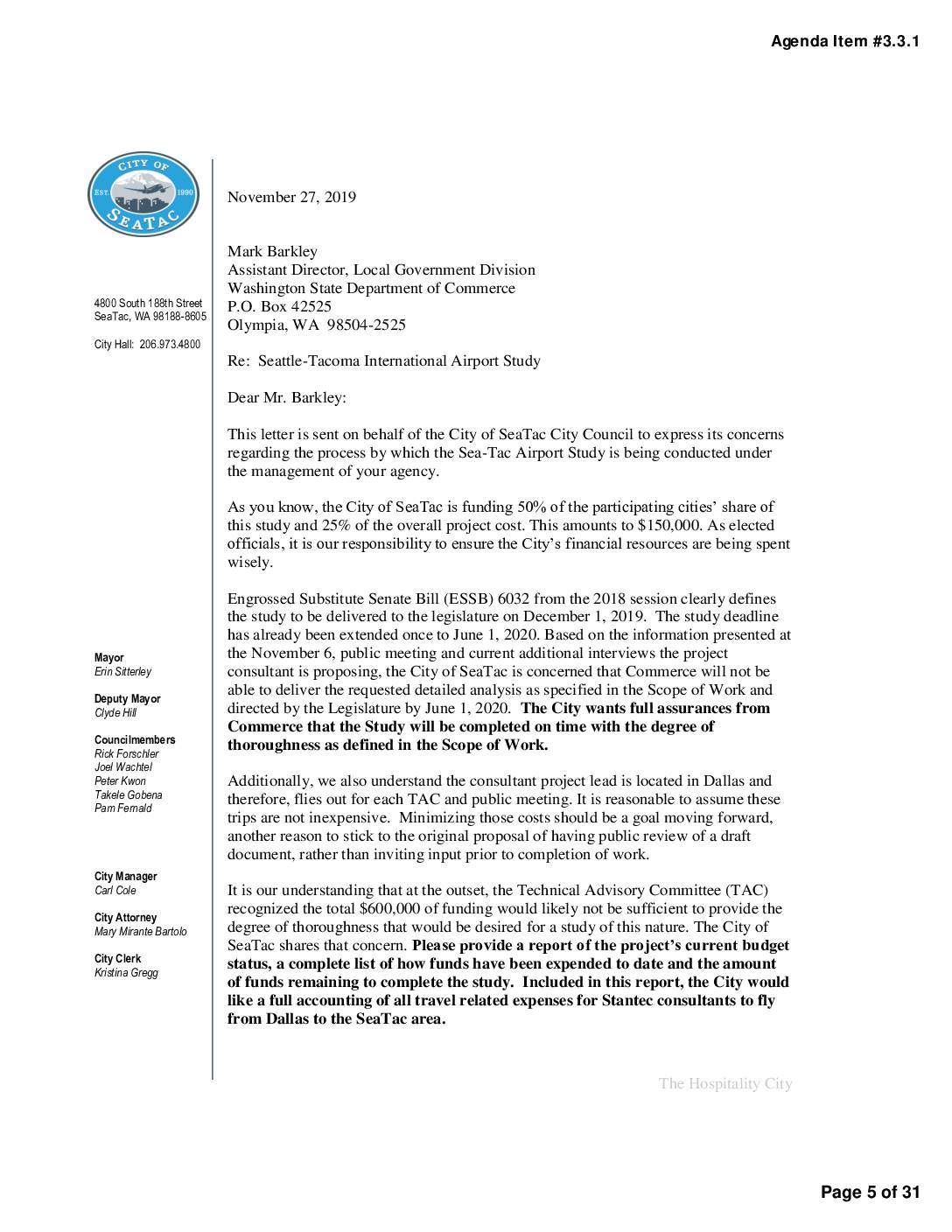
Letter to Washington State Department of Commerce regarding Seattle-Tacoma International Airport Study
In a November 2019 letter to the Washington State Department of Commerce, SeaTac Mayor Erin Sitterley raised concerns about the management of the Seattle-Tacoma International Airport Study, which SeaTac is funding to the tune of $150,000. The city questioned whether consultant Stantec had strayed from the study's original technical scope, flagged potentially wasteful spending on travel from Dallas, and expressed doubt that the study would be completed on time and thoroughly by the June 2020 deadline. The city demanded a full budget accounting and requested that public input be limited until after a draft report was completed and reviewed by the Technical Advisory Committee. -
A Letter To Gary Idleburg re. Commerce Impact Study Public Meeting
Mr. Idleburg is a Senior Planner at the Washington Department Of Commerce and is overseeing the Sea-Tac Airport Impact Study. This letter is in reference to the public meeting held 6 November, 2019 at Burien City Hall. Hi Mr. Idleburg, I wanted to add to my somewhat discombobulated public comment last night. Frankly, I was -
 2018-03-27
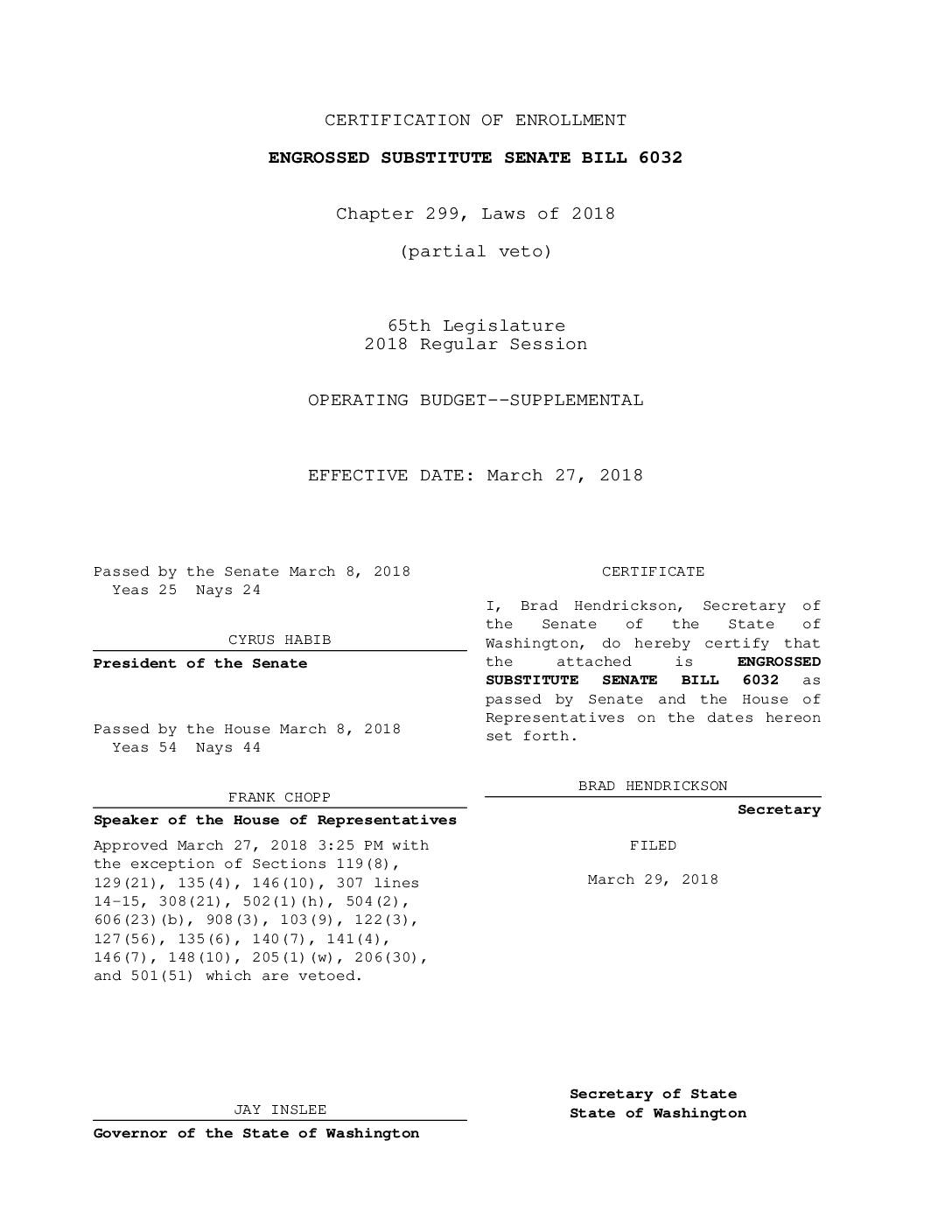
Engrossed Substitute Senate Bill 6032: Washington State 2018 Supplemental Operating Budget (Chapter 299, Laws of 2018)
Engrossed Substitute Senate Bill 6032, passed by the Washington State Legislature on March 8, 2018, and signed by Governor Jay Inslee on March 27, 2018, is a supplemental operating budget bill making appropriations and amendments to various state funds for the 2017-2019 fiscal biennium. The bill covers a wide range of general government expenditures, including funding for the House of Representatives, tax structure reform discussions, and rural health care planning. Governor Inslee approved the bill with a partial veto, striking down more than 20 specific sections. -
Sea-Tac Airport Impact Study 2018
You can find the current draft report here. The Washington State Legislature enacted Engrossed Substitute Senate Bill (ESSB) 6032 during the 2018 regular session. •The Washington State Legislature formally asked Commerce on 3/21/2018 to complete a study that evaluates the current and on-going impacts of the Seattle-Tacoma International Airport. •Commerce must implement provisions of Sections -
 2002-10-22
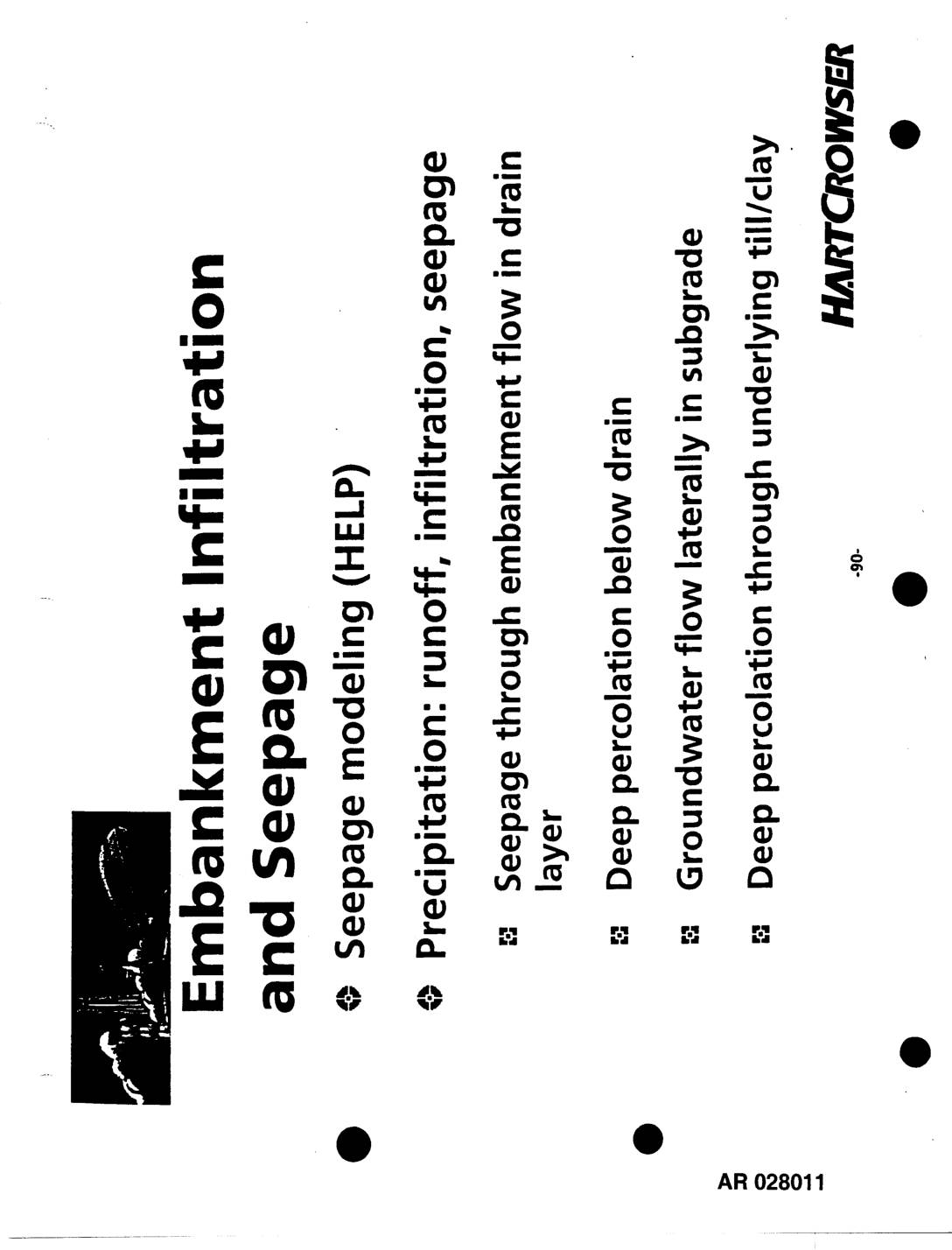
EXH AR028011: Embankment Infiltration and Seepage — HartCrowser Presentation
HartCrowser presentation on embankment infiltration and seepage modeling, covering seepage modeling using HELP (Hydrologic Evaluation of Landfill Performance), precipitation components including runoff, infiltration, and seepage, seepage through embankment flow in drain layer, deep percolation below drain, groundwater flow laterally in subgrade, and deep percolation through underlying till/clay. Includes embankment slope section diagram showing seepage parameters