TagPuget Sound Regional Council(191)
-
 2026-07-08
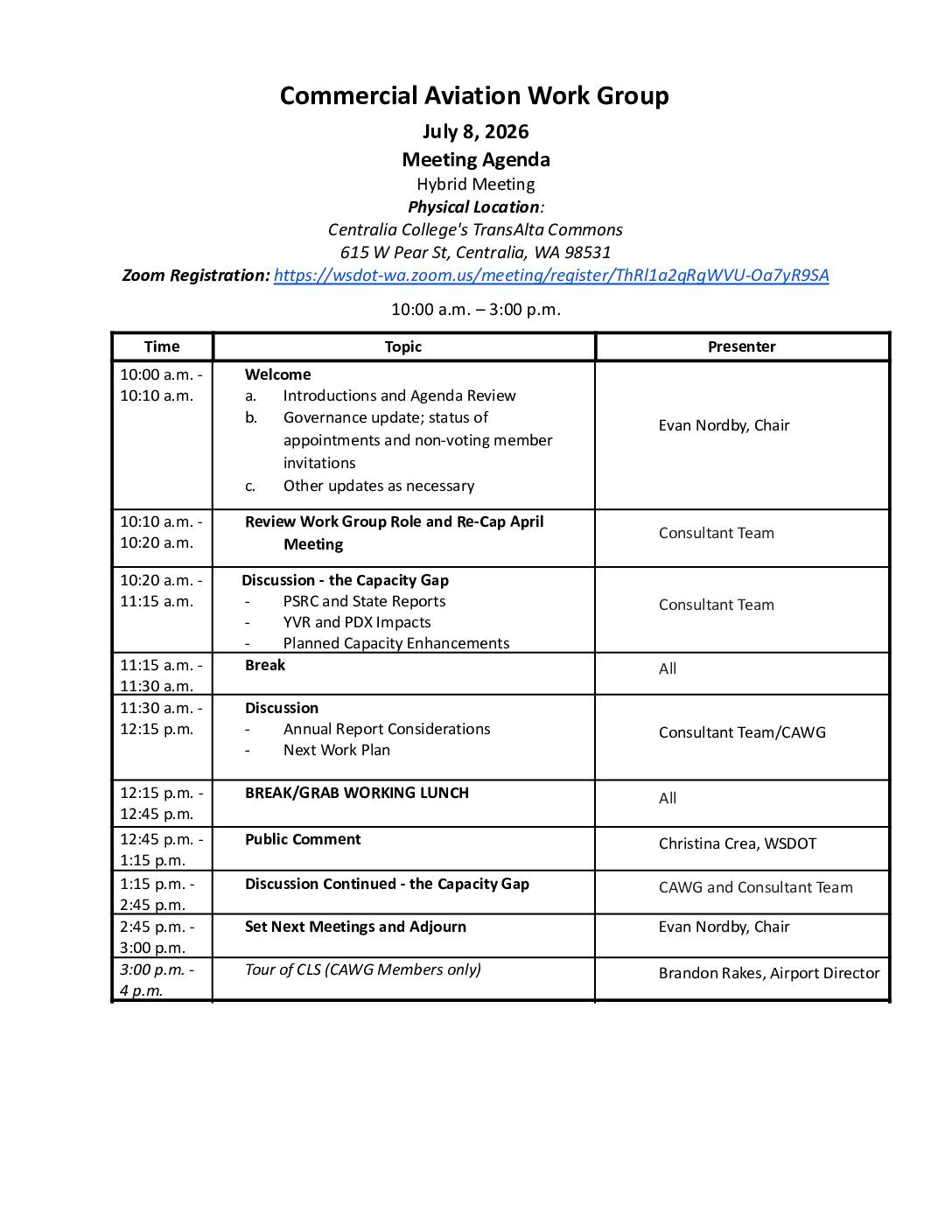
Commercial Aviation Work Group
Commercial Aviation Work Group Meeting 10:00 a.m. – 10:10 a.m. | Welcome a. Introductions and Agenda Review b. Governance update; status of appointments and non-voting member invitations c. Other updates as necessary Presenter: Evan Nordby, Chair 10:10 a.m. – 10:20 a.m. | Review Work Group Role and Re-Cap April Meeting Presenter: Consultant Team 10:20 a.m. -
 2026-07-08
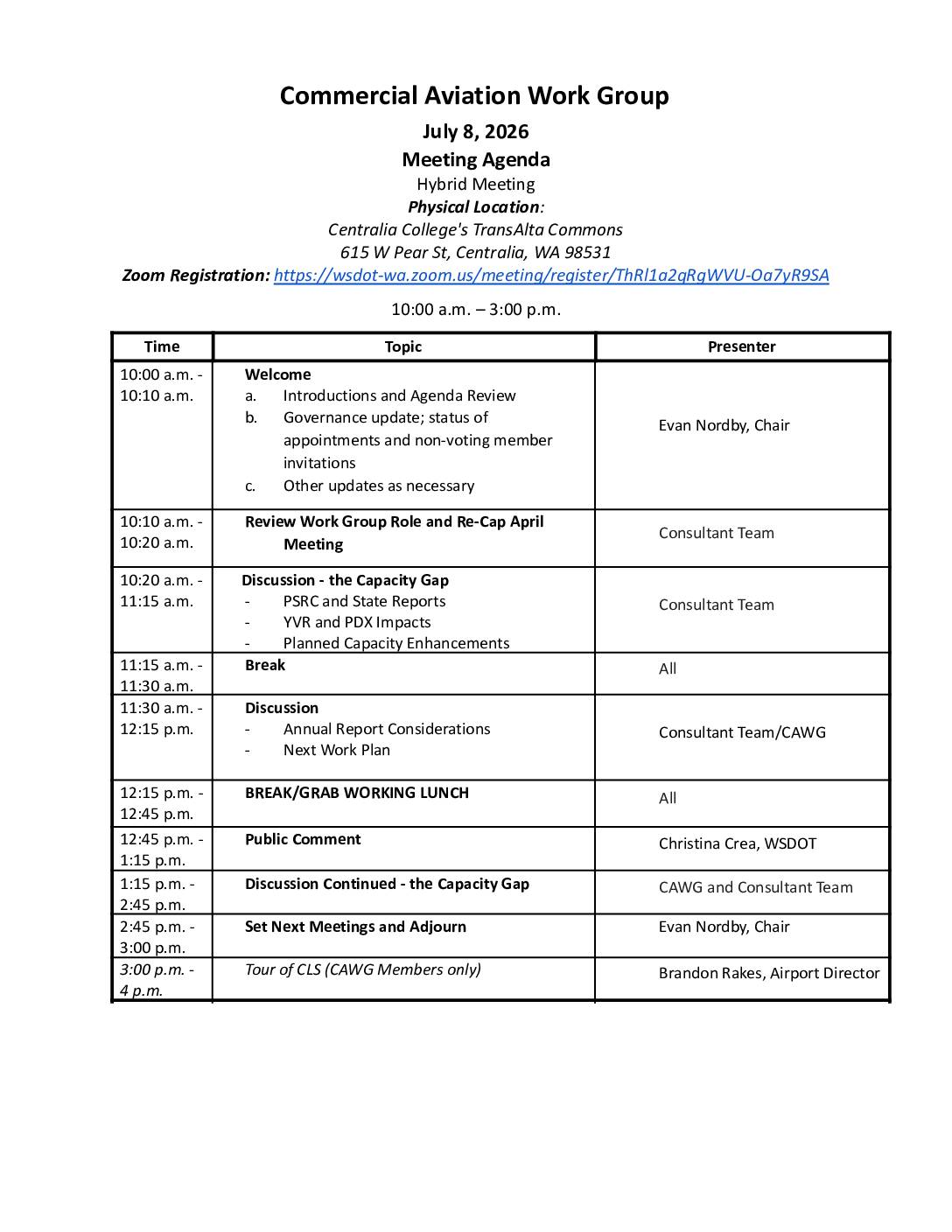
Commercial Aviation Work Group meeting agenda – July 8, 2026
Meeting agenda for the Commercial Aviation Work Group (CAWG) hybrid meeting held at Centralia College’s TransAlta Commons. The agenda covers discussions on the capacity gap including PSRC and state reports, YVR and PDX impacts, and planned capacity enhancements. Additional topics include annual report considerations, next work plan, and a post-meeting tour of CLS airport for -
 2025-09-01
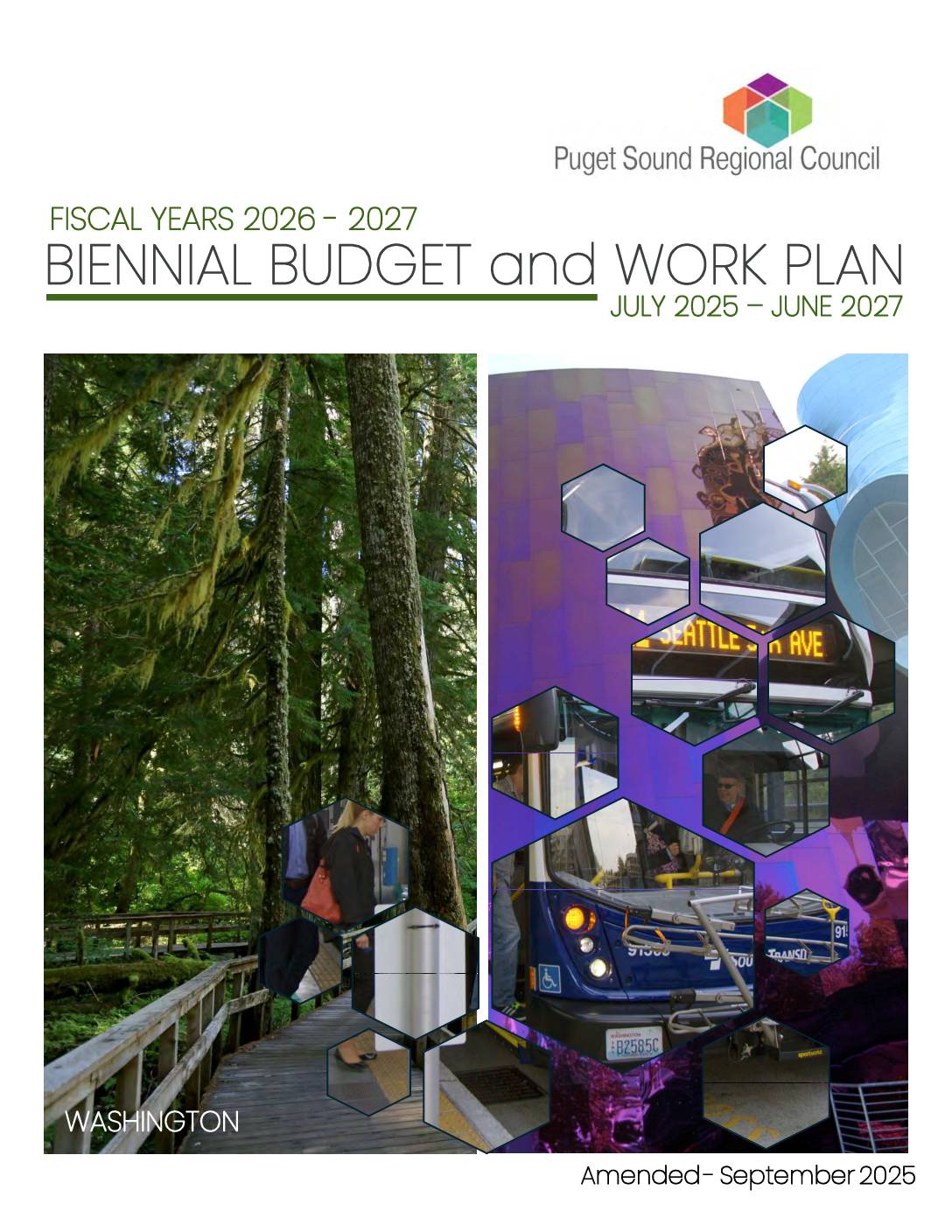
PSRC Fiscal years 2026-2027 biennial budget and work plan: July 2025 – June 2027
This document is the Puget Sound Regional Council's Fiscal Years 2026–2027 Biennial Budget and Work Plan, covering July 2025 through June 2027, which outlines the agency's revenues, expenditures, staffing, and regional planning priorities for the greater Seattle–Tacoma area. It includes demographic data on population, housing, and employment growth across member jurisdictions, along with financial tables and an integrated planning timeline. Note that this budget document does not address Sea-Tac Airport noise policy; researchers seeking noise-related planning materials should consult dedicated airport or environmental planning resources. -
 2024-10-24
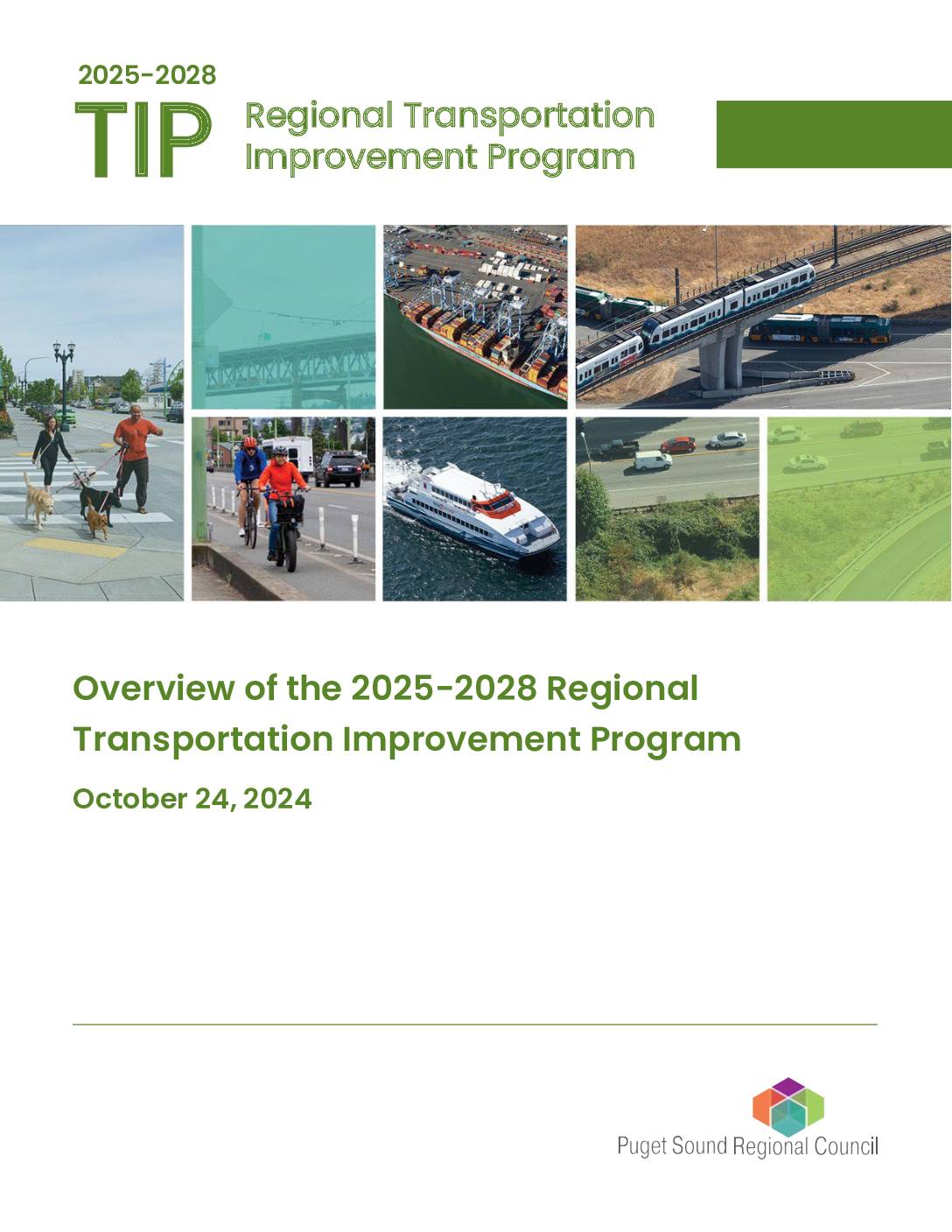
Overview of the 2025-2028 Regional Transportation Improvement Program
The 2025-2028 Regional Transportation Improvement Program (TIP), published by the Puget Sound Regional Council (PSRC) on October 24, 2024, outlines planned transportation projects and investments across the greater Puget Sound region for a four-year period. It covers project selection processes, funding plans, air quality requirements, and federal performance measures for roads, transit, ferries, and active transportation infrastructure. This document does not specifically address Sea-Tac Airport noise policy. -
 2024-09-05
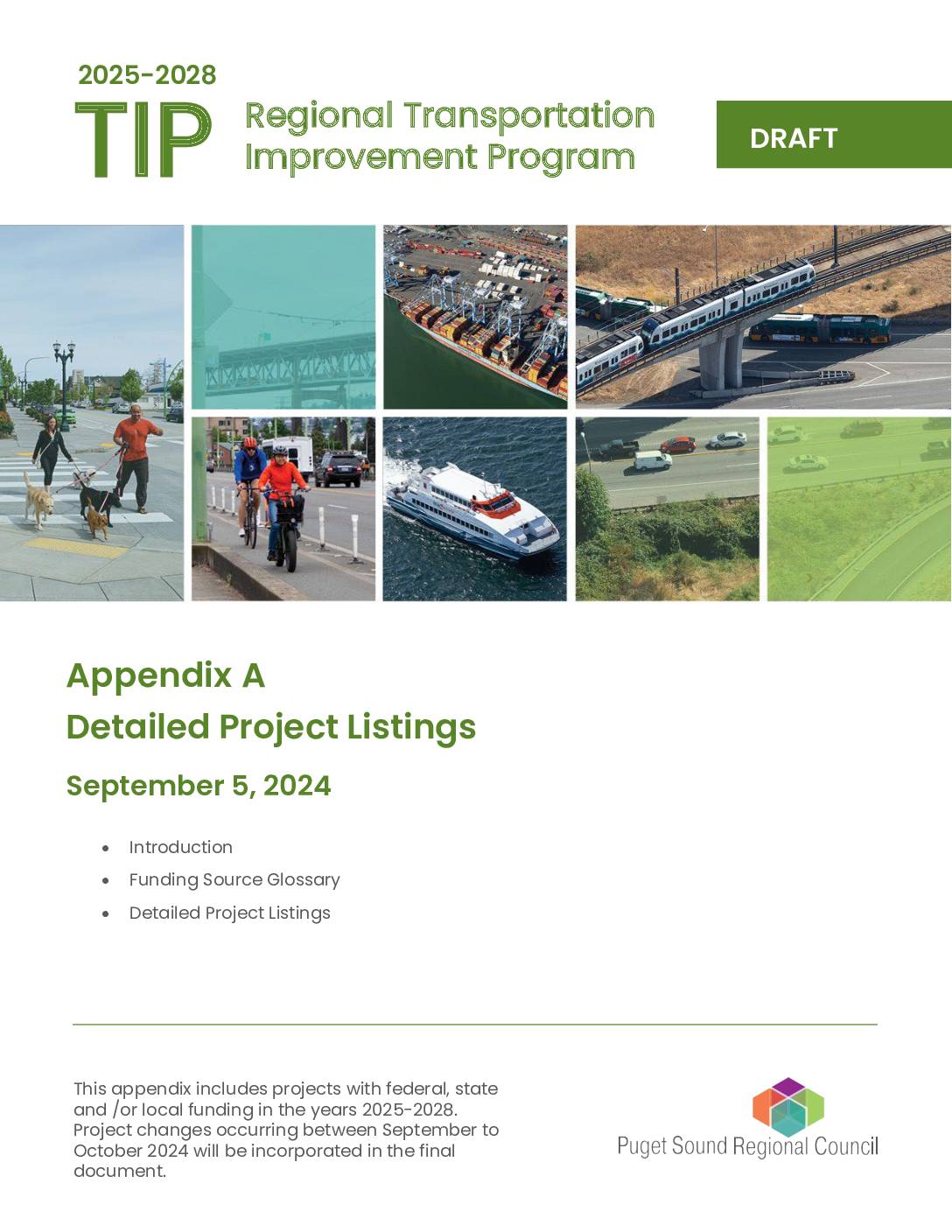
Draft 2025-2028 regional transportation improvement program: Appendix A detailed project listings
This draft document from the Puget Sound Regional Council outlines the 2025-2028 Regional Transportation Improvement Program (TIP) for the greater Seattle-Tacoma region, listing federally, state, and locally funded transportation projects scheduled between 2025 and 2028. Projects are organized alphabetically by jurisdiction and include details on funding phases such as planning, design, construction, and equipment. The document was prepared as of September 5, 2024, with final updates expected by October 2024. -
 2024-02-22
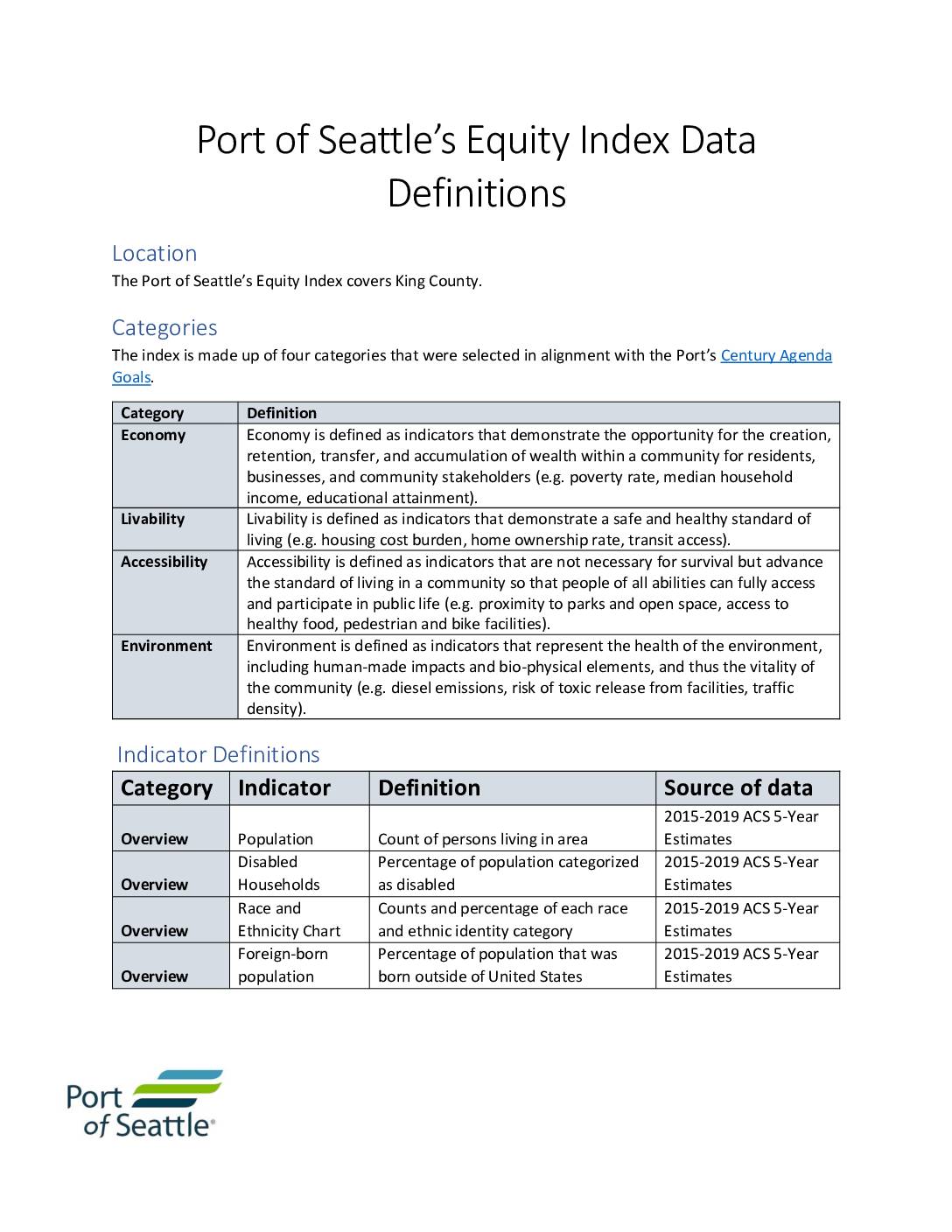
Port Of Seattle’s Equity Index data definitions
The Port of Seattle's Equity Index tracks community well-being across King County using four categories: Economy, Livability, Accessibility, and Environment. It draws on data from sources such as the U.S. Census Bureau's American Community Survey, EPA EJ Screen, and local agencies to measure indicators like poverty rate, housing cost burden, transit access, and diesel emissions. The index is designed to assess equity and quality-of-life conditions for residents and communities in the region. -
 2024-01-01
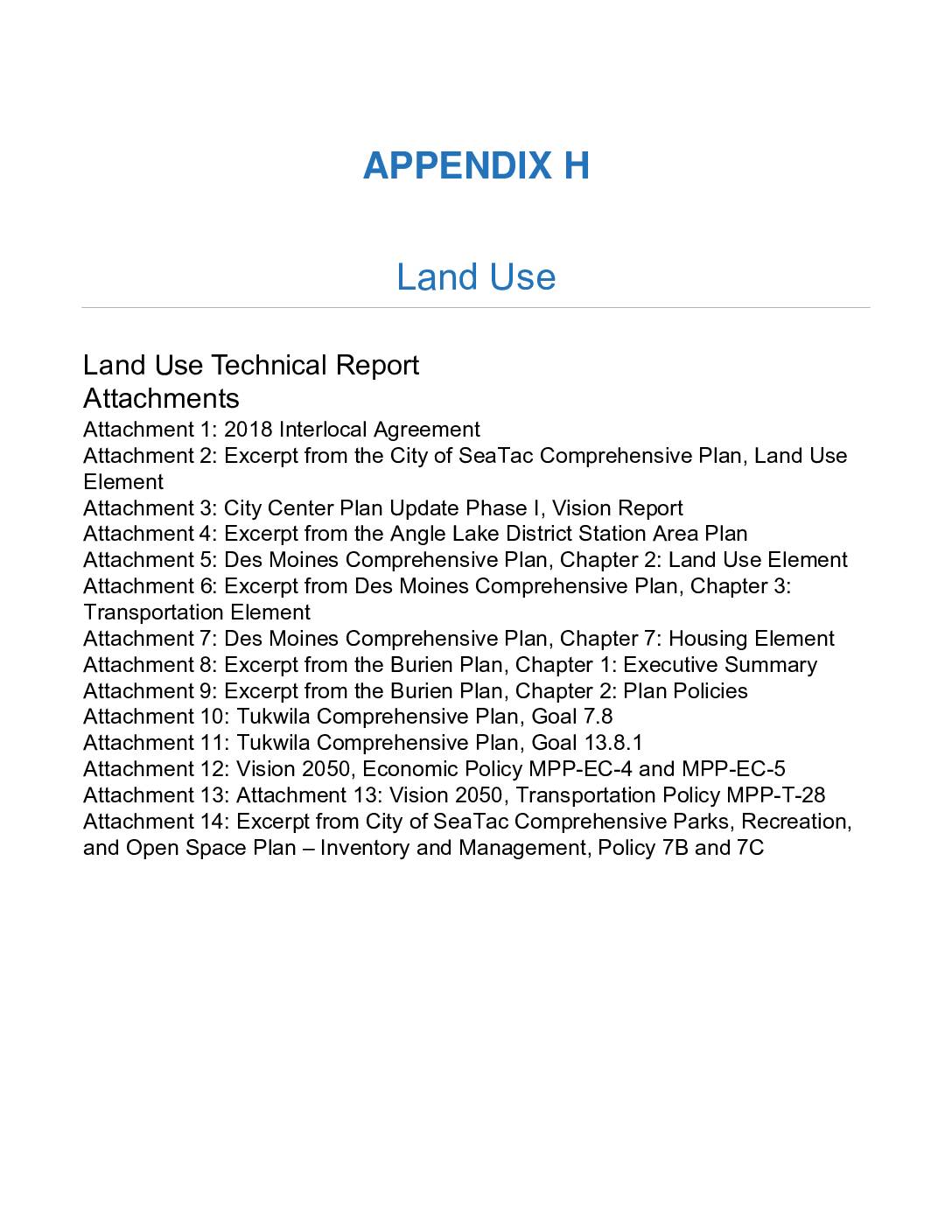
Appendix H: Land Use Technical Report — Sustainable Airport Master Plan Near-Term Projects
This January 2024 Land Use Technical Report, prepared by Landrum & Brown for the Port of Seattle, examines how near-term construction projects at Seattle-Tacoma International Airport align with local and regional land use plans. It reviews existing and planned land uses in surrounding cities—including SeaTac, Des Moines, Burien, and Tukwila—and evaluates the potential land use impacts of proposed action alternatives. The report draws on key planning documents such as a 2018 Interlocal Agreement and the Puget Sound Regional Council's Vision 2050 to assess consistency with community goals. -
 2024-01-01
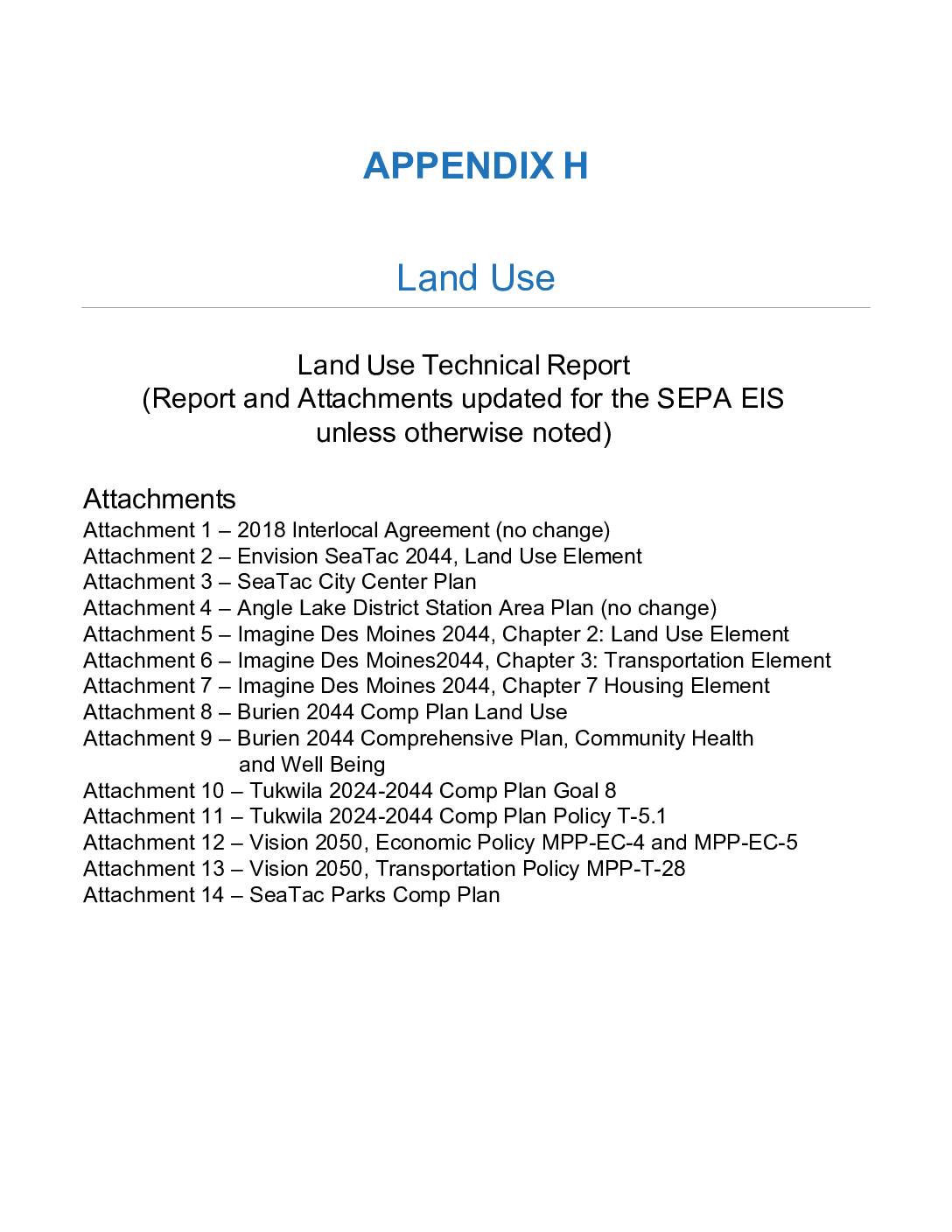
Appendix H: Land Use Technical Report
This Land Use Technical Report, prepared for the Port of Seattle's Sustainable Airport Master Plan Near-Term Projects, examines how proposed improvements at Seattle-Tacoma International Airport align with land use plans and regulations in surrounding communities including SeaTac, Des Moines, Burien, and Tukwila. It reviews existing and planned land uses, relevant local and regional planning documents, and assesses potential land use impacts under three alternatives: No Action, Proposed Action, and a Hybrid Terminal Option. The report was originally prepared in January 2024 by Landrum & Brown and later updated in April 2026 by Parametrix for the SEPA Environmental Impact Statement. -
 2023-10-25
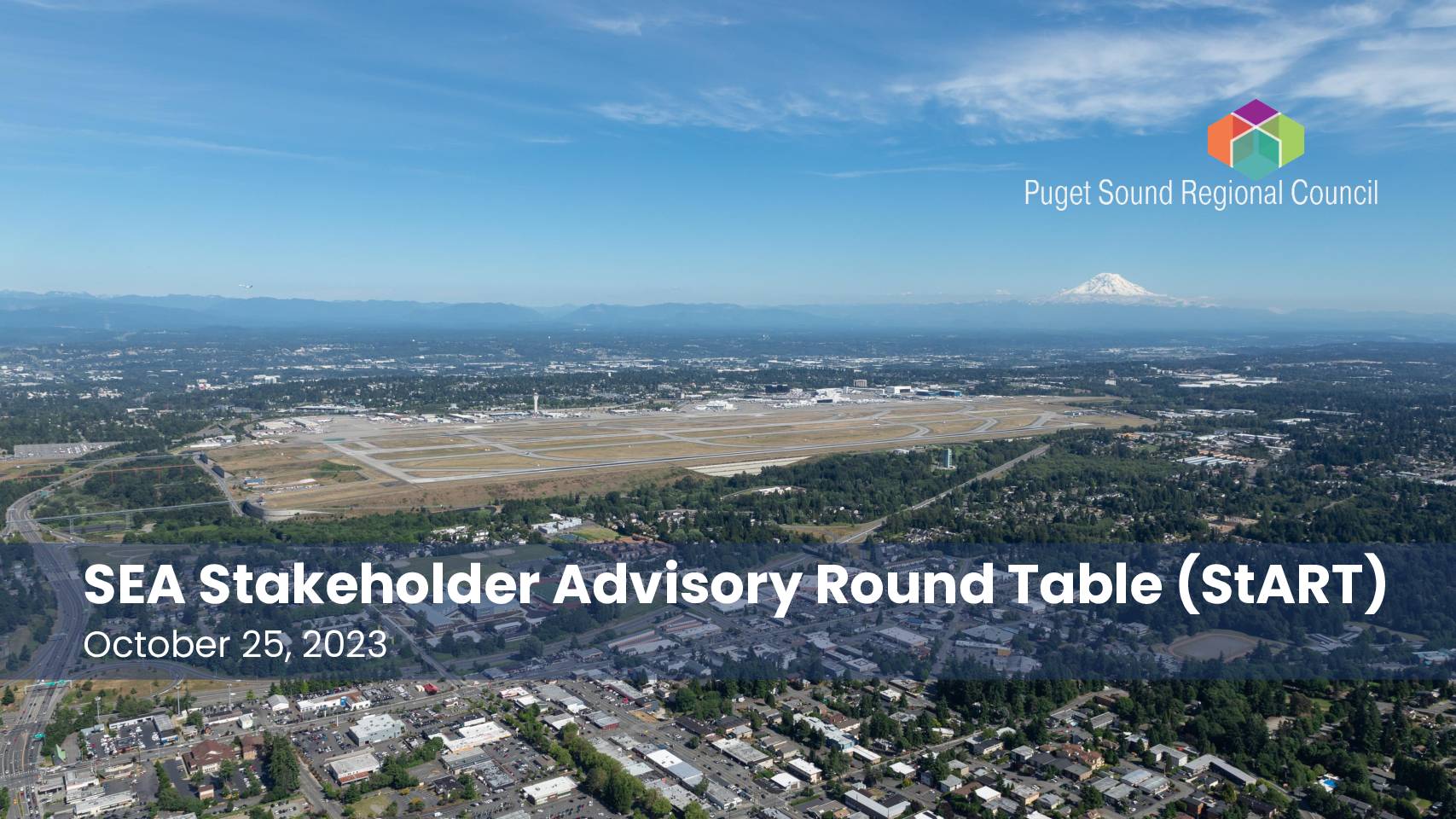
SEA Stakeholder Advisory Round Table (StART): October 25, 2023 Meeting Presentation
The SEA Stakeholder Advisory Round Table (StART), convened on October 25, 2023 by the Puget Sound Regional Council, brought together stakeholders to discuss regional planning around Seattle-Tacoma International Airport in the context of the Vision 2050 plan, which guides growth for 5.8 million people across the Central Puget Sound region. The meeting covered key planning priorities including mobility, housing, equity, climate, and environment. It also outlined a regional planning timeline from 2020 to 2025, encompassing transportation plans, economic strategies, countywide growth targets, and local comprehensive plan updates leading to plan certification. -
Regional planning agency to leave longtime space for 1201 Third tower
By Joey Thompson – Reporter, Puget Sound Business Journal Aug 28, 2023 The Puget Sound Regional Council is moving its headquarters to one of Seattle’s largest Class A office buildings — at an apparent discount. The government-funded metropolitan planning organization has signed a 13.5-year lease at 1201 Third Avenue, filling 21,000 square feet on the