TagPort Of Seattle(2342)
-
 1979-12-21
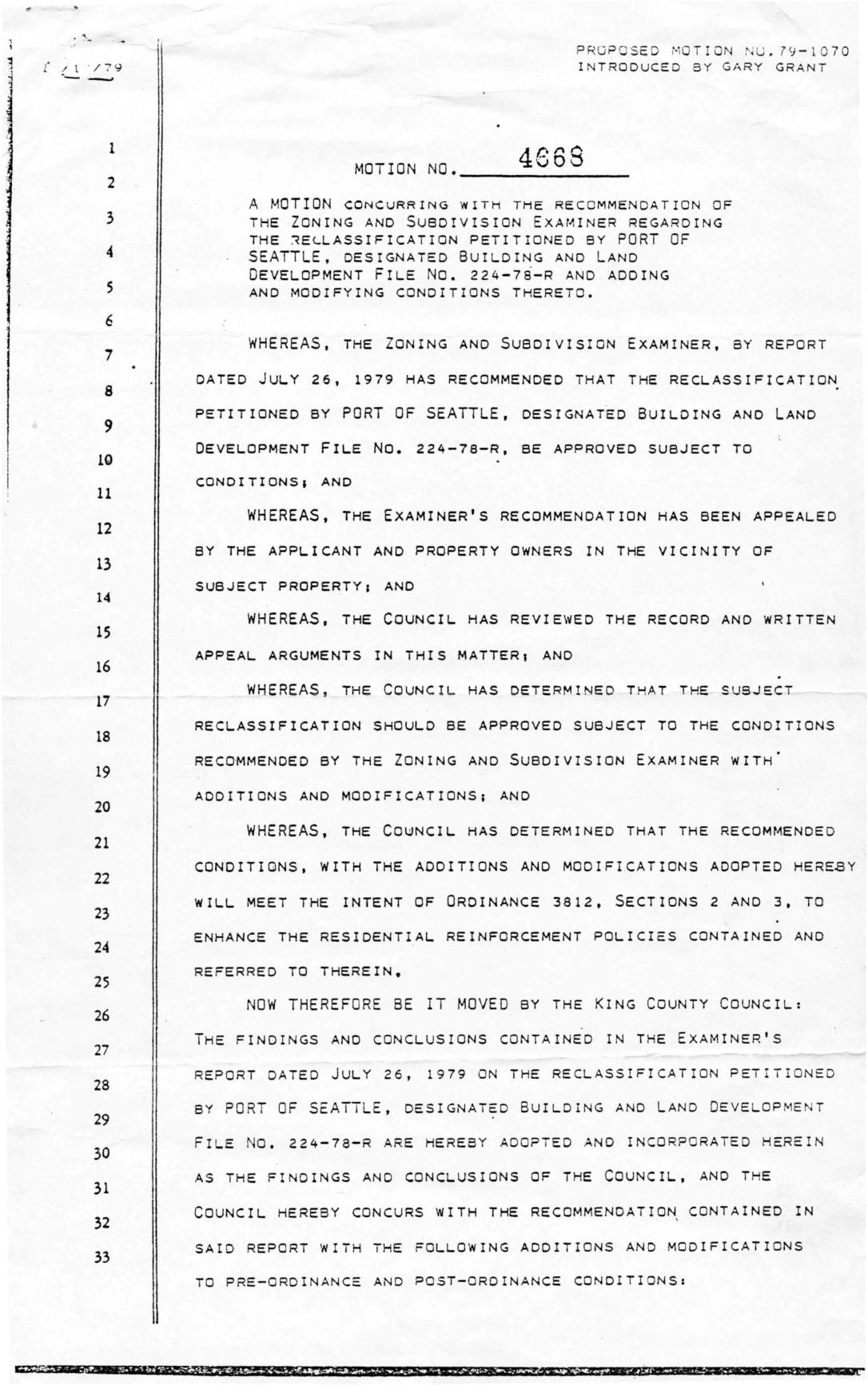
Motion No. 4668: King County Council Motion Concurring with Zoning and Subdivision Examiner Recommendation Regarding Reclassification Petitioned by Port Of Seattle, Building and Land Development File No. 224-78-R
In December 1979, the King County Council passed Motion No. 4668, concurring with the Zoning and Subdivision Examiner's recommendation to approve a land reclassification petitioned by the Port of Seattle (File No. 224-78-R), related to development of a Boeing facility near Sea-Tac Airport. As conditions of approval, the Port of Seattle was required to provide 5 acres for a neighborhood park along 12th Avenue South and to enter into a memorandum of understanding with King County freezing development on a 55-acre Westside Greenbelt buffer zone for ten years. The motion also mandated a separate public hearing in affected communities during the site plan approval process, reflecting efforts to balance airport-related development with residential stability concerns. -
 1979-12-02
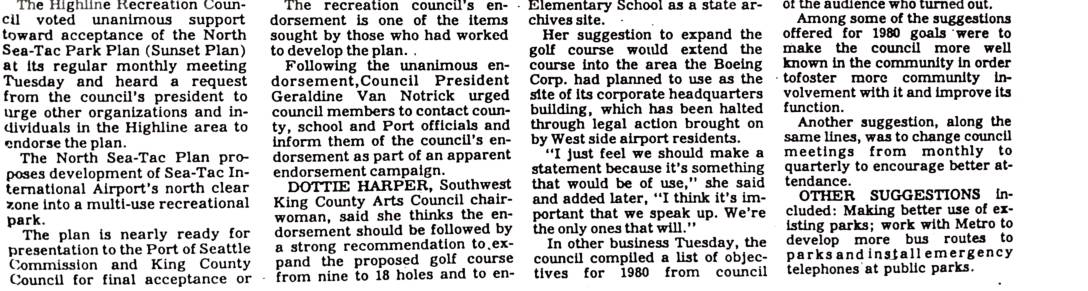
North Sea-Tac Park plan coverage: Recreation council endorsement, records center proposal, and Sunset Park editorial
In late 1979, community discussions around Sea-Tac International Airport's north clear zone focused on repurposing approximately 240 acres of noise-impacted land into a multi-use recreational park, featuring soccer fields, tennis courts, nature trails, a golf course, and a motorcycle training area. The Highline Recreation Council unanimously endorsed the North Sea-Tac Park Plan (Sunset Plan), while a separate initiative proposed converting the closed Sunset Junior High School into a regional government records and archives center. Both plans reflect broader efforts to find productive uses for land rendered uninhabitable by airport noise, with funding and community engagement identified as key challenges. -
 1979-11-14
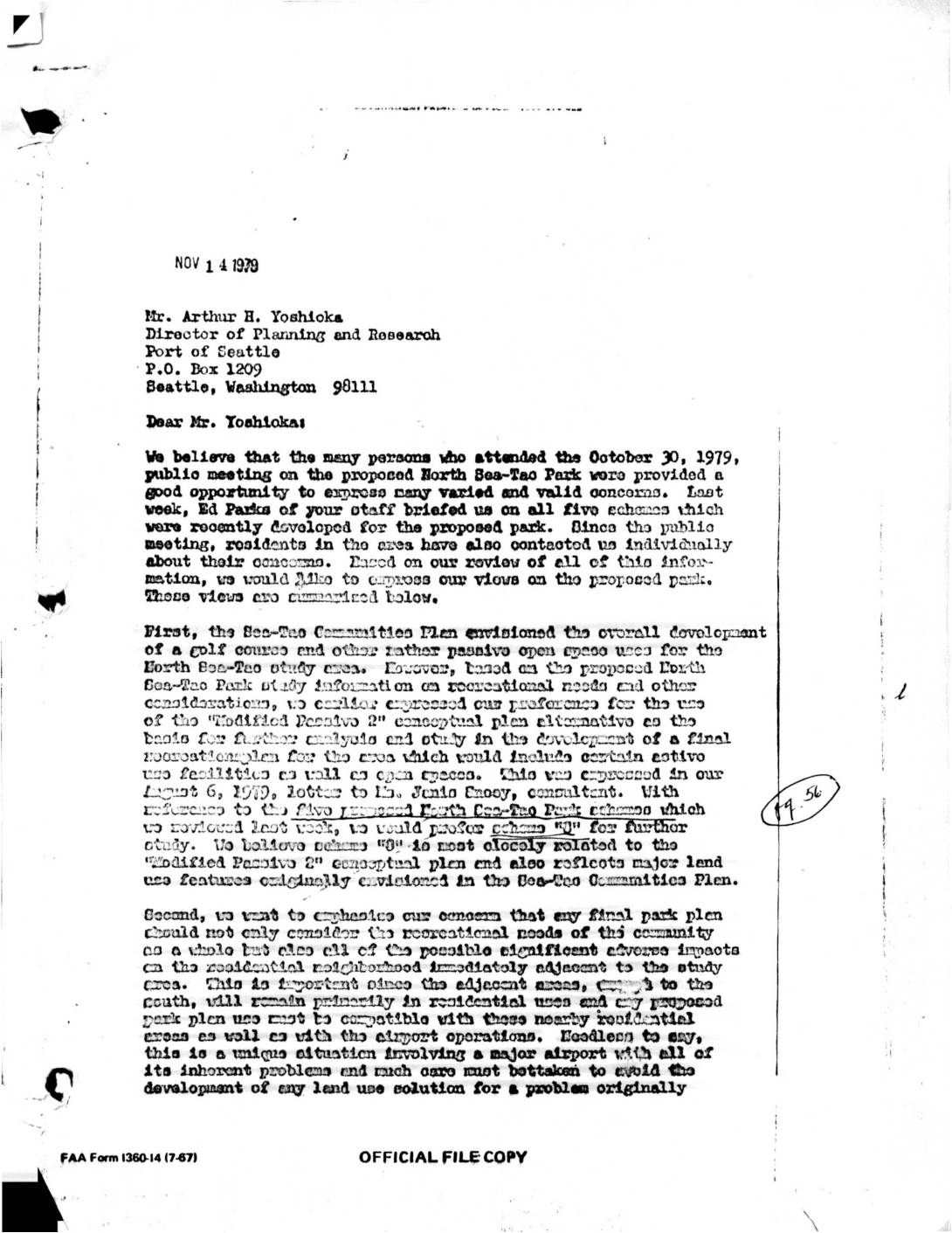
Letter to Arthur H. Yoshioka re: North Sea-Tac Park planning
A November 1979 FAA letter to the Port of Seattle expresses support for a 'Modified Passive 2' conceptual plan for the proposed North Sea-Tac Park, while urging that any final park plan carefully weigh adverse impacts on adjacent residential neighborhoods and airport operations. The letter emphasizes that residents in the immediate study area should have meaningful input into the final park plan, and calls for close collaboration among the Port, King County, consultants, and citizens to minimize conflicts between park uses and the unique challenges posed by proximity to a major airport. -
 1979-09-20
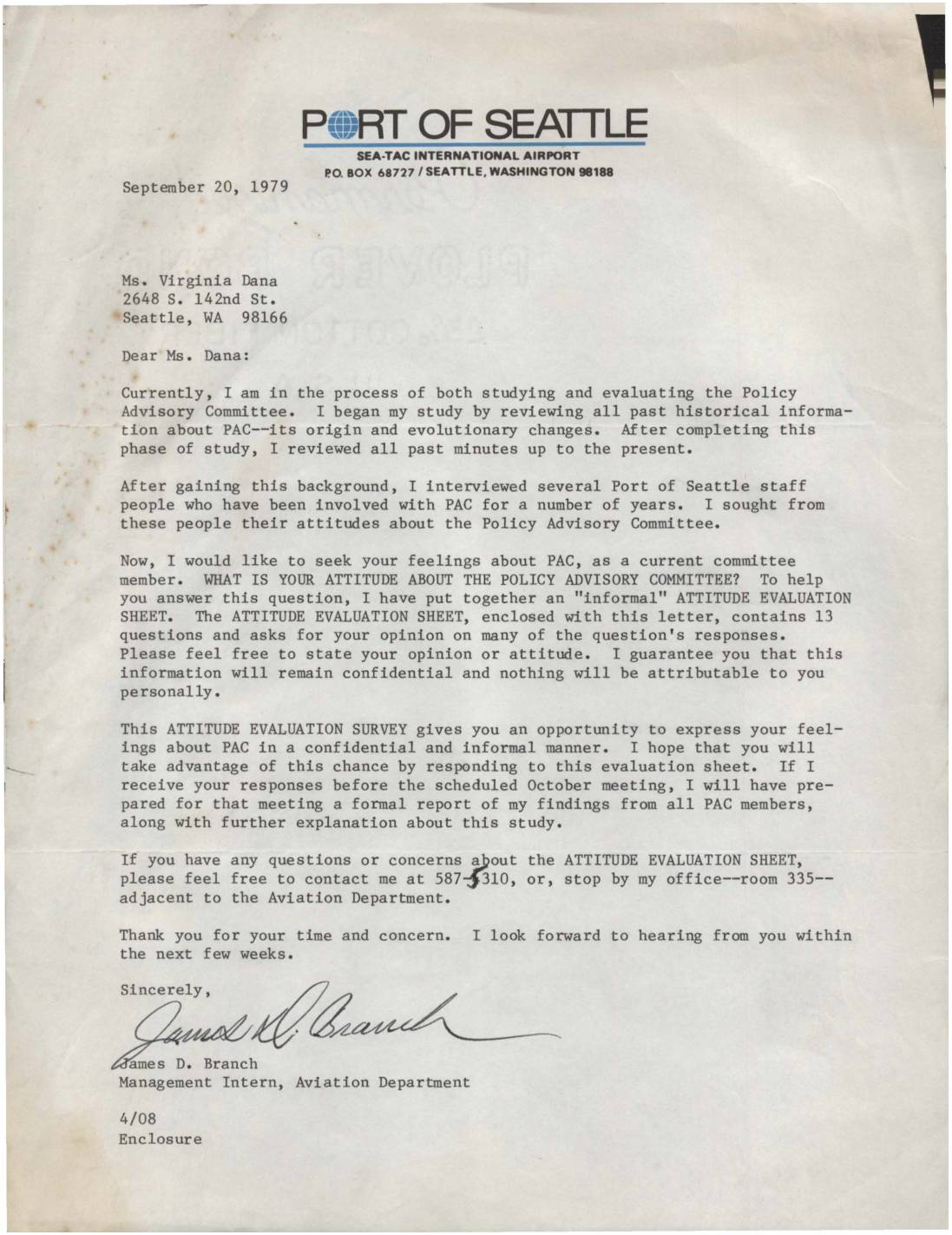
Letter to Virginia Dana regarding Policy Advisory Committee attitude evaluation
A September 1979 letter from Port of Seattle Management Intern James D. Branch to Virginia Dana, a member of the Policy Advisory Committee (PAC) at Sea-Tac International Airport, requesting her participation in a confidential attitude survey about the committee. Branch explains that he has been studying PAC's history, reviewing past minutes, and interviewing Port staff, and is now seeking input directly from current committee members via a 13-question evaluation sheet. Responses received before the October meeting would be compiled into a formal report of findings from all PAC members. -
 1979-08-29
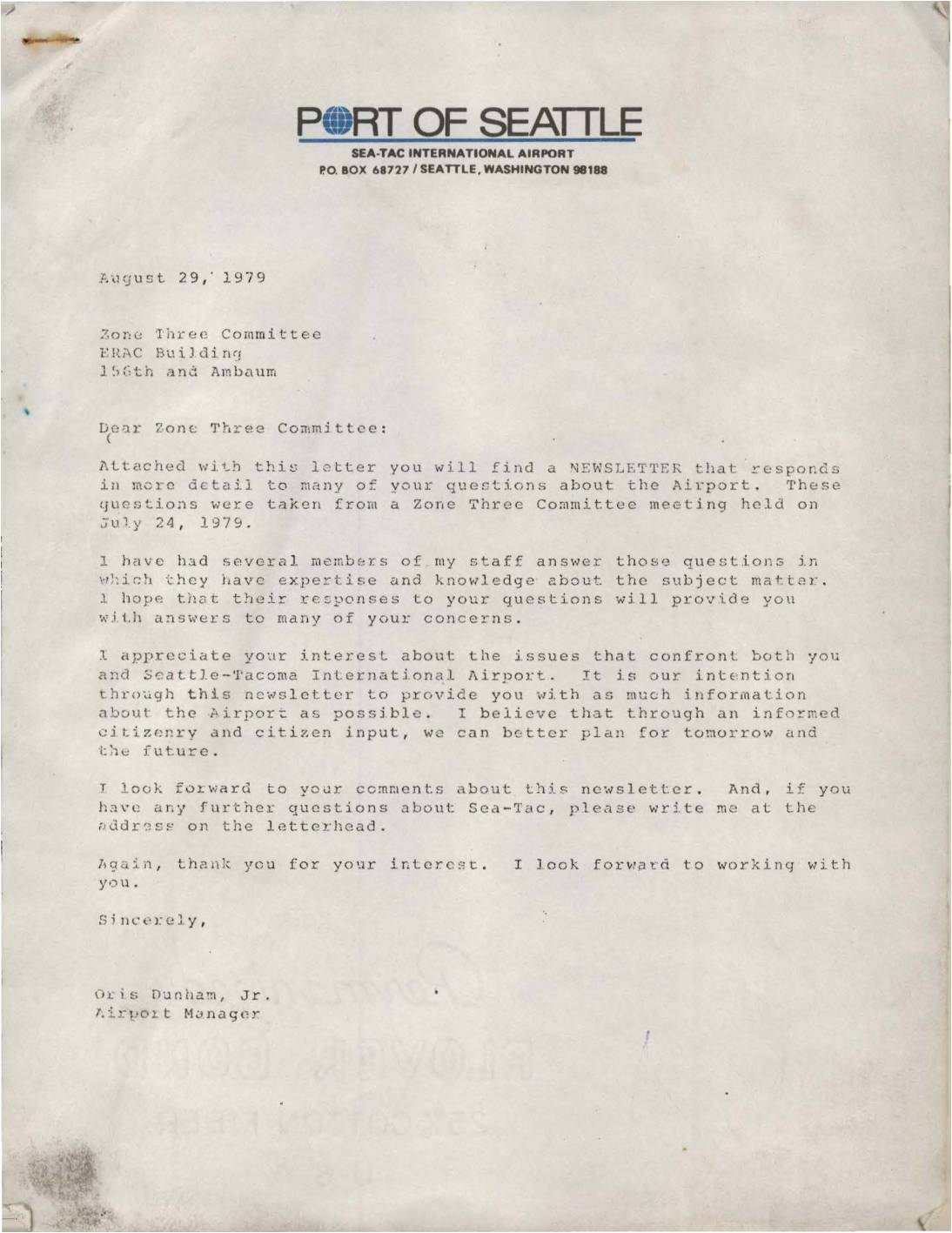
Port Of Seattle Sea-Tac Airport: Zone Three Committee Q&A Newsletter, August 29, 1979
A 1979 letter from Sea-Tac International Airport Manager Oris Dunham, Jr. to the Zone Three Committee accompanies a newsletter addressing community questions about airport operations and noise impact. The document explains key programs including the Interim Land Acquisition Program (approved 1974) to purchase properties within FAA-established flight path zones, and the federally funded Airport Development Assistance Program (ADAP), which draws from airline ticket taxes to fund noise remedy efforts. It also references the Sunset Recreational Plan, a coordinated initiative between the Port of Seattle and King County to address land use in the airport's north clear zone. -
 1979-08-11
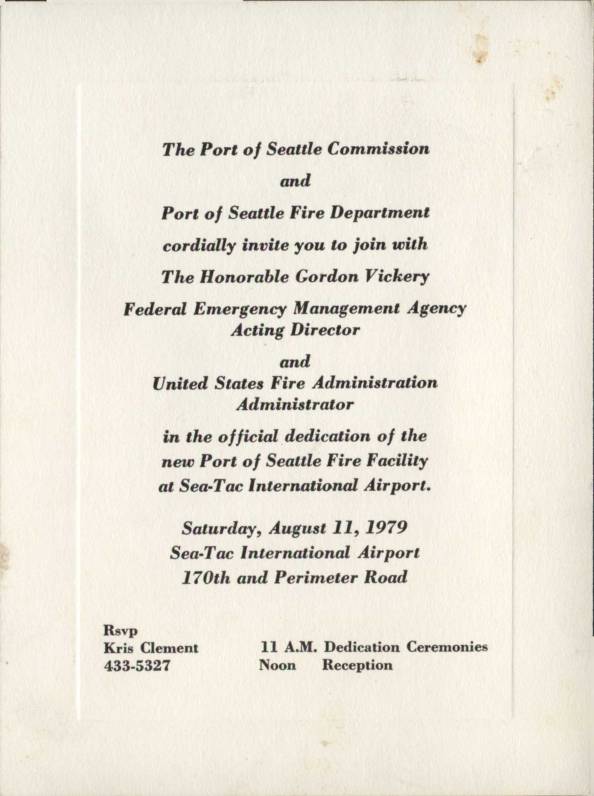
Invitation: Dedication of New Port Of Seattle Fire Facility at Sea-Tac International Airport
This is a formal invitation from the Port of Seattle Commission and Port of Seattle Fire Department to the official dedication of a new fire facility at Sea-Tac International Airport, held on Saturday, August 11, 1979. The event featured Gordon Vickery, Acting Director of the Federal Emergency Management Agency and Administrator of the United States Fire Administration, as a distinguished guest. Dedication ceremonies were scheduled for 11 A.M., followed by a noon reception at the airport's 170th and Perimeter Road location. -
 1979-07-25
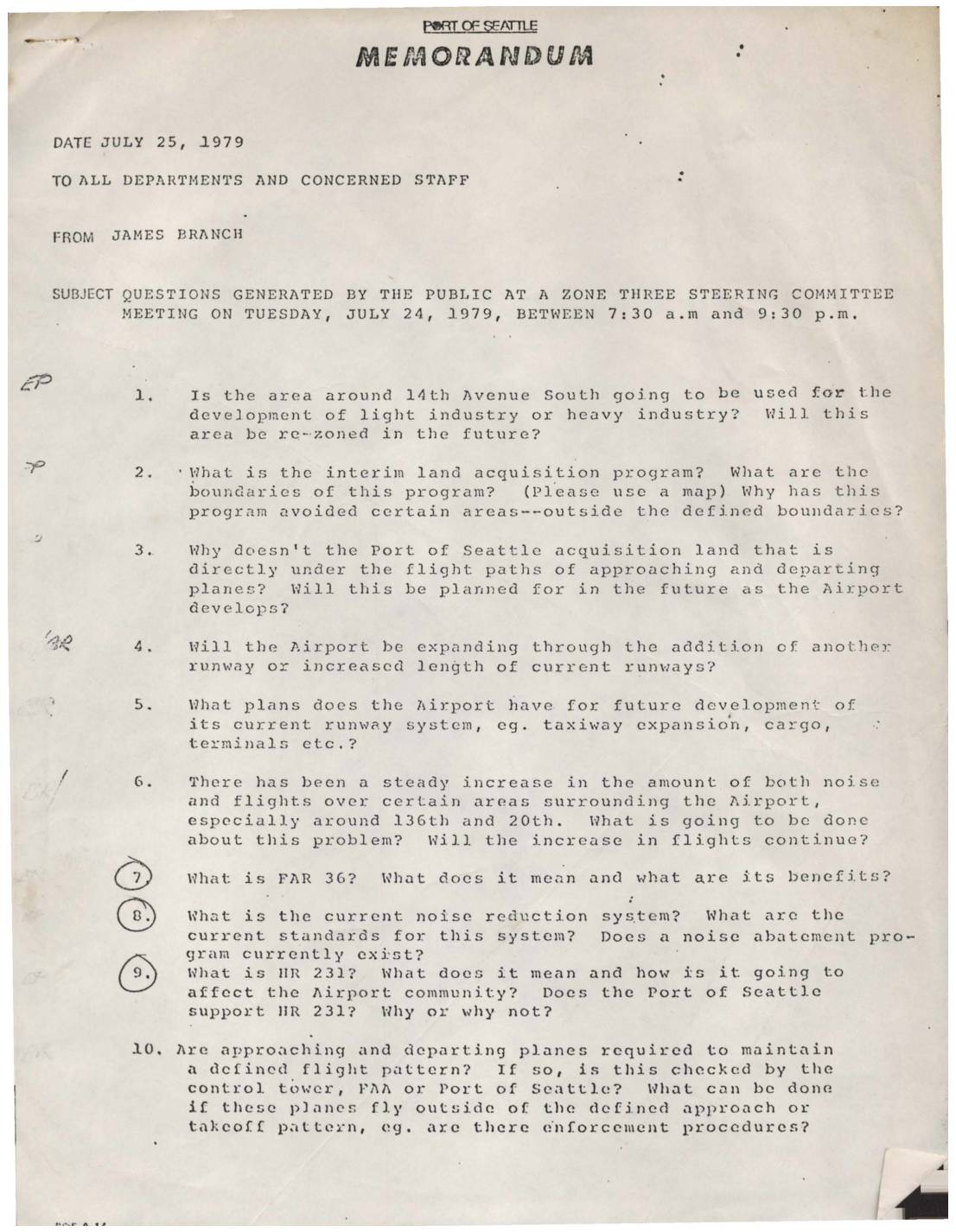
Port Of Seattle Memorandum: Questions from Zone Three Steering Committee Meeting, July 24, 1979
A July 25, 1979 Port of Seattle internal memorandum from James Branch to all departments and staff compiles 23 questions raised by the public at a Zone Three Steering Committee meeting held on July 24, 1979. The questions cover a wide range of community concerns related to Seattle-Tacoma International Airport, including aircraft noise levels, flight path enforcement, land acquisition programs, runway expansion plans, clear zone definitions, and jet engine emissions affecting nearby neighborhoods. The memo also addresses topics such as FAR 36 noise standards, the Sunset Recreation Plan, the ADAP program, and how residents of the Highline and Zone 3 communities can better cooperate with the Port of Seattle to resolve ongoing airport-related issues. -
 1979-07-24
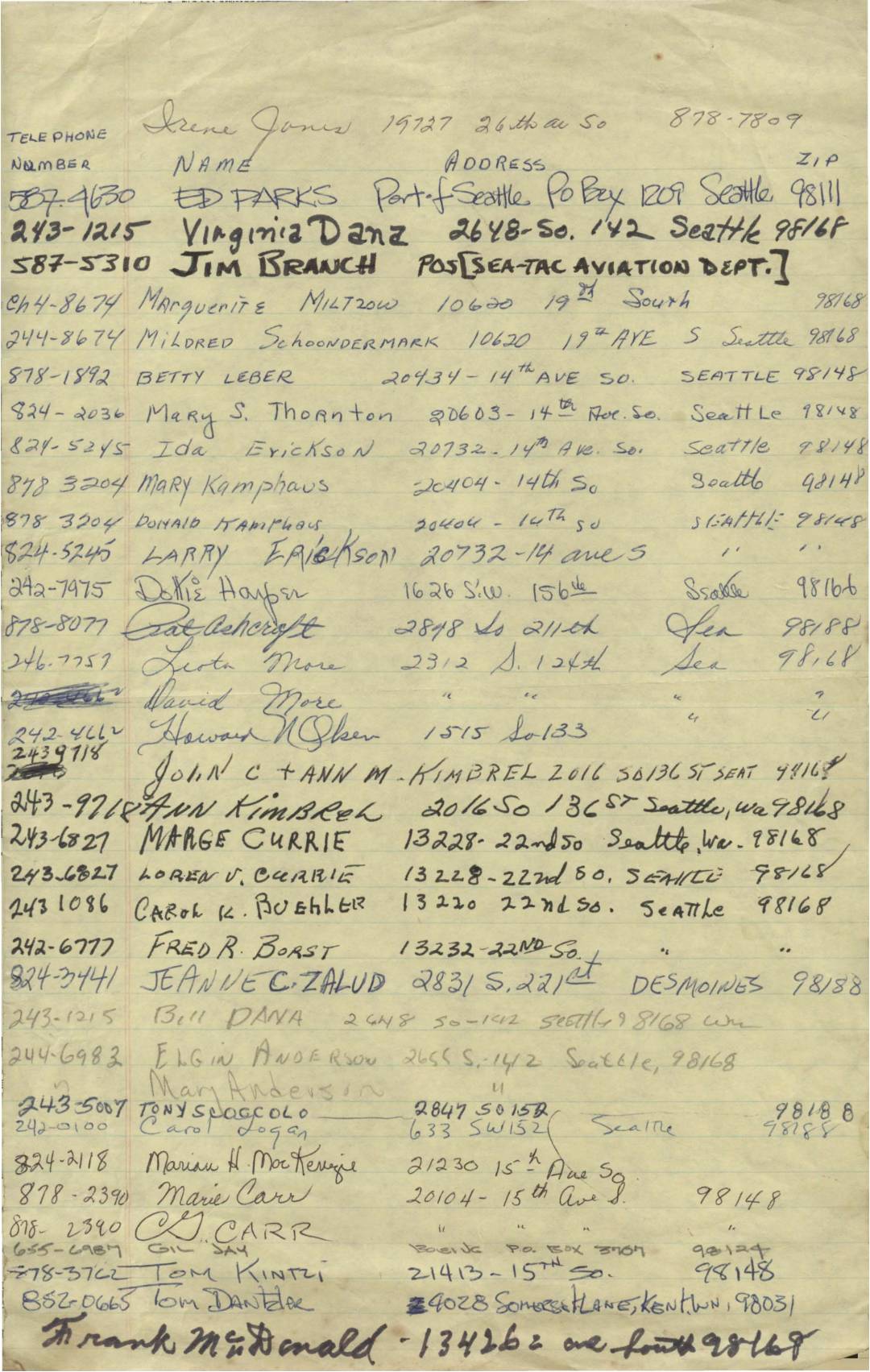
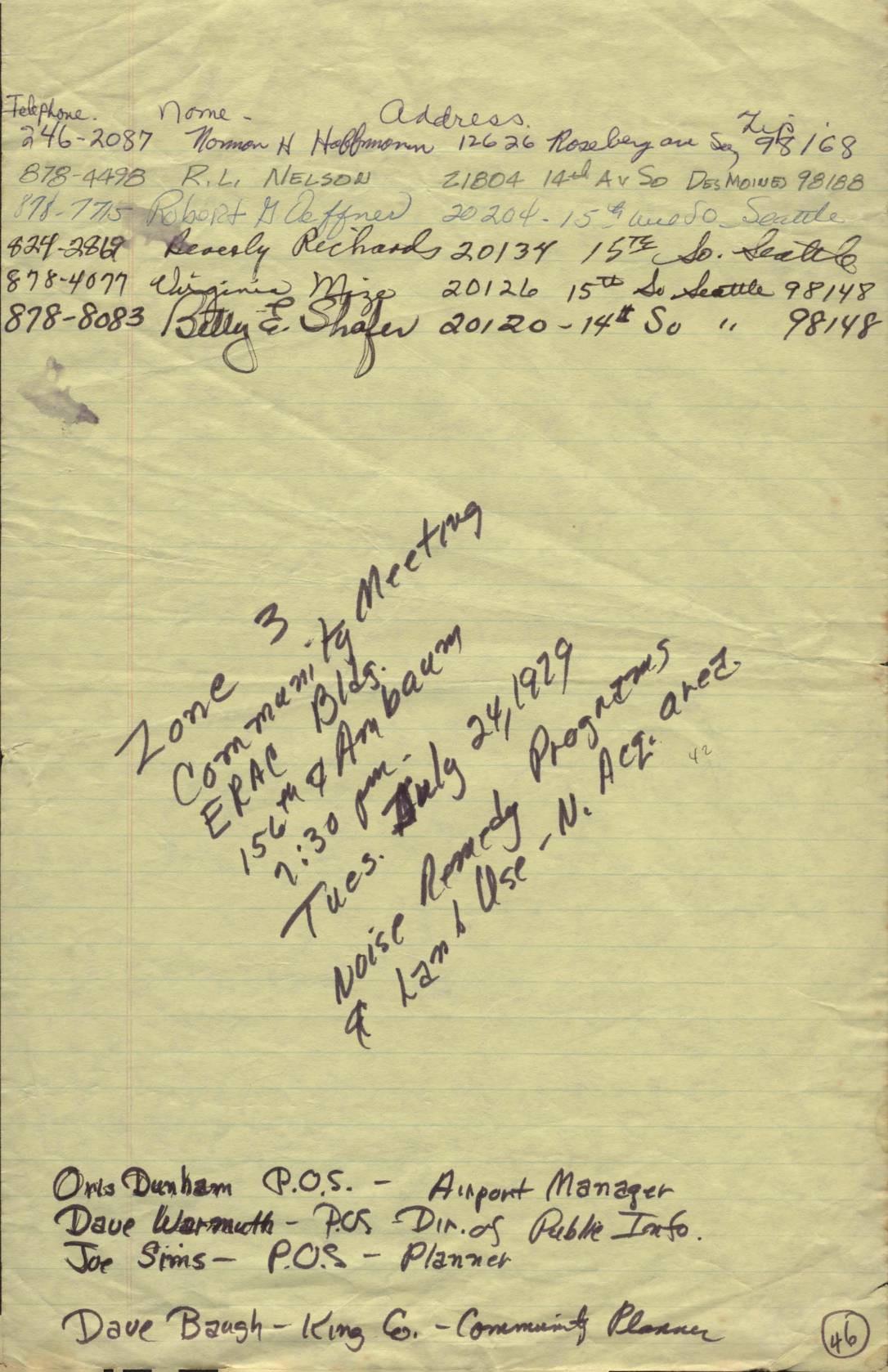
Zone 3 Community Meeting Attendees — ERAC Building, July 24, 1979: Noise Remedy Programs and Land Use Acquisition Area
These handwritten pages appear to be contact lists and meeting notes related to community organizing around Sea-Tac Airport noise issues, dating to around 1979. The lists include names, phone numbers, and addresses of residents in Seattle and Des Moines, Washington neighborhoods affected by airport noise. A notation references a Zone 3 Community Meeting held on July 24, 1979 at the ERAC Building (156th & Ambaum), focused on noise remedy programs and land use in the North Action Area, with Port of Seattle officials including the Airport Manager, Director of Public Information, and Planner in attendance. -
 1979-07-24
Zone 3 Community Meeting Attendee List, July 24, 1979
This document contains handwritten sign-in sheets and contact lists from a Zone 3 Community Meeting held on Tuesday, July 24, 1979, at the ERAC Building (156th & Ambaum), focused on noise remedy programs and land use in the North Acres area near Sea-Tac Airport. Attendees included Port of Seattle officials such as Airport Manager Otis Dunham, Director of Public Information Dave Warmuth, Planner Joe Sims, and King County Community Planner Dave Baugh, along with numerous local residents. The sheets record names, addresses, and phone numbers of participants, reflecting community engagement with airport noise and land-use concerns in the Seattle/Des Moines area during the late 1970s. -
 1979-07-20
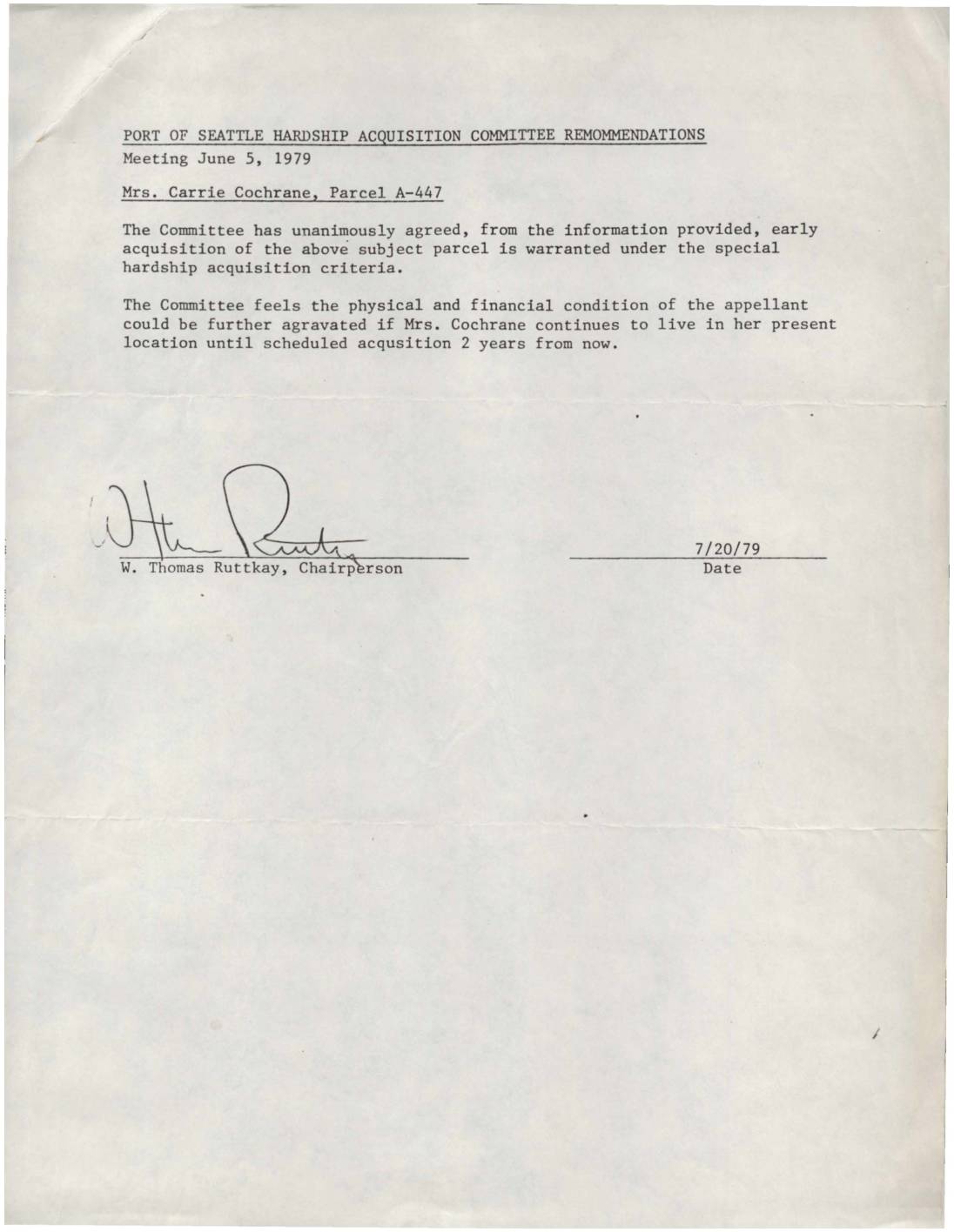
Port Of Seattle Hardship Acquisition Committee recommendations: Mrs. Carrie Cochrane, Parcel A-447
At a June 5, 1979 meeting, the Port of Seattle Hardship Acquisition Committee unanimously recommended the early purchase of Parcel A-447, owned by Mrs. Carrie Cochrane, under special hardship acquisition criteria. The Committee determined that Mrs. Cochrane's physical and financial condition could worsen if she remained in her current home until the regularly scheduled acquisition, approximately two years away. The recommendation was signed by Committee Chairperson W. Thomas Ruttkay on July 20, 1979.