TagPort Of Seattle(2349)
-
 2017-05-24
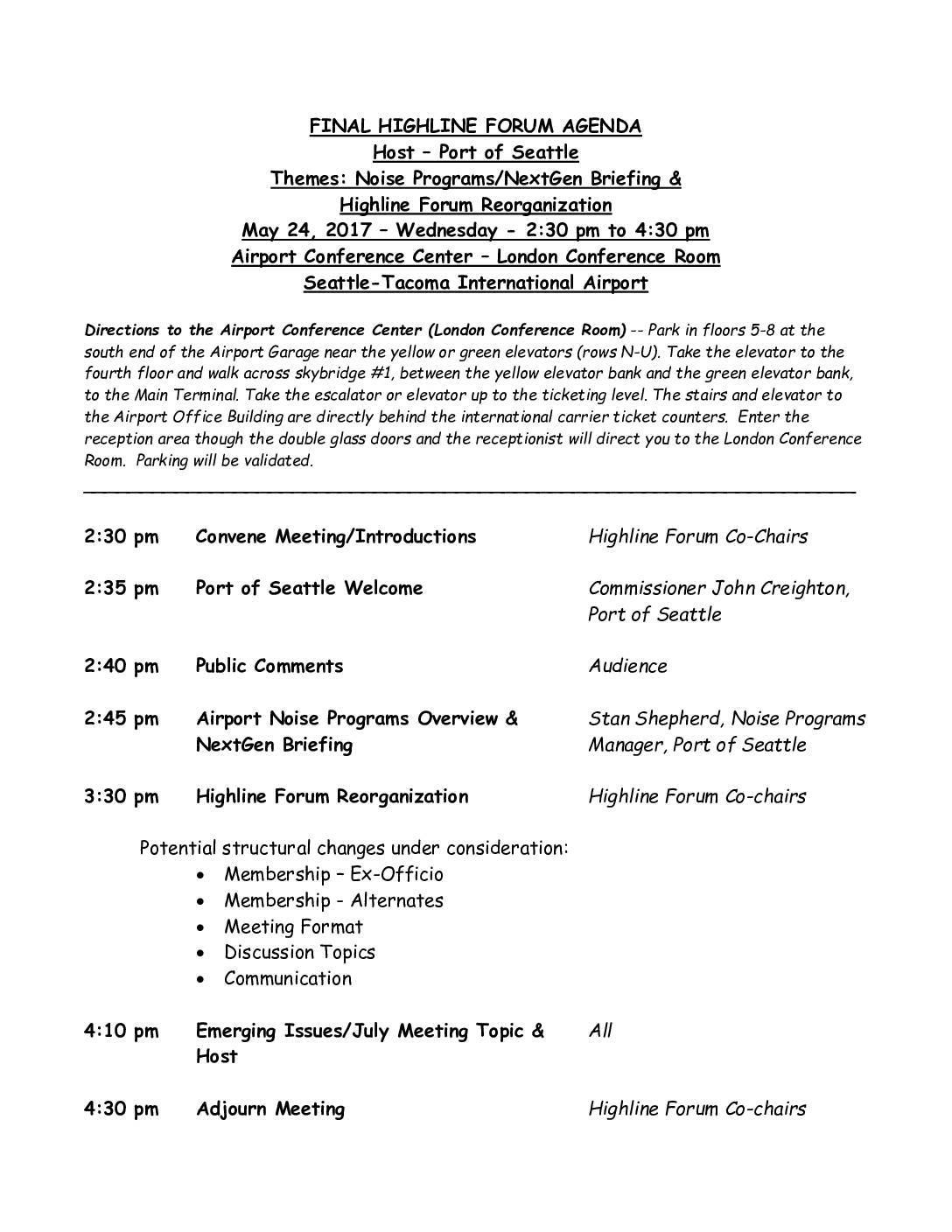
Final Highline Forum agenda: Noise Programs/NextGen Briefing & Highline Forum Reorganization
The Highline Forum held a public meeting on May 24, 2017, at Seattle-Tacoma International Airport, hosted by the Port of Seattle. The two-hour session covered an overview of the airport's noise programs and a NextGen briefing presented by Noise Programs Manager Stan Shepherd, followed by a discussion of potential structural changes to the Forum itself, including membership rules, meeting format, and communication practices. The meeting was open to public comment and concluded with planning for the next Forum session in July. -
 2017-05-12
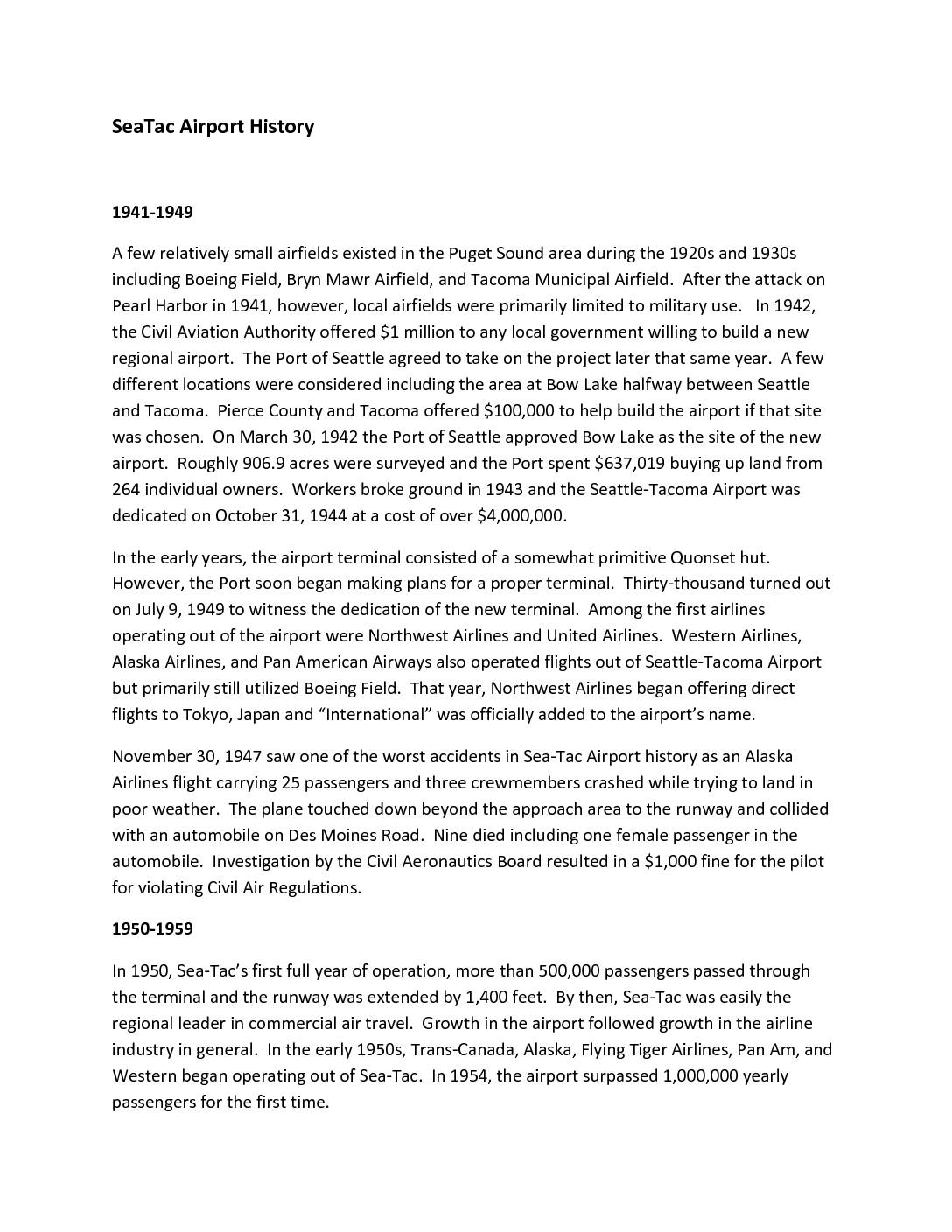
SeaTac Airport history
Seattle-Tacoma International Airport (Sea-Tac) has grown from a modest wartime airfield dedicated in 1944 on 906 acres of land near Bow Lake into one of the busiest airports in the United States, now serving nearly 47 million passengers annually. Over the decades, the airport underwent numerous expansions, security upgrades, and name controversies while navigating major events such as airline deregulation, the post-9/11 security overhaul, and a community-opposed third runway completed in 2008. Today, Sea-Tac supports more than 87,000 jobs and generates over $22 billion in economic activity for the region. -
 2017-04-25
NextGen briefing
In April 2017, the Federal Aviation Administration (FAA) presented a NextGen briefing to the Port of Seattle Commission, outlining the agency's initiative to modernize the U.S. air traffic system. NextGen aims to improve safety, reduce flight delays, cut fuel consumption and emissions, and handle growing air travel demand. The briefing is relevant to Sea-Tac Airport stakeholders as these airspace changes can directly affect flight paths and noise impacts on surrounding communities. -
 2017-04-25
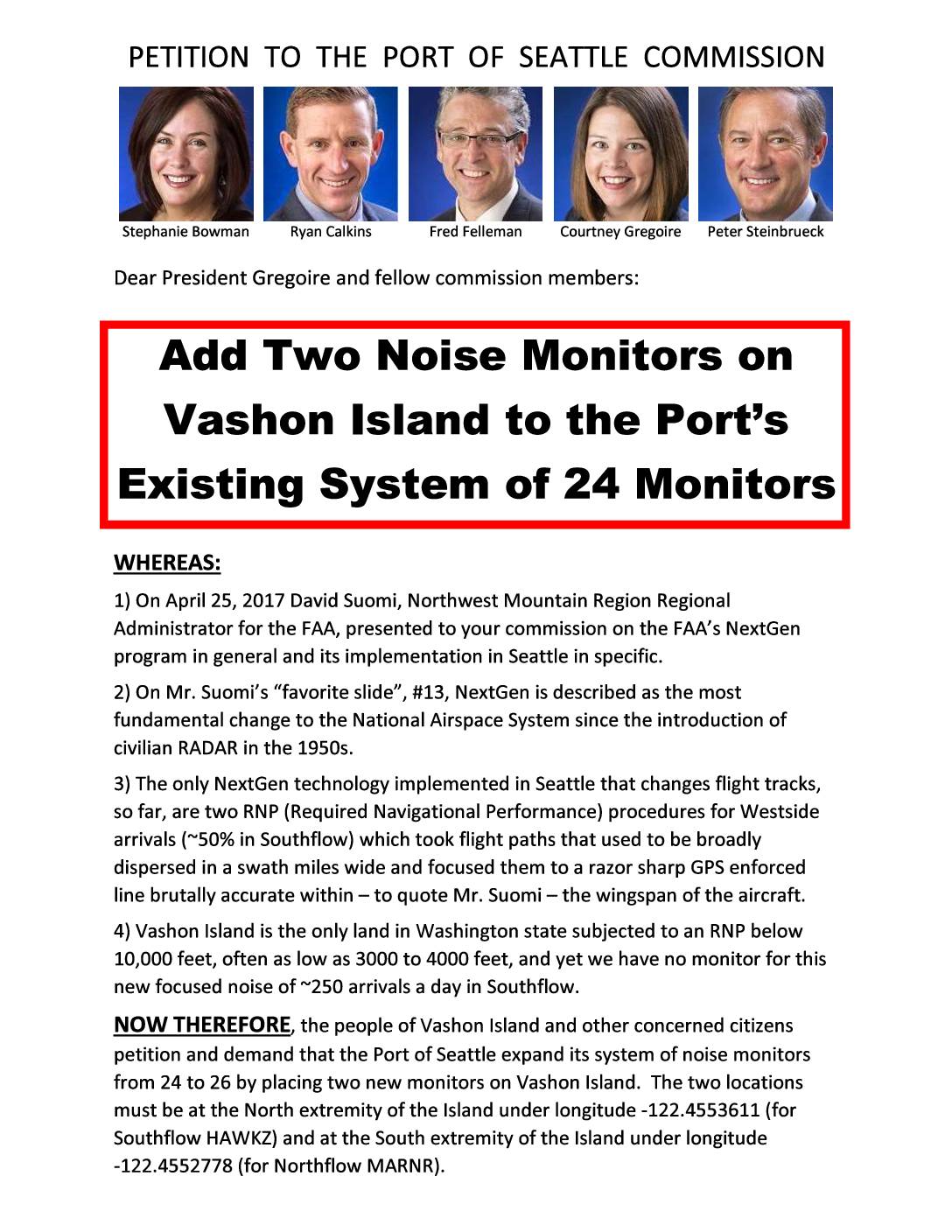
Petition to the Port of Seattle Commission – Add Two Noise Monitors on Vashon Island to the Port’s Existing System of 24 Monitors
A petition to the Port of Seattle Commission requesting the addition of two noise monitors on Vashon Island to monitor aircraft noise from new FAA NextGen flight procedures. The petition cites concerns about focused flight paths over Vashon Island at low altitudes affecting approximately 250 arrivals per day in Southflow operations. -
 2016-12-31
Aviation properties overview
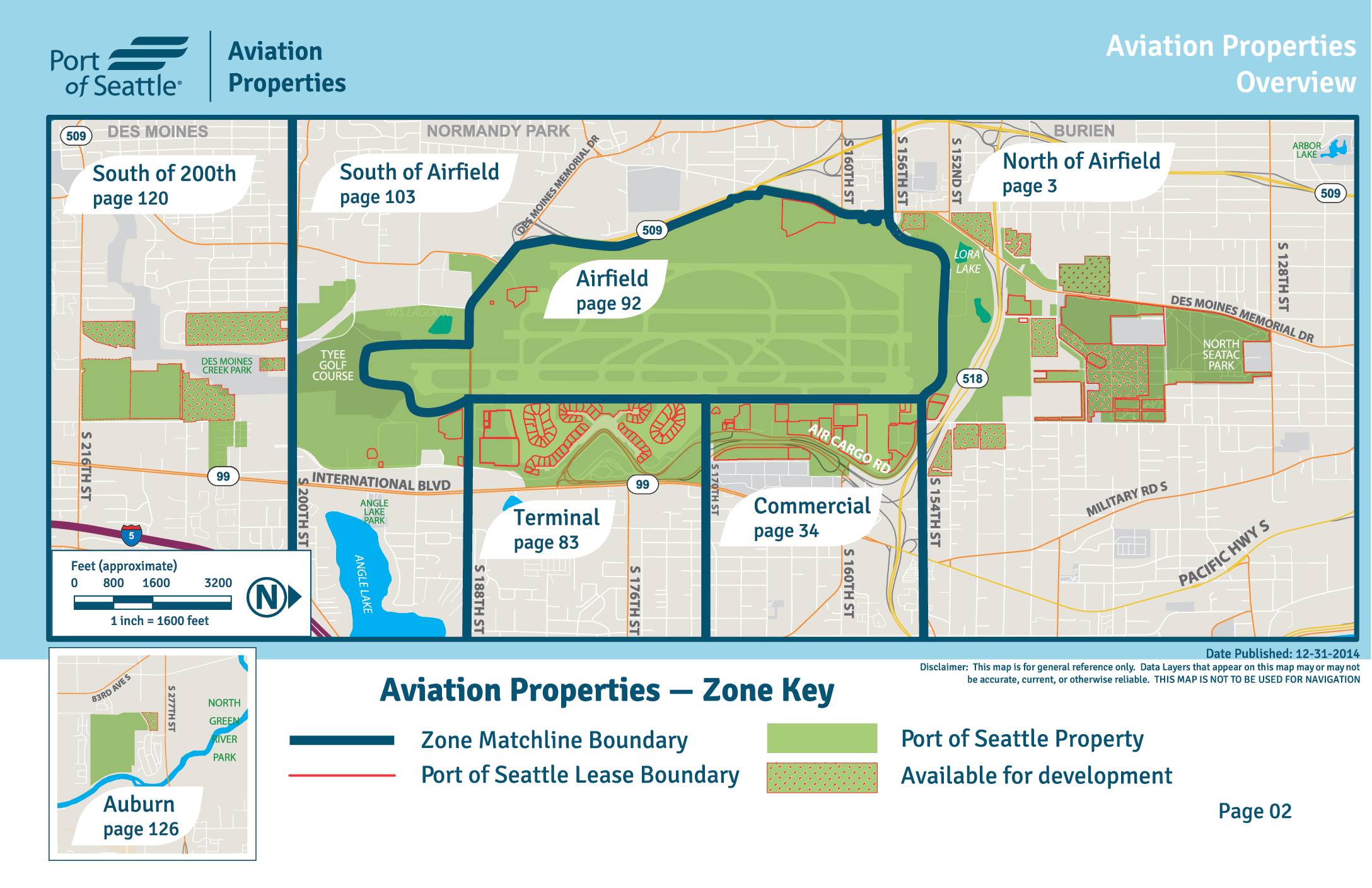
This Aviation Properties Overview map provides a general reference guide to the Port of Seattle's property zones surrounding Seattle-Tacoma International Airport. It divides the airport and surrounding areas into six named zones — Terminal, Airfield, Commercial, North of Airfield, South of Airfield, and South of 200th — each referenced to a specific page for detailed information. The map also identifies Port of Seattle property boundaries, lease boundaries, and land available for development in the Sea-Tac Airport region. -
 2016-12-31
Comprehensive annual financial report: Port Of Seattle
This is the Comprehensive Annual Financial Report for the Port of Seattle, Washington State, covering financial data as of December 31, 2016 and 2015, and for the years ended December 31, 2016, 2015, and 2014. The report was prepared by the Port of Seattle's Accounting and Financial Reporting Department and provides a detailed overview of the port's financial position and results of operations across those periods. -
 2016-12-19
Resolution No. 384: Establishing a committee to address issues related to Seattle Tacoma International Airport
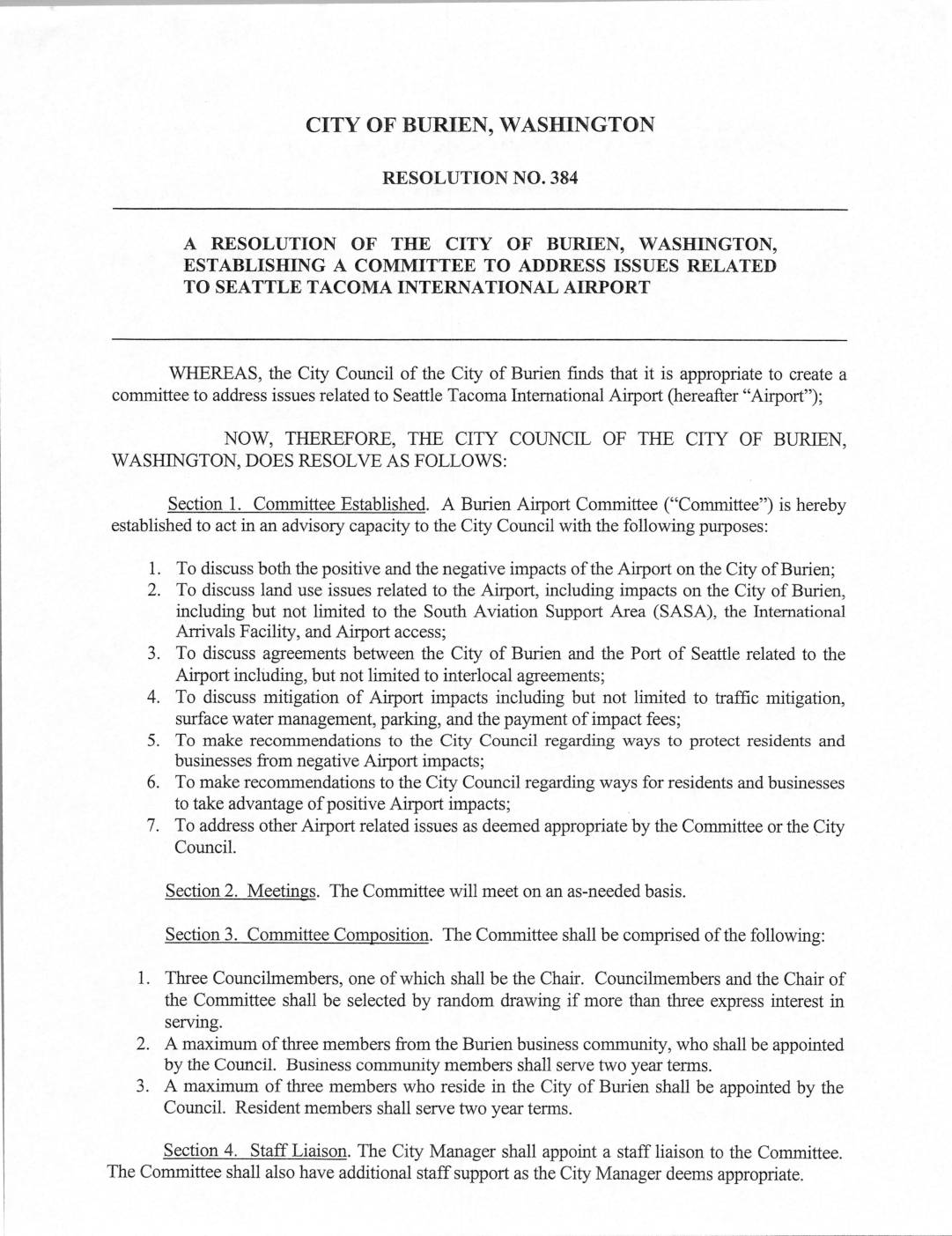
The City of Burien, Washington passed Resolution No. 384 in December 2016, establishing the Burien Airport Committee to advise the City Council on issues related to Seattle-Tacoma International Airport. The committee, composed of three council members, up to three local business representatives, and up to three Burien residents, was created to evaluate both the positive and negative impacts of the airport, including noise, traffic, land use, and mitigation measures. All committee meetings are open to the public under Washington State's Open Public Meetings Act. -
 2016-12-02
Tomorrow @Sea-Tac Coalition advertising supplement
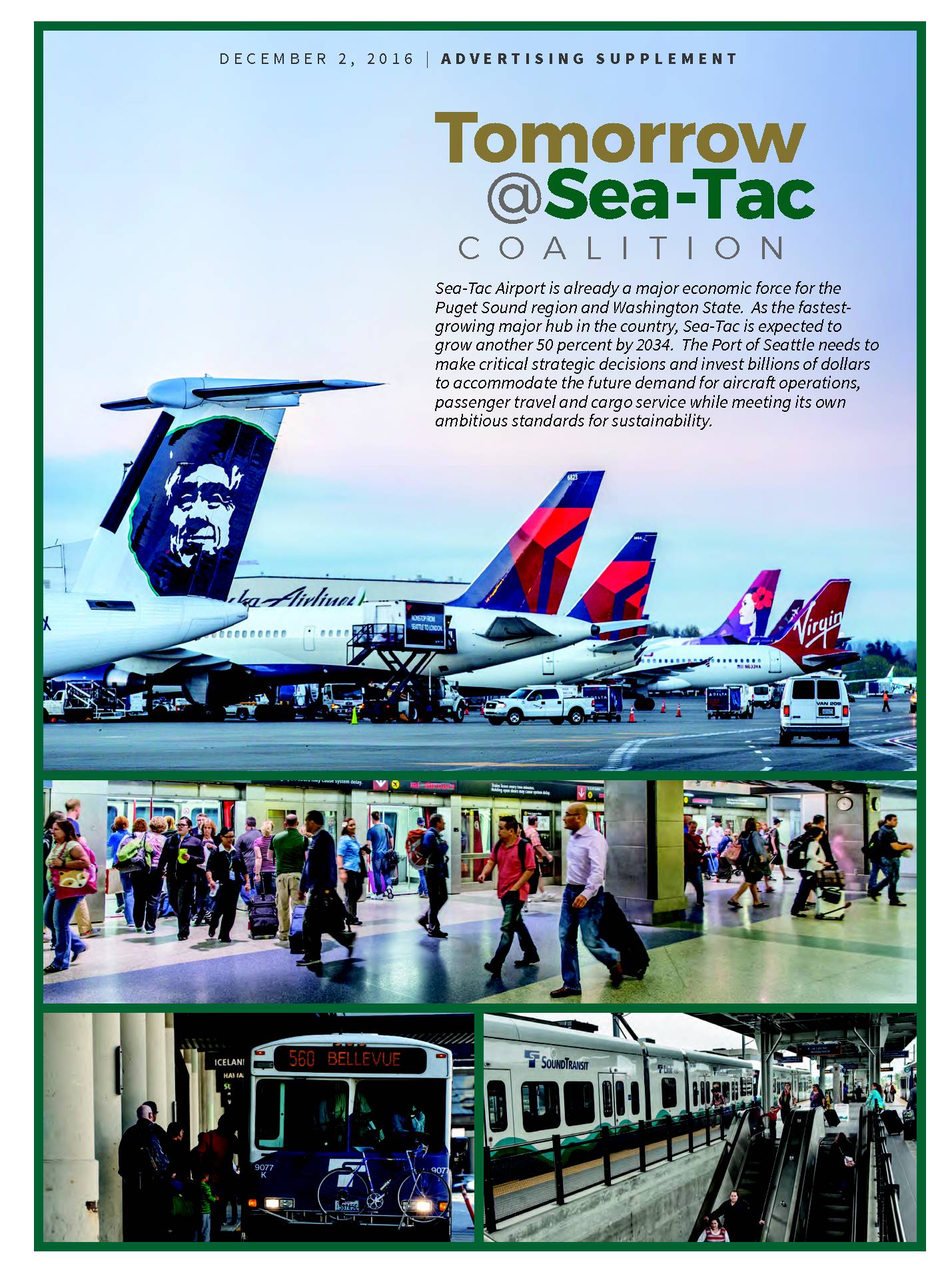
This December 2016 advertising supplement from the Tomorrow@Sea-Tac Coalition outlines the Port of Seattle's plans to expand and modernize Seattle-Tacoma International Airport, which was the fastest-growing major hub in the country and expected to reach 66 million passengers by 2034. The document highlights billions of dollars in planned capital improvements under a Sustainable Airport Master Plan, covering aircraft operations, passenger facilities, and cargo services, while emphasizing commitments to environmental sustainability. It also spotlights workforce development efforts, noting that Sea-Tac directly and indirectly supports nearly 172,000 regional jobs and actively works to create opportunities for diverse and minority-owned businesses in surrounding South King County communities. -
 2016-11-22
Port plan to cut 3000 trees near SeaTac Airport met with angry reaction
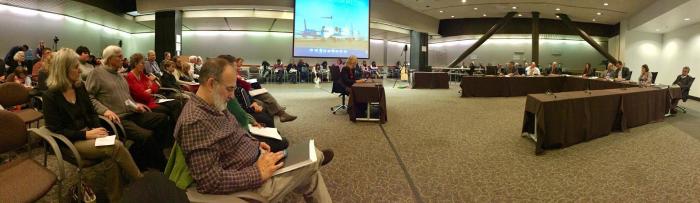
Gwen Davis The Port of Seattle held a commission meeting Nov. 22 and their plan to cut nearly 3000 trees in the vicinity of SeaTac Airport was met with an emotional response. By Gwen Davis It’s on everyone’s mind: “You’re going to cut down 3,000 trees?! That’s crazy!” The Port of Seattle held an emotional -
 2016-11-01
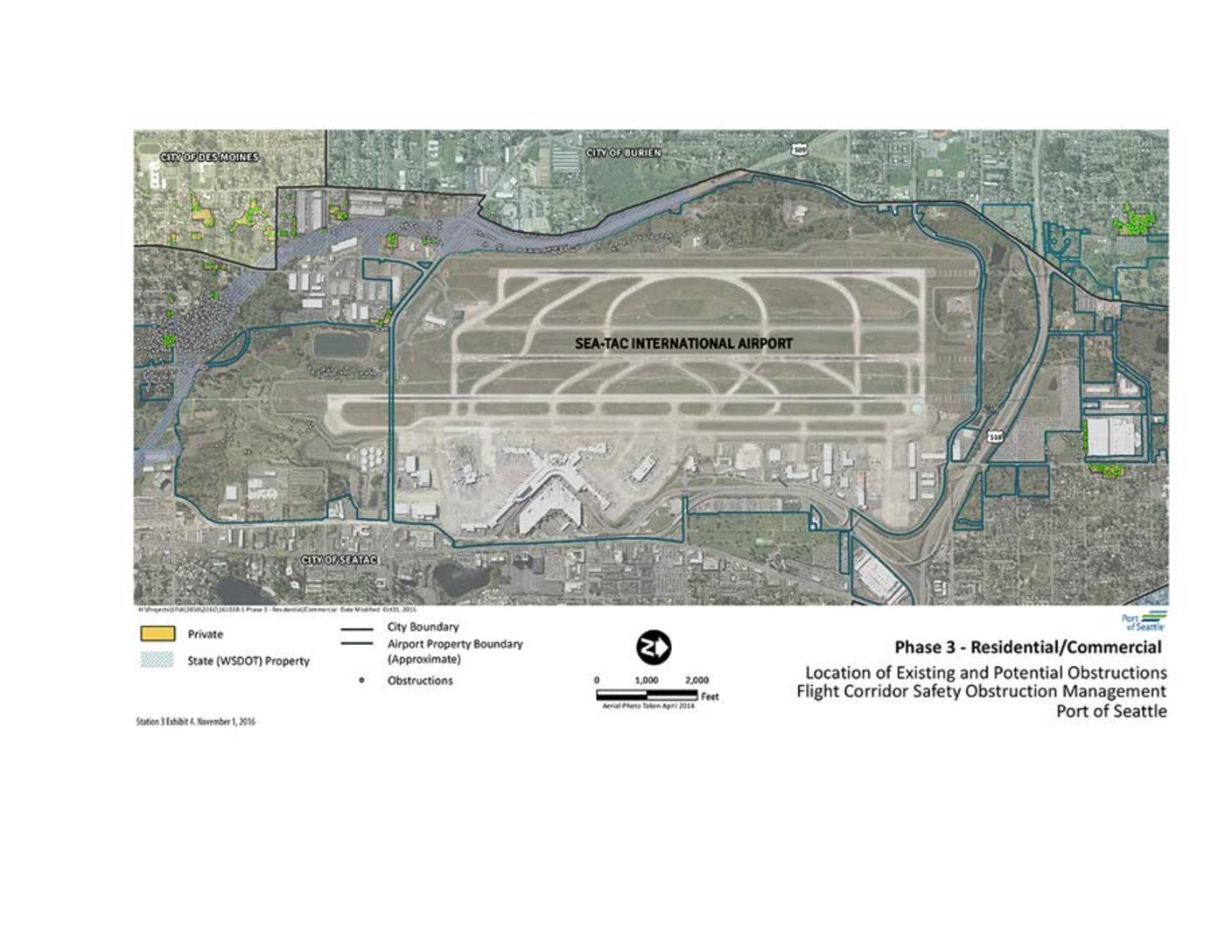
Phase 3 – Residential/Commercial: Location of existing and potential obstructions flight corridor safety obstruction management Port Of Seattle
This map, prepared by the Port of Seattle in November 2016, shows the location of existing and potential flight-path obstructions around Seattle-Tacoma International Airport as part of Phase 3 of the Flight Corridor Safety Obstruction Management program. It identifies private and Washington State DOT (WSDOT) properties, city boundaries for Des Moines, Burien, and SeaTac, and the approximate airport property boundary. The document is intended to support planning efforts that ensure structures in surrounding residential and commercial areas do not pose safety hazards to aircraft flight corridors.