Tagpollution(77)
-
 2010-12-31 12:49
Port Of Seattle Annual Environmental Report (2009-2010)
The Port of Seattle has begun an important journey that will be continuous. The goals of that journey are to be a national leader in environmental and sustainability programs, and to make our green initiative a substan- tial thread that runs through everything we do. Our employees have embraced these goals fully, including everything from turning off lights at their work stations to writing federal grant proposals for multi-million dollar energy-saving projects. Our employees bring passion and energy to our environmental work just as they did for the 10-year capital investment program that brought you the new Central Terminal, third runway and Concourse A at Seattle-Tacoma International Airport, renewed facilities at Fishermen’s Terminal and Shilshole Bay Marina, and upgraded container cargo terminals that compete successfully in the global marketplace. Admittedly, passion and energy alone cannot solve all of our challenges. We face some highly complex issues that touch many stakeholders and many lives. We don’t have all the answers. We know we need partners with like goals, and we need the appropriate funding for major projects that pay off in the long run but can be quite costly to initiate. The Port of Seattle’s primary function is to create and support the 194,000 jobs in this region that depend upon Port related businesses. But we can’t sustain those businesses without sustaining the environment in which we work. A LETTER FROM TAY YOSHITANI, CEO Scope of Report: This report covers data and activities for the year 2009. It does not identify… -
 2010-10-10 12:10
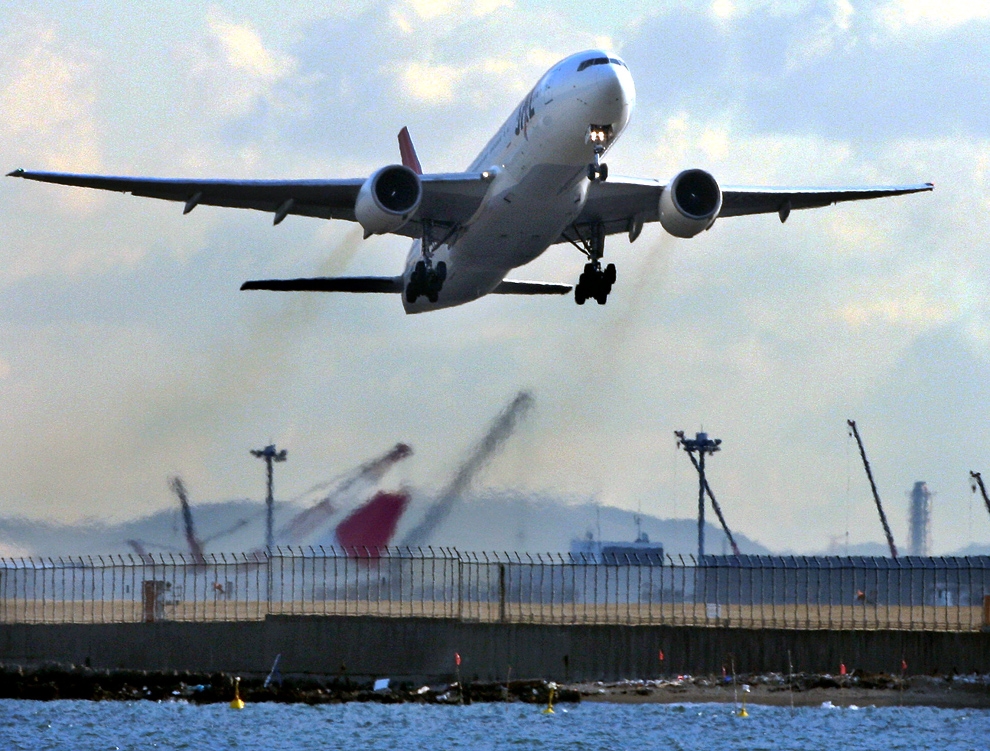
Plane Exhaust Kills More People Than Plane Crashes
Toxic pollutants kill at least ten thousand annually, study says. By Mason Inmanfor National Geographic News Published October 10, 2010 There’s a new fear of flying: You’re more likely to die from exposure to toxic pollutants in plane exhaust than in a plane crash, a new study suggests. In recent years, airplane crashes have -
 2009-10-31 13:33
Aircraft Impacts on Local and Regional Air Quality in the United States Partner Project 15 Final Report
Aircraft Impacts on Local and Regional Air Quality in the United States Partnership for AiR Transportation Noise And Emissions Reduction Project Final Report Gayle Ratliff, Christopher Sequeira, and Ian Waitz Massachusetts Institute of Technology, Cambridge, Massachusetts Melissa Ohsfeldt and Theodore Thrasher CSSI Inc, Washington DC Michael Graham and Terence Thompson Metron Aviation, Herndon, Virginia -
 2009-05-20 00:00
Sea-Tac Airport Spatial Nitrogen Dioxide Study 2009
Previous air pollution modeling efforts and current facility expansion activities at Sea-Tac International Airport have raised concerns about elevated nitrogen dioxide (NO2) levels in the surrounding community. The goals for this project were to 1) assess compliance with the 100 micrograms per cubic meter annual national ambient air quality standard (NAAQS) for NO2, 2) quantify any local concentration gradients, and 3) evaluate the impact of aircraft operations on local NO2 levels. The scope of this project included annual NO2 measurements throughout the community; samplers were located in areas near the north and south ends of the airport where aircraft operations would most likely affect ambient concentrations. Three-week integrated NO2 measurements were continuously performed at 16 locations using Yanagisawa NO2 diffusion badges. Additionally, Washington State Department of Ecology (WDOE) performed continuous nitrogen oxides (NOX) measurements using Federal Reference Method chemiluminescent analyzers and collected meteorological data at two of the sampling locations. Annual average NO2 measurements at all sites were well below the NAAQS. Consistent spatial concentration gradients were observed throughout the study. NO2 levels decreased from east to west. NO2 levels generally decreased with distance from both the airport runways and local freeways. Hourly NOX and meteorological data from WDOE monitoring stations were used to identify local source impacts by comparing measured NOX levels by wind direction. Because NOX is primarily emitted as nitric oxide (NO), concentration of this species varied more with wind direction than NO2. Evidence of a small but discernable airport impact on NOX levels was observed near… -
 2007-12-07 23:37
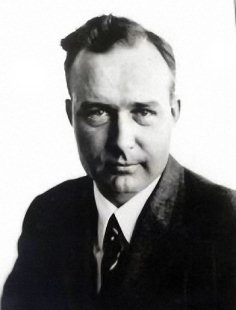
The Ethyl-Poisoned Earth
Long-Form: Chronically catastrophic chemist Thomas Midgley accidentally poisons the world with a neurotoxin, and Clair Patterson tries to stop him. Written by Alan Bellows • Non-Fiction • December 2007 Thomas Midgley At the turn of the twentieth century, as the age of automobiles was afoot, the newfangled gasoline-powered internal combustion engine began to reach the limitations of the fuel that fed it. As -
2007-04-02 23:25
Massachusetts v EPA, 549 U.S. 497 (2007)
Annotation Primary HoldingThe Clean Air Act allows the Environmental Protection Agency to regulate greenhouses gases because they qualify as air pollutants. Also, standing requires showing a concrete harm that can be traced to the defendant and remedied by the courts. Read More Syllabus SYLLABUS OCTOBER TERM, 2006 MASSACHUSETTS V. EPA SUPREME COURT OF THE -
 2006-11-06 16:44
Spatial and Temporal Patterns of Airborne Toxic Species in Seattle Neighborhoods 2006
Spatial and Temporal Patterns of Airborne Toxic Species in Seattle, WA Neighborhoods Paper # 456 Hal Westberg, Brian Lamb and Doris Montacastro Laboratory for Atmospheric Research Washington State University Pullman, WA 99111 John Williamson Washington Department of Ecology 3190 160th Ave. SE Bellevue, WA 98008 -
 2005-12-31 12:49
Seattle Greenhouse Gas Inventory Full Report (2005)
2005 Inventory of Seattle Greenhouse Gas Emissions: Community & Corporate -
 2003-10-01 00:00
Puget Sound Air Toxics Evaluation Final Report, October 2003
For more information about this report, call Leslie Keill at (206) 689-4022 -
 2002-08-12 00:00
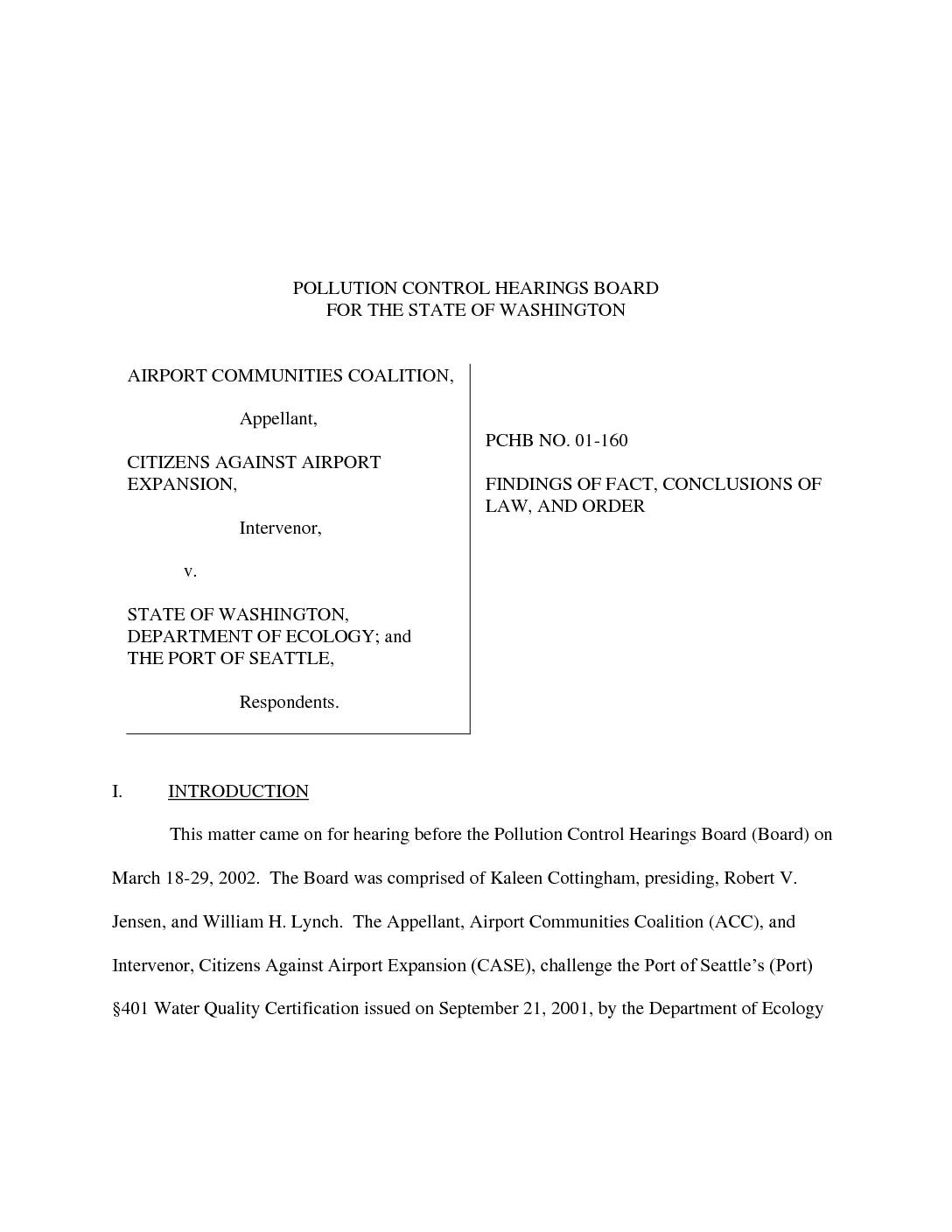
Pollution Control Hearings Board Case No. 01-160
March 18-29, 2002. The Board was comprised of Kaleen Cottingham, presiding, Robert V. Jensen, and William H. Lynch. The Appellant, Airport Communities Coalition (ACC), and Intervenor, Citizens Against Airport Expansion (CASE), challenge the Port of Seattle‘s (Port)