TagPCHB(607)
-
 2002-02-18
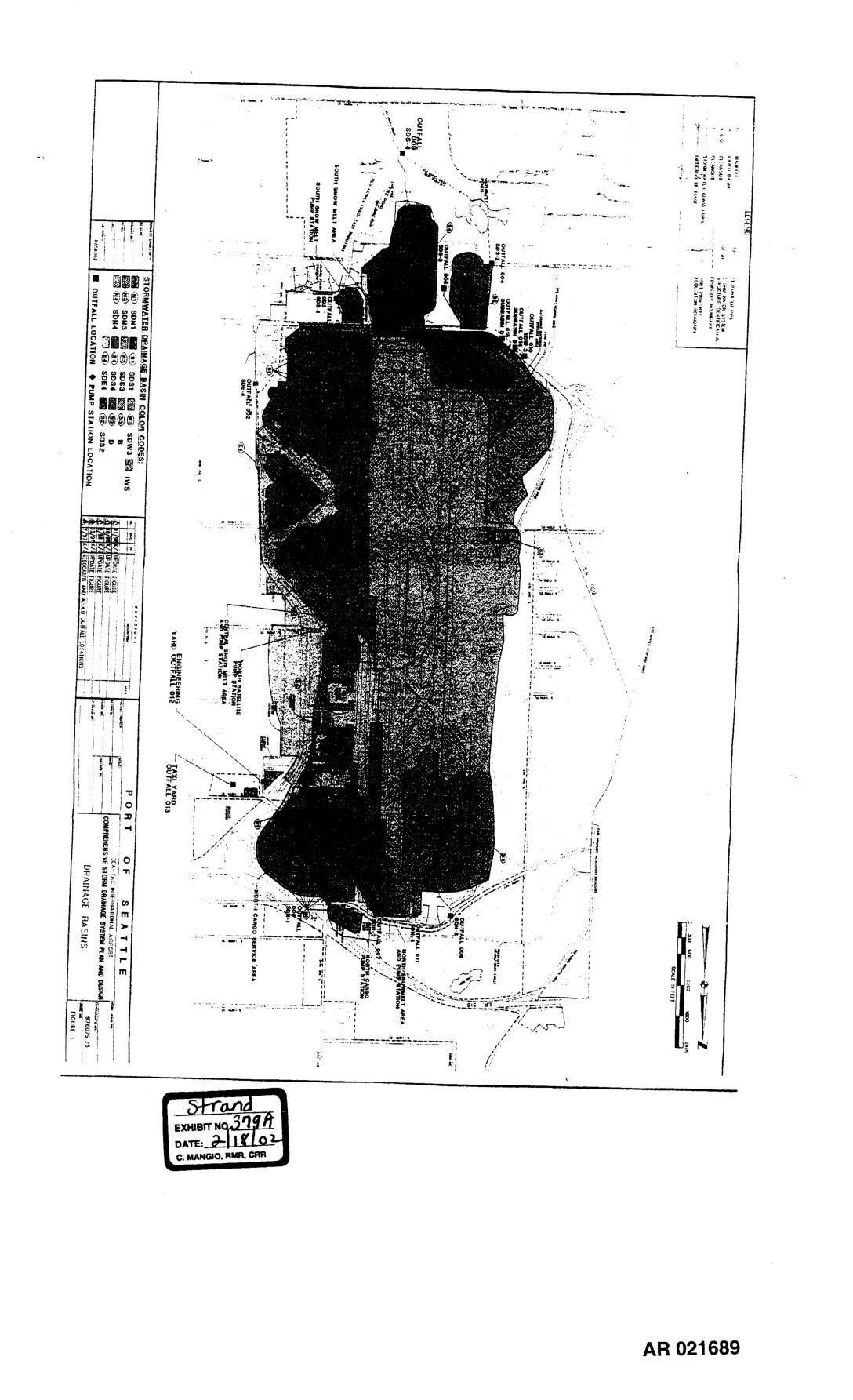
EXH 379A: Comprehensive Storm Drainage System Plan — Drainage Basins Map
This document is a map from the Port of Seattle showing the comprehensive storm drainage system plan and drainage basins for the Seattle port facility. It identifies stormwater drainage basin color codes, outfall locations, and pump station locations across the property. The figure was entered as Exhibit 379A on February 18, 2002, in proceedings recorded by C. Mangio, RMR, CRR. -
 2002-02-18
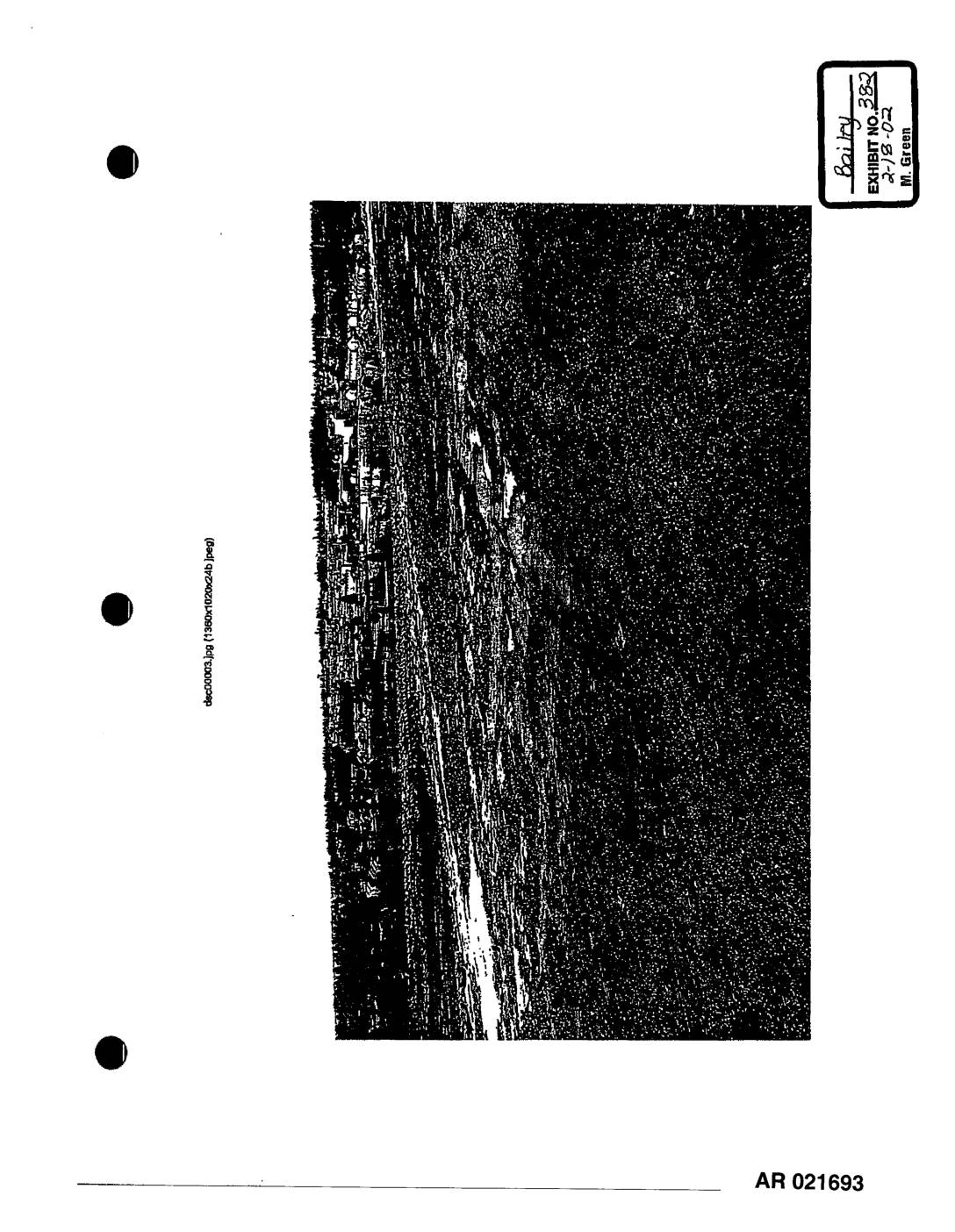
EXH 382: AR021693 — Aerial/Ground Photo STIA Third Runway Area
This document, marked as Exhibit No. 382 from the Bailey proceeding dated 2-18-02, contains a photographic image that appears to show an aerial or ground-level view of a landscape, likely related to environmental or noise impact evidence near Sea-Tac Airport. The photograph, originally a high-resolution JPEG (1360x1020x24b), depicts what appears to be a roadway or runway corridor surrounded by terrain. It is part of the administrative record (AR 021693) compiled in connection with Sea-Tac Airport noise policy litigation or regulatory proceedings. -
 2002-02-18
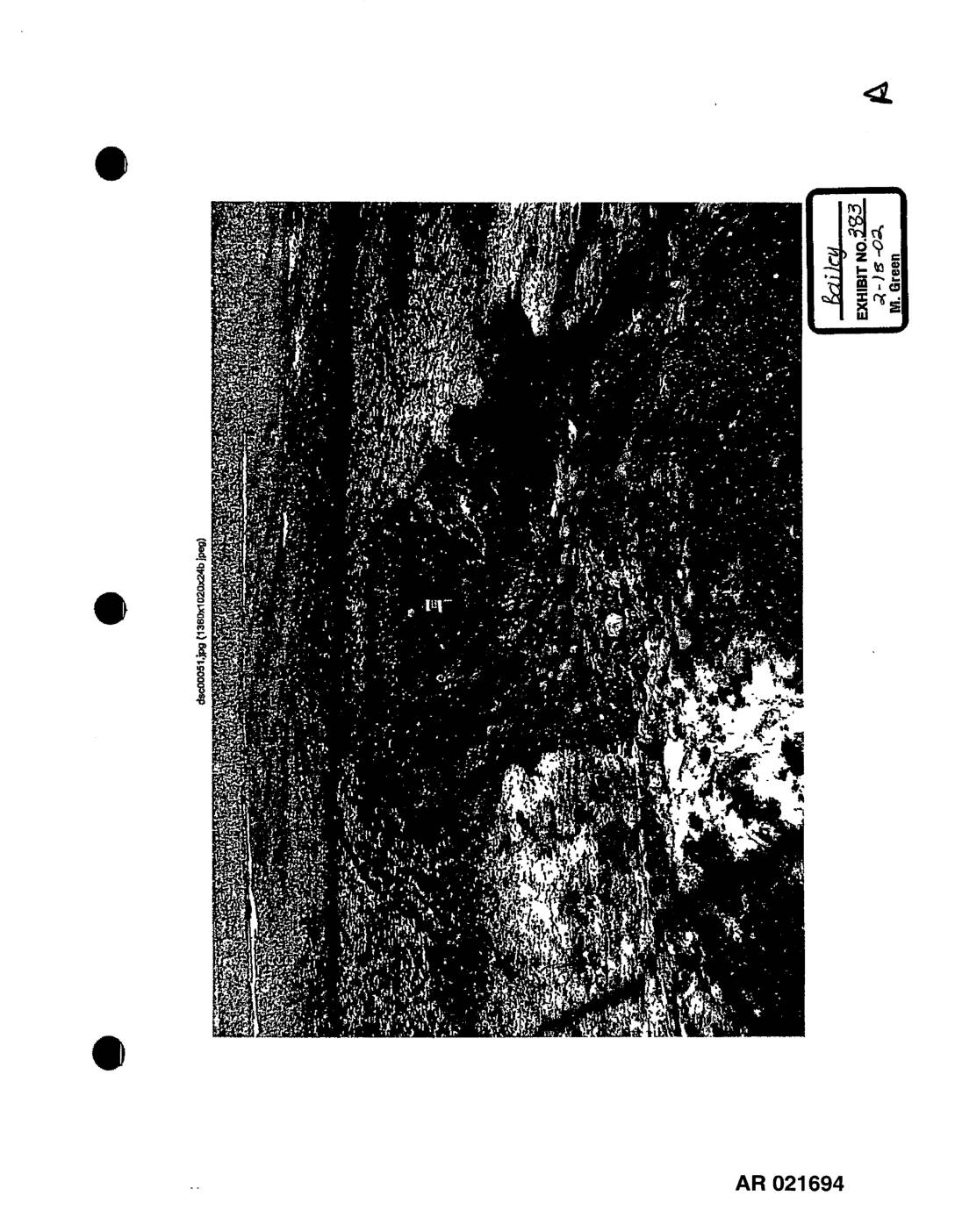
EXH 383: Third Runway EIS Photographs (AR 021694–021696)
These three pages (AR 021694–021696) are black-and-white photographic exhibits entered into the administrative record as Exhibit No. 383 on February 18, 2002, in the Bailey proceeding before M. Green. The images, originally digital JPEG files at 1360×1020 resolution, appear to depict aerial or close-up views of terrain or surface conditions, likely submitted as visual evidence related to noise-impact or environmental conditions at or near Sea-Tac Airport. The poor reproduction quality of the scanned photos makes specific details difficult to discern. -
 2002-02-18
EXH 376: Decl. Dr. John Strand Support ACC Motion for Stay PCHB No. 01-133
Dr. John Strand, a fisheries biologist with over 25 years of experience, submitted this declaration in support of the Airport Communities Coalition's legal challenge to Washington State's water quality certification for Sea-Tac Airport's third runway expansion. Drawing on his own water quality sampling of Miller and Des Moines Creeks in 2000, Dr. Strand argues that the certification fails to adequately protect sensitive local waterways from stormwater runoff containing heavy metals, petroleum hydrocarbons, and other contaminants. He urges the Pollution Control Hearings Board to stay the certification until Clean Water Act compliance questions are fully resolved. -
 2002-02-16
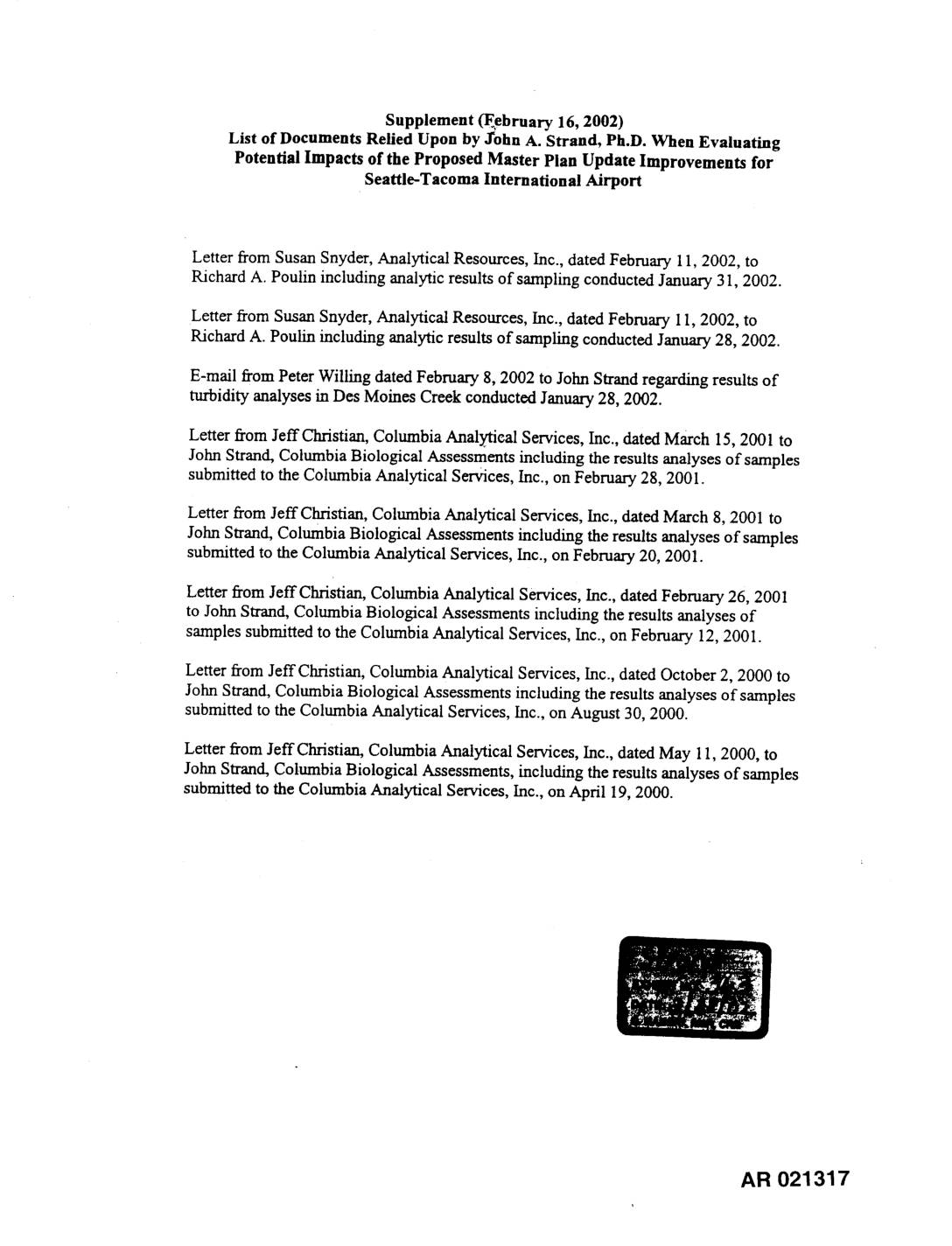
EXH AR021317: Supplement Feb 16 2002 — Docs Relied Upon by John A. Strand PhD STIA Master Plan Update EIS Evaluation
This February 2002 supplement lists the technical documents relied upon by environmental scientist John A. Strand, Ph.D., when assessing the potential environmental impacts of proposed improvements outlined in Seattle-Tacoma International Airport's Master Plan Update. The documents primarily consist of laboratory analysis letters from Columbia Analytical Services and Analytical Resources, Inc., covering water quality sampling results collected between 2000 and 2002. An email regarding turbidity measurements in Des Moines Creek is also included, suggesting a focus on water quality impacts near the airport. -
 2002-02-14
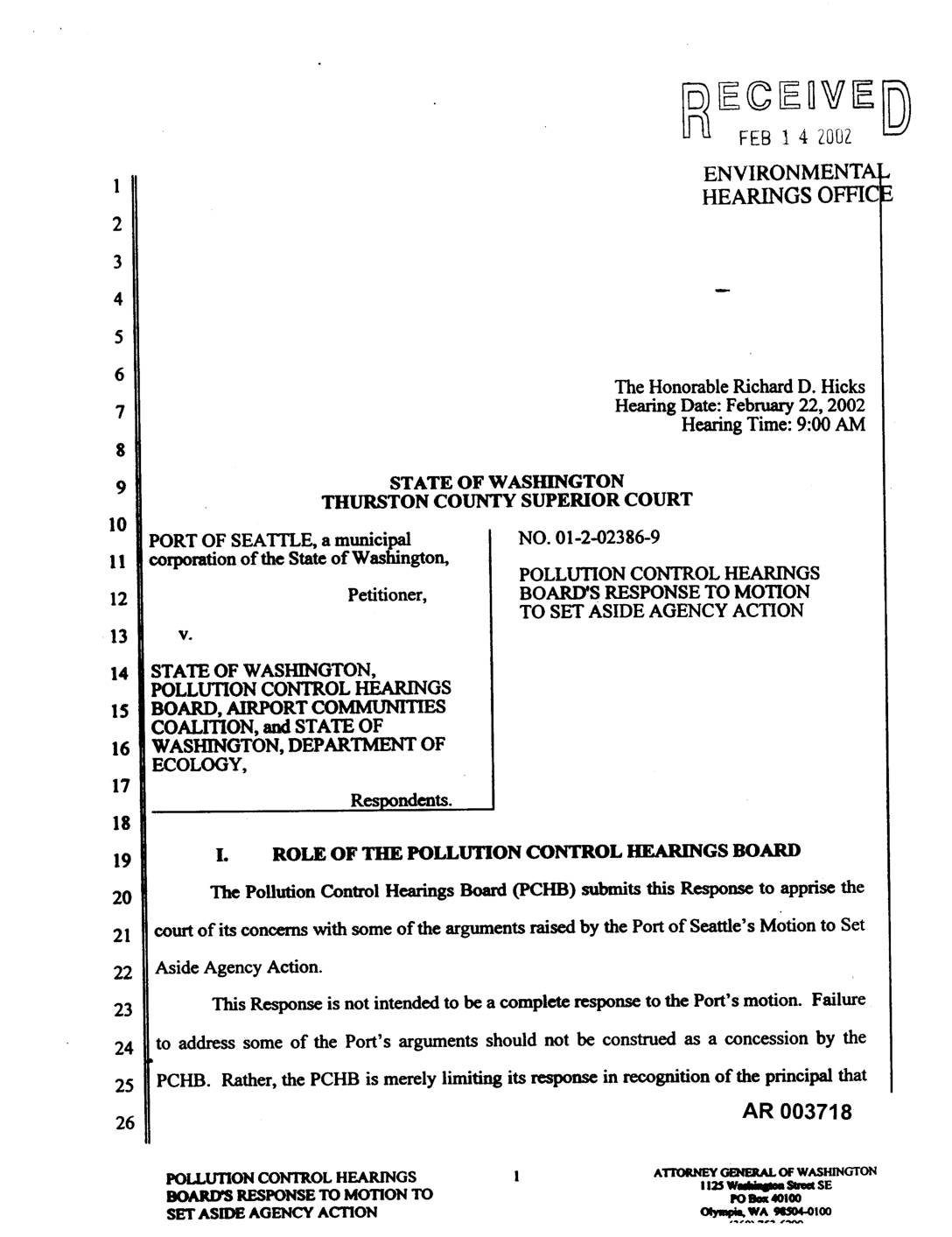
PCHB Doc 3718: Pollution Control Hearings Board’s Response to Motion to Set Aside Agency Action (Port Of Seattle v. PCHB, ACC, Ecology)
Pollution Control Hearings Board (PCHB) response filed in Thurston County Superior Court case No. 01-2-02386-9, Port Of Seattle v. State of Washington Pollution Control Hearings Board, Airport Communities Coalition, and State of Washington Department of Ecology. Filed February 14, 2002, hearing set February 22, 2002 before Judge Richard D. Hicks. Addresses Port Of Seattle’s Motion -
 2002-02-14
EXH 334: Compensating Wetland Losses Clean Water Act — App. H, 40 Common Wetland Functional Assessment Procedures
This document, Appendix H from a National Research Council publication titled 'Compensating for Wetland Losses Under the Clean Water Act,' presents a comparative table of 40 common wetland functional assessment procedures. The table summarizes key attributes of each method, including habitat type, scale, functions assessed, and whether social values or weighting factors were applied. It serves as a reference for evaluating and comparing tools used to measure wetland functions in the context of Clean Water Act mitigation and compensation requirements. -
 2002-02-14
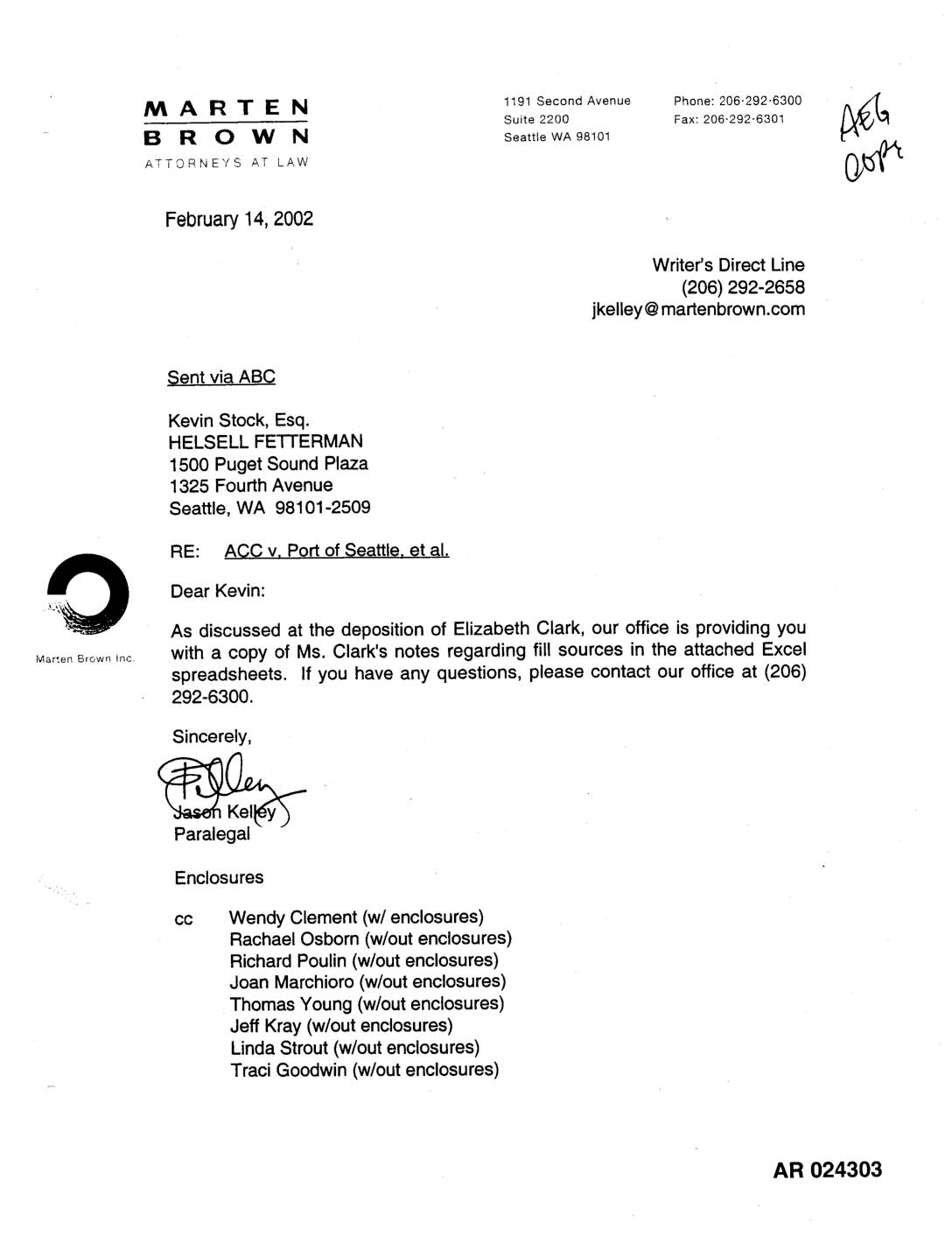
EXH AR024303: Marten Brown Letter to Kevin Stock Transmitting Elizabeth Clark Fill Sources Notes
A February 2002 letter from Marten Brown Attorneys at Law transmits Excel spreadsheets containing Elizabeth Clark's notes on fill sources related to the case ACC v. Port of Seattle. The attached spreadsheets provide a cumulative fill summary for the Draft Third Runway project at Sea-Tac Airport, detailing fill sources, suppliers, volumes, and placement locations across three construction phases spanning 1997–2001. Sources include borrowed pit materials, city transfers, and various property acquisitions used to build runway embankments and stockpiles. -
 2002-02-13
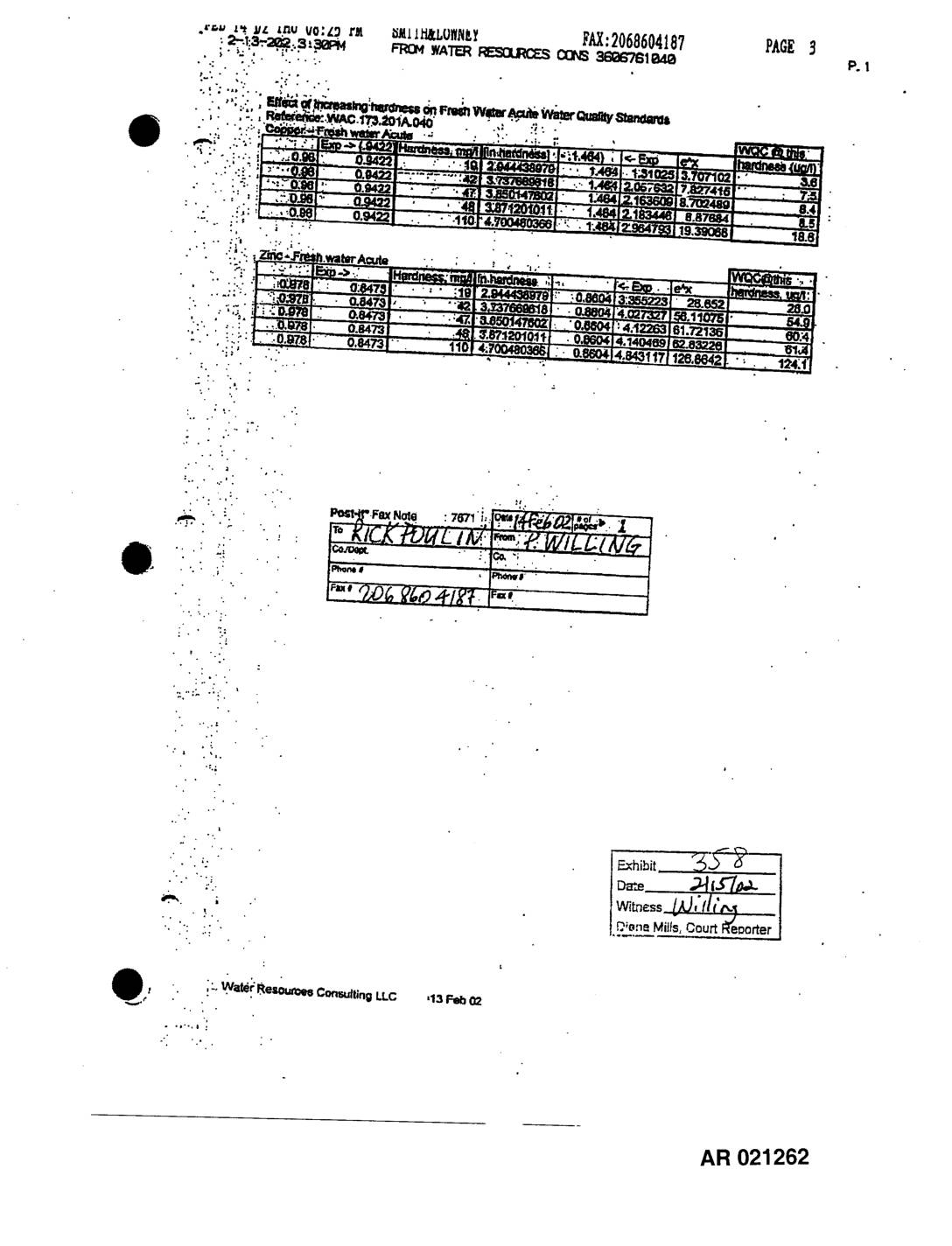
EXH 358: Increasing Hardness Effect on Freshwater Acute WQ Standards — Copper & Zinc, WAC 173.201A.040
This document is a February 2002 fax from Water Resources Consulting LLC addressing the effect of increasing water hardness on fresh water acute water quality standards, referencing WAC 173.201A.040. It contains tables calculating acute water quality standards for copper and zinc at varying hardness levels in fresh water. The document appears to be part of an administrative record (AR 021262) and was transmitted between consultants, though its connection to Sea-Tac Airport noise policy is not evident from the content. -
 2002-02-13
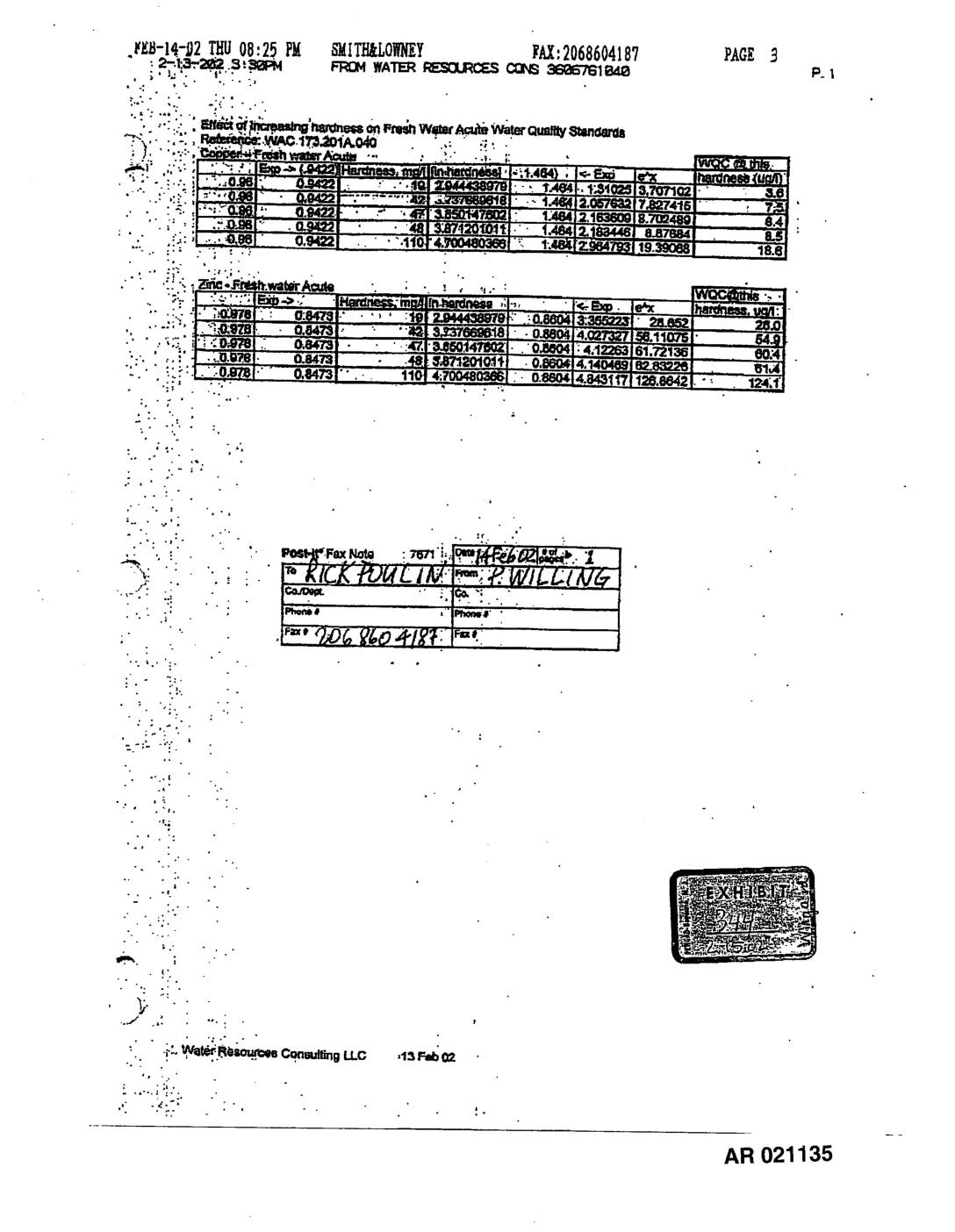
EXH AR021135: Increasing Hardness Effect on Freshwater Acute WQ Standards WAC 173.201A.040 — Copper & Zinc
This document presents a technical analysis of the effect of increasing water hardness on Fresh Water Acute Water Quality Standards, referencing WAC 173.201A.040. It includes calculated values for copper and zinc acute water quality criteria at varying hardness levels (ranging from 10 to 110 mg/L), showing how the allowable concentrations change as hardness increases. The document was transmitted via fax in February 2002 from Water Resources Consulting LLC.