TagNorth Sea-Tac Park(157)
-
 1982-02-14
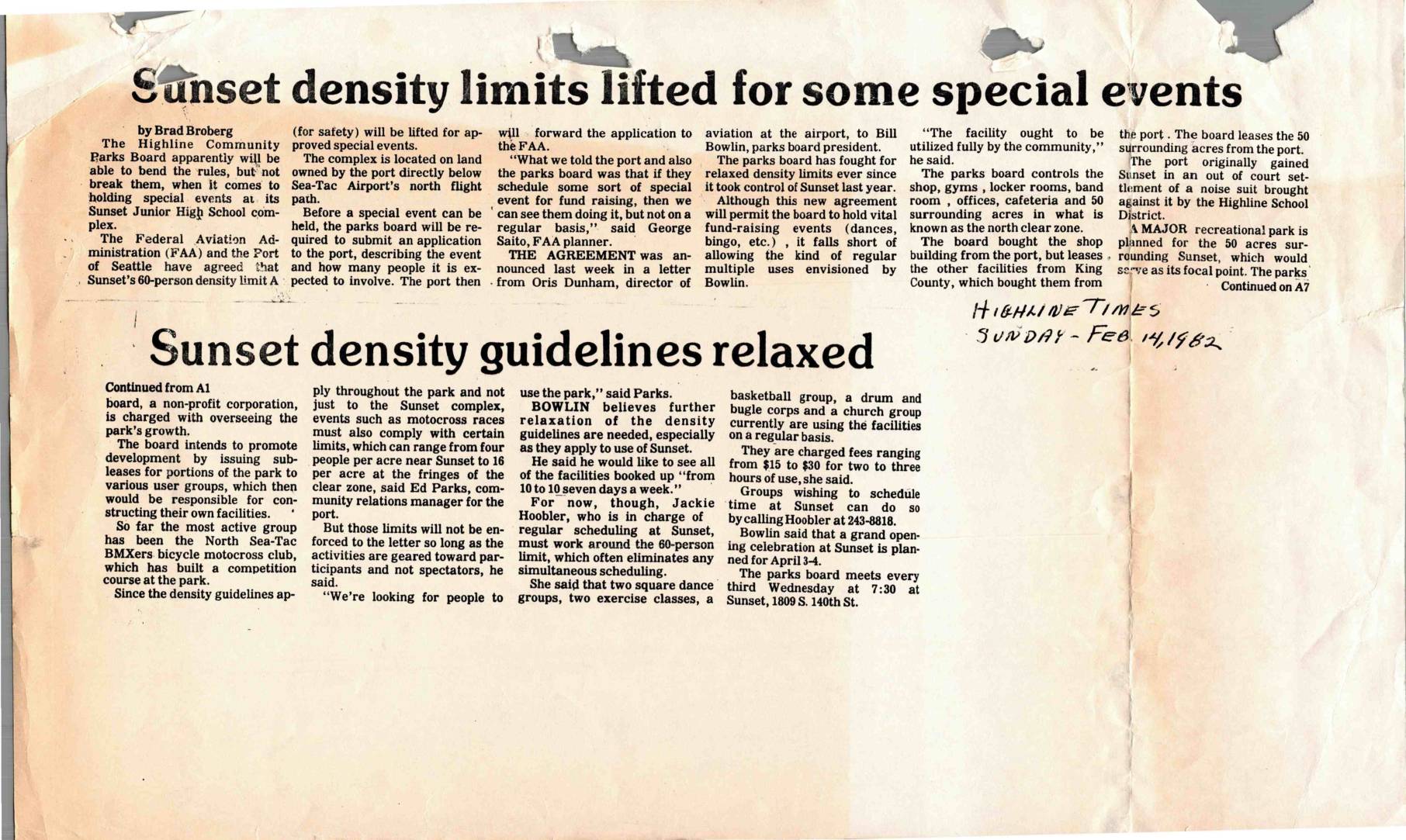
Sunset density limits lifted for some special events
A February 14, 1982 article from the Highline Times reports that the FAA and Port of Seattle agreed to temporarily lift the 60-person density limit at the Sunset Junior High School complex for approved special events, such as fundraising dances and bingo nights. The complex sits on port-owned land directly beneath Sea-Tac Airport's north flight path, where density restrictions exist for public safety reasons. While the agreement allows the Highline Community Parks Board to hold occasional large events, it falls short of permitting the regular, full-capacity scheduling the board had sought for the facility. -
 1982-02-09
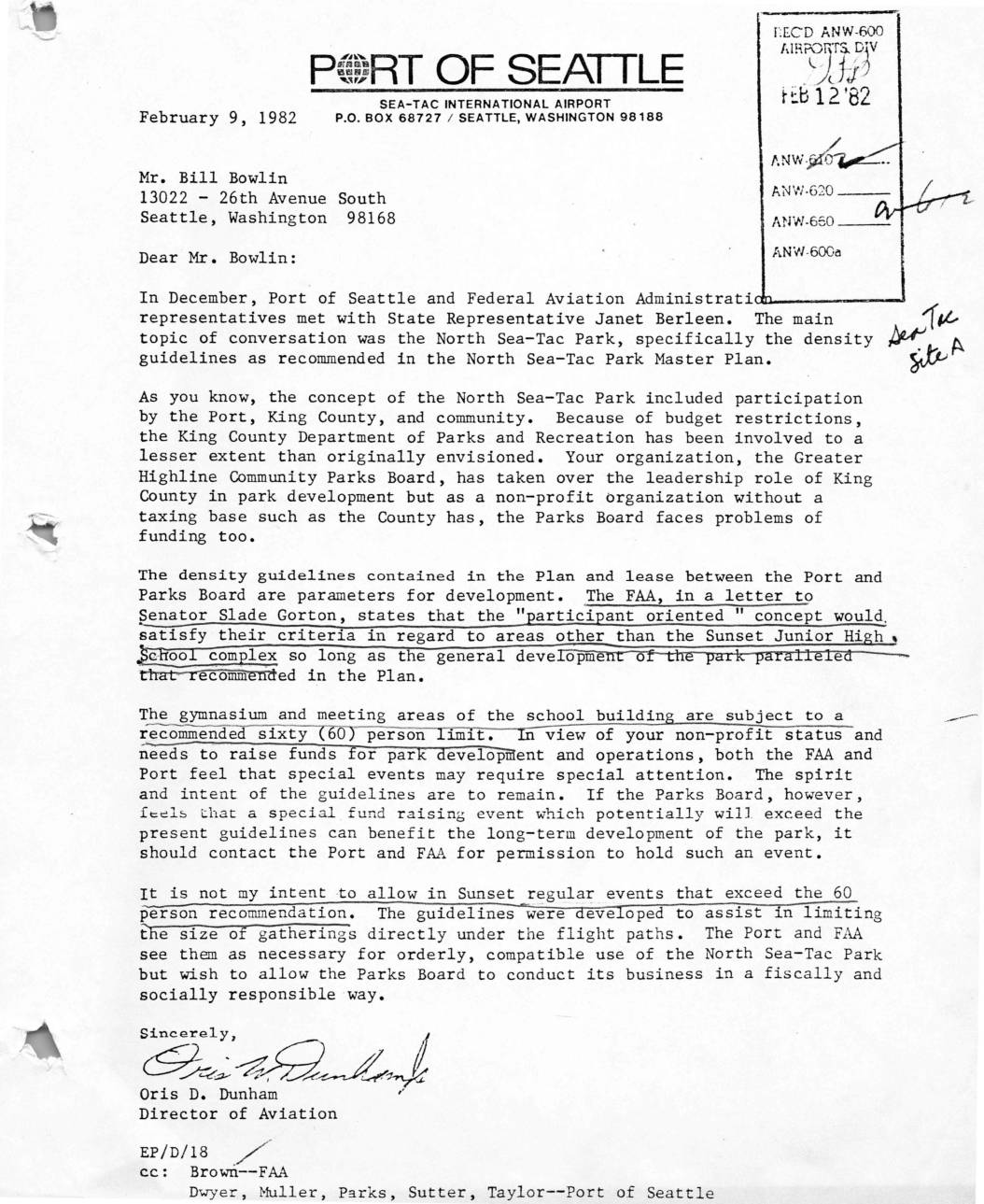
Letter to Bill Bowlin regarding North Sea-Tac Park density guidelines
A February 9, 1982 letter from Port of Seattle Director of Aviation Oris D. Dunham to Bill Bowlin addresses density guidelines for the North Sea-Tac Park, located under flight paths at Sea-Tac International Airport. The letter clarifies that the gymnasium and meeting areas of the former Sunset Junior High School complex are subject to a recommended 60-person limit to reduce noise impacts on gatherings beneath the flight paths. However, the Port and FAA indicated they would consider granting special permission for the Greater Highline Community Parks Board to exceed that limit for one-time fundraising events benefiting long-term park development. -
 1981-09-13
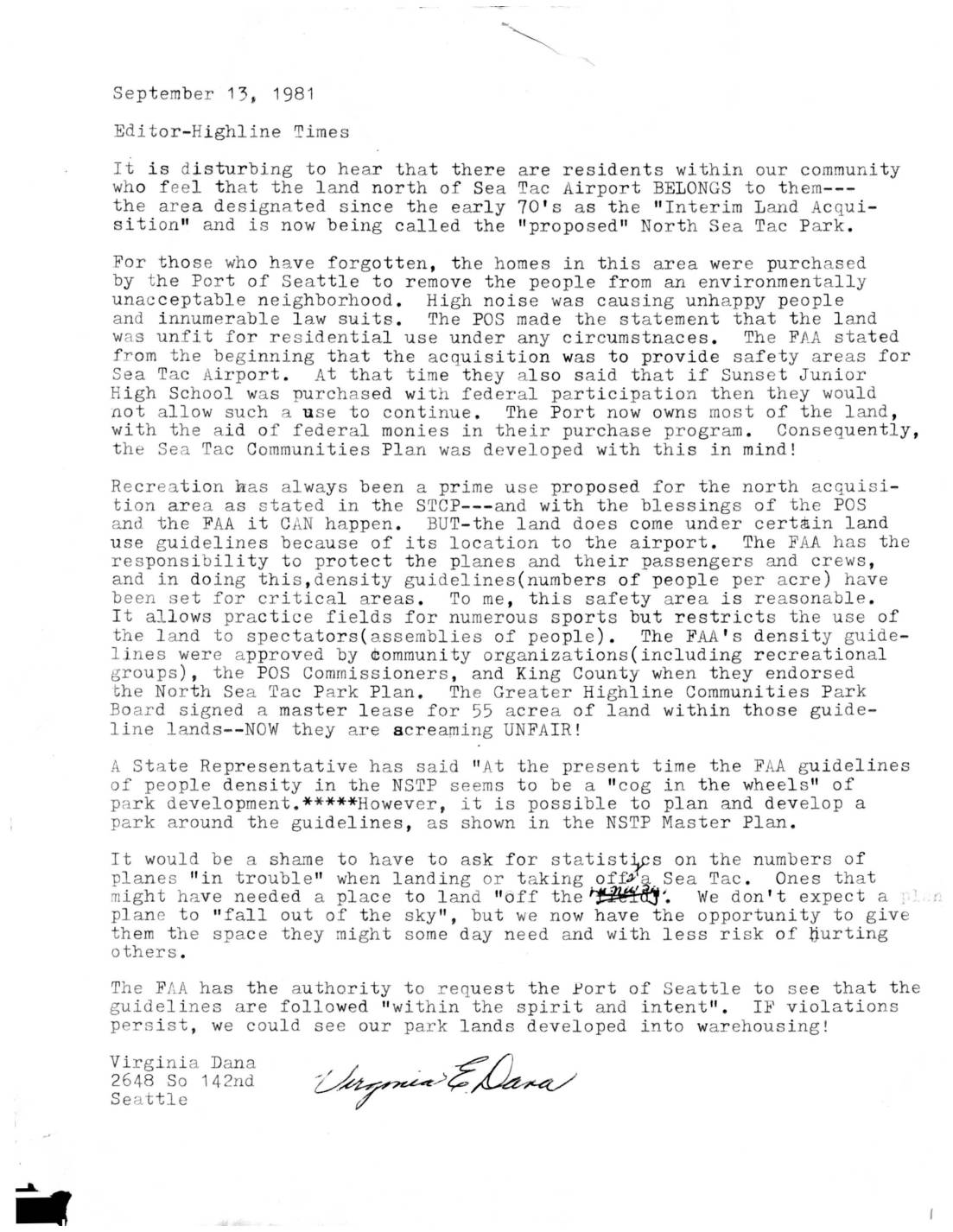
Letter to Editor about North Sea-Tac Park Land Use Guidelines
A letter to the editor of Highline Times from Sea-Tac Communities Plan member Virginia Dana discussing the Port of Seattle’s acquisition of land north of Sea-Tac Airport for safety purposes and defending FAA density guidelines for the proposed North SeaTac Park. The author argues that the land was purchased to remove residents from an environmentally -
 1981-06-12
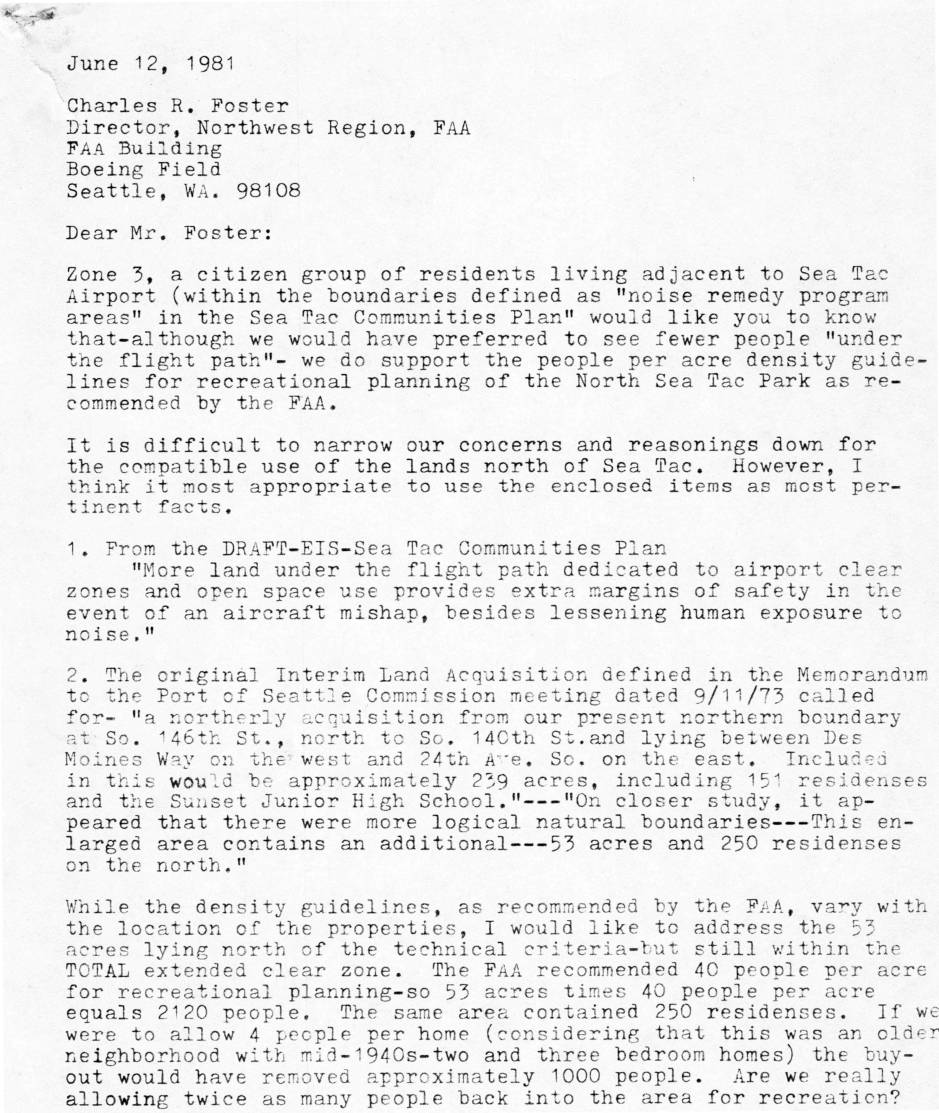
Letter from Zone 3 residents to FAA Director Charles Foster regarding Noise Density Guidelines
In a June 1981 letter to the FAA's Northwest Regional Director, Zone 3 citizen group representative Virginia E. Dana expresses qualified support for the FAA's recommended people-per-acre density guidelines for recreational use of North Sea-Tac Park, while raising concerns about safety and population exposure under flight paths. The letter highlights that the proposed recreational density of 40 people per acre across 53 acres could allow up to 2,120 people in an area from which only roughly 1,000 residents were displaced through the airport's land buyout program. Dana urges continued attention to airport safety criteria and environmental protection for communities living adjacent to Sea-Tac Airport. -
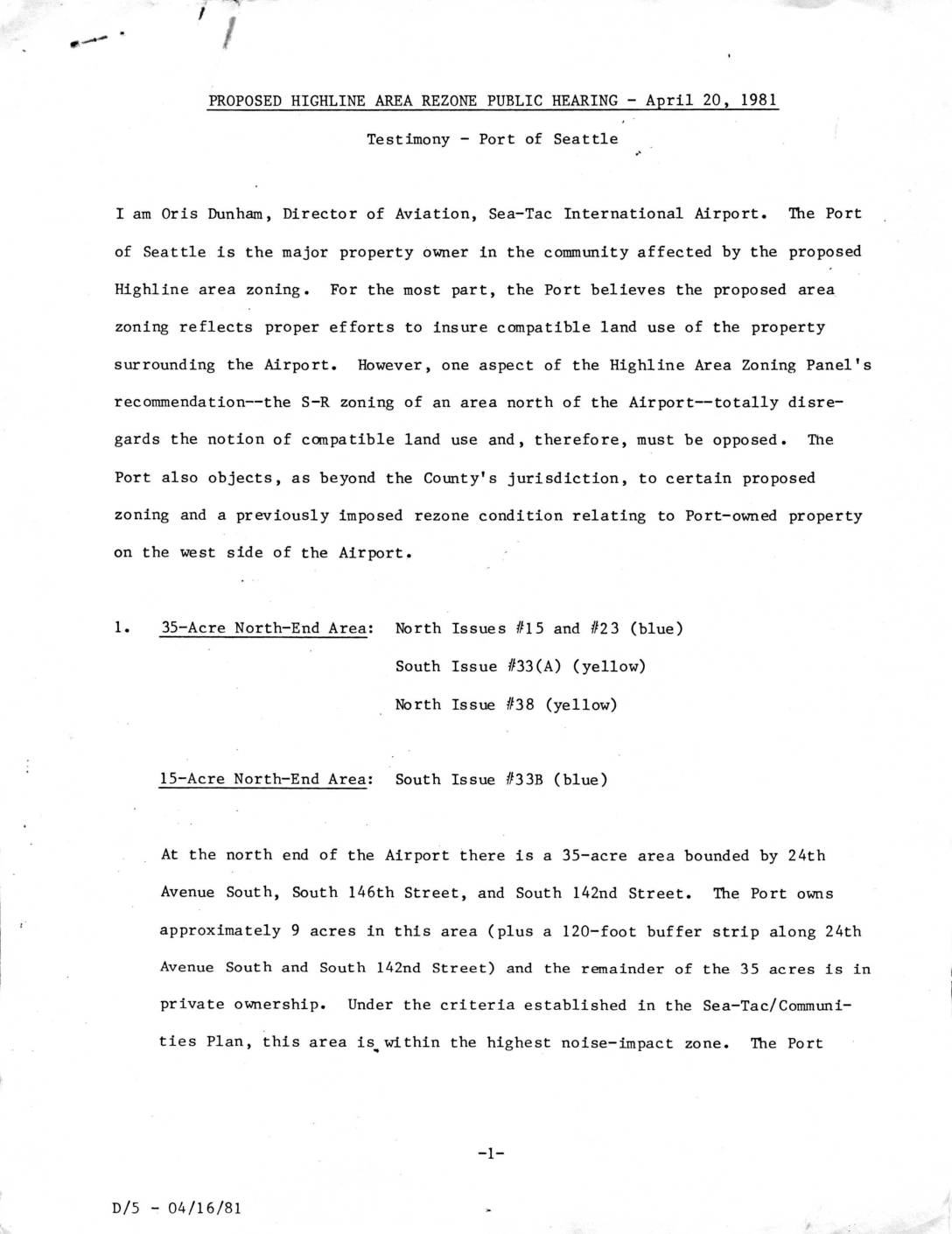 1981-04-20
Proposed Highline Area Rezone Public Hearing – Port of Seattle Testimony
In April 1981, the Port of Seattle testified at a public hearing opposing proposed residential (S-R) zoning for areas north of Sea-Tac International Airport, arguing the land falls within the highest aircraft noise impact zone and cannot legally or practically be developed for housing. The Port contended that rezoning these parcels to light manufacturing (M-L) was consistent with the Sea-Tac/Communities Plan and supported by a court ruling finding that residential zoning in such noise-impacted areas is arbitrary and unrealistic. The testimony also challenged the County's authority to impose certain zoning conditions on Port-owned property on the airport's west side. -
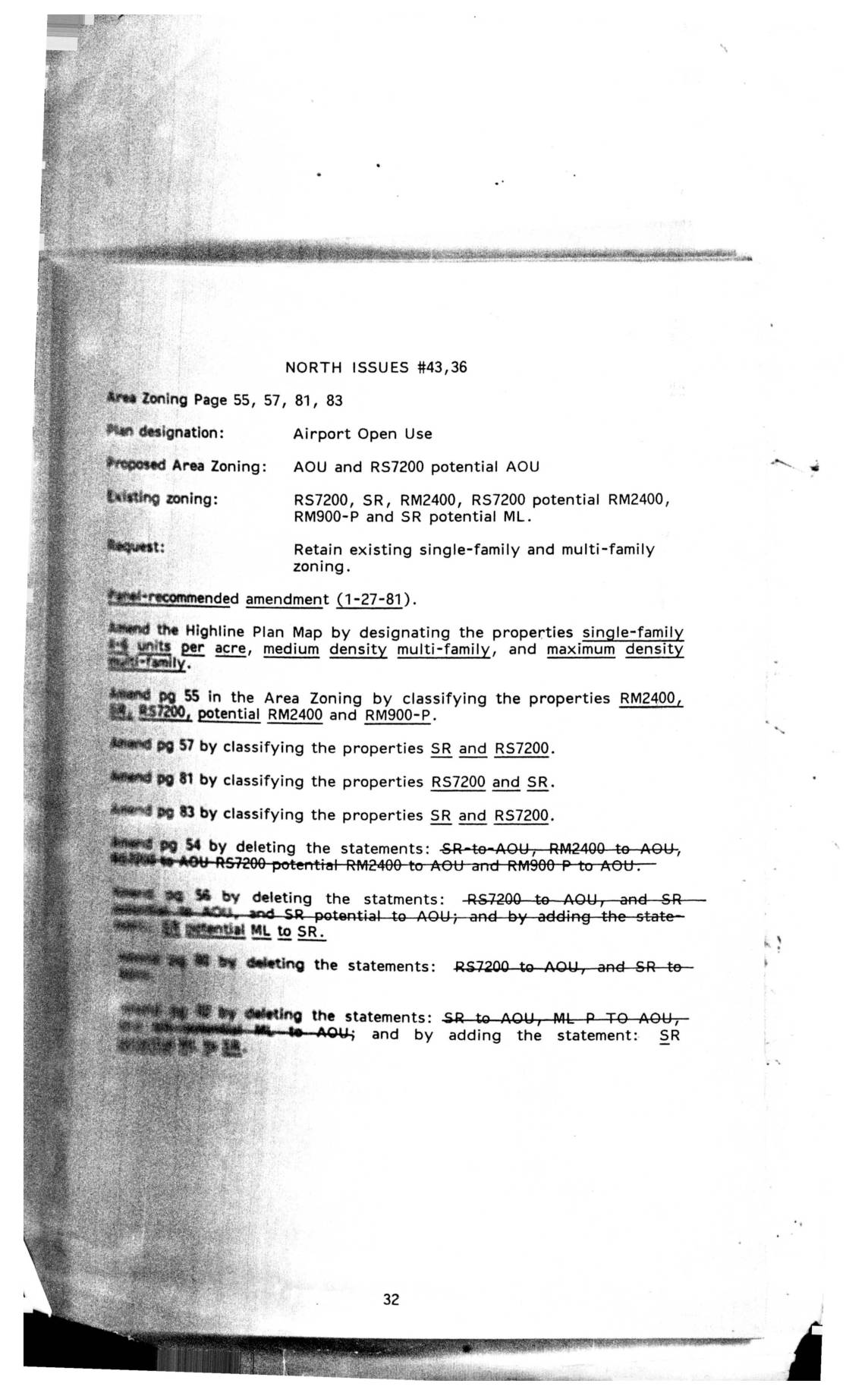 1981-01-27
HCP North Issues #43, 36, 57, 81, 83 – Airport Open Use Zoning
Zoning amendment document for Highline area properties regarding Airport Open Use designation. Details proposed changes from existing single-family and multi-family zoning classifications to AOU and RS7200 potential AOU, with specific amendments to Area Zoning pages 55, 57, 81, and 83. -
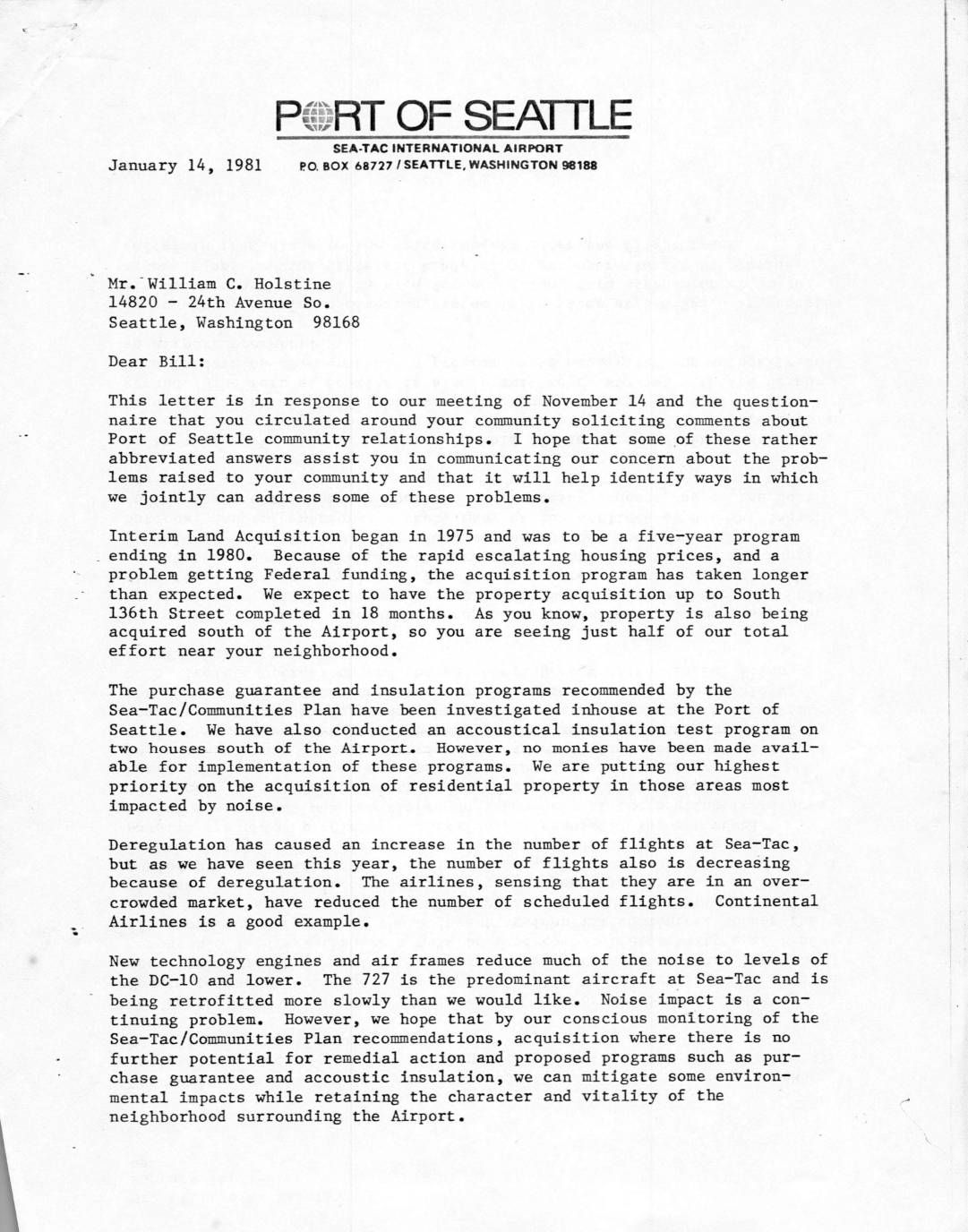 1981-01-14
Port of Seattle Response to Community Concerns about Sea-Tac Airport
Letter from Sea-Tac Airport Manager Oris W. Dunham Jr. to William C. Holstine addressing community concerns about airport operations, including land acquisition programs, noise mitigation, flight operations, and the North Sea-Tac Park development. The letter responds to a November 14 meeting and community questionnaire about Port of Seattle relationships with surrounding neighborhoods. -
 1980-01-03
North Sea-Tac Park recreation master plan
This 1980 recreation master plan for North Sea-Tac Park was prepared by Jongejan/Gerrard/McNeal, Inc. as a joint planning effort between the Port of Seattle and King County. The plan identifies community recreational needs, assesses natural and manmade site constraints including airport noise impacts, and proposes development guidelines for the park adjacent to Seattle-Tacoma International Airport. It was described at the time as a pioneering example of airport-adjacent land use planning at the national level. -
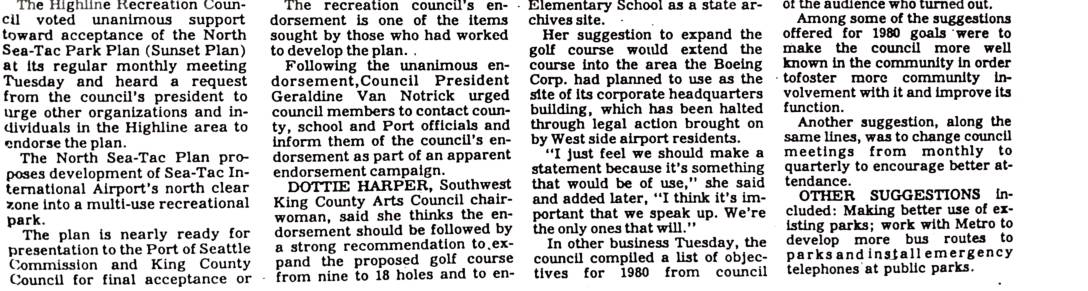 1979-12-02
North Sea-Tac Park plan coverage: Recreation council endorsement, records center proposal, and Sunset Park editorial
In late 1979, community discussions around Sea-Tac International Airport's north clear zone focused on repurposing approximately 240 acres of noise-impacted land into a multi-use recreational park, featuring soccer fields, tennis courts, nature trails, a golf course, and a motorcycle training area. The Highline Recreation Council unanimously endorsed the North Sea-Tac Park Plan (Sunset Plan), while a separate initiative proposed converting the closed Sunset Junior High School into a regional government records and archives center. Both plans reflect broader efforts to find productive uses for land rendered uninhabitable by airport noise, with funding and community engagement identified as key challenges. -
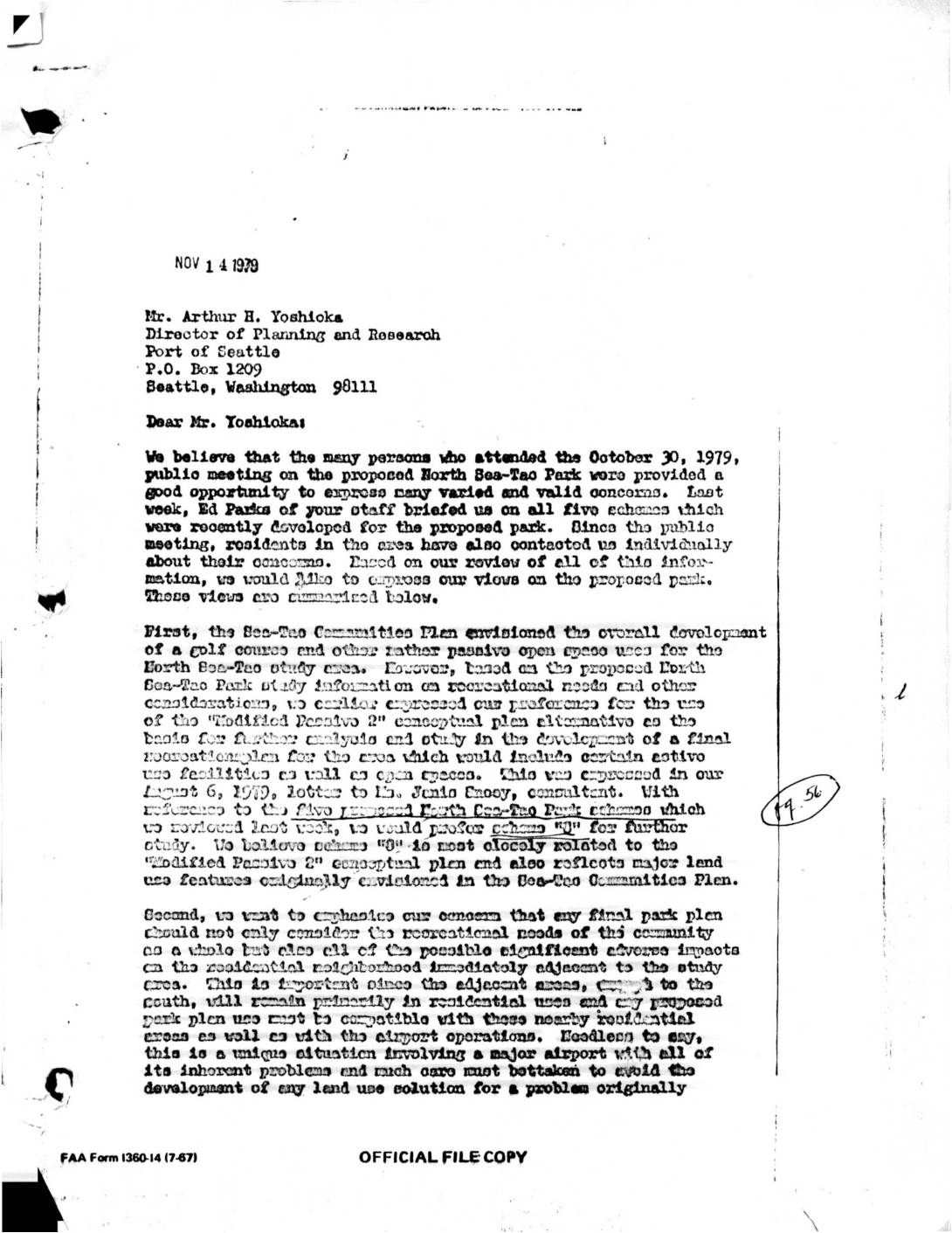 1979-11-14
Letter to Arthur H. Yoshioka re: North Sea-Tac Park planning
A November 1979 FAA letter to the Port of Seattle expresses support for a 'Modified Passive 2' conceptual plan for the proposed North Sea-Tac Park, while urging that any final park plan carefully weigh adverse impacts on adjacent residential neighborhoods and airport operations. The letter emphasizes that residents in the immediate study area should have meaningful input into the final park plan, and calls for close collaboration among the Port, King County, consultants, and citizens to minimize conflicts between park uses and the unique challenges posed by proximity to a major airport.