TagNorth Sea-Tac Park(157)
-
 1979-08-17
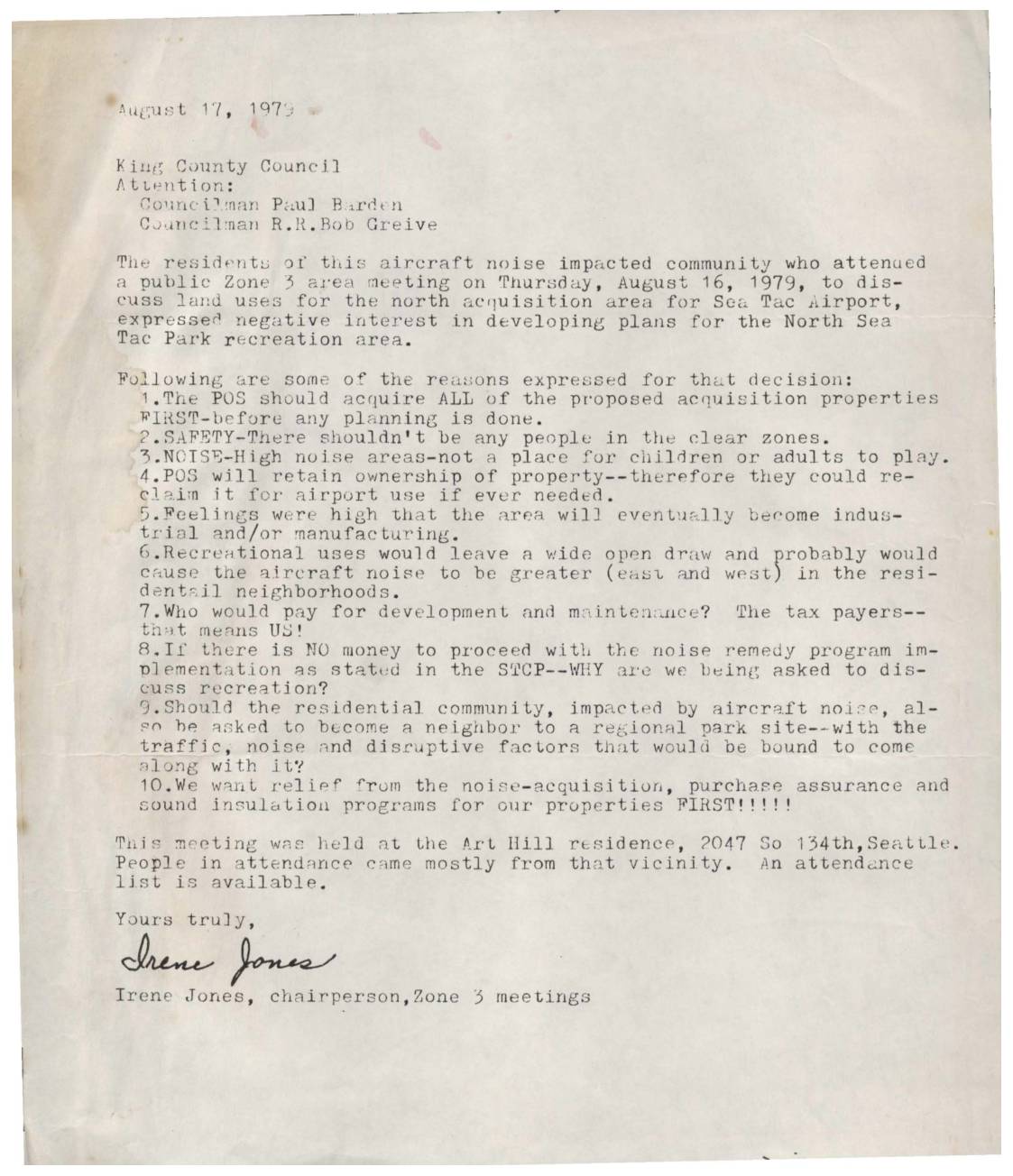
Letter to King County Council Regarding North Sea-Tac Park Recreation Area
In an August 17, 1979 letter to the King County Council, Irene Jones, chairperson of Zone 3 meetings, conveyed strong opposition from local residents to developing a recreational park in the North Sea-Tac area near the airport. Attendees at a public meeting cited safety concerns, high noise levels, and potential tax burdens as reasons against the park plan, arguing that the land should first be fully acquired by the POS before any development is considered. Residents emphasized that their top priority was relief through noise-acquisition, purchase assurance, and sound insulation programs for their existing properties. -
 1979-08-06
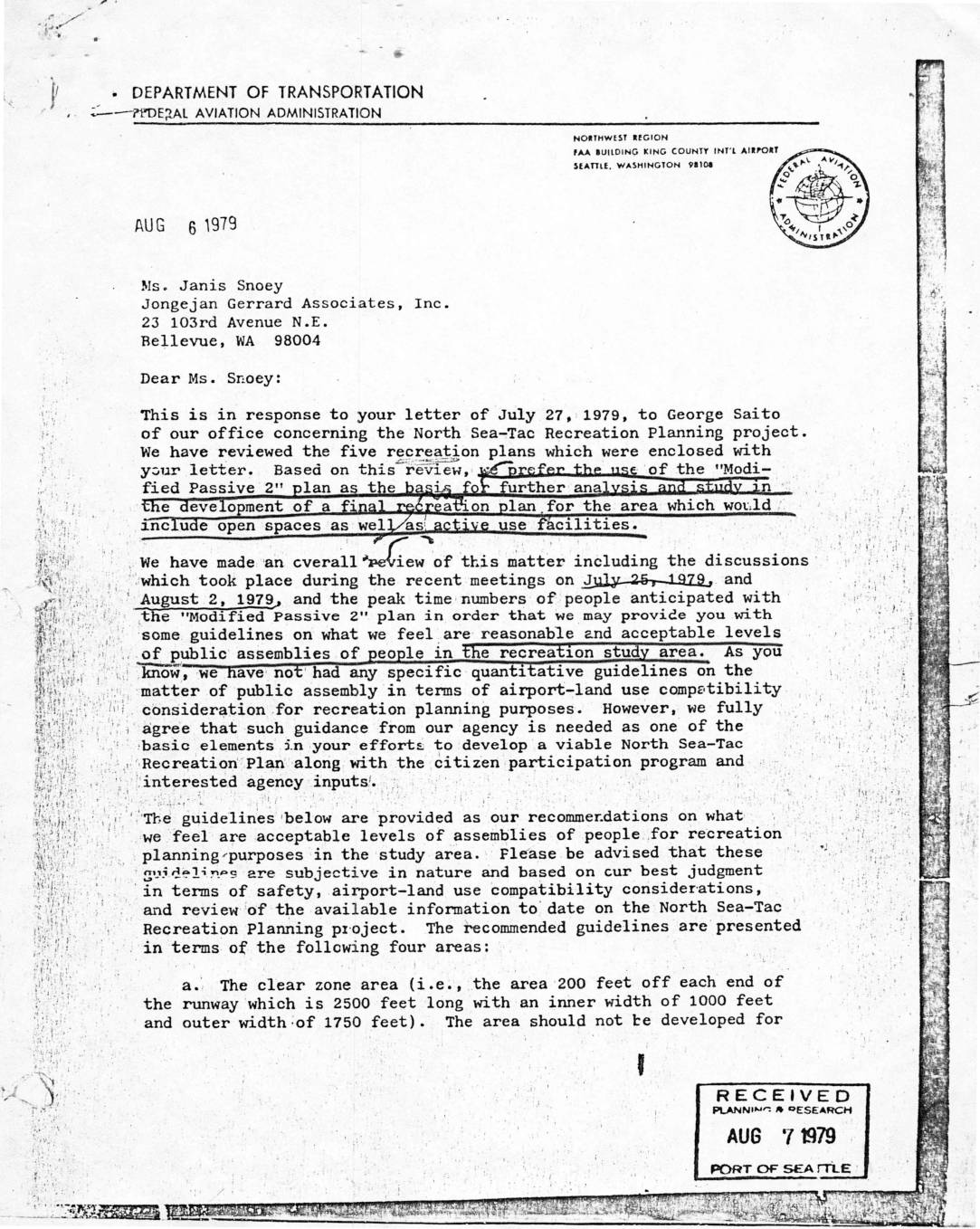
FAA letter to Jongejan Gerrard Associates regarding North Sea-Tac Recreation Planning guidelines
In this August 6, 1979 letter from the FAA's Northwest Region to Jongejan Gerrard Associates, the agency provides guidelines on acceptable crowd density levels for recreation planning near Sea-Tac Airport. The FAA outlines four zones around the runway, each with specific limits on peak-time people per acre, ranging from no intensive use in the clear zone closest to the runway to no more than 40 people per acre in outlying areas. The letter also discourages any recreation development that could create bird hazards, incompatible lighting, or electronic interference with airport operations. -
 1979-08-02
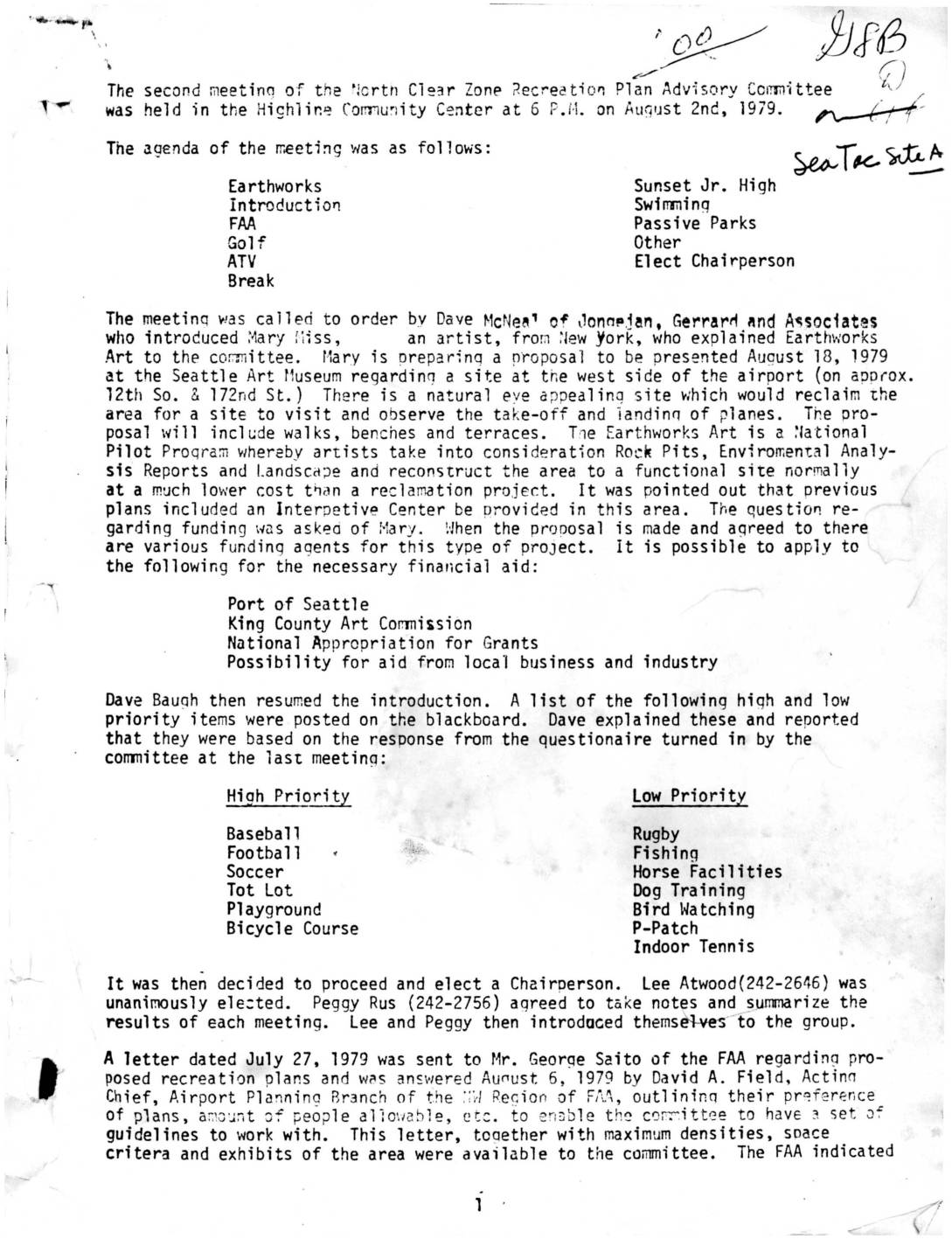
Minutes: North Clear Zone Recreation Plan Advisory Committee, Second Meeting – August 2, 1979
Minutes from the August 2, 1979 second meeting of the North Clear Zone Recreation Plan Advisory Committee, held at the Highline Community Center, covering proposed recreational uses for land near Sea-Tac Airport's north clear zone. Topics discussed included an Earthworks Art installation, FAA density guidelines (1.5 people per acre), a possible 9-hole golf course, ATV facilities, use of Sunset Jr. High School, and passive park development around Tub Lake and Lake Reba. Lee Atwood was elected Chairperson, and the committee agreed to reconvene with the consulting firm to develop workable recreation plan recommendations within FAA constraints. -
 1979-07-30
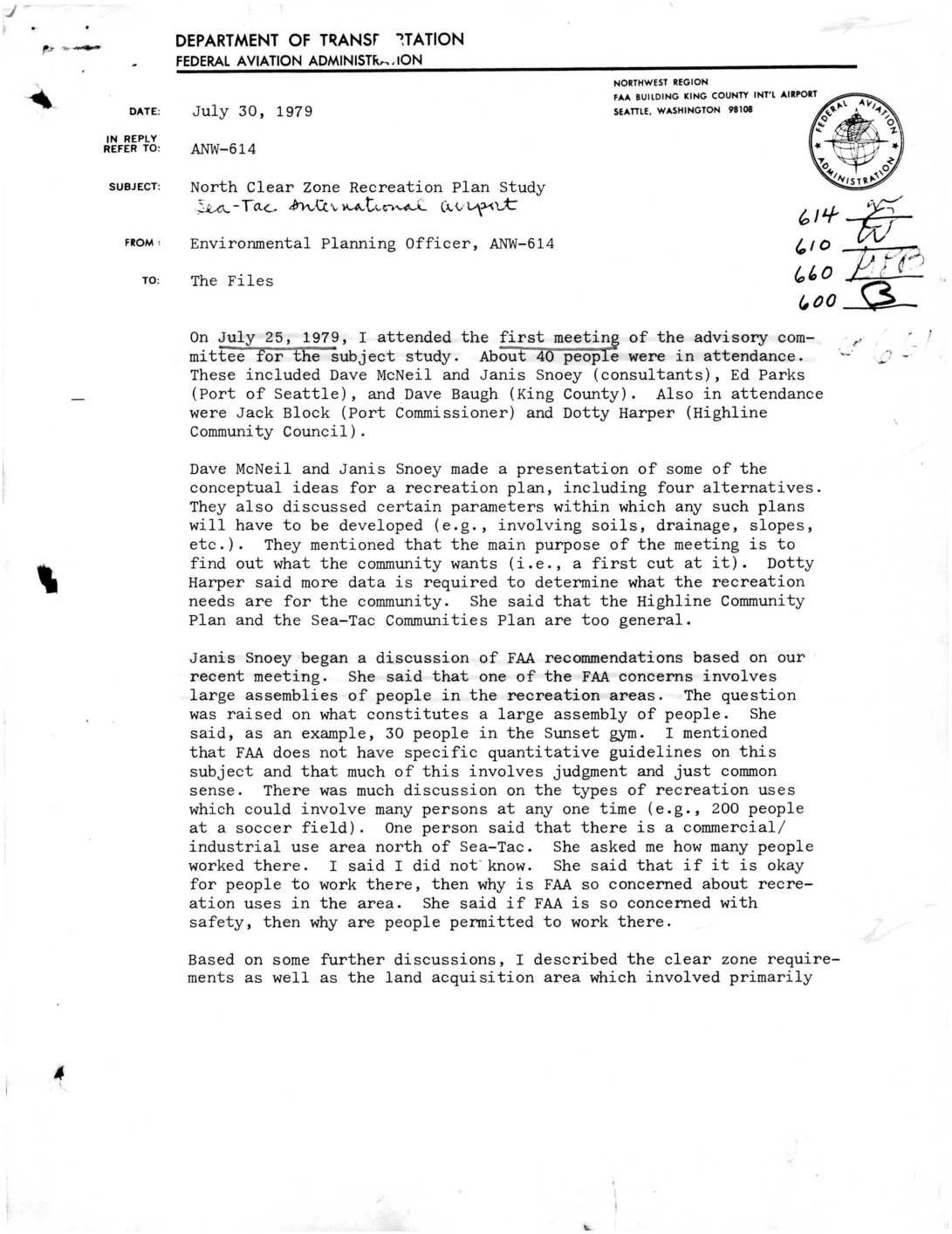
North Clear Zone Recreation Plan Study – Sea-Tac International Airport
A July 1979 FAA memo summarizes the first advisory committee meeting on a proposed recreation plan for the North Clear Zone near Sea-Tac International Airport. The meeting, attended by about 40 community members, consultants, and Port of Seattle representatives, centered on what types of recreational uses—such as soccer fields, golf courses, and bike trails—would be compatible with airport safety guidelines, with the FAA cautioning against intensive uses and large fixed spectator facilities in the clear zone. The group requested more specific, quantitative FAA guidelines on acceptable land use, and a follow-up meeting was scheduled for August 8, with the full study expected to take six months and potentially set precedents for recreational land use near major airports. -
 1979-07-27
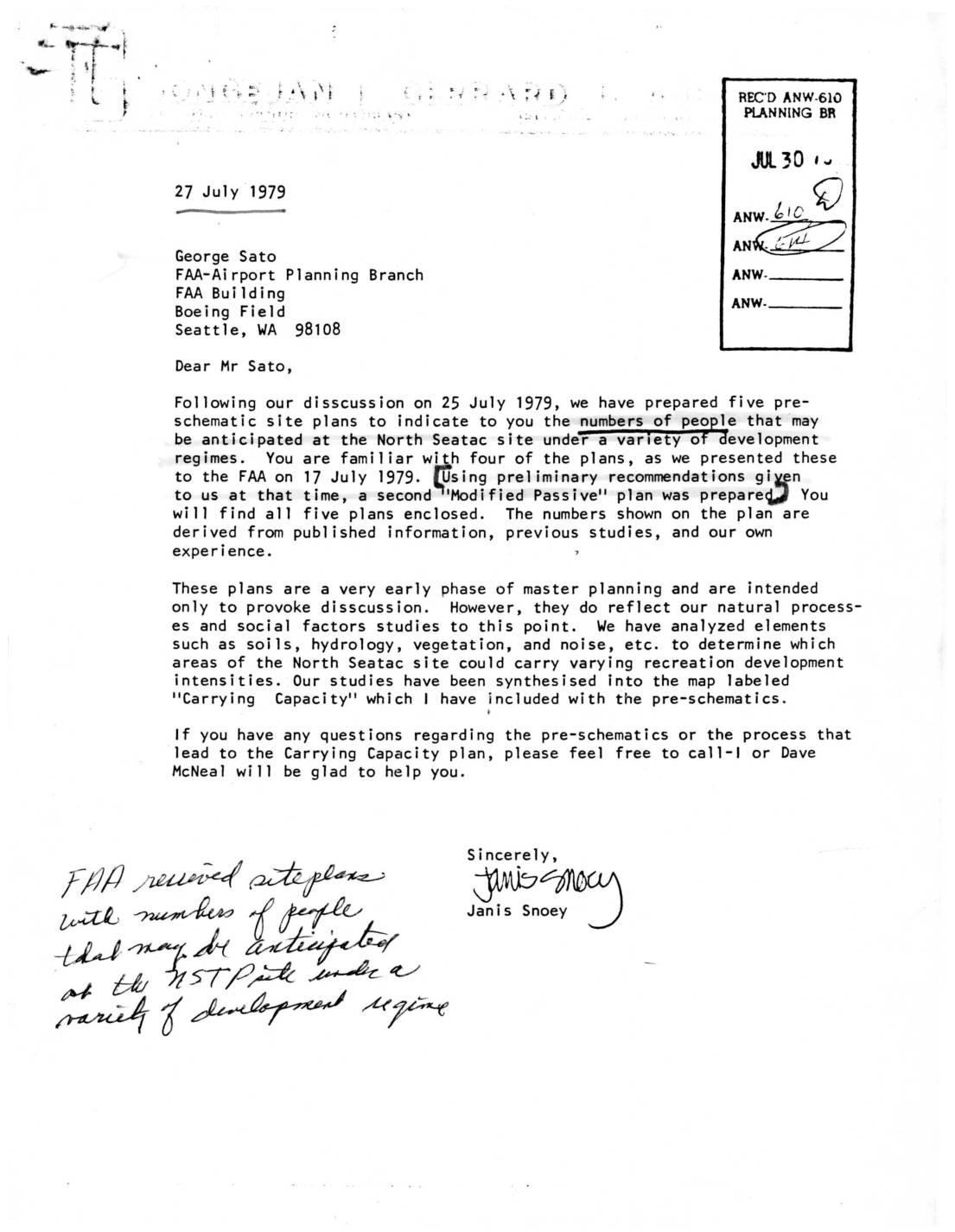
Letter to FAA North Sea-Tac site development plans and carrying capacity analysis
A July 1979 letter from planner Janis Snoey to FAA Airport Planning Branch representative George Sato transmits five pre-schematic site plans for the North Sea-Tac Park, showing projected peak-time visitor numbers under various development scenarios. The plans, prepared following an FAA meeting on July 17, 1979, are accompanied by a 'Carrying Capacity' map that classifies park areas by development suitability—from very high intensity (sports fields, motorcycle trails) to low intensity (foot paths only)—based on analysis of soils, hydrology, vegetation, and noise. The documents were intended solely to provoke discussion during the early master planning phase for the North Sea-Tac site. -
 1979-07-25
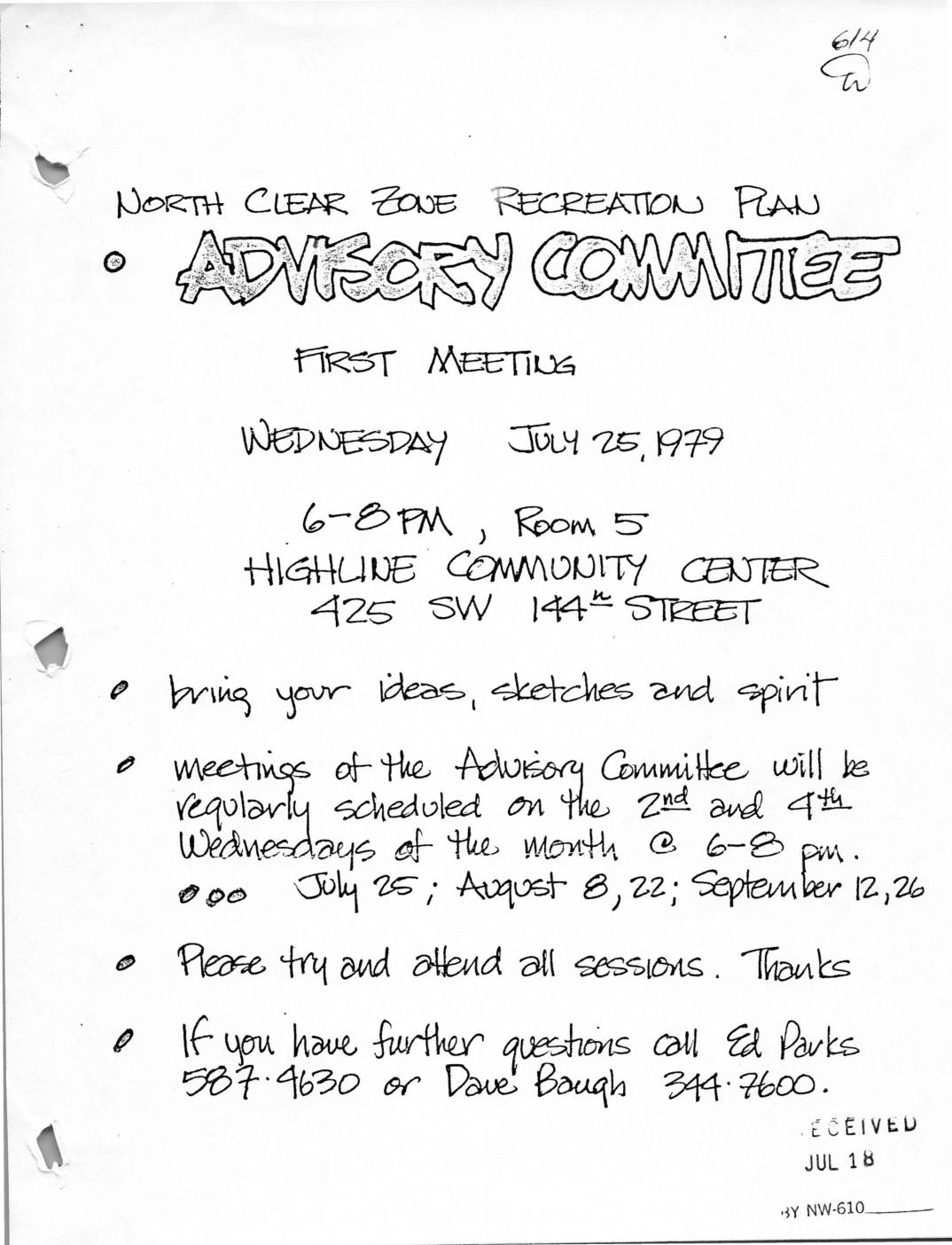
North Clear Zone Recreation Plan Advisory Committee: First Meeting Notice and Steering Committee Materials, July 25, 1979
This document contains materials from the first Steering Committee meeting for North Sea-Tac Park, held on July 25, 1979, as part of the North Clear Zone Recreation Plan advisory process. The committee, supported by consultants Jongejan/Gerrard/Associates, was tasked with gathering community input and developing a master plan for the park based on environmental analysis, public proposals, and FAA recommendations. Early public feedback showed a majority favoring an 18-hole golf course, while other suggestions included a greenbelt, passive park, and facilities for various age groups. -
 1979-07-22
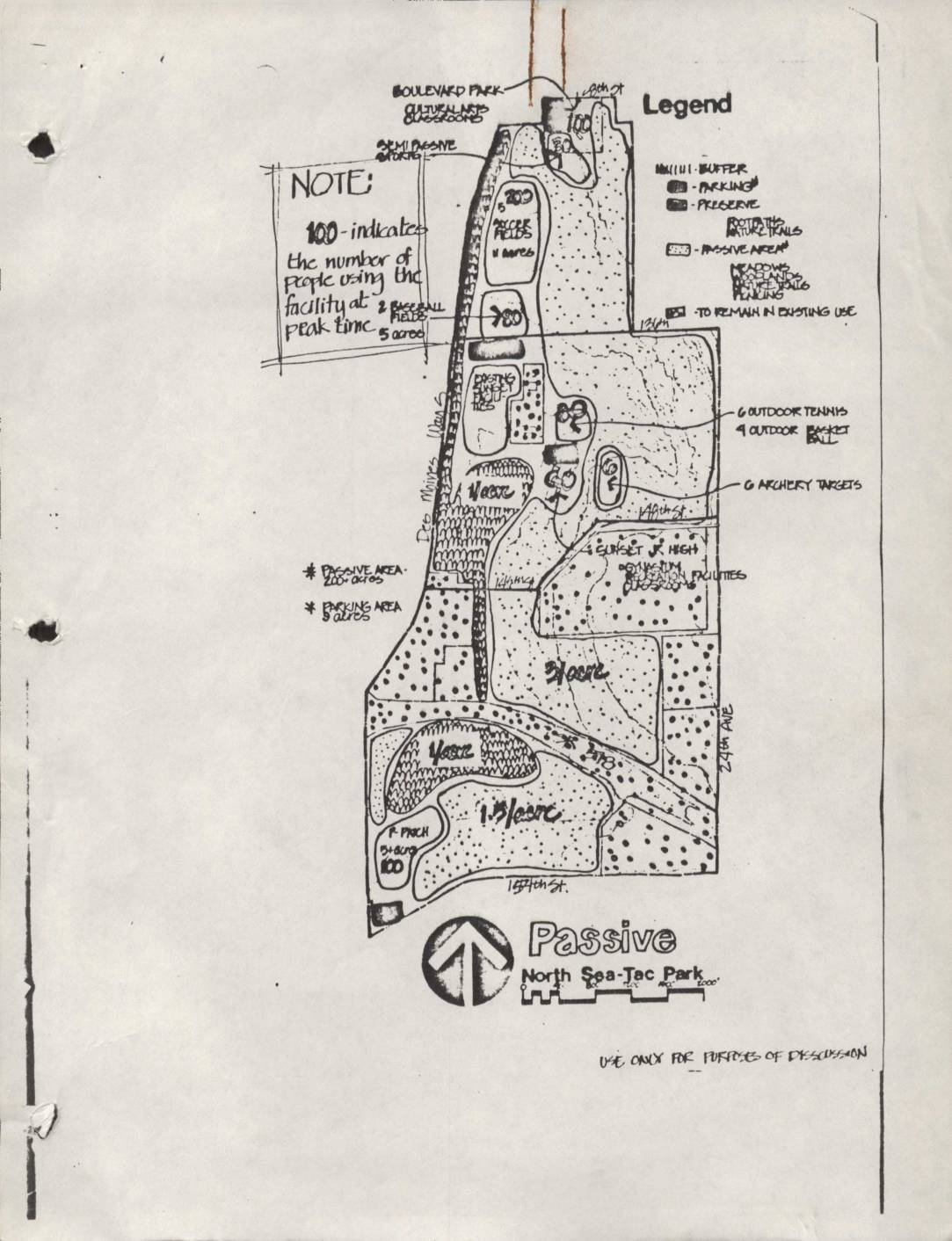
North Sea-Tac Park planning maps: Passive, Modified Passive, and Modified Passive 2 concepts
These three hand-drawn planning maps present alternative development scenarios for North Sea-Tac Park, labeled 'Passive,' 'Modified Passive,' and 'Modified Passive 2.' Each concept proposes different mixes of recreational facilities—such as soccer fields, baseball fields, tennis courts, a golf course, and archery targets—alongside preserved natural areas, nature trails, and passive open space. The maps were intended solely for discussion purposes and show peak-time visitor capacity estimates for each proposed facility zone. -
 1979-07-10
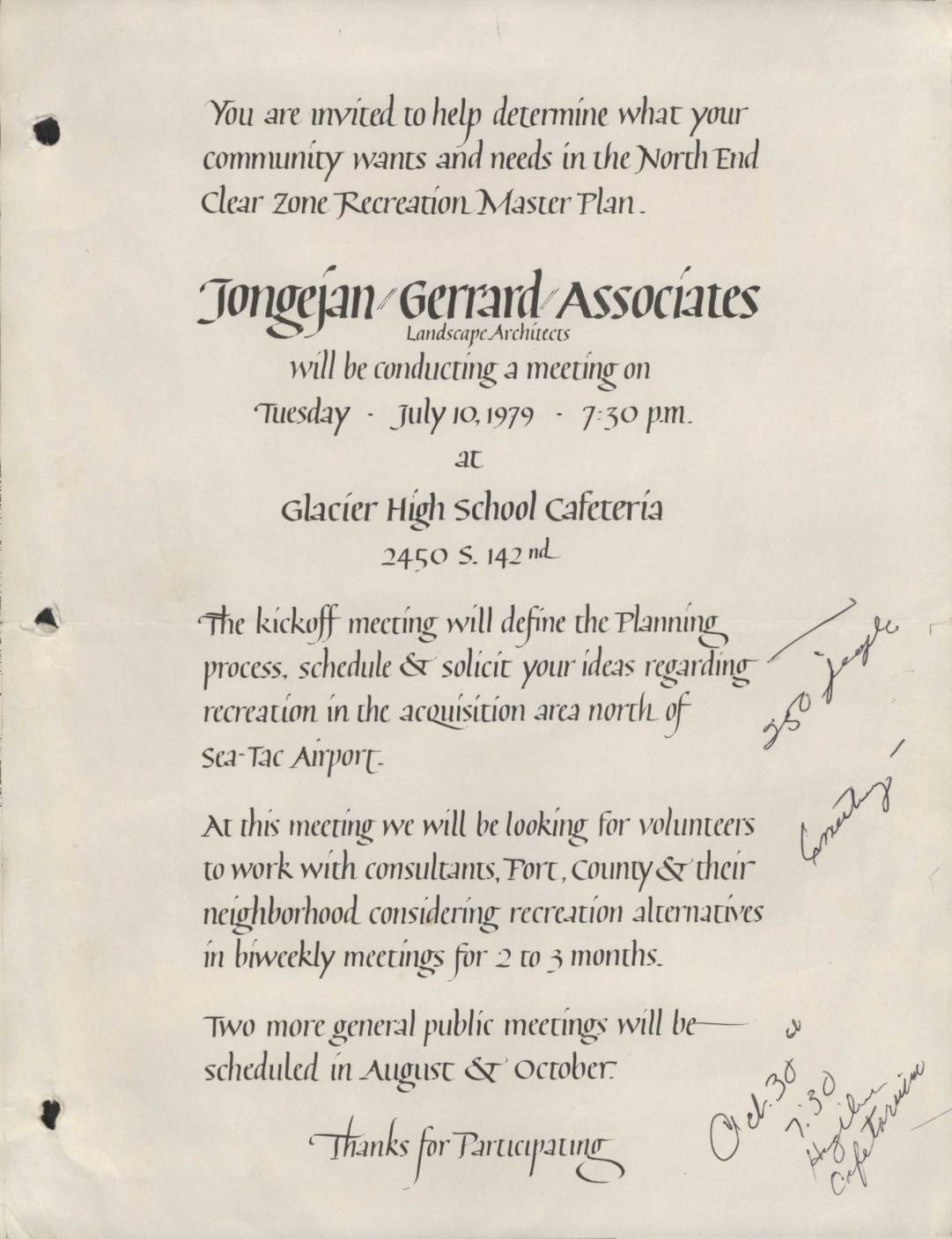
North End Clear Zone Recreation Master Plan community meeting notice
A 1979 public meeting notice from Jongejan/Gerrard Associates, Landscape Architects, inviting community members to participate in the North End Clear Zone Recreation Master Plan near Sea-Tac Airport. The kickoff meeting was held on July 10, 1979, at Glacier High School Cafeteria, where residents could share ideas about recreational use of the acquisition area north of Sea-Tac Airport and volunteer to work with consultants, the Port of Seattle, and King County. Additional public meetings were planned for August and October 1979 as part of the biweekly planning process. -
 1979-07-10
North Clear Zone Advisory Committee membership list (July 10, 1979)
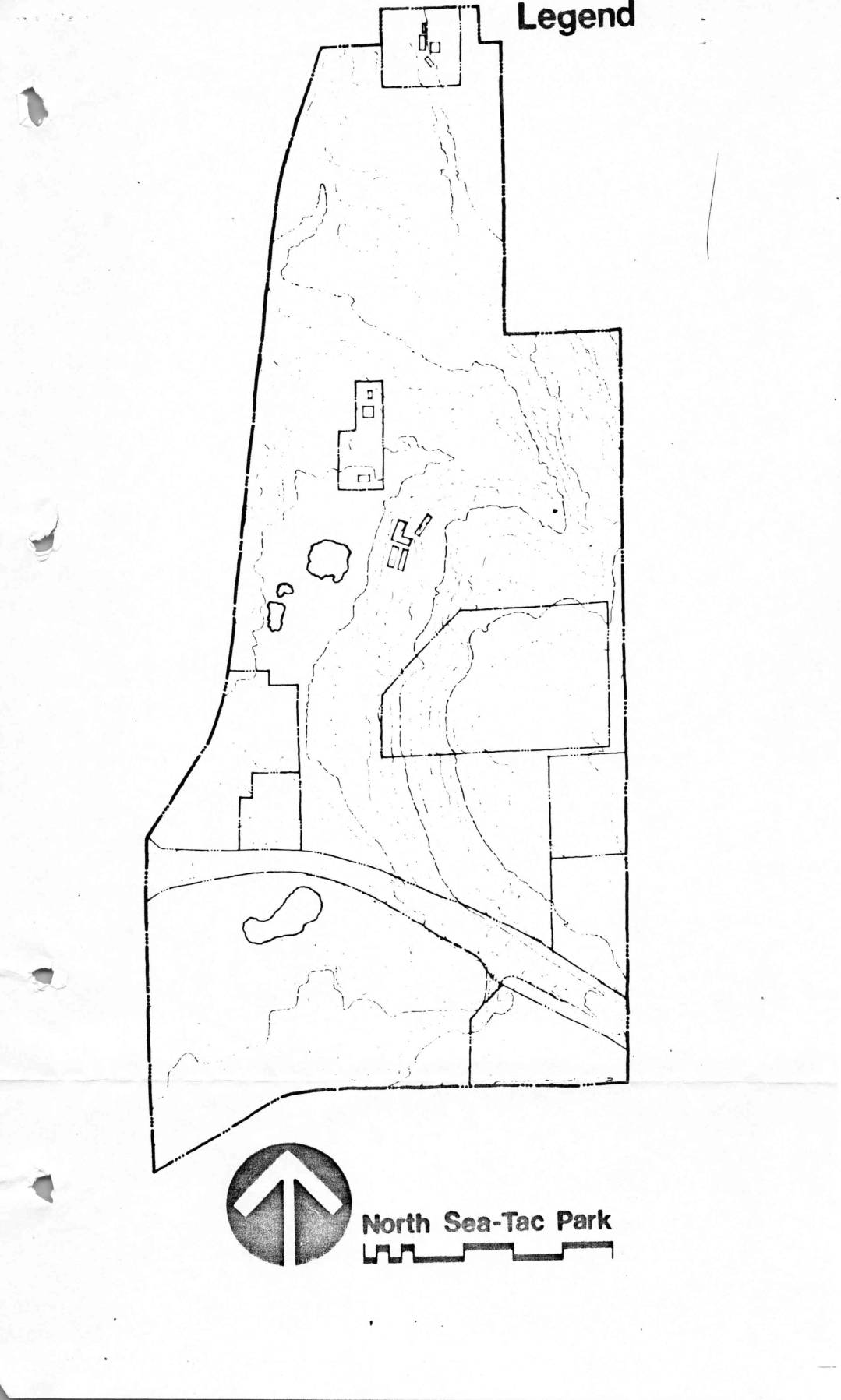
This document contains planning materials for North Sea-Tac Park from around 1979, including a base map of the park and four alternative development concept plans ranging from fully passive (nature-focused) to fully active (sports and recreation facilities). It also includes a roster of the North Clear Zone Advisory Committee, dated July 10, 1979, listing approximately 40 community members with their addresses, phone numbers, and areas of recreational interest such as golf, baseball, trails, and general planning. The materials reflect community input efforts related to land use and park development in the airport noise impact zone near Seattle-Tacoma International Airport. -
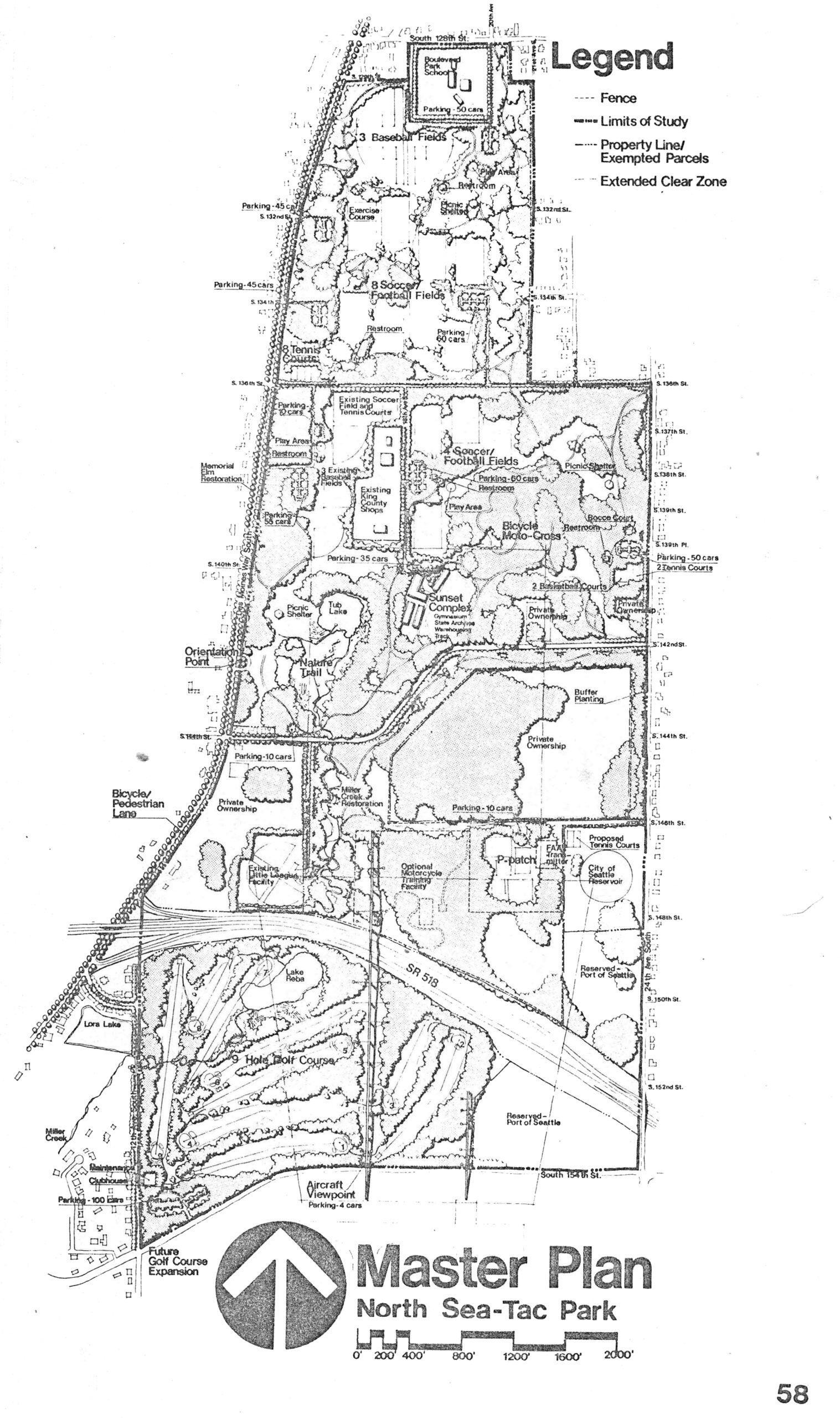
North Sea-Tac Park Master Plan 1979 Pg 58
A detailed master plan map of North Sea-Tac Park showing proposed and existing facilities including baseball fields, soccer/football fields, tennis courts, a 9-hole golf course, bicycle/pedestrian lanes, a P-patch, Miller Creek restoration area, and various parking areas. The plan identifies adjacent features such as SR 518, City of Seattle Reservoir, and Port of Seattle reserved lands, with a scale bar and north arrow.