TagFAA(687)
-
 2018-03-19
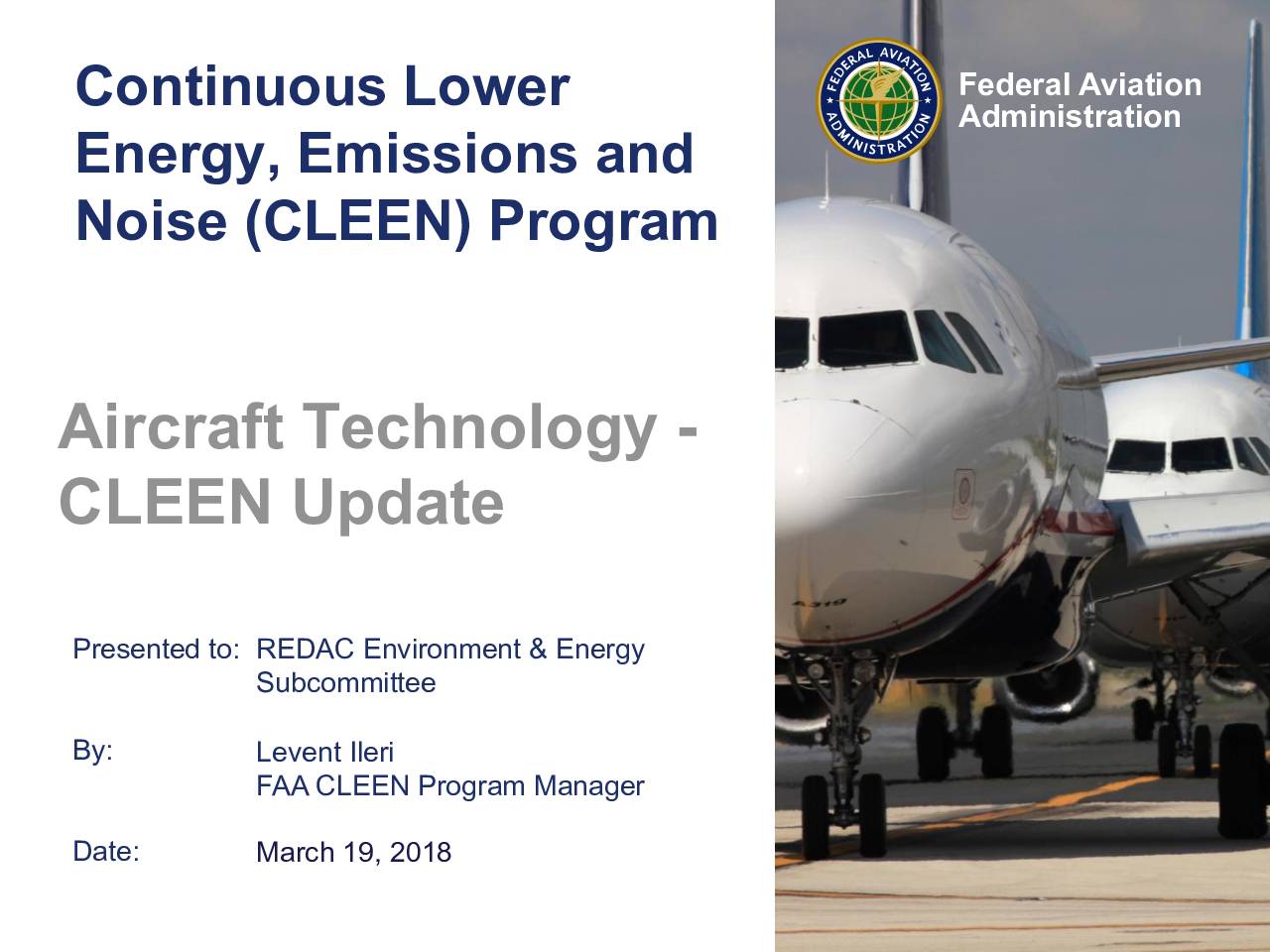
Continuous Lower Energy, Emissions and Noise (CLEEN) Program: Aircraft Technology Update
The FAA's Continuous Lower Energy, Emissions and Noise (CLEEN) program is a public-private partnership aimed at reducing aircraft fuel burn, emissions, and noise through new engine and aircraft technologies and alternative jet fuels. Running in three phases from 2010 through 2025, the program sets increasingly ambitious targets, including up to a 75% reduction in NOx emissions and a 40% reduction in fuel burn by 2026. These advancements are relevant to communities near busy airports like Sea-Tac, as the program's noise reduction goals include a 25 dB cumulative reduction relative to Stage 5 standards. -
 2018-03-14
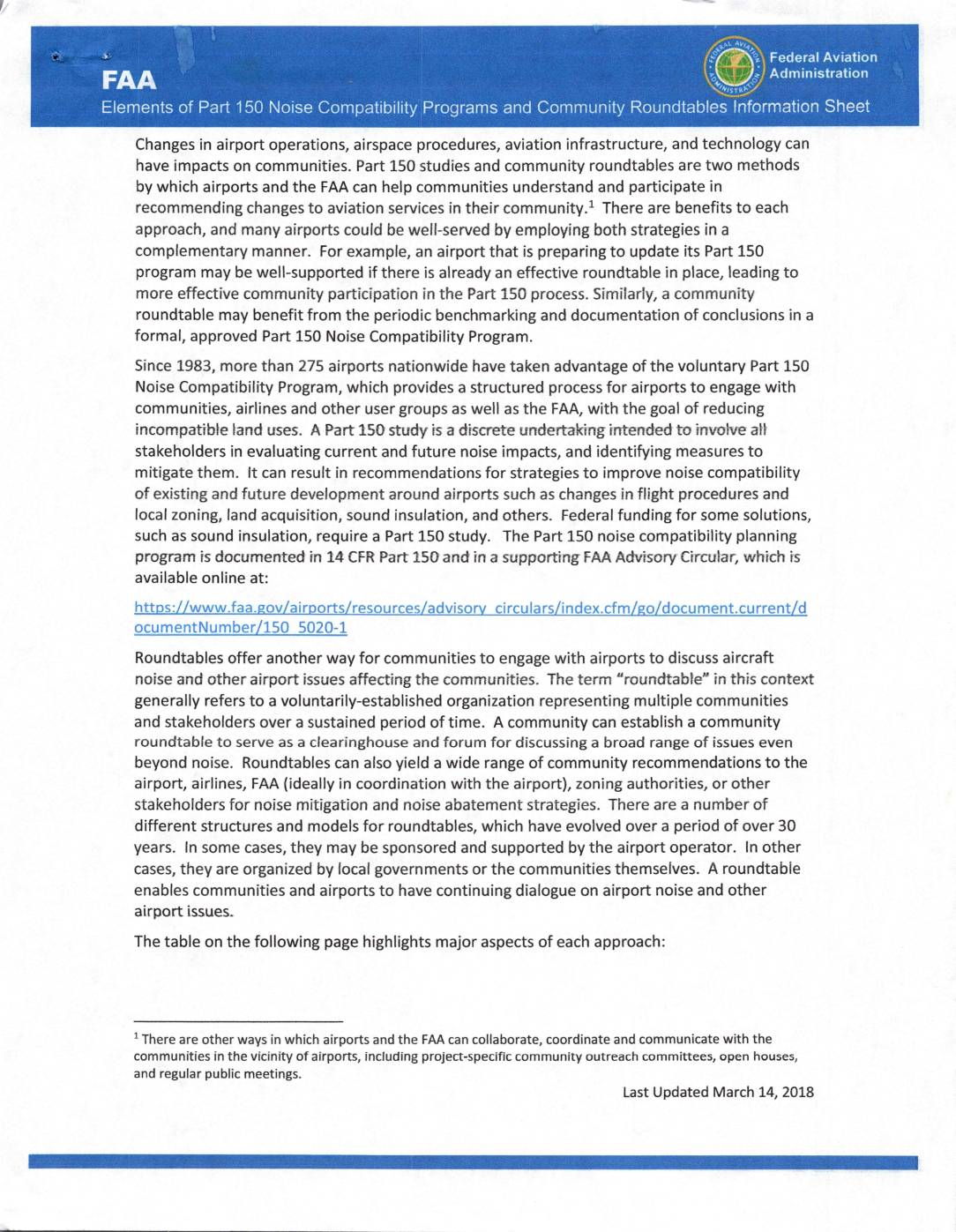
Elements of Part 150 noise compatibility programs and community roundtables information sheet
This FAA information sheet explains two main ways airports and communities can work together to address aircraft noise: the formal Part 150 Noise Compatibility Program, which follows federal regulations and can unlock federal funding for solutions like sound insulation, and Community Roundtables, which are voluntary ongoing forums where neighbors, airlines, and airport representatives discuss a broad range of noise and airport concerns. While Part 150 studies are structured, time-limited processes that result in an approved Noise Compatibility Plan, roundtables operate continuously under their own bylaws without a defined end date. The FAA recommends that airports consider using both approaches together for the most effective community engagement. -
 2018-03-14
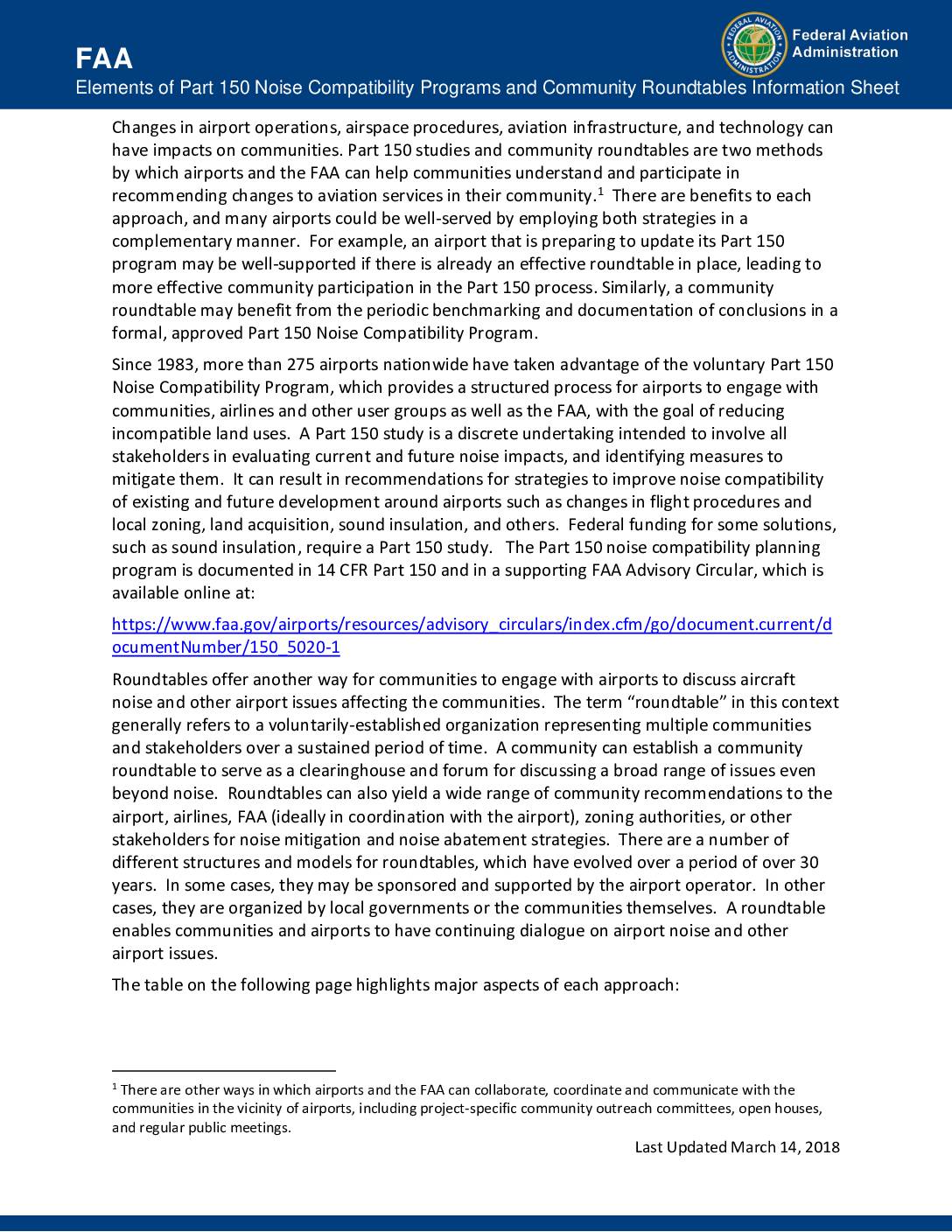
Elements of Part 150 noise compatibility programs and community roundtables information sheet
This FAA information sheet explains two main ways airports and communities can address aircraft noise concerns: the formal Part 150 Noise Compatibility Program, which follows federal regulations and can unlock funding for solutions like sound insulation, and Community Roundtables, which are voluntary ongoing forums for broader dialogue between airports, airlines, the FAA, and neighboring communities. The document compares the two approaches across key factors such as goals, FAA involvement, geographic scope, funding, and expected outcomes, noting that both methods can work together effectively. Airports like Sea-Tac may use one or both strategies to reduce noise impacts and keep community members informed and engaged. -
 2018-01-30
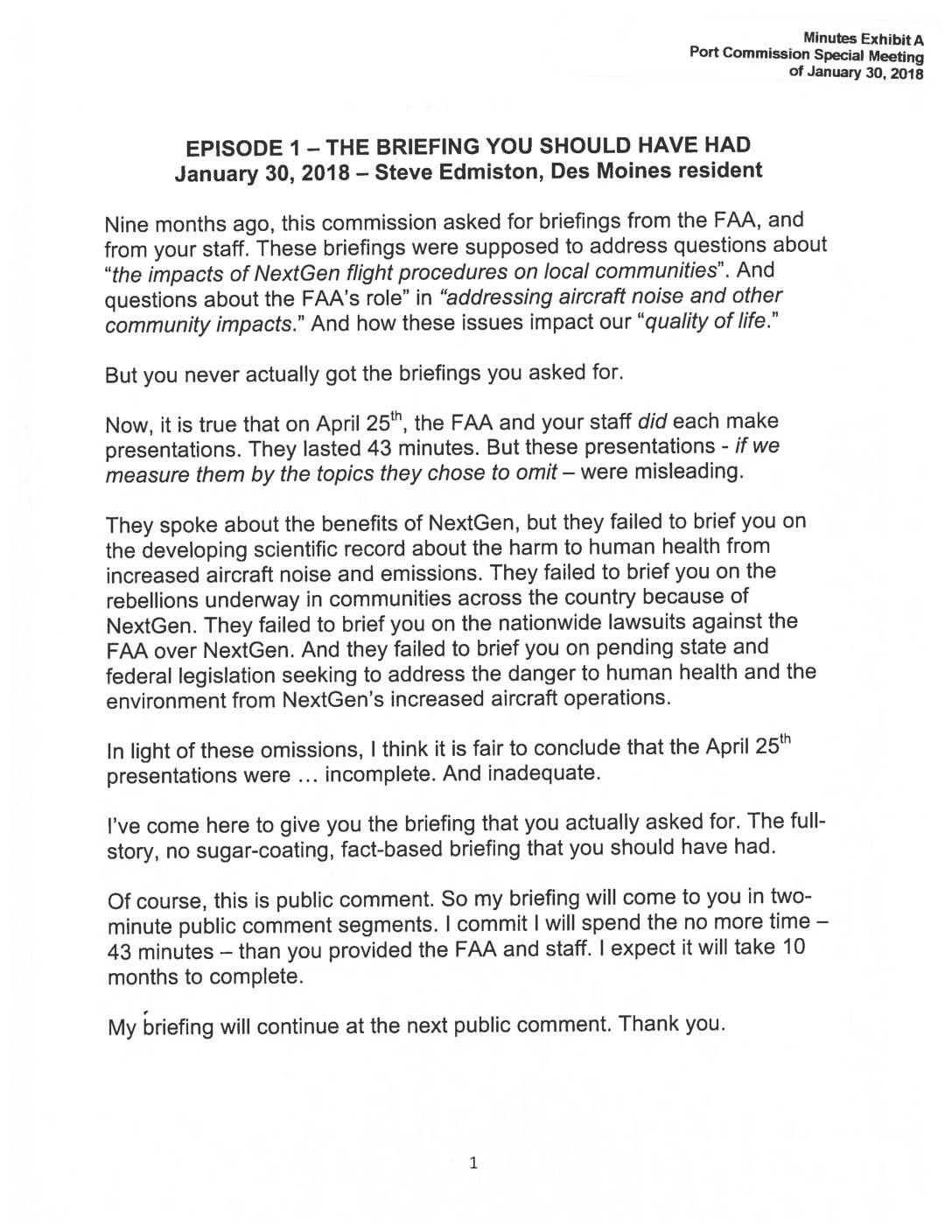
Episode 1 – The briefing you should have had
In January 2018, Des Moines resident and filmmaker Steve Edmiston addressed the Port of Seattle Commission, arguing that a prior FAA briefing on NextGen flight procedures omitted critical information about health harms from aircraft noise, nationwide community opposition, lawsuits against the FAA, and related legislation. Edmiston announced a project to deliver the full, fact-based briefing the Commission originally requested, presenting his information in two-minute public comment segments over an estimated 10 months. His goal was to push the Port to move beyond what he called 'selective environmentalism' and make better-informed decisions about the human and environmental costs of expanded flight operations at SeaTac Airport. -
 2018-01-01
Quiet Skies Coalition: What Happened to Our Peace and Quiet?
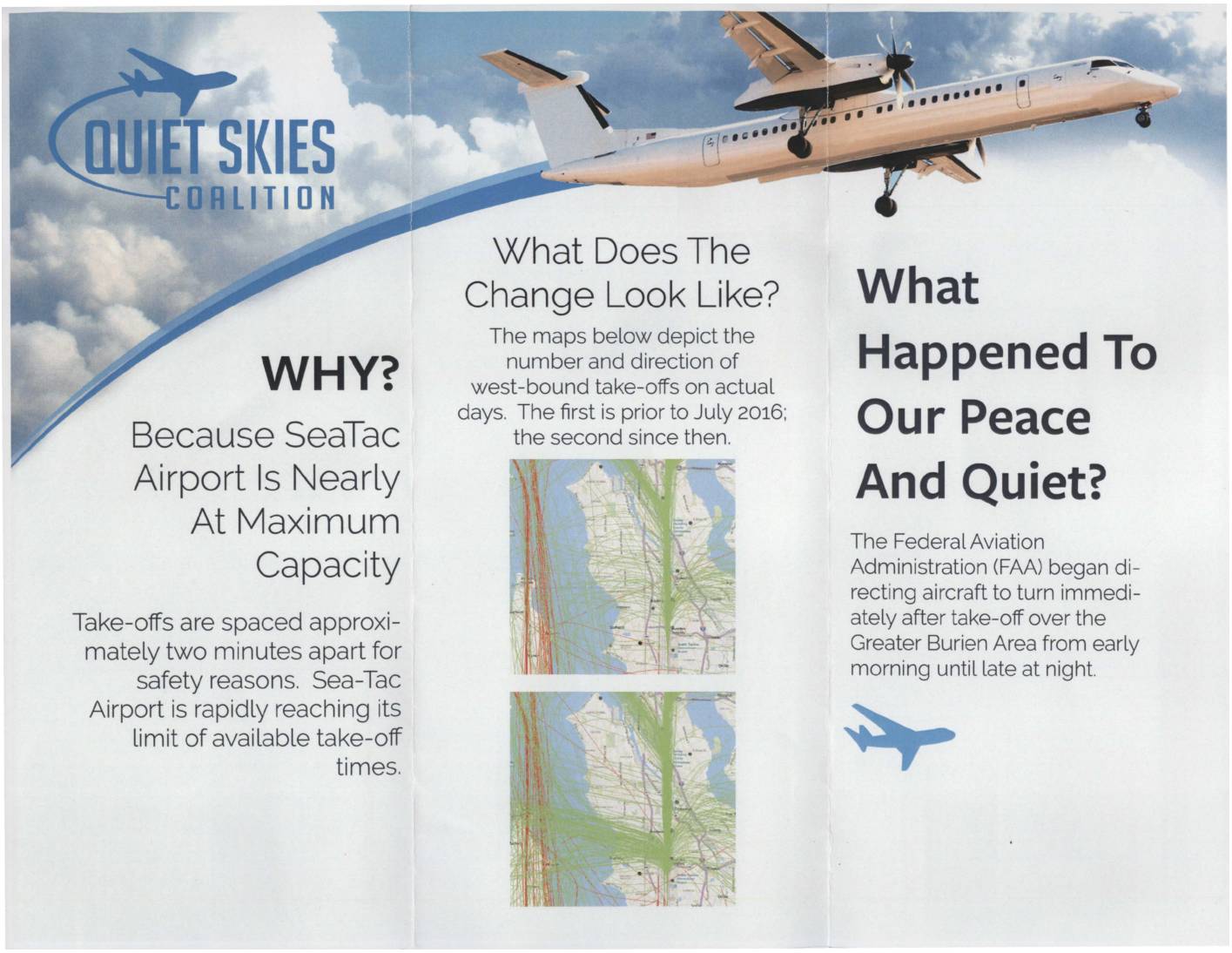
The Quiet Skies Coalition is a community group opposing increased aircraft noise over the Greater Burien area near Seattle-Tacoma (Sea-Tac) Airport. Since July 2016, the FAA began directing westbound flights to turn immediately after takeoff over residential neighborhoods, a change driven by Sea-Tac nearing its maximum capacity with takeoffs spaced roughly two minutes apart. The coalition urges residents to contact the FAA and Port of Seattle to object, and welcomes financial contributions to support their advocacy efforts. -
 2017-12-11
FAA/Industry’s own data exposes ‘Greener Skies’ as an environmental fraud
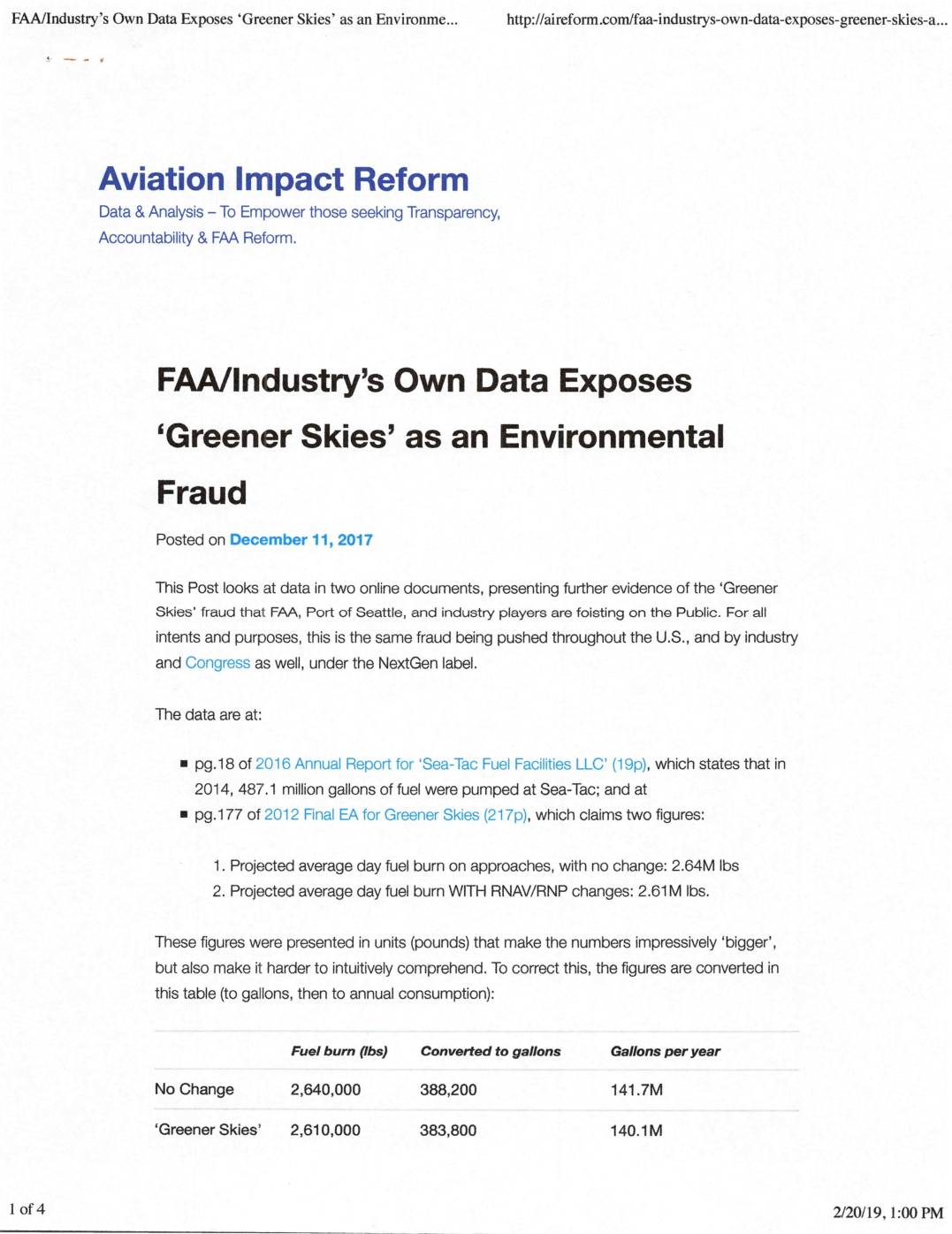
An analysis of FAA and industry data argues that the 'Greener Skies' flight procedure changes at Seattle-Tacoma International Airport provided negligible environmental benefits, saving only about 1.6 million gallons of fuel annually — less than one-third of one percent of the airport's total fuel consumption. Meanwhile, actual fuel use at Sea-Tac grew by hundreds of millions of gallons per year due to increased flight operations, completely overshadowing the claimed savings. The article contends that the program was essentially a public relations campaign that shifted noise burdens onto surrounding neighborhoods without delivering meaningful environmental improvements. -
2017-12-08
Aviation Fuel Tax Action Plans and Status
The 3-year transition period for state and local governments to come into compliance with the FAA’s Policy Concerning the Use of Airport Revenues; Proceeds from Taxes on Aviation Fuel; expired on December 8, 2017. The FAA will consider extension of the compliance date on a case by case basis for good cause. Read the Reminder of -
 2017-10-19
H.R. 4087 – Protecting Airport Communities from Particle Emissions Act
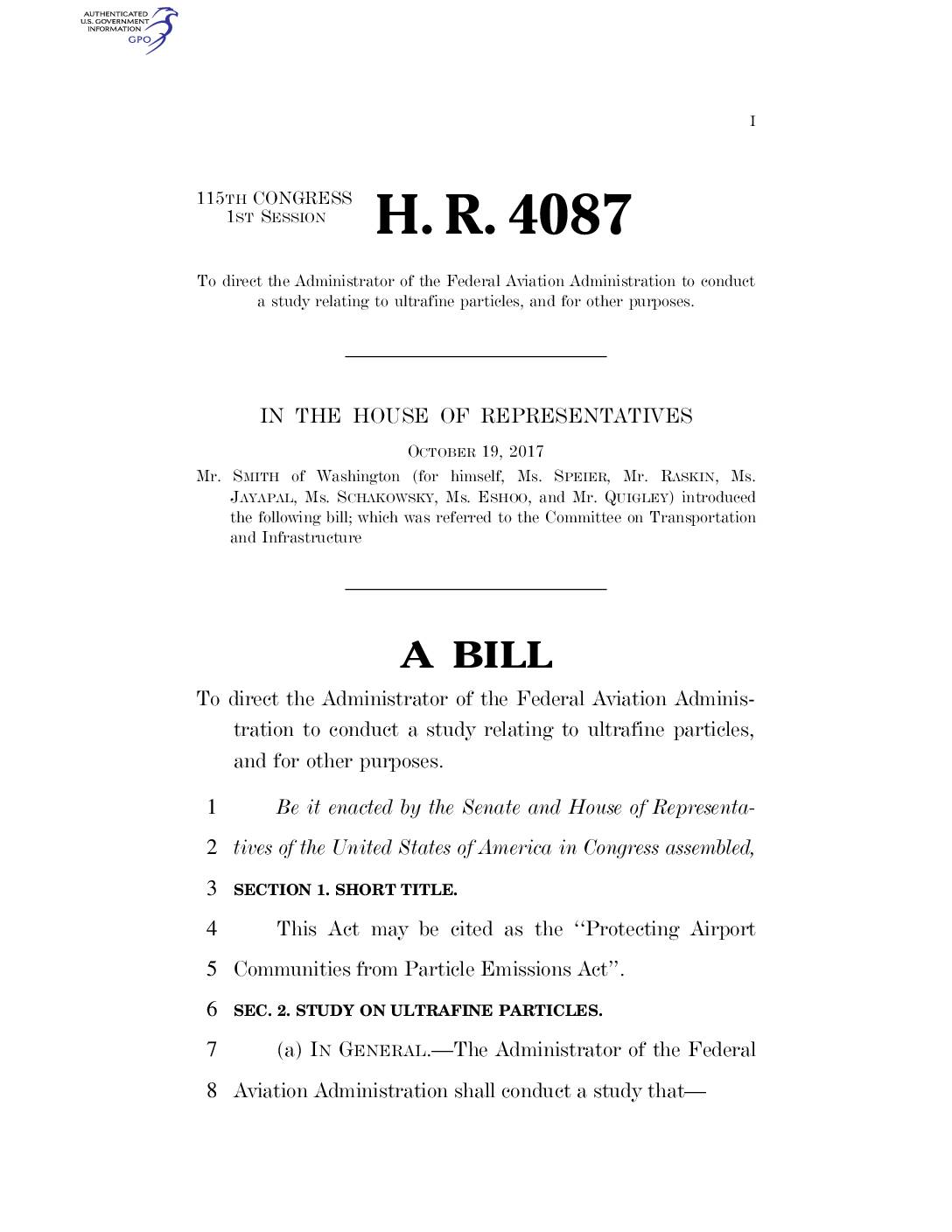
H.R. 4087, the 'Protecting Airport Communities from Particle Emissions Act,' introduced in October 2017, directs the FAA to study ultrafine particles (tiny airborne particles under 100 nanometers) around the 20 busiest U.S. airports, including their health effects on surrounding communities. The study must examine particle sources, concentration patterns, and health impacts such as heart disease, asthma, and nervous system disorders, with special attention to disproportionate effects on communities of color and economically vulnerable residents. The FAA is required to coordinate with the EPA and Department of Health and Human Services and report findings to Congress within two years. -
 2017-10-12
HAROB6 Departure (RNAV)
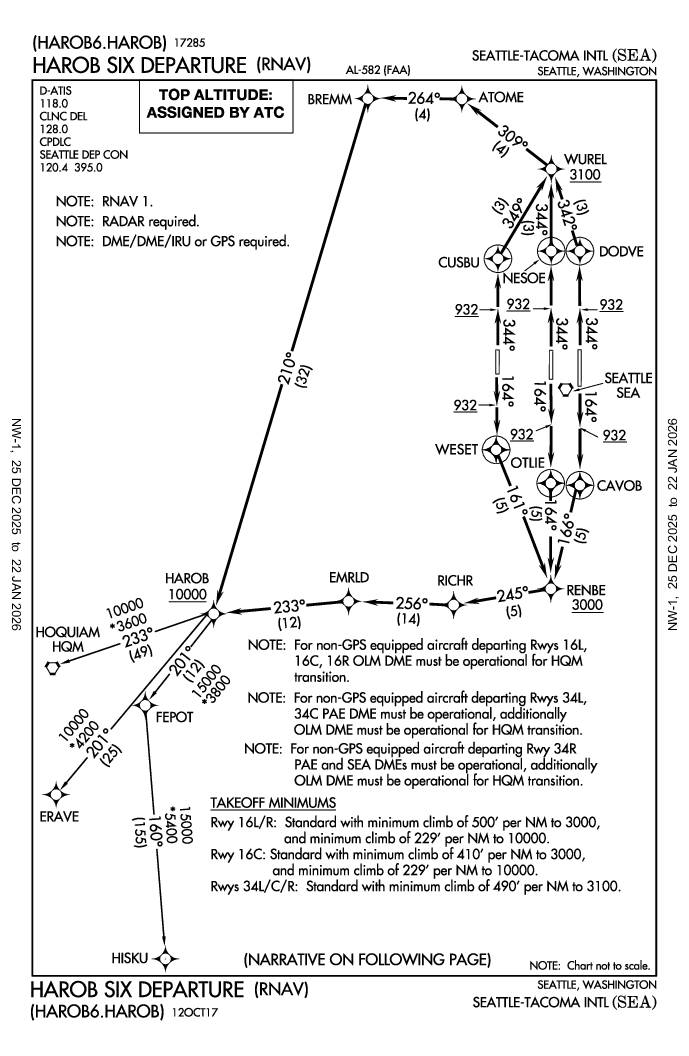
FAA instrument departure procedure chart for the HAROB SIX DEPARTURE (RNAV) at Seattle-Tacoma International Airport. This chart provides navigation waypoints, altitudes, and takeoff minimums for aircraft departing SEA using RNAV navigation procedures. -
 2017-09-11
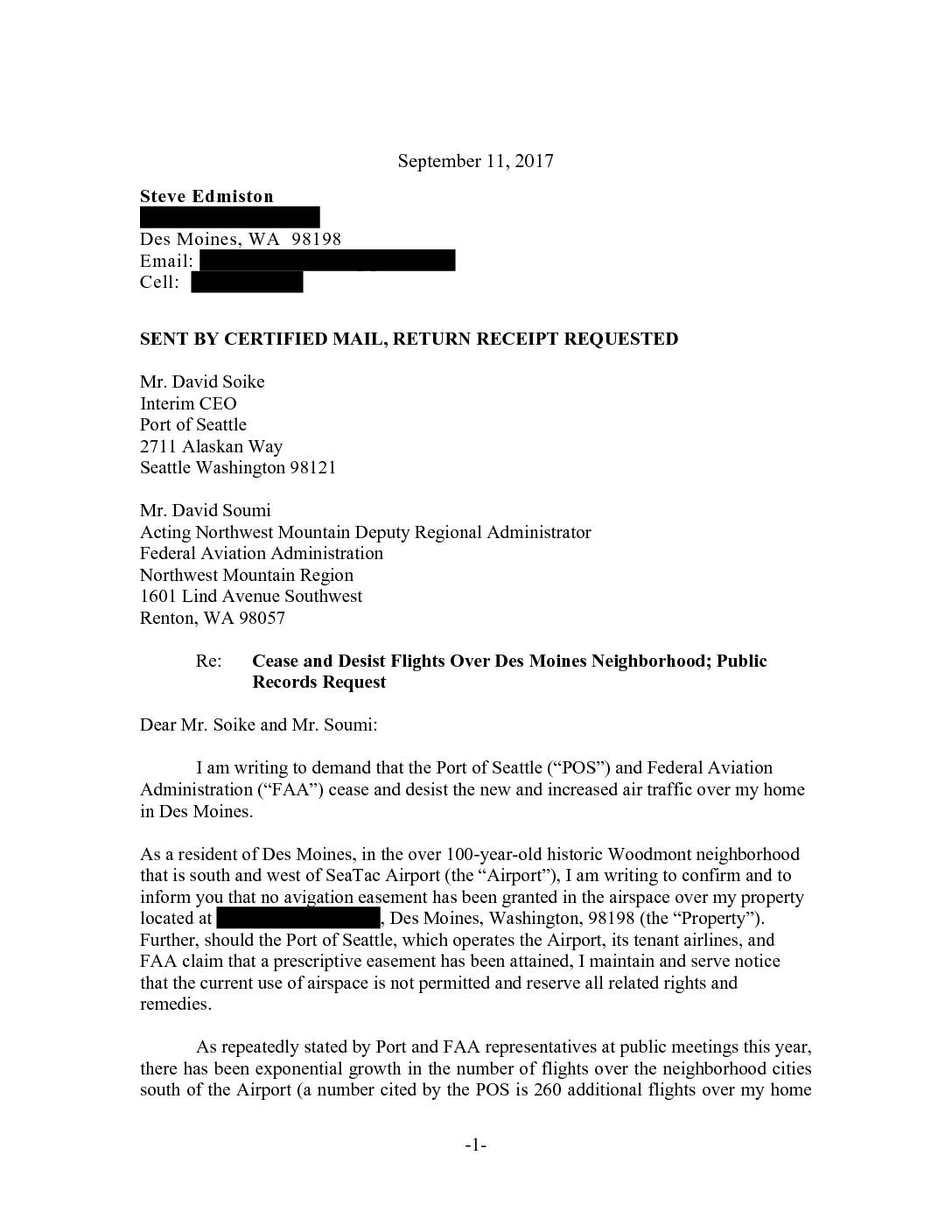
Cease and desist flights over Des Moines neighborhood; public records request
In September 2017, Des Moines, WA resident Steve Edmiston sent a certified letter demanding that the Port of Seattle and the FAA stop increased flight operations over his historic Woodmont neighborhood, arguing that no avigation easement had ever been granted over his property. He cited a dramatic rise in aircraft noise, vibrations, fumes, and nighttime flights linked to expanded use of Sea-Tac's third runway and new navigation procedures, noting that commercial operations at the airport had nearly doubled since 2003. The letter also included a formal public records request for documents related to flight procedure changes made after February 14, 2012, and outlined legal grounds under which affected homeowners may still seek damages despite general noise liability limitations.