TagAuburn Wetland(82)
-
 2013-10-12
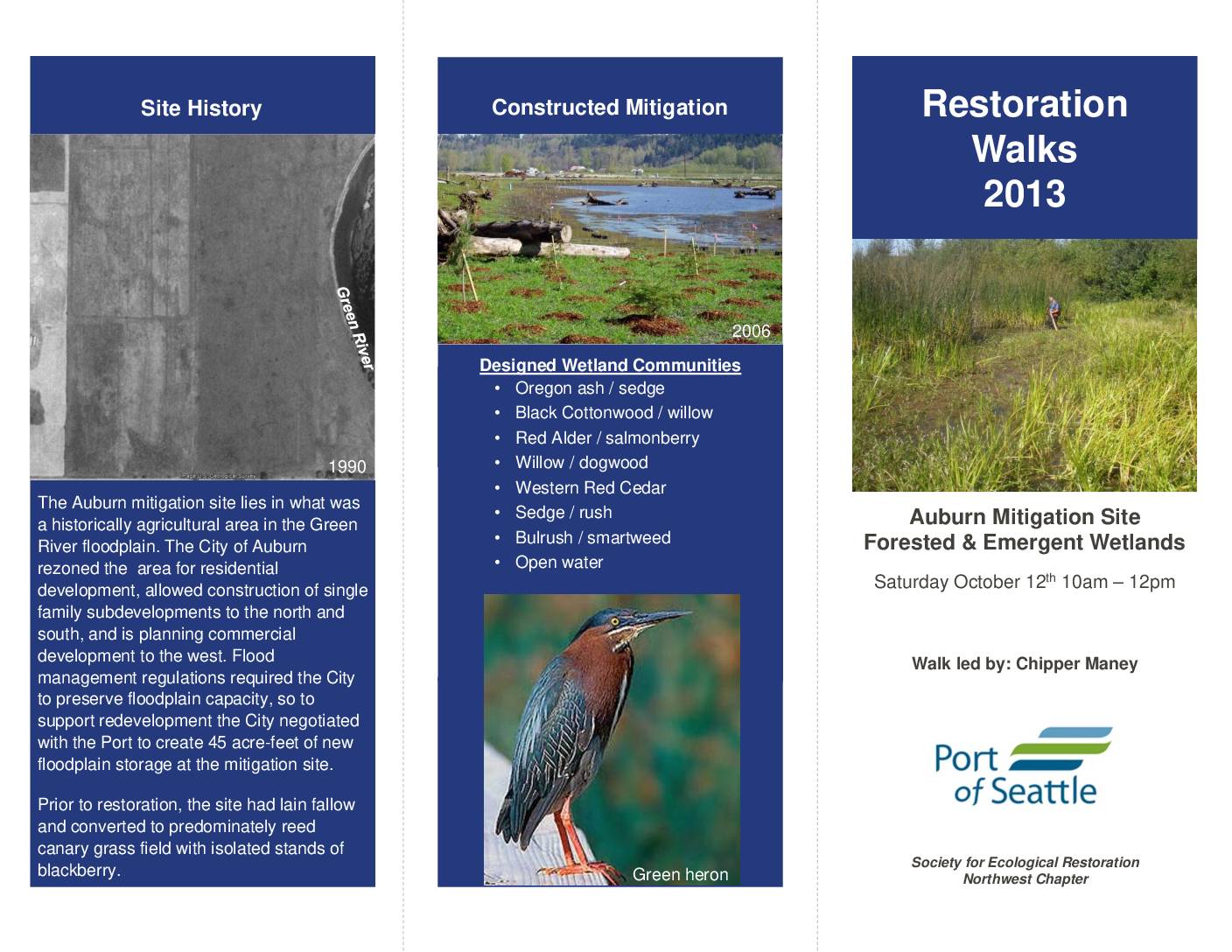
Auburn Mitigation Site: Forested & Emergent Wetlands — Restoration Walks 2013
The Auburn Mitigation Site is an 80-acre wetland restoration project in the Green River floodplain, created by the Port of Seattle to offset natural resource impacts from Seattle-Tacoma International Airport's third runway construction. The site features forested, scrub-shrub, and emergent wetlands that provide 40 acre-feet of floodplain storage, while keeping waterfowl habitat away from the airport to reduce bird-strike hazards to aircraft. As of 2013, the Port was in Year 6 of a 15-year monitoring program, with most communities successfully maturing and meeting performance standards after targeted removal of invasive species such as reed canary grass and cattail. -
 2004-04-08
Declaration of Robin V. Kordik in opposition to Airport Communities Coalition’s motion for injunctive relief
In this 2004 declaration filed with the Washington Supreme Court, Robin V. Kordik, a Senior Environmental Program Manager for the Port of Seattle's Aviation Division, describes efforts to identify wetland mitigation sites near Sea-Tac Airport in connection with the airport's Third Runway construction project. A study by environmental firm Parametrix assessed 89 potential mitigation locations but concluded that no suitable new sites were available in the affected sub-basins that met the Pollution Control Hearings Board's criteria for sustainability and public safety. The declaration was submitted in opposition to a motion for injunctive relief brought by the Airport Communities Coalition. -
 2002-10-23
EXH AR037700: Draft Restrictive Covenants for Mitigation Sites for Seattle-Tacoma International Airport Master Plan Improvements
Draft Declaration of Restrictive Covenants by Port Of Seattle for four mitigation sites associated with Seattle-Tacoma International Airport Master Plan Improvements, including third runway construction. Covers Miller Creek Buffer Areas, Miller Creek/Lora Lake Wetland and Floodplain, Tyee Valley Golf Course Wetland Enhancement, and Auburn Wetland Mitigation Site (approximately 69 acres in City of Auburn). Executed -
 2002-10-22
EXH AR016440: Prefiled Testimony of James C. Kelley, Ph.D. — PCHB 01-160 (ACC and CASE v. Ecology and Port Of Seattle)
Prefiled direct testimony of James C. Kelley, Ph.D., submitted in PCHB case No. 01-160 before the Pollution Control Hearings Board for the State of Washington. Filed on behalf of respondents Department of Ecology and Port Of Seattle against appellants Airport Communities Coalition (ACC) and Citizens Against Sea-Tac Expansion (CASE). Testimony covers wetland delineation and classification, -
 2002-10-22
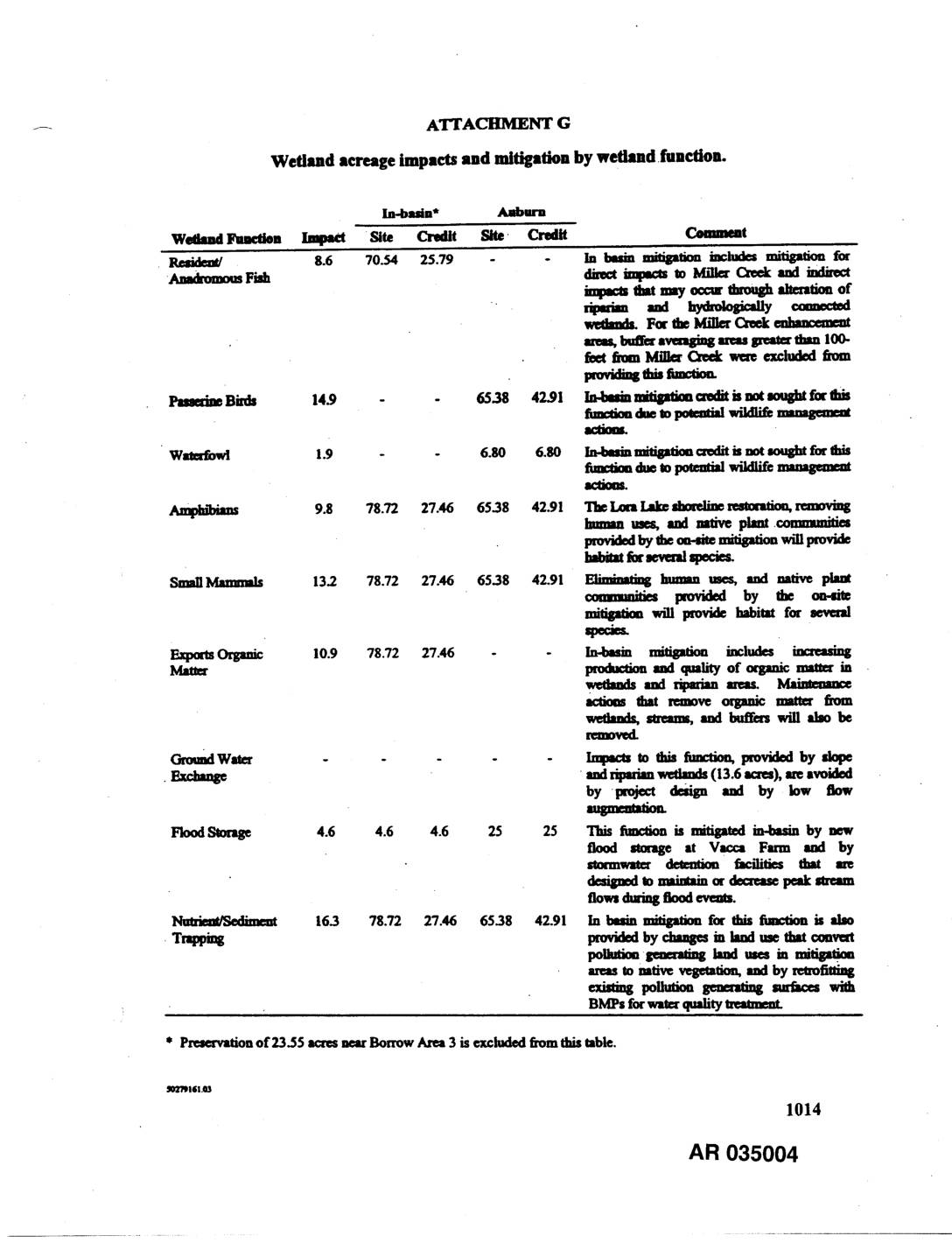
EXH AR035004: Attachment G — Wetland Acreage Impacts and Mitigation by Wetland Function
Attachment G table detailing wetland acreage impacts and mitigation credits by wetland function for in-basin and Auburn sites, related to the Sea-Tac Airport or associated project. Functions covered include Resident/Anadromous Fish (8.6 acres impacted), Passerine Birds (14.9 acres), Waterfowl (1.9 acres), Amphibians (9.8 acres), Small Mammals (13.2 acres), Exports Organic Matter (10.9 acres), Ground Water -
 2002-10-22
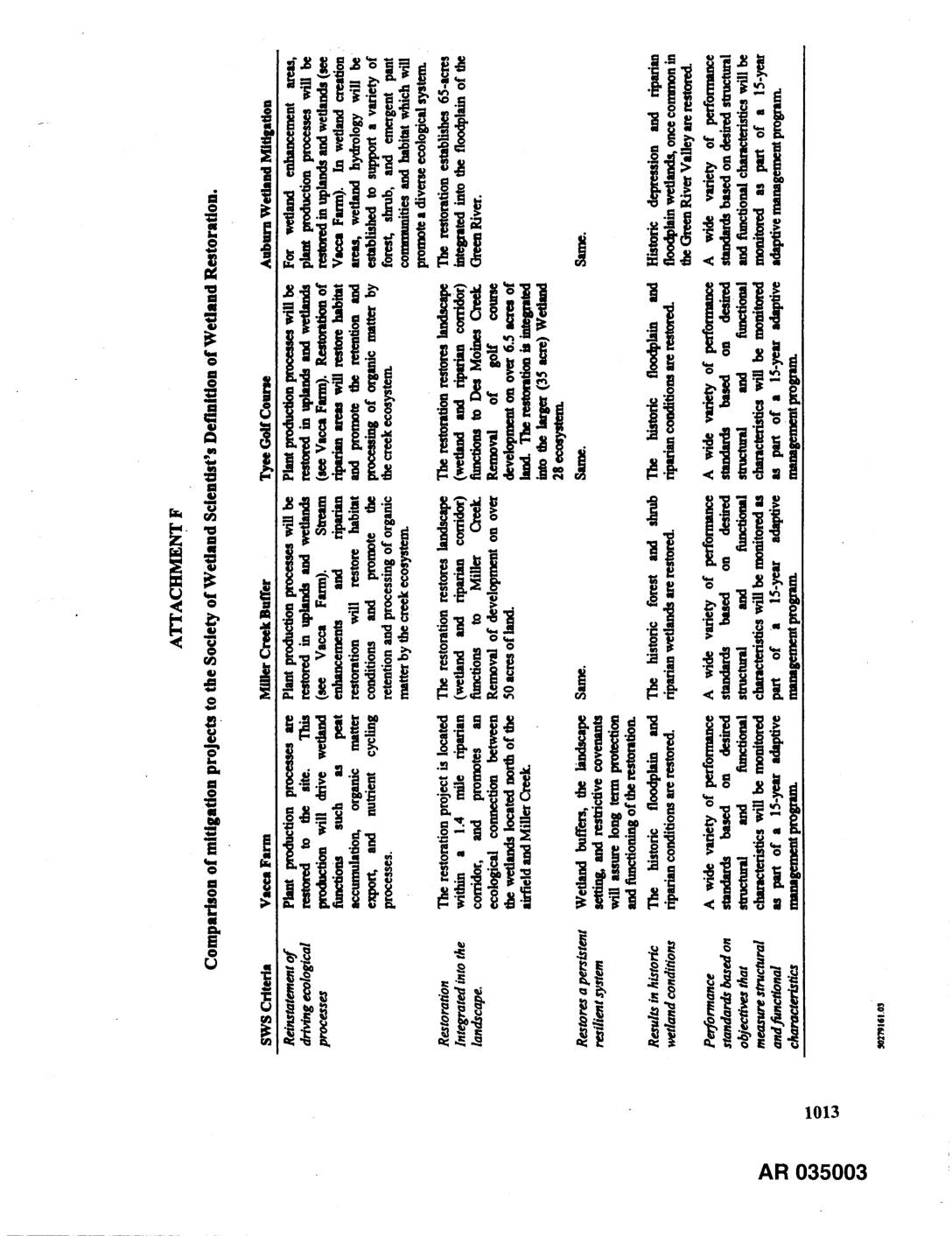
EXH AR1013: Attachment F — Comparison of Mitigation Projects to the Society of Wetland Scientist’s Definition of Wetland Restoration
AR 035003. Attachment F table comparing wetland mitigation projects — Vacca Farm, Miller Creek Buffer, Tyee Golf Course, and Auburn Wetland — against Society of Wetland Scientists (SWS) criteria including reinstatement of driving ecological processes, restoration integrated into the landscape, restores a persistent resilient system, results in historic wetland conditions, and performance standards based on -
 2002-03-15
PCHB 01-160: Prefiled Testimony of James C. Kelley, Ph.D. — Wetland Impacts and Mitigation, Sea-Tac Airport MPU
Prefiled direct testimony of James C. Kelley, Ph.D. (Parametrix, Inc.) submitted to the Pollution Control Hearings Board (PCHB) for the State of Washington, Case No. PCHB 01-160, on behalf of respondents Department of Ecology and Port Of Seattle, against appellants Airport Communities Coalition (ACC) and Citizens Against Sea-Tac Expansion (CASE). Kelley testifies as principal consulting -
 2002-01-31
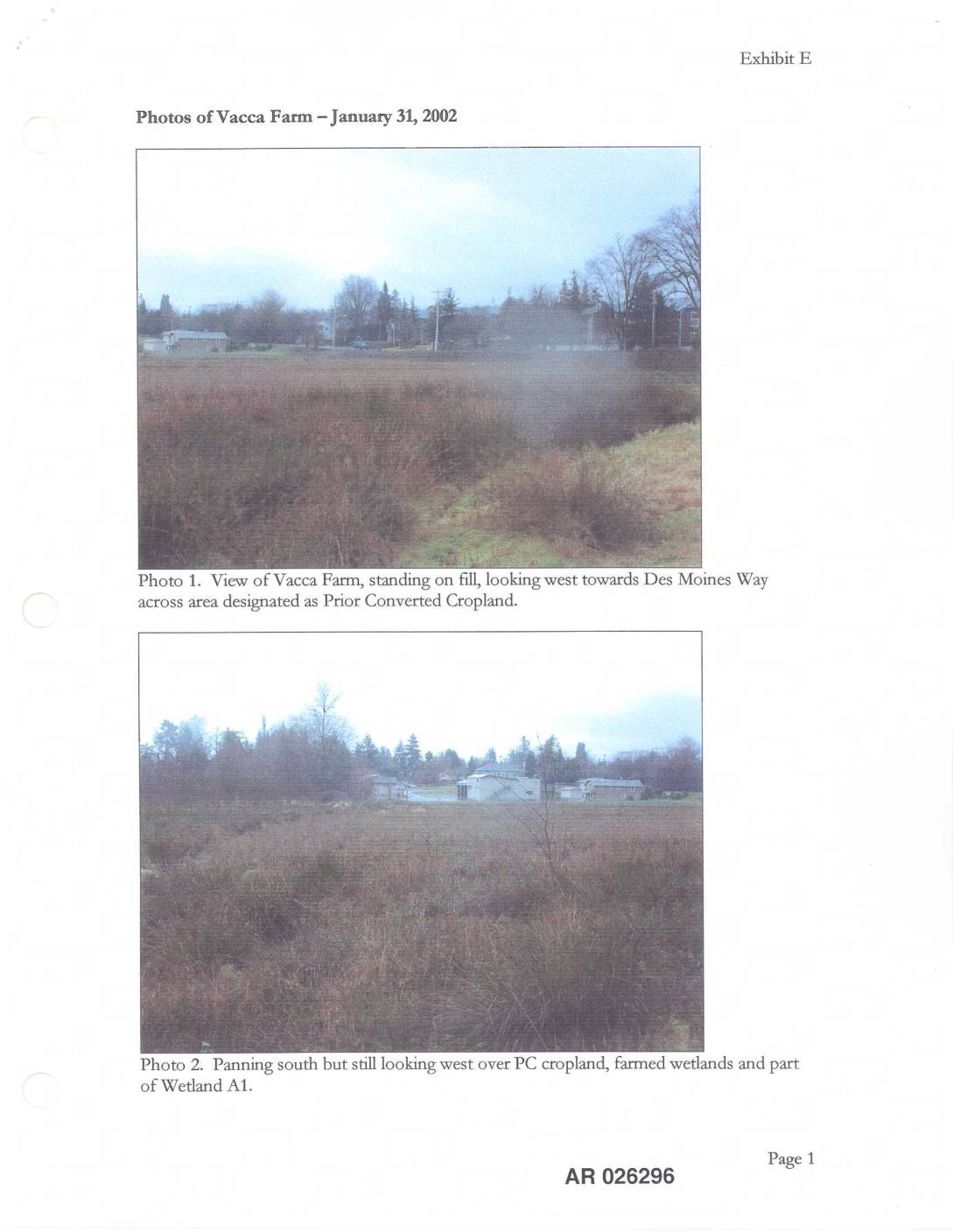
EXH E: Photos Vacca Farm — January 31, 2002
This document, labeled Exhibit E, contains photographs taken on January 31, 2002 of the Vacca Farm site, showing various land features including areas designated as Prior Converted Cropland, farmed wetlands, and Wetland A1. The photos document the site's vegetation and water features, including a close-up of wetland plants and a view of Miller Creek looking west across Wetland A1. The images appear to be part of an environmental or land-use assessment record related to the Vacca Farm property near Des Moines Way. -
 2002-01-31
EXH AR053382: Vacca Farm and West Side Observations – Handwritten Field Notes, January 31, 2002
Handwritten field observation notes by R. Azous (Azous Exhibit 387, dated 2-19-02) transmitted via fax from Helsell Fetterman LLP on 02-19-2002, documenting site visits to Vacca Farm and West Side areas adjacent to Miller Creek and STIA. Notes cover wetland conditions, plant communities (cattail, alder, Juncus, Phalaris, Sparganium, sedge), upland buffer zones, NRM planting plan -
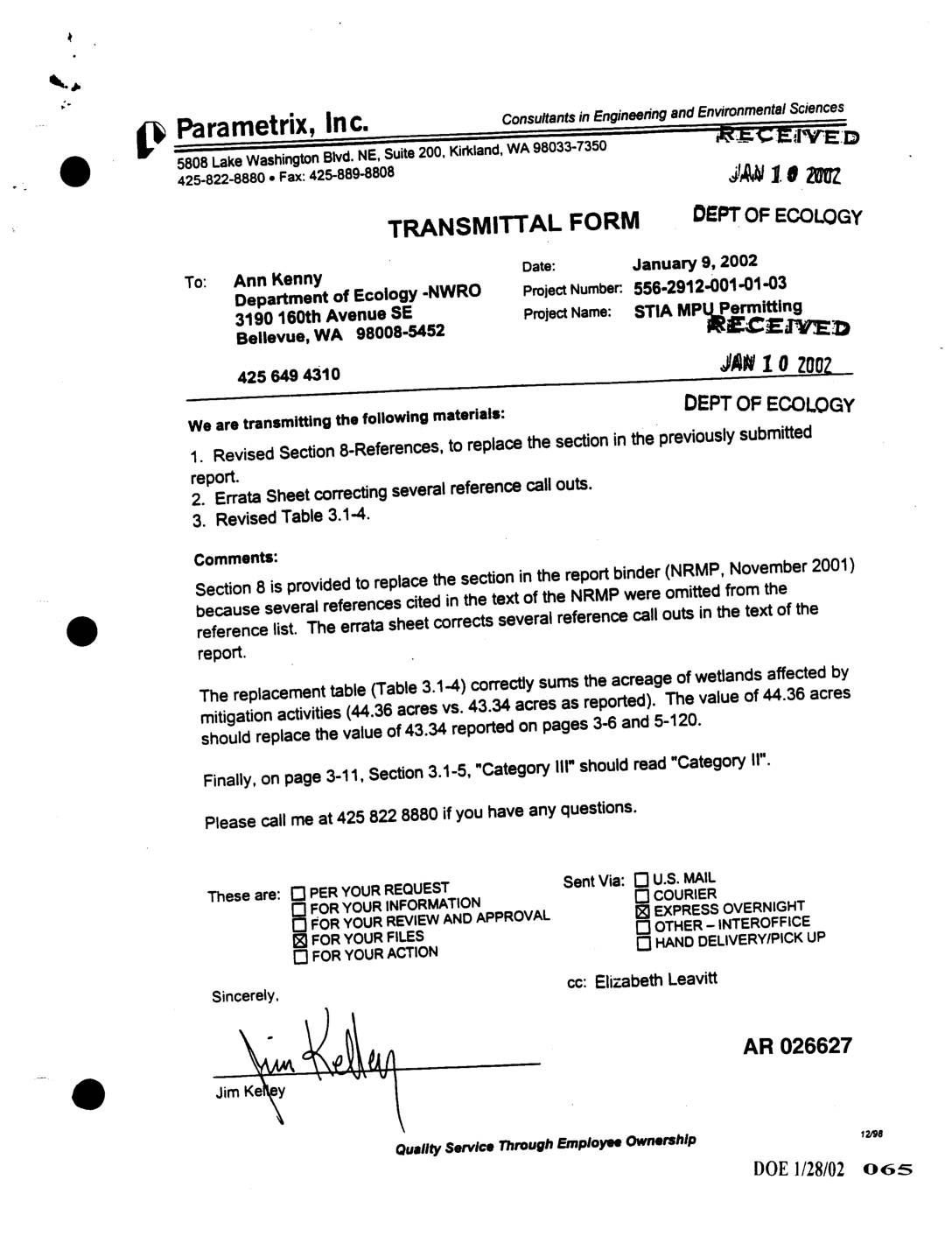 2002-01-09
EXH AR026627: Transmittal Form & Errata — STIA Master Plan Update Natural Resources Mitigation Plan Corrections (Jan 2002)
This January 2002 transmittal from Parametrix, Inc. to the Washington State Department of Ecology submits corrections to the Seattle-Tacoma International Airport Master Plan Update Natural Resources Mitigation Plan (NRMP, November 2001). The corrections include a revised reference list, an errata sheet fixing citation errors throughout the report, and an updated Table 3.1-4 that adjusts the total acreage of wetlands affected by mitigation activities from 43.34 to 44.36 acres. Additional text corrections clarify wetland category designations and update various reference callouts across multiple sections of the report.