TagACC(1548)
-
 2002-01-08
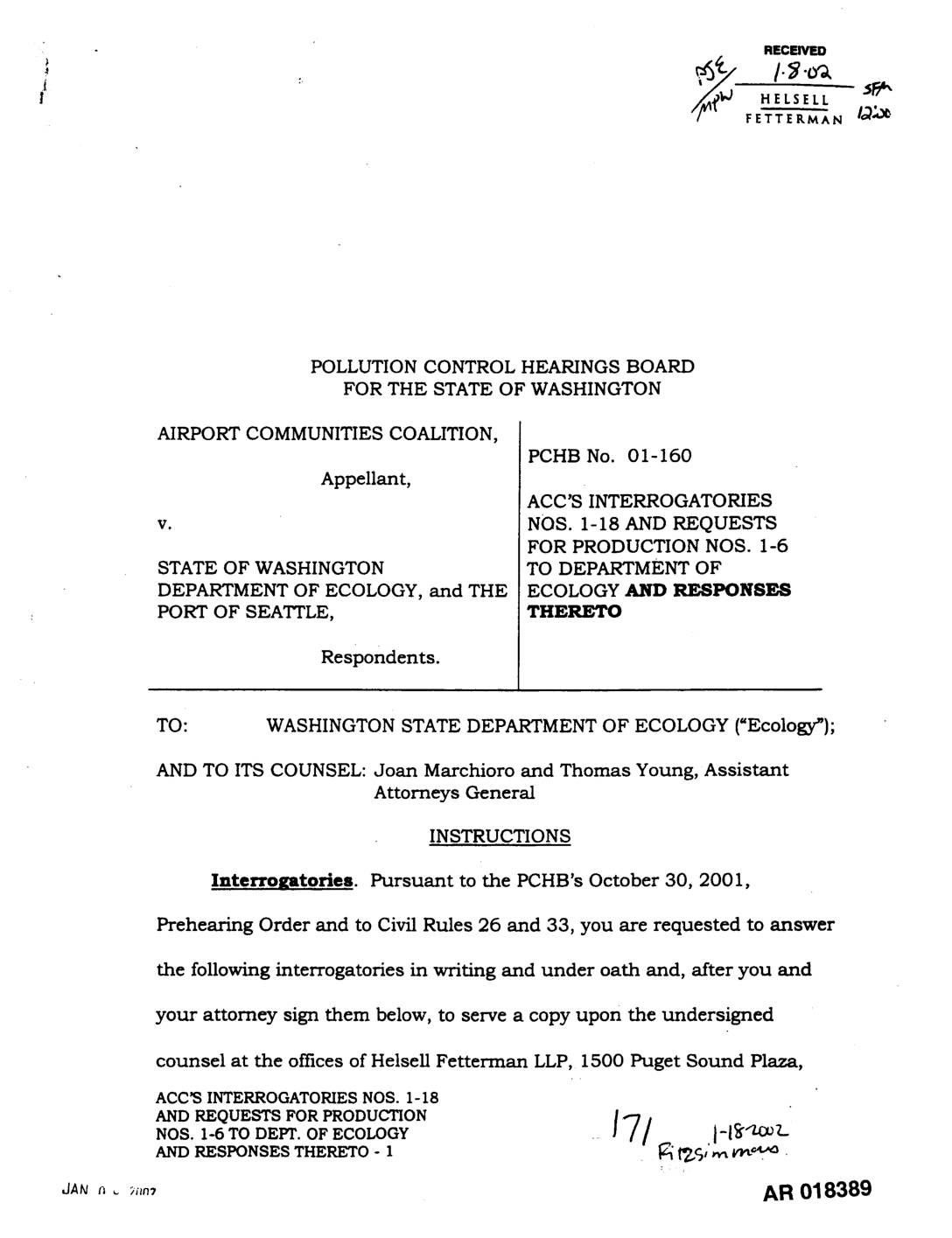
EXH AR018389: ACC’s Interrogatories Nos. 1-18 and Requests for Production Nos. 1-6 to Ecology and Responses Thereto
Airport Communities Coalition (ACC) interrogatories nos. 1-18 and requests for production nos. 1-6 directed to the Washington State Department of Ecology, filed in PCHB No. 01-160 before the Pollution Control Hearings Board for the State of Washington. Pursuant to PCHB October 30, 2001 Prehearing Order and Civil Rules 26, 33, and 34, ACC through counsel -
 2002-01-08
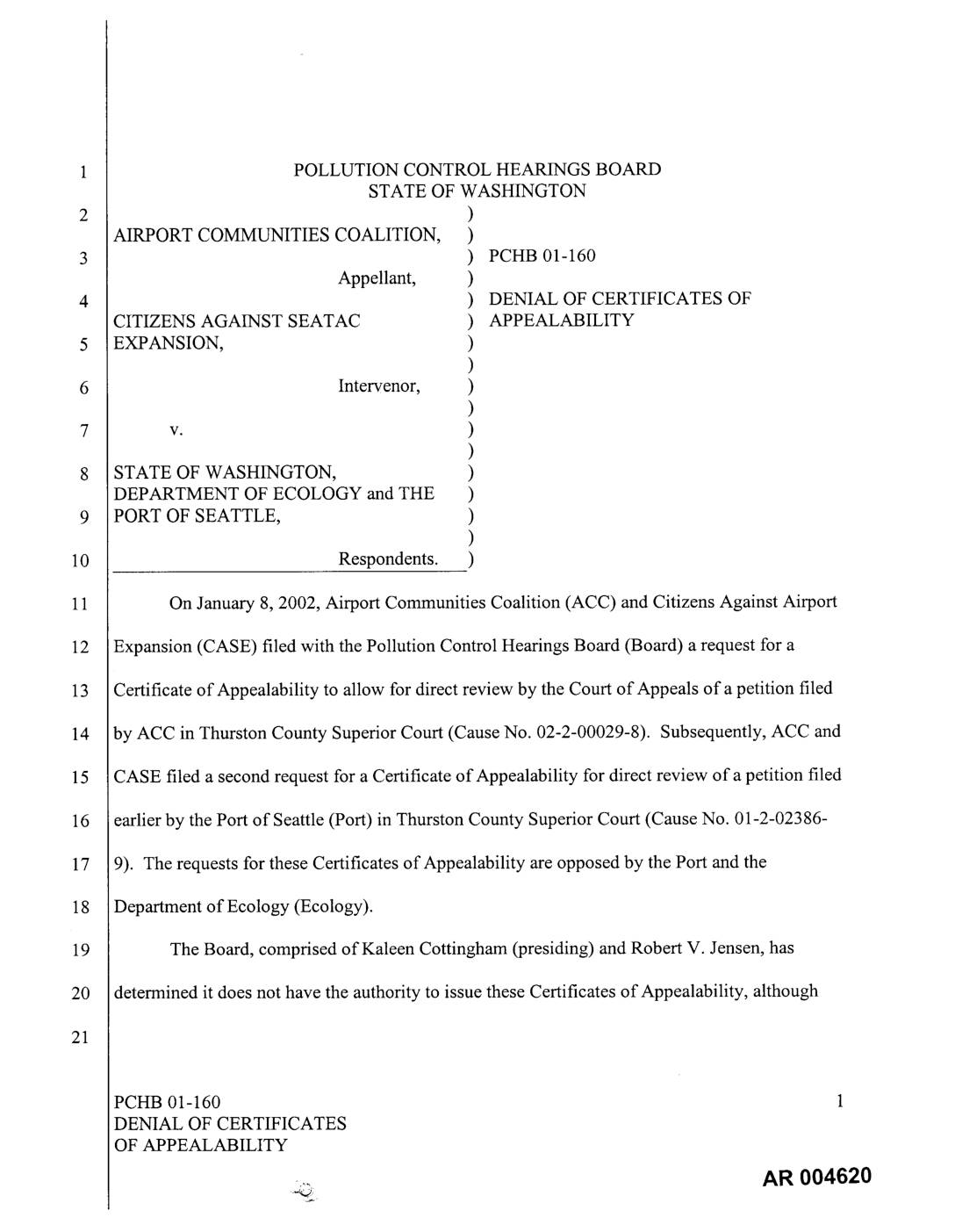
PCHB Doc 01-160: Denial of Certificates of Appealability — ACC and CASE v. Ecology and Port Of Seattle
Pollution Control Hearings Board (PCHB) case 01-160 denial of Certificates of Appealability filed by Airport Communities Coalition (ACC) and Citizens Against Sea-Tac Expansion (CASE) under RCW 34.05.518 and RCW 43.21B.320(5). ACC and CASE sought direct Court of Appeals review of Thurston County Superior Court petitions (Cause No. 02-2-00029-8 and Cause No. 01-2-02386-9) arising from the -
 2002-01-04
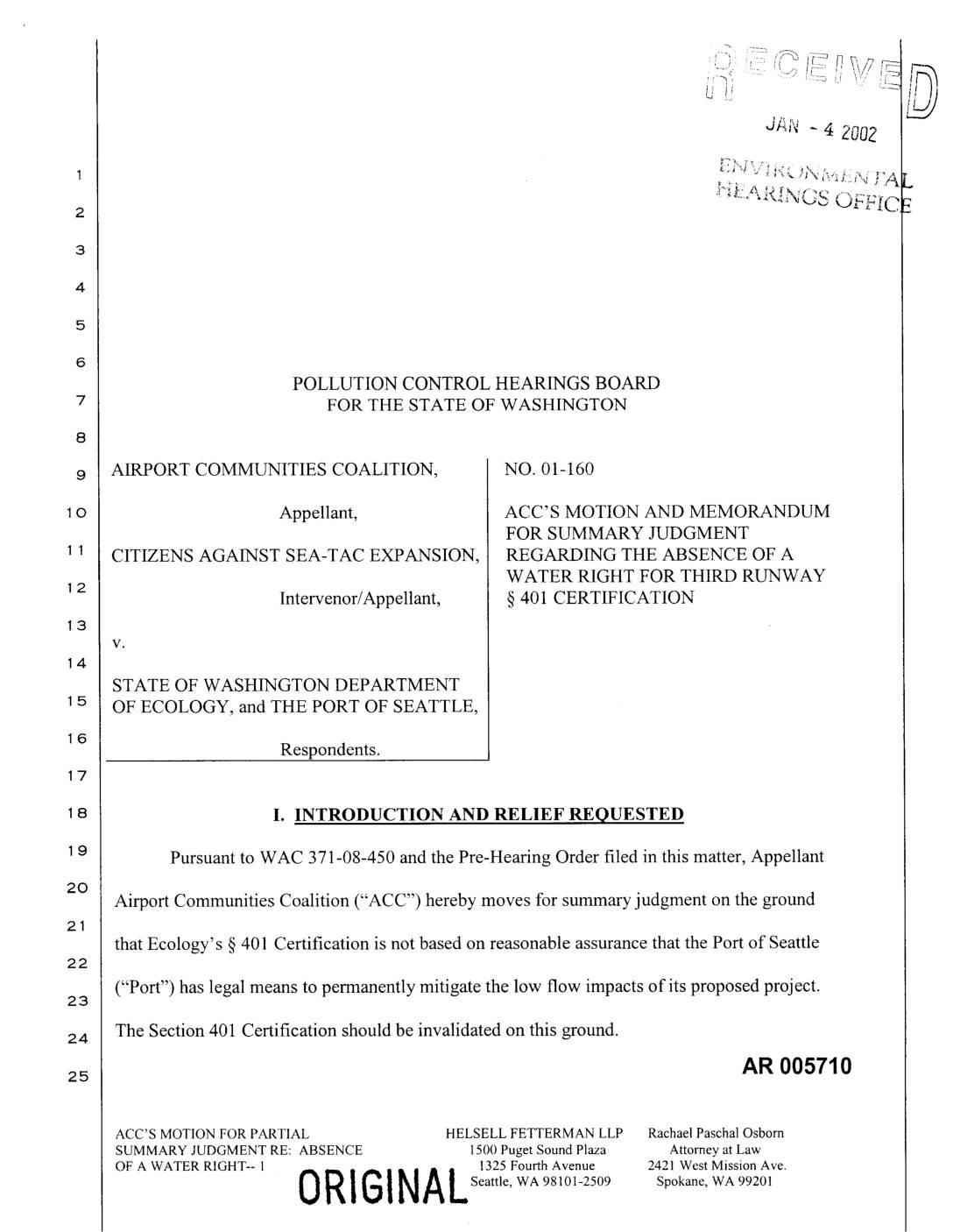
EXH AR005710: ACC Motion for Summary Judgment Re: Absence of Water Right for Third Runway § 401 Certification
Airport Communities Coalition (ACC) motion for summary judgment filed January 4, 2002 before the Pollution Control Hearings Board (PCHB), Case No. 01-160, arguing that Ecology’s Section 401 Certification for the Port Of Seattle Third Runway project (Sea-Tac Airport Master Plan Update) should be invalidated because the Port lacks a water right to implement low flow -
 2002-01-04
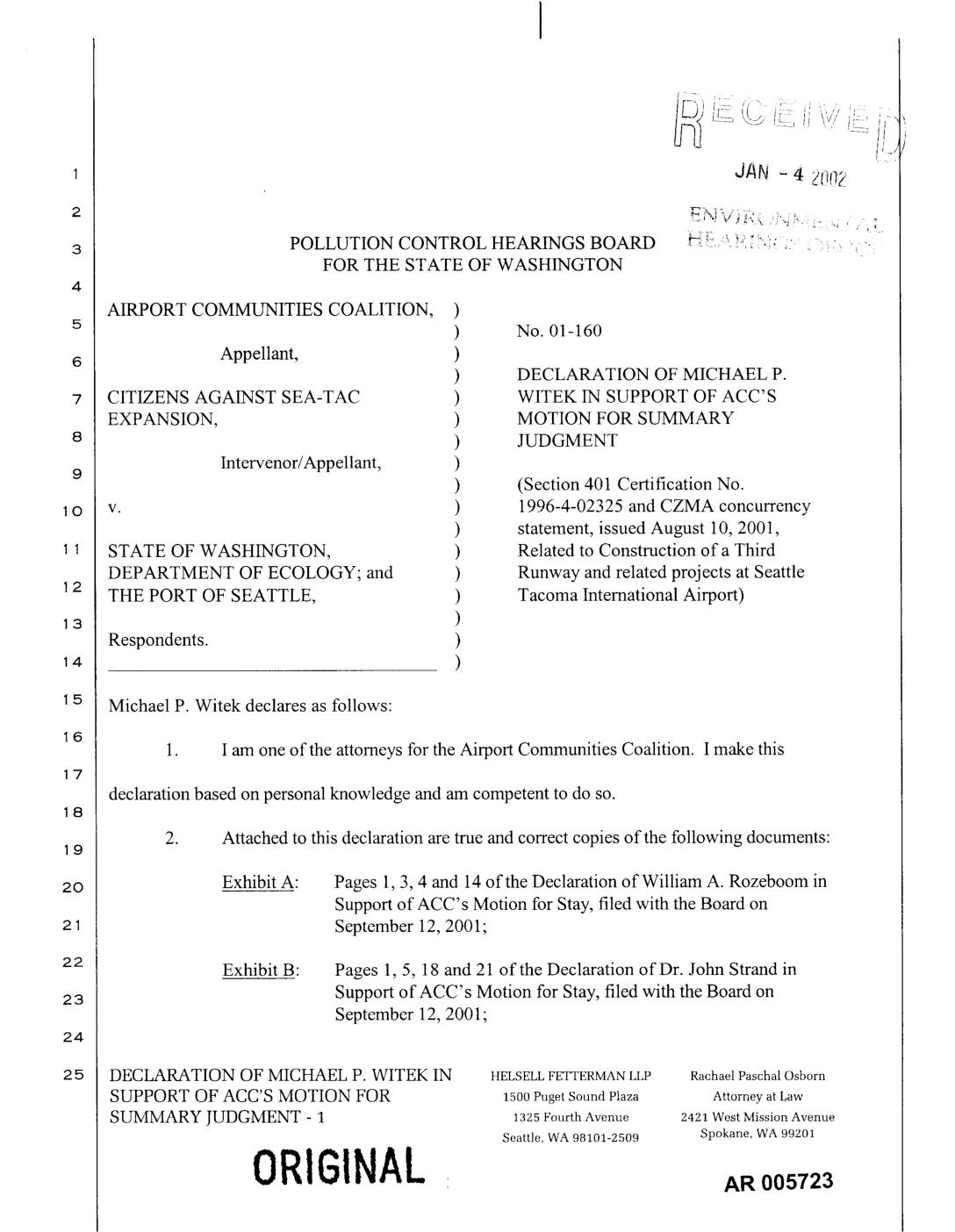
PCHB Doc 01-160: Declaration of Michael P. Witek in Support of ACC’s Motion for Summary Judgment
Declaration by attorney Michael P. Witek of Helsell Fetterman LLP, filed January 4, 2002, before the Washington Pollution Control Hearings Board (PCHB Case No. 01-160) in support of ACC’s Motion for Summary Judgment. Concerns Section 401 Certification No. 1996-4-02325 and CZMA concurrency statement issued August 10, 2001, related to construction of a Third Runway and -
 2002-01-04
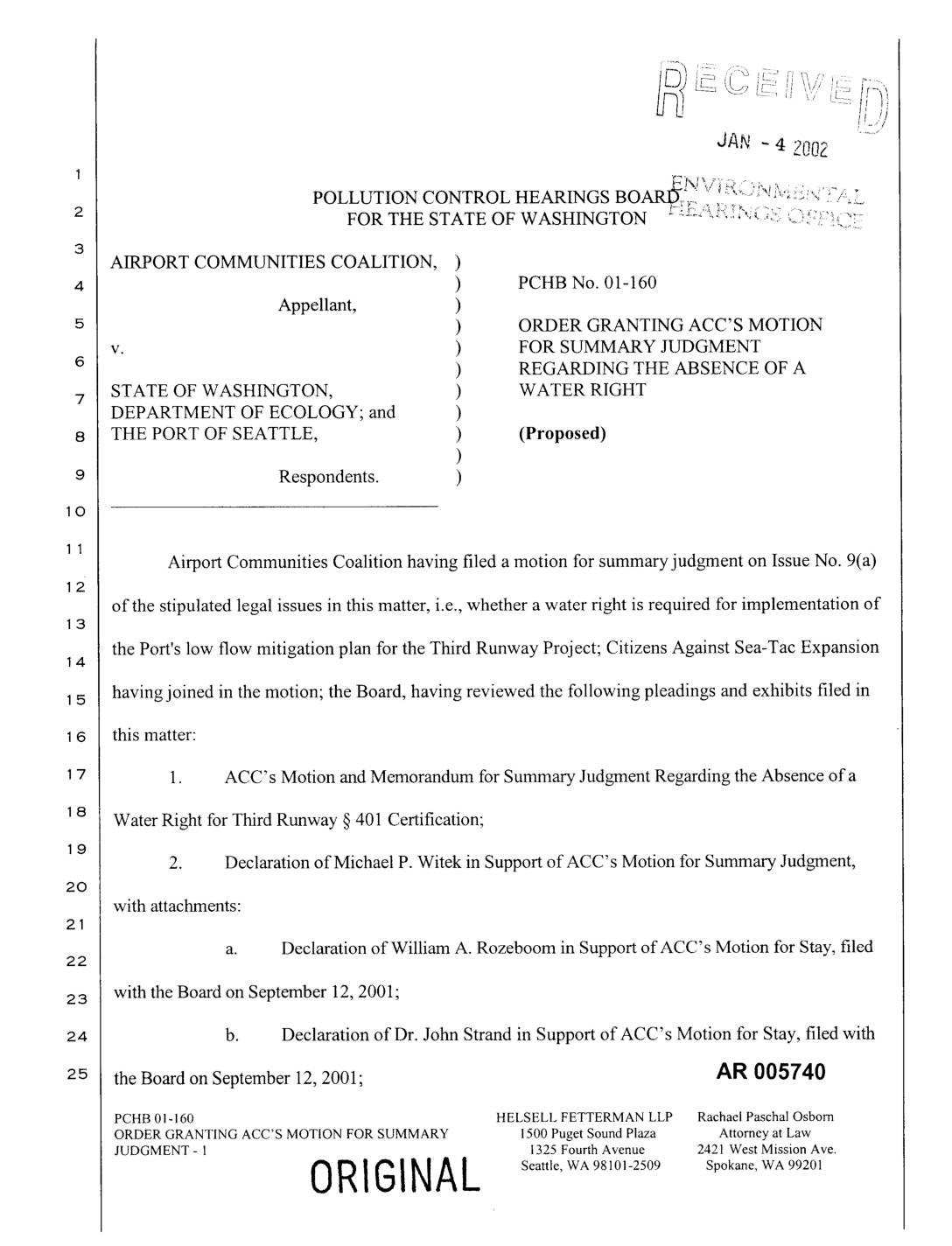
PCHB Doc 01-160: Proposed Order Granting ACC’s Motion for Summary Judgment Regarding the Absence of a Water Right
Proposed order from the Washington Pollution Control Hearings Board (PCHB No. 01-160) granting Airport Communities Coalition (ACC) motion for summary judgment on Issue No. 9(a) — whether a water right is required for implementation of the Port of Seattle’s low flow mitigation plan for the Third Runway Project. The Board found no reasonable assurance of -
 2002-01-03
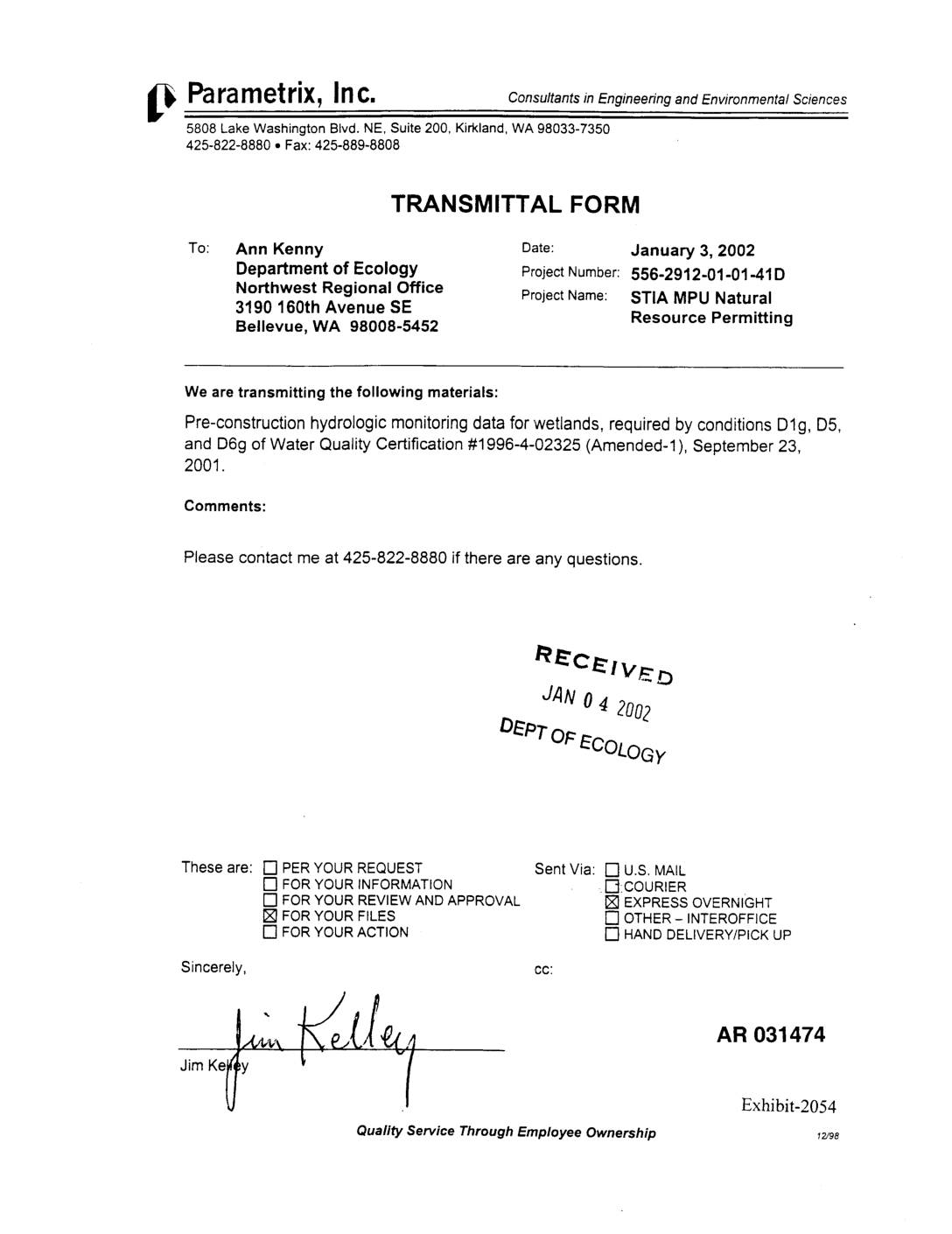
Exhibit 2054: Pre-Construction Hydrologic Monitoring Data, Master Plan Update Improvements, Seattle-Tacoma International Airport
Transmittal form from Parametrix, Inc. (Jim Kelley) to Ann Kenny, Department of Ecology Northwest Regional Office, dated January 3, 2002, transmitting pre-construction hydrologic monitoring data for wetlands near the Third Runway embankment at Seattle-Tacoma International Airport. Required by conditions D1g, D5, and D6g of Water Quality Certification #1996-4-02325 (Amended-1), September 23, 2001. Project Number 556-2912-01-01-41D, -
 2002-01-02
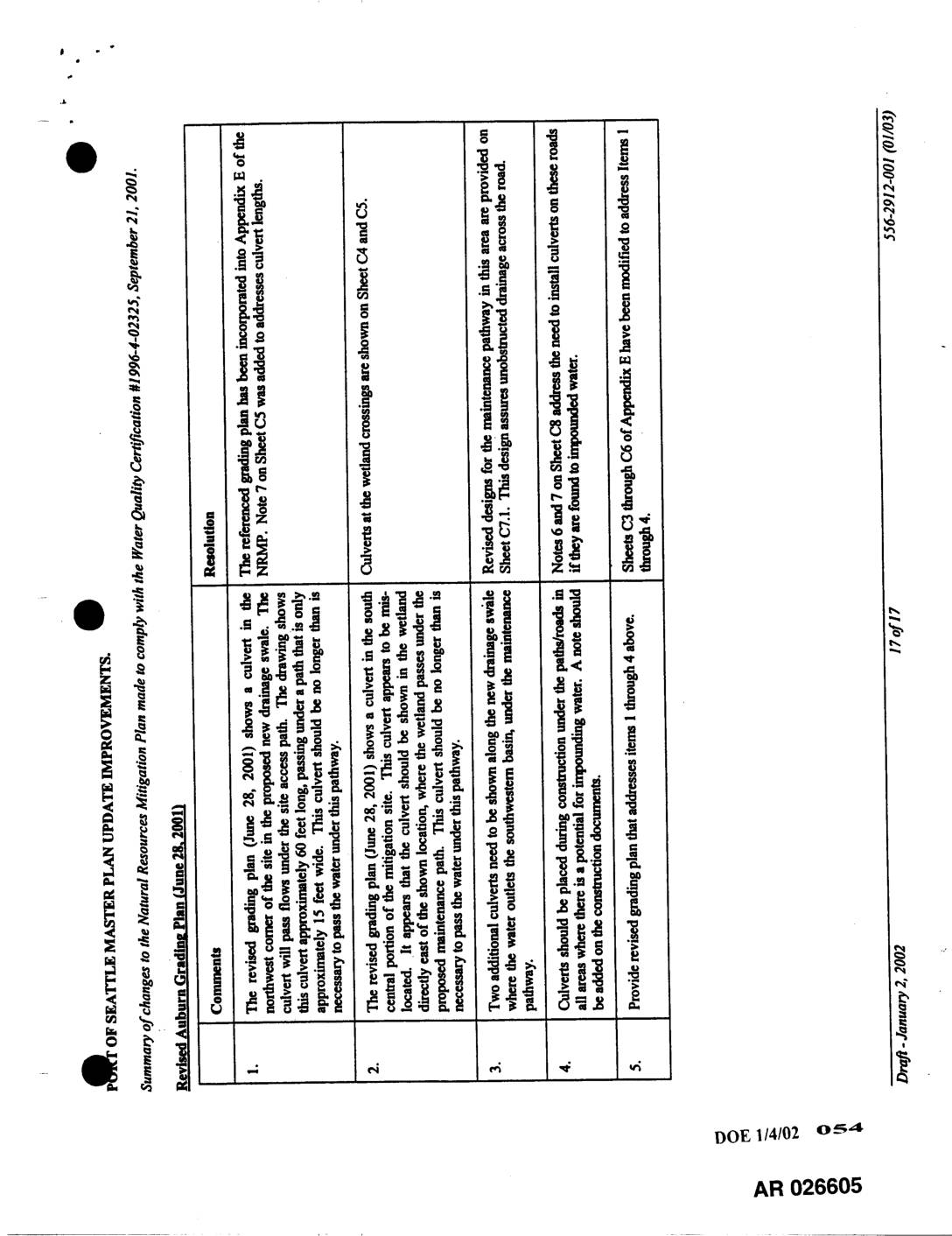
EXH AR026605: Seattle Master Plan Update — Natural Resources Mitigation Plan Changes (Auburn Grading Plan, June 28, 2001)
This document summarizes changes made to the Port of Seattle Master Plan Update's Natural Resources Mitigation Plan to comply with a Water Quality Certification issued September 21, 2001. It outlines revisions to grading plans, culvert placements, wetland crossings, drainage controls, and planting schedules at the Auburn mitigation site, along with corresponding resolutions for each identified concern. The updates address issues such as water impoundment, erosion prevention, bald eagle habitat protection, and invasive species removal. -
 2002-01-02
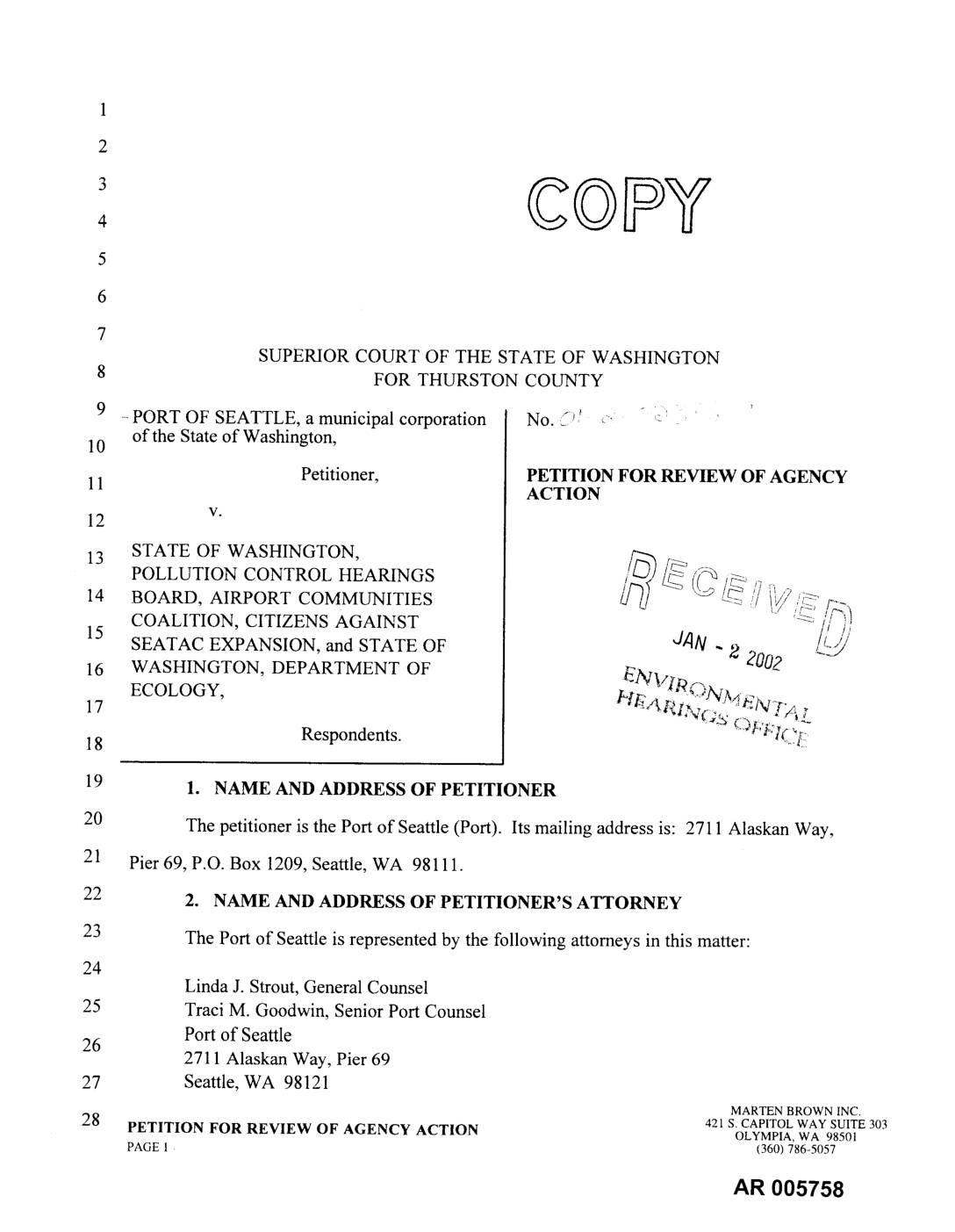
PCHB AR005758: Port Of Seattle Petition for Review of PCHB Order Granting Motion to Stay Section 401 Certification (Third Runway)
Port Of Seattle petition for judicial review filed in Superior Court of Washington, Thurston County, challenging the Pollution Control Hearings Board (PCHB) Order Granting Motion to Stay the Effectiveness of Section 401 Certification related to the proposed third runway at Seattle-Tacoma International Airport (STIA). Petitioner Port Of Seattle represented by Linda J. Strout, Traci M. -
 2002-01-01
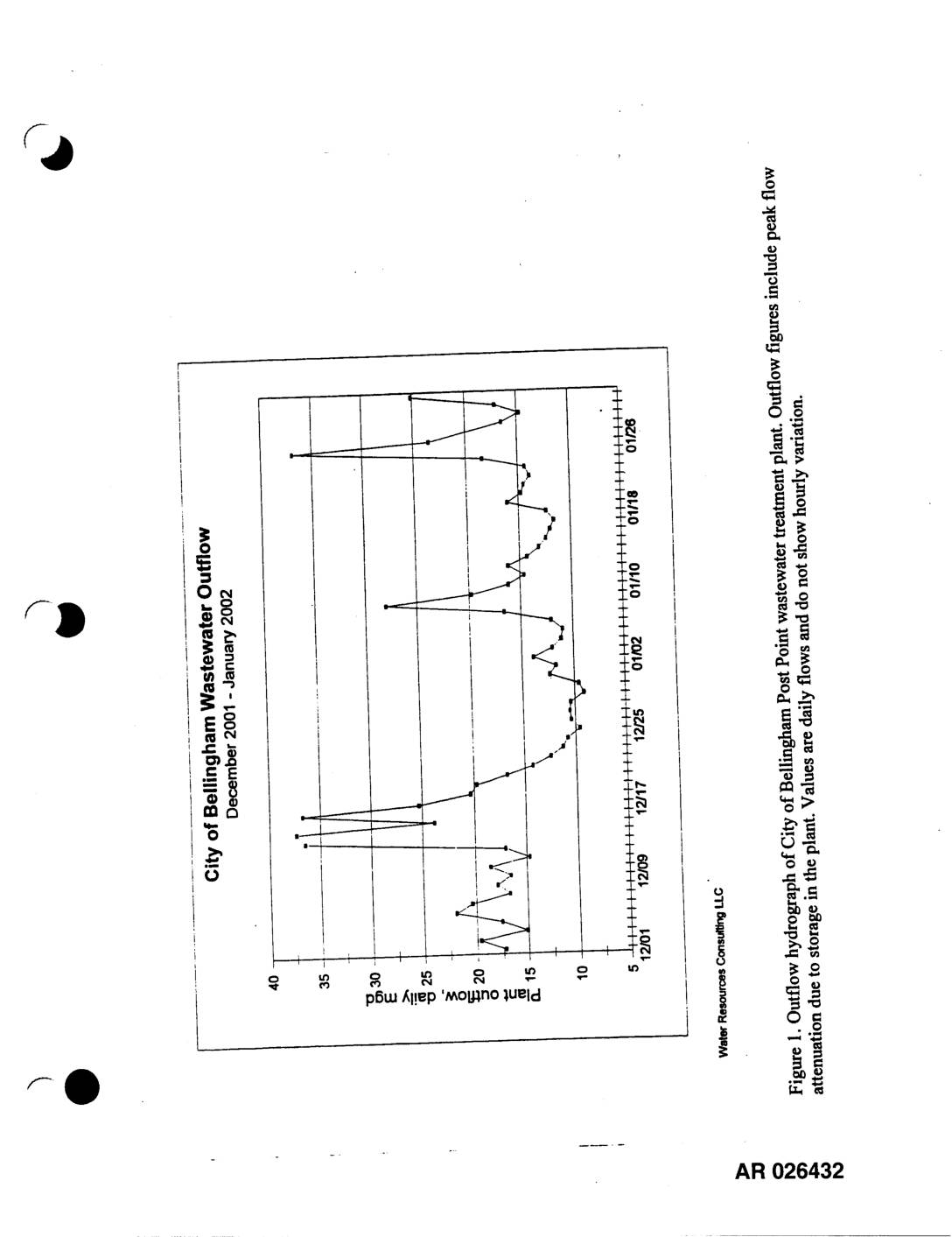
Exhibit 715: City of Bellingham Wastewater Outflow and Midway Sewer District Flow Data, December 2001–January 2002
Exhibit AR 026432–AR 026433 contains two figures related to wastewater flow data in the Bellingham and Midway Sewer District area. Figure 1 is an outflow hydrograph for the City of Bellingham Post Point wastewater treatment plant covering December 2001–January 2002, showing daily plant outflow in million gallons per day (mgd), prepared by Water Resources Consulting -
 2002-01-01
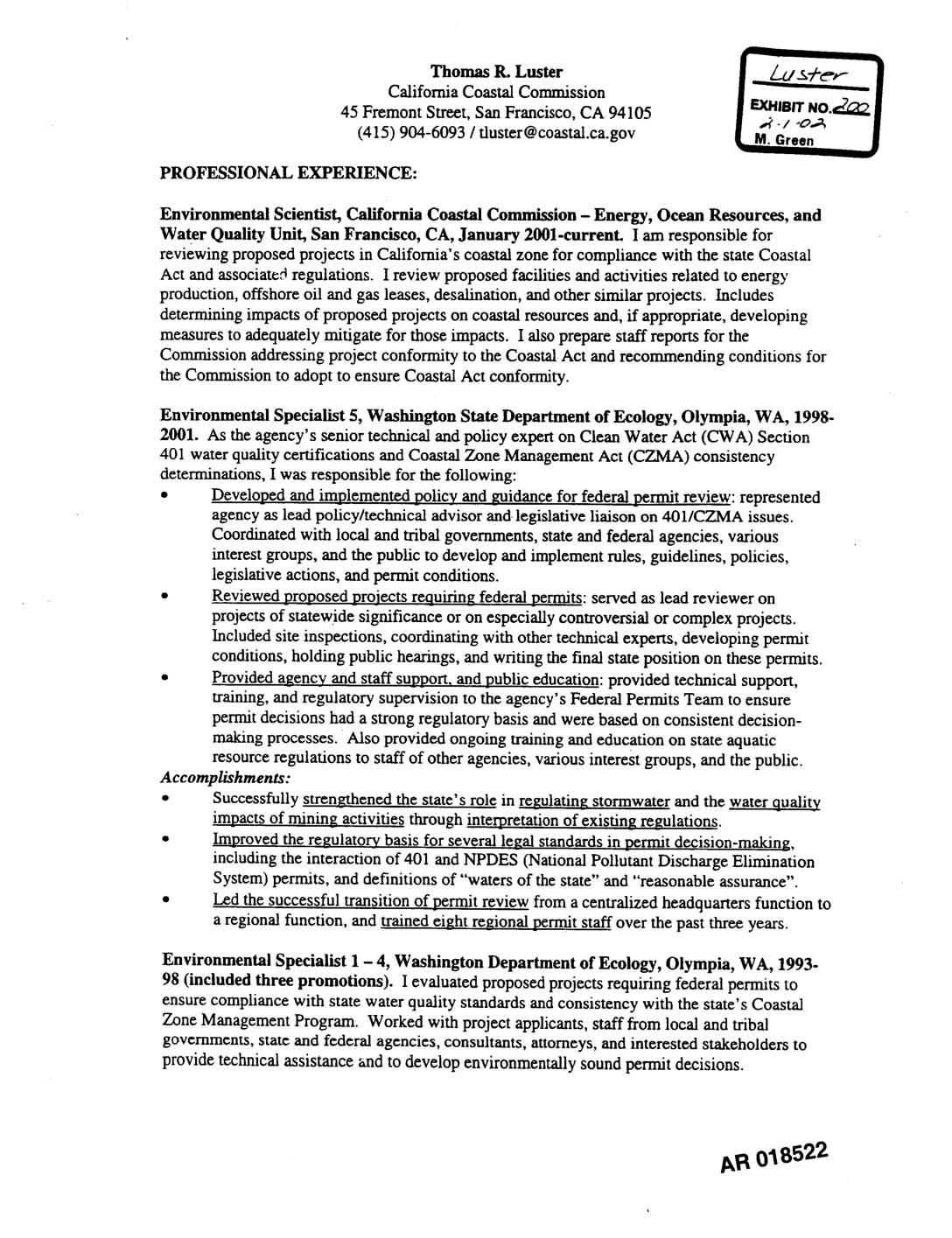
Exhibit 200: Resume of Thomas R. Luster, Environmental Scientist, California Coastal Commission
This document is the professional resume of Thomas R. Luster, an Environmental Scientist with the California Coastal Commission, detailing his career reviewing coastal development projects for compliance with environmental regulations. His background includes senior roles with the Washington State Department of Ecology, where he specialized in Clean Water Act Section 401 water quality certifications and Coastal Zone Management Act consistency determinations. The resume focuses on environmental permitting, water quality, and coastal resource protection, and does not contain content related to Sea-Tac Airport noise policy.