TagACC(1548)
-
 2000-09-11
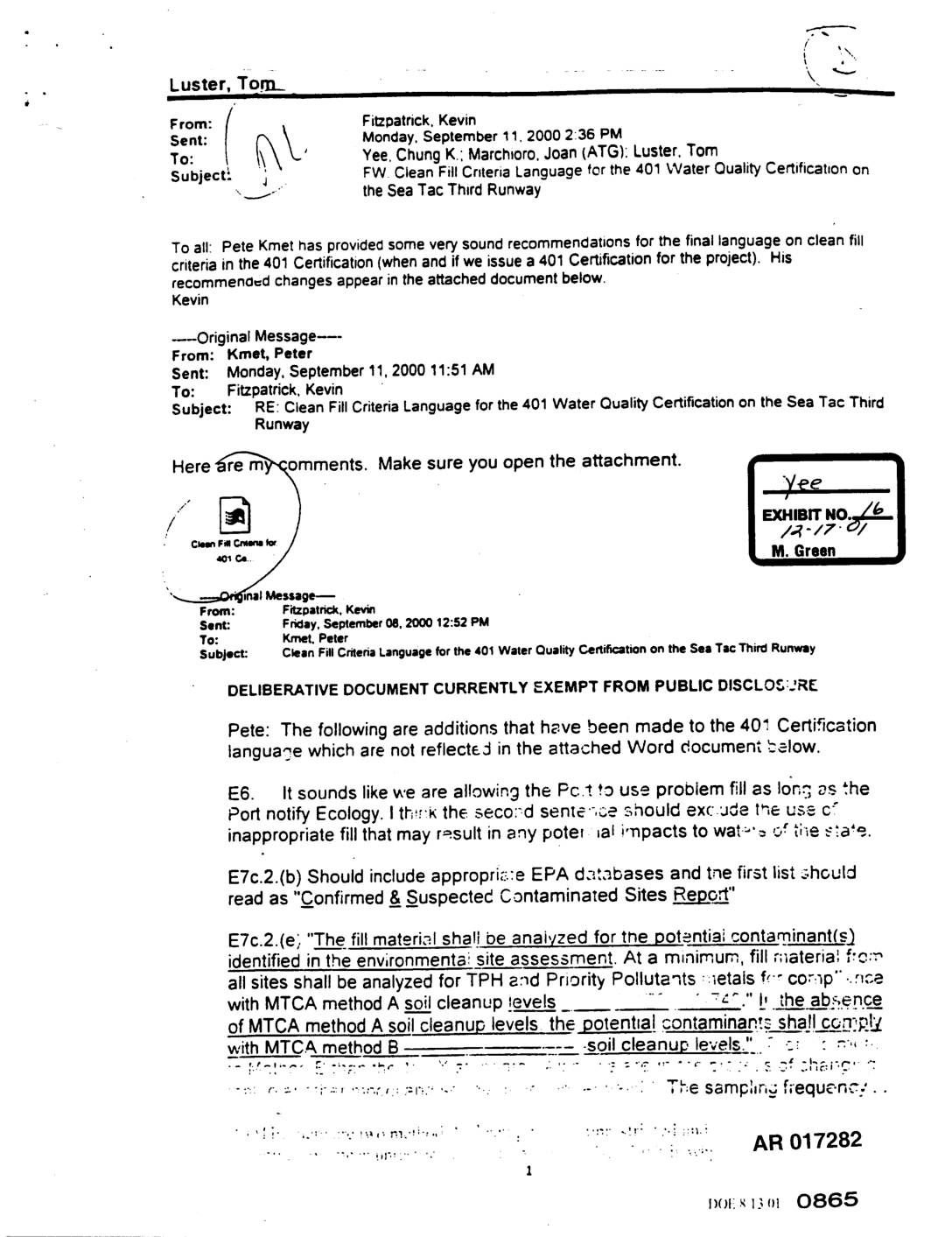
EXH AR017282: Email Chain on Clean Fill Criteria Language for the 401 Water Quality Certification on the Sea-Tac Third Runway
Email chain dated September 11, 2000 among Kevin Fitzpatrick, Peter Kmet, Chung K. Yee, Joan Marchioro, and Tom Luster of Washington State Department of Ecology (Water Quality Program, NWRO) regarding clean fill criteria language for the 401 Water Quality Certification on the Sea-Tac Third Runway project. Document marked ‘Deliberative Document Currently Exempt From Public Disclosure.’ -
 2000-09-11
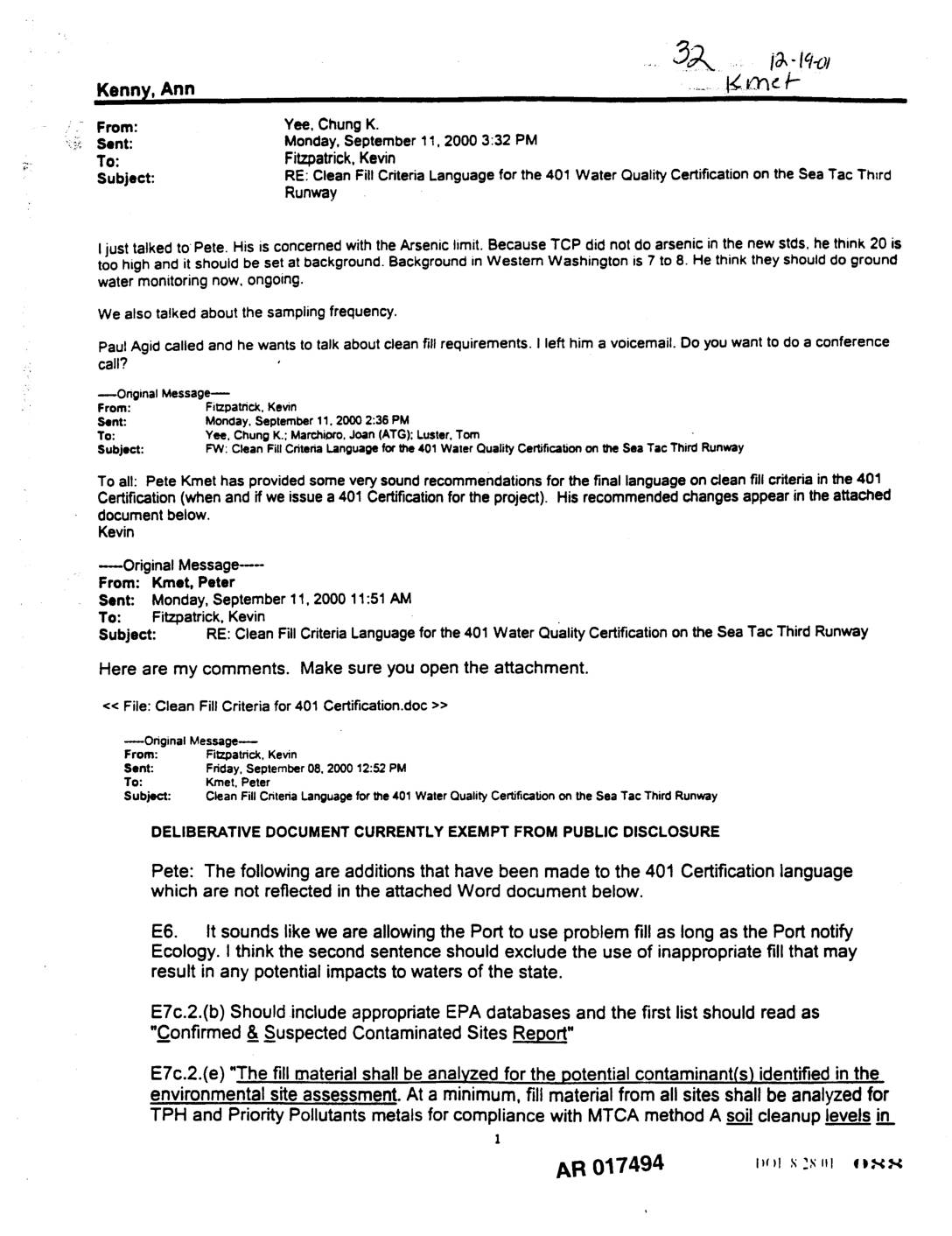
EXH AR17494: Clean Fill Criteria Language for the 401 Water Quality Certification on the Sea-Tac Third Runway
Email chain dated September 11, 2000 among Chung K. Yee, Kevin Fitzpatrick, Peter Kmet, Joan Marchioro (ATG), and Tom Luster of Washington State Department of Ecology (Ecology) regarding clean fill criteria language for the 401 Water Quality Certification for the Sea-Tac Third Runway project. Key issues include arsenic limits (Pete Kmet concerned 20 ppm is -
 2000-09-11
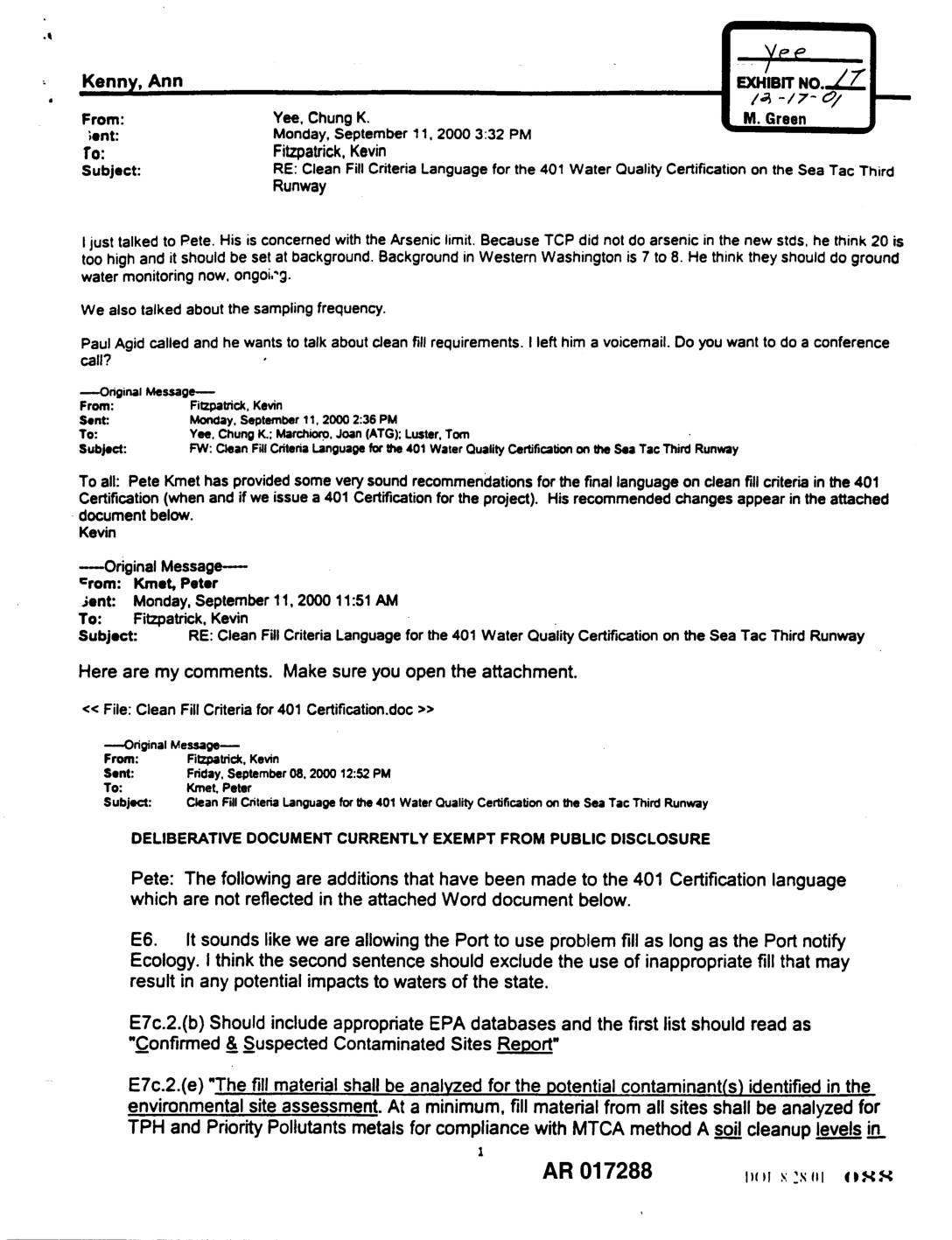
EXH AR017288: Email Chain Re: Clean Fill Criteria Language for the 401 Water Quality Certification on the Sea-Tac Third Runway
Email chain dated September 11, 2000 among Chung K. Yee, Kevin Fitzpatrick, Peter Kmet, Joan Marchioro (ATG), and Tom Luster regarding clean fill criteria language for the 401 Water Quality Certification on the Sea-Tac Third Runway. Key issues include arsenic limits (Pete Kmet argues 20 ppm is too high and should be set at Western -
 2000-09-11
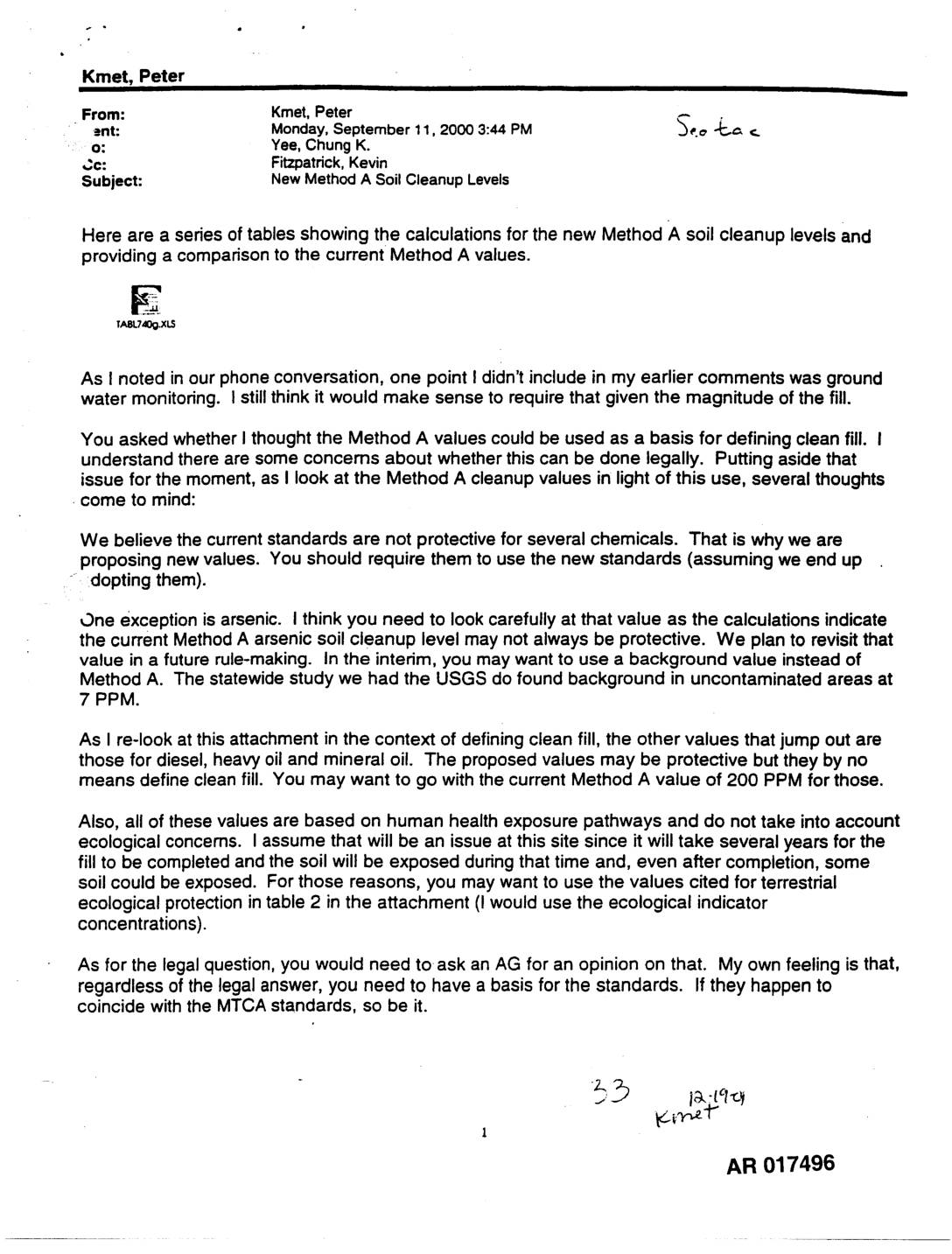
EXH AR017496: Email from Peter Kmet to Chung K. Yee Regarding New Method A Soil Cleanup Levels
Internal email dated September 11, 2000 from Peter Kmet to Chung K. Yee (cc: Kevin Fitzpatrick) discussing new Method A soil cleanup levels under MTCA (Model Toxics Control Act) and their use as a basis for defining clean fill. Kmet addresses specific chemicals including arsenic (recommends 7 PPM background value from USGS statewide study instead -
 2000-09-11
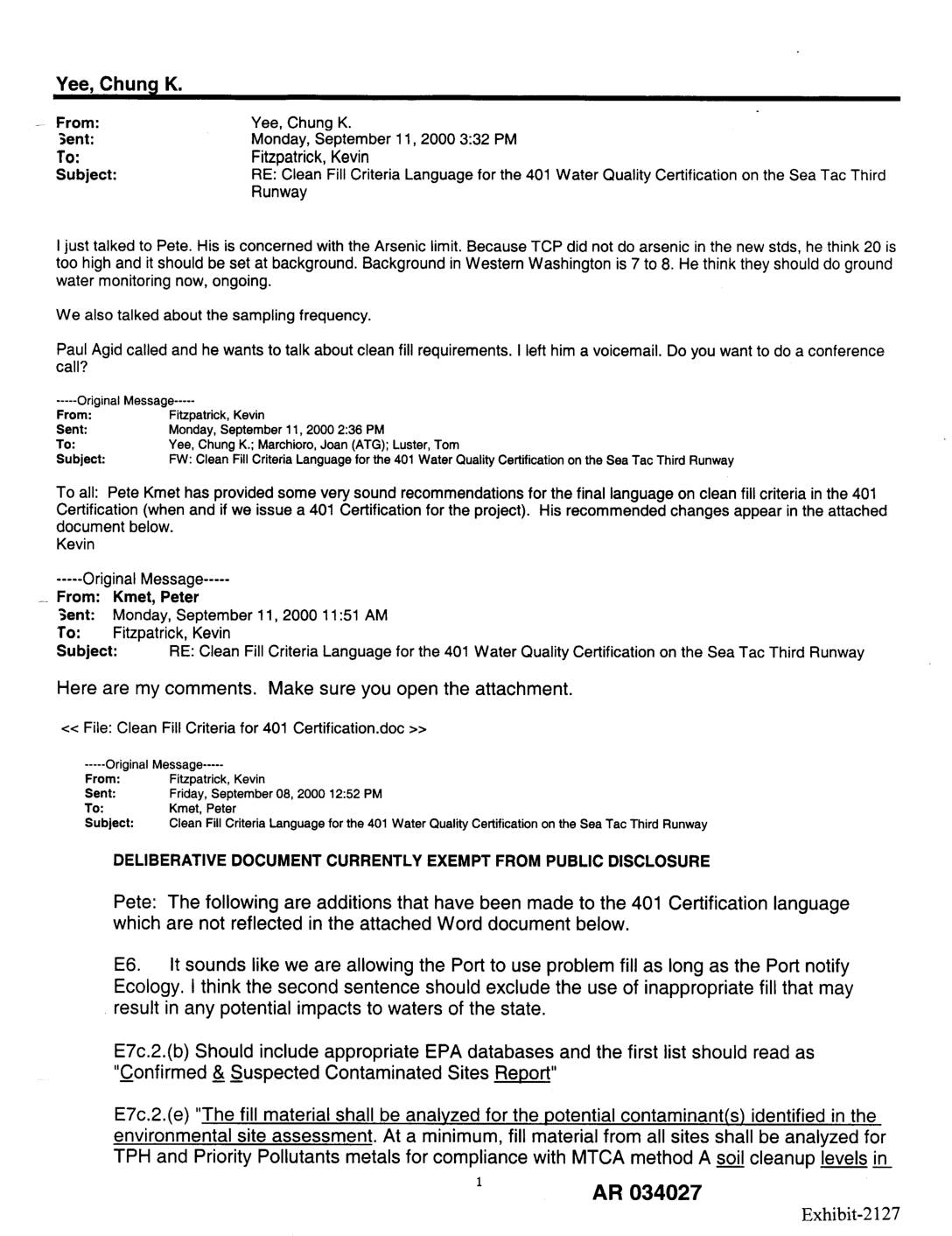
Exhibit 2127: Email Chain RE: Clean Fill Criteria Language for the 401 Water Quality Certification on the Sea-Tac Third Runway
Email chain dated September 11, 2000 among Washington State Department of Ecology staff (Chung K. Yee, Kevin Fitzpatrick, Peter Kmet) and ATG’s Joan Marchioro regarding clean fill criteria language for the 401 Water Quality Certification on the Sea-Tac Third Runway. Peter Kmet raises concerns about arsenic limits (proposed 20 vs. background 7-8 in Western Washington), -
 2000-09-08
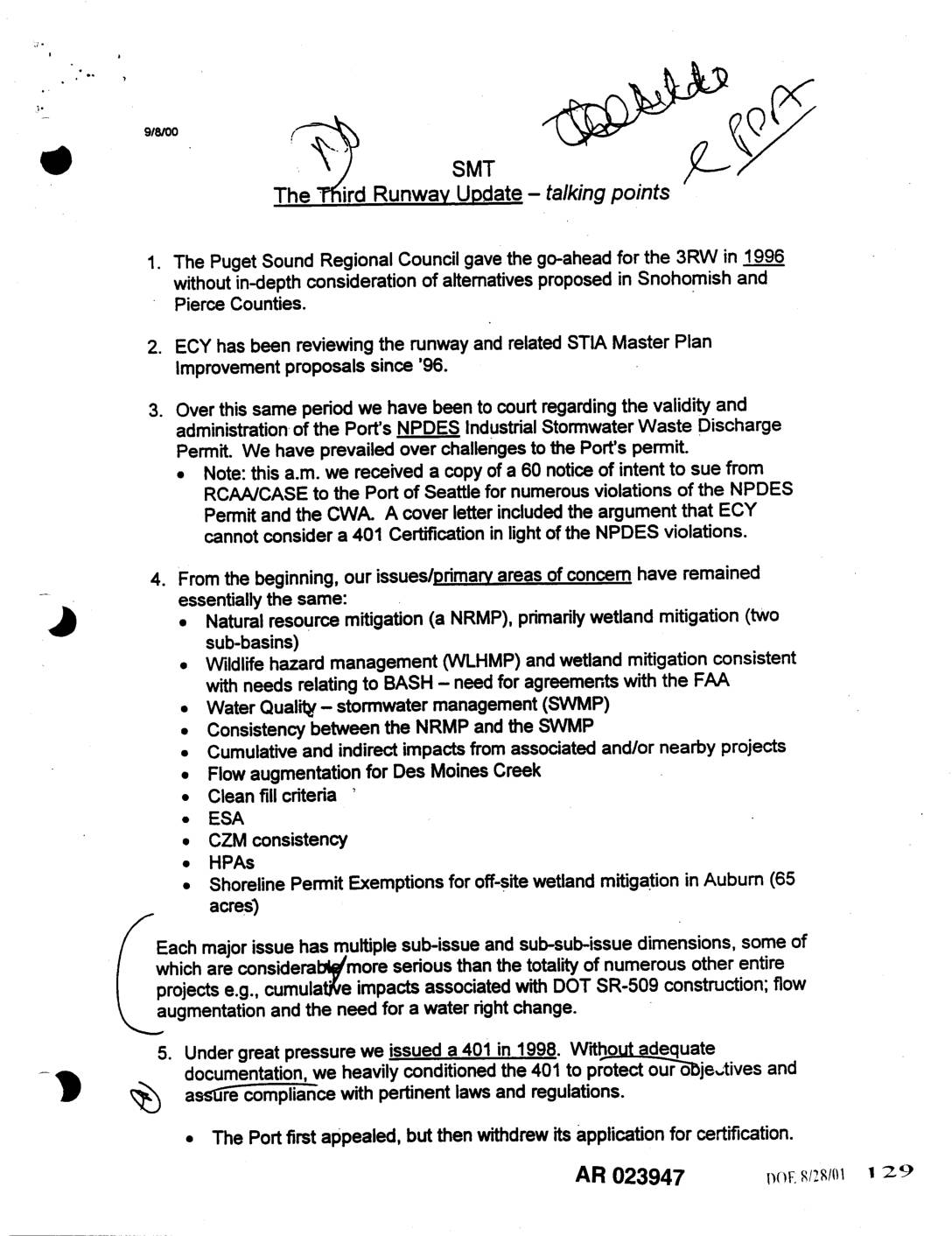
EXH AR023947: Third Runway Update Talking Points — ECY SMT Briefing
This September 2000 internal briefing document from the Washington State Department of Ecology (ECY) outlines the agency's long-running regulatory review of the proposed Third Runway at Seattle-Tacoma International Airport, covering key environmental concerns such as wetland mitigation, stormwater management, and wildlife hazard management. It describes ongoing conflicts with the Port of Seattle over compliance with environmental permits, including a Clean Water Act Section 401 certification that was heavily conditioned in 1998 and subsequently withdrawn by the Port. The document also notes intensifying political pressure from legislators, the Governor's office, and community opposition groups threatening legal action over perceived environmental violations. -
 2000-09-07
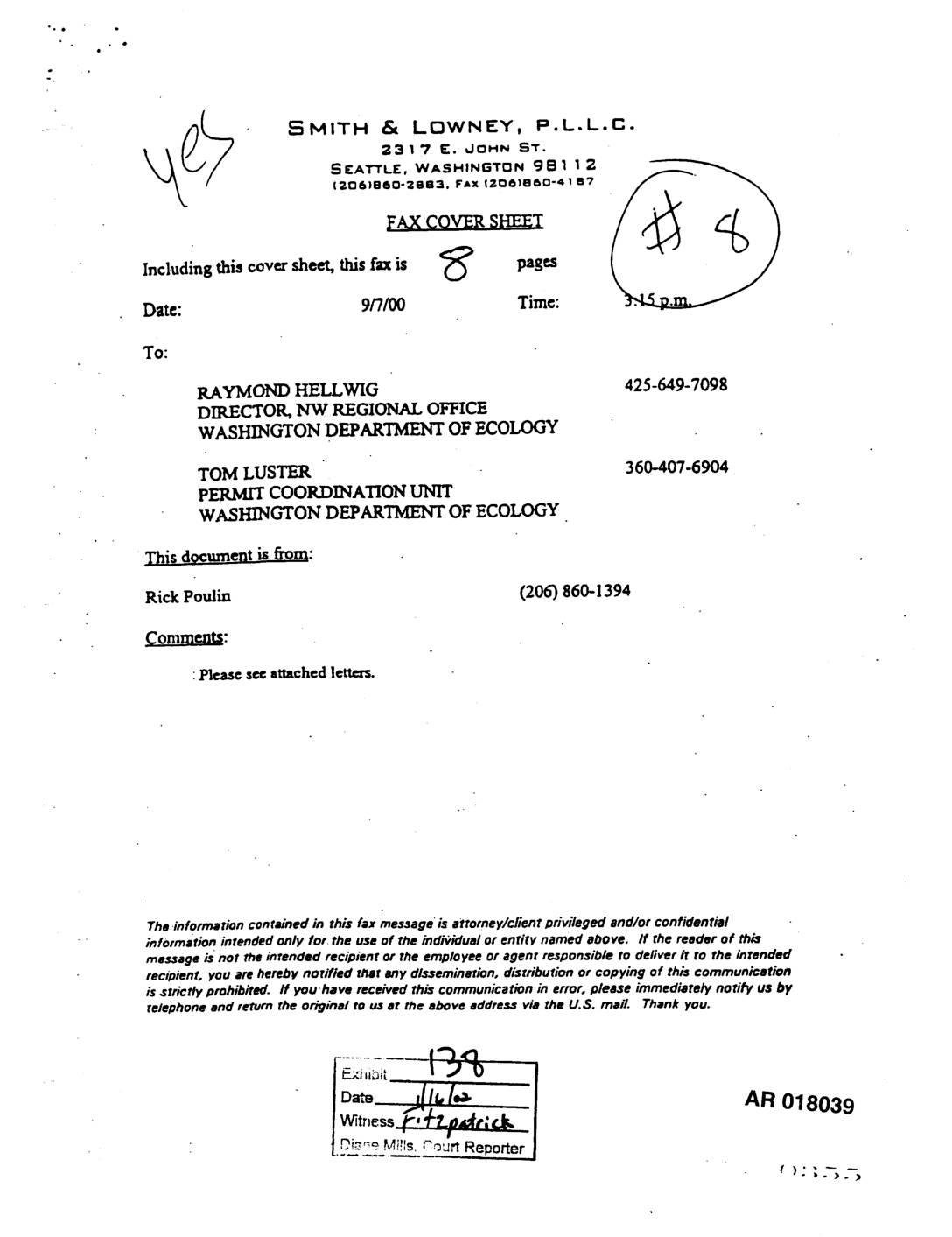
Exhibit 138: Smith & Lowney Letter to Ecology Regarding Port Of Seattle NPDES Permit Violations and Third Runway Water Quality Certification
Fax cover sheet and two-page letter dated September 7, 2000 from Richard A. Poulin of Smith & Lowney, P.L.L.C. to Raymond Hellwig (Director, NW Regional Office, Washington Department of Ecology) and Tom Luster (Permit Coordination Unit, Ecology), on behalf of Citizens Against Seatac Expansion (CASE) and Waste Action Project (WAP). Letter transmits a 60-day Notice -
 2000-09-07
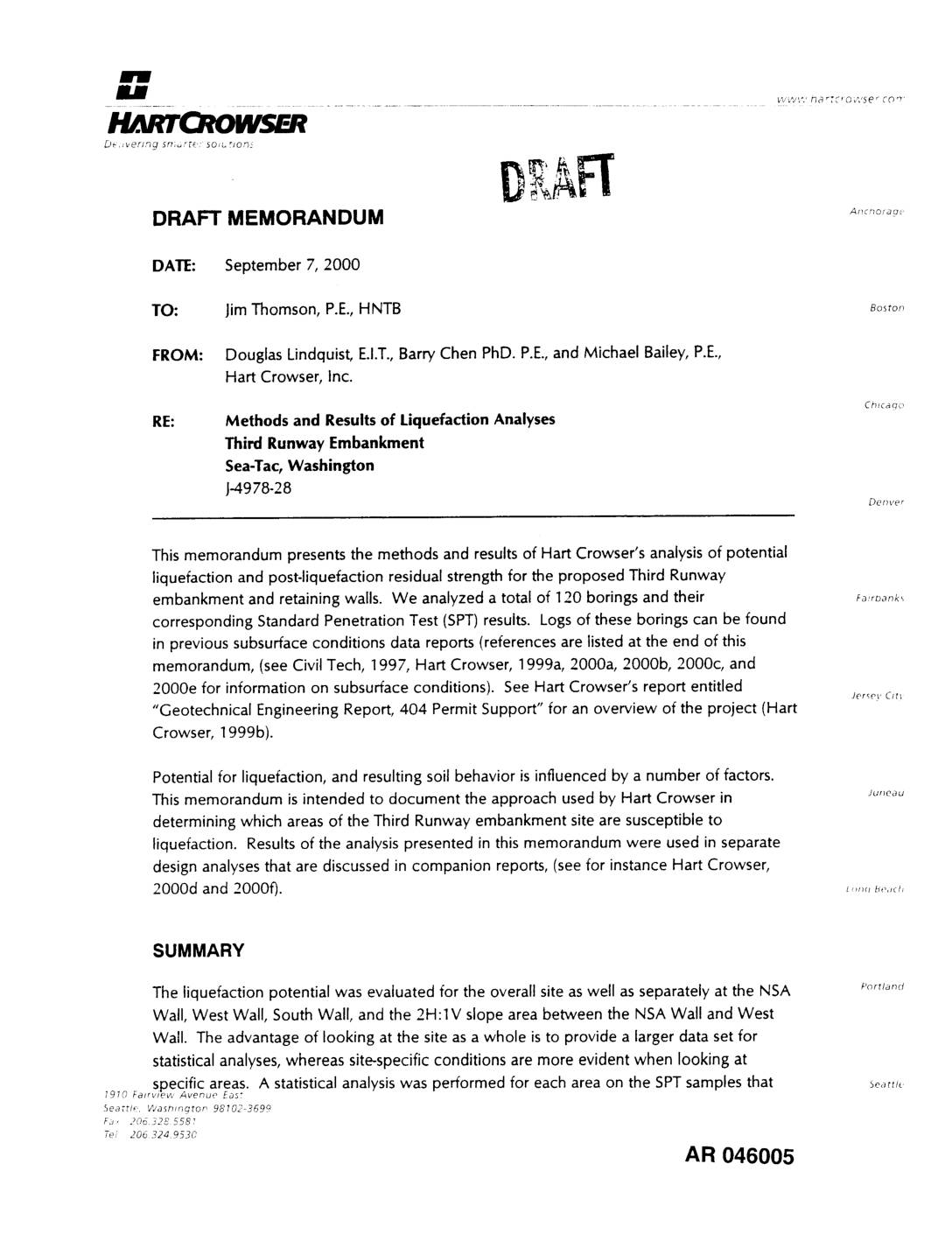
EXH AR046005: Draft Memorandum — Methods and Results of Liquefaction Analyses, Third Runway Embankment, Sea-Tac, Washington
Draft memorandum J-4978-28 from Hart Crowser (Douglas Lindquist, Barry Chen PhD P.E., Michael Bailey P.E.) to Jim Thomson P.E. at HNTB, dated September 7, 2000, presenting methods and results of liquefaction analyses for the proposed Third Runway embankment and retaining walls at Sea-Tac, Washington. Analyzed 120 borings with Standard Penetration Test (SPT) results from 112 -
 2000-09-07
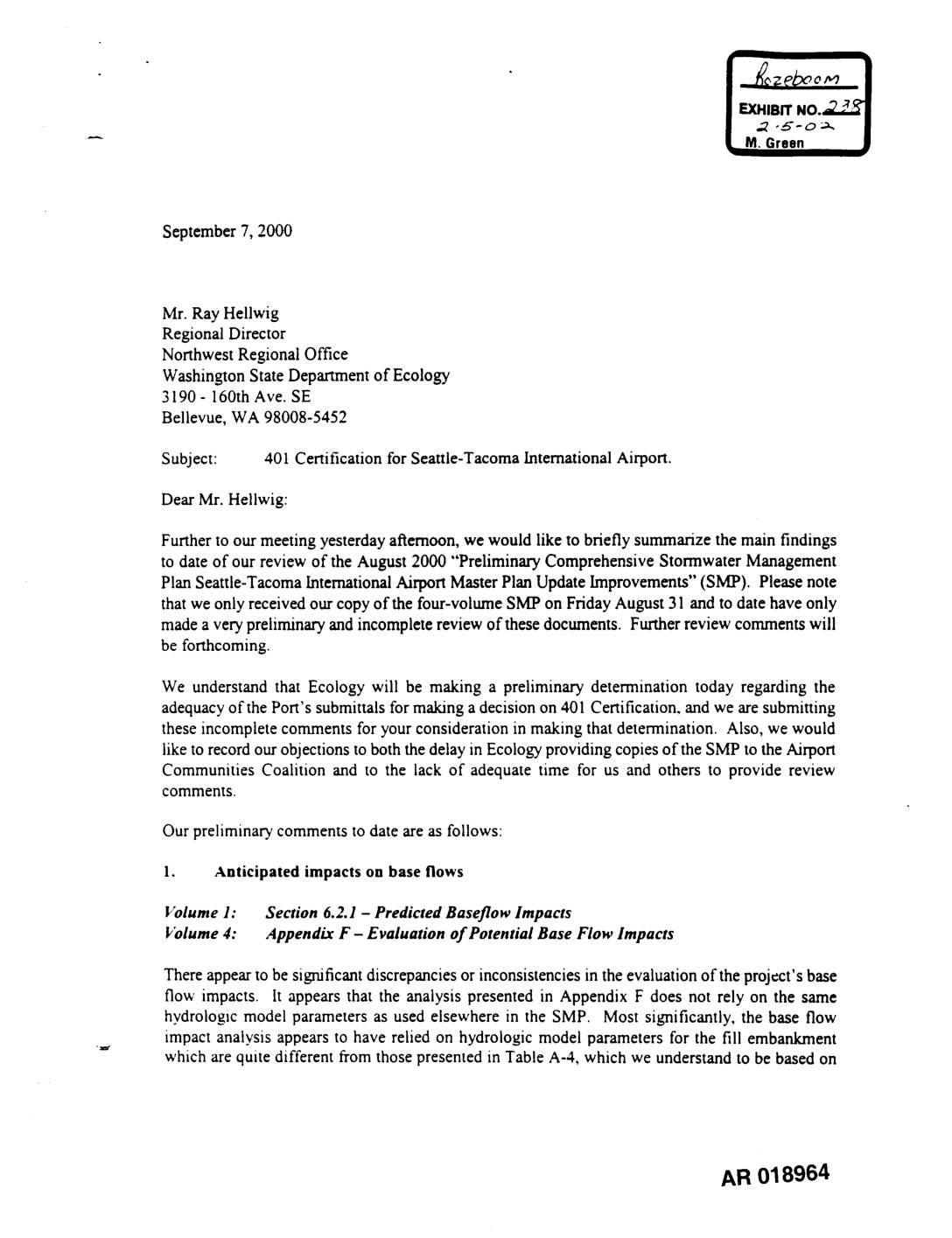
EXH 238: ACC Letter to Ecology — 401 Certification STIA Master Plan Update Preliminary SMP Review Comments
A September 2000 letter from the Airport Communities Coalition to the Washington State Department of Ecology raises concerns about the adequacy of Seattle-Tacoma International Airport's Stormwater Management Plan submitted for 401 Certification. The letter identifies potential flaws in the analysis of base flow impacts on Miller Creek, inconsistencies between the new plan and earlier natural resource mitigation documents, and concerns about proposed changes to watershed basin boundaries. The authors argue that insufficient time was provided for proper review and that the plan fails to fully account for cumulative water quantity impacts of future development. -
 2000-09-07
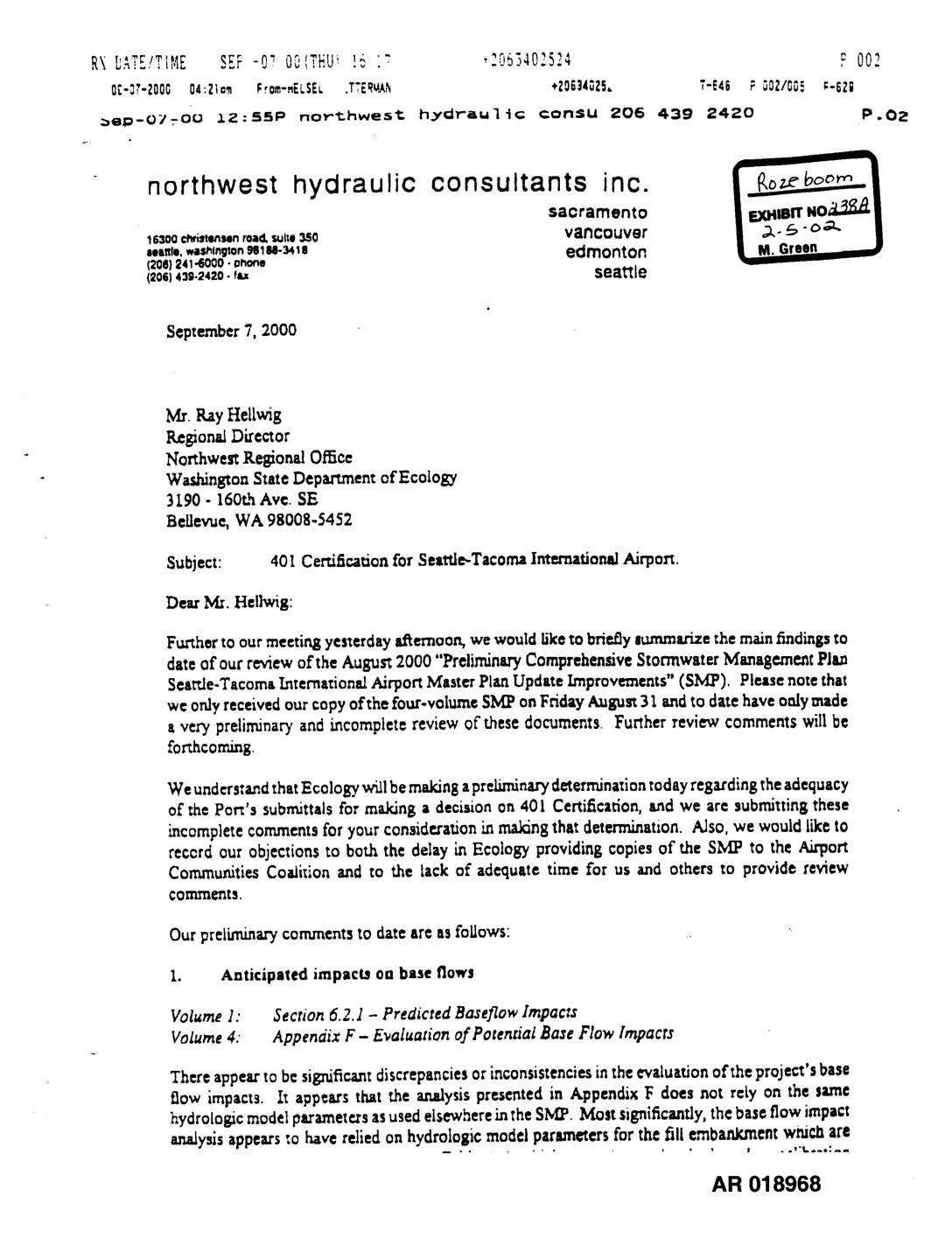
EXH 238A: Northwest Hydraulic Consultants Letter to Ecology — 401 Certification STIA Master Plan Update Stormwater Management Plan Preliminary Review
A September 7, 2000 letter from Northwest Hydraulic Consultants to the Washington State Department of Ecology raises concerns about the adequacy of the Port of Seattle's Stormwater Management Plan for Sea-Tac Airport's Master Plan expansion. The letter identifies significant technical discrepancies in the plan's analysis of baseflow impacts on Miller Creek, questions the reliability of proposed water-rights acquisitions as mitigation, and flags inconsistencies between the stormwater plan and the Natural Resource Mitigation Plan. The consultants also object to the limited time provided for independent review of the four-volume plan and warn that cumulative water quantity impacts of future commercial development in the airport acquisition area have not been adequately assessed.