TagWashington State Legislature(119)
-
 2024-01-16
Senate bill report SB 5955: Mitigating harm and improving equity in large port districts
Washington Senate Bill 5955 would require large port districts operating airports with more than 900 daily flights — such as Sea-Tac — to launch a remedial mitigation program addressing failed soundproofing, air quality, green space, and community facilities in noise-impacted neighborhoods. The bill would fund these programs through a portion of the port's annual property tax levy revenue and establish a state environmental equity fund, managed by the Department of Commerce, to provide grants and loans to qualifying ports. Property owners within ten miles of the airport experiencing 55 decibels or more of aircraft noise would be eligible for free inspections and mitigation equipment, with priority given to homes where previously installed soundproofing has failed. -
 2024-01-15
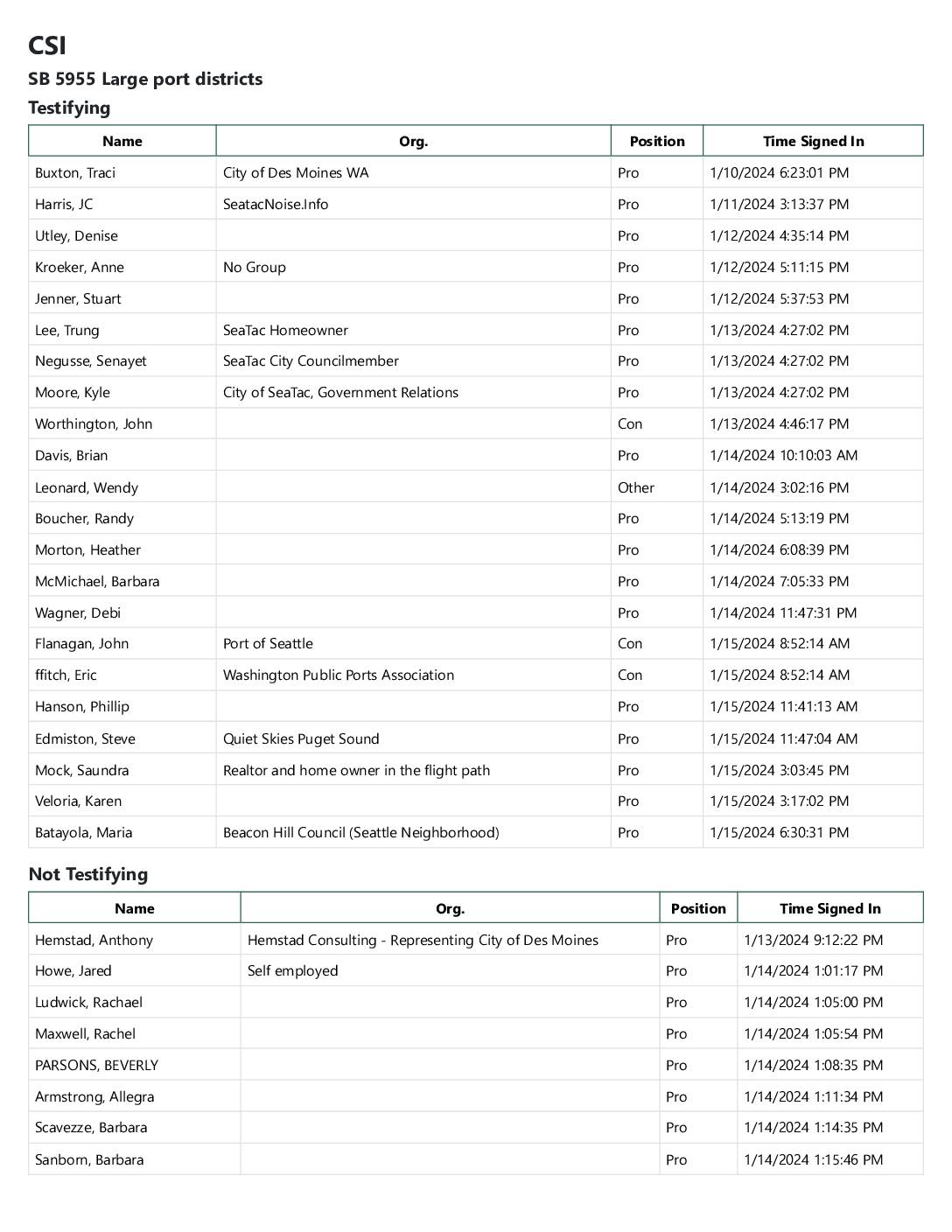
SB 5955 Large port districts – committee sign-in sheet
This document lists sign-ins for a Washington State legislative hearing on SB 5955, a bill concerning large port districts, held in January 2024. The overwhelming majority of participants — including residents, neighborhood groups, and city officials from communities like SeaTac, Des Moines, and Seattle — registered in support of the bill, while only two individuals, representing the Port of Seattle and the Washington Public Ports Association, registered in opposition. The bill and its broad community backing appear to be driven by concerns about airport noise and its impact on neighborhoods surrounding Seattle-Tacoma International Airport. -
 2024-01-15
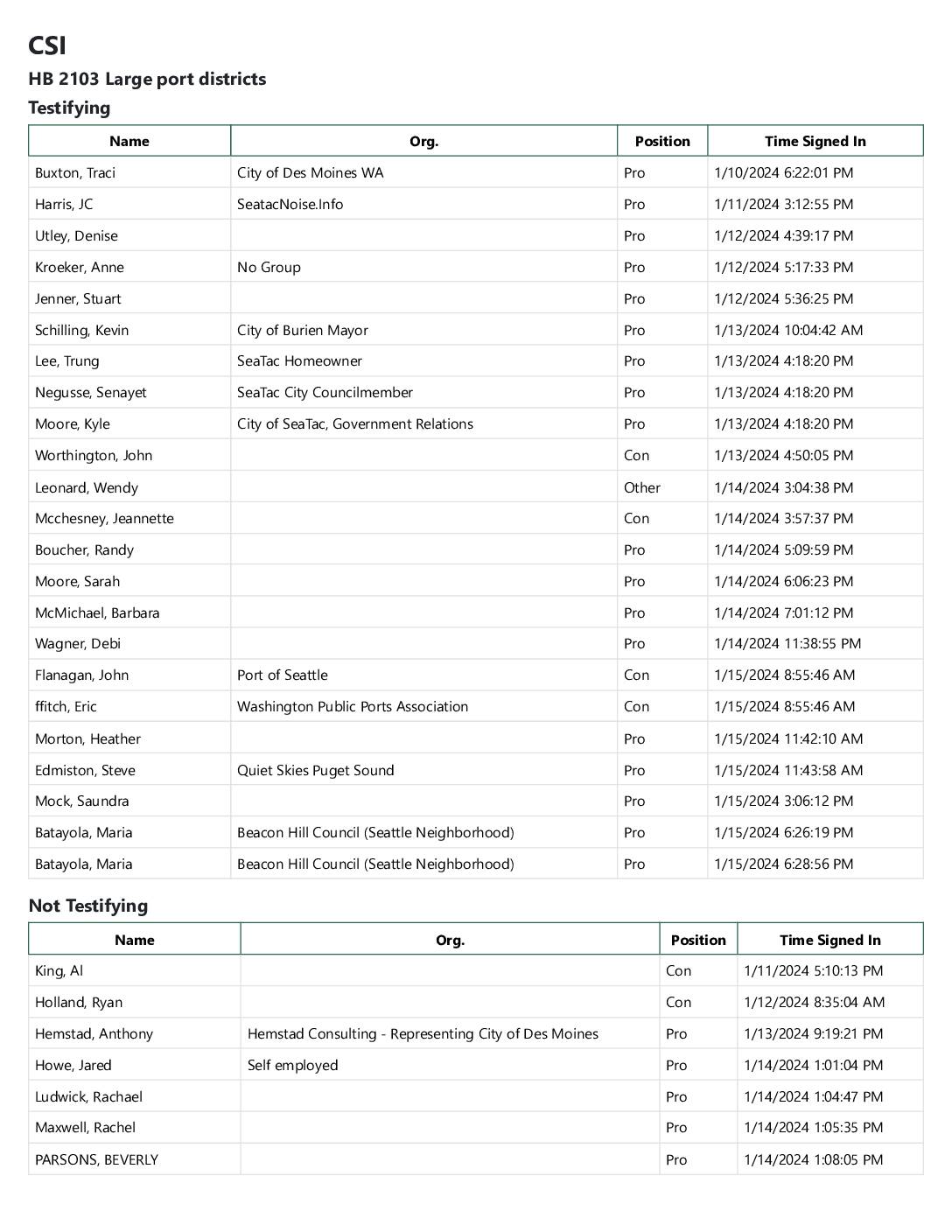
HB 2103 large port districts – CSI sign-in sheet
This document is a sign-in sheet for public testimony on Washington State House Bill 2103, concerning large port districts, recorded in January 2024. The bill drew significant public interest, with the majority of participants — including representatives from the cities of Des Moines, Burien, and SeaTac, as well as noise advocacy groups like SeatacNoise.Info and Quiet Skies Puget Sound — expressing support, while opponents included the Port of Seattle and the Washington Public Ports Association. The testimony period reflects an ongoing community debate over local government oversight of large port districts, particularly in relation to aircraft noise impacts around Seattle-Tacoma International Airport. -
 2024-01-08
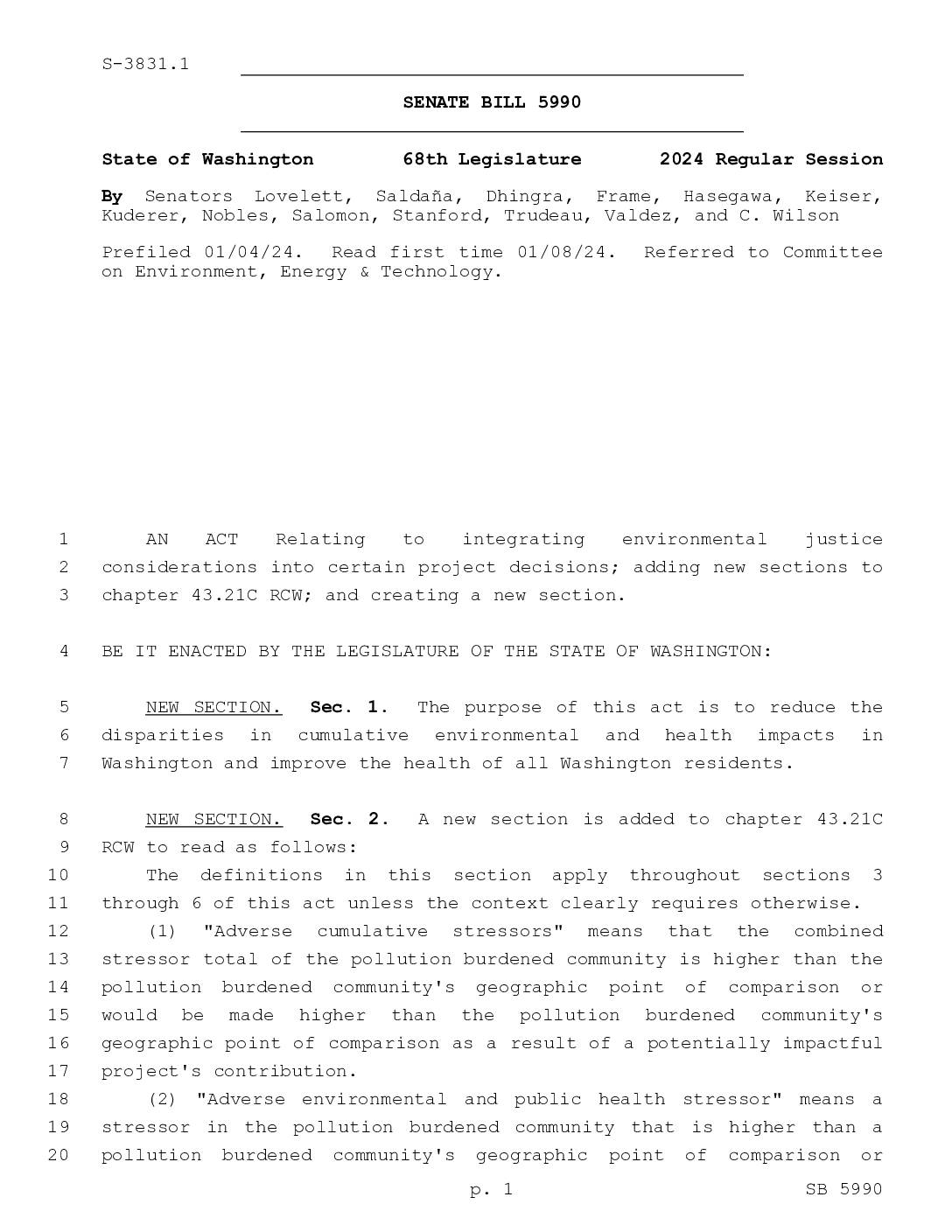
Senate Bill 5990: Integrating Environmental Justice Considerations into Certain Project Decisions
Washington Senate Bill 5990, introduced in January 2024, aims to reduce environmental health disparities by requiring assessment of cumulative pollution burdens on overburdened communities before approving new projects. The bill defines key terms such as 'disproportionate impact' and 'environmental justice impact statement,' and establishes a framework to evaluate stressors like air pollution, water quality, and public health risks. Note: this bill addresses broad environmental justice concerns statewide and does not specifically address Sea-Tac Airport noise policy. -
 2024-01-08
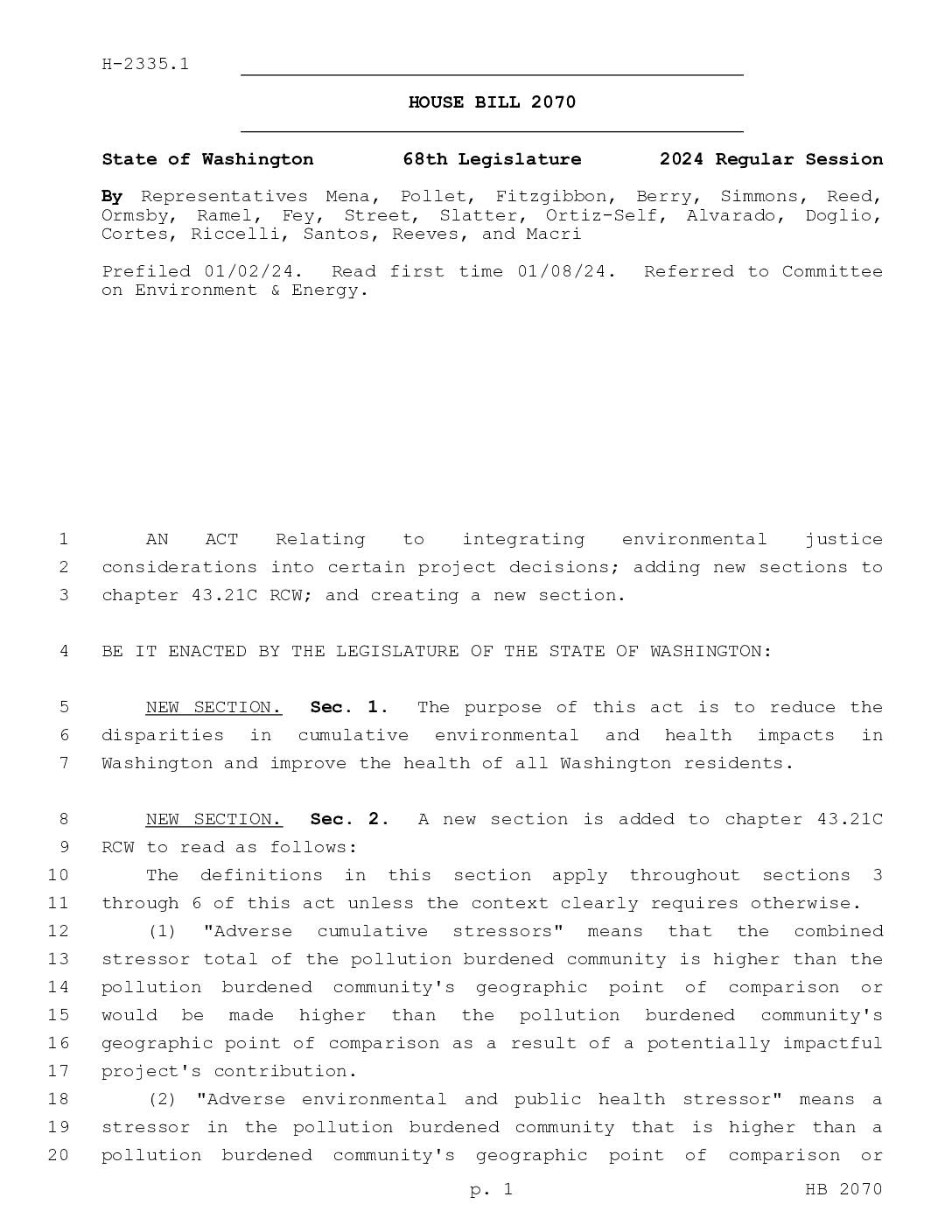
HB 2070: Integrating Environmental Justice Considerations into Certain Project Decisions
Washington House Bill 2070 (2024) aims to reduce environmental health disparities by requiring environmental justice impact assessments for projects that may add pollution burdens to already overburdened communities. The bill defines key terms such as 'disproportionate impact' and 'adverse cumulative stressors' to evaluate whether a proposed project would worsen air, water, or other environmental conditions in vulnerable neighborhoods. Note: this bill addresses broad environmental justice considerations statewide and does not specifically concern Sea-Tac Airport noise policy. -
 2024-01-03
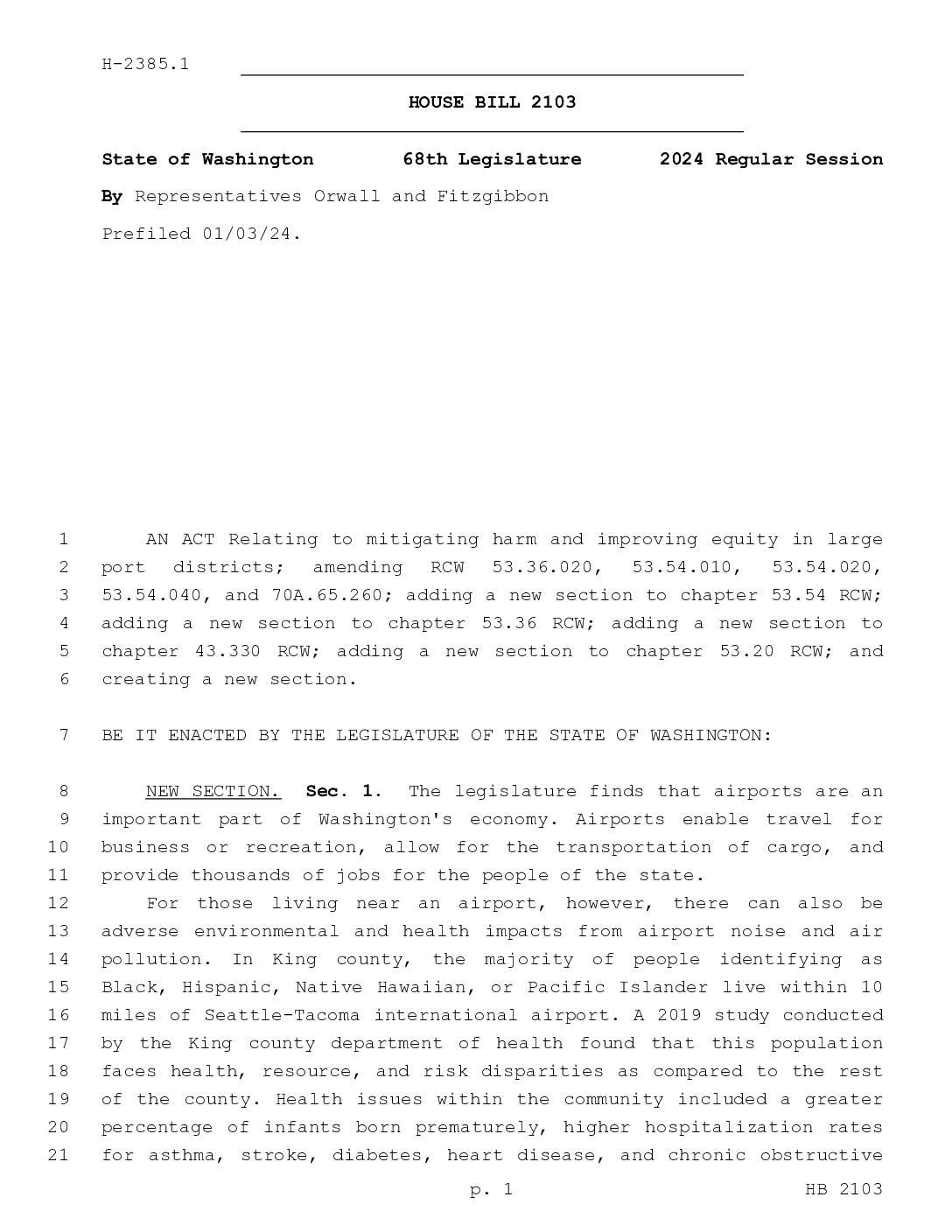
House Bill 2103: Mitigating Harm and Improving Equity in Large Port Districts
Washington House Bill 2103 (2024) requires large port districts operating major airports, such as Seattle-Tacoma International Airport, to dedicate a growing portion of their property tax levy revenue toward programs that reduce noise and air pollution impacts on nearby communities. The bill was prompted by health and equity concerns, as studies show that communities of color living close to Sea-Tac face higher rates of asthma, heart disease, premature births, and other health disparities. Mitigation programs funded under the bill may include repairing failed soundproofing equipment, providing air purifiers, creating urban green spaces, and supporting indoor community facilities in affected neighborhoods. -
 2024-01-01
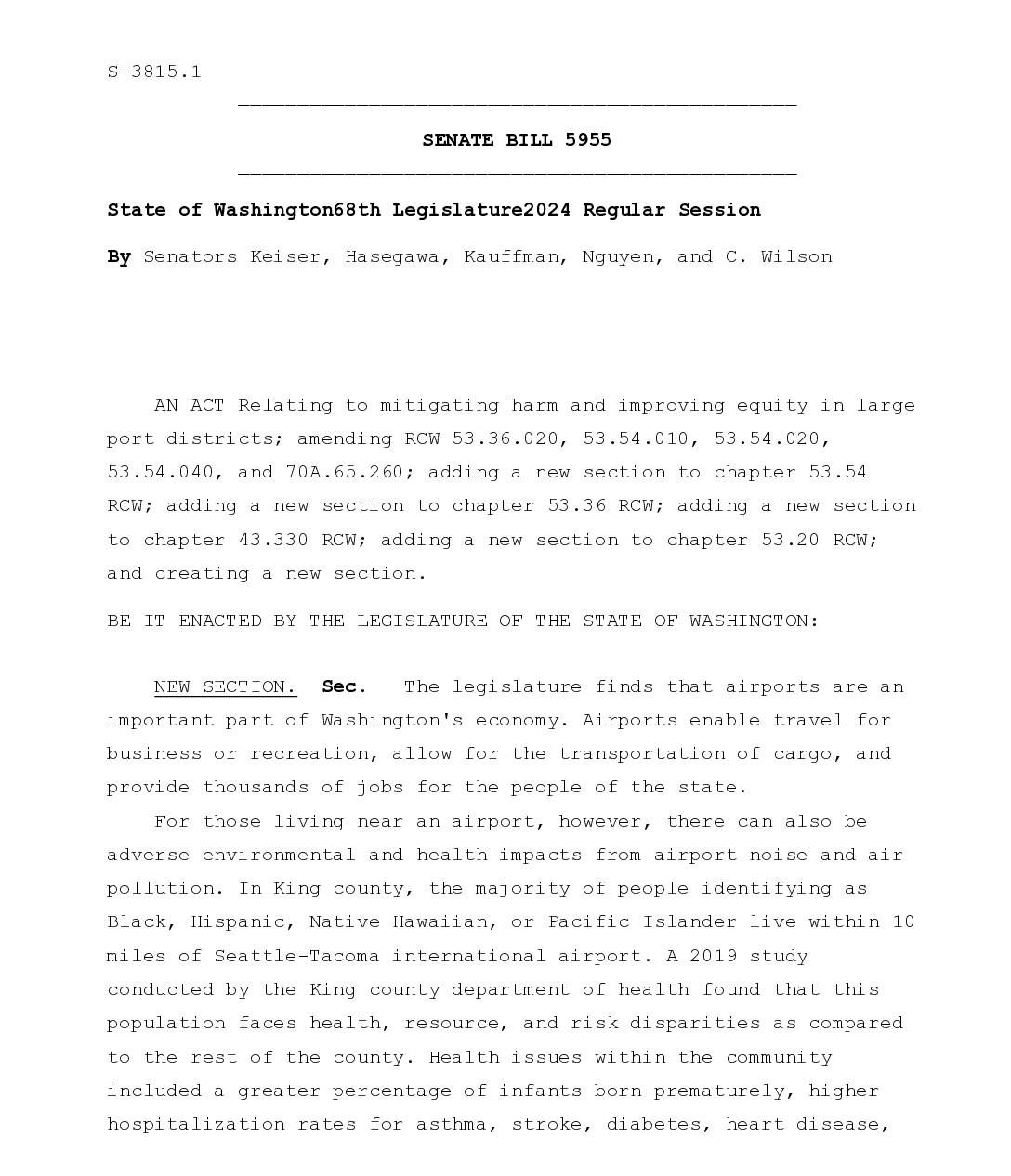
Senate Bill 5955: Mitigating Harm and Improving Equity in Large Port Districts
Washington Senate Bill 5955 (2024) requires large port districts operating airports, such as the Port of Seattle which runs Sea-Tac International Airport, to dedicate a growing share of their annual property tax levy revenue toward programs that reduce noise and air pollution impacts on nearby communities. Starting in 2024, at least half of any levy revenue increase must fund mitigation efforts, rising to a minimum of 1% of total levy revenue by 2025 and increasing by 1% each year up to a cap of 10%. The bill was introduced in response to documented health disparities—including higher rates of asthma, heart disease, and premature births—affecting Black, Hispanic, Native Hawaiian, and Pacific Islander residents who disproportionately live within 10 miles of Sea-Tac Airport. -
 2024-01-01
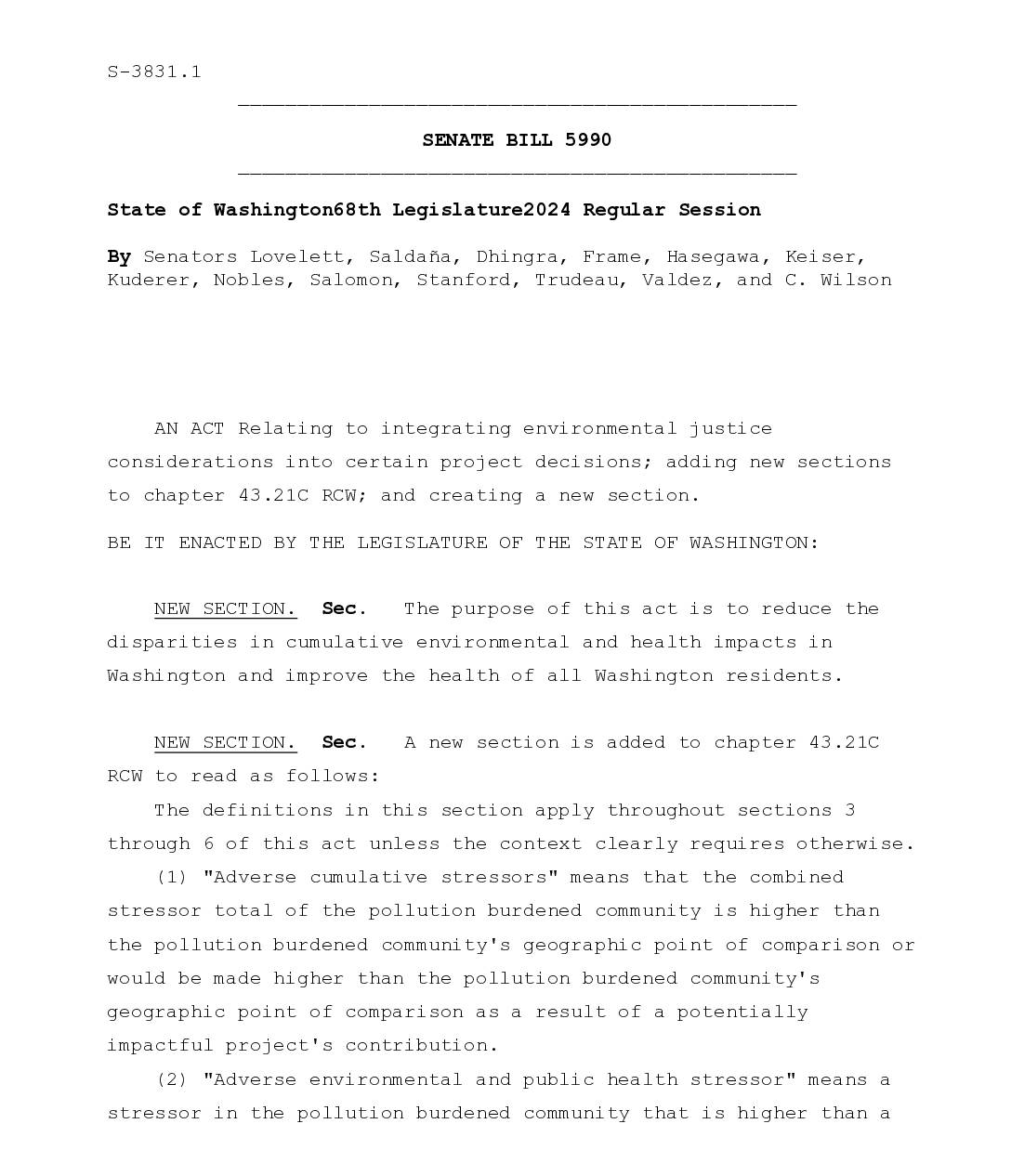
Senate Bill 5990: Integrating Environmental Justice Considerations into Certain Project Decisions
Washington Senate Bill 5990, introduced in the 2024 legislative session, aims to reduce environmental health disparities by requiring detailed impact assessments before approving projects in communities already burdened by pollution. The bill defines key terms such as 'disproportionate impact' and 'environmental justice impact statement,' and establishes a framework for evaluating whether new or expanded projects would worsen cumulative health and environmental stressors in overburdened communities. Note: this bill addresses broad environmental justice policy statewide and does not specifically address Sea-Tac Airport noise or aviation-related impacts. -
 2023-10-01
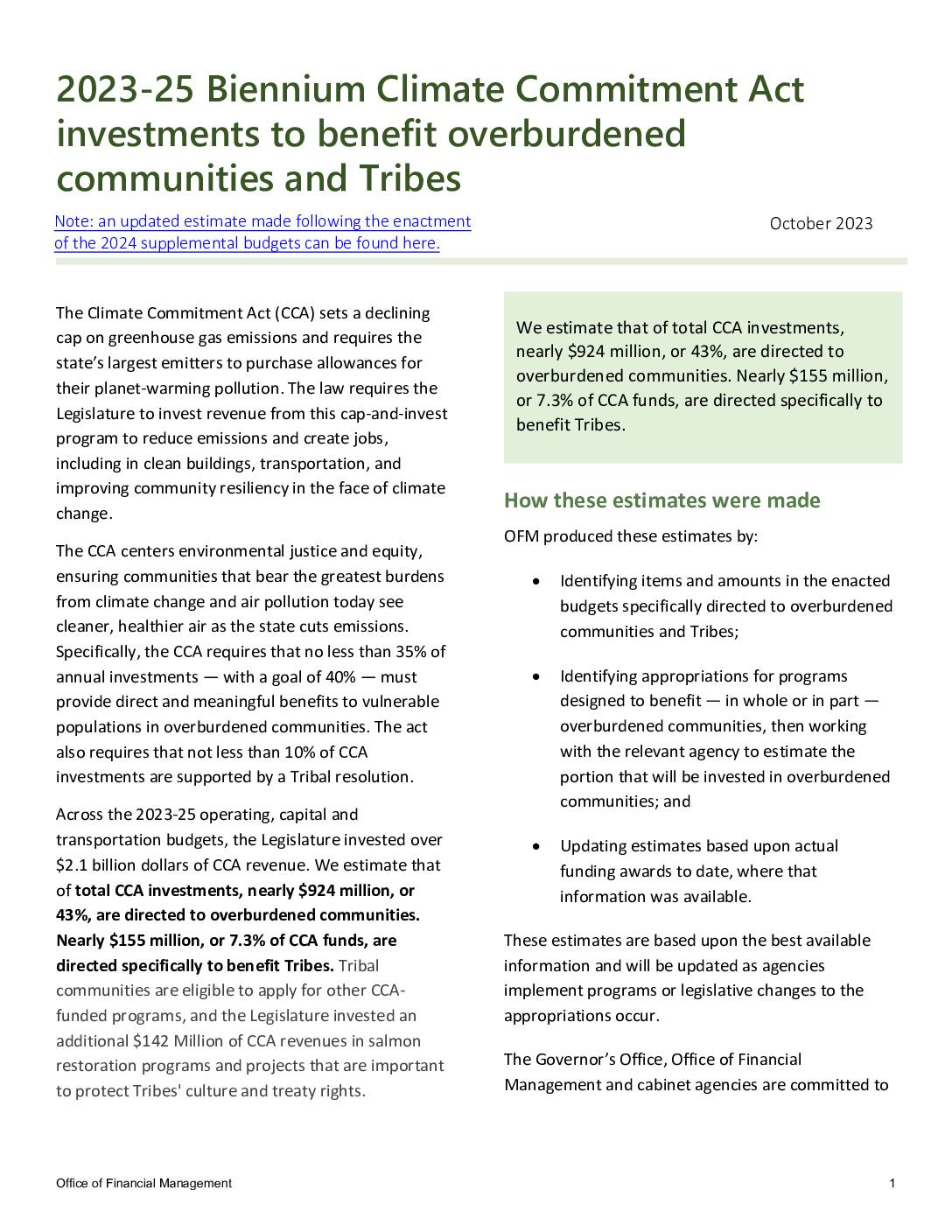
2023-25 Biennium Climate Commitment Act Investments to Benefit Overburdened Communities and Tribes
Washington State's Climate Commitment Act invested over $2.1 billion in the 2023-25 budget cycle to reduce greenhouse gas emissions, with an estimated $924 million (43%) directed to overburdened communities and $155 million (7.3%) specifically benefiting Tribes. Key investments include rebates for energy-efficient home equipment, weatherization assistance for low-income households, transit grants, bike and pedestrian safety improvements, and air quality programs in heavily polluted communities. An additional $142 million was directed to salmon restoration projects important to Tribal culture and treaty rights. -
 2023-09-28
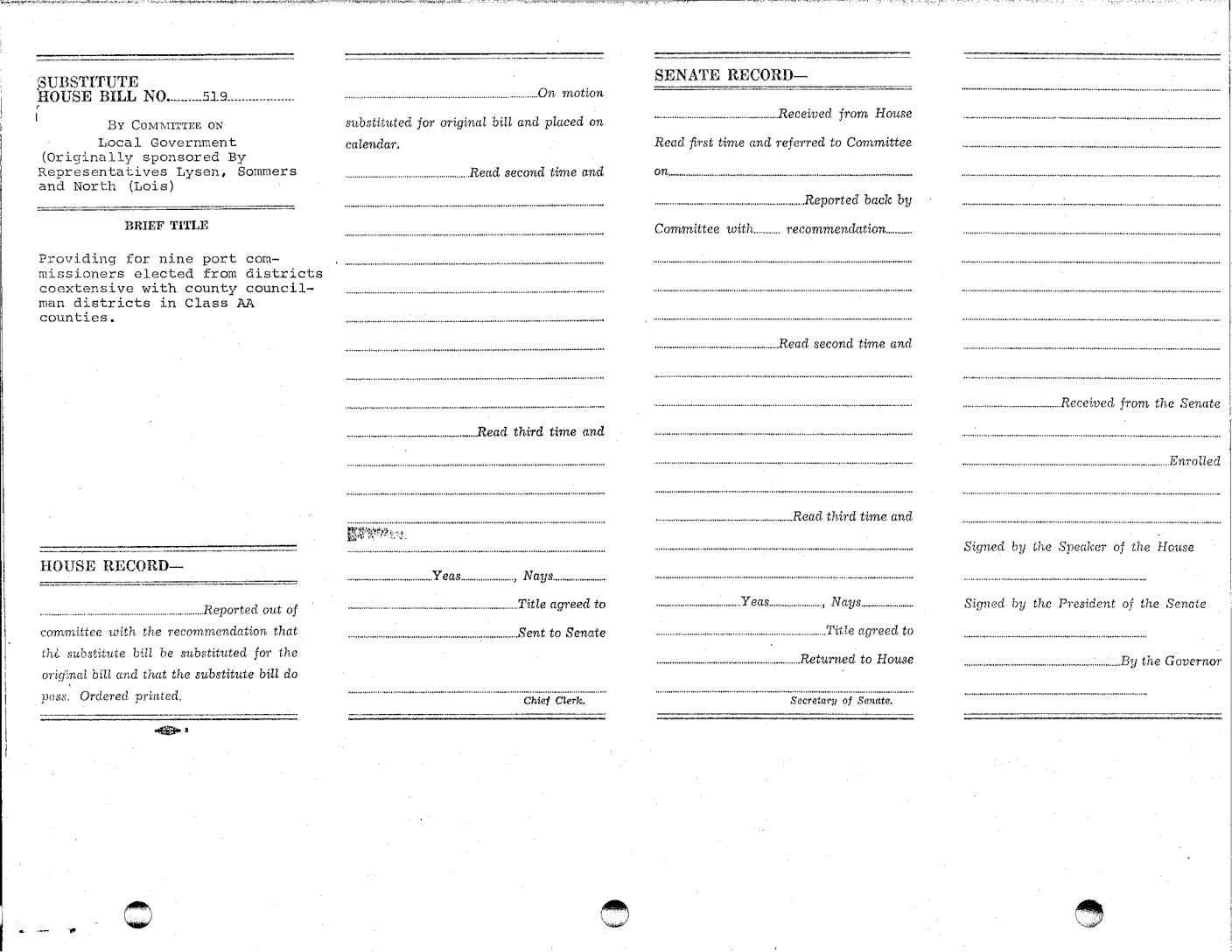
Substitute House Bill No. 519: Providing for nine port commissioners elected from districts coextensive with county councilman districts in Class AA counties
Washington State Substitute House Bill No. 519 proposes expanding port district commissions in Class AA counties from three to nine commissioners, each elected from districts that align with county councilman districts. The bill outlines election procedures, term lengths, and district boundaries for the new commissioner positions. Though focused on port governance structure, this legislation directly affects the Port of Seattle, which oversees Sea-Tac Airport and its surrounding communities.