Skip to content
  • STNI
  • Statistics
    • Ops and Passengers
      • King County International Airport (Boeing Field) Annual Operations
    • Financials
    • Aviation fuel uplift in the State of Washington 2018 – 2025
      • Aviation Fuel Tax Revenue in the State of Washington 1983-2025
      • Aviation Fuel Uplift at Sea-Tac Airport
    • Air Quality Monitoring
    • Flight Tracking
      • Flow and Flight Tracks
      • Five Year Comparison
      • Busiest Hours and Days
    • SEL Noise Reports & Graphs
      • About The Permanent Noise Monitors
      • Minutes of Quiet by Noise Monitor
      • Noise Events mapped
      • Noise Events (SEL)
    • Runways
    • Employees
    • Real Estate
      • Port Properties and Trees mapped
    • Parking
  • Events
  • Protest
    • Regular Events
    • Legislation 2026
    • Complain about a particular flight
    • Advocacy Organizations
    • Media Outlets
    • People
    • The Port of Seattle
      • Commission Meetings
      • Public Records Requests
      • StART
      • Highline Forum
    • Contact Your Electeds
  • Resources
    • FAQs
      • FAA Occurrences/Accidents/Indents
    • The SAMP
      • SAMP Public Comment Template
        • Two versions of Appendix K: NEPA/SEPA 2018 vs 2023
      • SAMP NTP: 31 projects by the numbers
      • SEPA Draft EIS (2026)
      • SAMP Record of Decision/FONSI (2025)
      • SAMP Draft EA (October 2024)
      • 2018 Scoping
    • Port Packages
      • Port Package Property Costs
      • Port Packages mapped
      • The Port Package Explainer
      • So you want a (first-time) Port Package? Start here
      • Port Package Looker Upper
      • How do I determine if I have a Port Package or Avigation Easement?
      • Progress on Port Package Update legislation
      • Having a Port Package Problem?
      • Port Package Site Visit Follow-Up
    • Document Library
    • Explainers
      • The Airport Law Cheat Sheet
      • The Grant Explainer
    • External Articles
    • History
      • Timeline
      • The Sea-Tac Communities Plan
        • Sea-Tac Communities Plan – Planning Maps
      • PSRC Third Runway Decision Process
    • Studies
    • Videos
  • Stories
  • Mission
  • Subscribe
  • Contact
Scroll down to content

Get InformedStay Informedx

I understand that you will never share my information with anyone, you will only use it to keep me updated on relevant events and that I may unsubscribe at any time.

STNI

STNISea-Tac Noise.Info

  • Solve for Sea-Tac. Solve for every airport.
  • Since 2016, working to obtain justice for everyone living under the flight path.
  • Less Noise. Cleaner Air. Better Public Health. Compensation.
  • Everything you think you know about the airport is wrong.

TagWAC(40)

Advanced Search Options

  • Dates
  • Media
    • External Articles
    • Images
    • PDFs
    • Video
    • Audio
  • Order By
  • 1997-11-18

    EXH AR017515: Washington Administrative Code Chapter 173-201A — Water Quality Standards for Surface Waters of the State of Washington

    WAC Chapter 173-201A establishes water quality standards for surface waters of the State of Washington under RCW 90.48, including definitions for AKART, background conditions, best management practices (BMP), fecal coliform, mixing zones, pH, turbidity, wetlands, nonpoint source pollution, and trophic state. Covers general water use and criteria classes (Class AA extraordinary), dissolved oxygen standards, fecal
    TagsACC, Ecology, Pollution Control Hearings Board, Puget Sound, WAC, Washington Administrative Code, Water QualityFolderBox 08
  • 1996-02-01

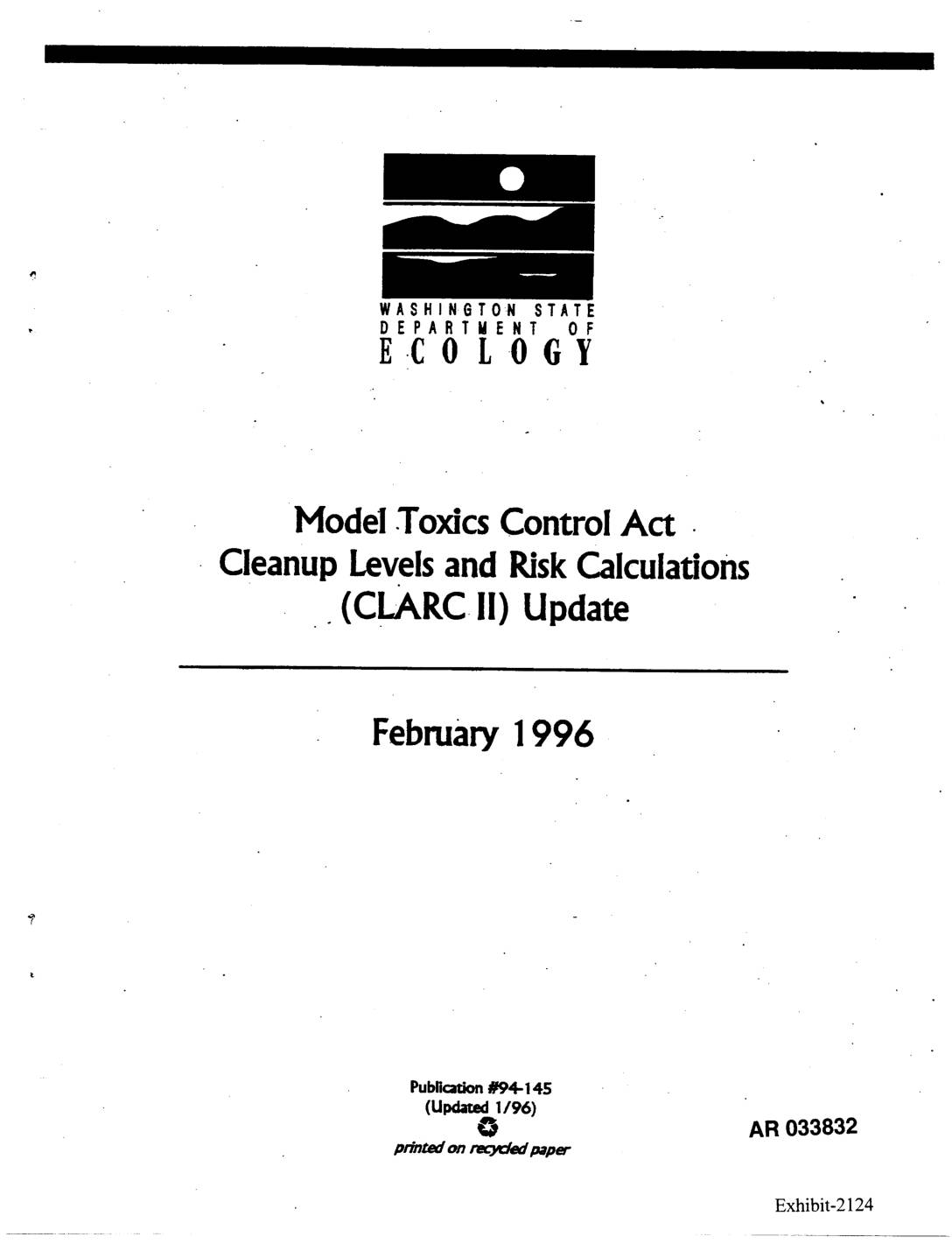
    Exhibit 2124: Model Toxics Control Act Cleanup Levels and Risk Calculations (CLARC II) Update, February 1996

    Washington State Department of Ecology publication #94-145 (updated 1/96) presenting the February 1996 annual update to the MTCA (Model Toxics Control Act) Cleanup Standards under CLARC II. Covers Method B and Method C cleanup levels for soil and groundwater, reference doses (RfD), cancer potency factors, hazard quotients, WAC 173-340-740 and WAC 173-340-745 calculations, inhalation correction
    TagsACC, Ecology, Model Toxics Control Act, MTCA, Pollution Control Hearings Board, soil, WACFolderBox 14
  • 1995-12-14

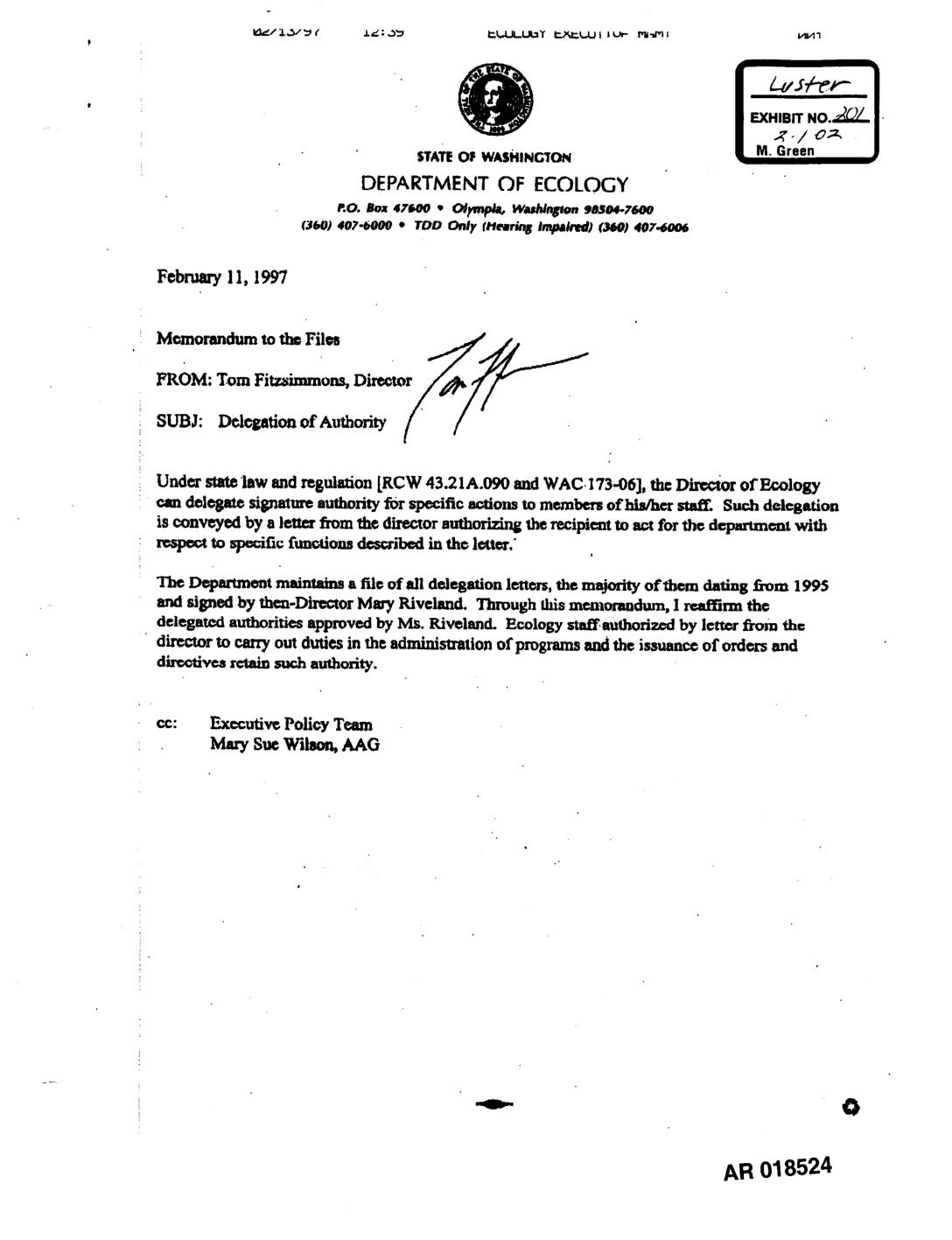
    Exhibit 201: Ecology Delegation of Authority — Tom Luster, Section 401 Certifications and CZM Consistency Determinations

    These three pages from the Washington State Department of Ecology document the delegation of signature authority to staff member Tom Luster, allowing him to issue routine Section 401 water quality certifications, Coastal Zone Management consistency determinations, and related administrative orders. Originally signed by Director Mary Riveland in December 1995, the authority was reaffirmed by Director Tom Fitzsimmons in February 1997. The delegation includes a succession of authority chain to ensure continuity if Luster is absent or leaves his position.
    TagsACC, Ecology, Environmental Impact Statement, PCHB, Pollution Control Hearings Board, RCW, WACFolderBox 08
  • Washington Administrative Code WAC 173-60-050 Noise Exemptions

    Exemptions. (1) The following shall be exempt from the provisions of WAC 173-60-040 between the hours of 7:00 a.m. and 10:00 p.m.: (a) Sounds originating from residential property relating to temporary projects for the maintenance or repair of homes, grounds and appurtenances. (b) Sounds created by the discharge of firearms on authorized shooting ranges. (c)
    CategoriesLegislation TagsWAC, Washington Administrative Code
  • 1993-11-24

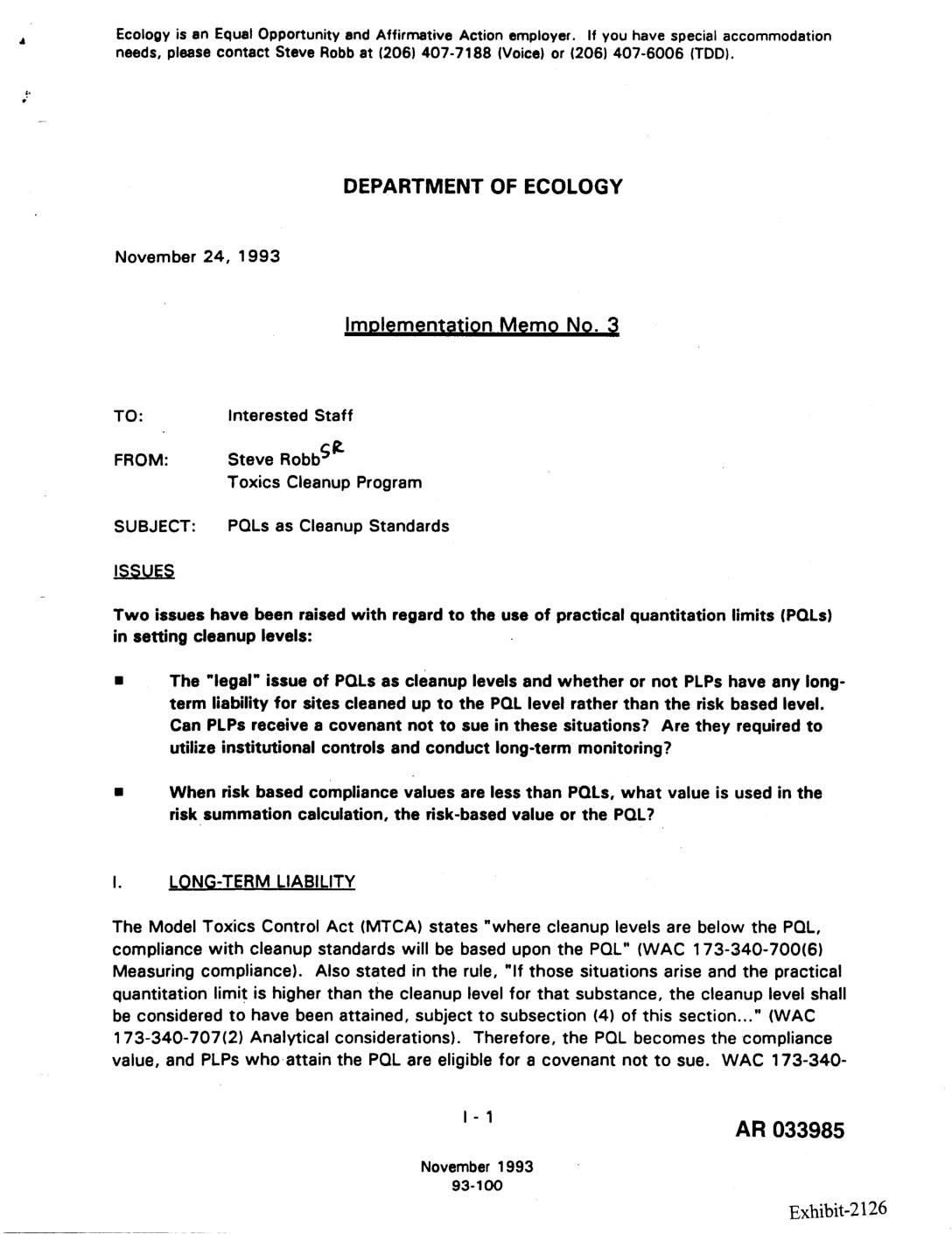
    Exhibit 2126: Implementation Memo No. 3 — PQLs as Cleanup Standards

    Implementation Memo No. 3 dated November 24, 1993, from Steve Robb of the Washington State Department of Ecology Toxics Cleanup Program to Interested Staff, addressing two issues regarding practical quantitation limits (PQLs) as cleanup standards under the Model Toxics Control Act (MTCA). Covers long-term liability for potentially liable persons (PLPs) who clean up to PQL
    TagsACC, Ecology, Model Toxics Control Act, MTCA, Pollution Control Hearings Board, soil, WACFolderBox 14
  • 1993-11-24

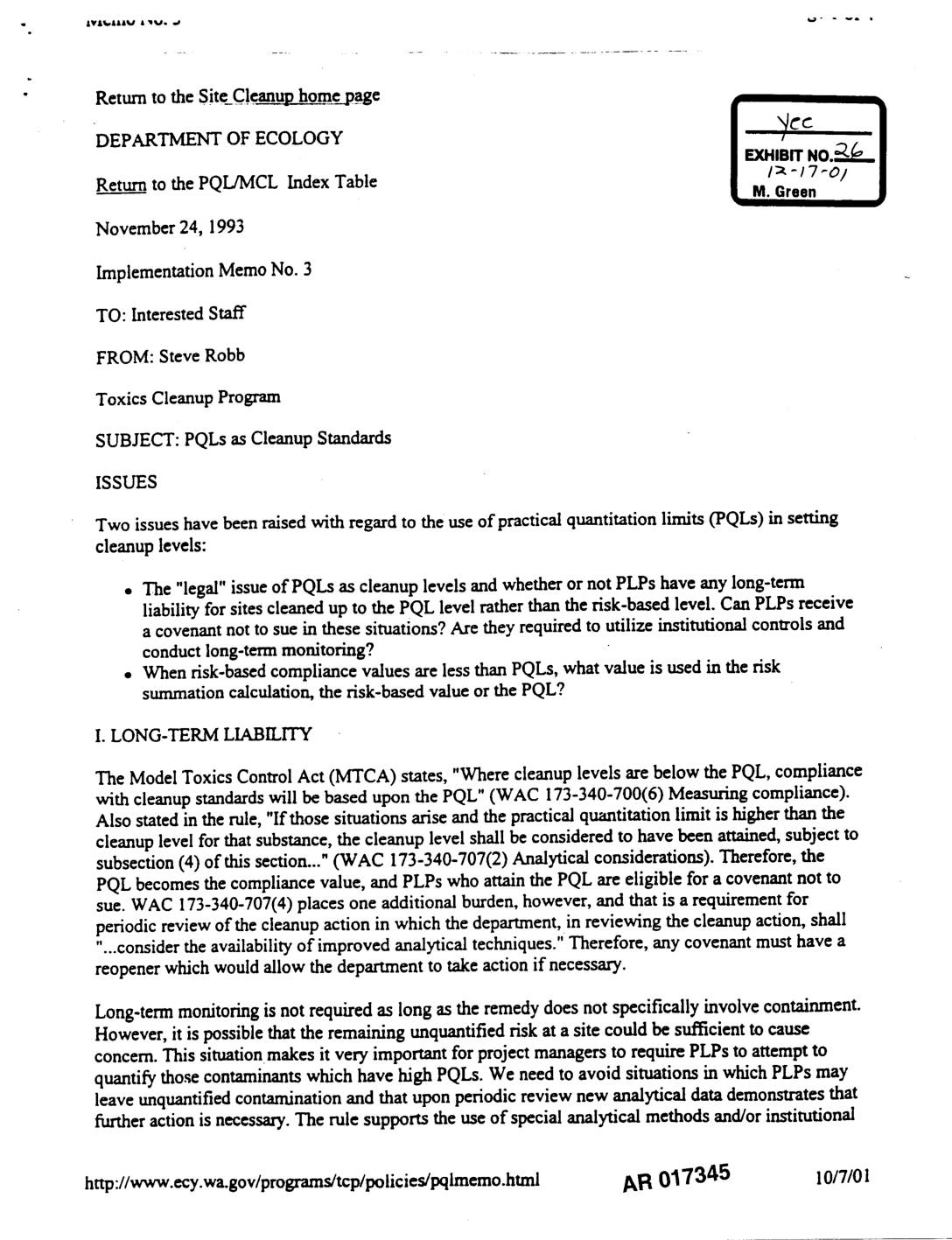
    EXH AR017345: Ecology Implementation Memo No. 3 — PQLs as Cleanup Standards

    Washington State Department of Ecology Implementation Memo No. 3, authored by Steve Robb of the Toxics Cleanup Program, dated November 24, 1993. Addresses two issues under the Model Toxics Control Act (MTCA): (1) long-term liability for potentially liable persons (PLPs) when cleanup levels are set at practical quantitation limits (PQLs) rather than risk-based levels, including
    TagsACC, Ecology, Model Toxics Control Act, MTCA, Pollution Control Hearings Board, WACFolderBox 08
  • 1992-12-26

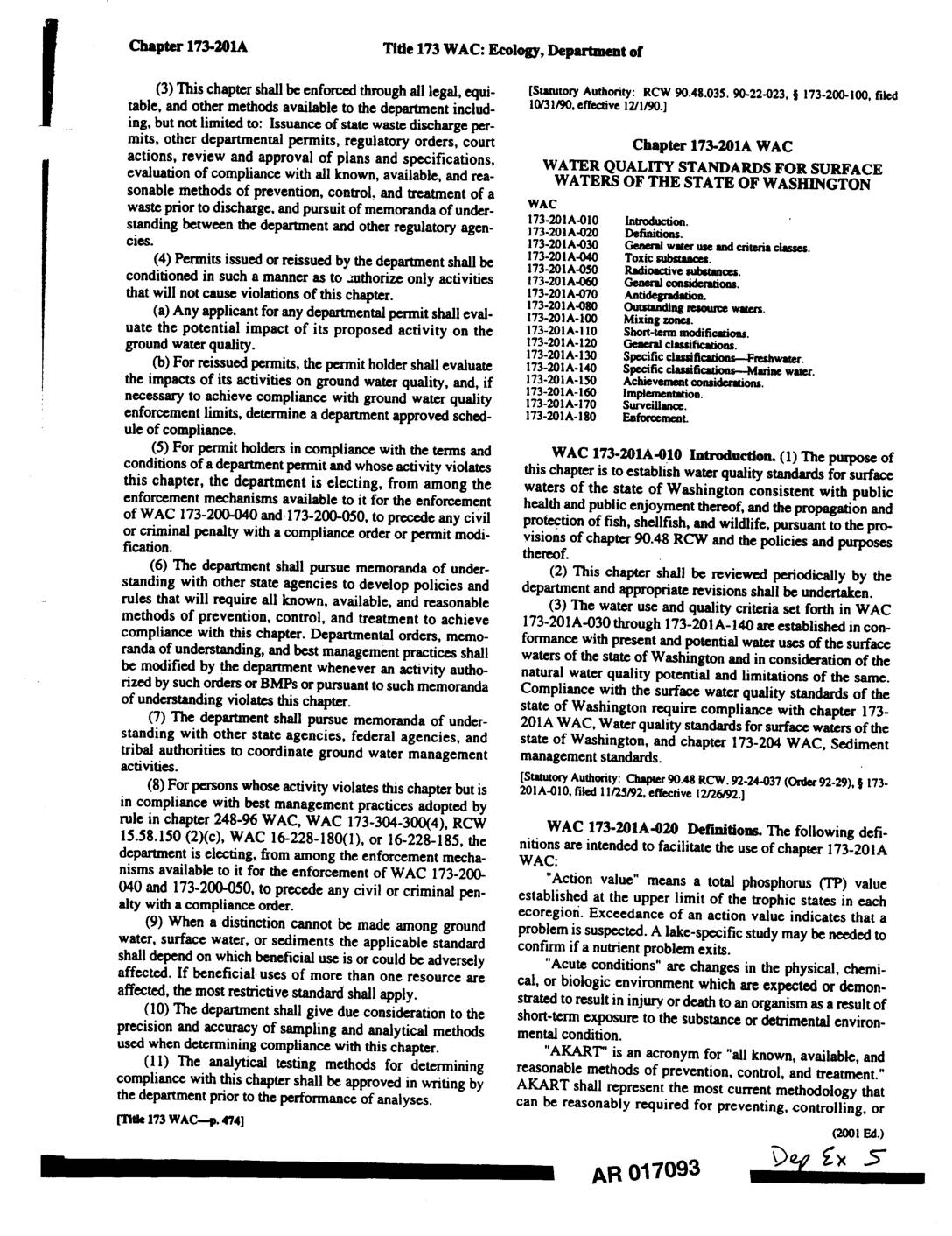
    EXH AR017093: Water Quality Standards for Surface Waters of the State of Washington — WAC Chapter 173-201A

    Washington Administrative Code (WAC) Chapter 173-201A, Water Quality Standards for Surface Waters of the State of Washington, issued by the Washington State Department of Ecology under RCW 90.48. Covers introduction (WAC 173-201A-010) and definitions (WAC 173-201A-020) including AKART, background conditions, best management practices, carcinogen, chronic/acute conditions, critical condition (7Q10 flow), ecoregions, fecal coliform, hardness, mixing
    TagsACC, Ecology, Pollution Control Hearings Board, RCW, WAC, Washington Administrative Code, Water QualityFolderBox 08
  • 1992-01-23

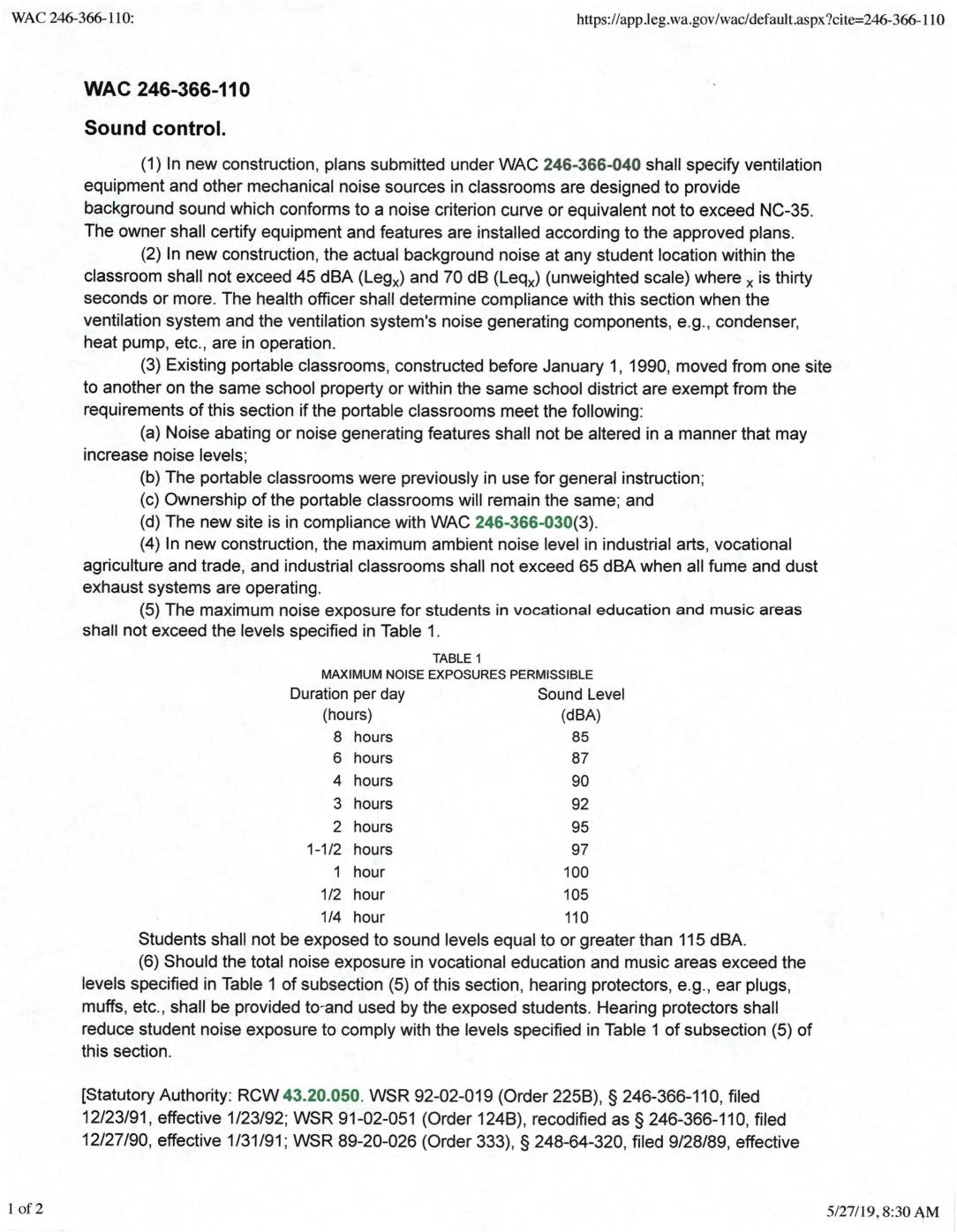
    WAC 246-366-110: Sound control

    WAC 246-366-110 sets sound control standards for Washington State school classrooms, requiring that background noise in new construction not exceed NC-35 on the noise criterion curve, with actual noise levels capped at 45 dBA during normal operation. Industrial and vocational classrooms have separate limits, with ambient noise not to exceed 65 dBA when exhaust systems are running. In music and vocational education areas, student noise exposure is strictly regulated by duration, and hearing protection must be provided if exposure limits are exceeded.
    TagsNoise, Regulations, Schools, WAC, Washington Administrative CodeFolderSP #2
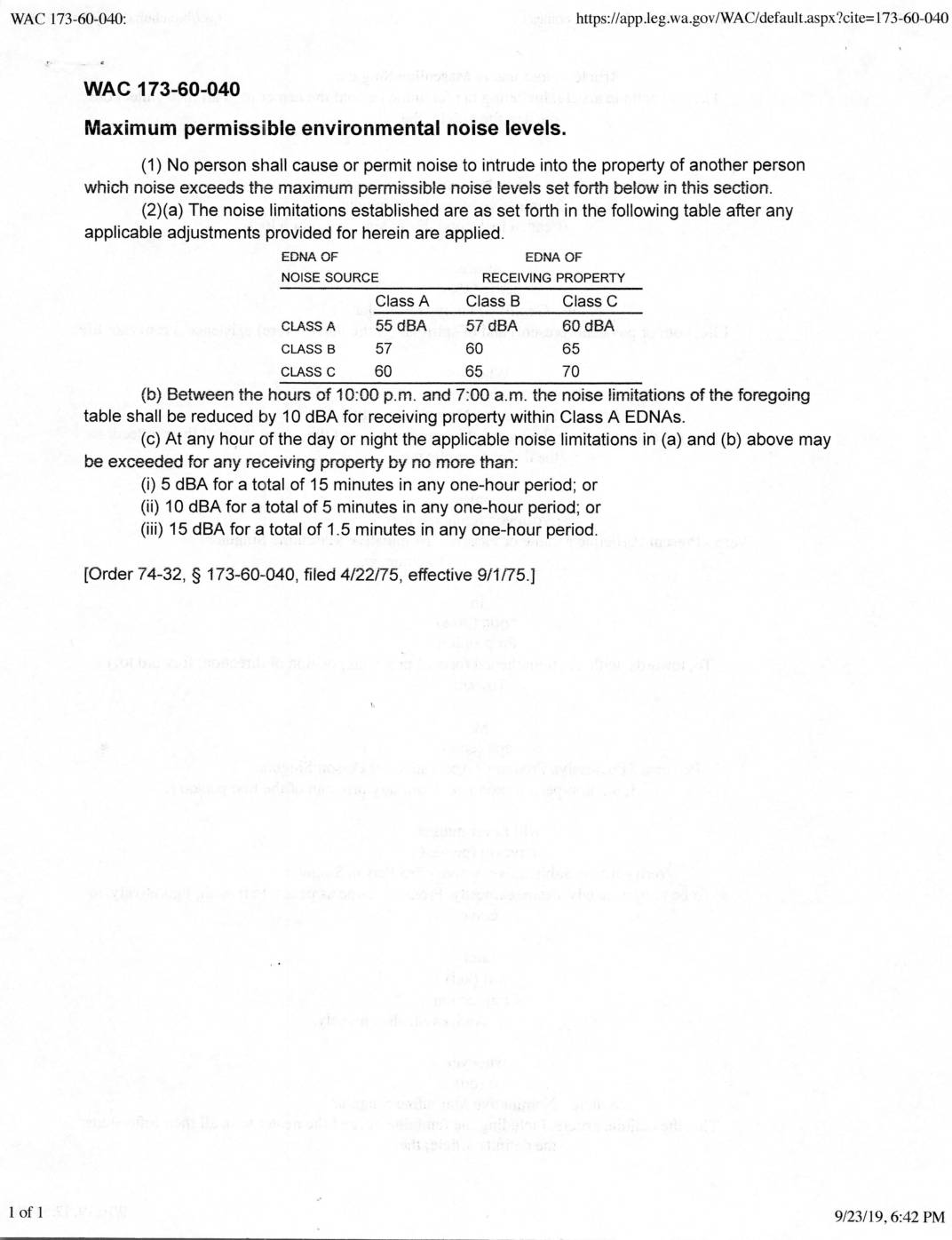
  • Washington Administrative Code WAC 173-60-040 Maximum permissible environmental noise levels

    Maximum permissible environmental noise levels. (1) No person shall cause or permit noise to intrude into the property of another person which noise exceeds the maximum permissible noise levels set forth below in this section. (2)(a) The noise limitations established are as set forth in the following table after any applicable adjustments provided for herein
    CategoriesLegislation TagsWAC
  • 1975-09-01

    WAC 173-60-040 and WAC 173-60-090: Maximum permissible environmental noise levels and enforcement policy

    Washington State law (WAC 173-60-040) sets maximum allowable noise levels based on the zoning class of both the noise source and the receiving property, ranging from 55 to 70 dBA, with nighttime limits reduced by 10 dBA for residential areas between 10 p.m. and 7 a.m. Short-duration noise spikes are permitted, allowing up to 15 dBA above the limit for no more than 1.5 minutes per hour. Enforcement is complaint-driven, measured at the receiving property, and each 24-hour period of violation counts as a separate offense under RCW 70.107.050.
    TagsNoise, Regulations, WAC, Washington Administrative CodeFolderSP #2

Posts pagination

Page 1 Page 2 Page 3 Page 4
Sidebar On/Off

Upcoming Events

  • Stay Grounded Event: Night trains, not night planes!
    Add to CalendarMSunday Sep 13: 12:00am
    Ntnnp social media3

    For the past two years, more than 220 initiatives from 15 countries have declared September 13th as the International day for the ban of night flights at airports. In parallel, activists across Europe have been gathering for pyjama parties for night trains – coordinated in 2024 and 2025 by Back on Track and Stay Grounded.

    [...]
  • Burien Airport Committee Meeting September 15, 2026
    Add to CalendarMTuesday Sep 15: 6:00pm
    400 SW 152nd St, Burien, WA 98166
    Burien airport committee 15 sep 2026 agenda pdf pdf

    a) Part 150 Noise Study (Emily Inlow-Hood) — 15 minutes
    b) SAMP Update and Next Steps (Brian Davis and Sarah Moore) — 15 minutes
    c) Legislative Updates — 10 minutes
       • SCA (Sarah Moore)
       • Work with Sen. Orwall (Brian Davis)
    d) StART Reorganization (Jeff Harbaugh and Karen Veloria) — 10 minutes

    [...]

[See all...]


Help study childhood asthma. Get free HEPA filter!

read more...

Issues

Sea-Tac Airport is currently undergoing the largest and longest expansion in its history, collectively known as the Sustainable Airport Master Plan (SAMP). Some of it you can already hear, but you’re probably not aware of what it all means. Here’s what you need to know.
read more...

Read This!

As the source for federal transportation grants, the Puget Sound Regional Council was charged with developing a system to meet the growing need for commercial aviation. When the search for a second airport failed, they authorized the Port of Seattle to build the Third Runway, with a mandate to develop a noise abatement and mitigation program. In their effort to stop the Third Runway, the ACC argued over every detail of the Port's efforts--including property buyouts and sound insulation. The dispute was meant to be settled by a three member Expert Arbitration Panel. This is their final report. It finds 2-1, that the Port's program was insufficient in several respects. Despite that, funding for the Third Runway was approved by the PSRC, and the 'Port Package' program, proceeded largely unchanged. Expert Arbitration Panel's final decision finding that the Port of Seattle had not shown sufficient reduction in real on-the-ground noise impacts to satisfy noise reduction conditions required for approval of a third runway at Sea-Tac International Airport. The majority decision concluded the Port's noise abatement programs were insufficient despite being impressive in scope.
continue...

The Podcast!

Subscribe to the only podcast devoted to policies, politics, history, impacts for people living under the flight path everywhere. It’s definitely not just about noise!
  • Sea-Tac Noise.Info
  • Connect with STNI

    • Subscribe
    • Port Package Problem?
    • Donate
    • Podcast
    • Socials
      • Facebook
      • X (Twitter)
      • Bluesky
      • Instagram

    "Aerial View of Cloverleaf Freeway Interchange Near Suburban Commercial Development" — , 2001

  • Learn

    • Frequently Asked Questions
    • Explainers
    • Youtube
    • Research Requests
    • Make a complaint
  • Goals

    Fulfill the promises of 1976:
    • Compensation
    • Reduced noise
    • Improved air quality
    • Environmental remediation
Login/Register
©2026•Data Privacy

Message

We use cookies to provide basic functionality. We also provide access to search engines in order to provide site analytics. We do not sell or share your data.
V V