TagUniversity Of Washington(27)
-
 2017-11-15
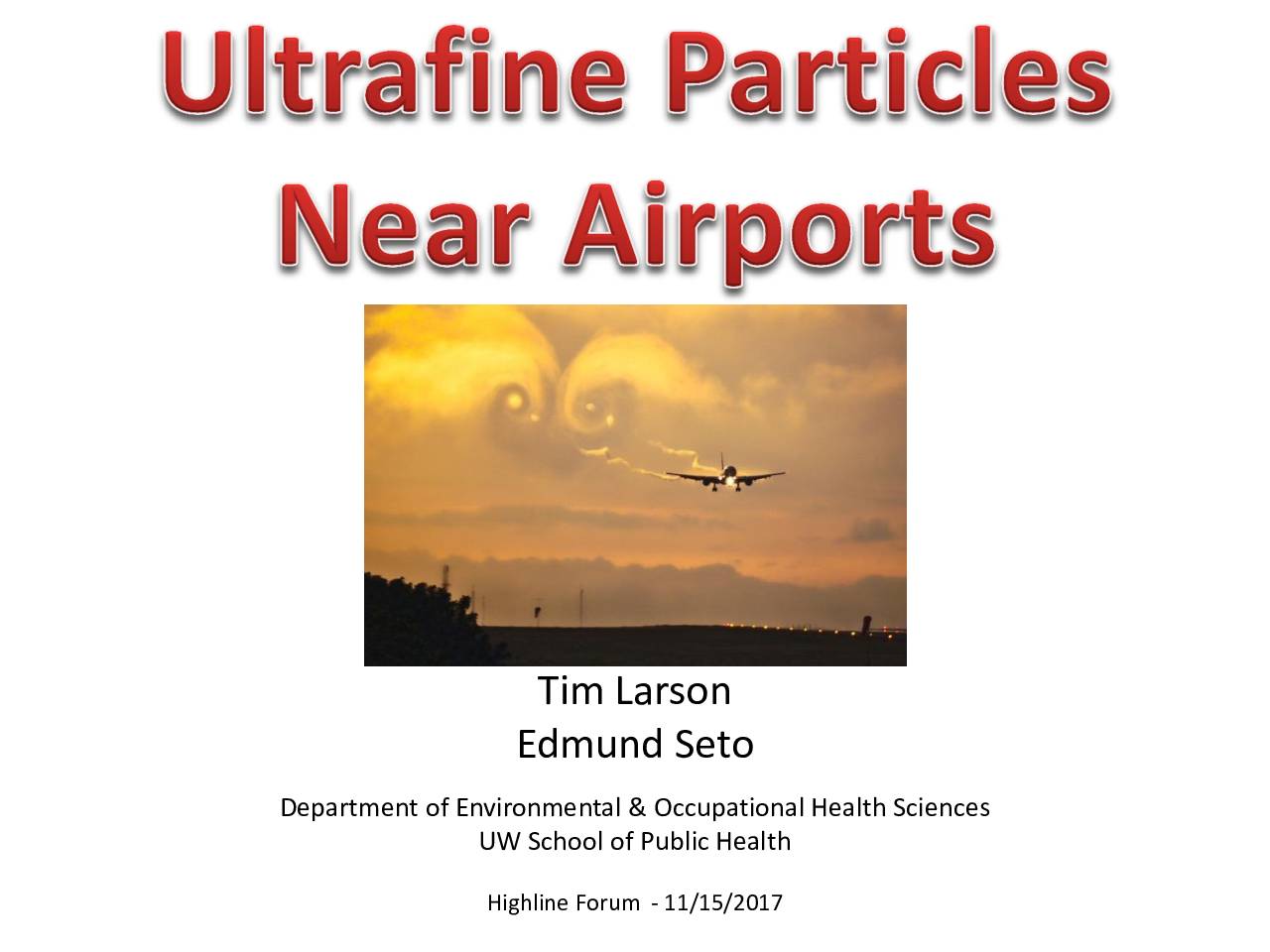
Ultrafine particles near airports
Researchers from the University of Washington School of Public Health were commissioned by Washington State to study ultrafine particle air pollution near Sea-Tac Airport, the busiest international airport in the state. The study, presented in November 2017, required measuring ultrafine particulate matter within ten miles of the airport along flight paths, distinguishing aircraft emissions from other pollution sources, and comparing affected areas to unaffected ones. Findings and recommendations on whether to proceed with a second phase of research were due to the state legislature by December 1, 2019. -
 2016-11-17
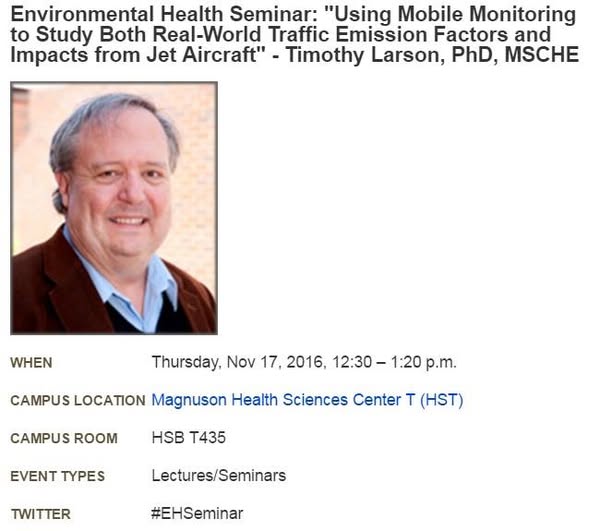
Timothy Larson UW DEOHS seminar flyer — mobile monitoring of traffic emissions and jet aircraft impacts
Flyer for a University of Washington Environmental Health Seminar titled 'Using Mobile Monitoring to Study Both Real-World Traffic Emission Factors and Impacts from Jet Aircraft,' presented by Timothy Larson, PhD, MSCHE. The event was held Thursday, November 17, 2016, 12:30–1:20 p.m. at Magnuson Health Sciences Center T, Room HSB T435. -
 2012-01-01
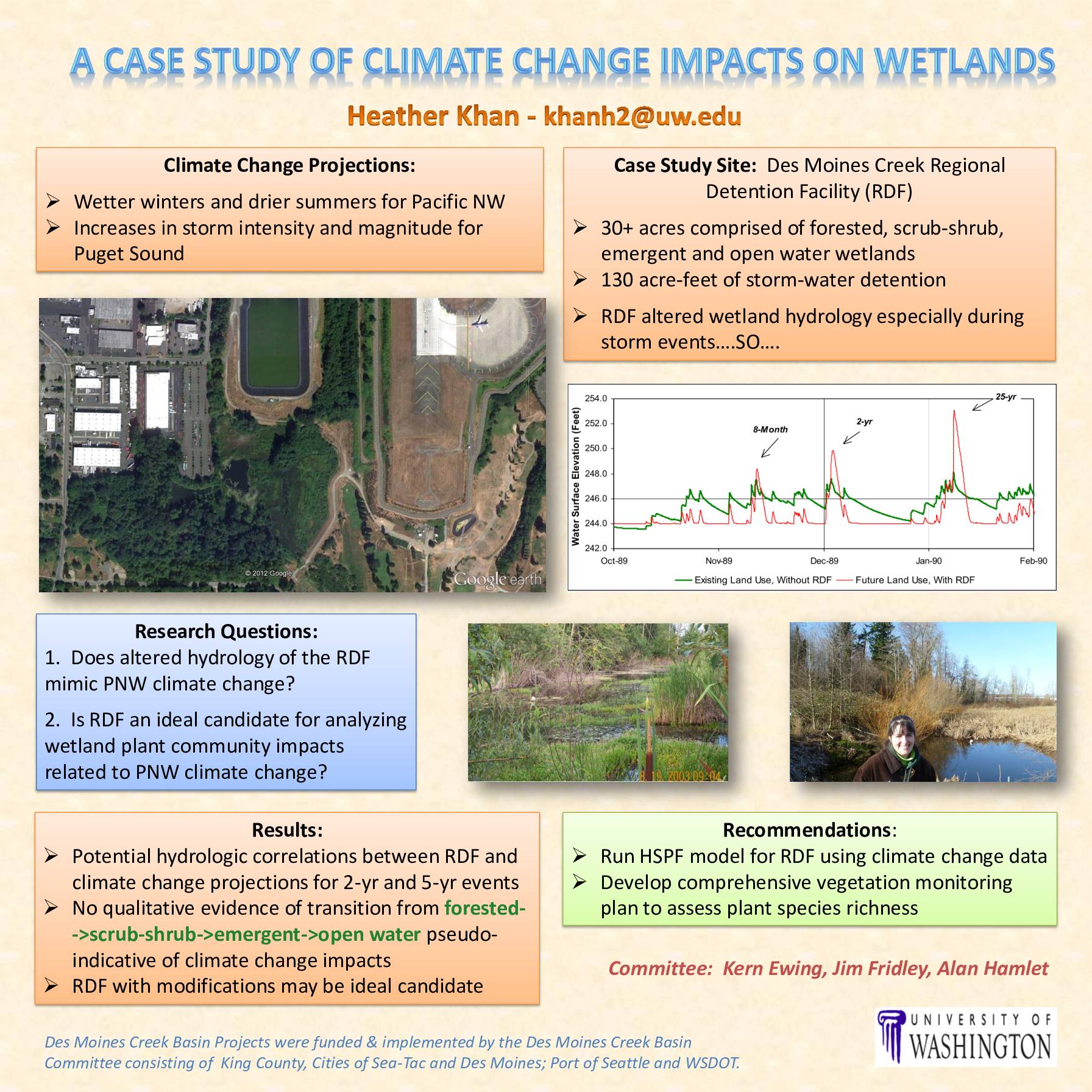
A Case Study of Climate Change Impacts on Wetlands: Des Moines Creek Regional Detention Facility
A University of Washington case study examines whether the Des Moines Creek Regional Detention Facility (RDF), a 30+ acre stormwater management site near Sea-Tac Airport, can serve as a model for understanding how projected Pacific Northwest climate changes—wetter winters, drier summers, and stronger storms—may affect local wetland ecosystems. Researchers found potential hydrologic similarities between the RDF's altered water patterns and regional climate change projections, though no clear vegetation shifts were observed. The study recommends further hydrologic modeling and a comprehensive plant monitoring program to better assess long-term wetland impacts. -
 2007-01-01
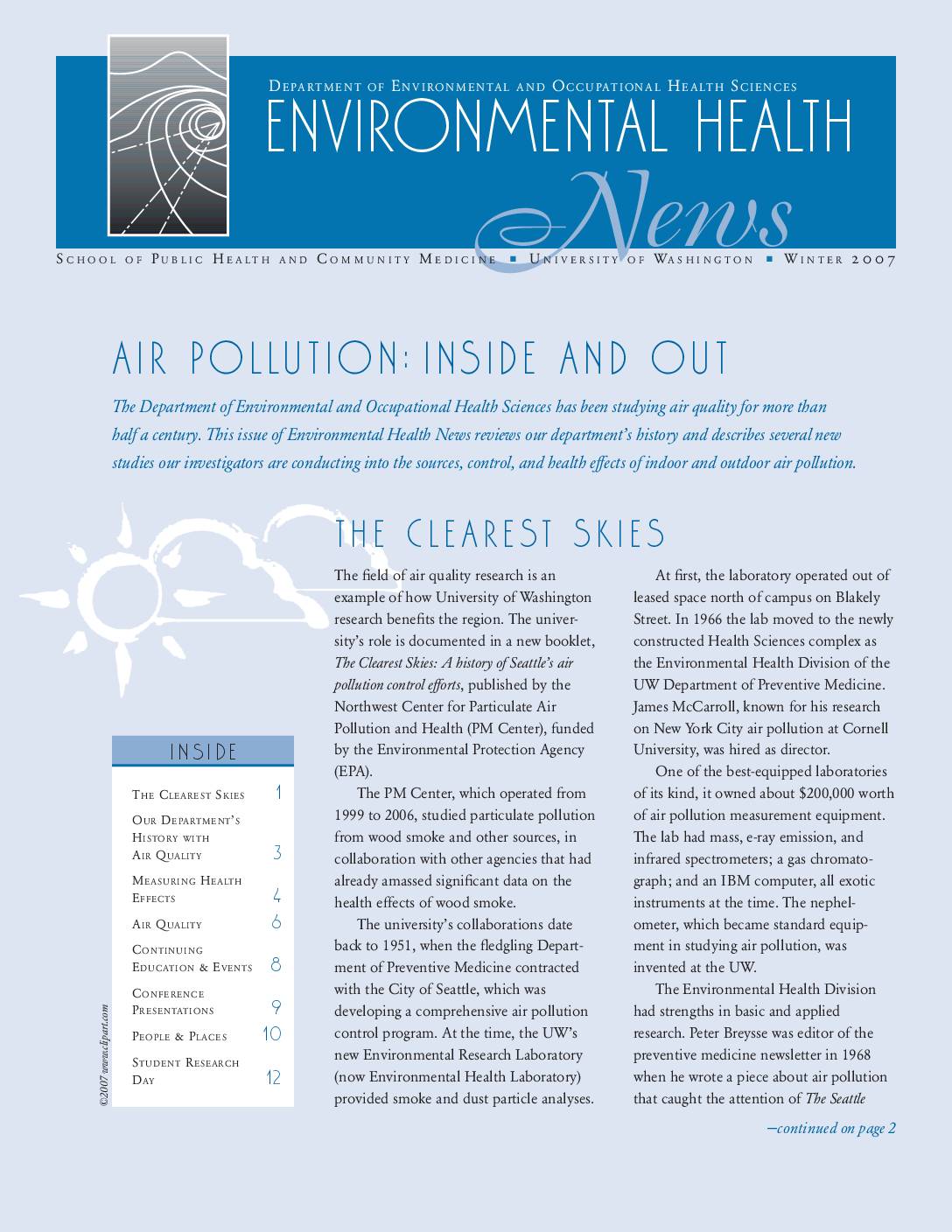
Environmental Health News, Winter 2007: Air Pollution Inside and Out
This University of Washington newsletter documents over 50 years of air quality research by the Department of Environmental and Occupational Health Sciences, tracing collaborations with Seattle and regional agencies dating back to 1951. It highlights key studies on particulate air pollution from sources such as car exhaust and burning vegetation in the Pacific Northwest, and describes the work of the EPA-funded Northwest Center for Particulate Air Pollution and Health (PM Center), which operated from 1999 to 2006. -
 2002-11-05
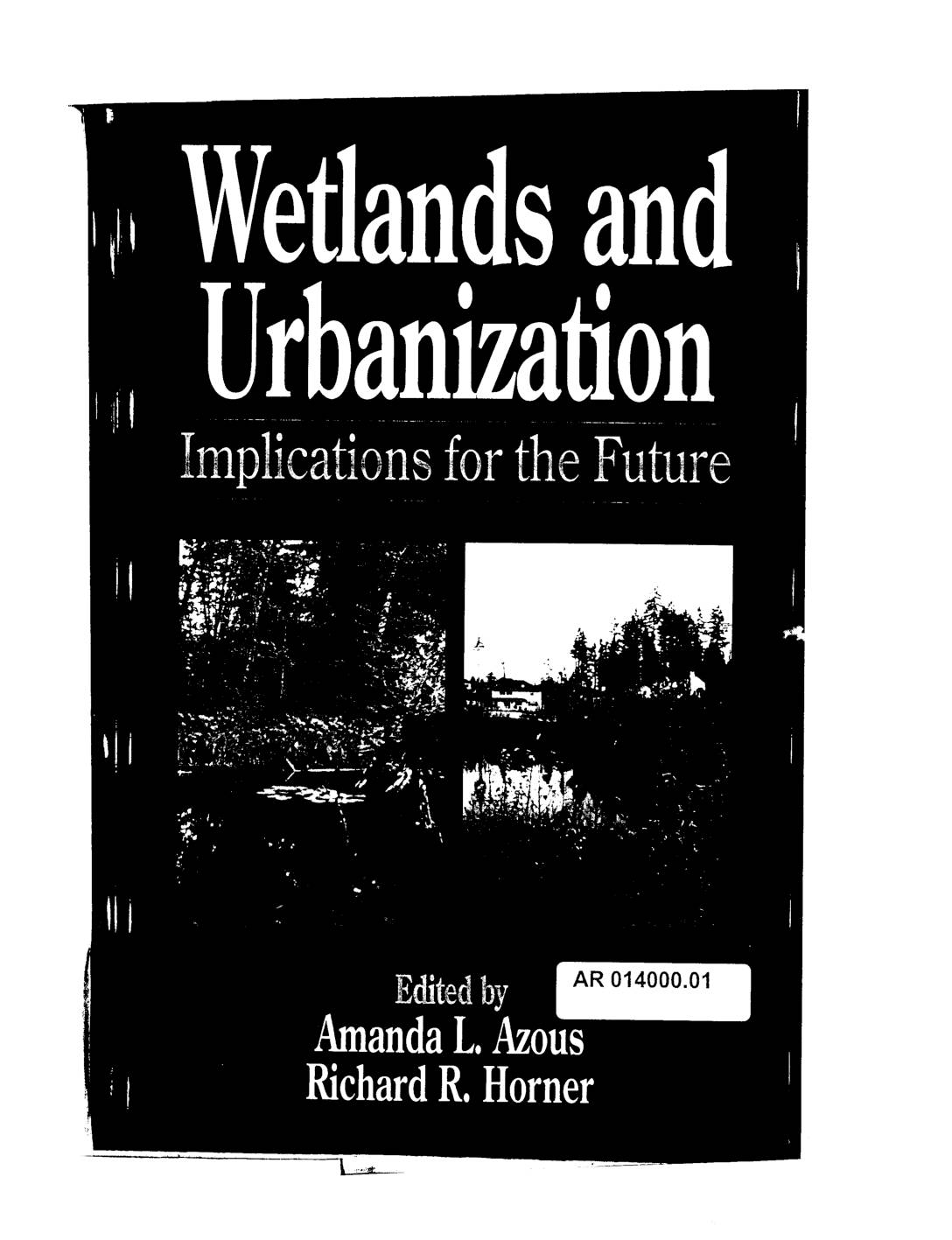
EXH AR14000: Wetlands and Urbanization — Implications for the Future
Book edited by Amanda L. Azous (Azous Environmental Sciences) and Richard R. Horner (Research Associate Professor, Landscape Architecture and Civil and Environmental Engineering, University of Washington, Seattle), published by Lewis Publishers (Boca Raton, London, New York, Washington D.C.). Title: ‘Wetlands and Urbanization: Implications for the Future.’ Administrative Record document AR 014000. Covers wetland ecology, urban -
 2000-03-01
Addressing community health concerns around SeaTac Airport: Response to the question, ‘Is it possible to monitor jet engine exhaust emissions or to model their path using data on prevailing winds and takeoff patterns?’
This March 2000 report, prepared by Washington State health and environmental agencies, examines whether jet engine exhaust emissions from Seattle-Tacoma International Airport can be monitored or modeled using wind and takeoff data. It reviews previous air quality studies, outlines health and environmental justice concerns for nearby communities, and recommends a structured air quality monitoring study with specific methods, data analysis approaches, and estimated costs. The report was developed in consultation with community representatives, the EPA, and local universities. -
 1999-05-20
Sea-Tac Airport spatial nitrogen dioxide study final report
A 1999 University of Washington study measured nitrogen dioxide (NO2) levels around Seattle-Tacoma International Airport to determine whether aircraft operations were harming local air quality. Researchers found that NO2 levels at all monitoring sites remained well below federal safety standards, and that regional conditions and nearby freeways — not aircraft — were the primary drivers of local pollution. The study concluded that airport operations had only a small, difficult-to-isolate effect on community NO2 levels, estimated at less than 7 parts per billion above background levels.