TagStormwater(373)
-
 2000-10-13
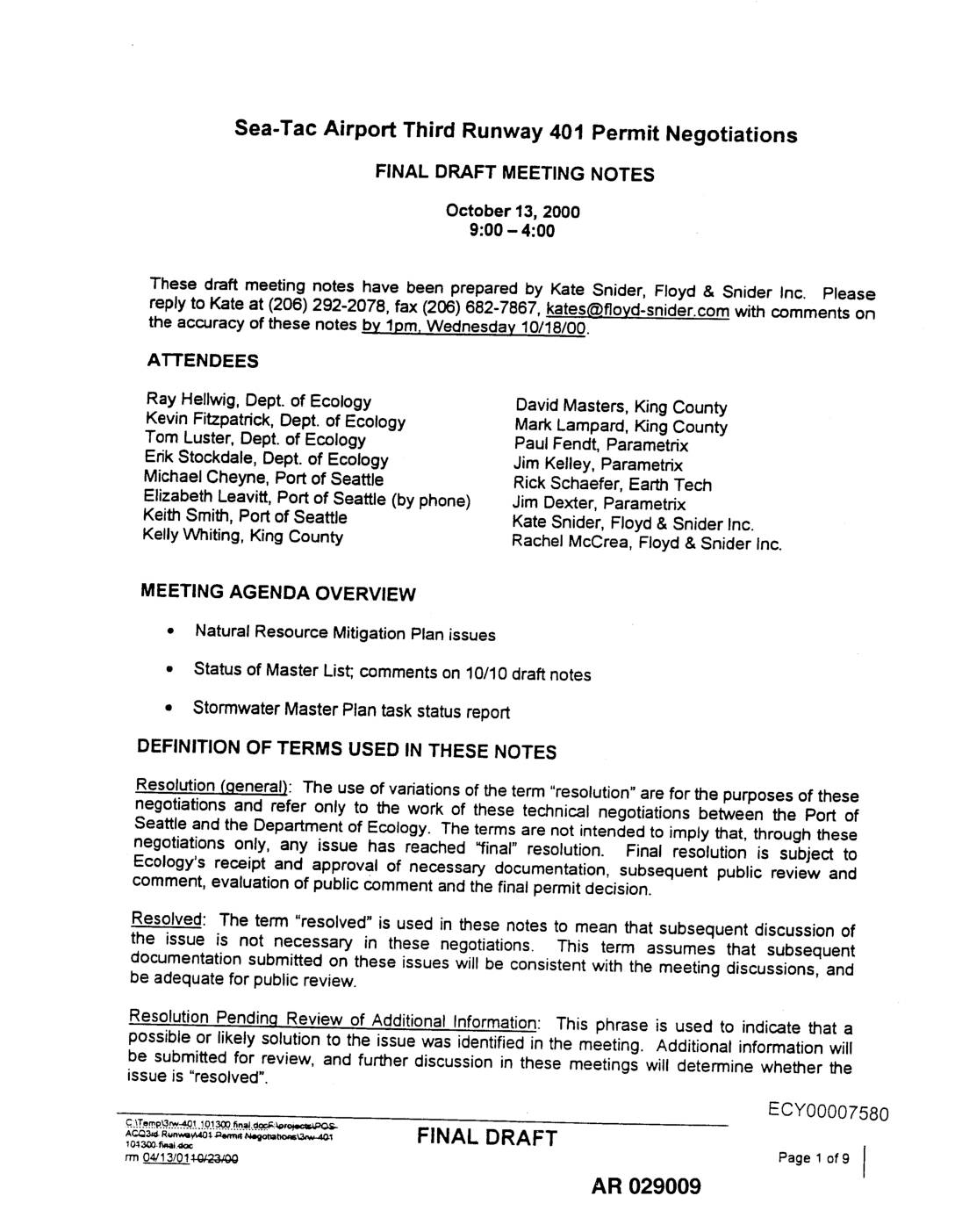
EXH AR029009: Sea-Tac Airport Third Runway 401 Permit Negotiations — Final Draft Meeting Notes, October 13, 2000
Final draft meeting notes prepared by Kate Snider of Floyd & Snider Inc. for the Sea-Tac Airport Third Runway 401 Permit Negotiations held October 13, 2000. Attendees include representatives from Washington State Department of Ecology (Ray Hellwig, Kevin Fitzpatrick, Tom Luster, Erik Stockdale), Port Of Seattle (Michael Cheyne, Elizabeth Leavitt, Keith Smith), King County (Kelly -
 2000-10-09
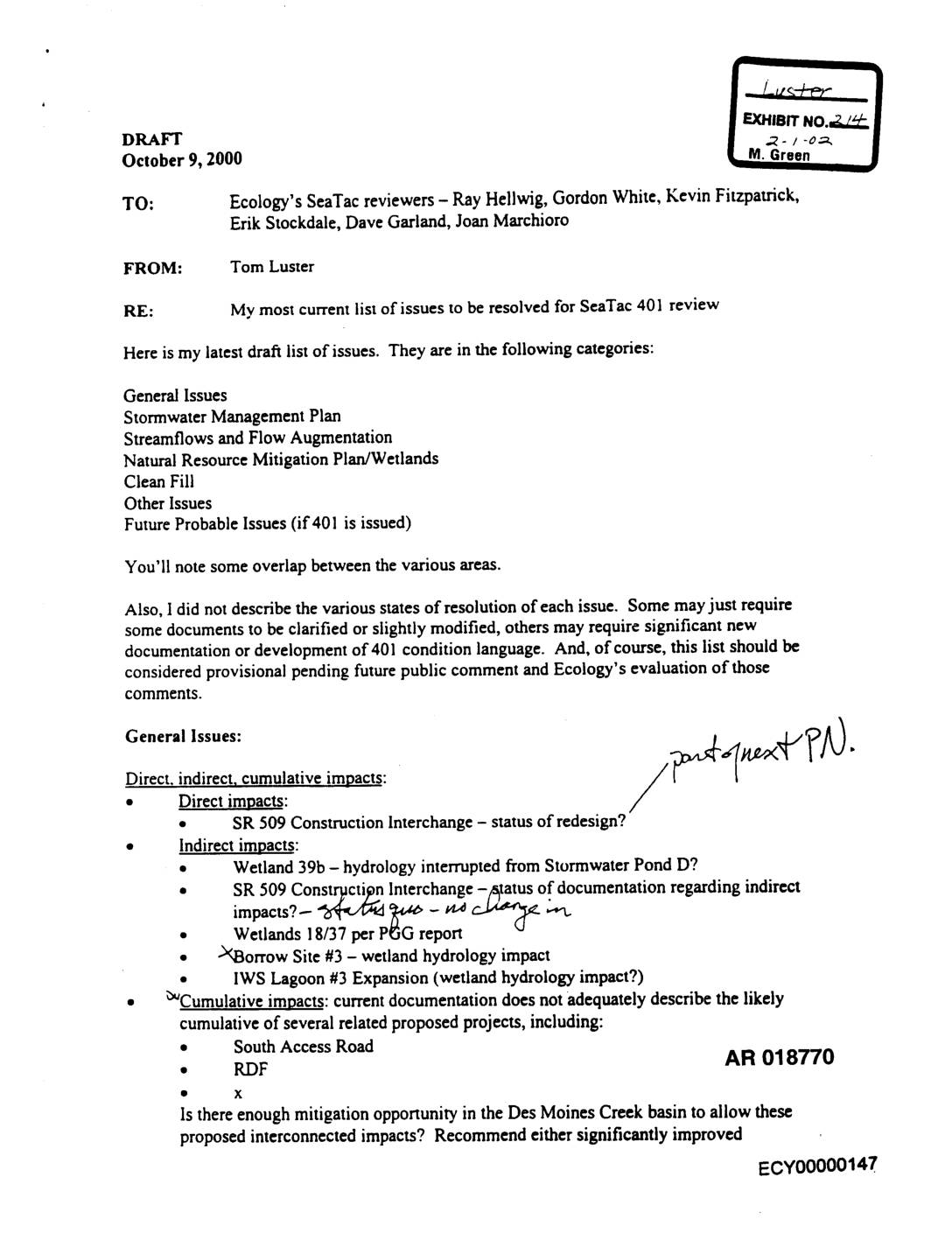
Exhibit 214: Tom Luster Draft Memo — Sea-Tac 401 Issues List for Ecology Reviewers
A October 9, 2000 internal memo from Tom Luster to Ecology's SeaTac reviewers outlines a draft list of unresolved issues related to the SeaTac Airport 401 water quality certification review. The issues cover stormwater management, streamflows, wetland impacts, and environmental mitigation plans, including concerns about cumulative impacts on Des Moines Creek and Miller Creek from several interconnected proposed projects. The memo notes that some issues may require only minor document clarifications while others may need significant new documentation or development of formal 401 permit conditions. -
 2000-10-06
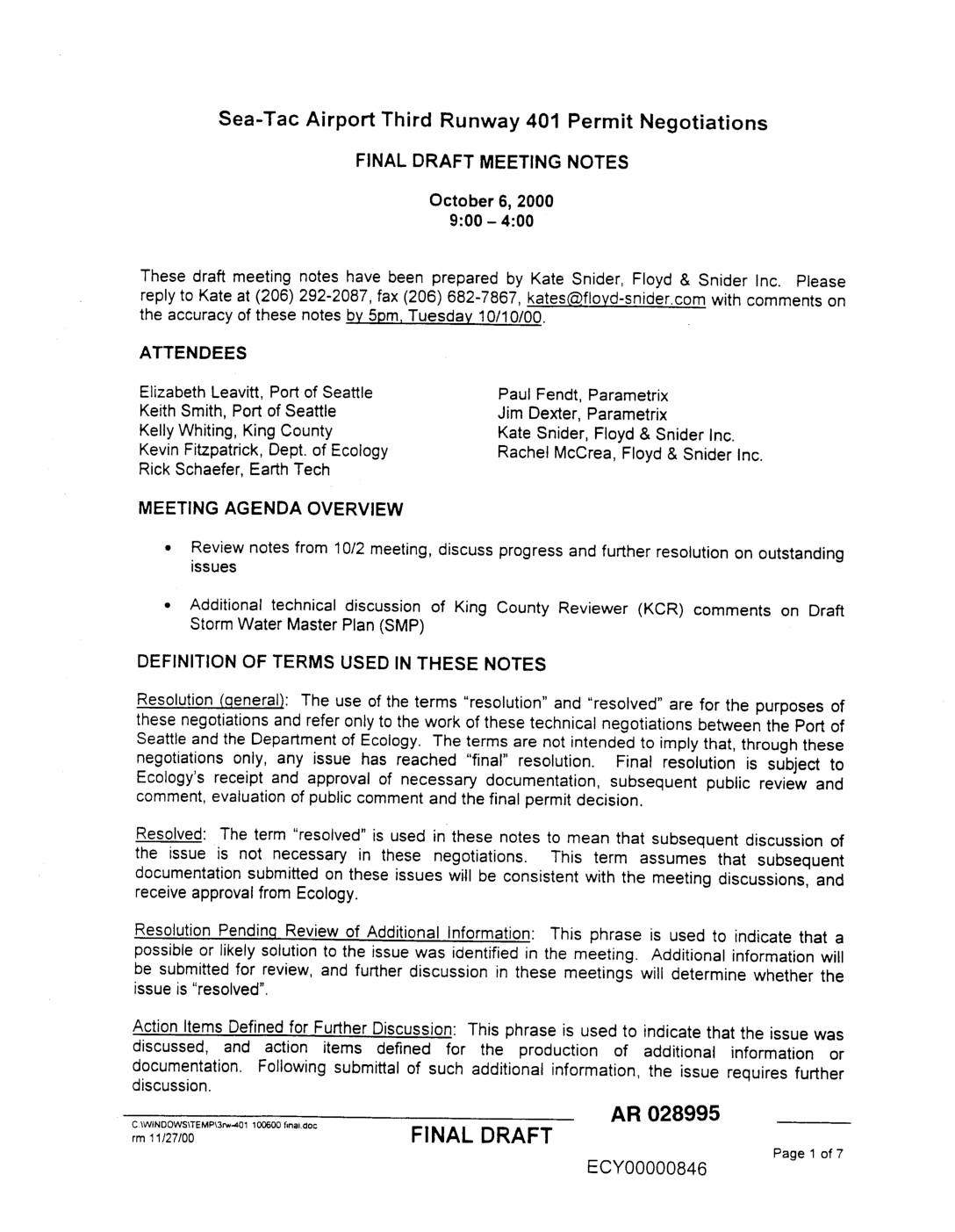
EXH AR028995: Sea-Tac Airport Third Runway 401 Permit Negotiations — Final Draft Meeting Notes, October 6, 2000
Final draft meeting notes prepared by Kate Snider, Floyd & Snider Inc., for Sea-Tac Airport Third Runway 401 Permit negotiations held October 6, 2000. Attendees include Elizabeth Leavitt and Keith Smith (Port Of Seattle), Kelly Whiting (King County), Kevin Fitzpatrick (Department of Ecology), Rick Schaefer (Earth Tech), Paul Fendt and Jim Dexter (Parametrix). Covers technical -
 2000-10-02
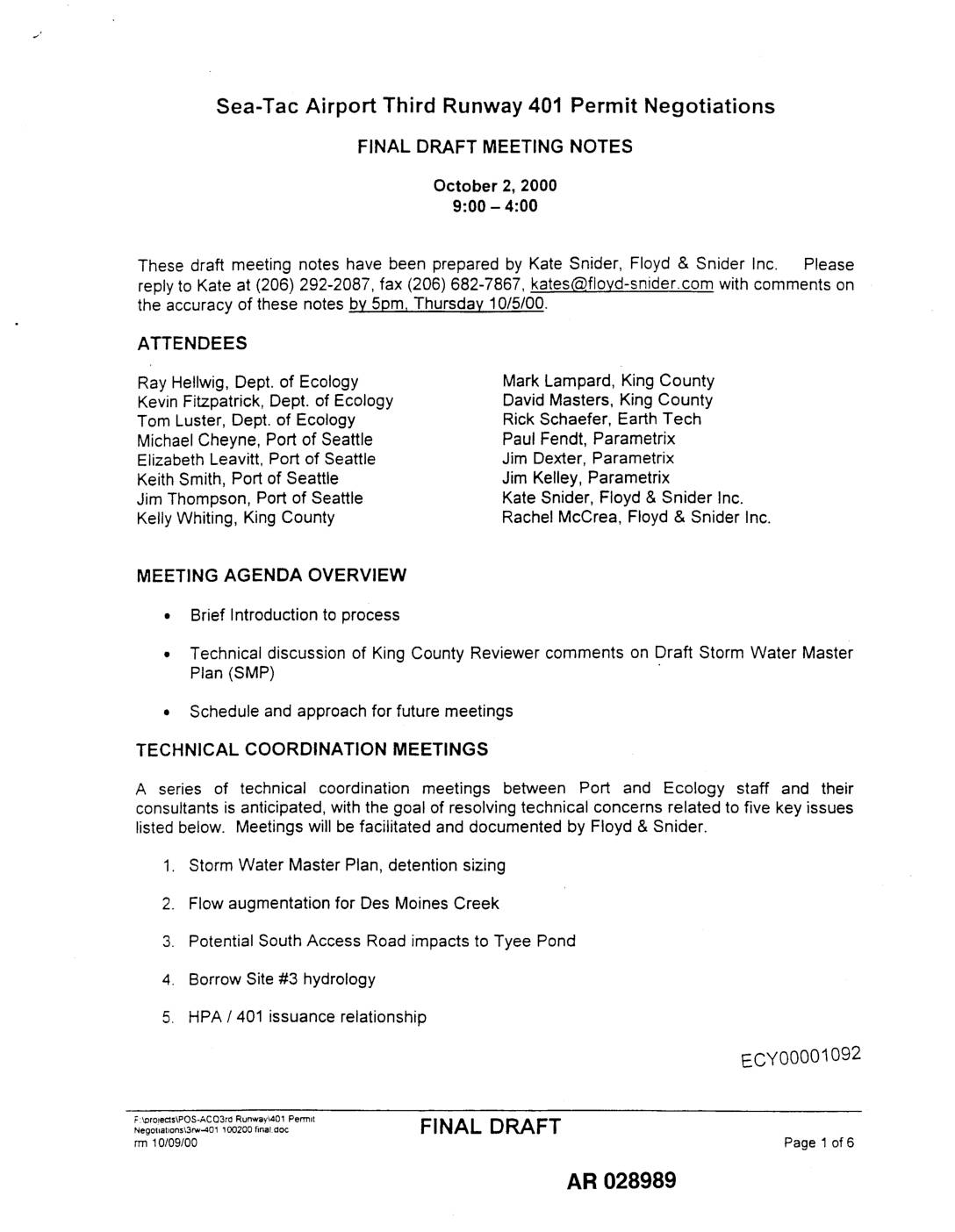
EXH AR028989: Sea-Tac Airport Third Runway 401 Permit Negotiations — Final Draft Meeting Notes, October 2, 2000
Final draft meeting notes from October 2, 2000 (9:00–4:00) for Sea-Tac Airport Third Runway 401 Permit Negotiations, prepared by Kate Snider of Floyd & Snider Inc. Attendees include representatives from Washington State Department of Ecology (Ray Hellwig, Kevin Fitzpatrick, Tom Luster), Port Of Seattle (Michael Cheyne, Elizabeth Leavitt, Keith Smith, Jim Thompson), King County (Kelly -
 2000-09-28
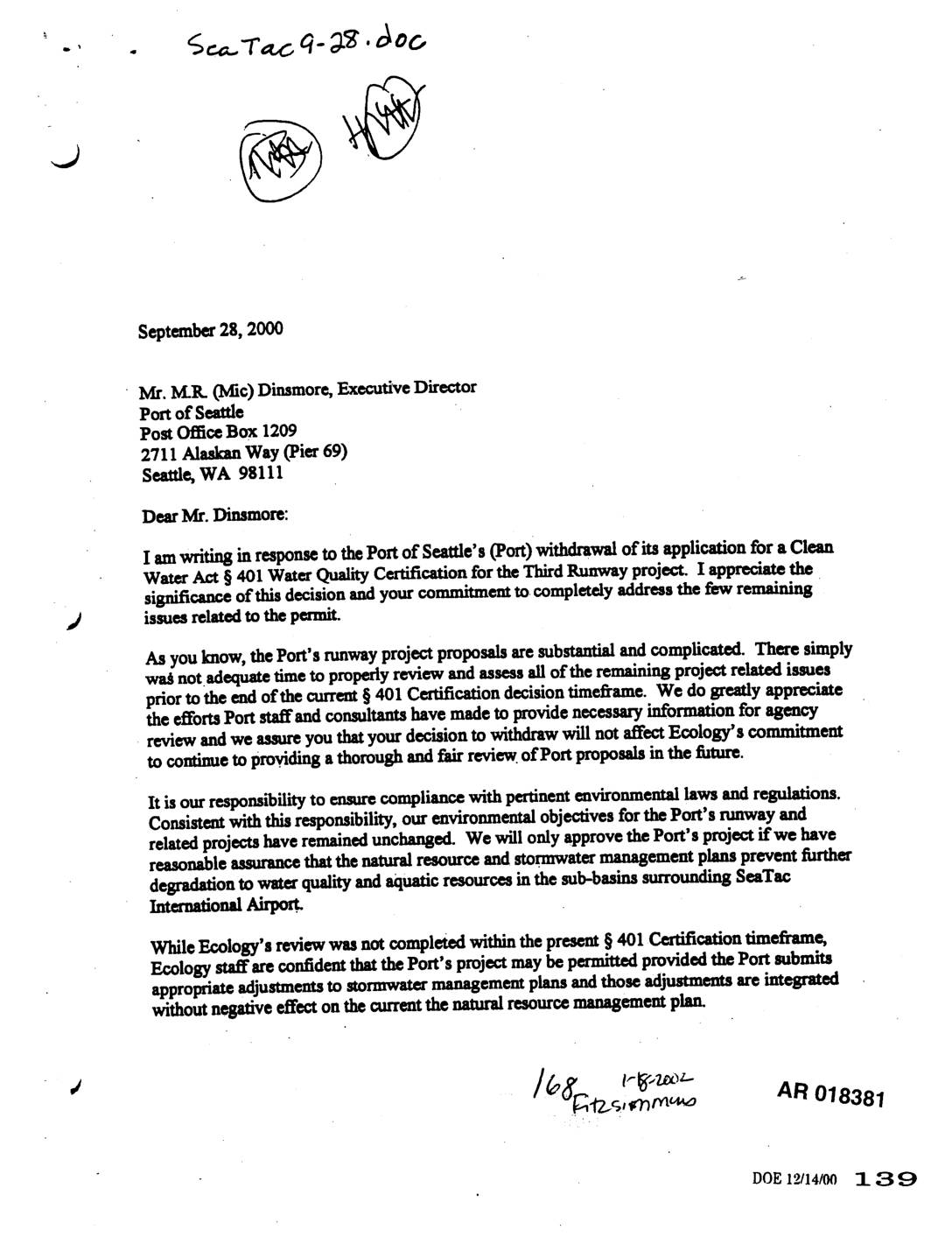
EXH AR018381: Letter from Ecology to Port Of Seattle Regarding § 401 Water Quality Certification Withdrawal for Third Runway
Letter dated September 28, 2000 from Tom Fitzsimmons, Director of Washington State Department of Ecology, to M.R. (Mic) Dinsmore, Executive Director of Port Of Seattle, responding to Port Of Seattle’s withdrawal of its Clean Water Act § 401 Water Quality Certification application for the Third Runway project at Seattle-Tacoma International Airport. Ecology outlines conditions for -
 2000-09-28
EXH AR045668: Annual Stormwater Monitoring Report for Seattle-Tacoma International Airport, July 1999–June 2000
Annual Stormwater Monitoring Report for Seattle-Tacoma International Airport (STIA) covering the period July 1, 1999 through June 30, 2000, prepared by Scott Tobiason, Environmental Management Specialist, Aviation Environmental Programs, Port Of Seattle. Report AR 045668 documents stormwater sampling results from STIA storm drainage subbasins including total petroleum hydrocarbons (TPH), fecal coliforms, suspended solids, turbidity, biochemical -
 2000-09-28
EXH AR051605: Annual Stormwater Monitoring Report for Seattle-Tacoma International Airport, July 1, 1999 through June 30, 2000
Annual stormwater monitoring report prepared by Scott Tobiason, Environmental Management Specialist, Aviation Environmental Programs, Port Of Seattle, covering Sea-Tac Airport (STIA) for the period July 1, 1999 through June 30, 2000. Report covers STIA storm drainage subbasins, sampling locations, grab and composite sample results for total petroleum hydrocarbons (TPH), fecal coliforms, suspended solids, turbidity, biochemical -
 2000-09-27
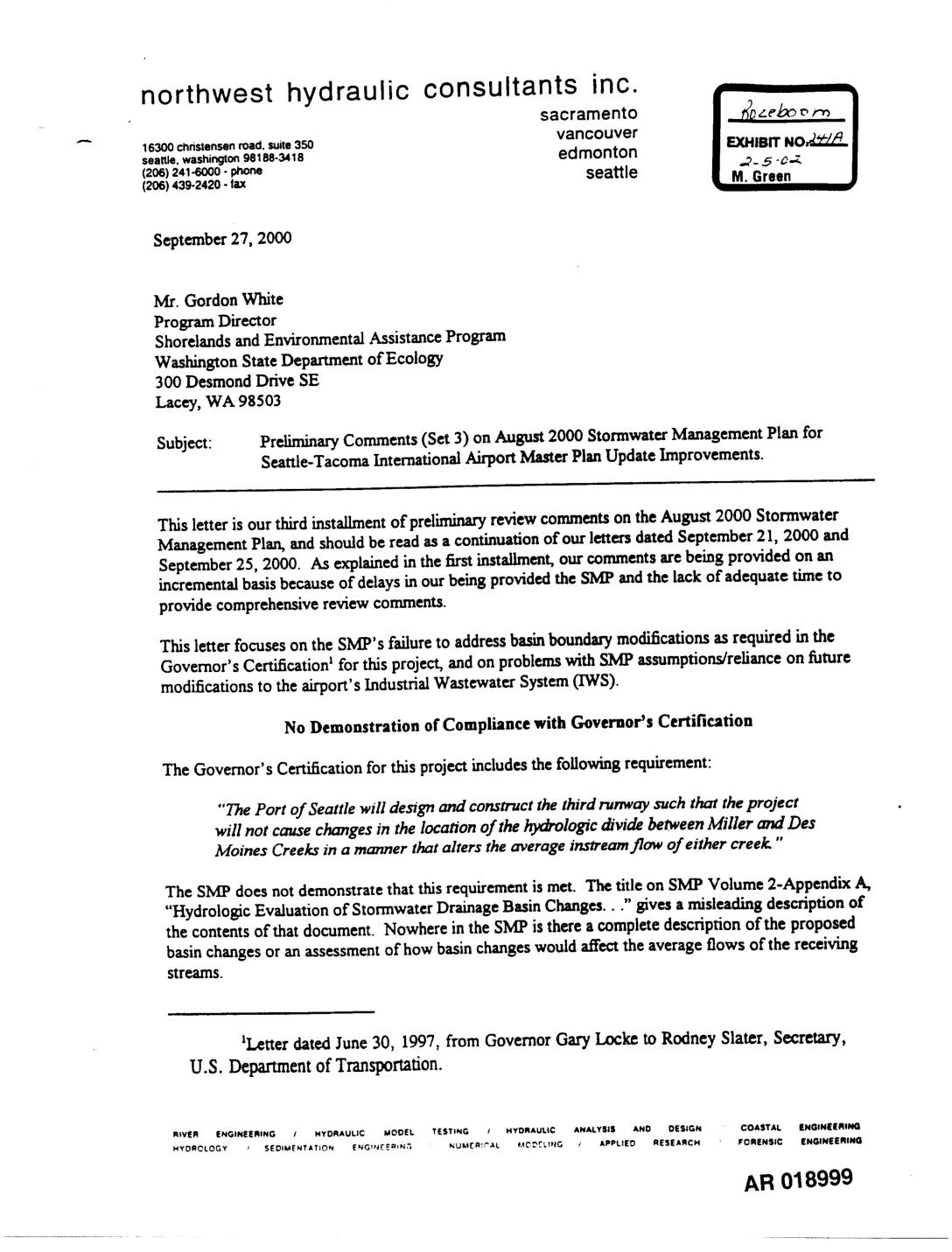
EXH 241A: Preliminary Comments Set 3 on Aug 2000 STIA Stormwater Management Plan
A September 2000 letter from Northwest Hydraulic Consultants raises concerns about the Stormwater Management Plan for Seattle-Tacoma International Airport's third runway expansion, finding that it fails to demonstrate compliance with the Governor's Certification requirement to protect water flow in Miller and Des Moines Creeks. The letter also identifies serious problems with the airport's plan to manage stormwater through expansions to its Industrial Wastewater System, including unresolved engineering uncertainties and potential conflicts with FAA wildlife safety guidelines that prohibit wastewater facilities within 10,000 feet of runway areas. -
 2000-09-27
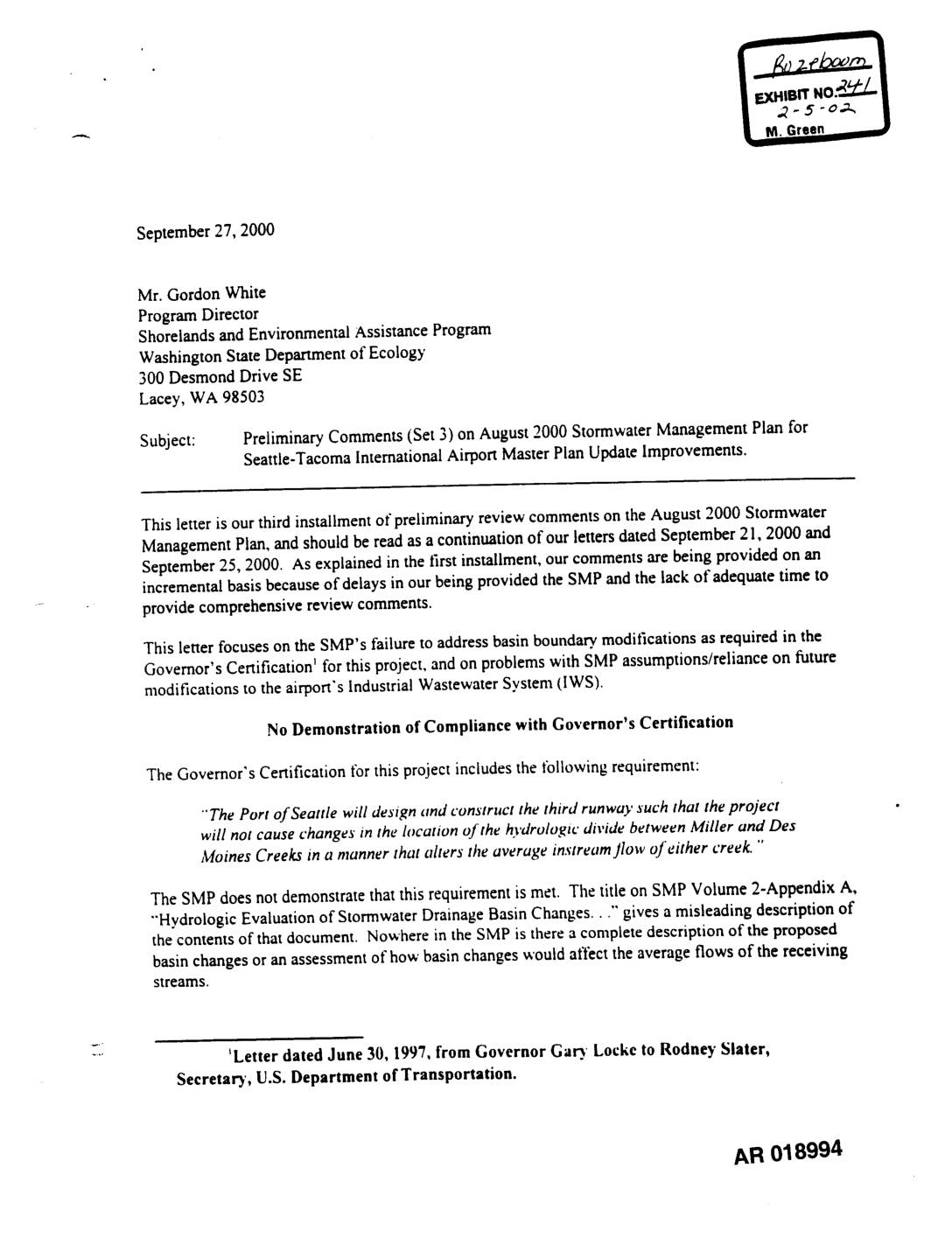
EXH 241: Preliminary Comments Set 3 on Aug 2000 Stormwater Management Plan STIA Master Plan Update
A September 2000 letter to the Washington State Department of Ecology raises concerns about the Stormwater Management Plan for Seattle-Tacoma International Airport's third runway expansion, arguing it fails to demonstrate compliance with the Governor's Certification requirement to avoid altering water flow between Miller and Des Moines Creeks. The letter also challenges the feasibility of proposed improvements to the airport's Industrial Wastewater System, citing inadequate modeling, unresolved capacity issues, and potential conflicts with FAA safety guidelines regarding wildlife attractants near runways. -
 2000-09-25
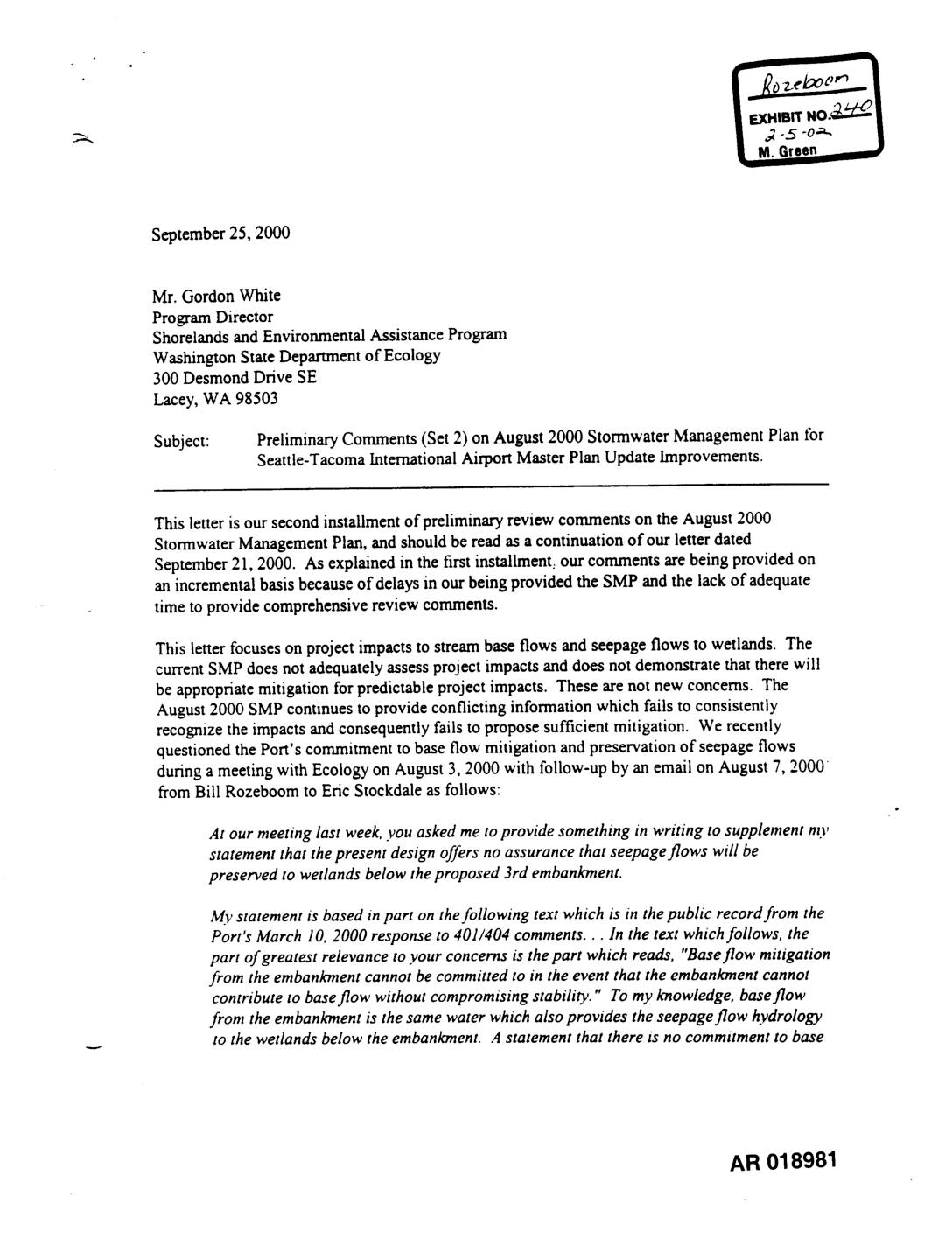
EXH 240: Preliminary Comments Set 2 on Aug 2000 STIA Stormwater Management Plan Master Plan Update
This September 2000 letter from environmental reviewers raises concerns about the Seattle-Tacoma International Airport third runway expansion project, specifically arguing that the Port of Seattle's Stormwater Management Plan fails to adequately assess or mitigate reductions in stream base flows and seepage flows to nearby wetlands. The reviewers present hydrological modeling data suggesting that groundwater inputs to Miller Creek could be reduced significantly more than the Port's own estimates indicate, and that the fill embankment's actual drainage behavior contradicts the Port's claims that it would function like natural outwash soil. The letter challenges the Port's assurances that seepage flows to downstream wetlands would be preserved, citing conflicting data within the Port's own documents and questioning the reliability of the analyses used to support those claims.