TagSea-Tac Airport(1855)
-
 1970-01-01
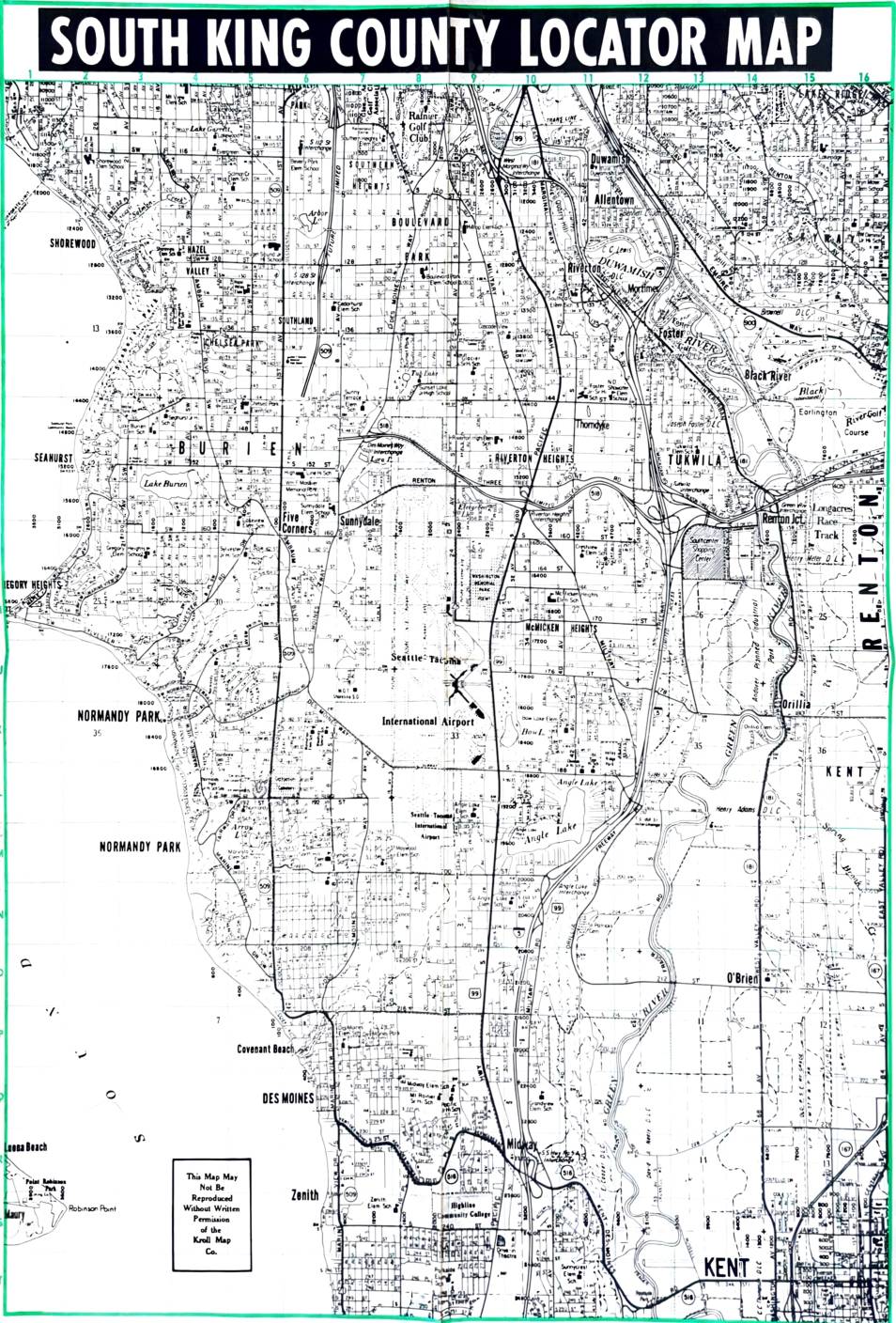
South King County Locator Map
This South King County Locator Map, produced by the Kroll Map Co., provides a detailed street-level view of communities surrounding the Seattle-Tacoma International Airport, including Burien, Des Moines, Normandy Park, Tukwila, Renton, and Kent. The map shows the airport's central position within the region and the dense residential neighborhoods directly affected by its flight paths. It is a key reference document for understanding the geographic scope of communities subject to Sea-Tac Airport noise impacts and related land-use policy decisions. -
 1969-01-01
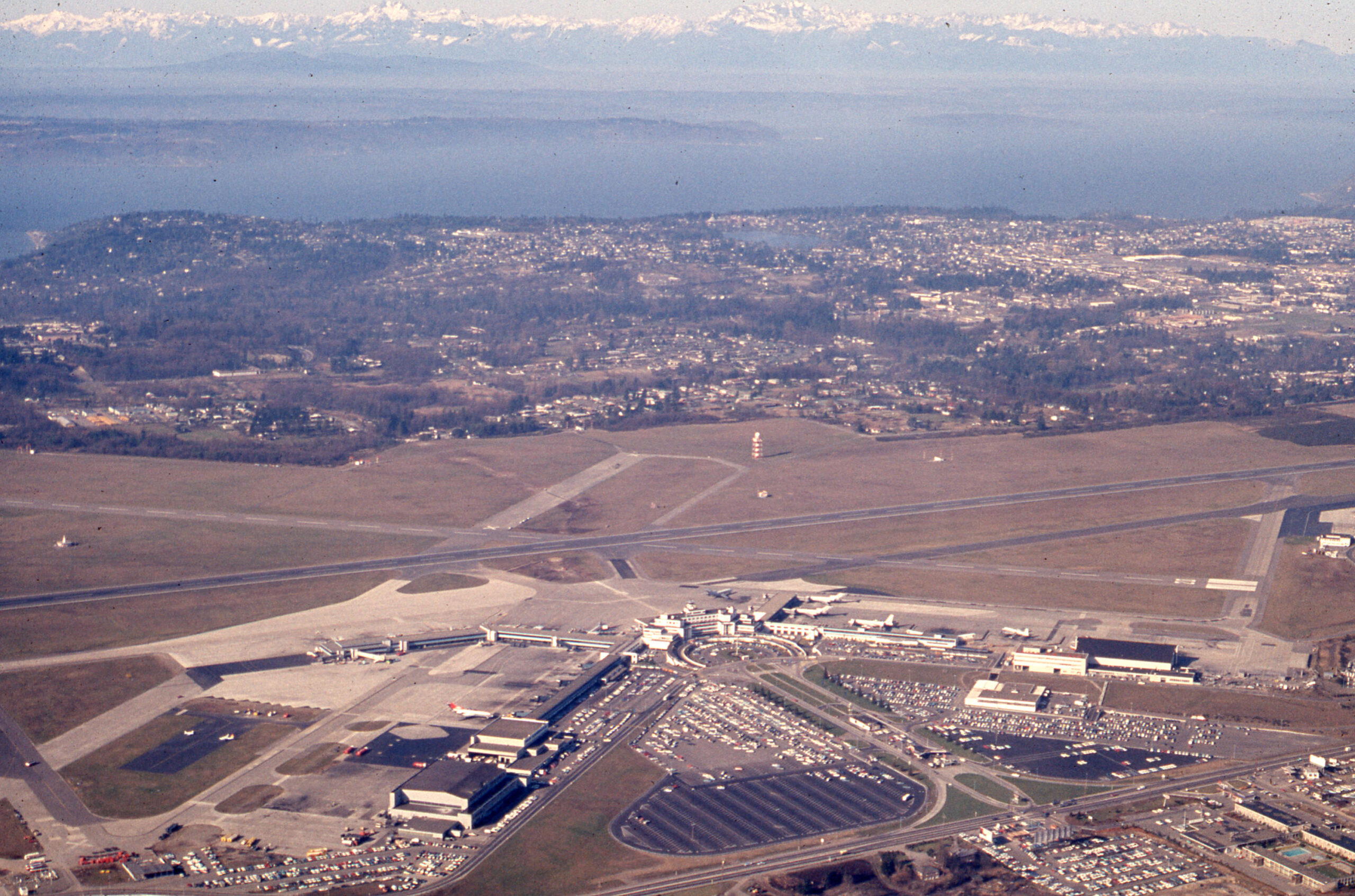
SEA-TAC Aerial late1960s
Aerial photograph looking northwest over Seattle-Tacoma International Airport (Sea-Tac), showing the original terminal complex, parallel runways, taxiways, and surface parking lots. In the background, Puget Sound, the city of Seattle, and the Olympic Mountains are visible, consistent with a photo taken from the south during the airport's early operational decades. -
 1969-01-01
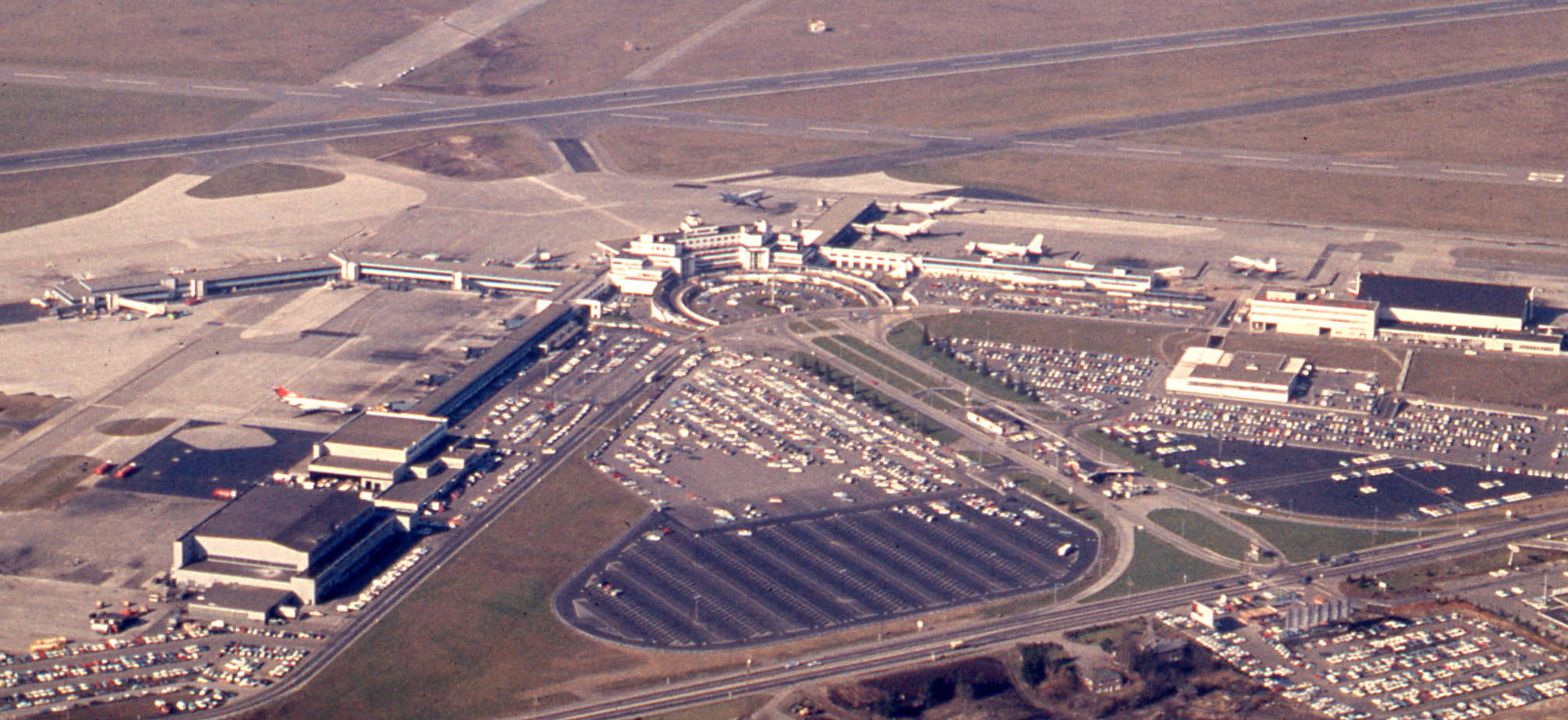
Sea-Tac Airport Aerial View, Late 1960s
Overhead photograph showing a large airport terminal complex with a control tower, multiple aircraft at gates, extensive surface parking lots, and intersecting runways. The photo appears to date from the 1960s–1970s based on vehicle styles and terminal architecture, but no visible text, logos, or captions confirm the specific airport identity. -
 1969-01-01
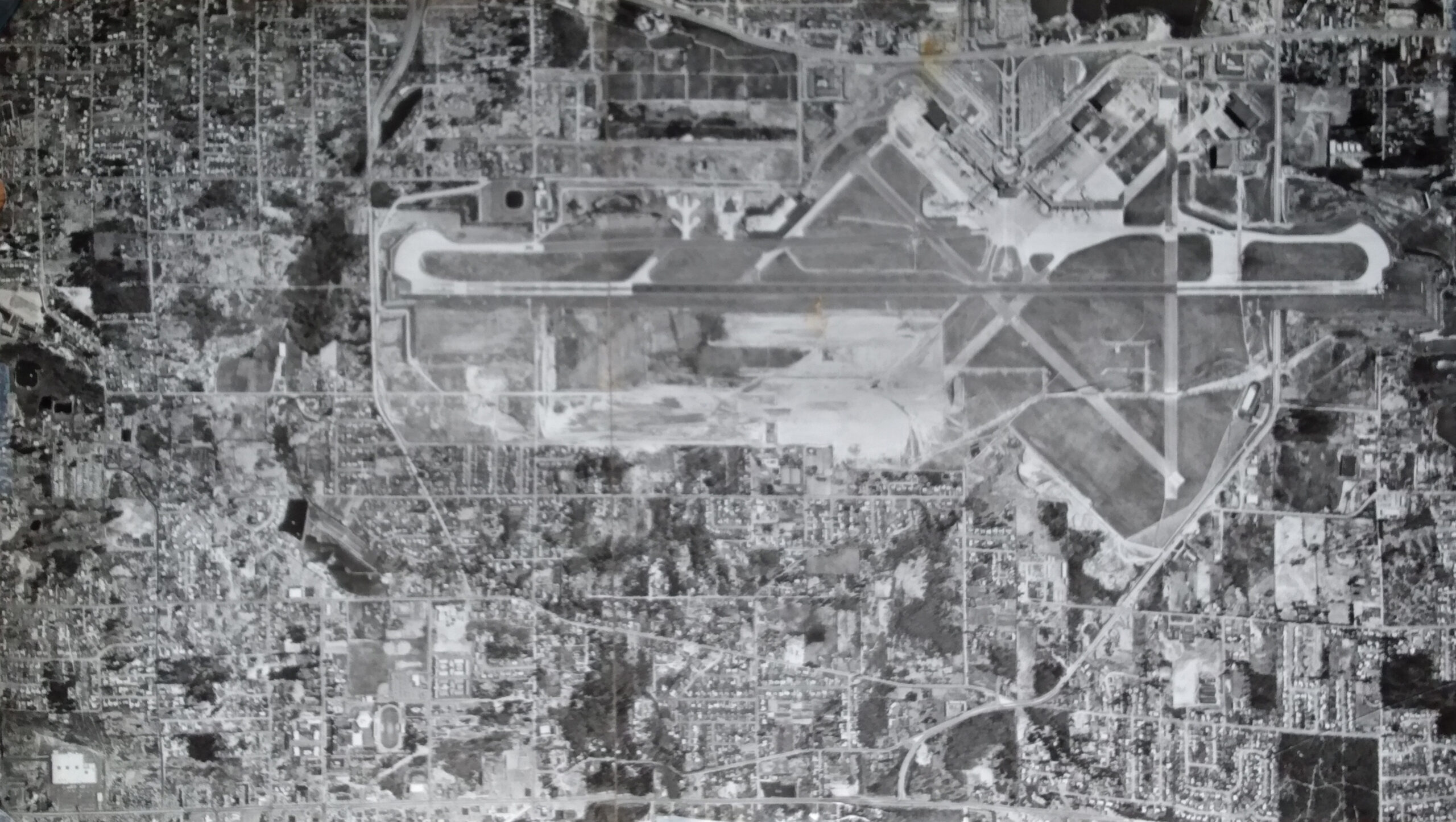
Second Runway Construction Aerial Photograph 1969
Black-and-white aerial photograph showing a large commercial or military airport with multiple runways in an X/crosswind configuration, taxiways, terminal areas, and extensive surrounding residential and commercial development. The image appears to be a historical mosaic aerial survey photograph, consistent with mid-20th century planning or noise-study documentation. -
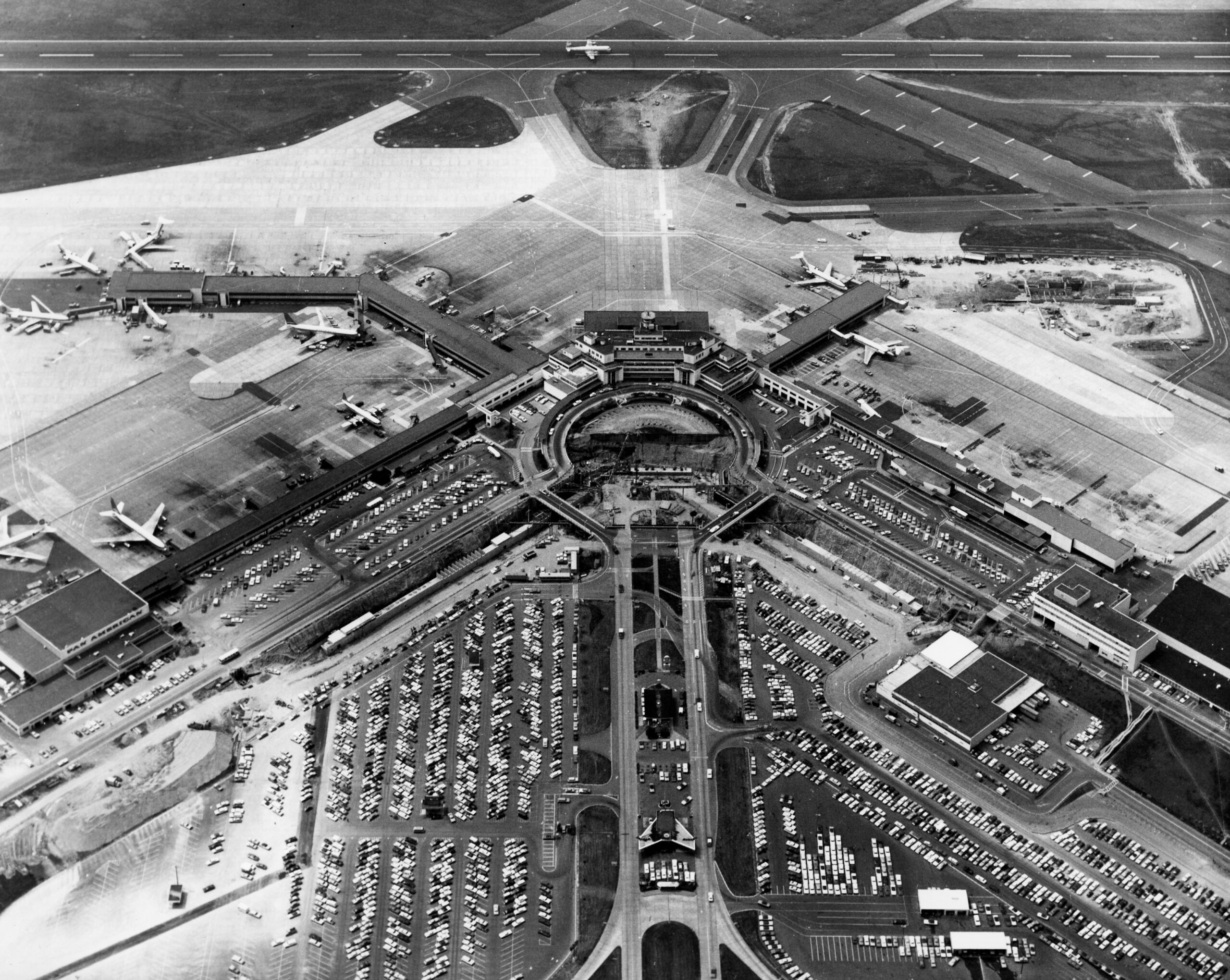 1969-01-01
Sea-Tac Airport Aerial View, circa 1969
Black-and-white aerial photograph showing a cruciform terminal building with a central rotunda, multiple concourses extending outward to aircraft gates, large surface parking lots, and active runways. The layout and architectural style are consistent with a major American commercial airport from the 1960s–1970s era, but no visible text, logos, or captions confirm the specific airport identity. -
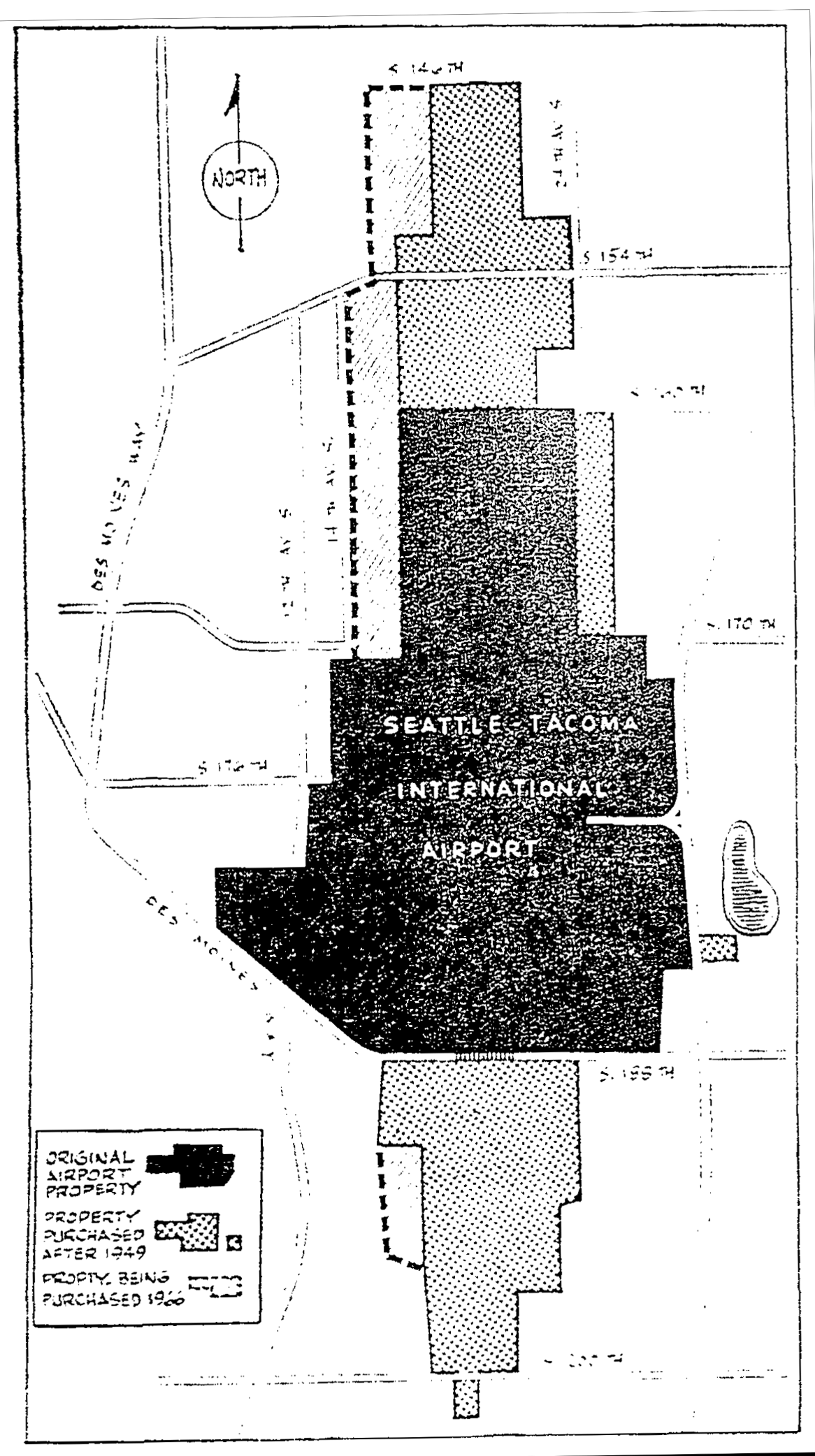 1966-04-17
Seattle Daily Times 1966-04-17 airport property purchases
A map showing the land acquisition history of Seattle-Tacoma International Airport, distinguishing between the original airport property, property purchased after 1949, and property being purchased in 1960. The map shows surrounding streets including S. 146th, S. 154th, S. 170th, S. 176th, S. 188th, and S. 200th, as well as Des Moines Way and nearby avenues. -
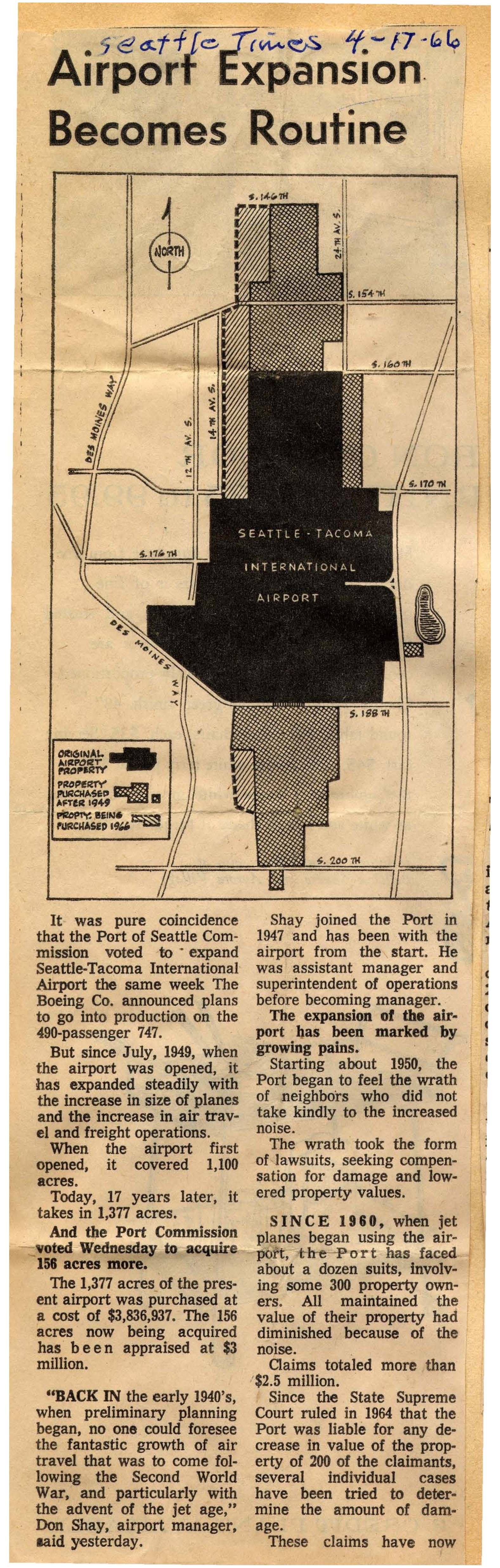 1966-04-17
Airport expansion becomes routine
A April 17, 1966 Seattle Times article reports that the Port of Seattle Commission voted to acquire 156 additional acres, expanding Seattle-Tacoma International Airport from its original 1,100 acres at opening in 1949 to over 1,500 acres. The expansion coincided with Boeing's announcement of the 490-passenger 747, reflecting rapid growth in air travel and freight. The article also details mounting legal challenges from roughly 300 neighboring property owners seeking over $2.5 million in compensation for noise-related property value losses, particularly since the introduction of jet aircraft in 1960. -
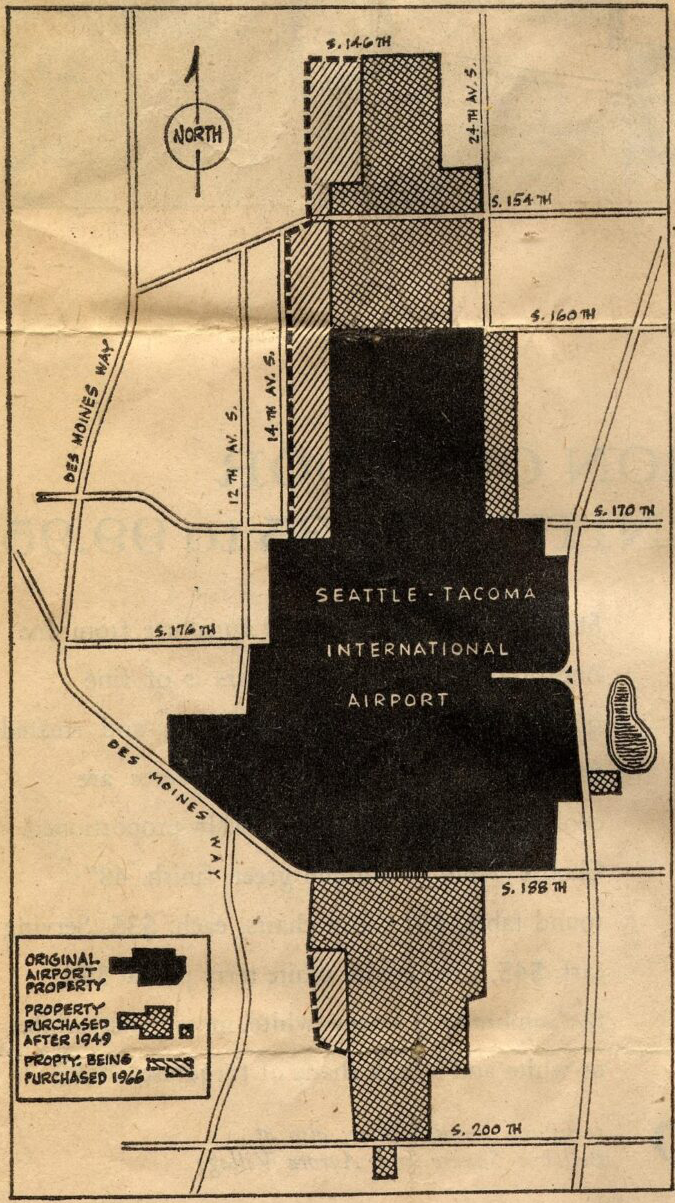
Seattle Times 1966 Airport Expansion Becomes Routine (map)
A map showing the land boundaries of Seattle-Tacoma International Airport, distinguishing between original airport property (solid black), property purchased after 1949 (crosshatch pattern), and property being purchased in 1966 (diagonal hatch pattern). The map shows surrounding streets including Des Moines Way, S. 146th through S. 200th Streets, and avenues including 12th, 14th, and 24th Ave S. -
 1962-01-01
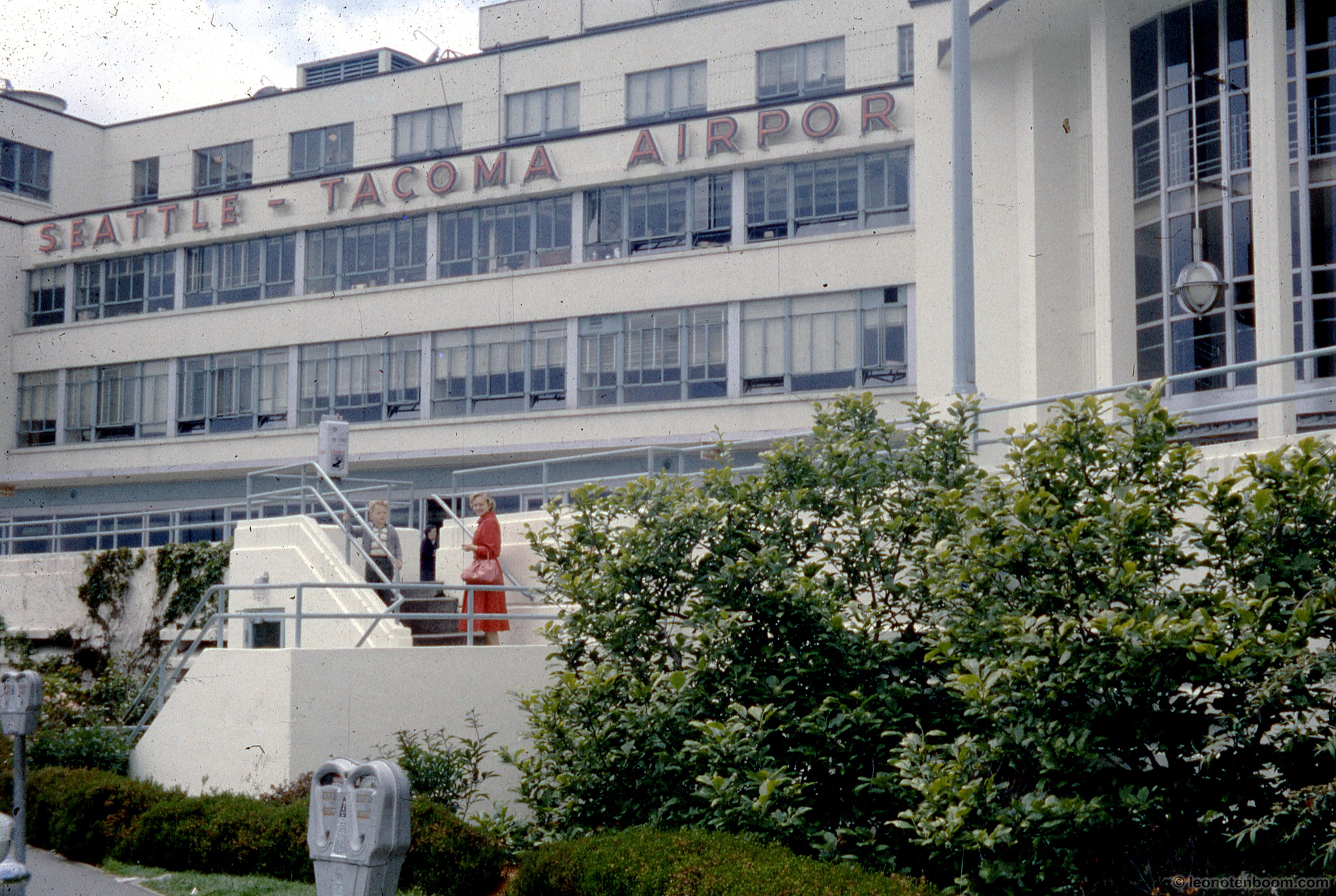
Sea-Tac Airport Terminal 1962
Exterior view of the original Seattle-Tacoma Airport terminal building, showing the large red 'SEATTLE - TACOMA AIRPORT' signage on the white Art Moderne-style facade. Two women are visible on the front entrance stairs, with period parking meters in the foreground; watermark reads leonotenboom.com. -
 1961-01-01
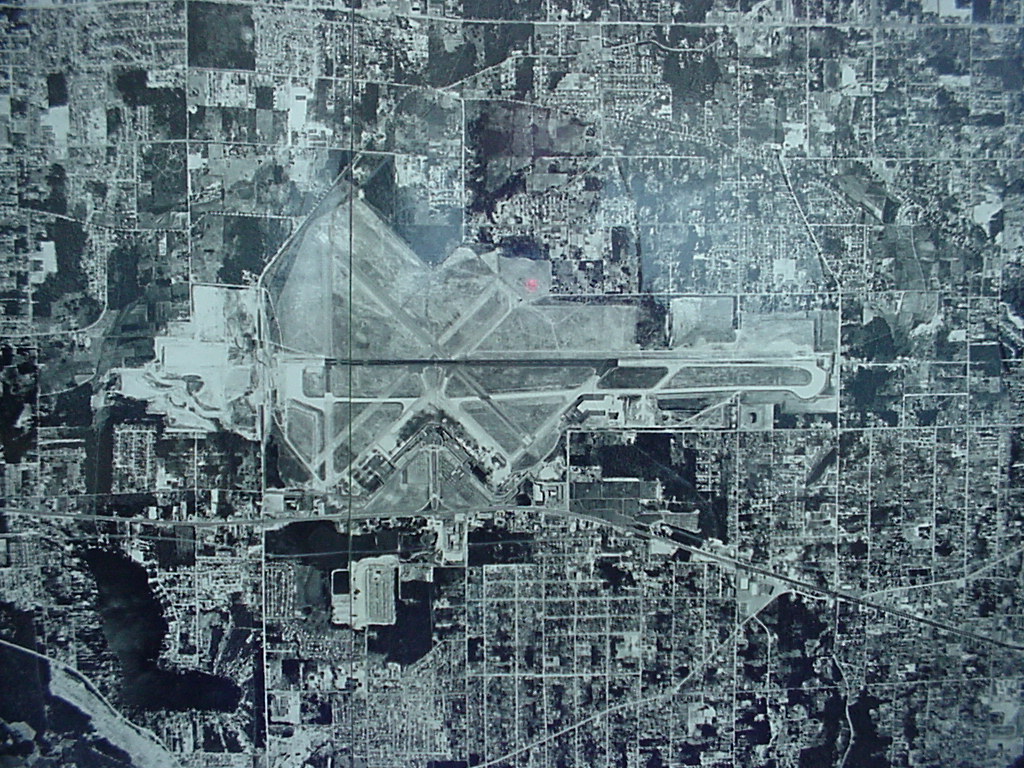
Aerial Photograph of Airport Runways, 1961
Black-and-white aerial or satellite photograph showing a major airport with multiple runways arranged in an X/parallel configuration, surrounded by a dense urban grid. The image appears to be a planning or reference map with a faint grid overlay, but contains no visible text, labels, or date information to identify the specific airport or time period.