TagPort Of Seattle(2400)
-
 1973-09-20
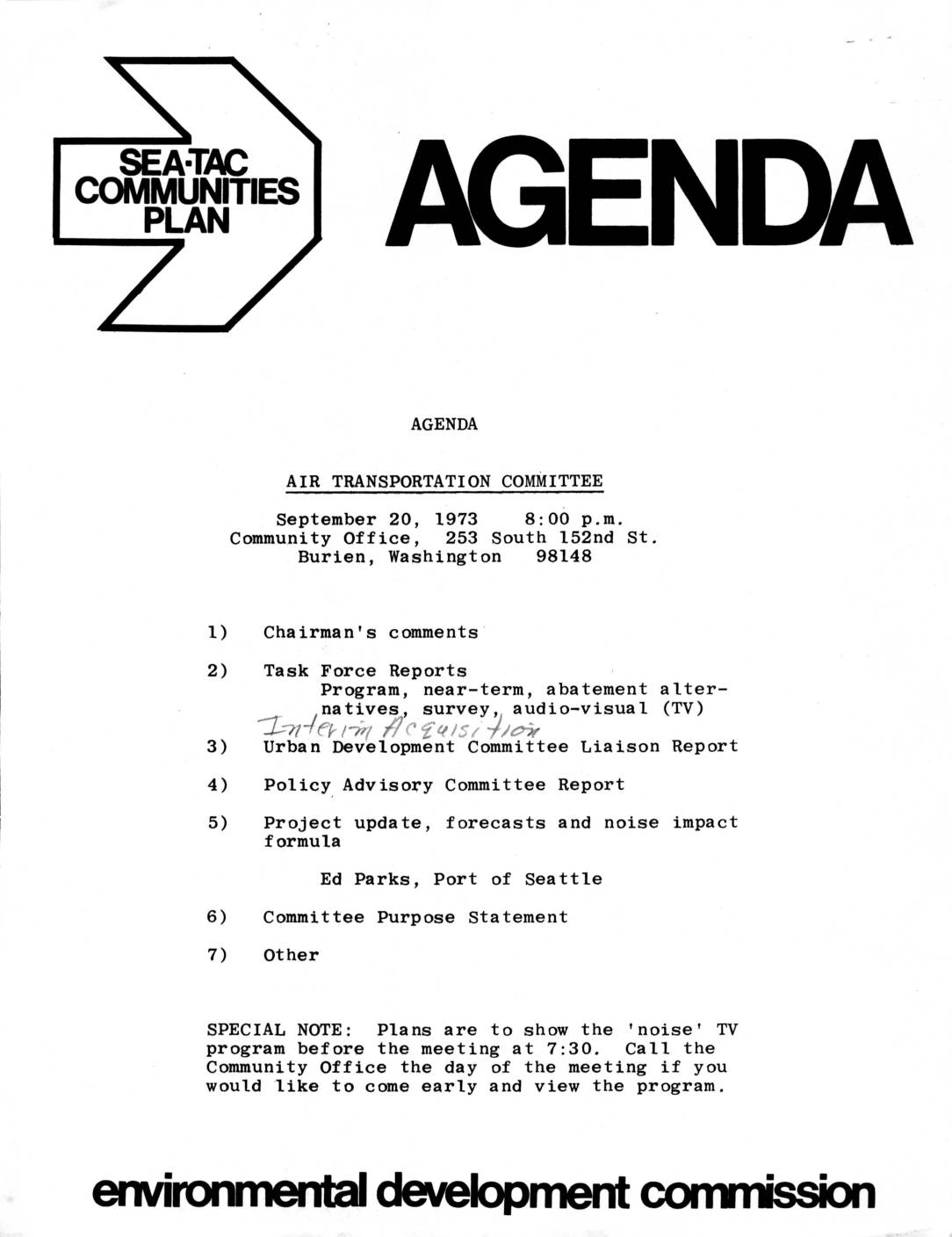
Sea-Tac Communities Plan: Air Transportation Committee agenda, September 1973
This September 1973 document package from the Sea-Tac Communities Plan includes an agenda for the Air Transportation Committee meeting held in Burien, Washington, covering topics such as noise abatement alternatives, land acquisition by the Port of Seattle, and a project update on noise impact formulas. A companion newsletter announces upcoming citizen committee meetings and highlights key initiatives including a port land acquisition proposal covering approximately 475 acres near Sea-Tac Airport, a community memory sketch mapping exercise, and the production of TV programs on noise and land use. Discussion materials also outline community engagement questions around airport noise impacts, land use priorities, and the role of citizens in shaping local planning decisions. -
 1973-09-07
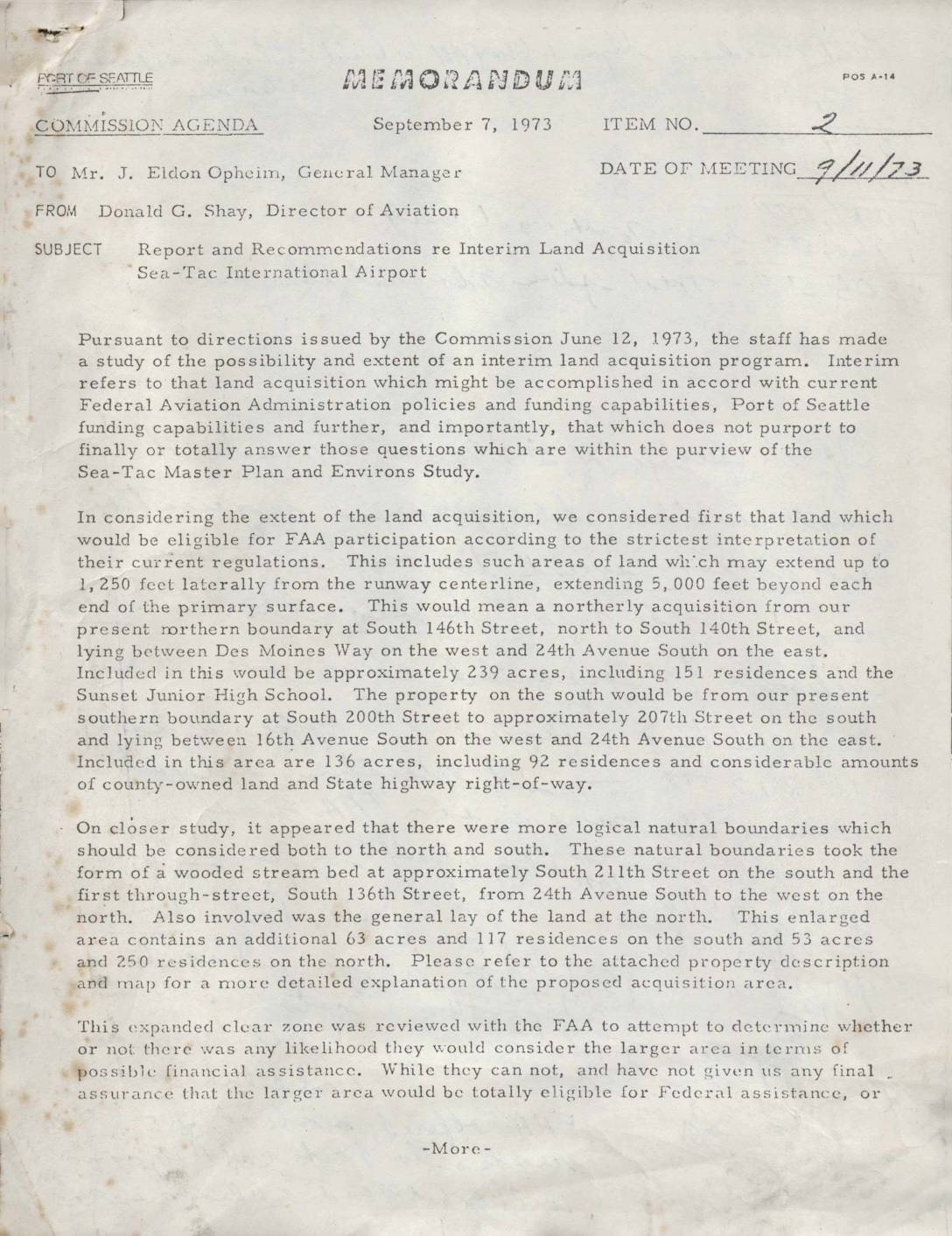
Report and recommendations re interim land acquisition, Sea-Tac International Airport
A 1973 Port of Seattle memorandum outlines a proposed interim land acquisition program around Sea-Tac International Airport, targeting properties to the north and south of the airport's existing boundaries to establish expanded clear zones. The plan covers approximately 610 residential parcels and 75 acres of open land valued at an estimated $15.46 million, with the Port seeking over $8 million in Federal Aviation Administration funding to offset costs. Land acquisition was projected to begin no earlier than July 1, 1974, following required environmental impact statements, housing relocation plans, and FAA review and approval. -
 1973-09-07
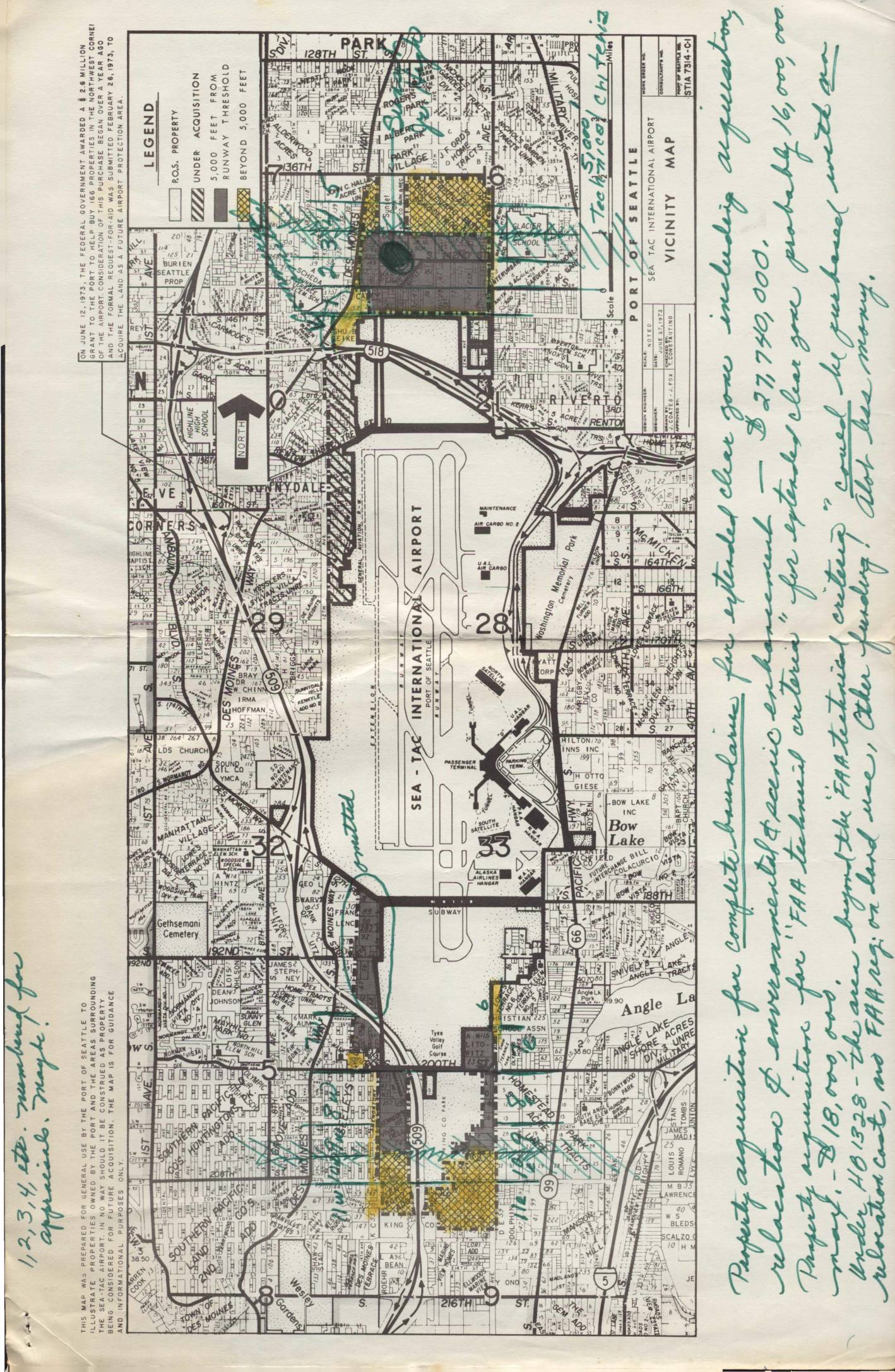
Land use map, heavily notated with property acquisition notes by Virginia Dana
In September 1973, the Port of Seattle's Director of Aviation recommended an interim land acquisition program around Sea-Tac International Airport, targeting approximately 610 residential parcels and 75 acres of open land in clear zones north and south of the runways. The estimated cost of the acquisitions was $15.46 million, with the FAA expected to contribute over $8 million and the Port of Seattle covering the remaining $8 million from airport revenues between 1974 and 1977. Under the best-case timeline, actual land purchases could not begin until after July 1, 1974, following completion of environmental impact statements, housing relocation plans, and FAA review. -
 1973-09-07
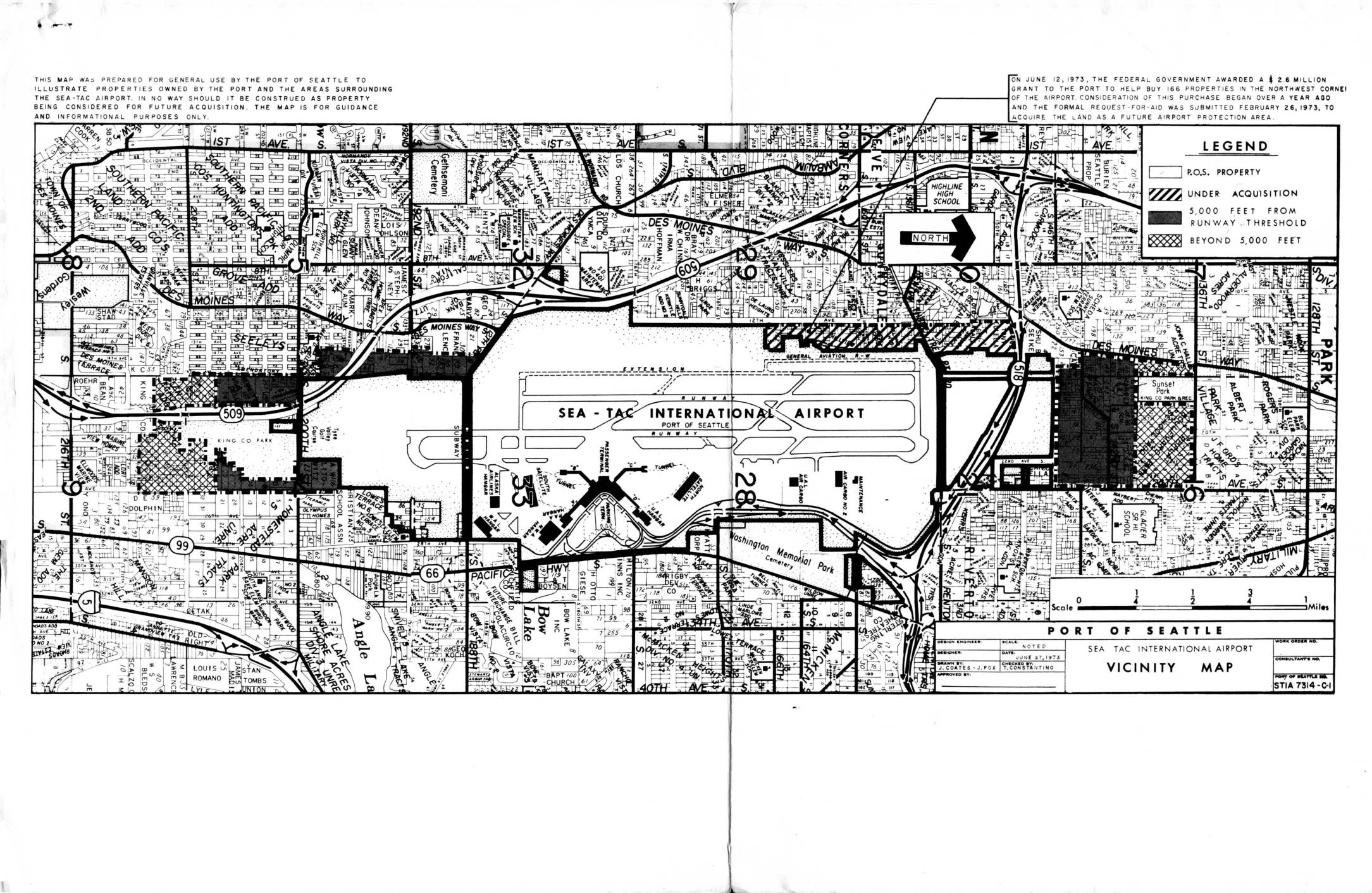
Report and recommendations re interim land acquisition, Sea-Tac International Airport
In September 1973, the Port of Seattle outlined a plan to acquire approximately 610 residential properties and 75 acres of open land surrounding Sea-Tac International Airport to create expanded clear zones north and south of the runways. The total estimated property cost was $15.46 million, with the Port anticipating over $8 million in federal FAA assistance and covering the remainder from airport revenues between 1974 and 1977. Under the best-case scenario, actual land acquisition could not begin until after July 1, 1974, following required environmental impact statements, housing relocation plans, and a multi-month FAA review process. -
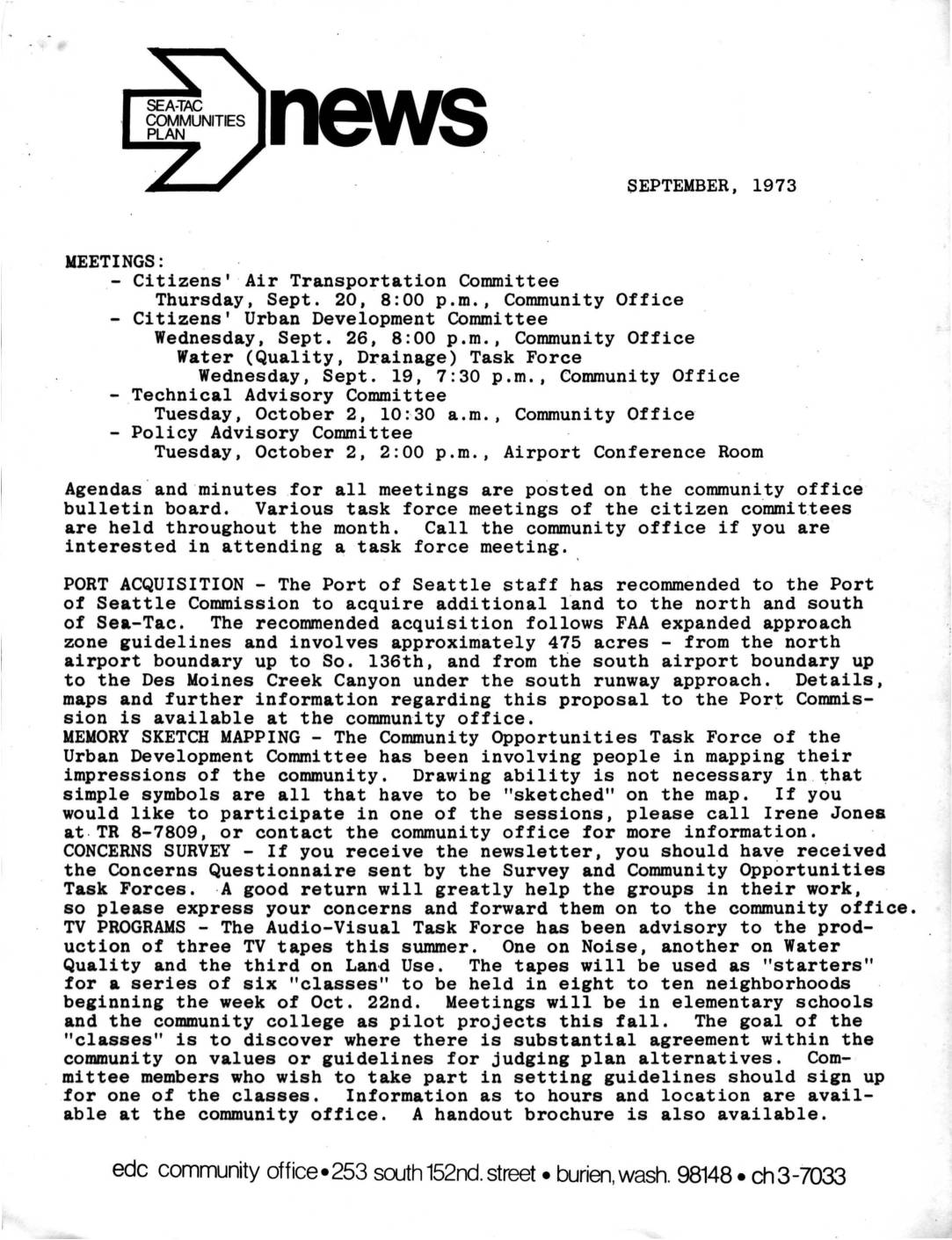 1973-09-01
Sea-Tac Communities Plan Newsletter and Air Transportation Committee Minutes, September 1973
This September 1973 newsletter from the Sea-Tac Communities Plan covers community committee meetings, Port of Seattle land acquisition plans, and neighborhood engagement initiatives related to Sea-Tac Airport. The Port of Seattle proposed acquiring approximately 475 acres of land north and south of the airport following FAA approach zone guidelines, while citizen committees worked on noise, water quality, and land use concerns. Community outreach efforts included a memory sketch mapping project, a concerns survey, and a series of TV-based neighborhood classes aimed at building consensus on planning guidelines. -
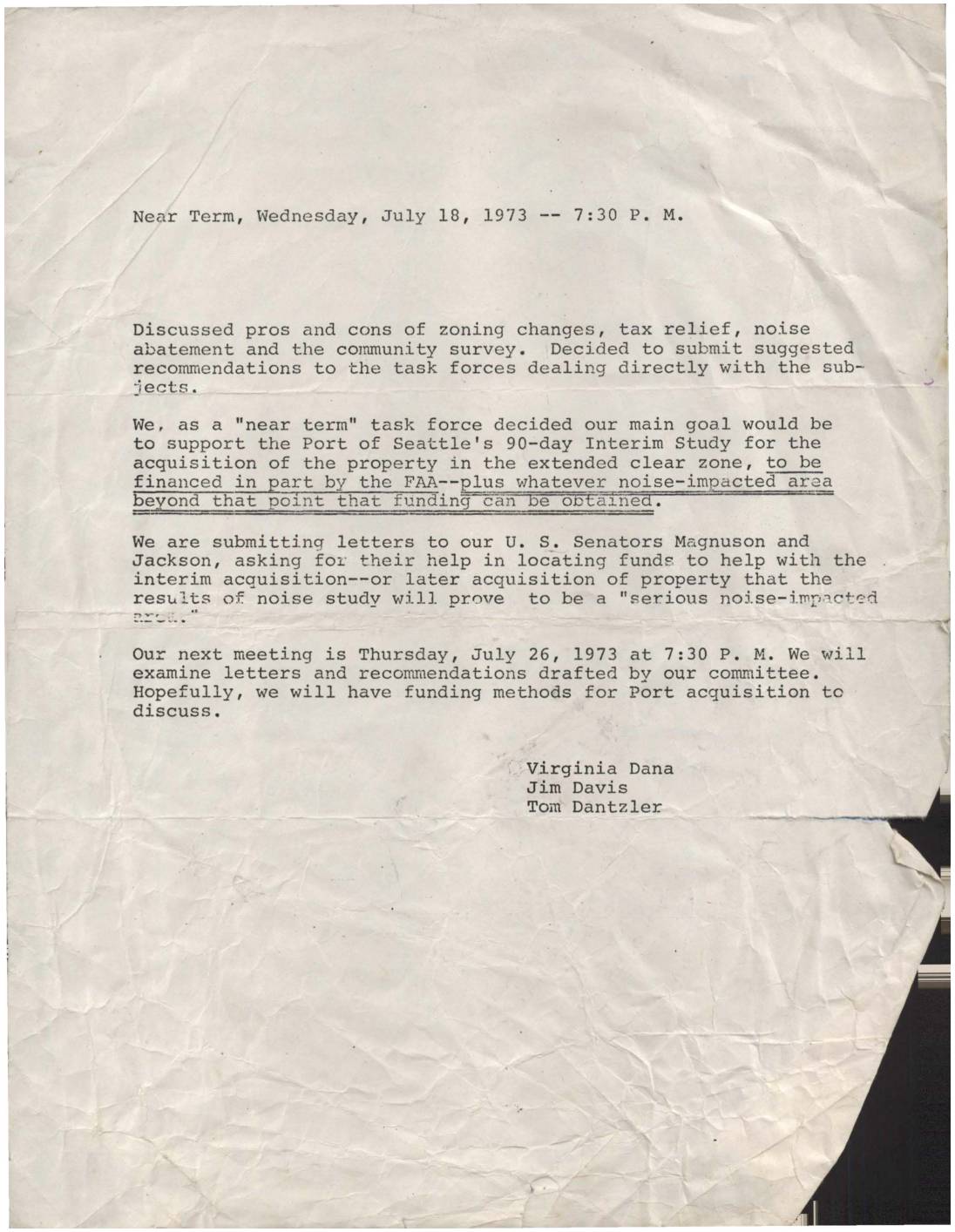 1973-07-18
Near Term Task Force Meeting Minutes: July 18, 1973
Minutes from a July 18, 1973 'Near Term' task force meeting focused on Sea-Tac Airport noise issues, in which members agreed to support the Port of Seattle's 90-day Interim Study for acquiring property in the extended clear zone, with partial FAA funding. The group also decided to write to U.S. Senators Magnuson and Jackson to seek additional funds for interim and future property acquisition in serious noise-impacted areas. The next meeting was scheduled for July 26, 1973, to review draft letters and explore funding options. -
 1973-07-01
Technical Report #2 Public Facilities and Services in the Sea-Tac Communities Plan Study Area
This 1973 technical report from King County's Office of Community and Environmental Development surveys the public facilities and services available in the SeaTac Communities Plan Study Area. It covers schools, parks, libraries, fire protection, sewer and water services, and other community infrastructure. The report was produced to support land use planning in the area surrounding Seattle-Tacoma International Airport. -
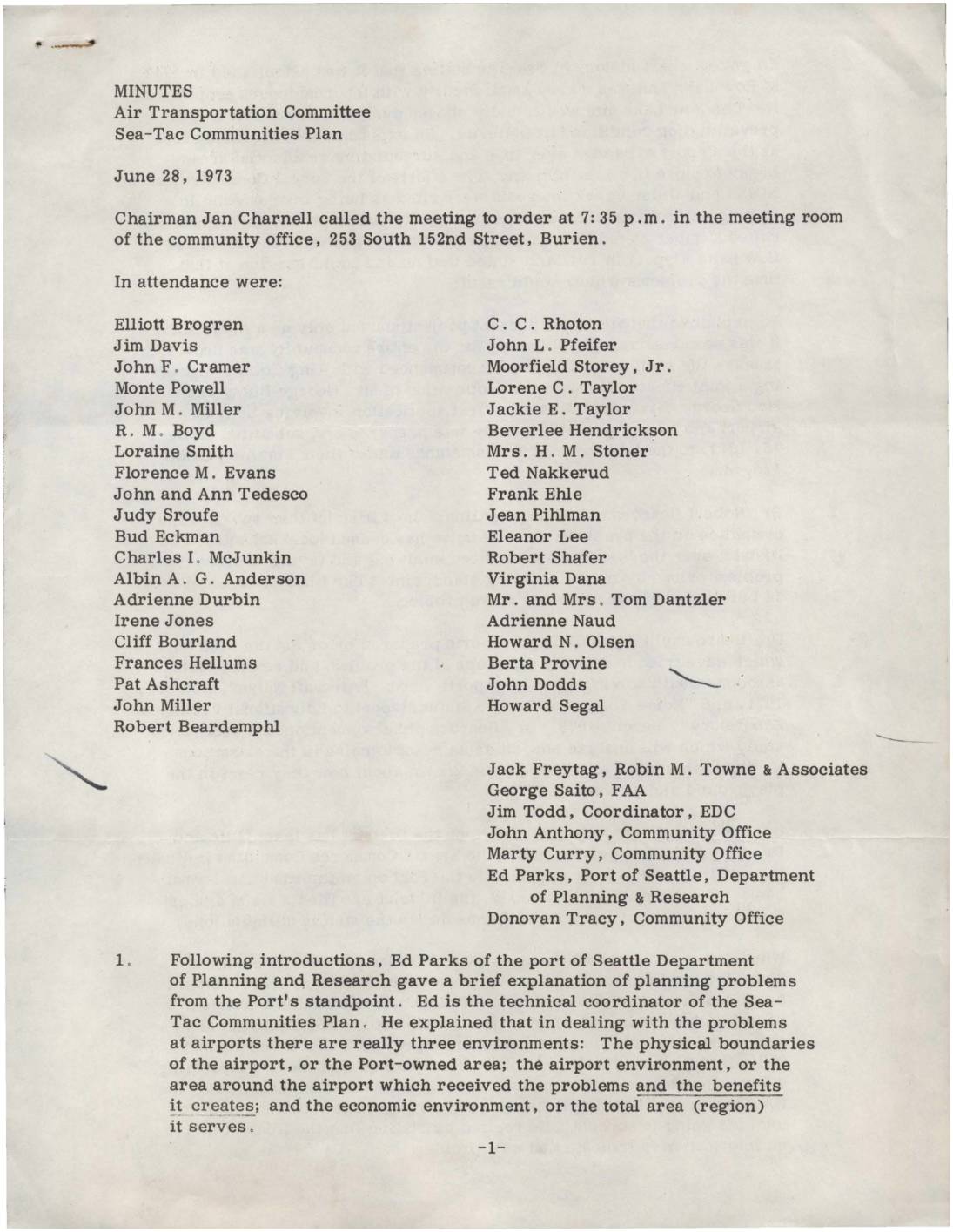 1973-06-28
Minutes: Air Transportation Committee, Sea-Tac Communities Plan
Minutes from a June 28, 1973 Air Transportation Committee meeting on the Sea-Tac Communities Plan, held in Burien, Washington. Representatives from the Port of Seattle, FAA, Highline School District, and local community groups discussed the history of Sea-Tac Airport's expansion, the impact of aircraft noise on nearby schools and neighborhoods, and ongoing efforts to measure and reduce noise exposure. Key topics included new comprehensive noise measurement methods, federal agency roles in noise regulation, and strategies for noise abatement such as modified flight procedures and sound-absorbing materials. -
 1973-06-21
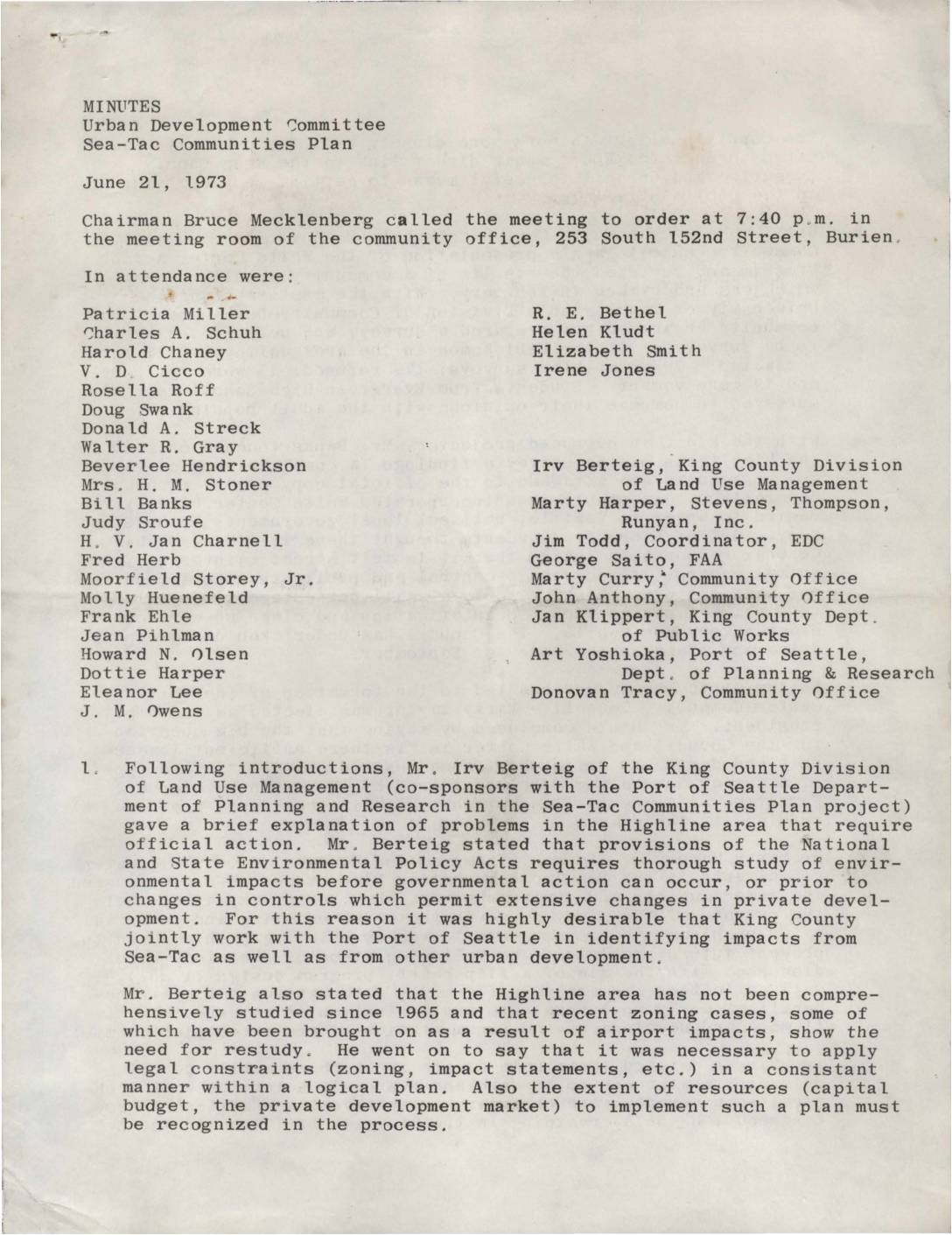
Minutes: Urban Development Committee, Sea-Tac Communities Plan
Minutes from a June 21, 1973 Urban Development Committee meeting on the Sea-Tac Communities Plan, held in Burien, Washington. The meeting covered the need for updated environmental and zoning studies in the Highline area due to airport impacts, a community opinion survey from White Center residents, and a water quality and drainage study. Officials discussed developing a focused 'middle plan' for the Highline area to better address local needs and airport-related land use challenges. -
 1973-05-02
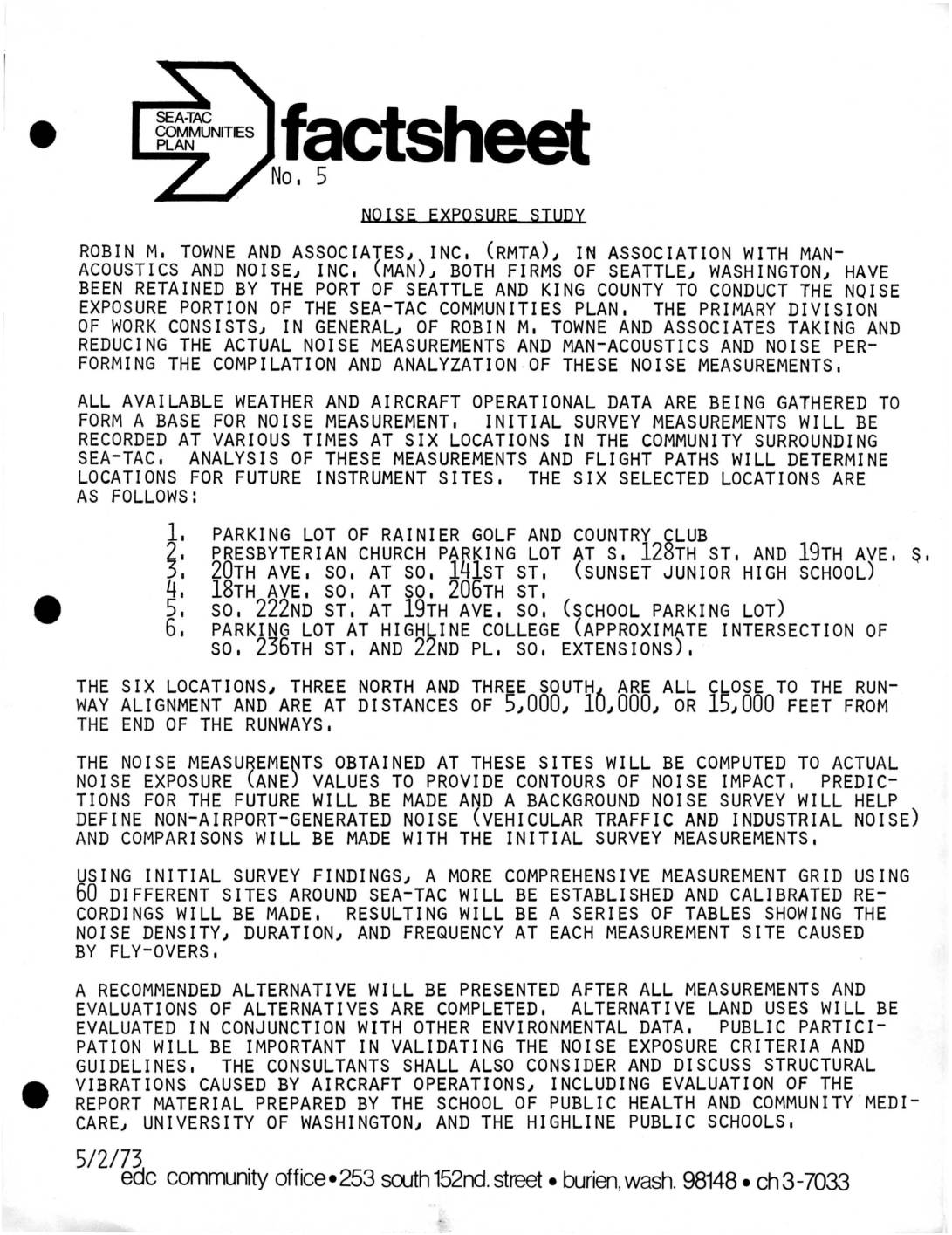
Sea-Tac Communities Plan Fact Sheet No. 5: Noise Exposure Study
This 1973 fact sheet describes a noise exposure study commissioned by the Port of Seattle and King County to measure aircraft noise impacts around Seattle-Tacoma International Airport. Two Seattle firms, Robin M. Towne and Associates and Man-Acoustics and Noise, Inc., conducted measurements at six community locations ranging from 5,000 to 15,000 feet from the runway ends, with plans to expand to 60 sites. The study aimed to produce noise exposure contours, future noise predictions, and alternative land-use recommendations, while also accounting for non-airport noise sources and structural vibrations caused by aircraft operations.