TagPort Of Seattle(2403)
-
 2001-06-13
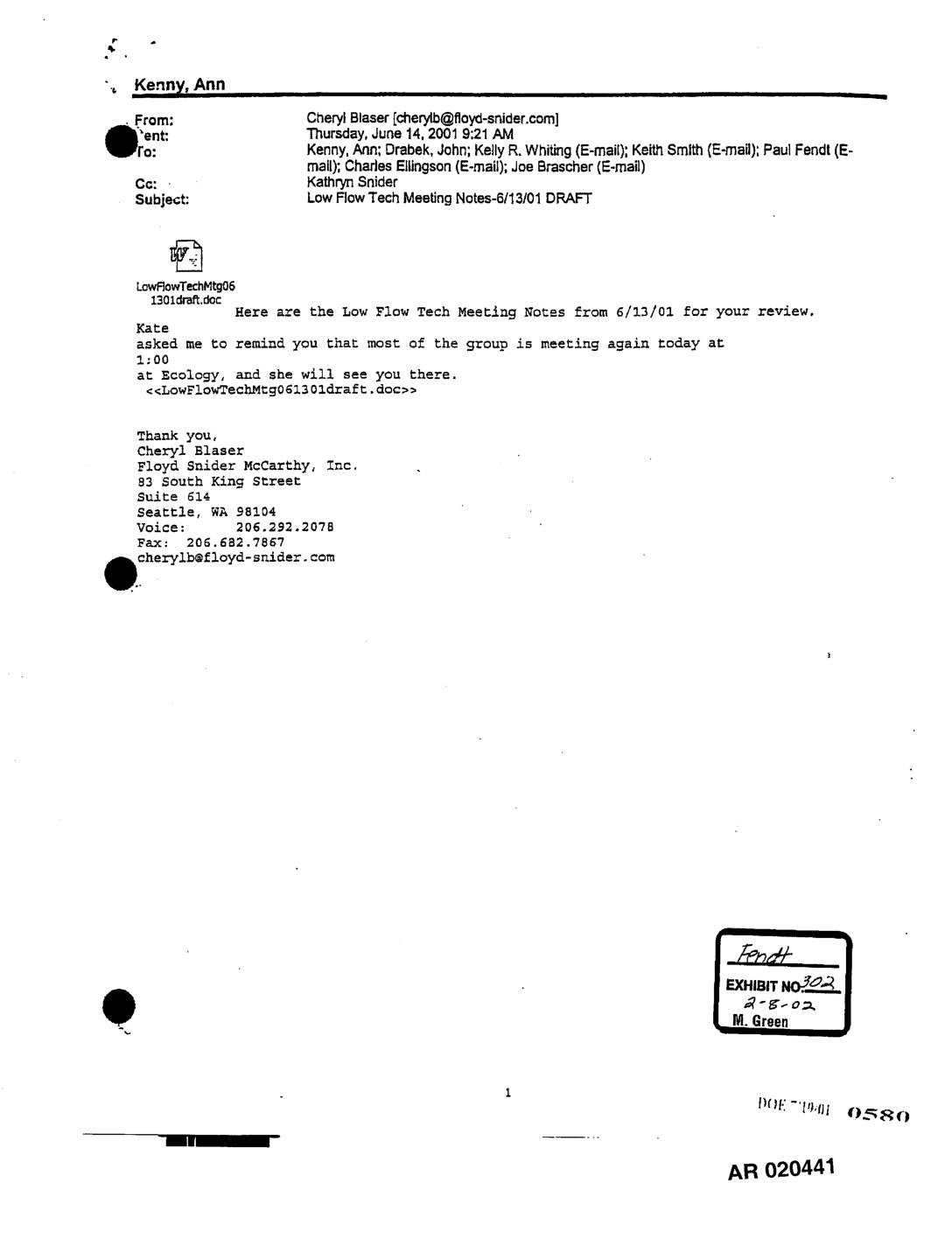
EXH 302: Draft Meeting Notes – Low Flow Analysis, STIA Third Runway 401 Permit, Jun 13 2001
These draft meeting notes from a June 12, 2001 technical meeting cover the Low Flow Analysis conducted as part of the 401 Permit Decision-Making process for Sea-Tac International Airport's Third Runway project. Representatives from the Washington Department of Ecology, King County, the Port of Seattle, and consulting firms discussed the status of hydrological modeling efforts, including HSPF and embankment seepage models, and outlined upcoming deliverables. The group also addressed plans for a mitigation and operational plan to evaluate and offset potential low stream flow impacts caused by the runway project. -
 2001-06-12
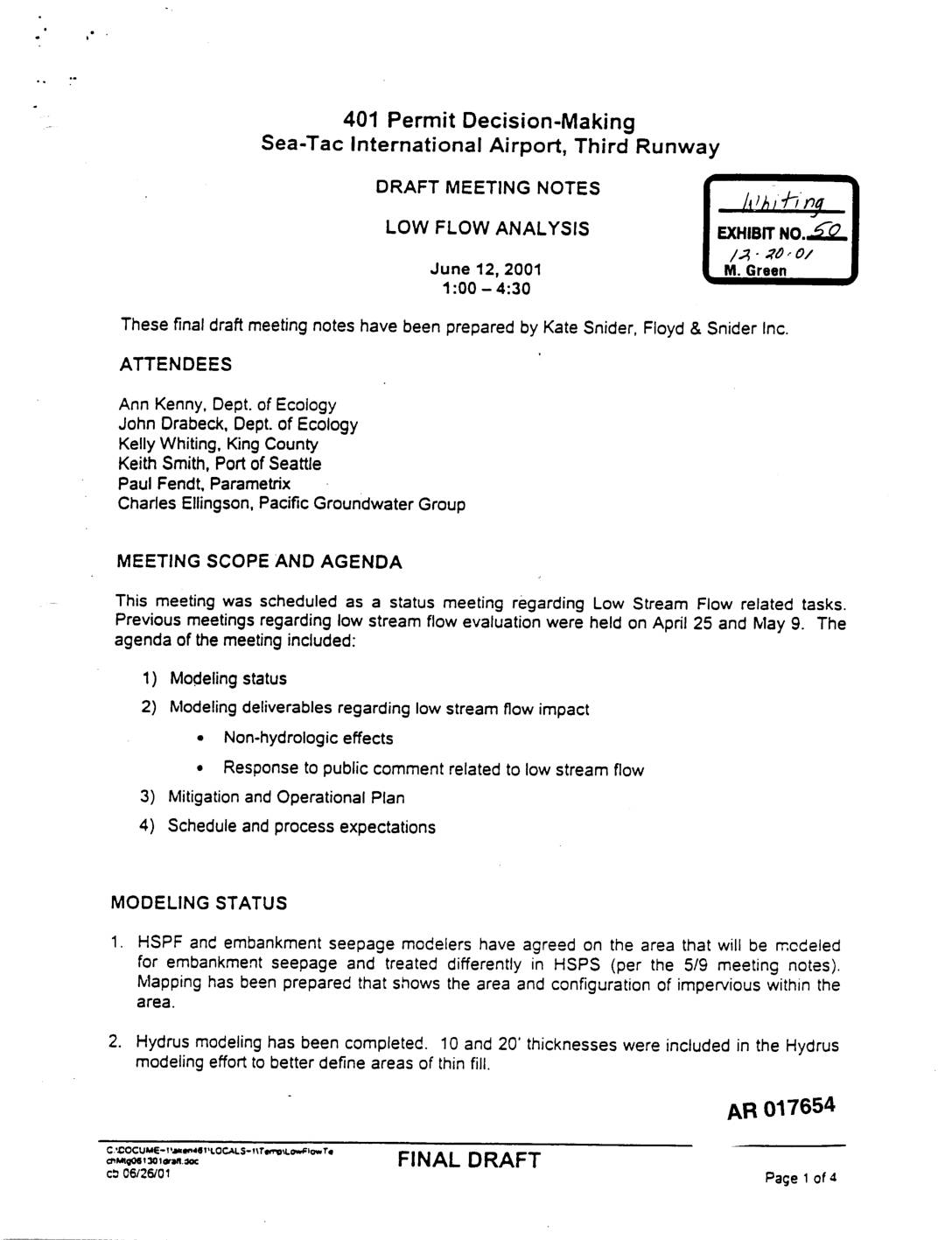
EXH AR017654: Draft Meeting Notes — Low Flow Analysis, Sea-Tac Airport Third Runway, 401 Permit Decision-Making
Draft meeting notes from June 12, 2001 status meeting on Low Stream Flow related tasks for Sea-Tac International Airport Third Runway 401 Permit Decision-Making process. Attendees included Ann Kenny and John Drabeck (Dept. of Ecology), Kelly Whiting (King County), Keith Smith (Port of Seattle), Paul Fendt (Parametrix), and Charles Ellingson (Pacific Groundwater Group). Topics covered: -
 2001-06-12
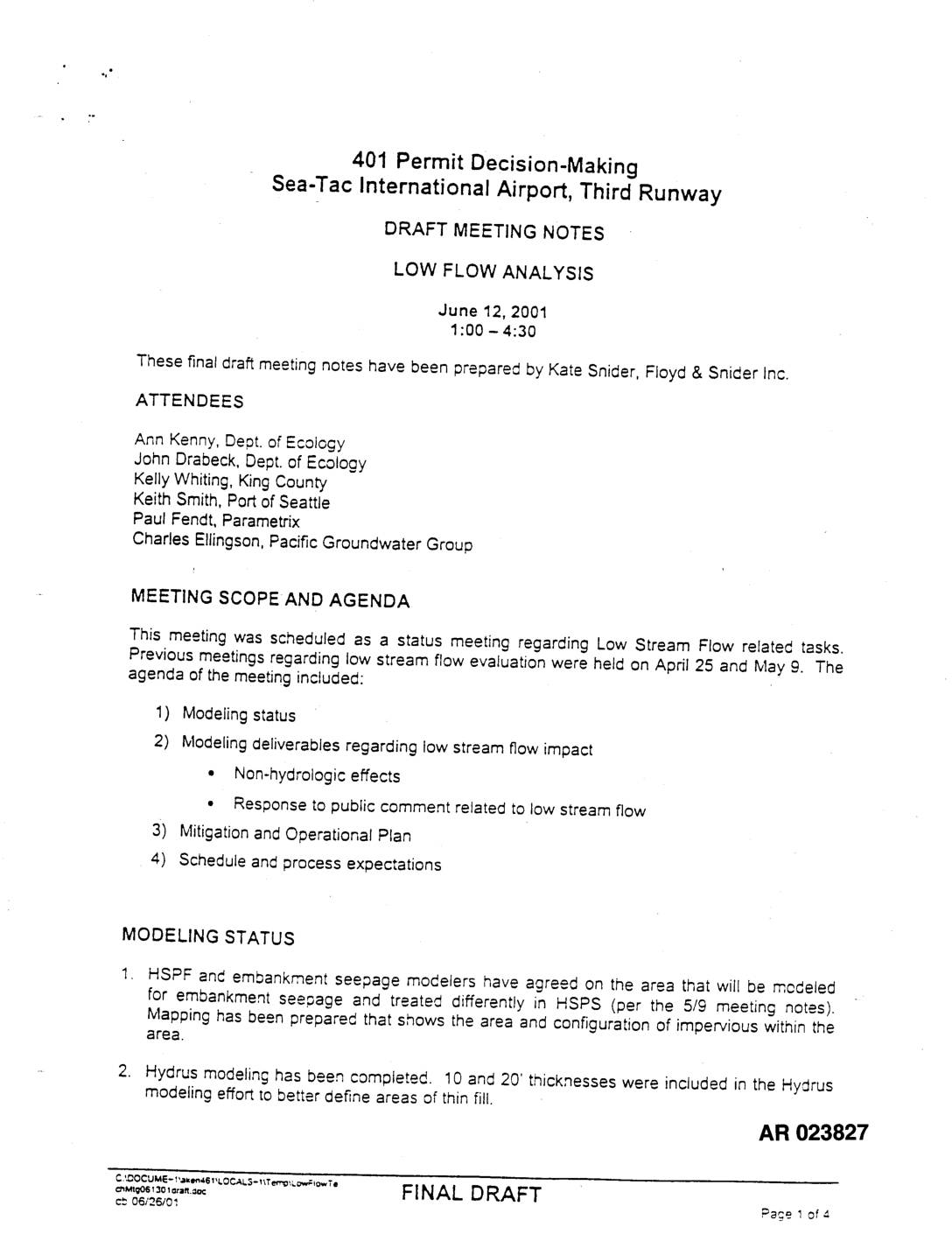
EXH AR023827: Draft Meeting Notes — Low Flow Analysis, STIA Third Runway (Jun 12, 2001)
These draft meeting notes from June 12, 2001 document a technical status meeting between the Washington Department of Ecology, King County, and the Port of Seattle regarding low stream flow analysis for the Sea-Tac International Airport Third Runway project. The group reviewed progress on hydrological modeling efforts, including HSPF and Hydrus modeling used to assess how runway embankment construction might affect nearby stream flows. Discussions also covered planned mitigation measures such as stormwater retention vaults, upcoming modeling deliverables, and a follow-up conference call that confirmed the Port team's modeling methodology was acceptable and conservative for evaluating embankment seepage. -
 2001-06-11
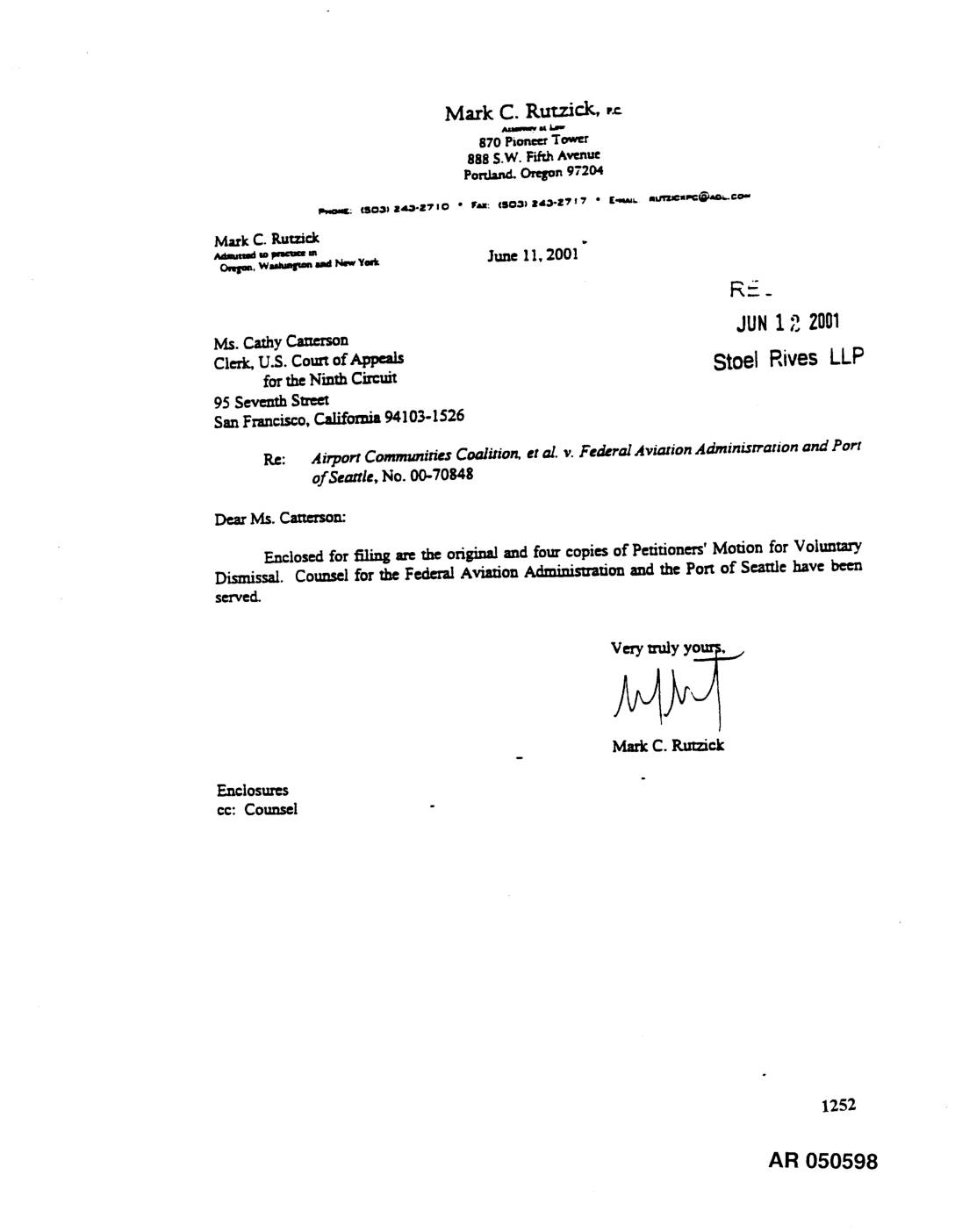
EXH AR1252: ACC Motion for Voluntary Dismissal — Airport Communities Coalition et al. v. FAA and Port Of Seattle, No. 00-70848
Motion for Voluntary Dismissal filed by Mark C. Rutzick on behalf of petitioners Airport Communities Coalition (ACC), City of Des Moines, City of Normandy Park, City of Burien, City of Federal Way, City of Tukwila, and Highline School District No. 401 in the Ninth Circuit Court of Appeals, Case No. 00-70848. Petitioners sought dismissal under -
 2001-06-05
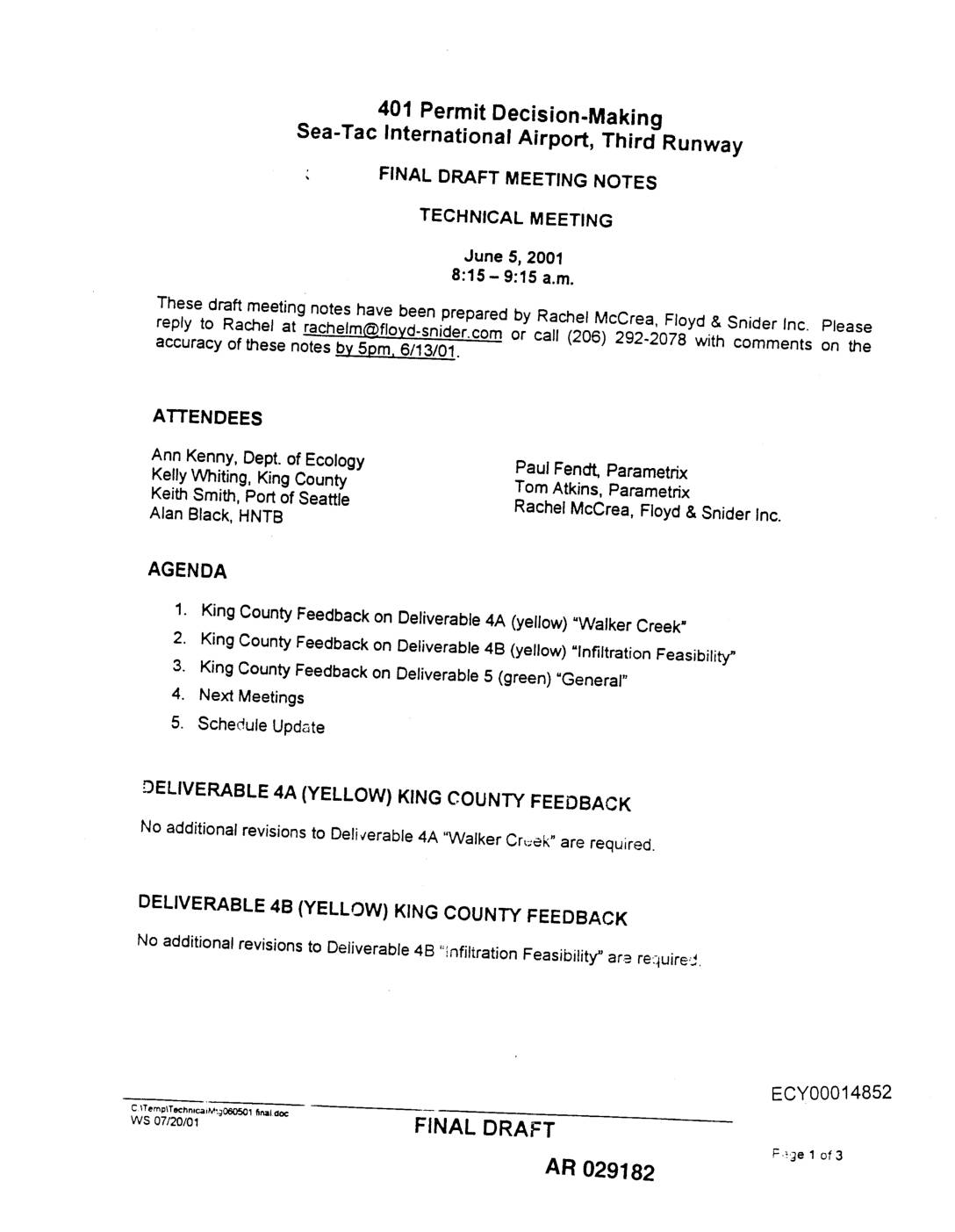
EXH AR029182: 401 Permit Decision-Making, Sea-Tac Airport Third Runway — Technical Meeting Notes, June 5, 2001
Final draft meeting notes prepared by Rachel McCrea of Floyd & Snider Inc. for a 401 Permit Decision-Making technical meeting on June 5, 2001 regarding Sea-Tac International Airport Third Runway. Attendees included Ann Kenny (Dept. of Ecology), Kelly Whiting (King County), Keith Smith (Port of Seattle), Alan Black (HNTB), Paul Fendt and Tom Atkins (Parametrix). -
 2001-06-05
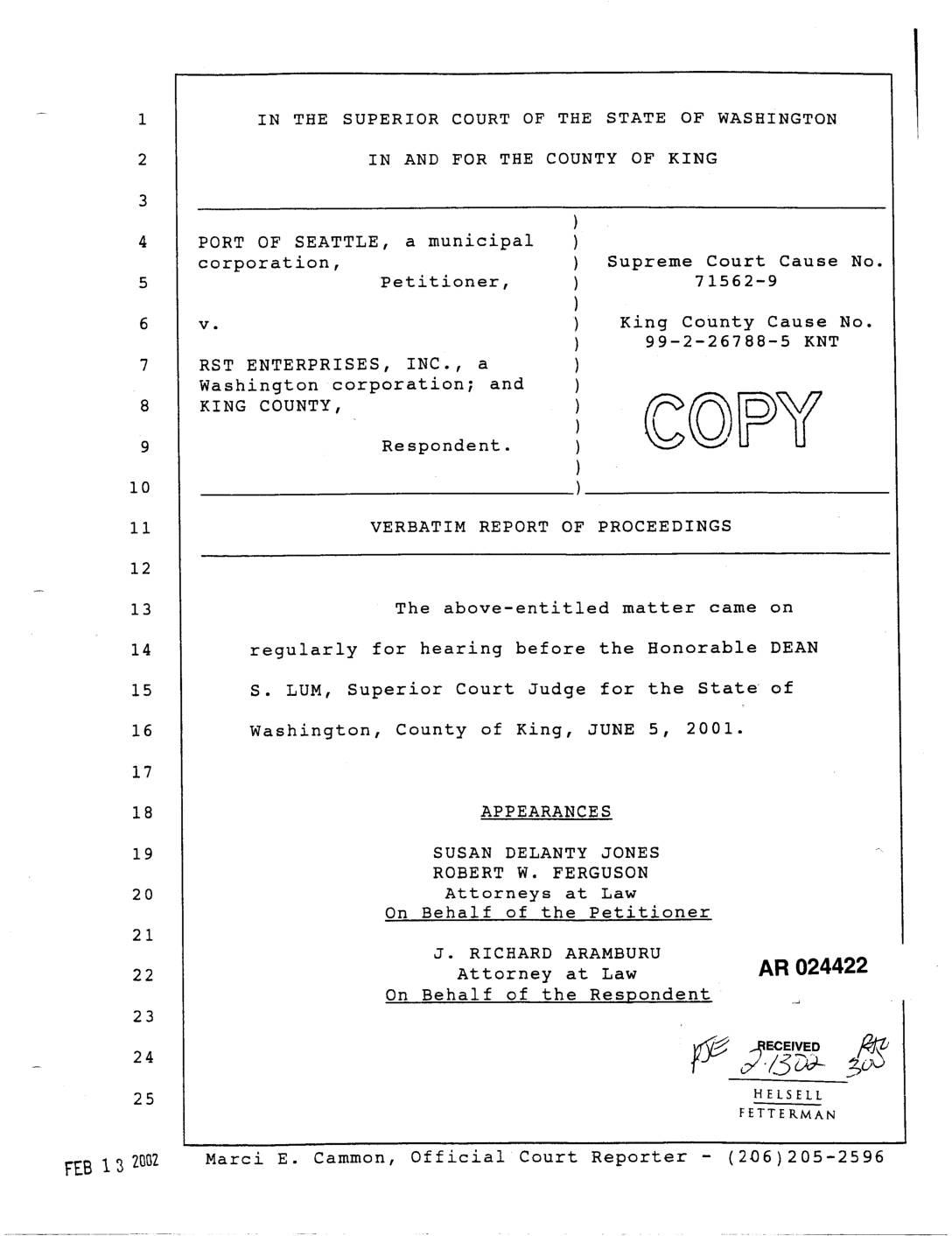
EXH AR 024422: Verbatim RP of Proceedings — Port of Seattle v. RST Enterprises Inc. & King County (June 5, 2001)
This is a verbatim transcript of a June 5, 2001 King County Superior Court hearing in the case of Port of Seattle versus RST Enterprises, Inc., presided over by Judge Dean S. Lum. The proceedings included testimony from expert witness James C. Kelley, Ph.D. and Jack Dodge, covering direct, cross, and redirect examinations across multiple sessions. The case, which also carried a Washington Supreme Court cause number, likely relates to disputes involving Port of Seattle operations or property matters in the Sea-Tac area. -
 2001-06-04
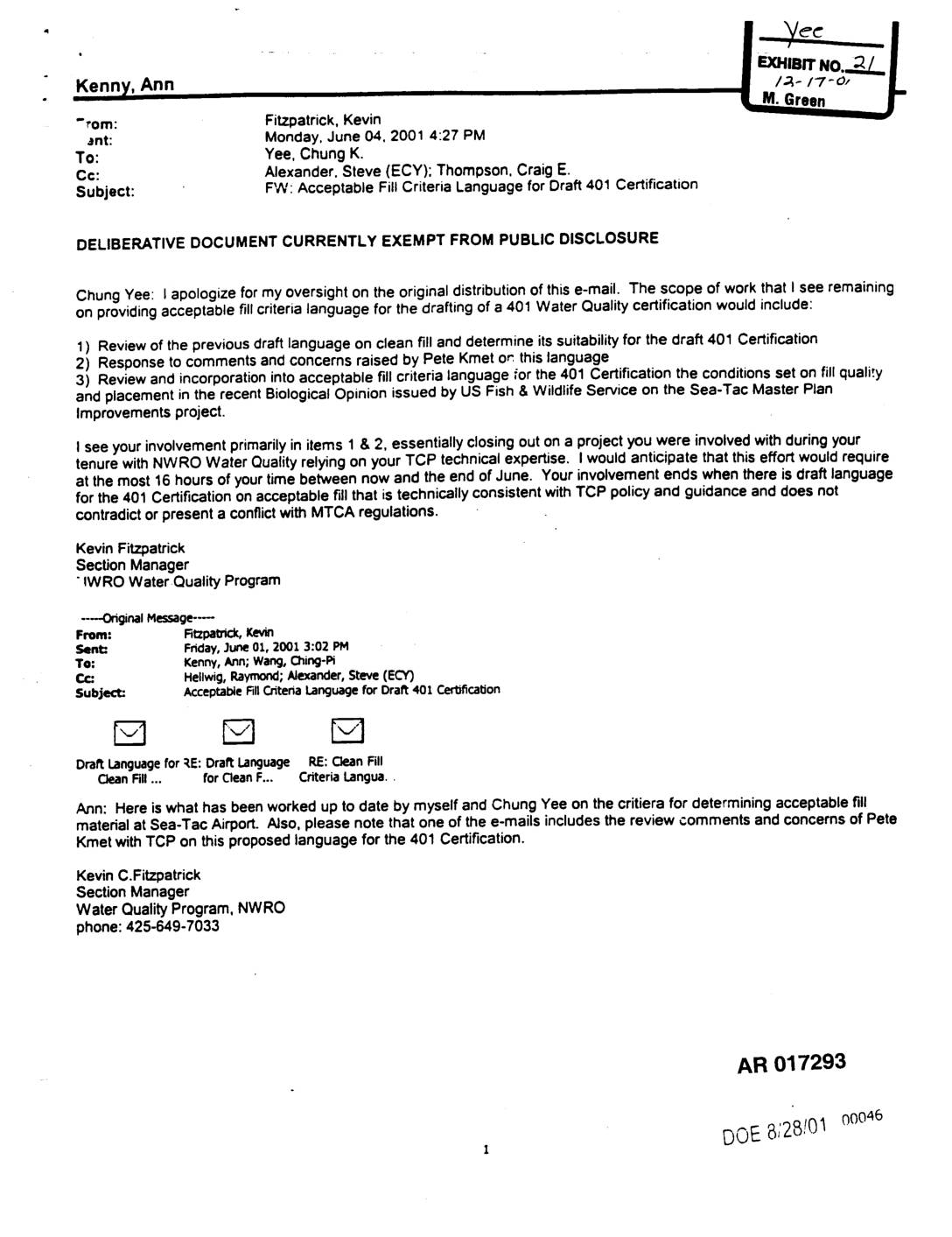
EXH AR017293: Ecology Internal Emails — Acceptable Fill Criteria Language for Draft 401 Certification, Sea-Tac Third Runway
Internal deliberative emails from Kevin Fitzpatrick (NWRO Water Quality Program Section Manager) to Chung K. Yee, Ann Kenny, Ching-Pi Wang, and others at Washington State Department of Ecology regarding development of acceptable clean fill criteria language for the 401 Water Quality Certification for the Sea-Tac Airport Third Runway (Sea-Tac Master Plan Improvements project). Emails reference -
 2001-06-04
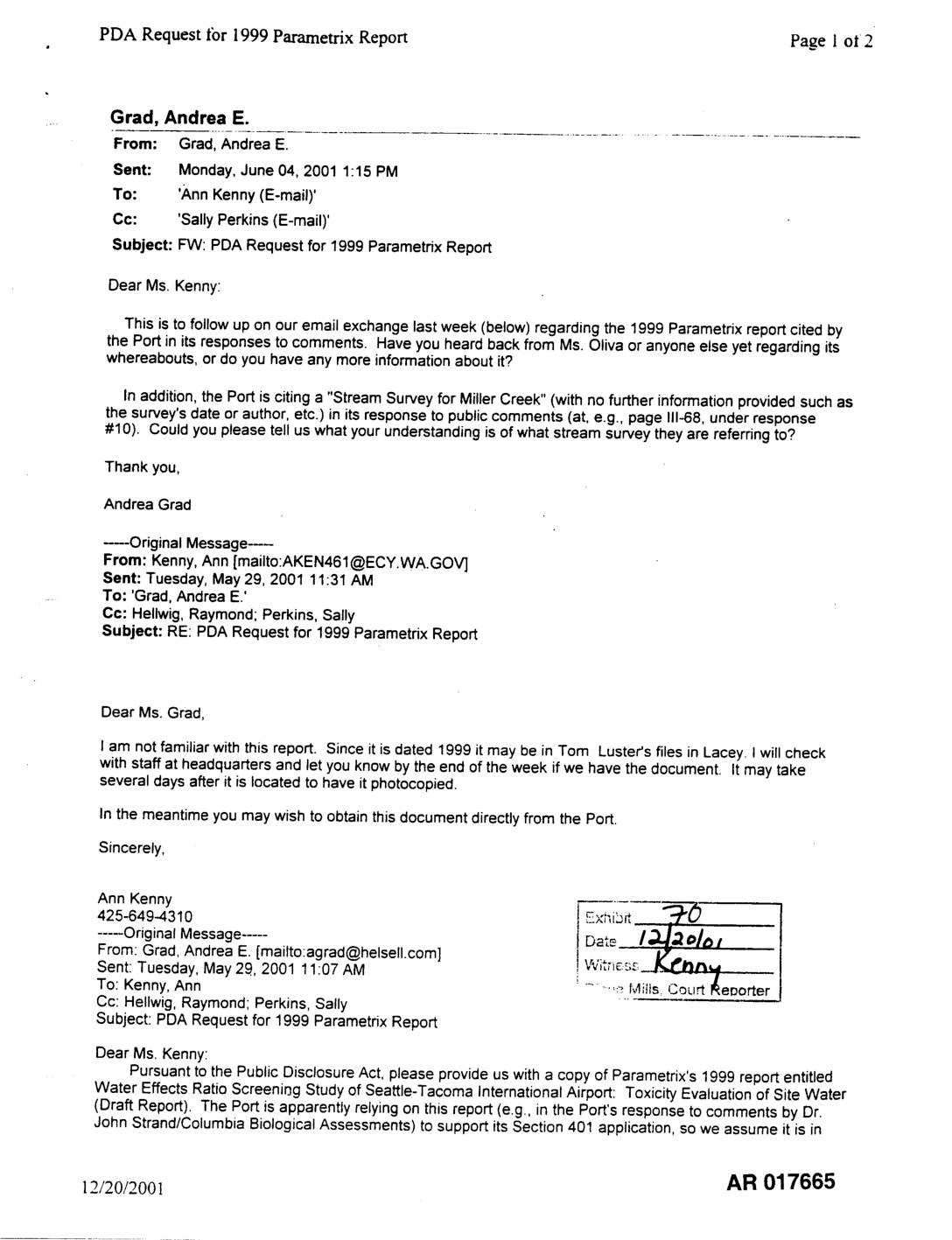
EXH AR017665: PDA Request for 1999 Parametrix Report — Correspondence Between Andrea Grad and Ann Kenny
Email correspondence (June 4, 2001) from Andrea Grad, paralegal at Helsell Fetterman, to Ann Kenny at Washington State Department of Ecology (ECY), following up on a Public Disclosure Act (PDA) request for Parametrix’s 1999 draft report titled ‘Water Effects Ratio Screening Study of Seattle-Tacoma International Airport: Toxicity Evaluation of Site Water.’ The Port of Seattle -
 2001-06-01
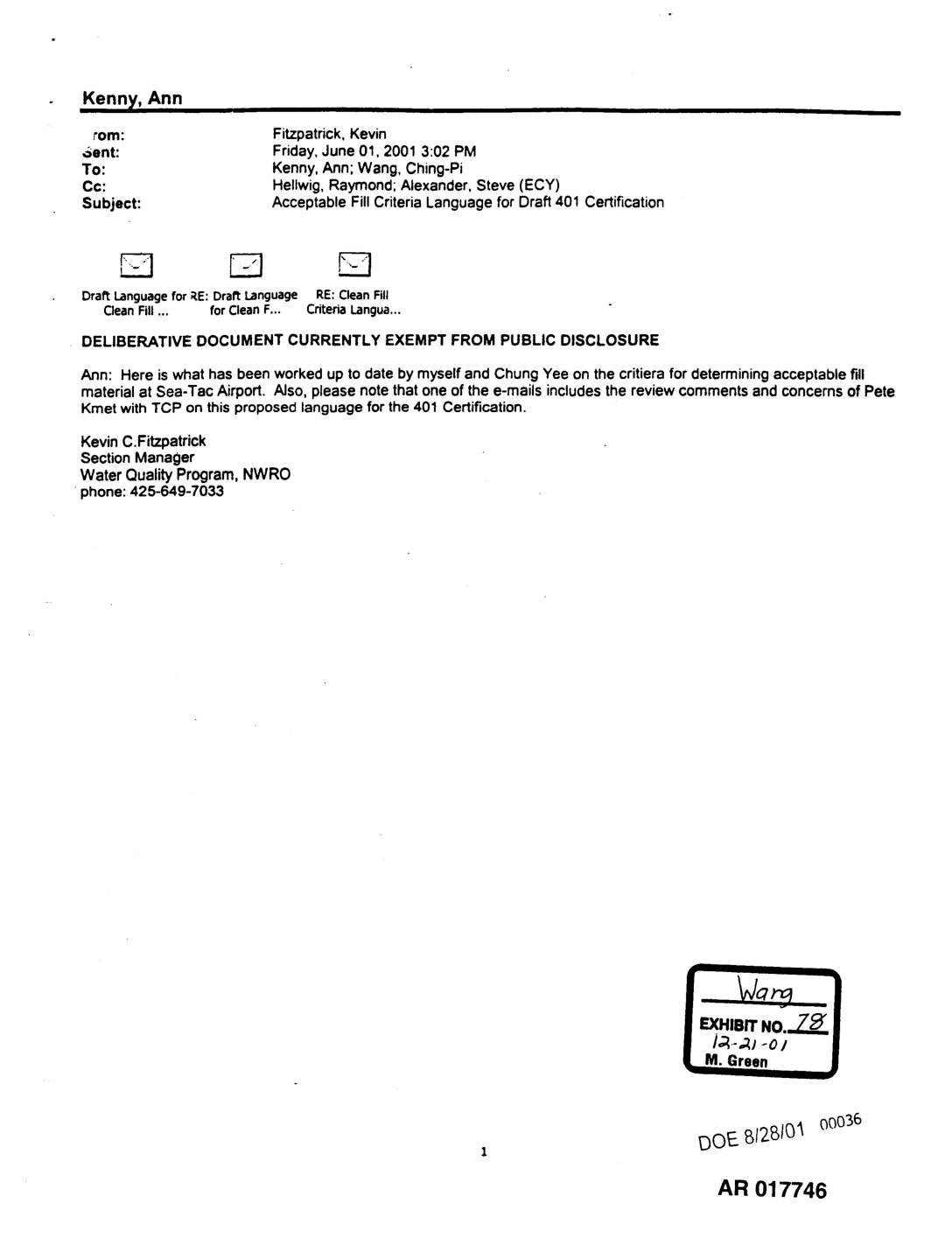
EXH AR017746: Acceptable Fill Criteria Language for Draft 401 Certification — Sea-Tac Airport Third Runway
Email chain (June 1, 2001) from Kevin Fitzpatrick, Section Manager, Water Quality Program NWRO, to Ann Kenny and Ching-Pi Wang, cc Raymond Hellwig and Steve Alexander (Ecology), forwarding deliberative draft language for clean fill criteria in the 401 Certification for Sea-Tac Airport Third Runway construction. Includes August 24, 2000 email from Fitzpatrick to Tom Luster -
 2001-05-30
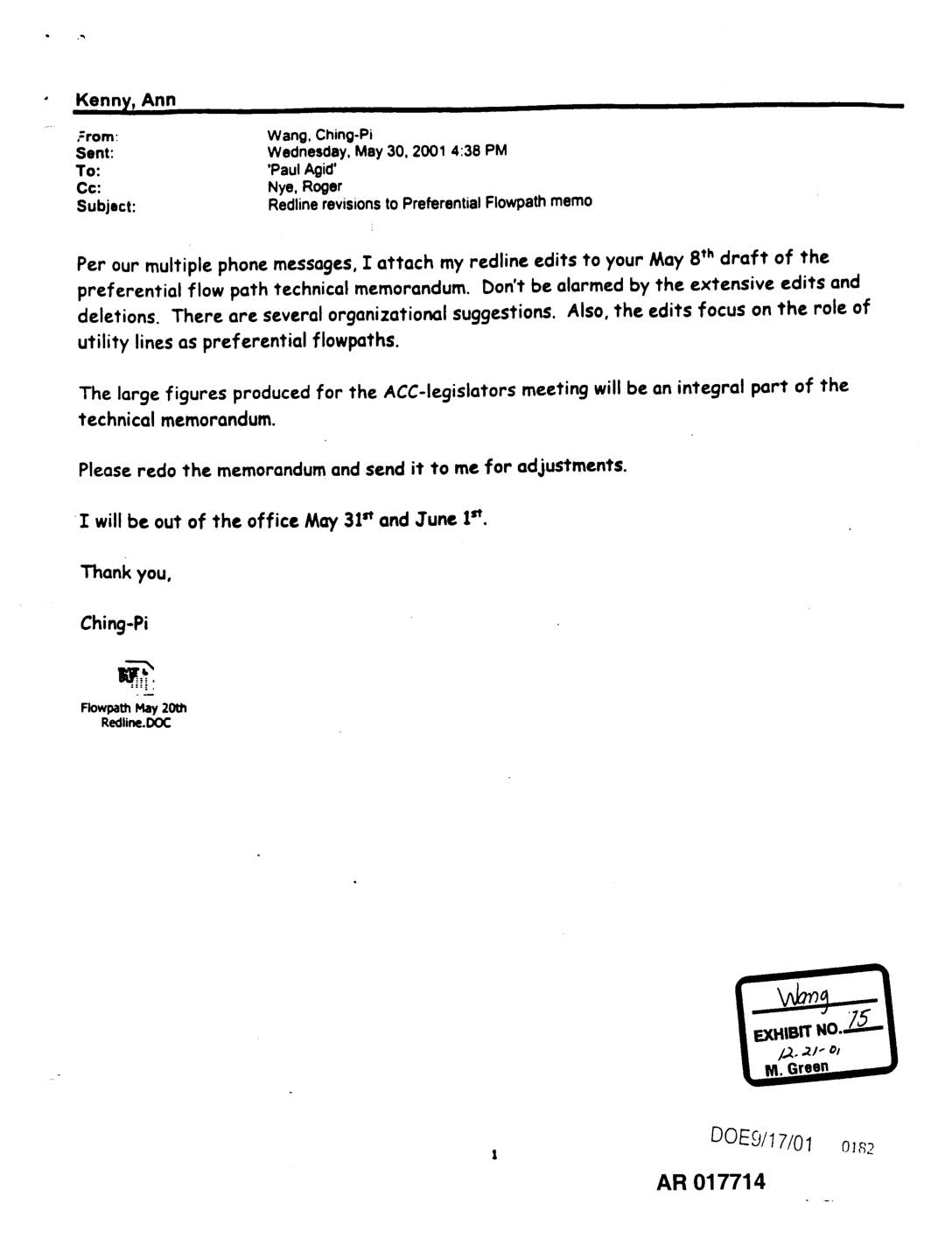
EXH AR017714: Email and Redline Revisions to Preferential Flowpath Technical Memorandum — Third Runway Construction
Email from Ching-Pi Wang (Port Of Seattle) to Paul Agid, cc Roger Nye, dated May 30, 2001, transmitting redline edits to the May 8th draft of the preferential ground-water flowpath technical memorandum related to construction of the Third Runway at Sea-Tac Airport. Attached redlined memorandum (From Port to Ecology, May 30, 2001) addresses preferential flowpaths