TagPort Of Seattle(2410)
-
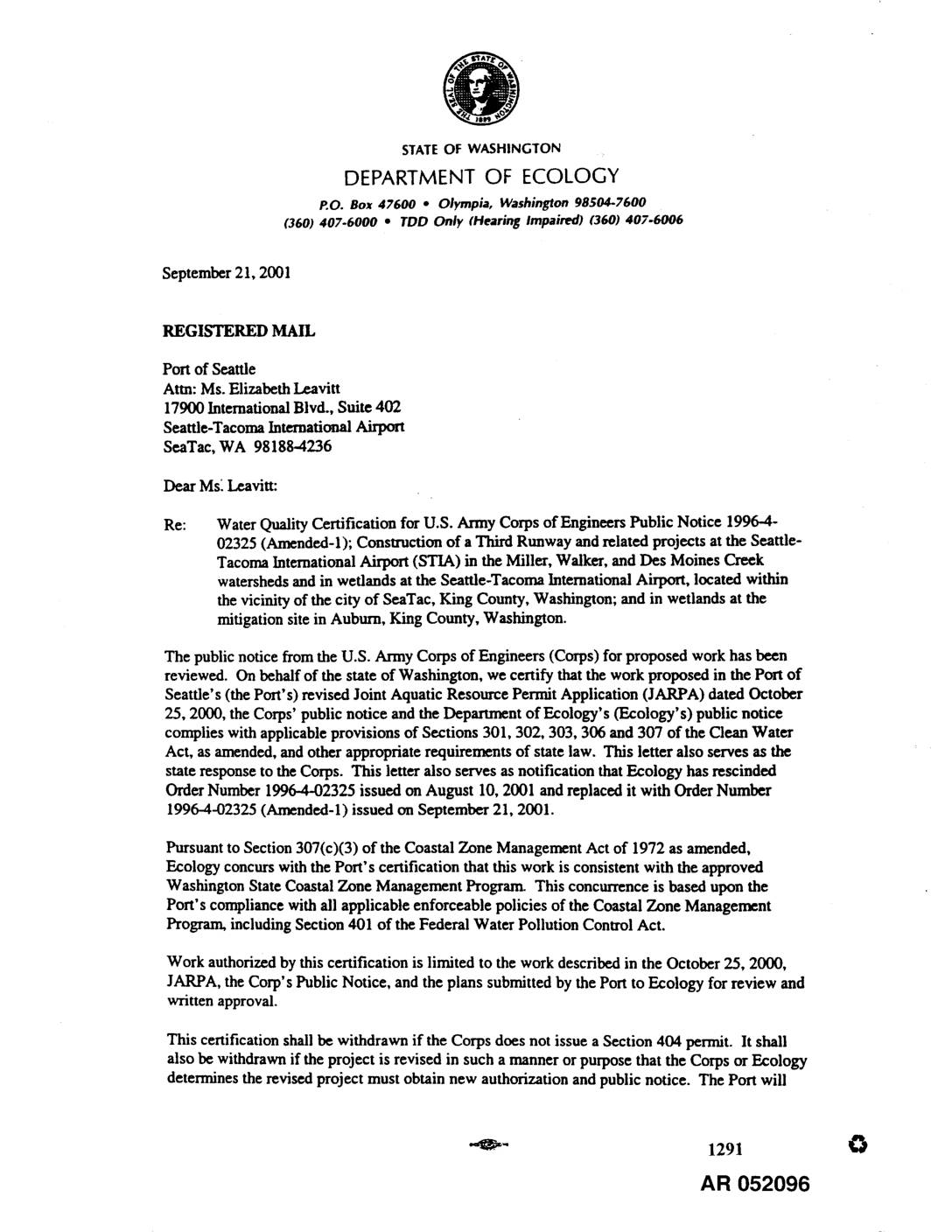 2001-09-21
EXH AR052096: Ecology Water Quality Certification Order 1996-4-02325 (Amended-1) for Port Of Seattle Third Runway Construction at STIA
Washington State Department of Ecology Water Quality Certification Order #1996-4-02325 (Amended-1), dated September 21, 2001, issued to Port Of Seattle (Attn: Elizabeth Leavitt) for construction of a third runway and related projects at Seattle-Tacoma International Airport (STIA). Certifies compliance with Clean Water Act Sections 301, 302, 303, 306, and 307; FWPCA Section 401; RCW 90.48.260; -
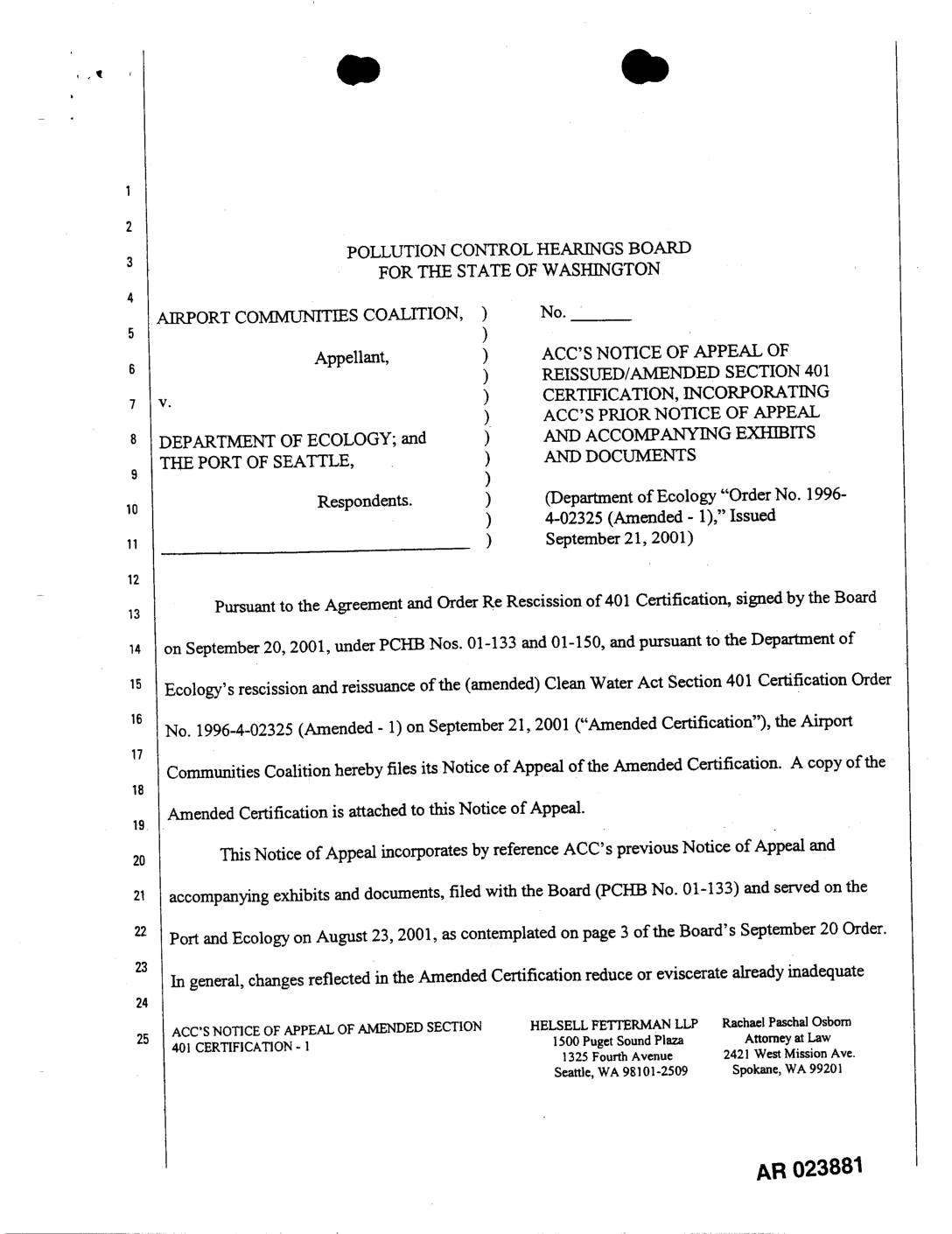 2001-09-21
EXH AR023881: ACC Notice of Appeal Reissued/Amended §401 Certification (Ecology Order 1996-4-02325 Amended-1)
The Airport Communities Coalition (ACC) appealed an amended Clean Water Act Section 401 Certification issued by the Washington Department of Ecology on September 21, 2001, related to construction and expansion work at Seattle-Tacoma International Airport. ACC argued that the amended certification weakened already inadequate water quality protections by limiting its scope, reducing wetland monitoring requirements, loosening fill acceptance standards, and bypassing required public notice and comment procedures. The appeal contended that these changes failed to provide reasonable assurance that the airport project would not violate state and federal water quality standards. -
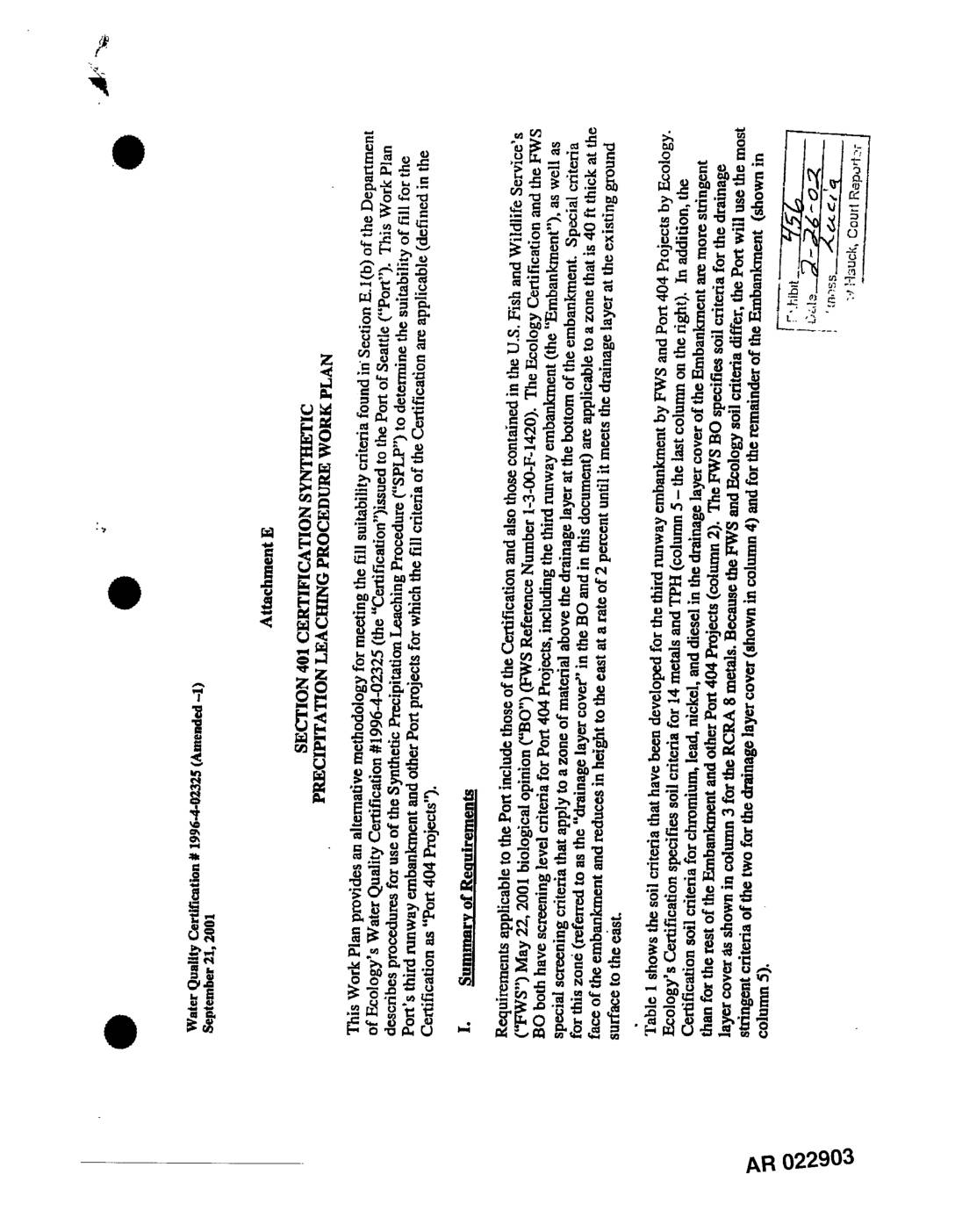 2001-09-21
EXH AR022903: Sec 401 Cert Synthetic Precipitation Leaching Procedure Work Plan, Attach E — Water Quality Cert #1996-4-02325 (Amended -1)
This September 2001 Work Plan Attachment describes the fill suitability testing procedures required for the Port of Seattle's third runway embankment construction at Sea-Tac Airport, outlining how soil and fill materials must meet Washington State and U.S. Fish and Wildlife Service environmental standards. It explains the Synthetic Precipitation Leaching Procedure (SPLP), a laboratory test used to determine whether fill materials could release harmful metals or chemicals into groundwater. Materials failing the screening criteria must be rejected or undergo additional testing before being approved for use in the embankment. -
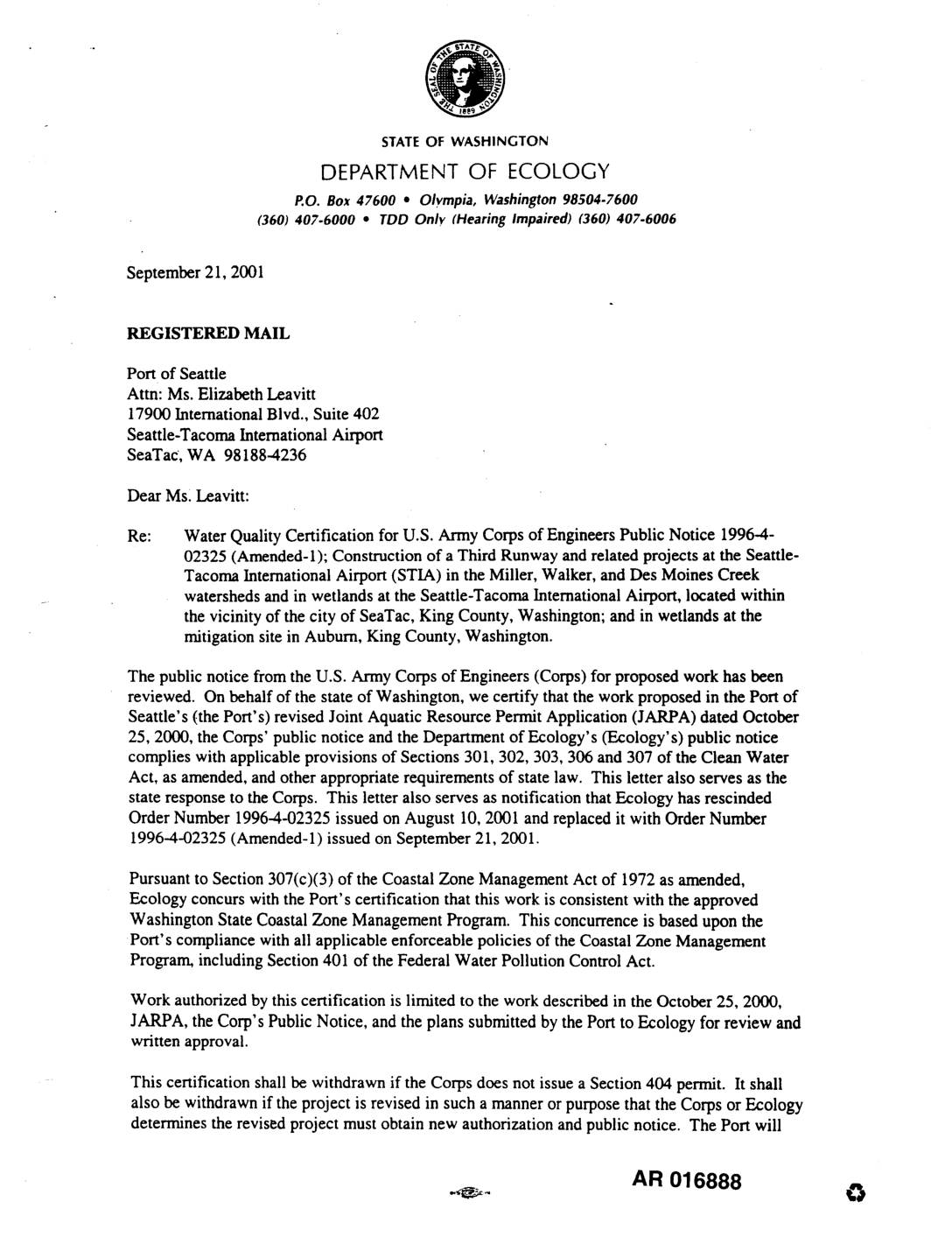 2001-09-21
EXH AR016888: Ecology Water Quality Certification Order #1996-4-02325 (Amended-1) for Port Of Seattle Third Runway Construction at STIA
Washington State Department of Ecology Water Quality Certification Order #1996-4-02325 (Amended-1), dated September 21, 2001, issued to Port Of Seattle (attention Elizabeth Leavitt) for construction of a third runway and related projects at Seattle-Tacoma International Airport (STIA). Certifies compliance with Clean Water Act Sections 301, 302, 303, 306, and 307, RCW 90.48.260, and WAC 173-201A. -
 2001-09-21
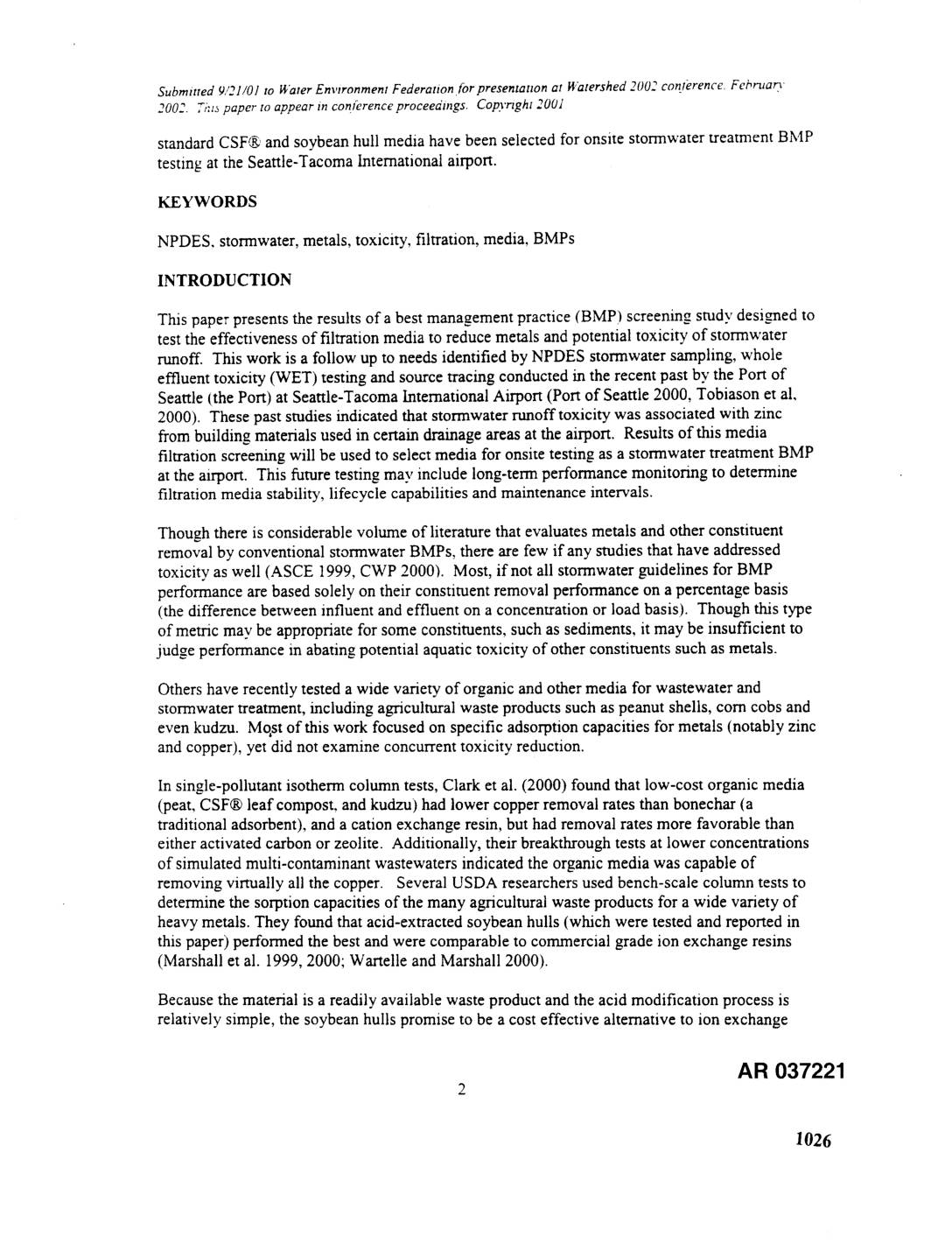
EXH AR037221: BMP Screening Study — Filtration Media for Metals and Toxicity Reduction in Stormwater Runoff at Seattle-Tacoma International Airport
Conference paper submitted September 21, 2001 to Water Environment Federation for Watershed 2002 conference, authored on behalf of the Port Of Seattle regarding Sea-Tac Airport stormwater best management practice (BMP) screening. Tests filtration media — deciduous leaf compost (CSF®), soybean hulls (SBH), extra fine deciduous leaf compost (XFCSF), commercial inorganic polyamine sponge, and zeolite/perlite (ZP) -
 2001-09-20
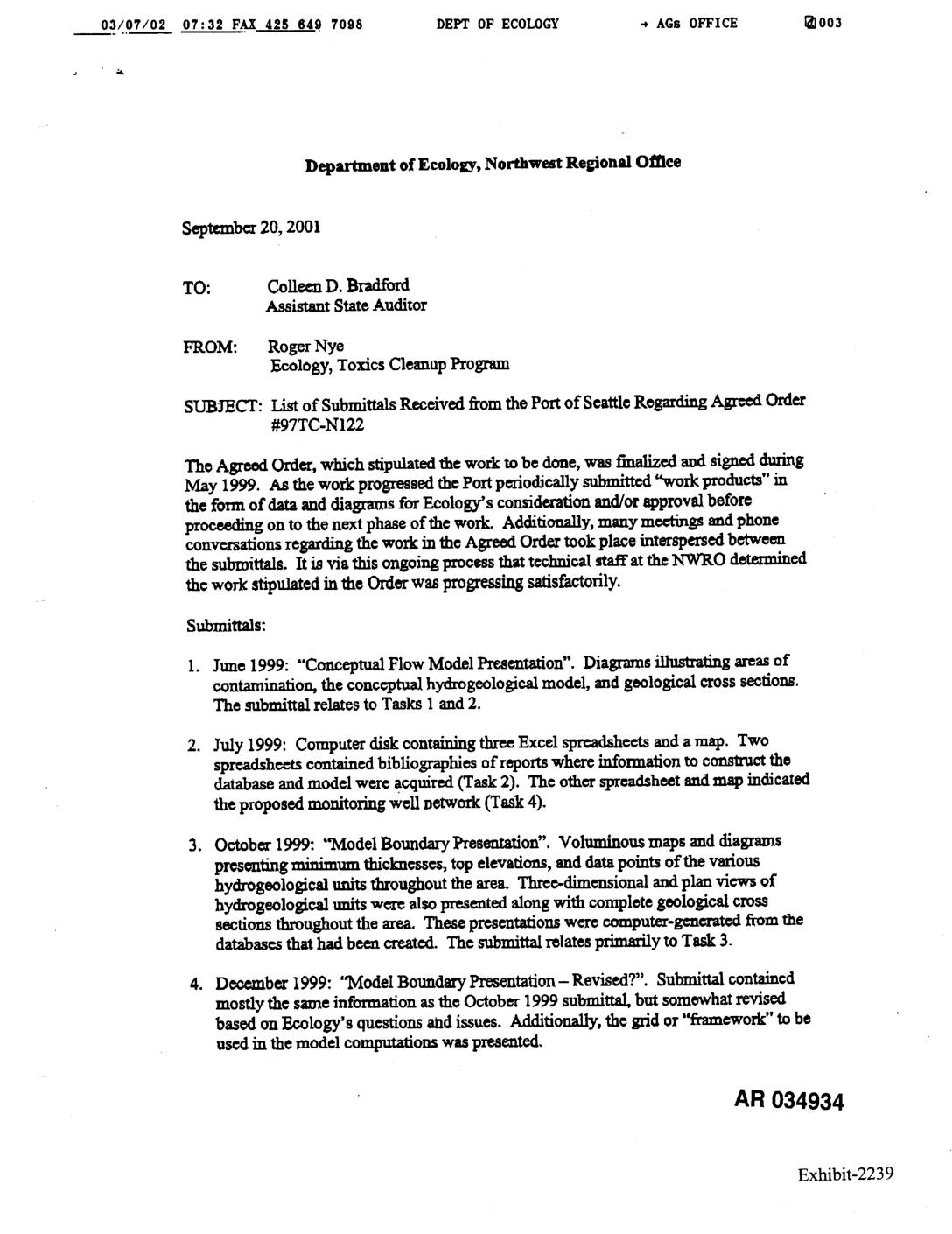
Exhibit 2239: List of Submittals Received from Port Of Seattle Regarding Agreed Order #97TC-N122
Memo dated September 20, 2001 from Roger Nye, Ecology Toxics Cleanup Program (Northwest Regional Office), to Colleen D. Bradford, Assistant State Auditor, listing eight work product submittals received from Port Of Seattle under Agreed Order #97TC-N122 (finalized May 1999). Submittals span June 1999 through October 2000 and include conceptual hydrogeological flow model presentations, Excel spreadsheet -
2001-09-19
Highline bond issue ‘yes’ votes in the lead
By SEATTLE POST-INTELLIGENCER STAFFSep 19, 2001 A $189.5 million bond issue in the Highline School District was leading with enough support to pass by an eyelash, according to incomplete results from Tuesday’s primary election. Unofficial results show the request with a fraction over the 60 percent support needed for passage under state requirements for school bond -
 2001-09-19
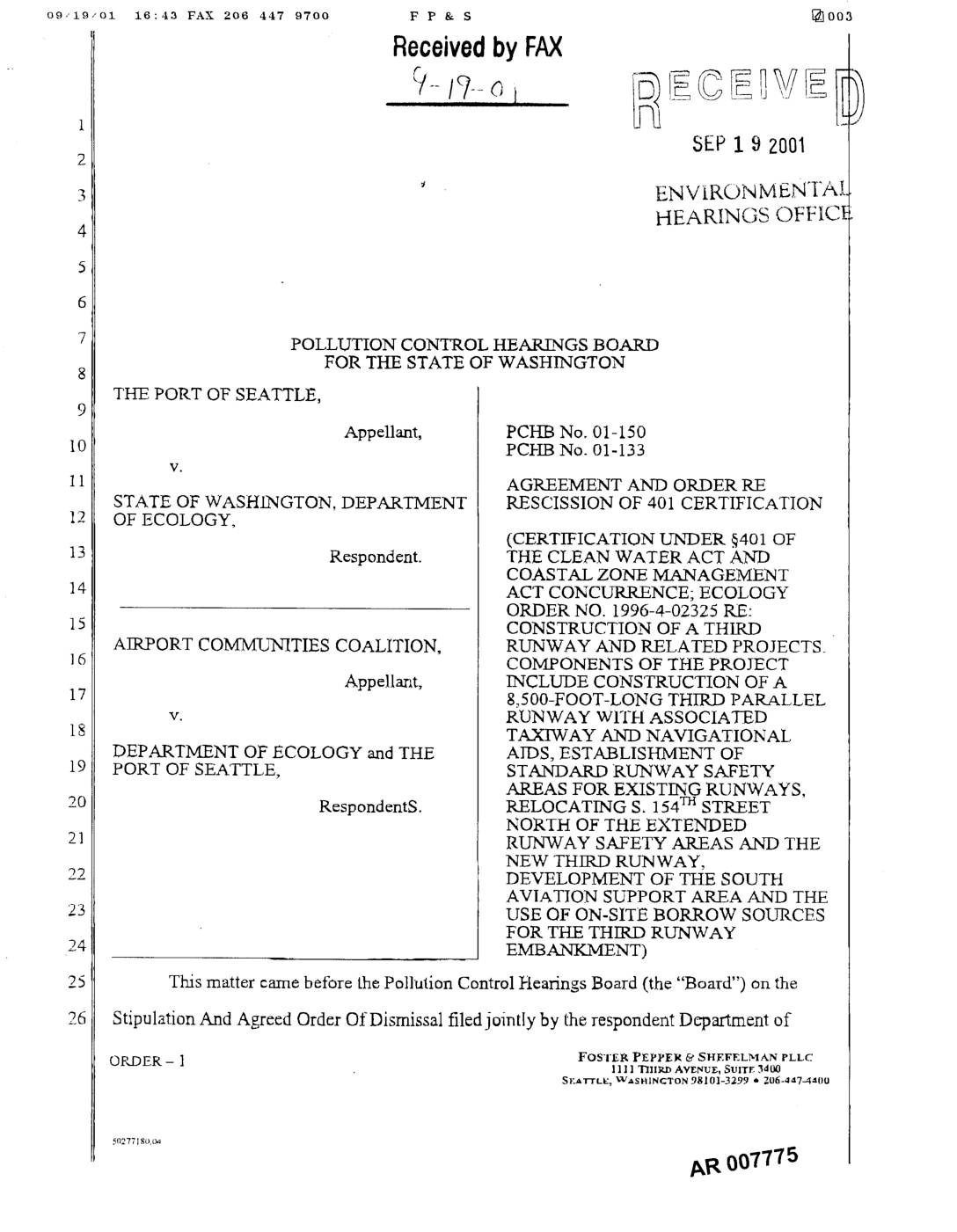
PCHB Doc 7775: Agreement and Order Re Rescission of 401 Certification — Port Of Seattle and ACC v. Ecology
Pollution Control Hearings Board (PCHB) Agreement and Order Re Rescission of 401 Certification, PCHB Case Nos. 01-133 and 01-150, involving Port Of Seattle and Airport Communities Coalition (ACC) as appellants and Washington State Department of Ecology as respondent. The 401 Certification (Ecology Order No. 1996-4-02325) issued August 10, 2001 under Section 401 of the Federal -
 2001-09-18
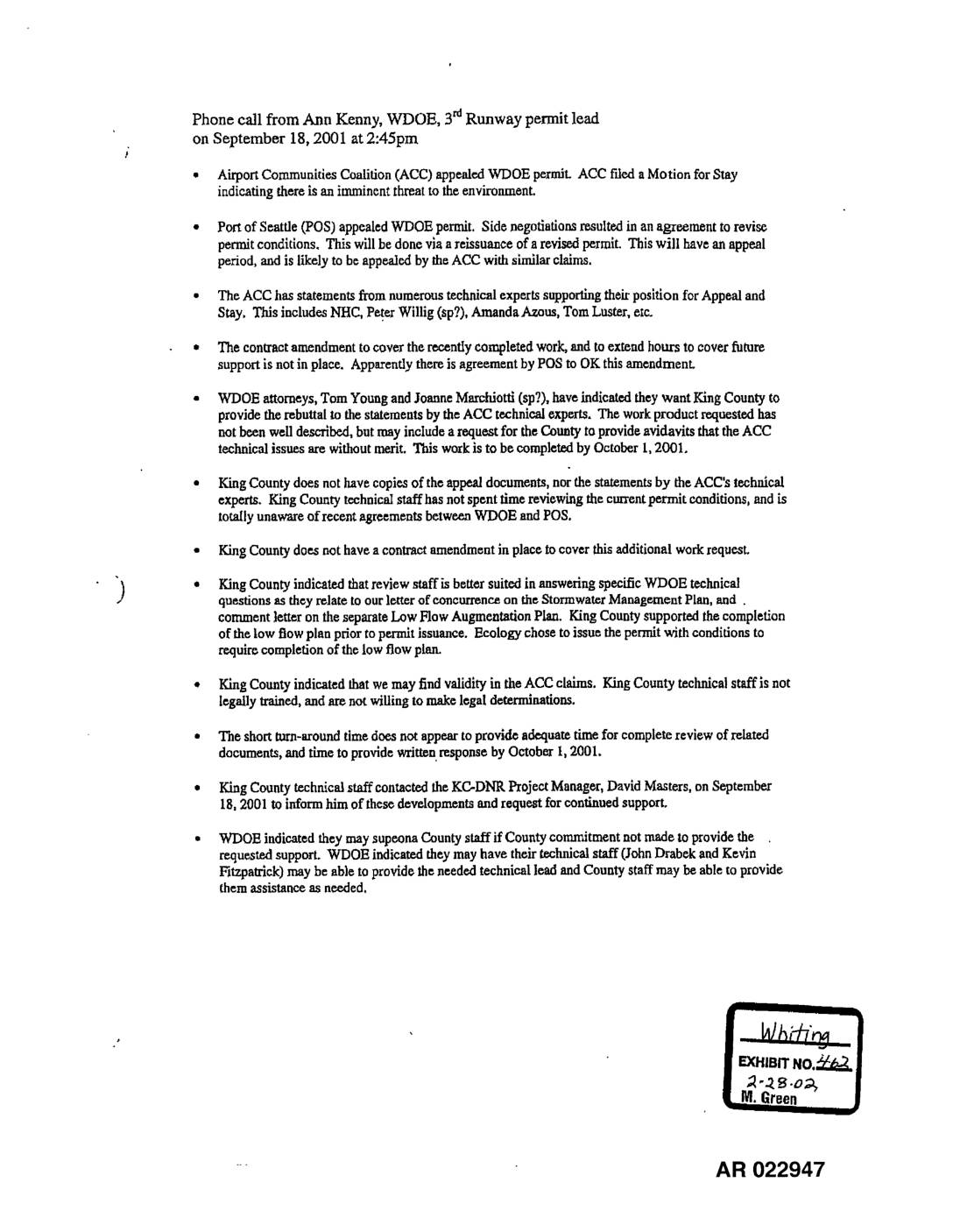
EXH 462: Phone Call Notes — ACC Appeals WDOE Third Runway Permit, King County Role
A September 18, 2001 phone call memo from Ann Kenny of the Washington Department of Ecology (WDOE) outlines a legal dispute over the 3rd Runway permit at Sea-Tac Airport, in which the Airport Communities Coalition (ACC) filed a Motion for Stay claiming an imminent environmental threat. WDOE attorneys requested King County provide technical rebuttals to the ACC's expert statements by October 1, 2001, but King County lacked the necessary documents, a contract amendment, and adequate time to respond. WDOE warned it might subpoena County staff if they did not commit to providing the requested support. -
 2001-09-12
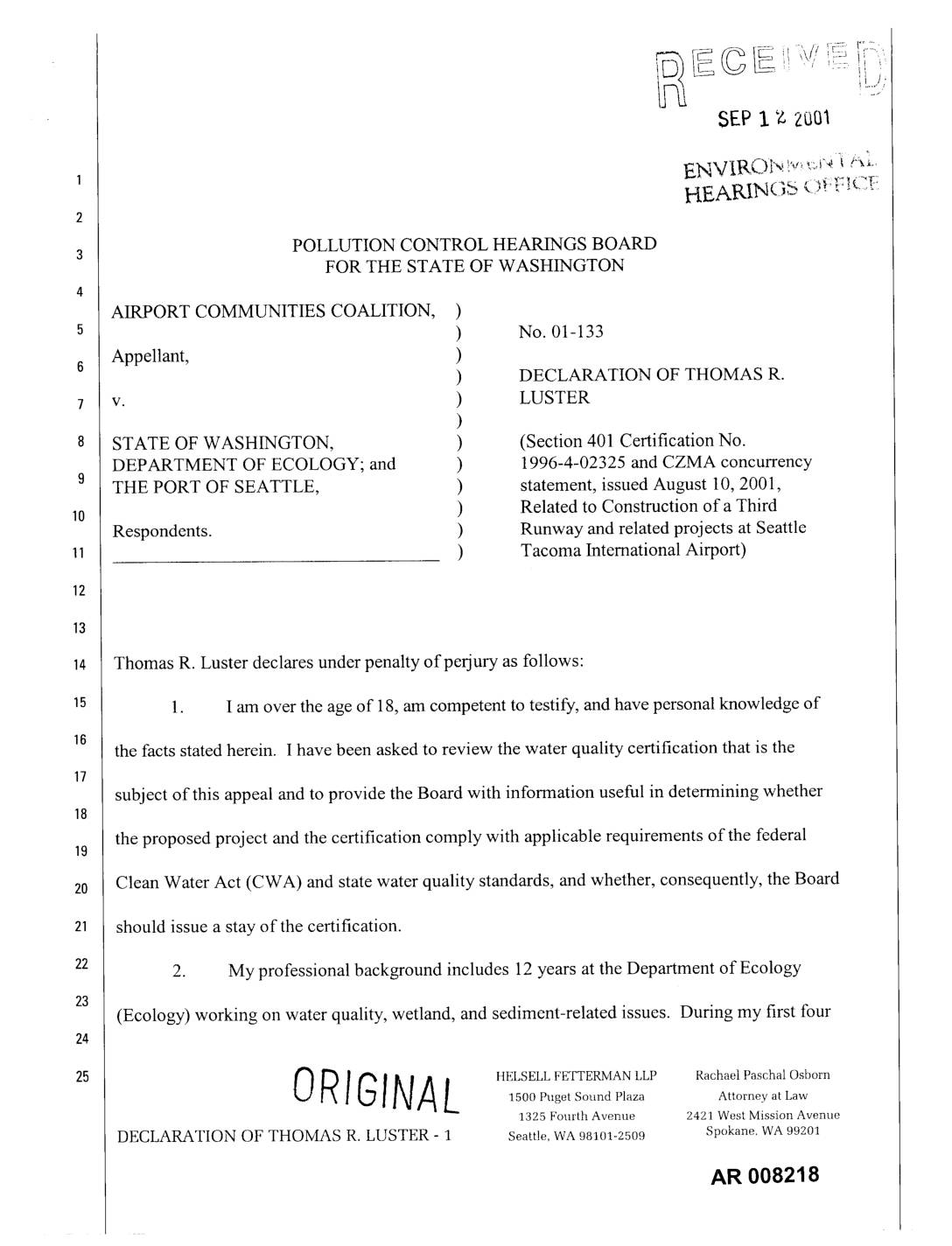
PCHB Doc 008218: Declaration of Thomas R. Luster — ACC v. Ecology & Port Of Seattle, No. 01-133
Declaration of Thomas R. Luster filed in Pollution Control Hearings Board case No. 01-133, Airport Communities Coalition (ACC) v. State of Washington Department of Ecology and Port Of Seattle. Luster, former senior policy and technical expert at Ecology’s Federal Permits Unit (1989–2001), provides expert testimony on CWA Section 401 water quality certification No. 1996-4-02325 and