TagPart 150(269)
-
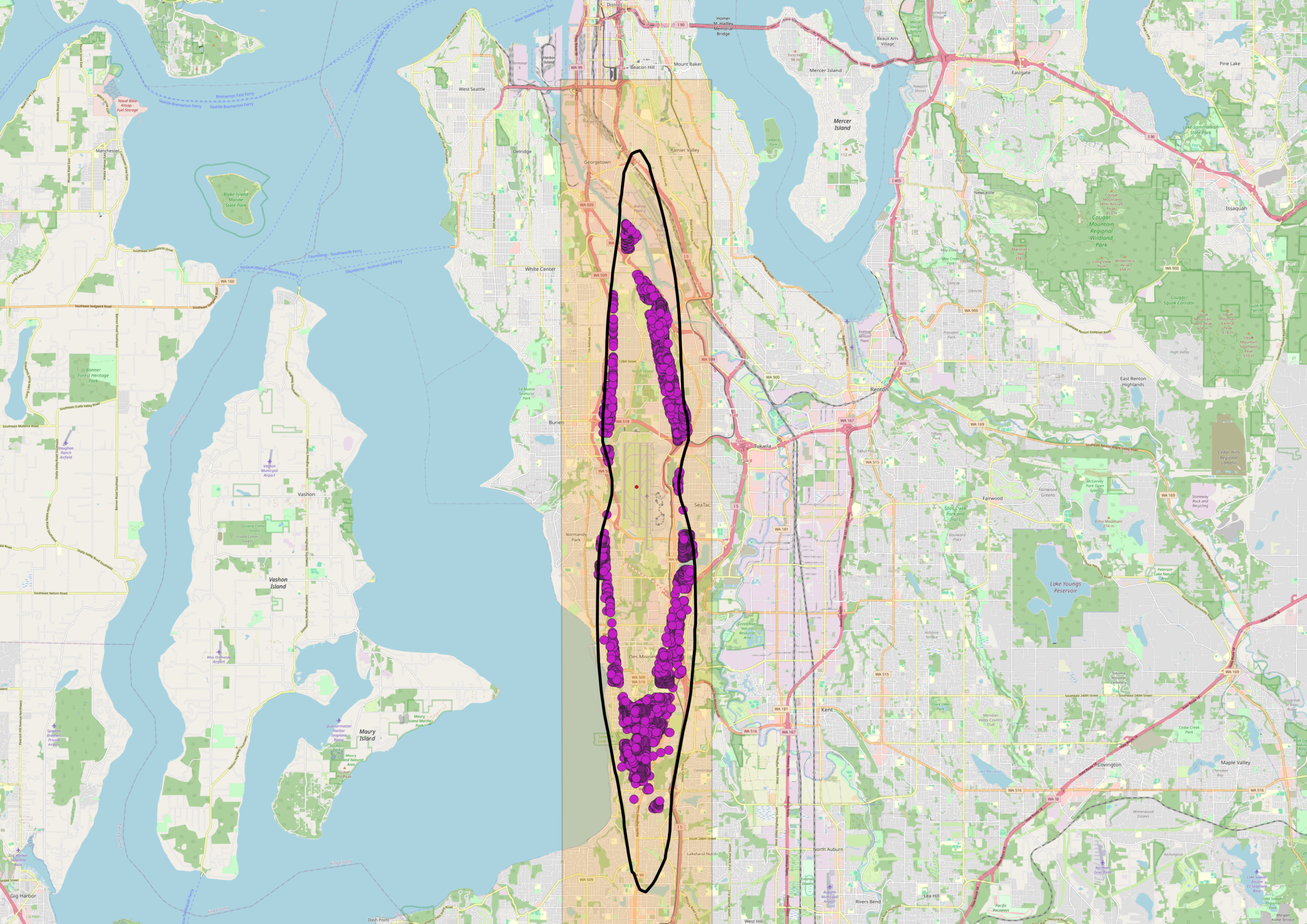
Dnl Outside 2018 Inside 1991
A GIS map centered on the Seattle/South Seattle area showing a north-south oriented elliptical boundary overlay on what appears to be a flight corridor, with numerous purple data points clustered along two parallel tracks within the corridor. The map extends from downtown Seattle southward through Tukwila toward the Sea-Tac Airport area, suggesting this depicts noise complaint locations or flight track concentrations within a defined study zone. -
 2026-01-22
Airport Advisory Committee 2026 Workplan — City Council Agenda Item, Des Moines, WA
The Des Moines, WA City Council is reviewing a 2026 workplan for its Airport Advisory Committee, an advisory body created in June 2025 to address issues related to Seattle-Tacoma International Airport. The workplan focuses primarily on the airport's Sustainable Airport Master Plan (SAMP) and its environmental review process, with the committee advocating for expanded air quality monitoring, a more comprehensive traffic impact analysis, and stronger noise mitigation measures for affected residents. The committee also plans to conduct a community survey in mid-2026 to gauge public awareness of the airport's projected operational growth and its impacts on the Des Moines community. -
 2026-01-16
Airport Advisory Committee 2026 Workplan
The Des Moines Airport Advisory Committee's draft 2026 Workplan outlines key priorities including air quality monitoring, the SEA Airport Part 150 noise study, traffic impacts, and projected increases in airport operations. The plan addresses noise mitigation measures and public education related to Seattle-Tacoma International Airport's expansion, with 2032 DNL noise contours showing affected residential and commercial areas in Des Moines reaching up to 75 decibels. This workplan reflects the committee's efforts to protect community health and quality of life amid growing airport activity. -
 2026-01-16
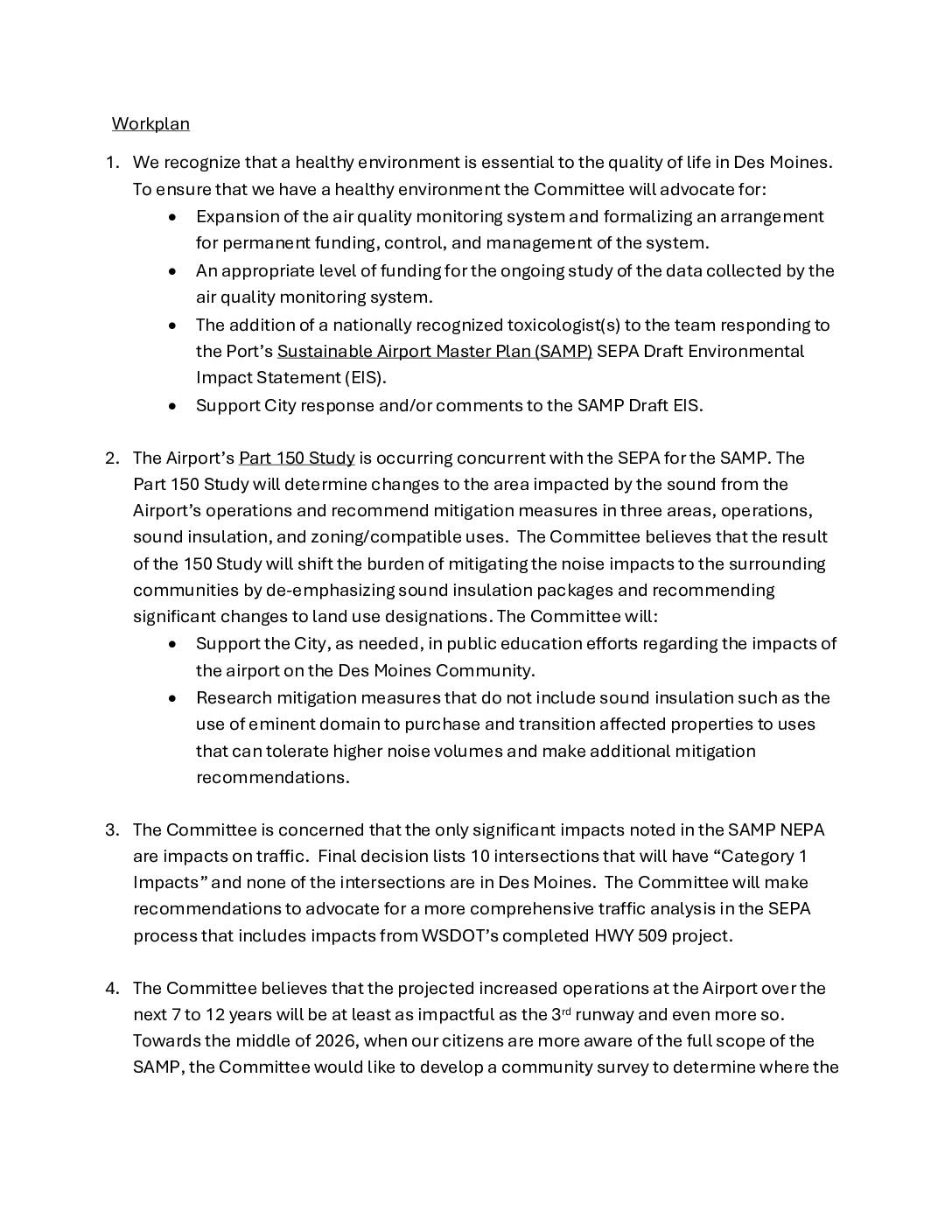
Des Moines Aviation Advisory Committee 2026 Workplan
This workplan outlines a community committee's priorities for addressing the impacts of Sea-Tac Airport's expansion on Des Moines, Washington. Key goals include expanding air quality monitoring, hiring a toxicologist to evaluate the airport's environmental impact statement, researching noise mitigation alternatives beyond sound insulation, and pushing for a more thorough traffic analysis. The committee also plans to conduct a community survey in 2026 to gauge public awareness of the airport's Sustainable Airport Master Plan (SAMP) and guide future outreach efforts. -
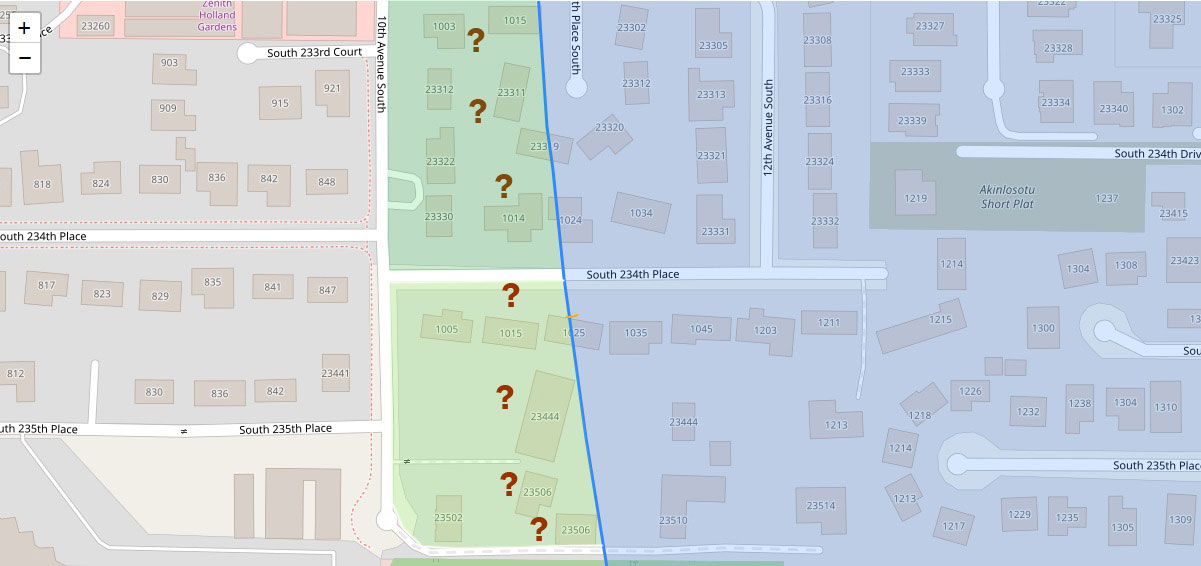
GIS Parcel Map — Akinlosotu Short Plat Area Near 10th and 12th Avenue South, Sea-Tac Airport Noise Review
A GIS map showing residential parcels in the Sea-Tac Airport vicinity, centered on 10th and 12th Avenue South between South 233rd Court and South 235th Place. Green-shaded zones with question mark markers appear to indicate properties under noise impact review or acquisition consideration, bisected by a blue diagonal line likely representing a noise contour or jurisdictional boundary; street addresses and the 'Akinlosotu Short Plat' label are visible. -
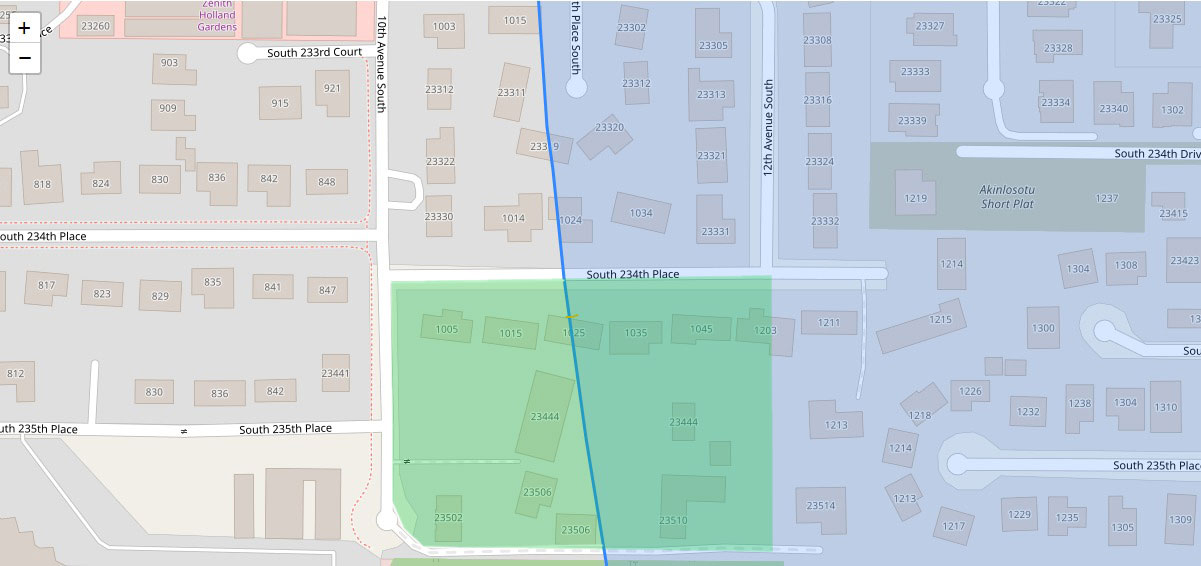
GIS Parcel Map with Noise Contour Boundary Near South 234th Place, Sea-Tac/Des Moines Area
A GIS map showing residential parcels near South 234th Place in the SeaTac/Des Moines area, with a blue diagonal line indicating a noise contour or flight path boundary related to Sea-Tac Airport. Street addresses and parcel numbers are visible, including properties along 10th Avenue South, 12th Avenue South, and South 234th–235th Places, with overlapping green and blue shaded zones likely representing different noise exposure levels. The 'Akinlosotu Short Plat' subdivision is labeled in the upper right area. -
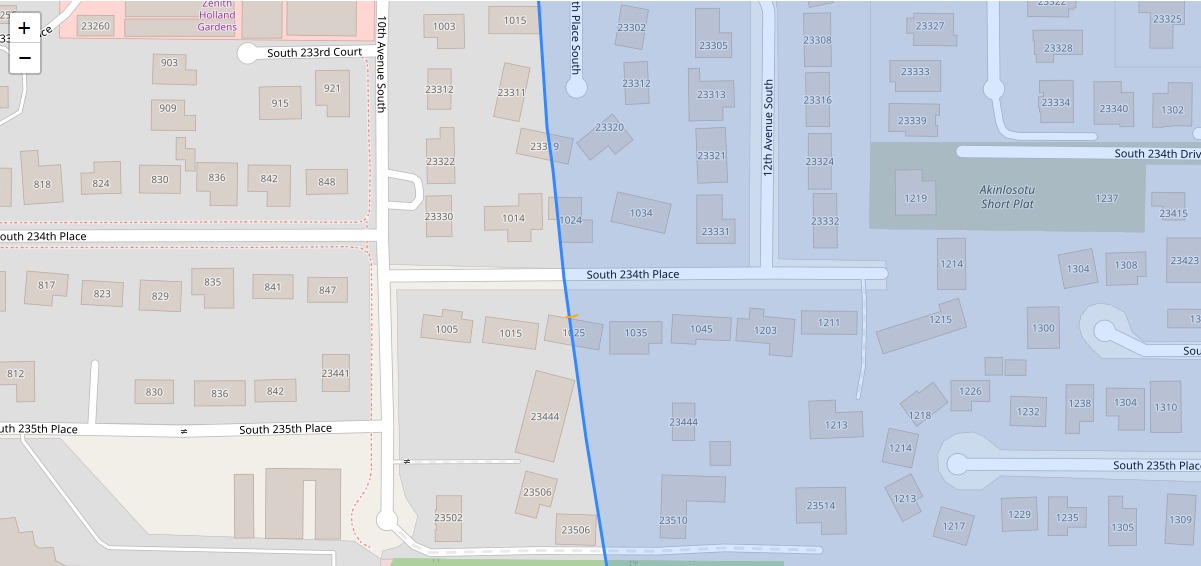
End of Block example from 2032 Part 150
A GIS map showing residential parcels in the South 234th Place corridor near 10th and 12th Avenue South in Des Moines/SeaTac, Washington, with a blue diagonal line indicating a noise contour or flight path boundary overlaid on the street grid. The shaded (blue) zone to the right of the line likely represents an airport noise impact area associated with Seattle-Tacoma International Airport policy mapping. -
-
 2025-12-12
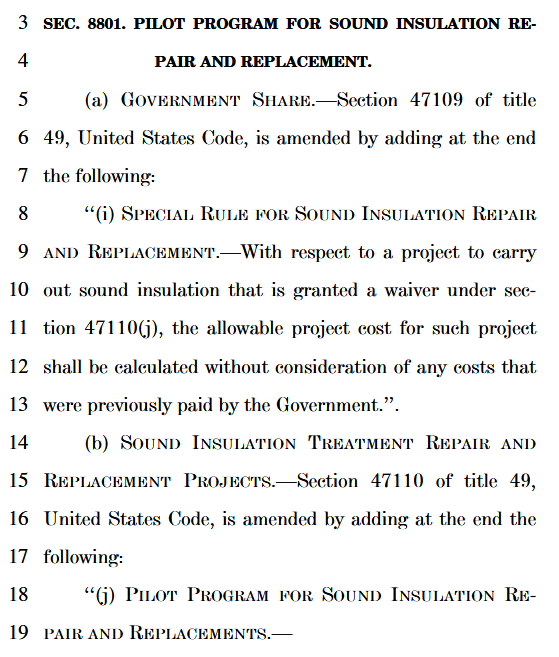
Pilot program for sound insulation repair and replacement passes in Defense bill
Smith/Murray provide funding. And so many loopholes. The House of Representatives has passed its mandated National Defense Authorization Act for Fiscal Year 2026. Near the end of the bill is Section 8801, language previously put forward by Congressman Adam Smith WA-9 to allow the FAA to provide grant funding for updates to existing sound insulation -
 2025-12-08
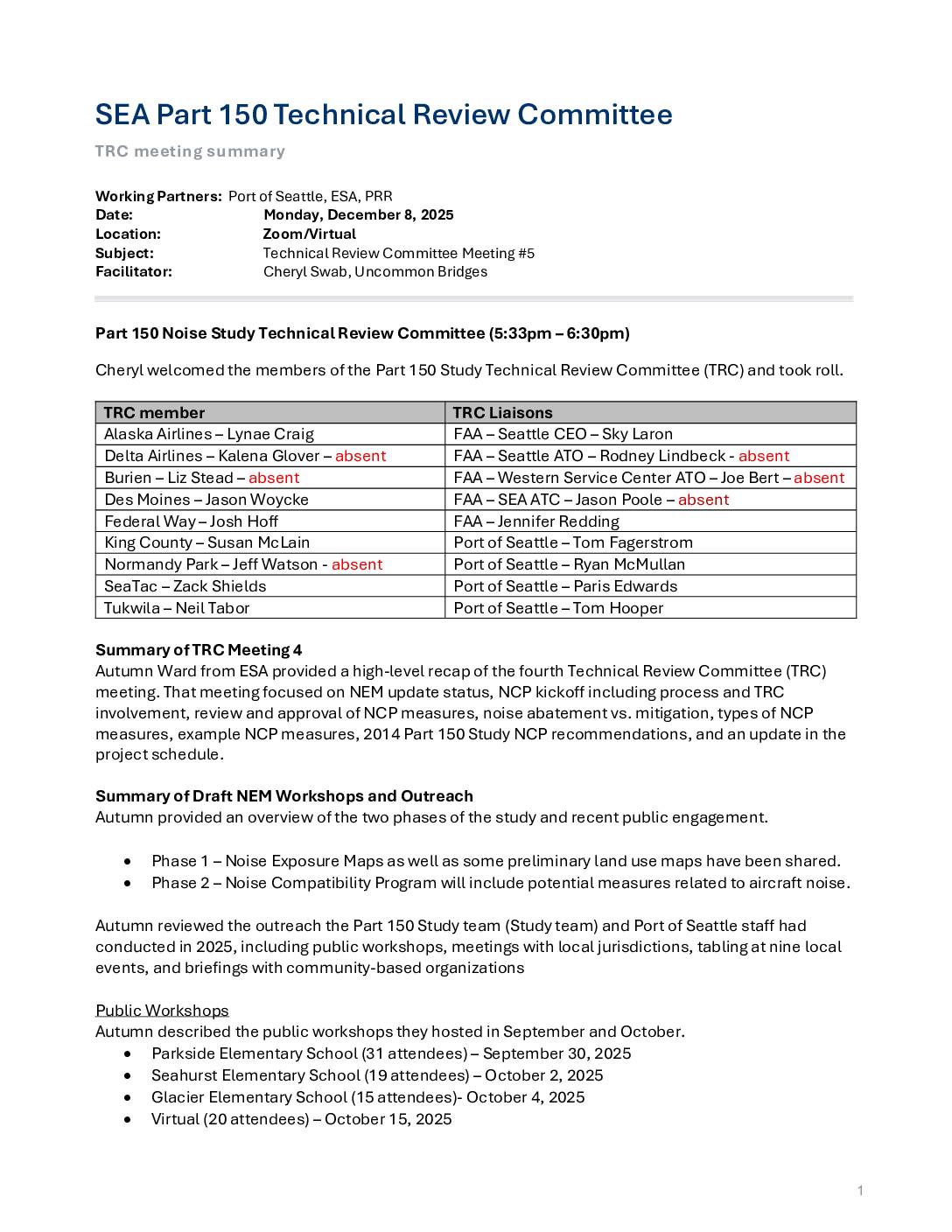
SEA Part 150 Technical Review Committee TRC meeting #5 summary
Summary of the fifth Technical Review Committee meeting for Seattle-Tacoma International Airport’s Part 150 Noise Study. The meeting covered updates on public workshops, outreach to community organizations, Noise Compatibility Program overview, and a working session on potential noise abatement measures.