TagNoise(262)
-
 2026-01-06
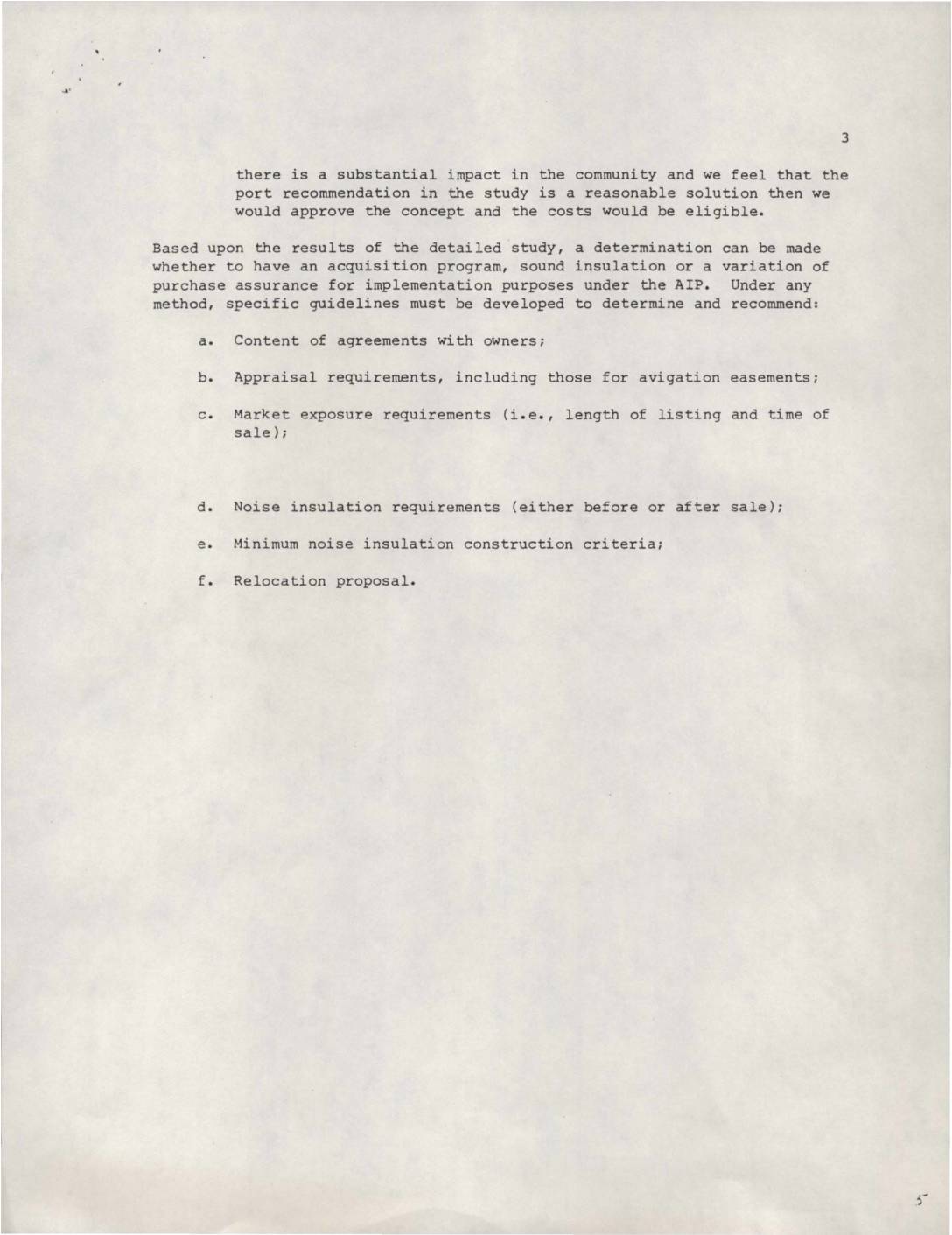
Airport noise mitigation program implementation guidelines
This document outlines how airport noise impact programs can be approved and funded under the Airport Improvement Program (AIP). Once a detailed study confirms substantial community noise impact and a reasonable solution is proposed, costs become eligible for approval. Specific guidelines must then be developed covering property acquisition or sound insulation options, including owner agreements, appraisals, market exposure, noise insulation standards, and relocation proposals. -
 2026-01-06
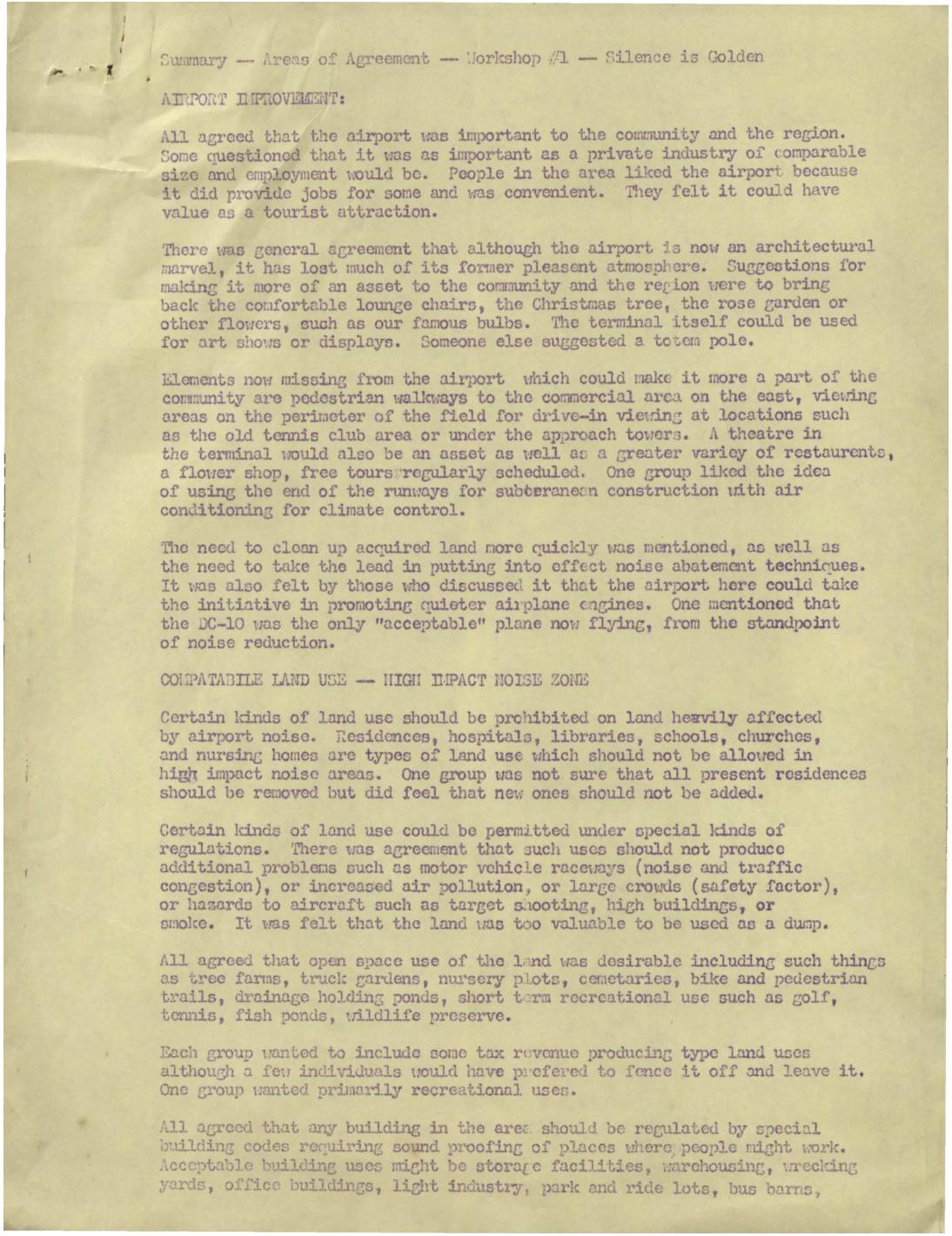
Summary — areas of agreement — Workshop #1 — Silence is golden
This document summarizes the areas of agreement reached at Workshop #1, titled 'Silence is Golden,' focusing on Sea-Tac Airport improvements and compatible land use in high-impact noise zones. Participants agreed that the airport is important to the community but has lost its former welcoming atmosphere, and suggested improvements such as lounge seating, art displays, and better amenities. The group also reached consensus that noise-sensitive uses like residences, schools, and hospitals should be prohibited in heavily affected areas, while open space, light industry, and recreational uses were seen as appropriate alternatives. -
 2026-01-06
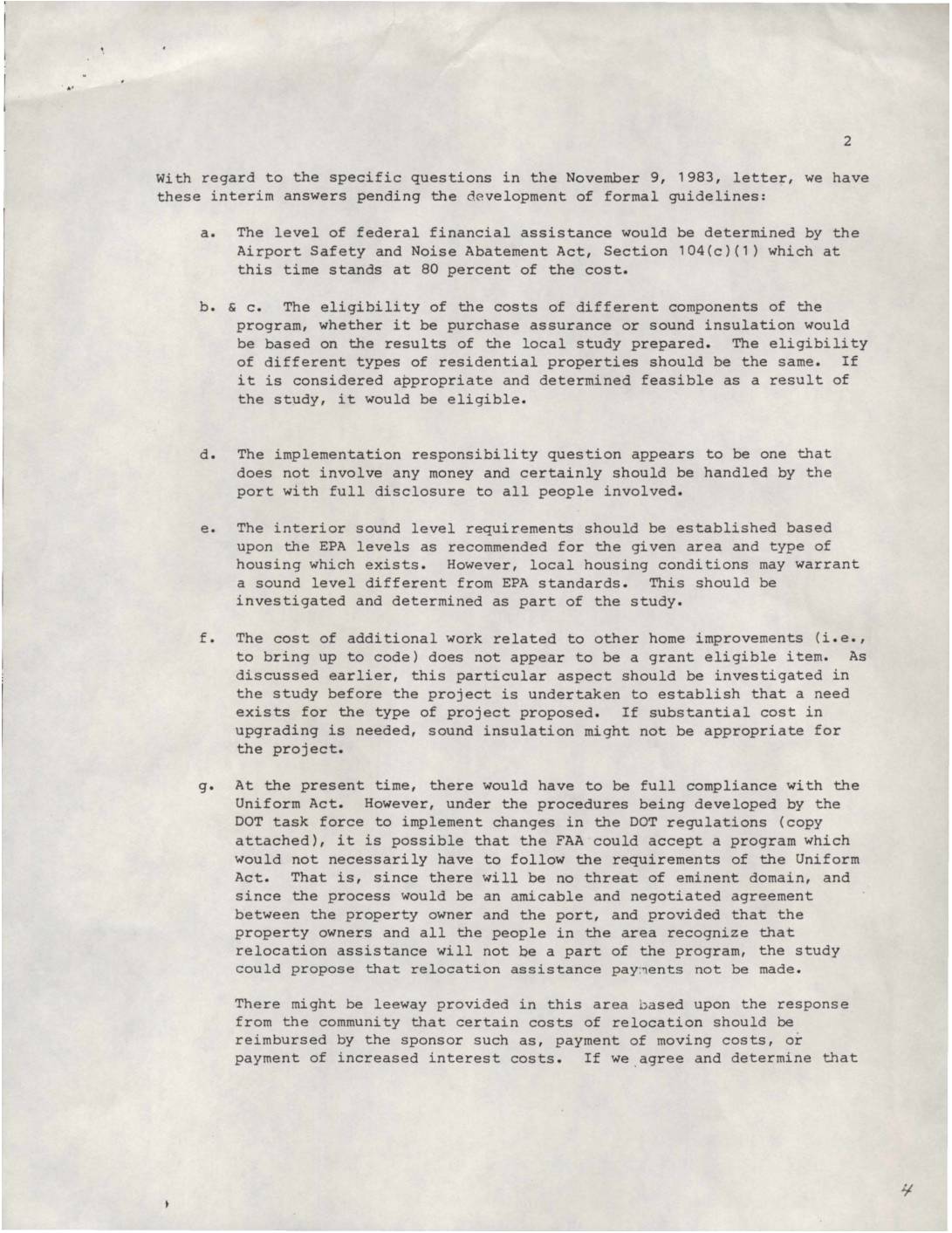
Interim answers to November 9, 1983 letter regarding airport noise remedy program
This letter from Edward G. Tatum, Manager of the FAA Airports Division, provides interim answers to the Port of Seattle's questions about federal funding and guidelines for airport noise remedy programs near Sea-Tac Airport. It outlines key details such as 80% federal cost coverage under the Airport Safety and Noise Abatement Act, eligibility criteria for sound insulation and property purchase assistance programs, and interior sound level standards based on EPA recommendations. The letter acknowledges that the FAA and Port of Seattle are breaking new ground together in developing policies that could serve as a nationwide model for noise abatement programs. -
 2026-01-06
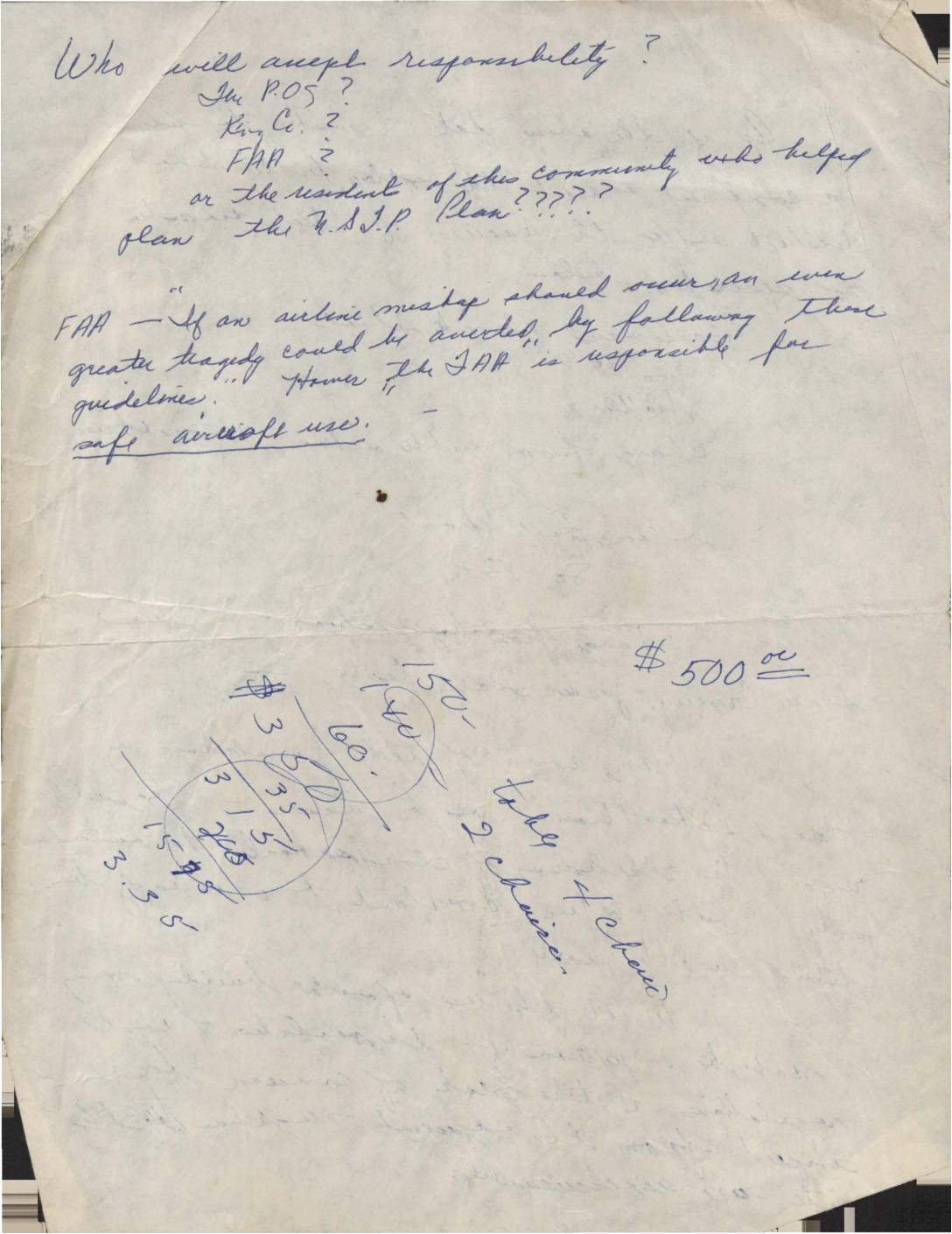
Handwritten Notes: FAA Responsibility and Community Complaints Regarding Airline Safety and School Building Use
A community member raises questions about who should accept responsibility for airport-related concerns — the Port of Seattle, King County, the FAA, or local residents who helped plan the N.S.I.P. — noting that the FAA is responsible for safe aircraft use but that following its guidelines could avert greater tragedy in the event of an airline mishap. A separate complaint is also filed against the Highline Public School District regarding the conversion of Boulevard Elementary School and Seaer High School into non-educational facilities, with the writer citing code violations and lack of concern for impact on adjacent neighborhoods. -
 2026-01-06
Summary of newspaper supplement questionnaire responses
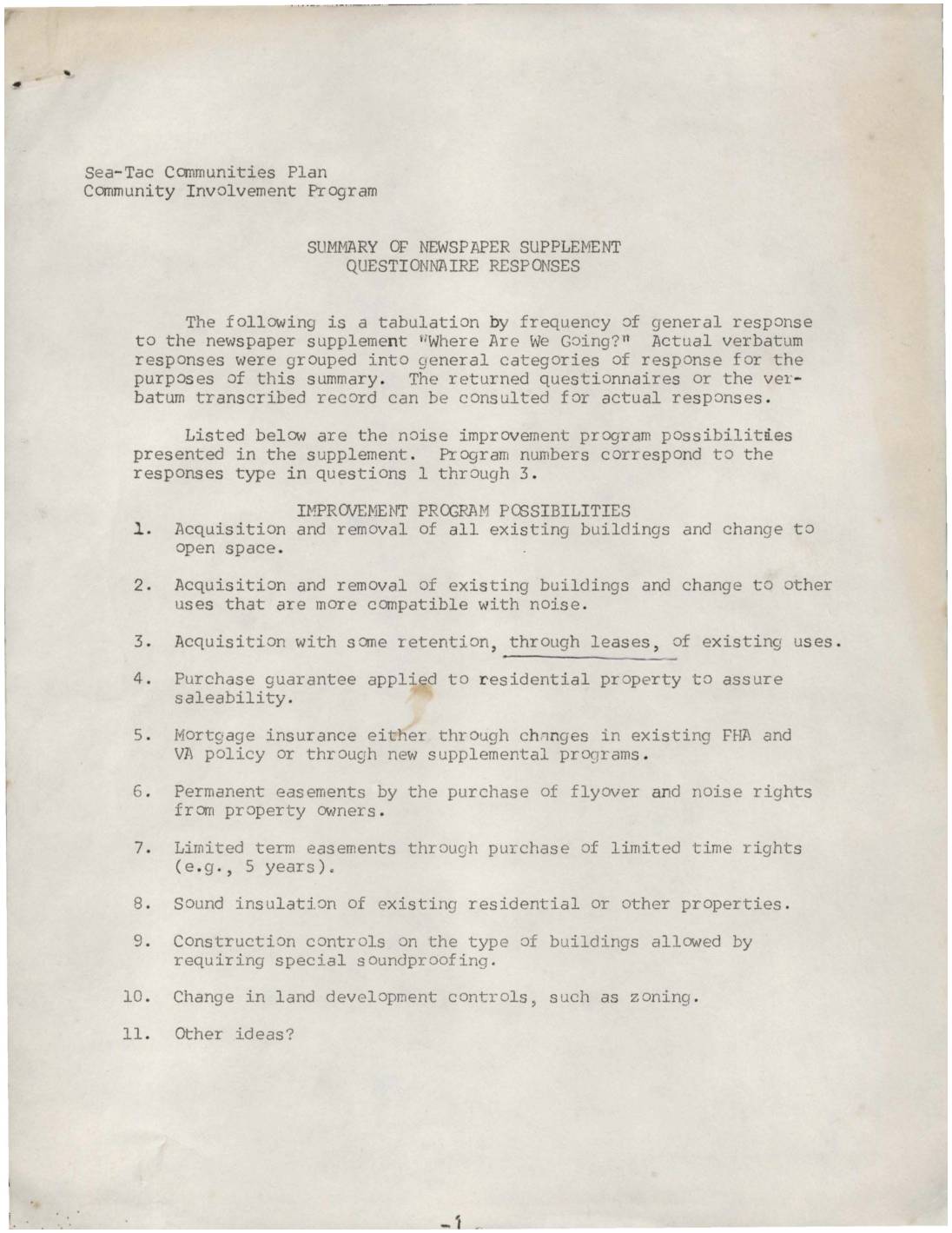
This document summarizes community responses to a questionnaire distributed as part of the Sea-Tac Communities Plan, asking residents near Seattle-Tacoma International Airport about preferred noise mitigation strategies. Respondents most commonly favored acquiring and removing existing buildings for noise-compatible uses, purchase guarantees for residential properties, and other locally-suggested ideas. The survey also captured opinions on open space use, environmental controls, and neighborhood improvement priorities such as greenbelts, parks, and street improvements. -
 2026-01-06
Airport noise remedy update: Preliminary program boundaries
This document is a public comment form from the Airport Noise Remedy Update program, inviting community members to share their feedback on an Open House event and the preliminary program boundaries that were presented for review. The form provided a large blank space for written comments, indicating it was distributed to residents likely affected by airport noise near Sea-Tac Airport. It represents part of an ongoing public engagement process aimed at updating noise remedy policies and determining the geographic scope of the program. -
 2026-01-06
Response to comments on the Sea-Tac/Communities Plan Draft Environmental Impact Statement
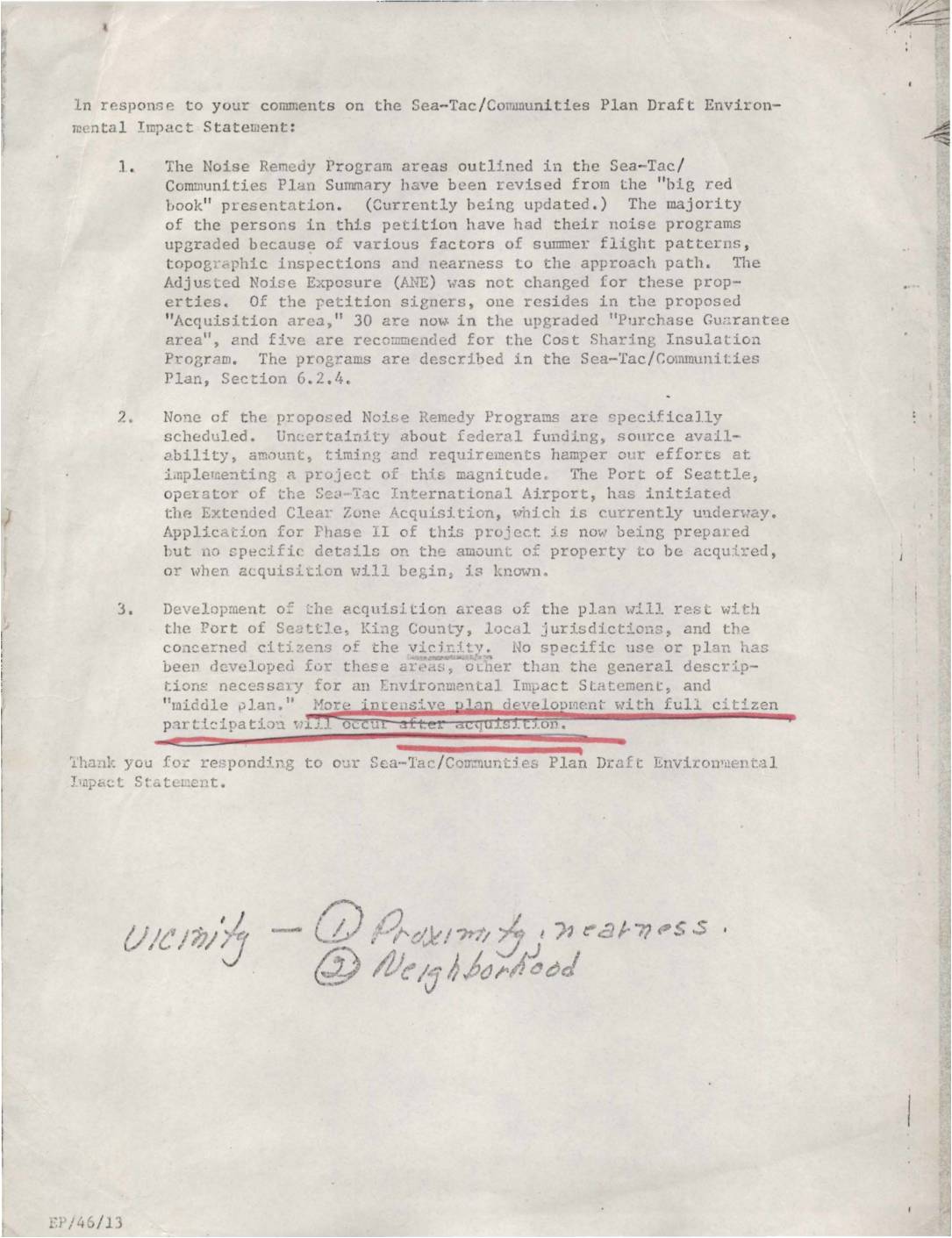
This document is a formal response to public comments on the Sea-Tac/Communities Plan Draft Environmental Impact Statement, addressing concerns about the airport's Noise Remedy Program. It explains that noise program classifications for petition signers were upgraded due to factors such as summer flight patterns and proximity to approach paths, and that most signers were moved into the Purchase Guarantee area or recommended for the Cost Sharing Insulation Program. The response also notes that no specific schedule exists for noise remedy implementation due to uncertainties in federal funding, and that detailed land-use planning for acquisition areas will involve full citizen participation after properties are acquired. -
Acoustic Weighting Curves 100Hz Red Arrow
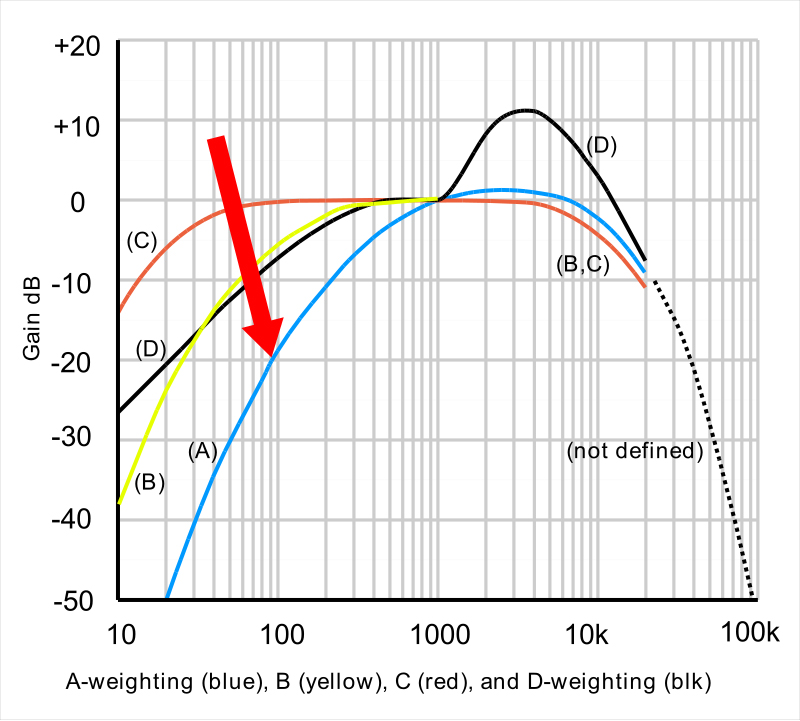
A standard audio engineering graph showing the frequency response curves for A-weighting (blue), B-weighting (yellow), C-weighting (red), and D-weighting (black) filters, plotted as Gain in dB versus frequency from 10 Hz to 100 kHz. A red arrow highlights the low-frequency region (~50-80 Hz) where the curves diverge most significantly, particularly relevant to aircraft noise assessment where D-weighting was developed specifically for aircraft noise measurement. -
 2025-12-23
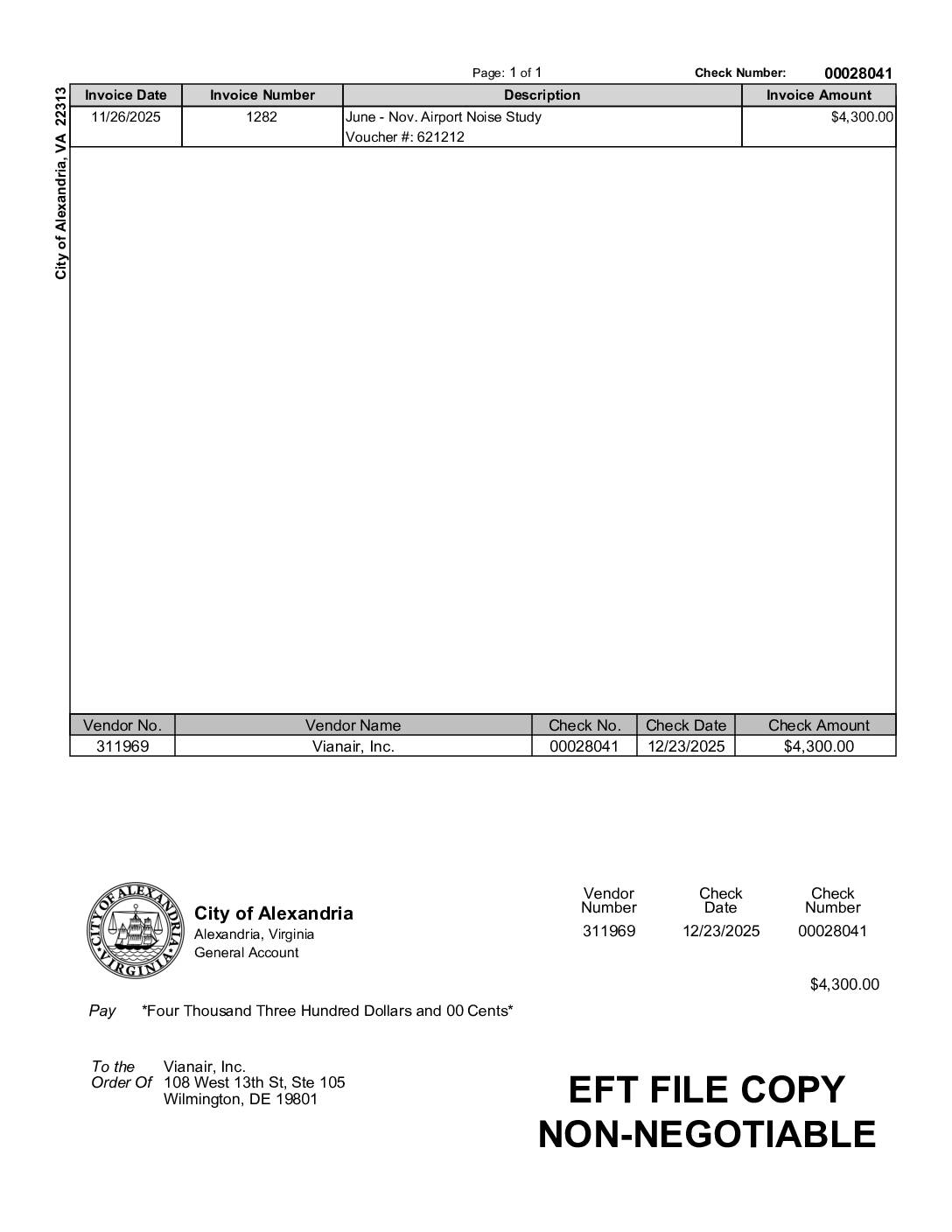
City of Alexandria EFT payment to Vianair, Inc. – Airport noise study
The City of Alexandria, Virginia issued a payment of $4,300 to Vianair, Inc., an aviation consulting firm based in Wilmington, Delaware, for an Airport Noise Study covering the period of June through November 2025. The payment was processed via electronic funds transfer (EFT) on December 23, 2025, under check number 00028041 and invoice number 1282. This document reflects the city's ongoing efforts to monitor and analyze airport noise impacts on its community. -
 2025-12-21
A guide to U.S. aircraft noise regulatory policy
This book by Sanford Fidell and Vincent Mestre provides a comprehensive guide to U.S. aircraft noise regulatory policy, covering the rules, standards, and government frameworks that govern how aircraft noise is measured, evaluated, and controlled. It is a key reference for understanding how federal agencies approach noise management around airports such as Sea-Tac, including the metrics and legal structures used to assess community noise impacts.