TagFAA(687)
-
 1990-03-27
Final environmental assessment for proposed changes to air traffic arrival and departure routes at Seattle-Tacoma International Airport
This 1990 Final Environmental Assessment, prepared by the FAA's Air Traffic Division in Seattle, evaluates proposed changes to arrival and departure flight routes at Seattle-Tacoma International Airport. The document was signed by Air Traffic Division Manager Temple H. Johnson, Jr. on March 27, 1990, and examines the potential environmental impacts of rerouting aircraft traffic in and out of Sea-Tac. It serves as an official federal record relevant to noise and environmental policy affecting communities around the airport. -
 1990-03-16
Day Night Average Sound Level (DNL): The Descriptor of Choice for Airport Noise Assessment
This 1990 FAA document explains why the Day Night Average Sound Level (DNL) was chosen as the standard metric for measuring airport noise. DNL averages noise exposure over a full 24-hour period, applying a penalty for nighttime flights, and has been adopted by multiple federal agencies—including the EPA, DOT, HUD, and DOD—as the most reliable way to assess how aircraft noise affects surrounding communities. The FAA formally incorporated DNL into federal regulation through FAR Part 150, Airport Noise Compatibility Planning, in 1981. -
1990-01-22
Rumblings Over Flight-Path Plan
By DICK LILLY January 22, 1990 Publication: THE SEATTLE TIMES Page: B3 Word Count: 1469 Like a plague, they slipped into Barbara Maxwell’s neighborhood, rattling the windows. Pretty soon, they were making it hard to hear phone conversations. After a while, they were interrupting backyard barbecues More and more jet planes, on their way to Seattle-Tacoma International Airport, -
1990-01-22
Planned Flight Paths Spur Arguments
Planned Flight Paths Spur Arguments Jan 22, 1990 Linda W.Y. Parrish Hearing set– The Federal Aviation Administration has set an environmental assessment hearing on its proposed changes in Sea-Tac Airport flight patterns for 7 to 10 p.m. Wednesday at Cleveland High School, 5511 15th Ave. S. FEDERAL WAY When the wind blows from the north, -
 1990-01-08
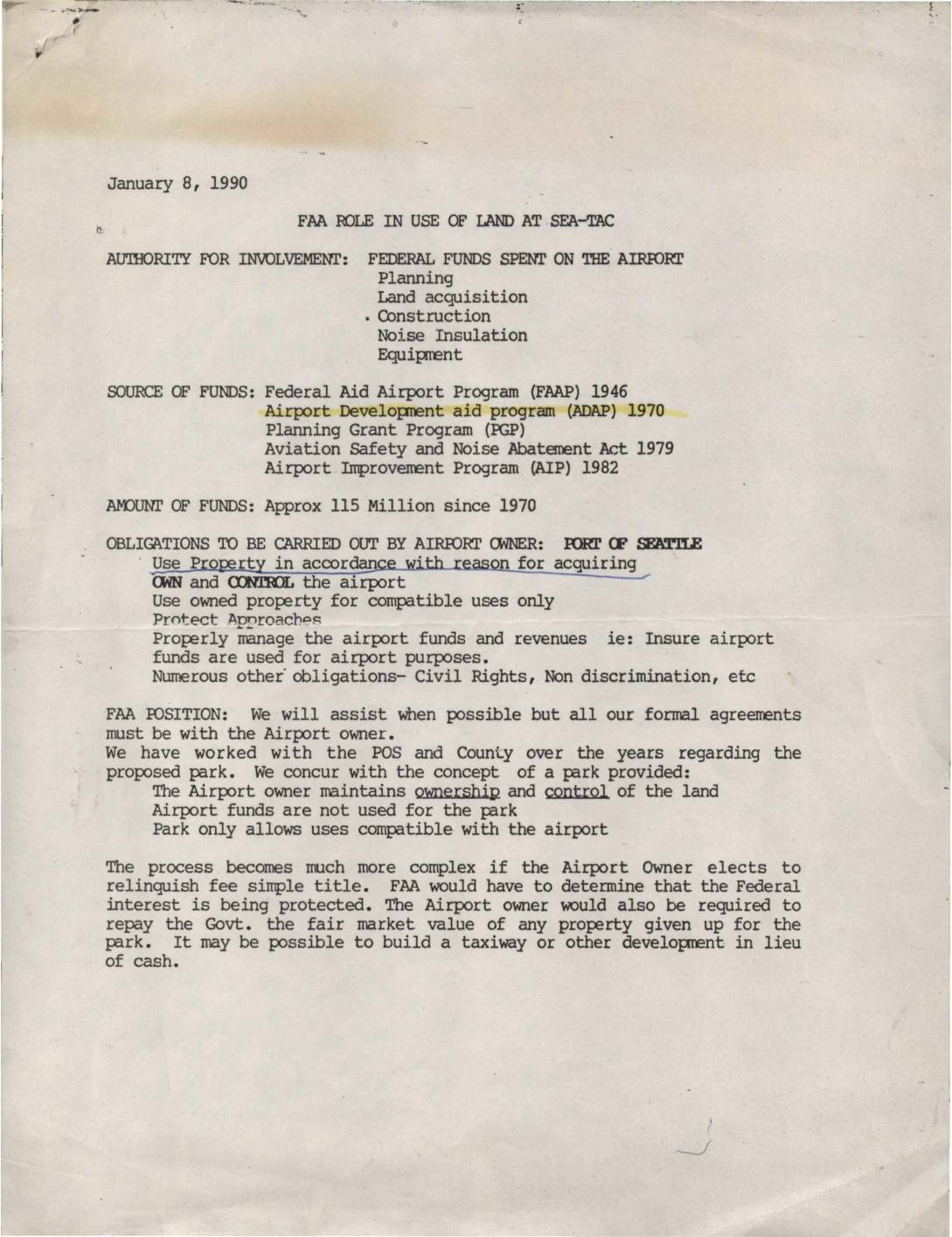
FAA role in use of land at Sea-Tac
★A January 1990 FAA briefing document outlines the agency's role in land use at Seattle-Tacoma International Airport, explaining that federal involvement stems from approximately $115 million in federal funds spent on the airport since 1970 for planning, land acquisition, construction, and noise insulation. The FAA supported the concept of a park on airport land, provided the Port of Seattle maintained ownership and control, airport funds were not used for the park, and only compatible uses were allowed. The document also details Sea-Tac's noise mitigation efforts, including over $50 million in federal grants to acquire roughly 750 noise-impacted land parcels and more than $7 million to insulate 323 homes near the airport. -
 1990-01-08
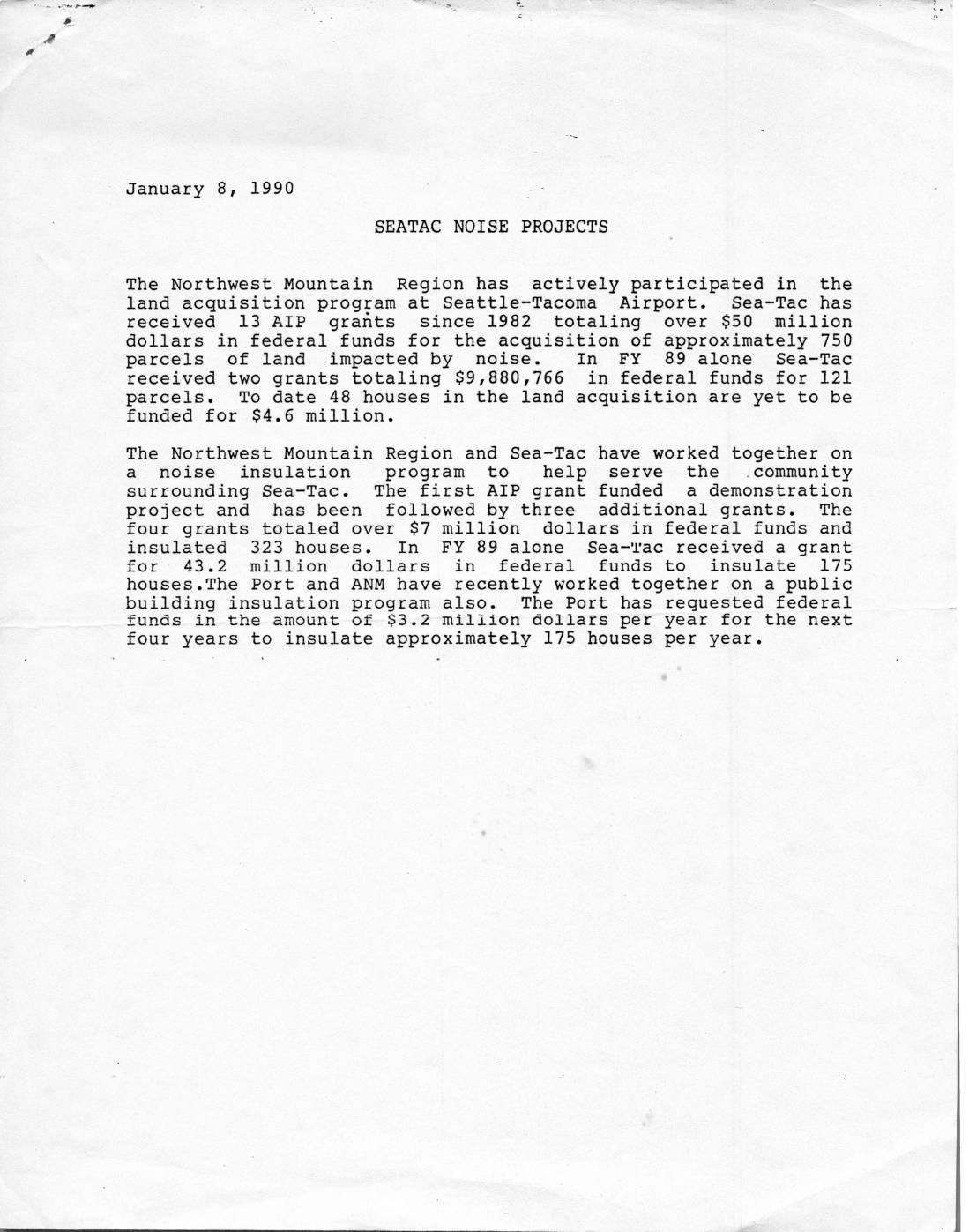
SeaTac noise projects
Since 1982, Seattle-Tacoma Airport (Sea-Tac) has received 13 federal AIP grants totaling over $50 million to acquire approximately 750 noise-impacted land parcels near the airport. In addition, four federal grants totaling over $7 million have funded a noise insulation program that has treated 323 homes, with further funding of $3.2 million per year requested to insulate roughly 175 additional houses annually over the next four years. -
 1990-01-01
Final environmental assessment: Proposed changes to air traffic arrival and departure routes at Seattle-Tacoma International Airport, Volume II
This 1990 Final Environmental Assessment, published by the U.S. Department of Transportation's Federal Aviation Administration, examines proposed changes to air traffic arrival and departure routes at Seattle-Tacoma International Airport. Volume II of the document compiles public comments received in response to the Draft Environmental Assessment, reflecting community input on how the proposed route changes could affect noise and other environmental conditions in the Seattle, Washington area. -
 1989-12-01
Draft environmental assessment for proposed changes to air traffic arrival and departure routes at Seattle-Tacoma International Airport
This 1989 FAA draft Environmental Assessment examines proposed changes to arrival and departure flight routes at Seattle-Tacoma International Airport, aimed at reducing air traffic congestion and improving airspace efficiency. The document identifies a key inefficiency: during good weather and peak demand, south-landing capacity (42 aircraft/hour) was significantly lower than north-landing capacity (56 aircraft/hour), largely due to a requirement routing turbojet aircraft through Elliott Bay. The assessment traces the issue back to noise abatement procedures established since 1970 that prioritized limiting jet overflights in certain Seattle metropolitan areas over operational efficiency. -
 1989-12-01
Draft Environmental Assessment for Proposed Changes to Air Traffic Arrival and Departure Routes at Seattle-Tacoma International Airport
This 1989 draft Environmental Assessment, prepared by the FAA's Air Traffic Division, evaluates proposed changes to arrival and departure flight routes at Seattle-Tacoma International Airport. The changes aimed to reduce air traffic congestion and improve airspace efficiency, particularly during peak demand periods when south-arrival capacity (42 aircraft/hour) lagged significantly behind north-arrival capacity (56 aircraft/hour). The inefficiency was linked to a requirement routing turbojet aircraft through Elliott Bay, a legacy of noise abatement agreements with local governments and the Port of Seattle dating back to 1970. -
 1989-05-01
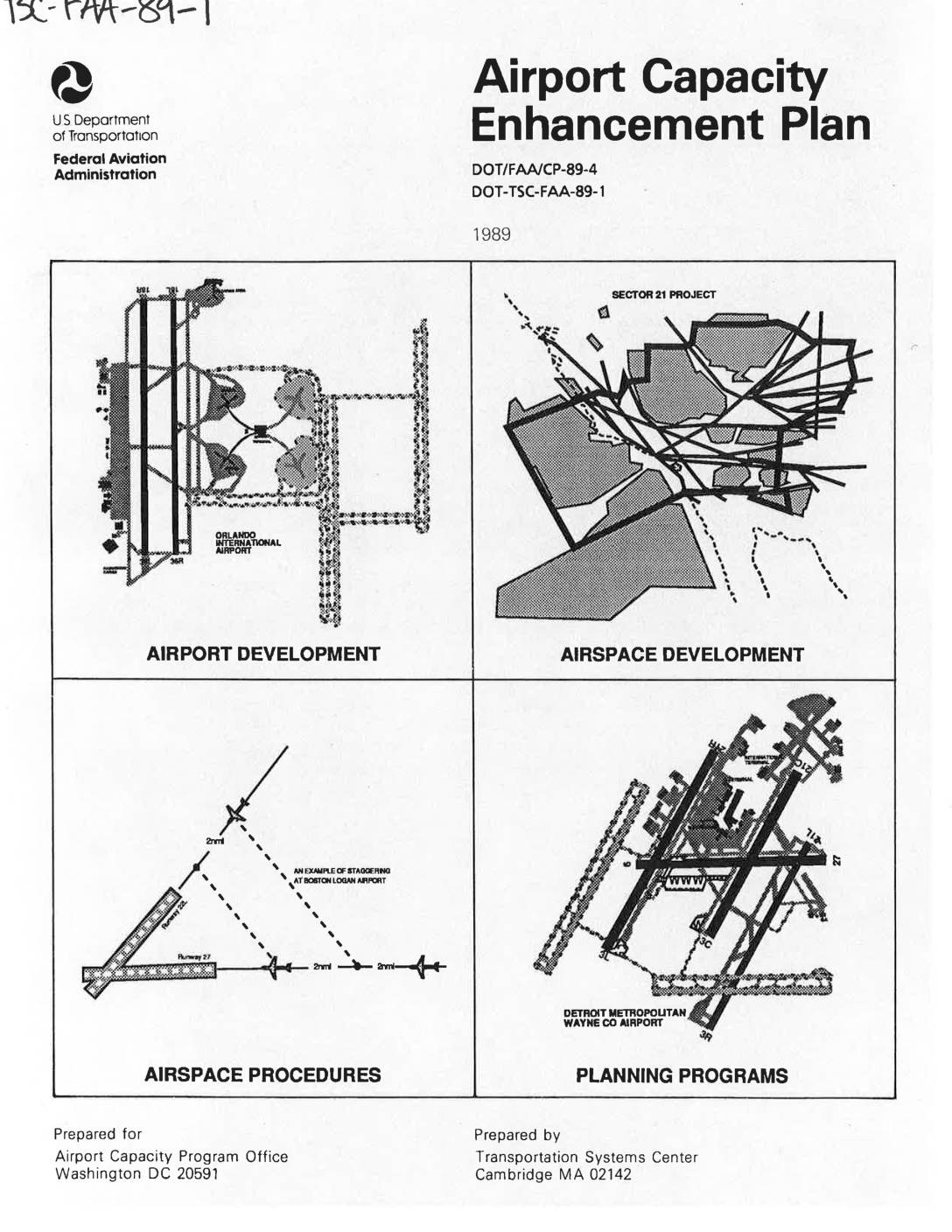
Airport Capacity Enhancement Plan 1989
The 1989 Airport Capacity Enhancement Plan, produced by the FAA and U.S. Department of Transportation, outlines efforts to increase airport capacity and efficiency across the U.S. air system without compromising passenger safety or the environment. It identifies causes of capacity and delay problems, projects the impact of increased air traffic over the following decade, and describes planned projects covering airport development, airspace procedures, new equipment, and capacity planning studies. Note: this document addresses national airport capacity issues broadly and does not focus specifically on Sea-Tac Airport or local noise policy.