TagEnvironmental Impact Statement(328)
-
 2026-05-28
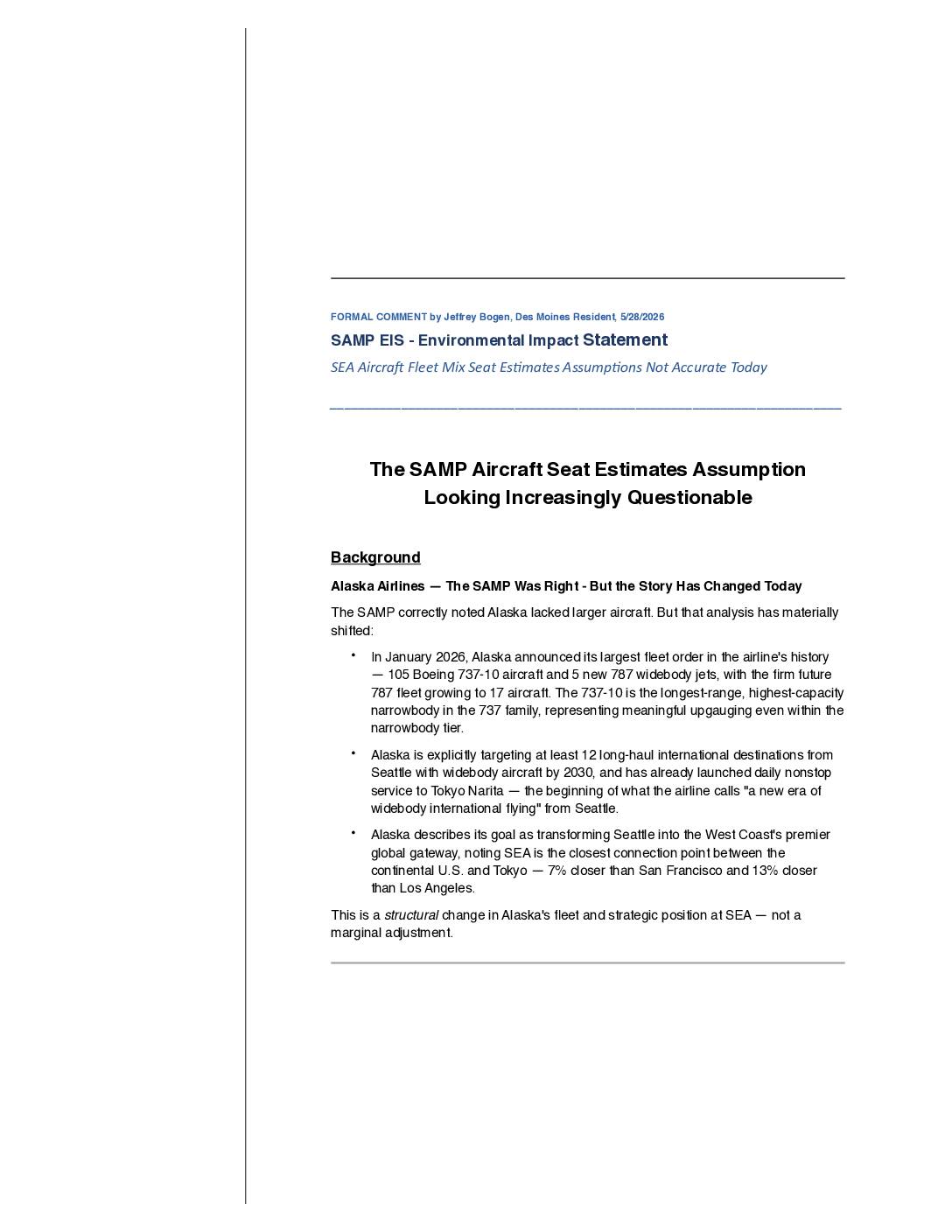
Formal Comment by Jeffrey Bogen: SAMP EIS Aircraft Fleet Mix Seat Estimates Assumptions Not Accurate Today
A Des Moines resident's formal comment on the Sea-Tac Airport Master Plan (SAMP) Environmental Impact Statement argues that the SAMP's aircraft seat capacity assumptions are now outdated, pointing to major 2026 fleet expansions by Alaska Airlines and Delta that include significantly more and larger widebody aircraft operating from SEA. The comment contends that because larger planes carry more passengers per flight, fewer total aircraft operations would be needed to reach the SAMP's 56 million passenger target, meaning the airport could handle projected growth with less noise impact than the SAMP currently estimates. The author presents revised seat-capacity scenarios suggesting the SAMP's low-growth assumption is internally inconsistent and that updated fleet data should be incorporated into the EIS before final conclusions are drawn. -
 2026-05-28
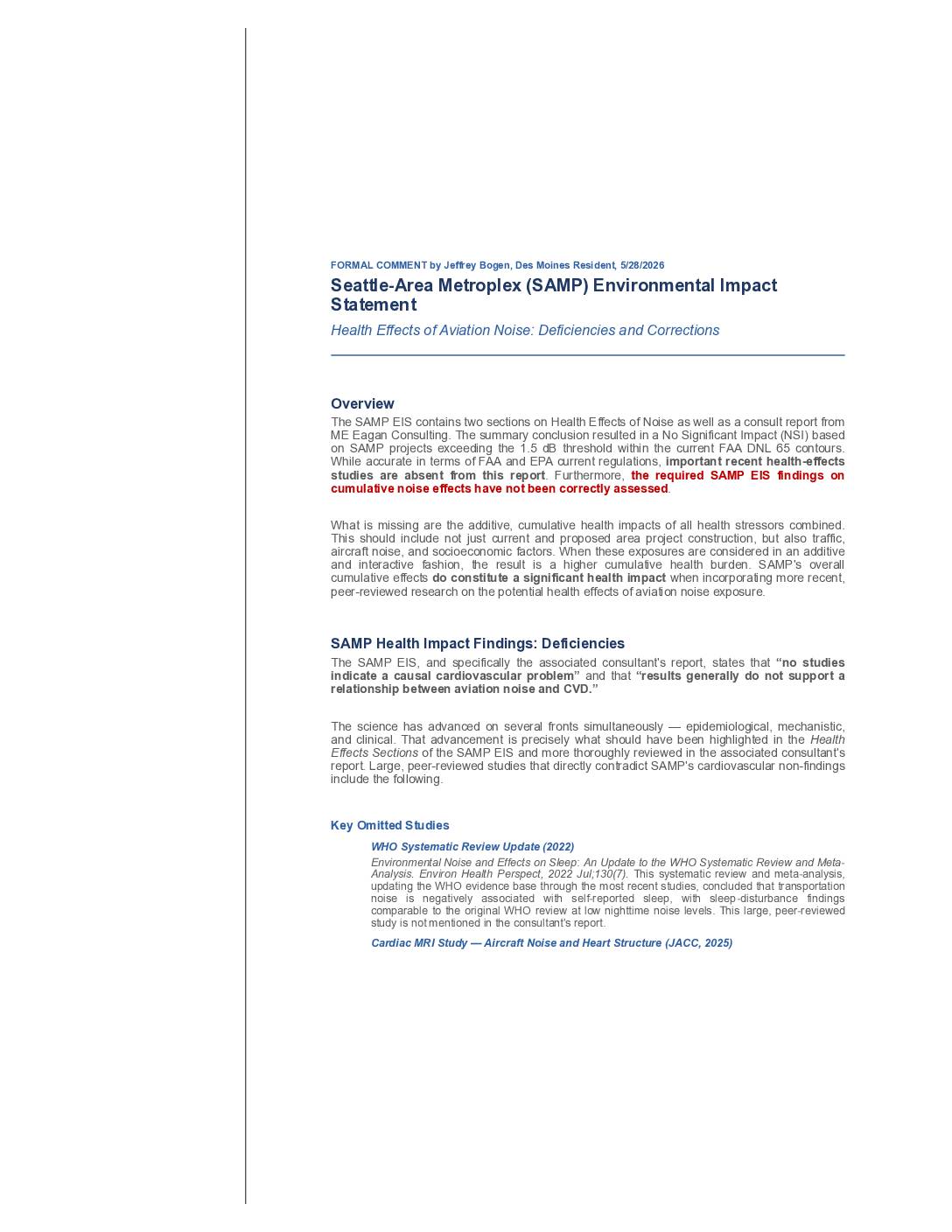
Formal Comment by Jeffrey Bogen: Seattle-Area Metroplex (SAMP) Environmental Impact Statement — Health Effects of Aviation Noise: Deficiencies and Corrections
A Des Moines resident submitted a formal comment arguing that the Seattle-Area Metroplex Environmental Impact Statement (SAMP EIS) significantly underestimates the health risks of aviation noise by omitting key peer-reviewed studies linking aircraft noise to cardiovascular disease, heart structural changes, and sleep disruption. The commenter contends that the EIS relies on outdated and methodologically flawed research, particularly FICAN studies using extrapolated rather than measured data, while ignoring more recent findings from the WHO, the HYENA Project, and a 2025 cardiac MRI study. The comment calls on the FAA to conduct a proper cumulative health effects analysis and require additional noise mitigation measures beyond the current DNL 65 dB contour threshold. -
 2026-05-28
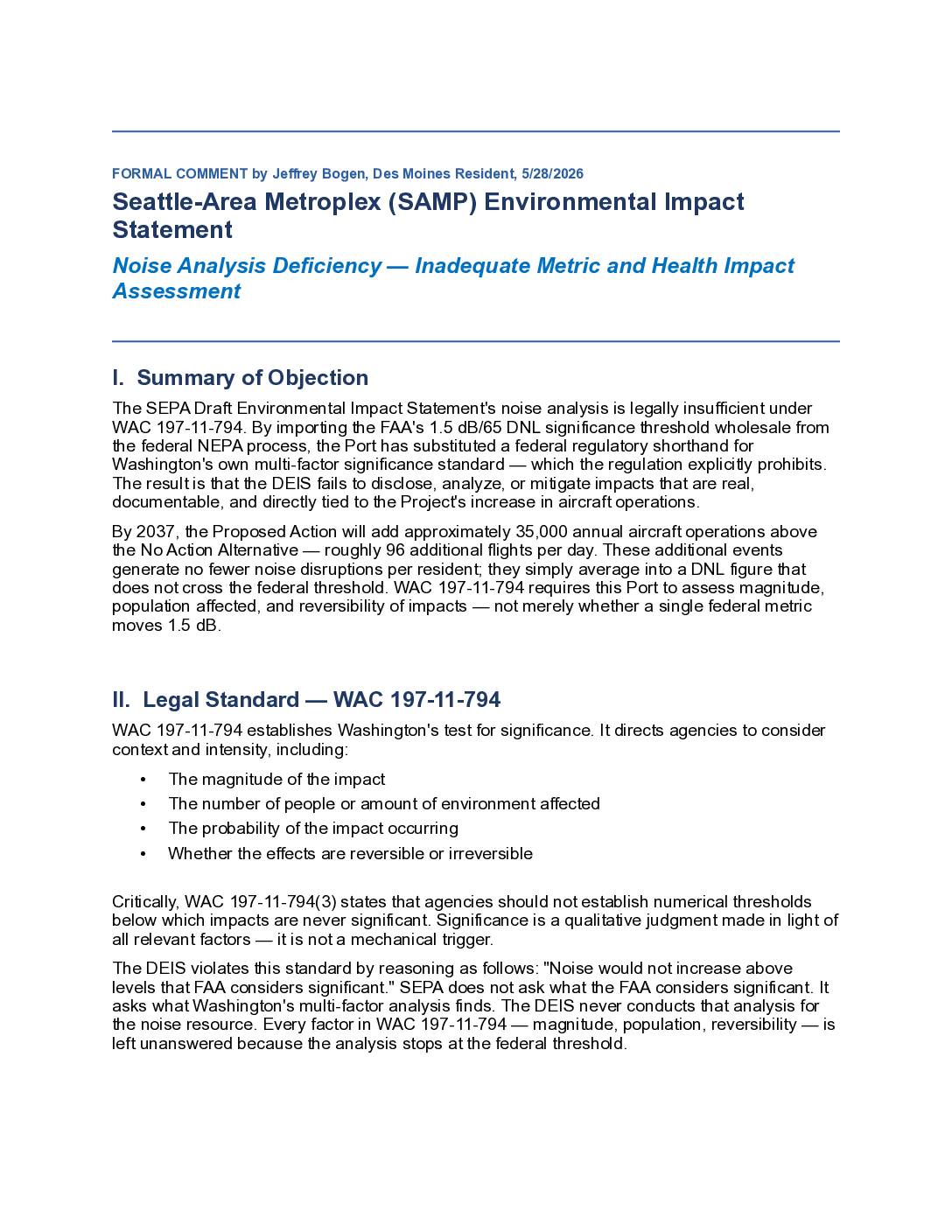
Formal Comment of Jeffrey Bogen: SAMP Draft EIS Noise Analysis Deficiency — Inadequate Metric and Health Impact Assessment
A Des Moines resident's formal comment argues that the Seattle-Area Metroplex Environmental Impact Statement's noise analysis is legally inadequate because it relies solely on a federal FAA noise threshold rather than Washington State's own multi-factor significance standard. The comment contends that the standard noise metric used (DNL) masks the real impact of roughly 96 additional daily flights projected by 2037, since it averages out individual disturbance events rather than counting them. The commenter calls for supplemental analysis using alternative metrics—such as single-event sound levels and nighttime averages—supported by peer-reviewed health studies linking aircraft noise to sleep disruption and cardiovascular harm. -
 2026-05-28
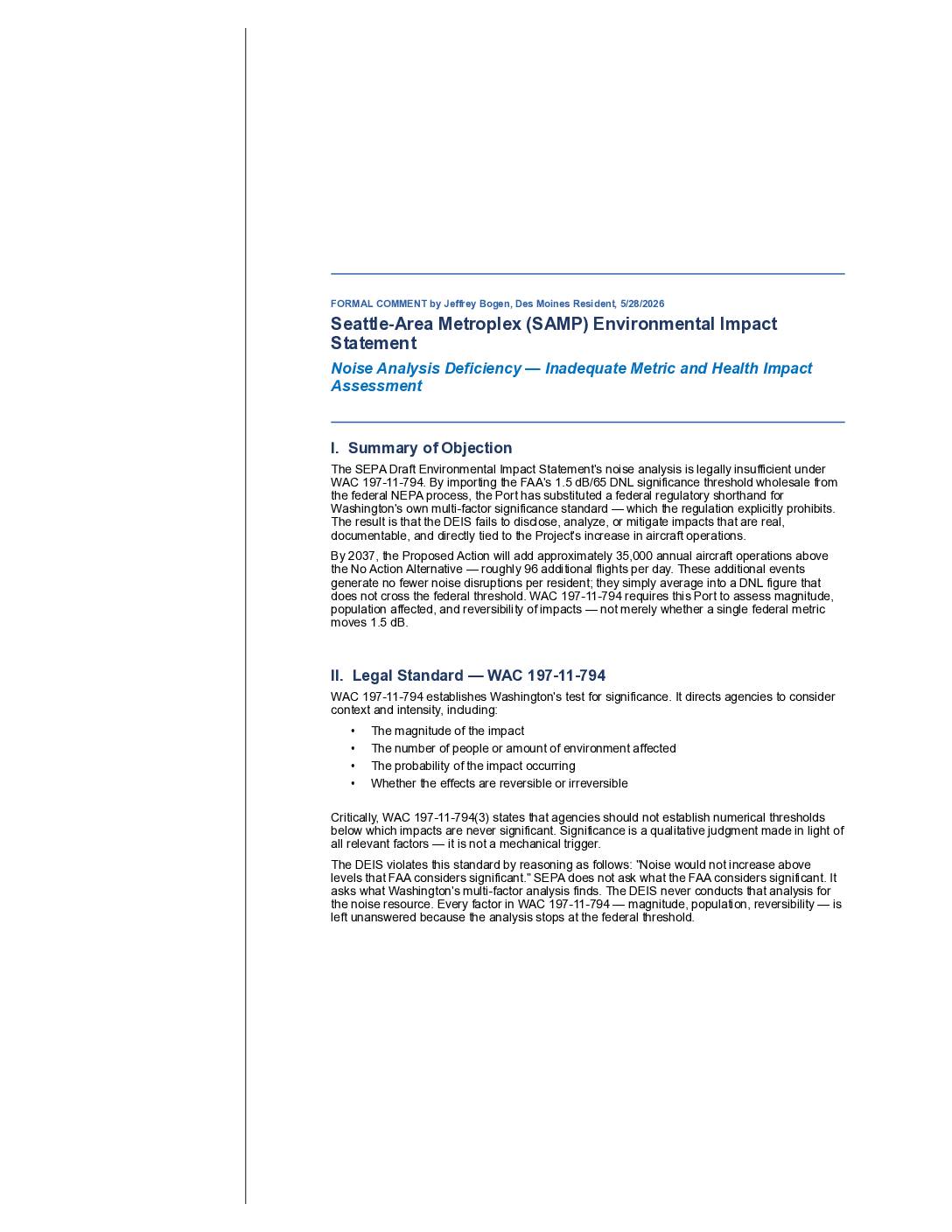
Formal Comment by Jeffrey Bogen: SAMP SEPA Draft EIS Noise Analysis Deficiency — Inadequate Metric and Health Impact Assessment
Des Moines resident Jeffrey Bogen submitted a formal comment arguing that the Seattle-Area Metroplex Environmental Impact Statement's noise analysis is legally inadequate because it relies solely on a federal average-noise metric (DNL) rather than Washington State's broader, multi-factor significance standard. Bogen contends that with roughly 96 additional flights per day projected by 2037, residents will experience more frequent individual noise disruptions — including sleep disturbance and cardiovascular stress — that the DNL metric is mathematically incapable of detecting. He calls on the Port of Seattle to supplement its Final EIS with event-level and nighttime noise metrics supported by peer-reviewed health research, including the FAA's own National Sleep Study. -
 2026-05-28
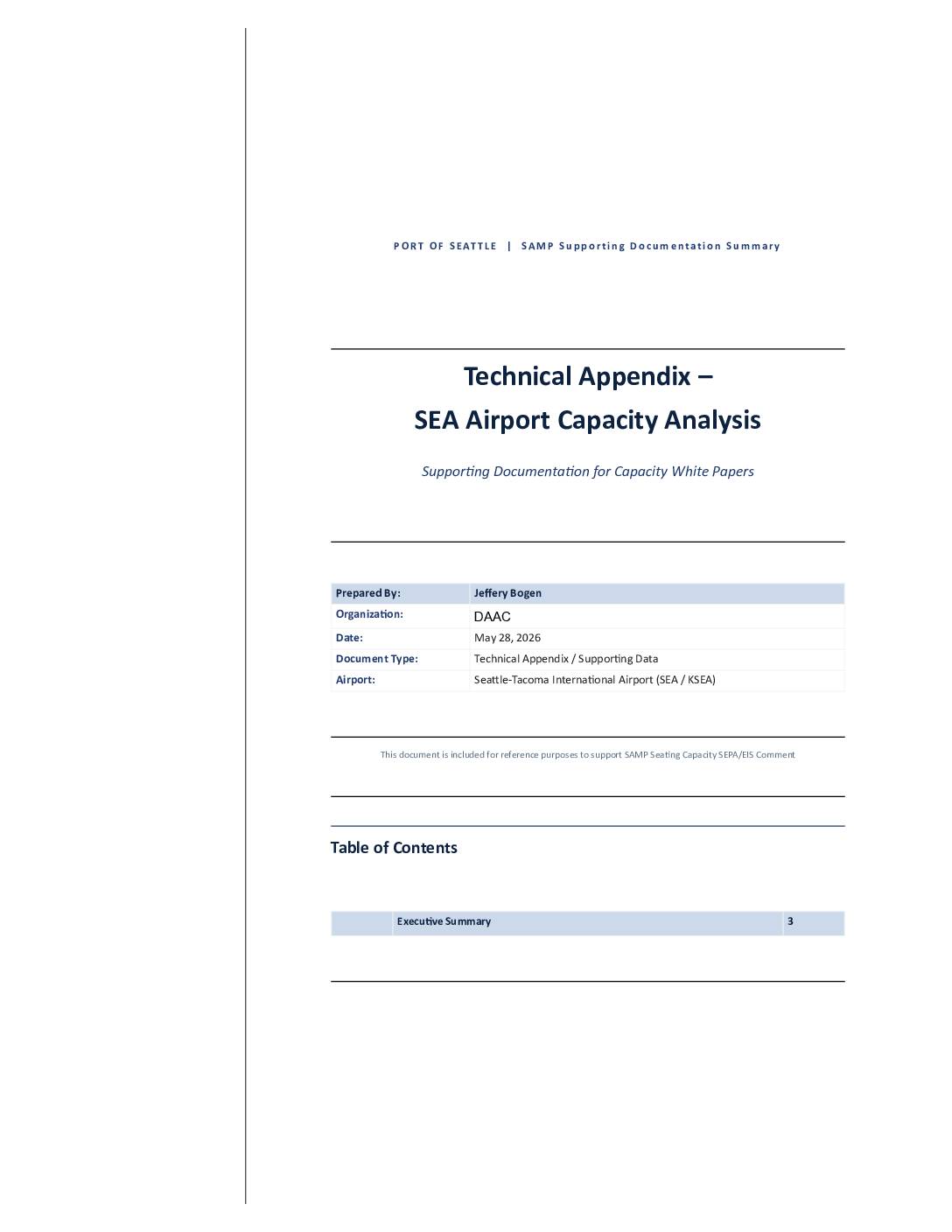
Technical Appendix: SEA Airport Capacity Analysis — Supporting Documentation for Capacity White Papers
This technical appendix, prepared by Jeffery Bogen of DAAC in May 2026, analyzes runway and airspace capacity at Seattle-Tacoma International Airport (SEA) to support the Port of Seattle's Sustainable Airport Master Plan (SAMP) environmental review process. It compares FAA 2016 baseline hourly flow rates against observed 2024–2026 performance data, documents current capacity improvements, and projects annual flight operations through 2037 under both constrained and unconstrained growth scenarios. The document is intended as supporting reference material for public comments on seating capacity impacts under SEPA/EIS review. -
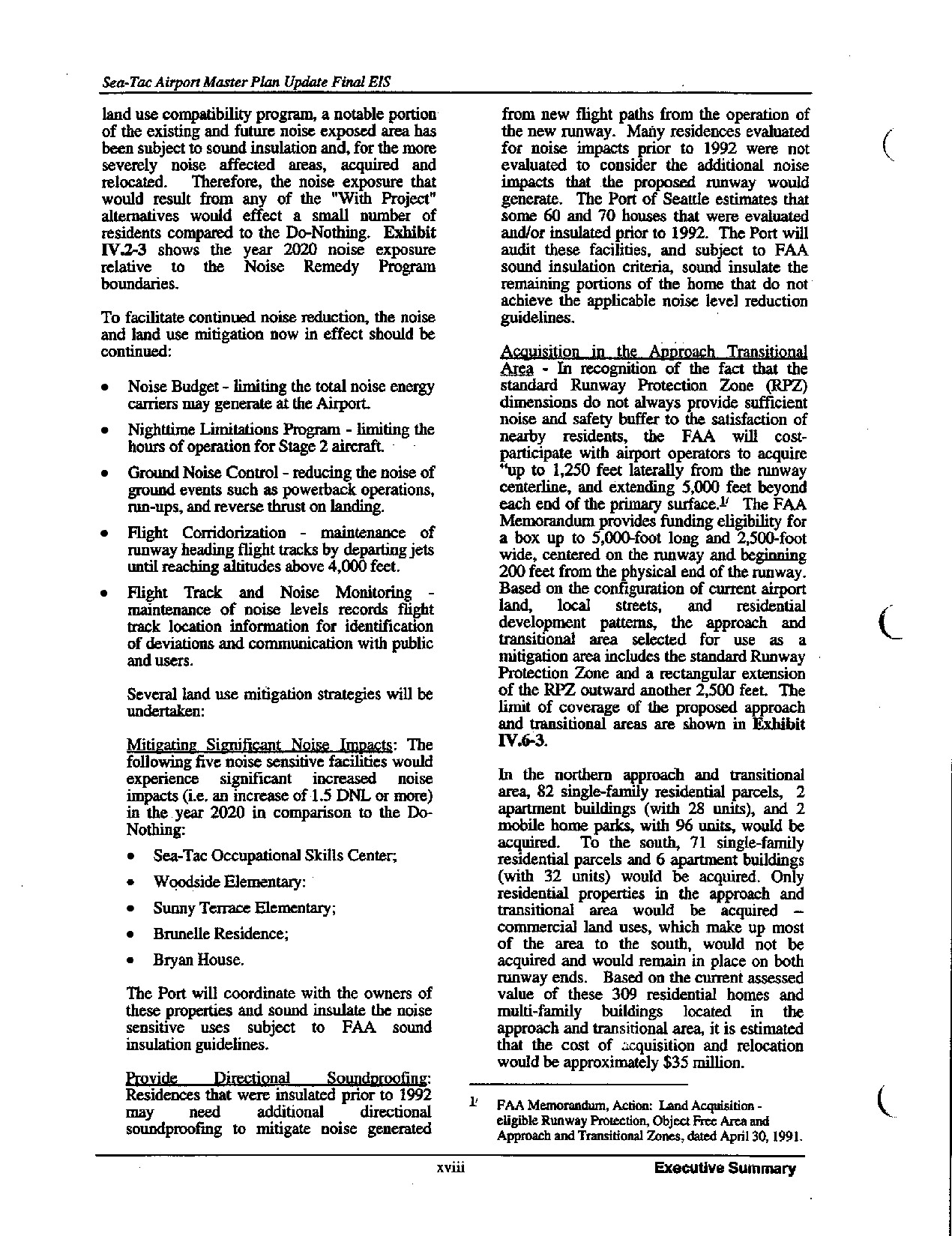
Sea-Tac-Airport-Final-EIS-Feb.-1996-Vol
This page is from the Executive Summary of the Sea-Tac Airport Master Plan Update Final Environmental Impact Statement (EIS), discussing noise mitigation strategies including sound insulation, noise budget limits, nighttime limitations, flight corridorization, and land acquisition in the Approach Transitional Area. It estimates acquisition and relocation costs for approximately 309 residential homes and multi-family buildings at roughly $35 million, referencing an FAA Memorandum dated April 30, 1991. -
 2026-05-26
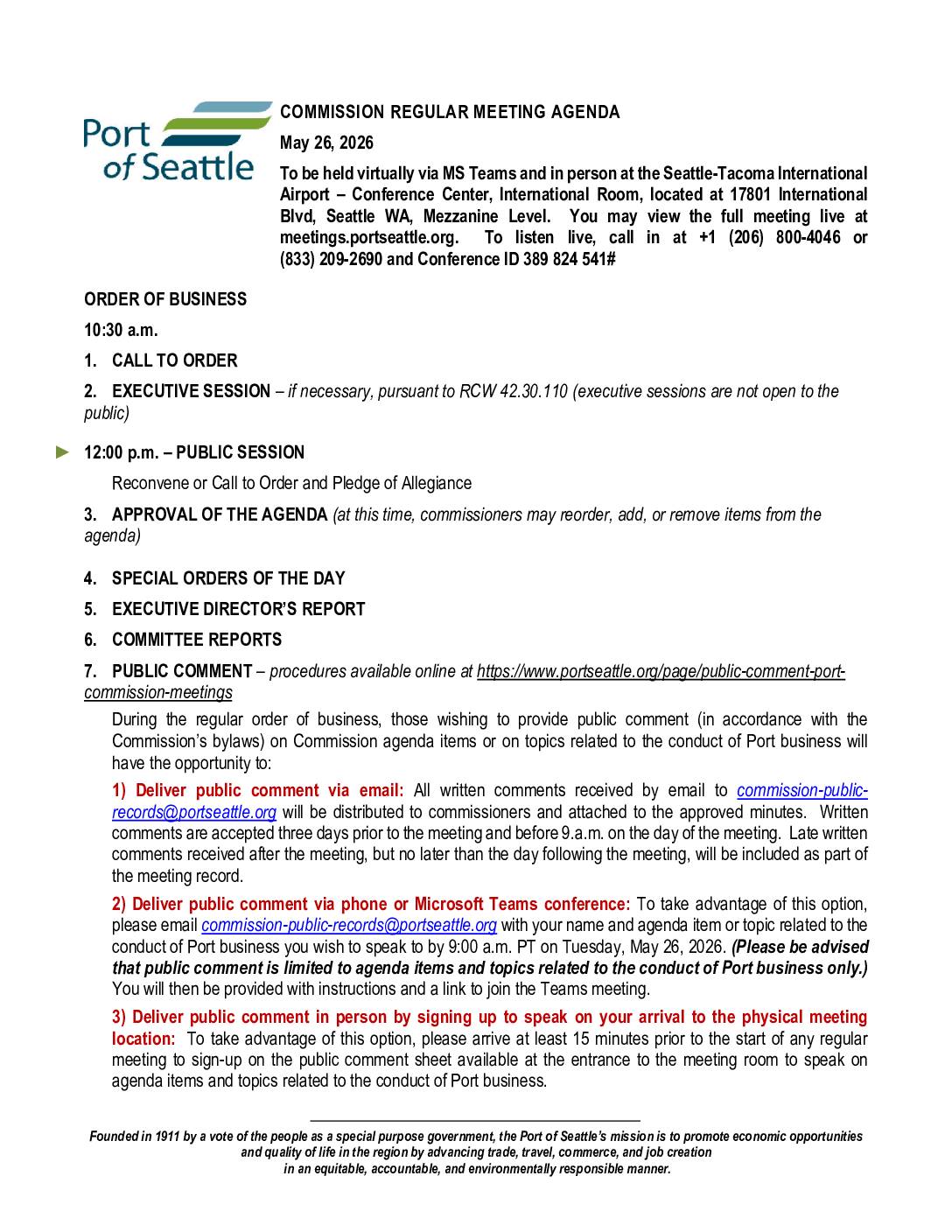
Port of Seattle Commission Regular Meeting May 26, 2026 (SAMP/SEPA intro)
Item 11b is the SAMP/SEPA EIS introduction and presentation -
2026-05-26
Port Of Seattle commission agenda May 26, 2026 (SAMP/SEPA introduction)
This is the agenda for the Port of Seattle Commission Regular Meeting held on May 26, 2026, covering a range of port business items including infrastructure projects at Seattle-Tacoma International Airport (SEA). Key topics include the S Concourse Evolution program (authorized up to $300 million), the Main Terminal Improvement Program emergency power design, and a briefing on the Sustainable Airport Master Plan Near-Term Projects Environmental Review, including a SEPA Draft Environmental Impact Statement. The meeting was held both in person at Sea-Tac Airport and virtually via Microsoft Teams. -
 2026-05-26
Sustainable Airport Master Plan near-term projects: State Environmental Policy Act draft environmental impact statement and next steps
The Port of Seattle presented a draft Environmental Impact Statement under Washington State's environmental review law (SEPA) for a set of near-term construction projects at Seattle-Tacoma International Airport. The projects, part of the Sustainable Airport Master Plan, include expansions and improvements such as new gates, taxiway extensions, a second terminal, cargo facilities, and roadway upgrades. The presentation outlined the environmental review process and next steps, including public outreach and engagement. -
 2026-05-26
Sustainable airport master plan near-term projects state environmental policy act draft environmental impact statement and next steps
Presentation about the Port of Seattle’s Sustainable Airport Master Plan Near-Term Projects, covering the completed NEPA process and the required SEPA Draft Environmental Impact Statement. The document outlines various airport infrastructure projects including runway improvements, terminal facilities, maintenance facilities, and cargo operations planned for Sea-Tac Airport.