TagAviation Fuel(70)
-
 2025-10-21
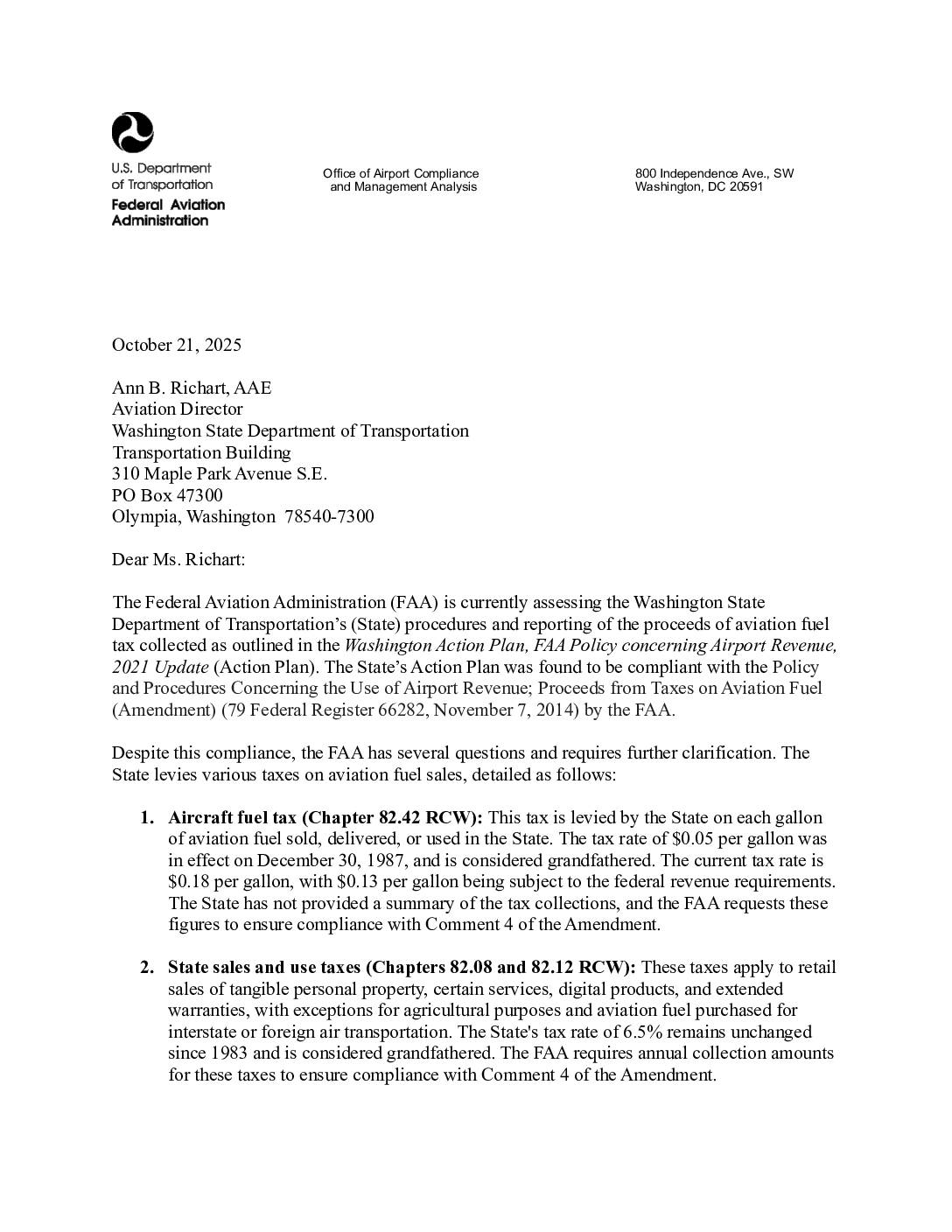
FAA Letter to Washington State DOT on Aviation Fuel Tax Compliance
The FAA sent a letter to Washington State's Aviation Director in October 2025 reviewing how the state collects and spends aviation fuel taxes, noting that despite having an approved compliance plan, the state has still not provided actual tax collection figures after 11 years. The FAA flagged concerns about three types of taxes — aircraft fuel tax, sales and use taxes, and environmental taxes (HST and PPT) — questioning whether the environmental tax revenues are being properly directed toward aviation purposes. The agency also reviewed over $97 million in state appropriations claimed as offsets, finding more than $82 million ineligible and nearly $15 million requiring further justification before a final compliance determination can be made. -
 2025-10-14
Barriers to Implementing SAF in MA Institute for Policy Studies
A report examining the barriers to implementing sustainable aviation fuel (SAF) in Massachusetts, authored by Neil Rasmussen and Chuck Collins from the Institute for Policy Studies. The report analyzes challenges and obstacles facing SAF adoption in the state. -
 2025-08-11
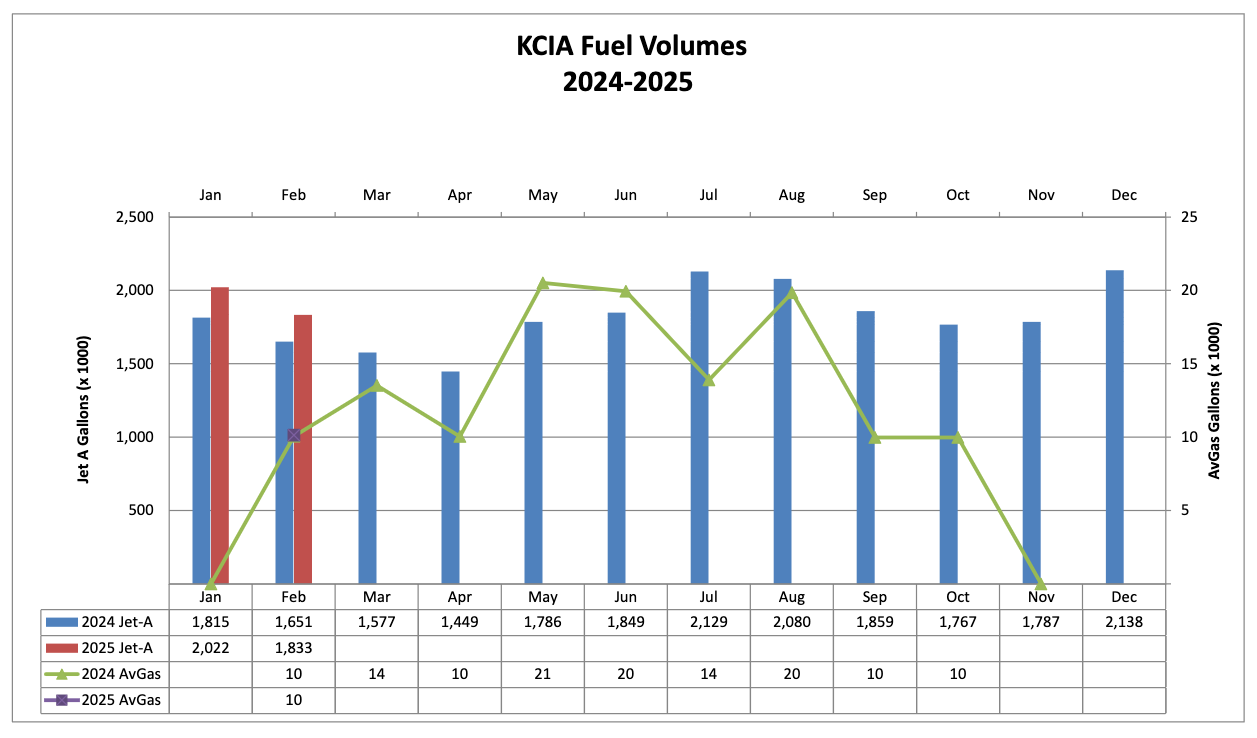
KCIA fuel volumes 2024-2025
Bar and line chart showing monthly Jet-A and AvGas fuel volumes at KCIA (Cincinnati/Northern Kentucky International Airport) for 2024 and early 2025. Data shows 2024 Jet-A volumes ranging from approximately 1,449,000 to 2,138,000 gallons monthly, with 2025 January and February Jet-A volumes of 2,022,000 and 1,833,000 gallons respectively. -
2025-06-28
Tweed New Haven Airport to get $11 million for improvements and to address noise
By Mark Zaretsky, Staff Writer June 28, 2025 A rendering of the proposed new terminal Tweed New Haven Regional Airport and its operator, Avports LLC and subsidiary The New HVN LLC, want to build on the East Haven side of the airport, as seen from the land side. Courtesy of Tweed New Haven Regional Airport -
 2025-02-21
Air France Aircraft Sustainable Aviation Fuel Refueling Operation
A Total fuel tanker labeled 'Biocarburant Aérien Durable SAF' (Sustainable Aviation Fuel) refuels an Air France aircraft, registration F-HTYI, on a rain-wet tarmac. Ground crew in high-visibility vests oversee the fueling operation, which involves TotalEnergies-branded SAF product. -
 2024-12-11
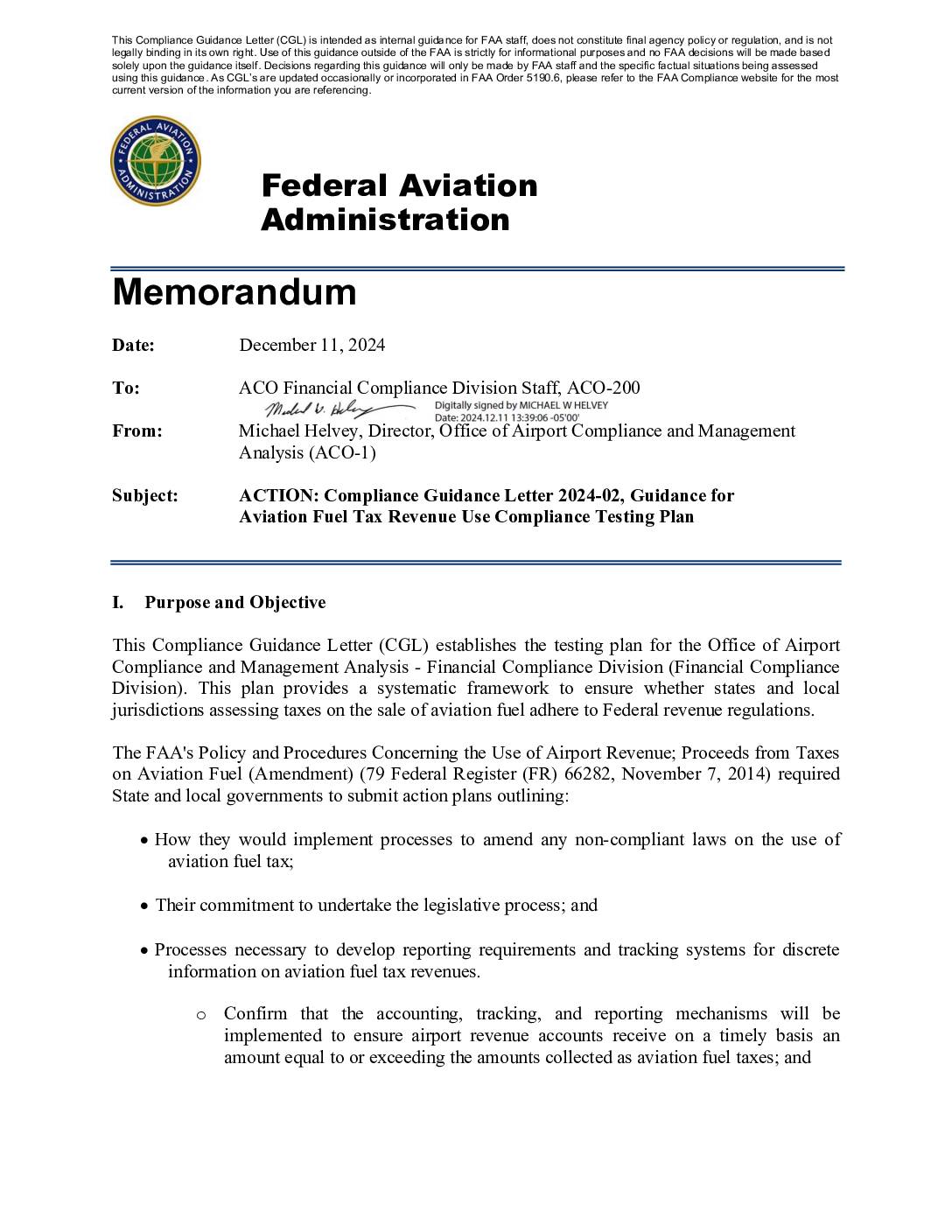
Compliance Guidance Letter 2024-02, Guidance for Aviation Fuel Tax Revenue Use Compliance Testing Plan
The FAA's Financial Compliance Division issued guidance in December 2024 establishing a testing plan to verify that states and local governments properly direct aviation fuel tax revenues toward airport and aviation purposes, as required by federal regulations. The plan outlines how jurisdictions are selected for review, what financial data they must submit, and how compliance is evaluated — with the State of Washington serving as the initial pilot case for the program. -
 2024-05-18
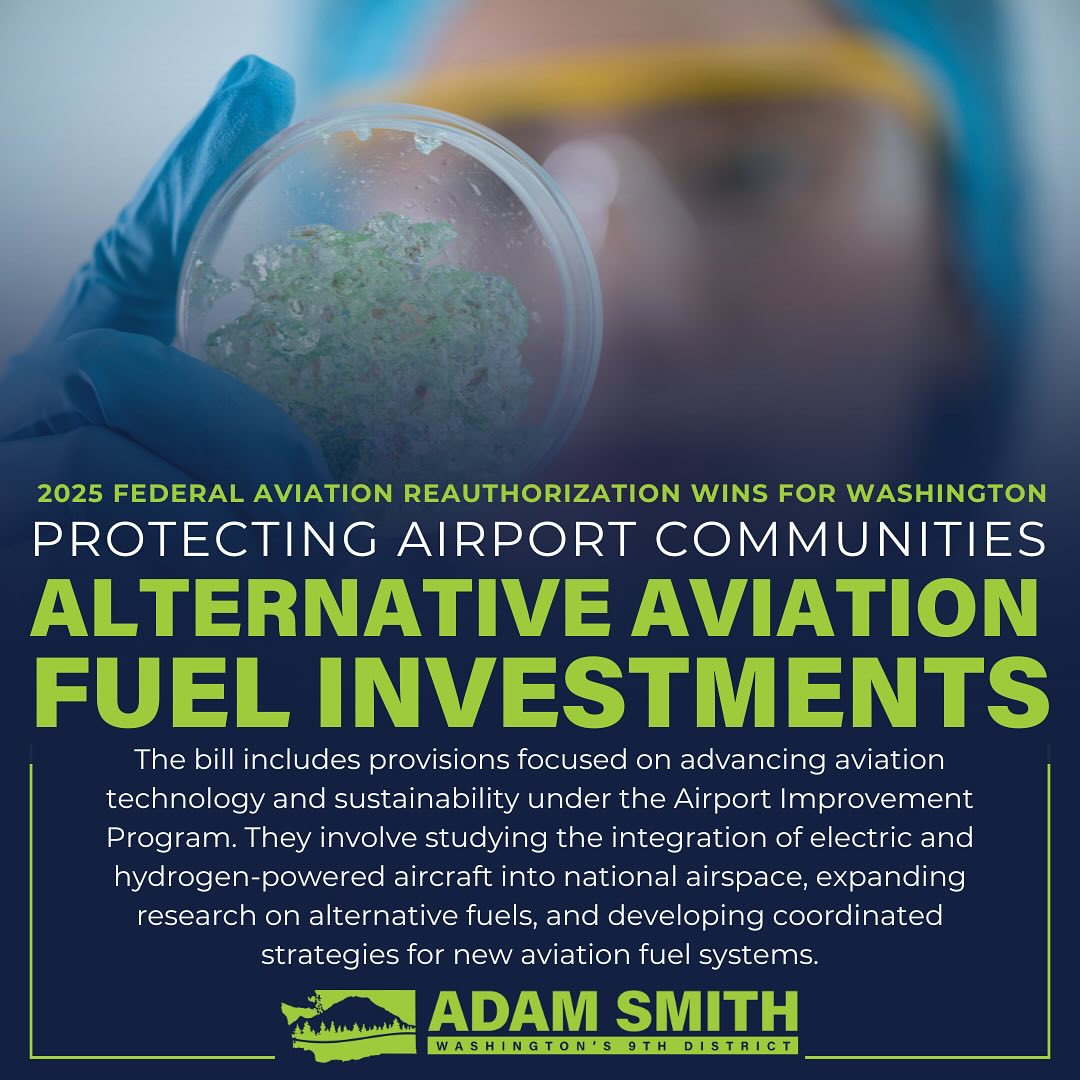
2025 Federal Aviation Reauthorization Wins for Washington – Alternative Aviation Fuel Investments
Promotional graphic from U.S. Representative Adam Smith (Washington's 9th District) highlighting provisions in the 2025 Federal Aviation Reauthorization bill focused on alternative aviation fuel investments, including study of electric and hydrogen-powered aircraft integration, expanded alternative fuel research, and coordinated strategies for new aviation fuel systems under the Airport Improvement Program. -
 2024-05-18
2025 Federal Aviation Reauthorization Wins for Washington – Protecting Airport Communities
Promotional graphic from U.S. Representative Adam Smith (Washington's 9th District) highlighting 2025 Federal Aviation Reauthorization provisions focused on sustainability, including research into alternative aviation fuels (hydrogen and electric power) and improved energy efficiency at airports. The graphic is branded with Smith's official congressional logo and framed under the theme 'Protecting Airport Communities.' -
 2023-12-13
FAA Has Made Progress Verifying Compliance With Aviation Fuel Tax Requirements, but Challenges Remain With Testing and Enforcement
A 2023 federal audit found that the FAA has made progress confirming whether state and local governments comply with rules governing how aviation fuel tax revenue must be used, but has not yet verified that compliant jurisdictions are actually spending those funds on aviation-related purposes. Five jurisdictions remain out of compliance and have not faced enforcement action, largely due to congressional guidance encouraging the FAA to delay penalties. The audit resulted in three recommendations to strengthen FAA oversight and prevent airport revenue from being diverted to non-aviation purposes. -
 2023-03-28
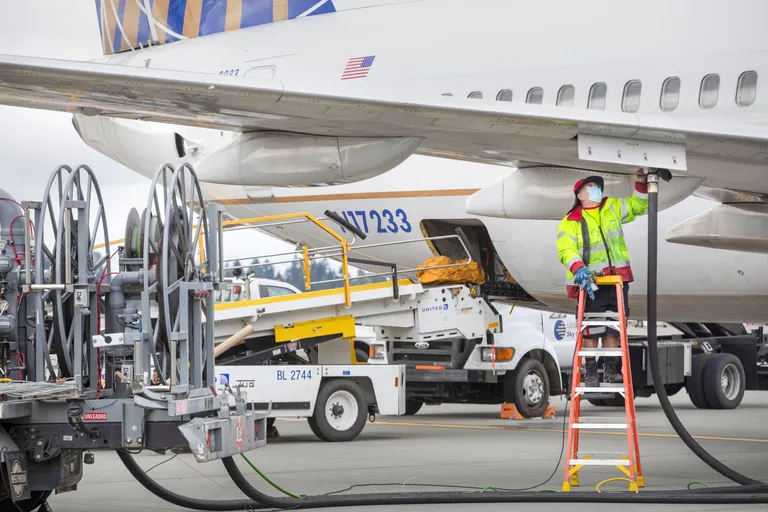
Airport Ground Crew Aircraft Fueling Operation
A ground crew worker in a high-visibility yellow jacket and face mask stands on an orange ladder to service a United Airlines Boeing 737 (tail number N7233) on the tarmac. A United Airlines ground support vehicle (BL 2744) is visible in the background alongside fueling hoses and equipment.