TagAviation Emissions(100)
-
2011-12-29
Obama’s Climate Betrayal
Elizabeth Kolbert Some international disputes are significant for symbolic reasons, others for substantive ones. The current conflict between the United States and the European Union over airline-emissions limits is both. Unfortunately this means that the U.S. is doubly on the wrong side. The Obama Administration ought to be applauding the Europeans. Instead it’s threatening a -
 2002-08-30
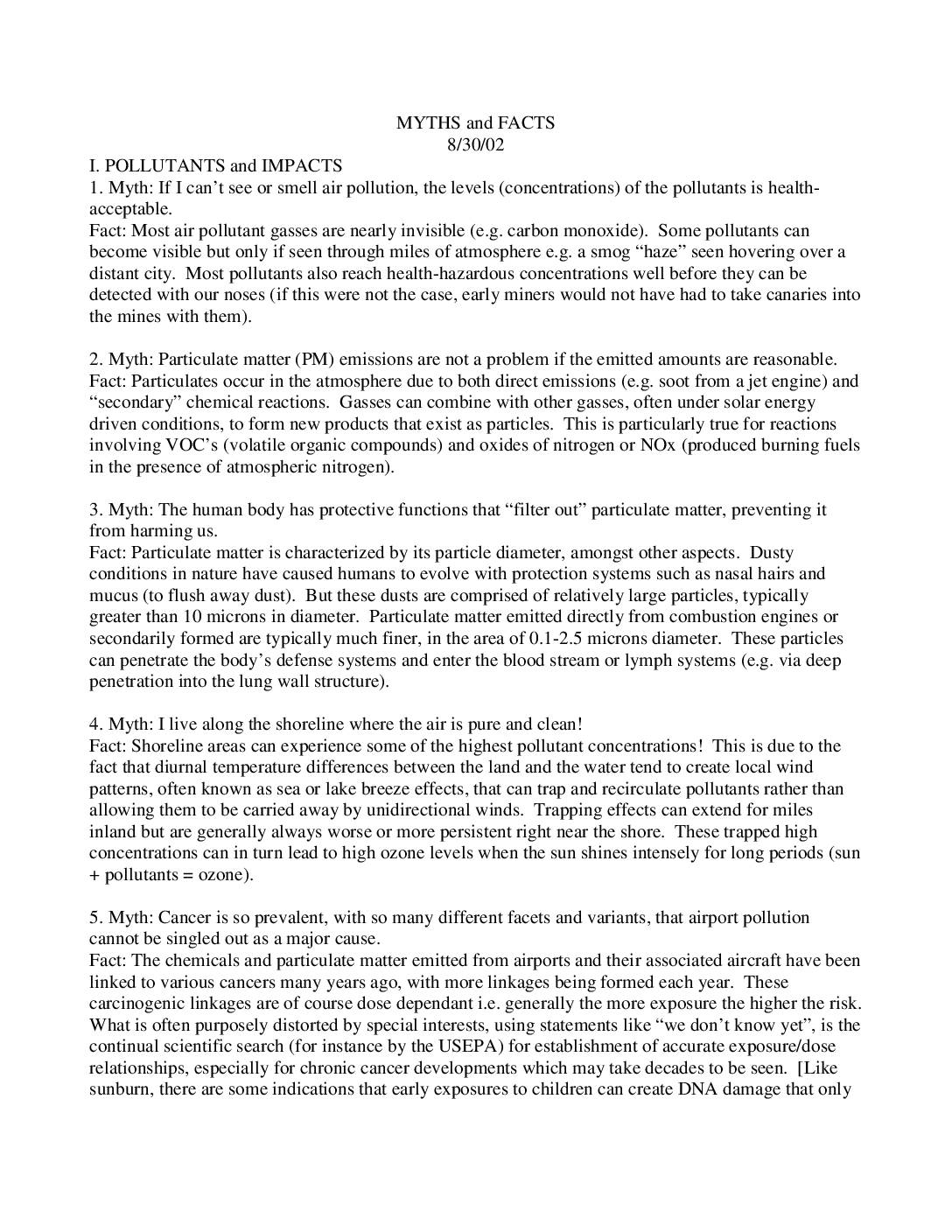
Myths and Facts: Airport Pollutants, Aircraft Emissions, and Pollution Simulators
Myths and Facts document dated August 30, 2002 addressing airport and aircraft air quality issues. Covers particulate matter (PM2.5, PM10), VOCs, NOx, ozone, carbon monoxide, and carcinogens from airport emissions. Discusses ICAO aircraft engine emissions certification standards, the ‘smoke number’ standard, EDMS (Emissions Dispersion Modeling System), ISC3 and AERMOD dispersion models, FAA regulatory authority over -
2002-08-30
Myths and Facts: Airport Pollutants, Aircraft Emissions, and Pollution Simulators
This document debunks common myths about airport air pollution, noise, and emissions regulation, explaining that invisible pollutants can still reach dangerous levels, that fine particles from jet engines bypass the body's natural defenses, and that shoreline communities like those near Sea-Tac may face higher pollution concentrations due to wind patterns. It also reveals that neither the EPA nor FAA effectively regulates aircraft emissions or noise in ways that truly protect nearby residents, as regulatory authority rests with bodies like ICAO that are dominated by airline and airport interests. Additionally, the document highlights that official pollution modeling tools may significantly underestimate actual pollution levels, and that so-called 'noise abatement' programs often fail to reduce noise at all. -
 2001-07-01
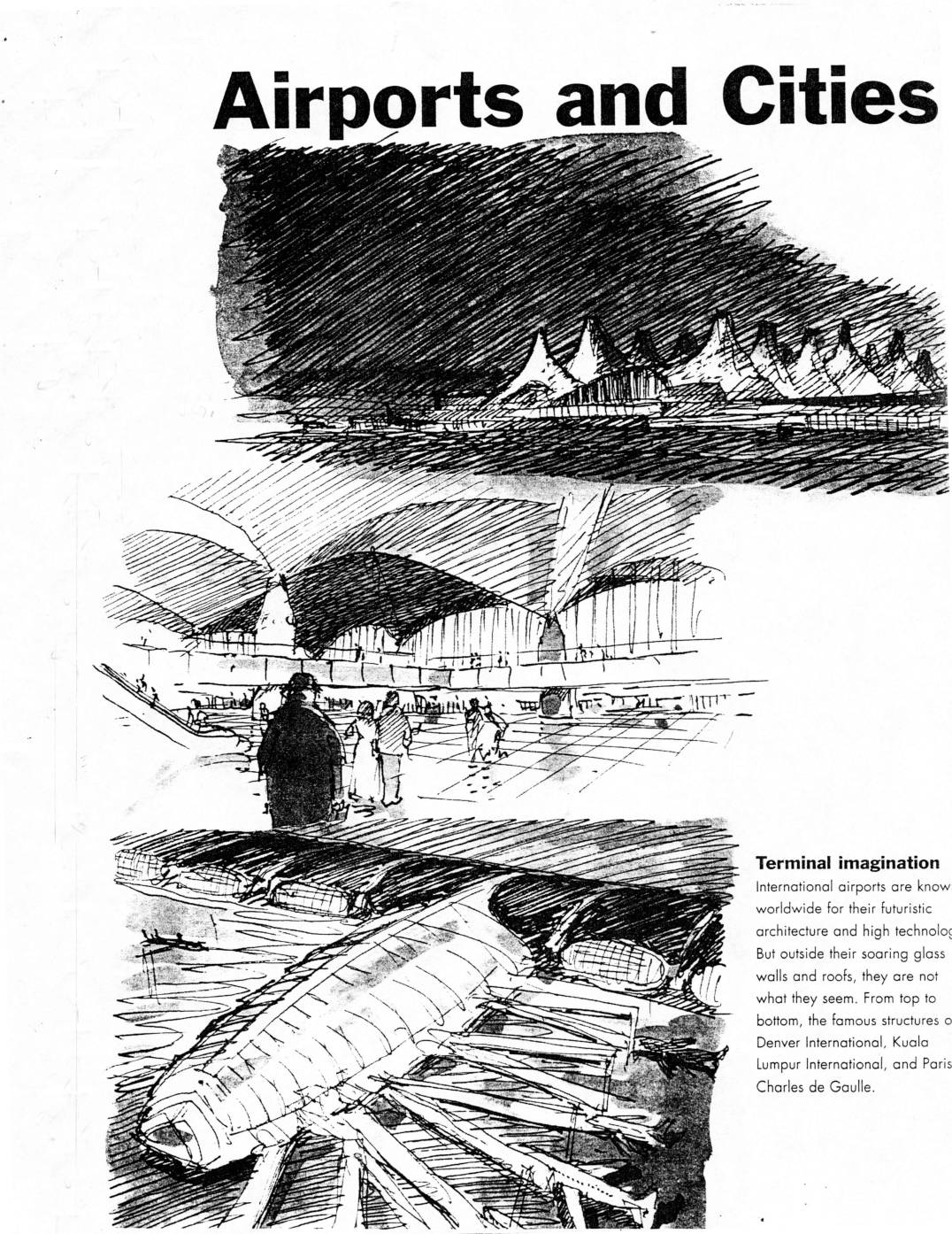
Airports and cities: Can they coexist?
This 2001 World Watch article by Ed Ayres examines the growing conflict between expanding airports and the cities surrounding them, highlighting the serious health, environmental, and noise impacts on nearby residents. It challenges the conventional mindset of simply building more airport capacity, noting that a 747 takeoff produces as much air pollution in two minutes as 3,000 cars, and that people living near airports face higher rates of illness and psychological harm. The article explores innovative design alternatives, such as inclined runways and energy-recovering landing systems, as more sustainable solutions to meeting rising air travel demand. -
 2000-09-01
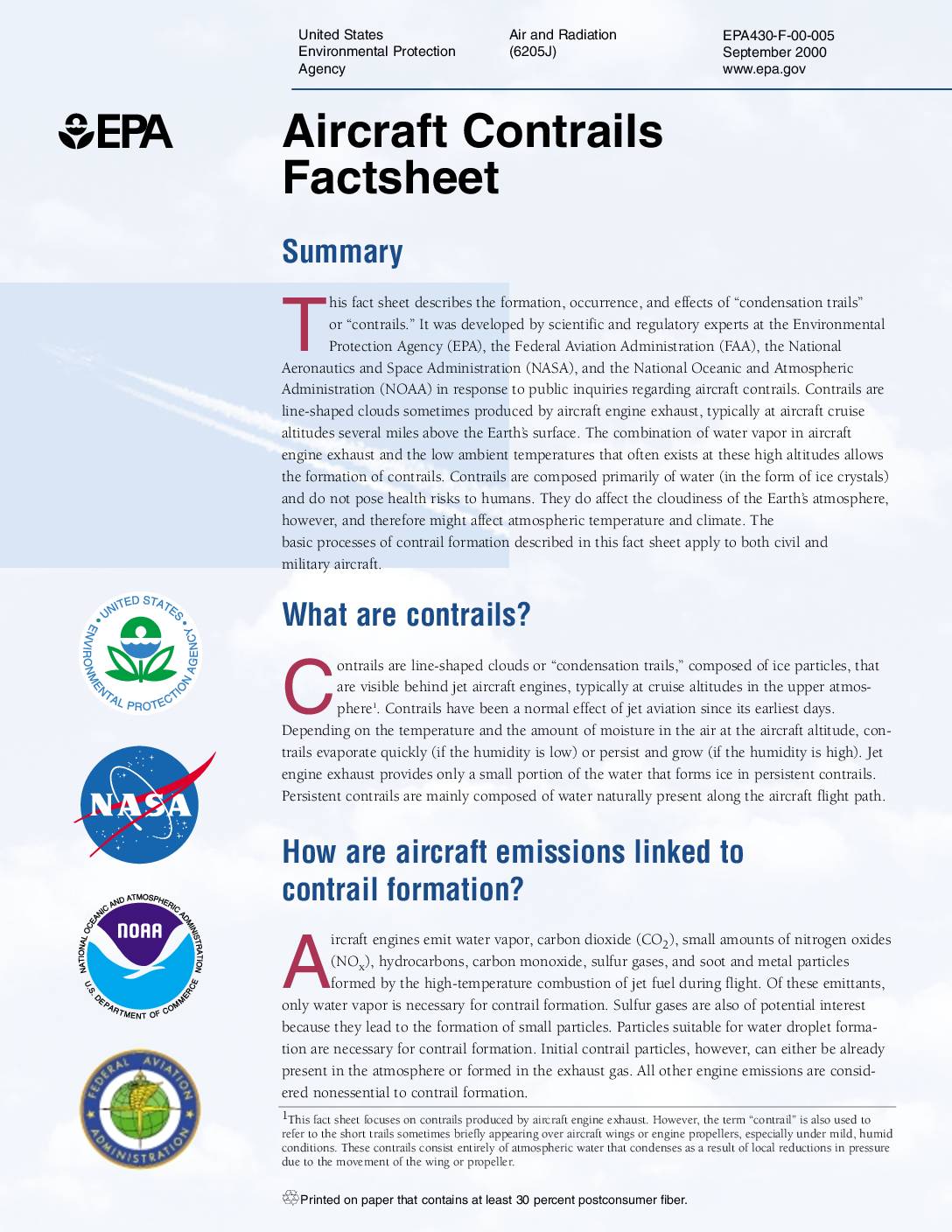
Aircraft contrails factsheet
This EPA fact sheet explains that aircraft contrails are line-shaped clouds made of ice crystals formed when water vapor in jet engine exhaust mixes with cold air at high altitudes. Contrails are composed primarily of water and do not pose direct health risks, but persistent contrails can spread into cirrus cloud cover and may influence the Earth's climate by affecting atmospheric cloudiness. Scientists estimate that persistent contrails cover about 0.1 percent of the Earth's surface on average, with the highest concentrations occurring over heavily trafficked air corridors like Europe and the United States. -
 1999-12-01
Addressing Community Health Concerns Around Sea-Tac Airport: Second Report on the Work Plan Proposed in August 1998
This December 1999 report from the Washington State Department of Health and Public Health – Seattle & King County examines community health concerns in neighborhoods surrounding SeaTac International Airport. It investigates whether cancer rates, particularly glioblastoma (a brain tumor) and breast cancer, are elevated near the airport, and explores potential links to jet engine exhaust emissions. The report also addresses respiratory health issues in local schools and outlines efforts to monitor or model the path of aircraft emissions over the surrounding communities. -
 1999-12-01
Addressing community health concerns around Sea-Tac Airport: Second report on the work plan proposed in August 1998
This December 1999 report from the Washington State Department of Health investigates community health concerns near Seattle-Tacoma (SeaTac) International Airport, focusing on whether cancer rates—particularly glioblastoma and breast cancer—are elevated in surrounding neighborhoods. The report examines potential links between jet engine exhaust emissions and health outcomes, reviews air quality studies, and assesses respiratory disease risks, especially for schools located under flight paths. It was prepared collaboratively by state and county public health officials alongside community representatives. -
 1999-08-14
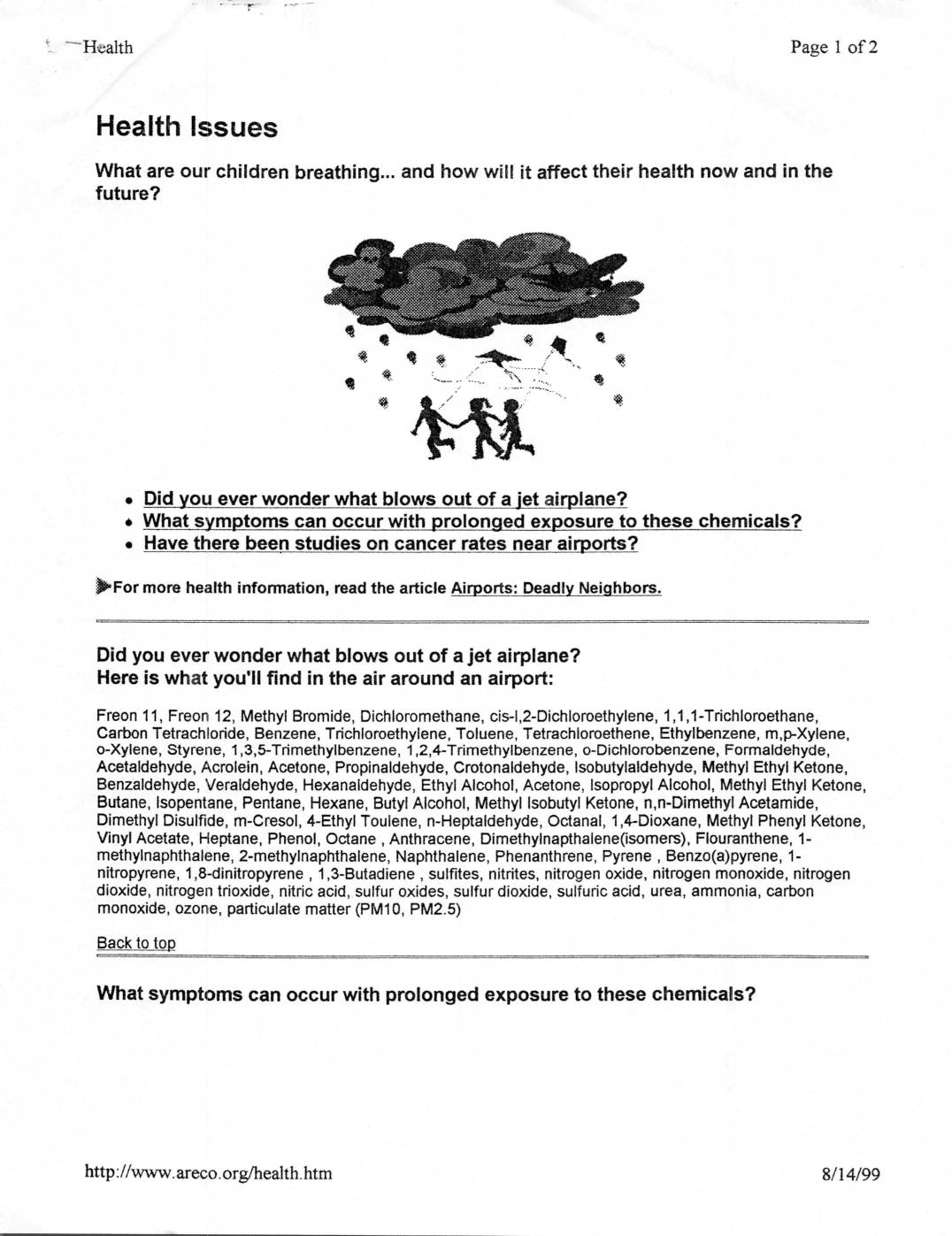
Health issues: What are our children breathing… and how will it affect their health now and in the future?
This 1999 health advocacy article raises concerns about air quality near airports, listing dozens of toxic chemicals found in jet exhaust — including benzene, formaldehyde, and 1,3-butadiene — and the serious health conditions linked to prolonged exposure, such as cancer, asthma, and lung disease. It references a 1993 EPA study of Midway Airport finding cancer risks more than 400 times the allowable federal limit, and cites Washington State health data showing elevated cancer rates and doubled rates of childhood respiratory disease near Seattle-Tacoma Airport and Boeing Field. The document was published by areco.org as part of a broader campaign highlighting the public health impacts of airport emissions on surrounding communities. -
 1995-06-28
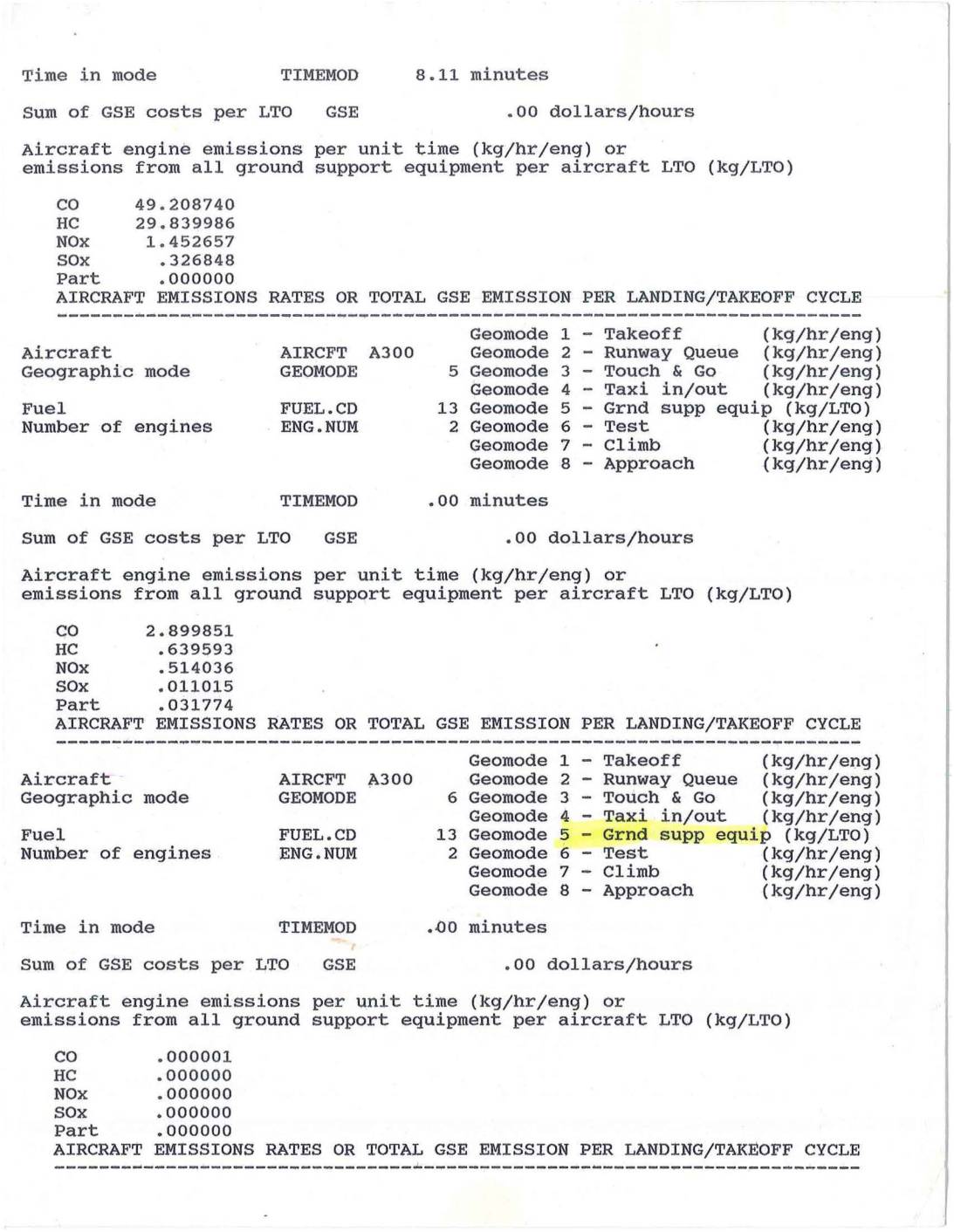
Aircraft Emissions Rates for Landing/Takeoff Cycles – A300, 757, and 737 Aircraft
Technical report showing aircraft engine emissions data for different aircraft types (A300, 757, 737) across various operational modes including takeoff, taxi, climb, and approach phases. Contains detailed emissions measurements for CO, HC, NOx, SOx, and particulates in kg/hr/engine units. -
 1970-10-01
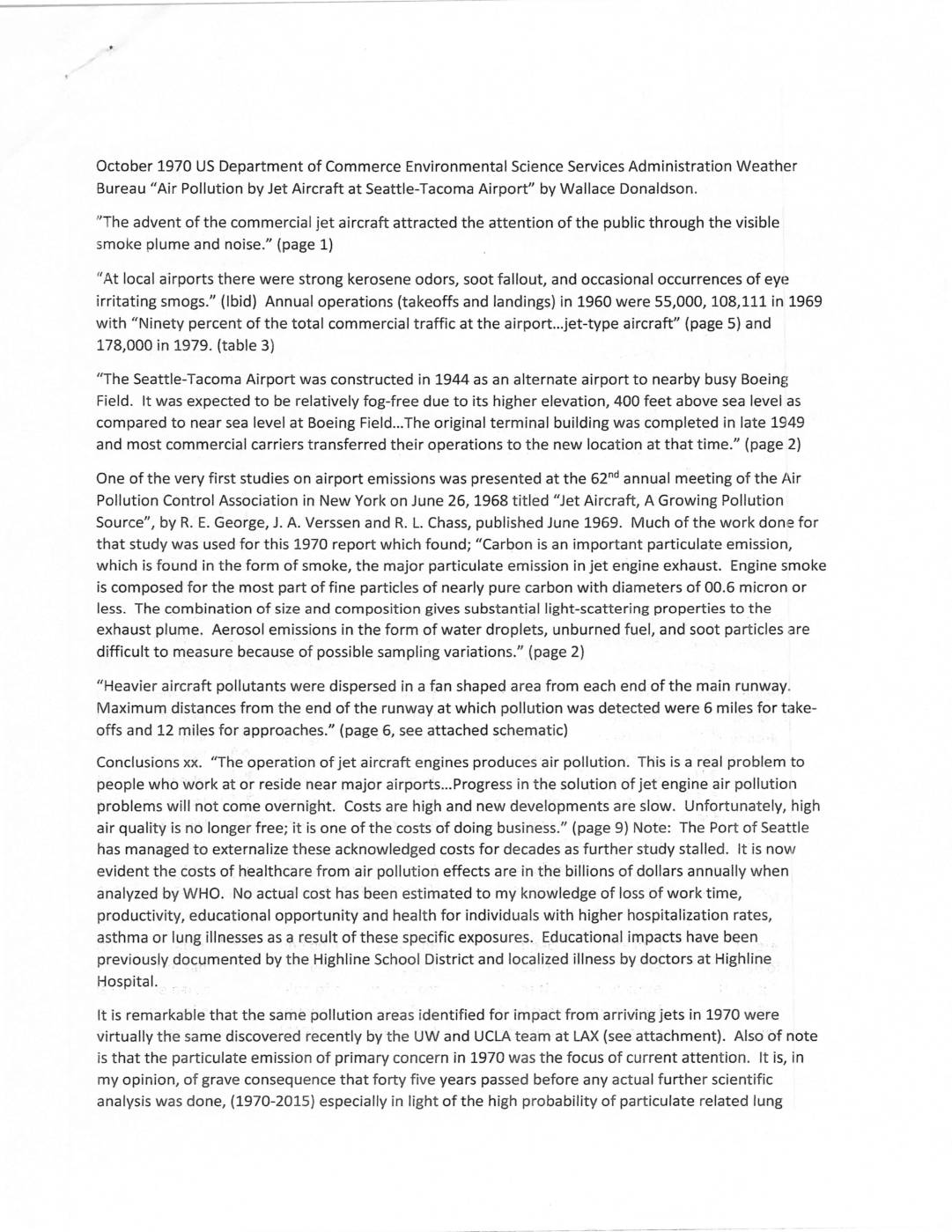
Air pollution by jet aircraft at Seattle-Tacoma Airport: Historical summary and commentary
This document traces decades of air pollution concerns around Seattle-Tacoma International Airport, drawing on studies from 1970 through 1991 that documented harmful emissions including carbon particles, hydrocarbons, and nitrogen oxides affecting residents living near the airport. It highlights how early research identified health risks and pollution spread up to 12 miles from the runways, yet meaningful follow-up scientific study and regulatory action were largely delayed for 45 years. Community groups, lawsuits, and independent monitoring repeatedly confirmed that nearby residents faced noise, kerosene odors, soot, and air quality violations, while the Port of Seattle externalized the associated public health costs.