TagAuburn Wetland(82)
-
 2000-11-27
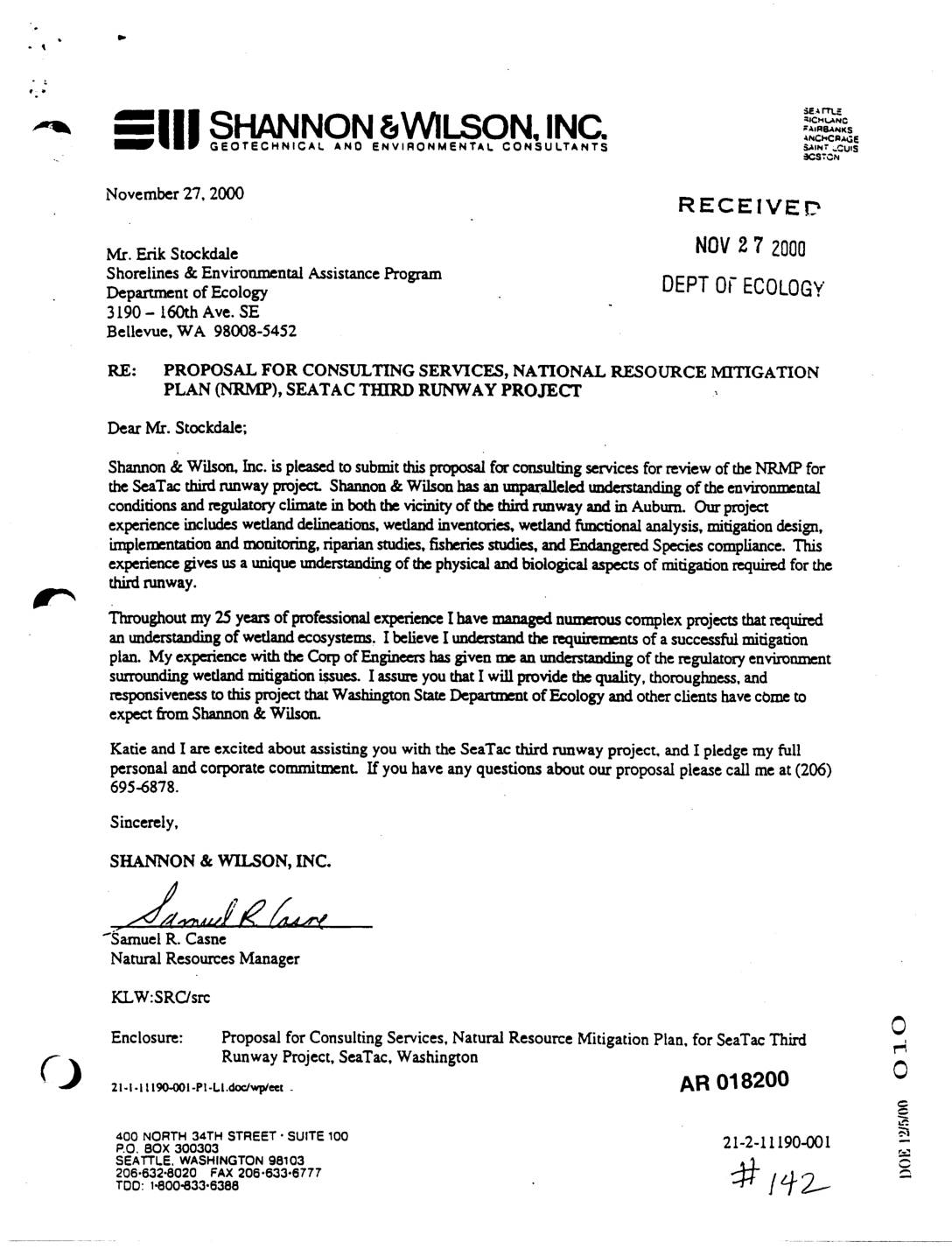
EXH AR018200: Shannon & Wilson Proposal for Consulting Services — Natural Resource Mitigation Plan, Sea-Tac Third Runway Project
Letter dated November 27, 2000 from Samuel R. Casne, Natural Resources Manager at Shannon & Wilson, Inc., to Erik Stockdale of the Washington State Department of Ecology (Shorelines & Environmental Assistance Program) in Bellevue, WA, proposing consulting services for review of the Natural Resource Mitigation Plan (NRMP) for the SeaTac Third Runway Project. The proposal, -
 2000-11-27
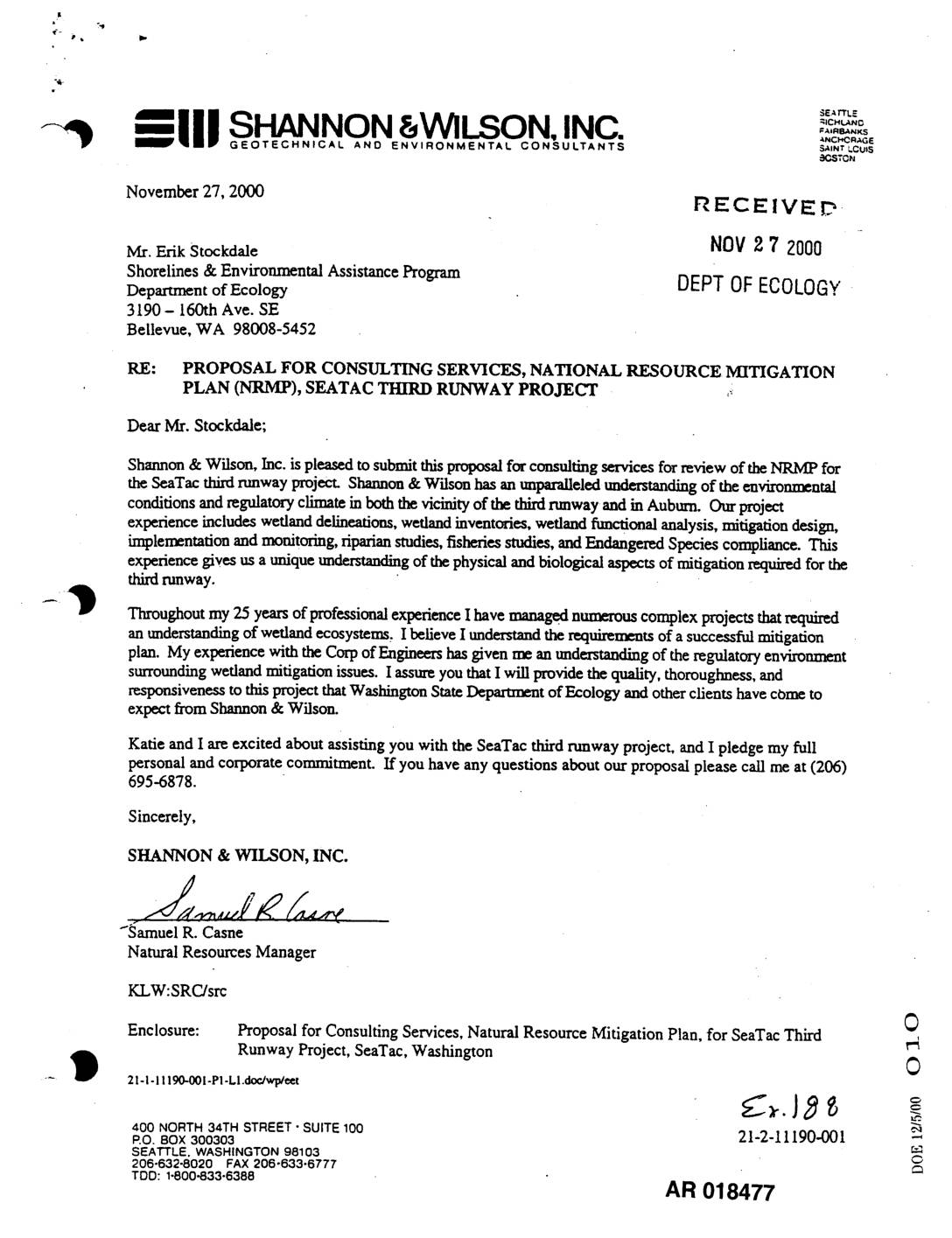
EXH AR018477: Shannon & Wilson Proposal for Consulting Services — Natural Resource Mitigation Plan (NRMP), Sea-Tac Third Runway Project
Letter and proposal from Samuel R. Casne, Natural Resources Manager at Shannon & Wilson, Inc., submitted to Erik Stockdale of Washington State Department of Ecology (Shorelines & Environmental Assistance Program) on November 27, 2000, proposing consulting services for third-party review of the Natural Resource Mitigation Plan (NRMP) for the SeaTac Third Runway Project. Document AR018477 -
 2000-10-30
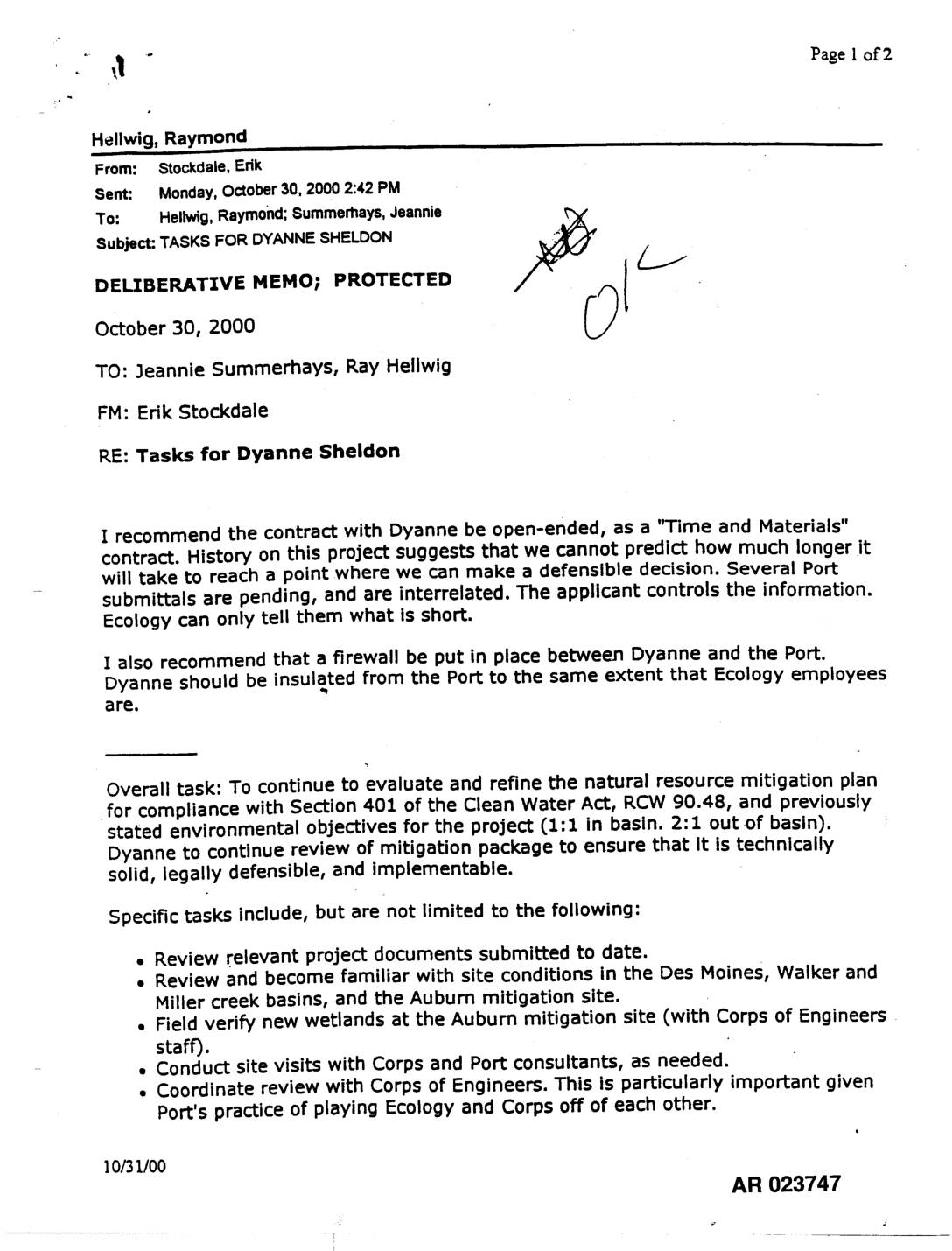
EXH AR023747: Ecology Internal Deliberative Memo — Natural Resource Mitigation Plan Review Tasks, Dyanne Sheldon
A October 30, 2000 internal memo from Erik Stockdale of Washington State Department of Ecology outlines recommended tasks for contractor Dyanne Sheldon, who was hired to evaluate the natural resource mitigation plan for a Port project near Sea-Tac Airport. The memo recommends an open-ended 'Time and Materials' contract and calls for a firewall between Sheldon and the Port, citing concerns about the Port playing Ecology and the Army Corps of Engineers against each other. Key tasks include reviewing wetland mitigation plans for the Des Moines, Walker, and Miller creek basins, evaluating stormwater consistency, and drafting Section 401 Clean Water Act permit conditions. -
 2000-10-30
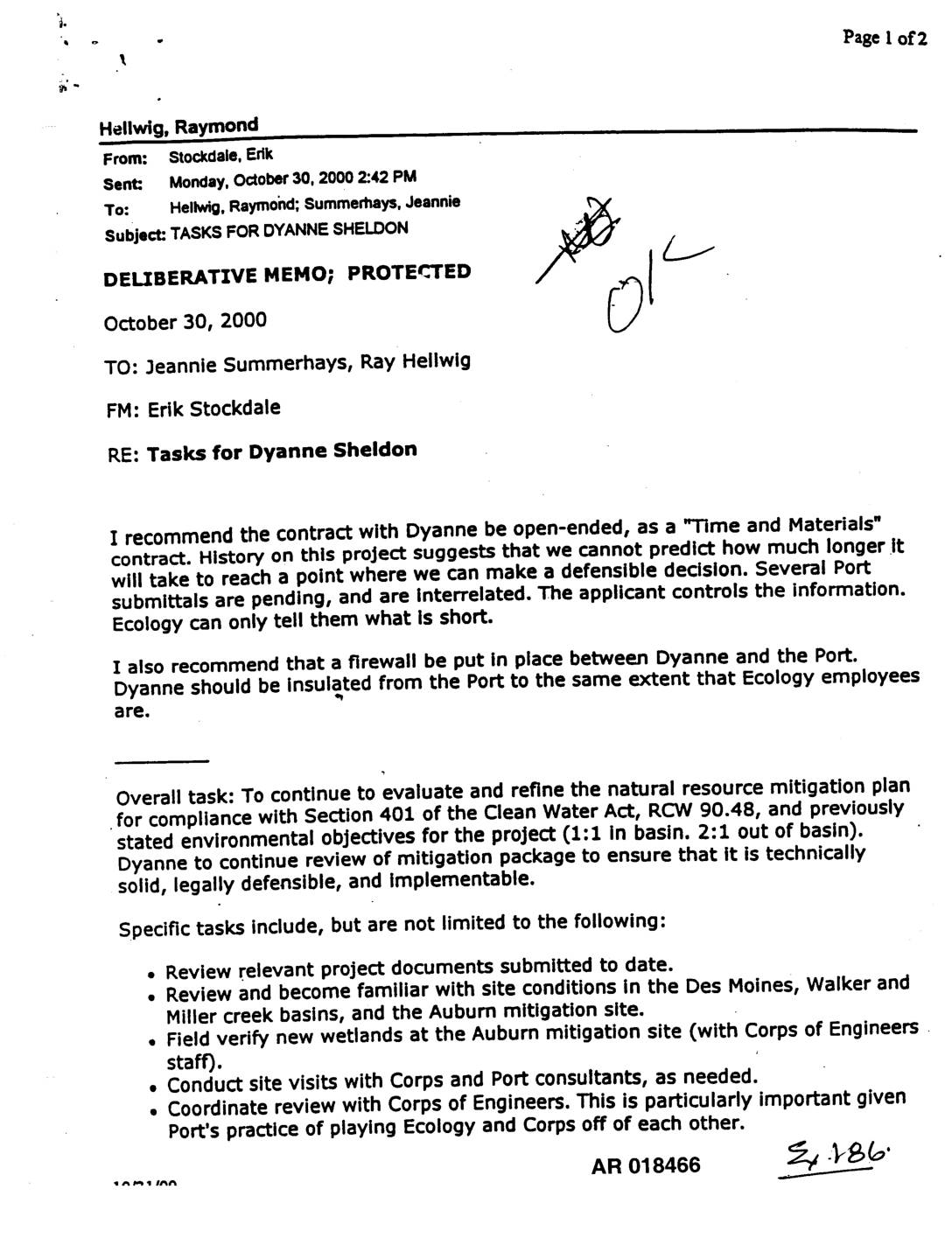
EXH AR018466: Tasks for Dyanne Sheldon — Ecology Internal Deliberative Memo
Deliberative memo dated October 30, 2000, from Erik Stockdale (Ecology) to Jeannie Summerhays and Ray Hellwig regarding tasks for contractor Dyanne Sheldon. Recommends open-ended ‘Time and Materials’ contract and a firewall between Sheldon and Port Of Seattle. Tasks include evaluating natural resource mitigation plan (NRMP) for compliance with Section 401 of the Clean Water Act -
 2000-09-01
EXH AR023005: ACC Analysis Proposed Mitigation Ratios STIA Third Runway Wetland Impacts
A September 2000 report by Azous Environmental Sciences, commissioned by the Airport Communities Coalition, critically analyzes the Port of Seattle's wetland mitigation plan for the SeaTac Third Runway construction project. The report identifies numerous errors in wetland acreage accounting, inadequate mitigation ratios, and flaws in the proposed compensatory measures, including out-of-basin mitigation that fails to replace lost wetland functions in the affected Miller, Walker, and Des Moines Creek watersheds. The author concludes that the Port's plan falls short of Washington State Department of Ecology standards and the regulatory goal of no net loss of wetland functions. -
 2000-08-16
EXH AR022982: ACC Review Wetlands Mitigation Plan STIA Third Runway Construction
A wetland scientist hired by the Airport Communities Coalition reviewed the Port of Seattle's proposed wetland mitigation plan for the SeaTac Third Runway construction and concluded it was wholly inadequate. The report argues that the planned out-of-basin mitigation at an Auburn site fails to replace the wetland functions lost in the Walker Creek, Des Moines Creek, and Miller Creek watersheds, and that placing mitigation in a different drainage basin cannot scientifically compensate for local losses under Washington State environmental law. The reviewer also warns that the Auburn mitigation site faces multiple risks and is unlikely to be sustainable long-term. -
 2000-08-11
Exhibit 2066: Port Of Seattle Facsimile — Auburn Wetland Shoreline Permit Exemption Letter
Facsimile cover sheet from Elizabeth Leavitt, Manager, Aviation Environmental Programs, Port Of Seattle, transmitting a 7-page package to Tom Luster (Ecology) and Eric Stockdale (NWRO) regarding the Auburn HPAD and shoreline exemptions. Includes August 9, 2000 letter from City of Auburn Planning Director Paul Krauss to Elizabeth Leavitt and Robert J. Fritzen (Department of Ecology, -
 2000-05-23
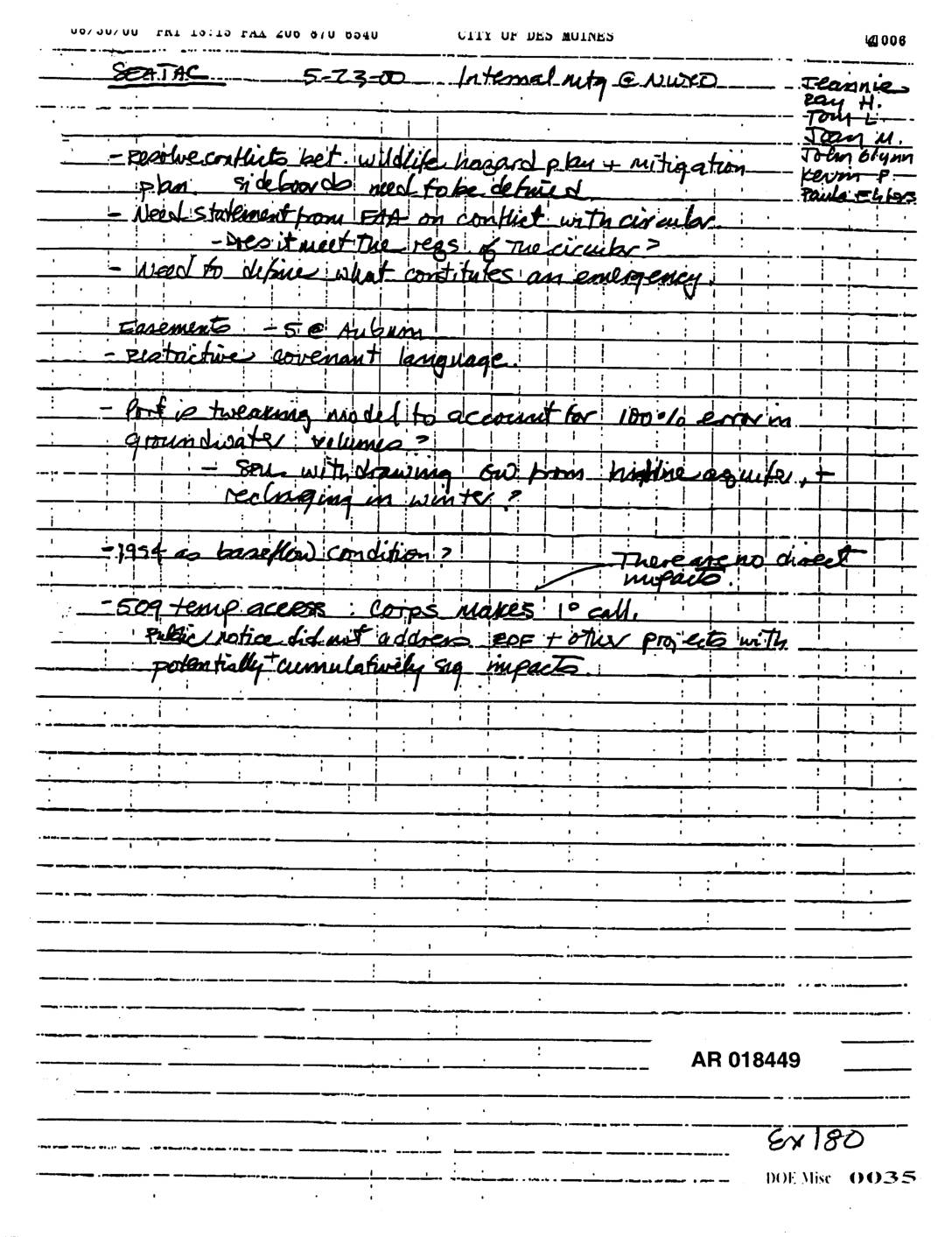
EXH AR018449: Sea-Tac Internal Meeting Notes — Wildlife Hazard Plan, Easements, Groundwater Model, Cumulative Impacts
Handwritten notes from a SeaTac internal meeting on 5-23-00 (AR 018449, Exhibit 180), attended by Jeannie, Ray H., Tom L., Joan M., John Glynn, Kevin P., and Paula Chlos. Topics include resolving conflicts between wildlife hazard plan and mitigation plan, sideboard definitions needed; need for ETA statement on conflict with circular and whether it meets -
 2000-05-05
EXH AR044544: SEPA Addendum — Auburn Wetland Mitigation Project, Port Of Seattle Master Plan Update, STIA
Port Of Seattle SEPA Addendum (POS SEPA No. 00-07) dated May 5, 2000, to the Final Supplemental Environmental Impact Statement for the Proposed Master Plan Update Development Actions at Seattle-Tacoma International Airport (STIA), issued jointly by FAA and Port Of Seattle in May 1997. Documents the Auburn Wetland Mitigation Project on an approximately 67-acre parcel -
 2000-03-08
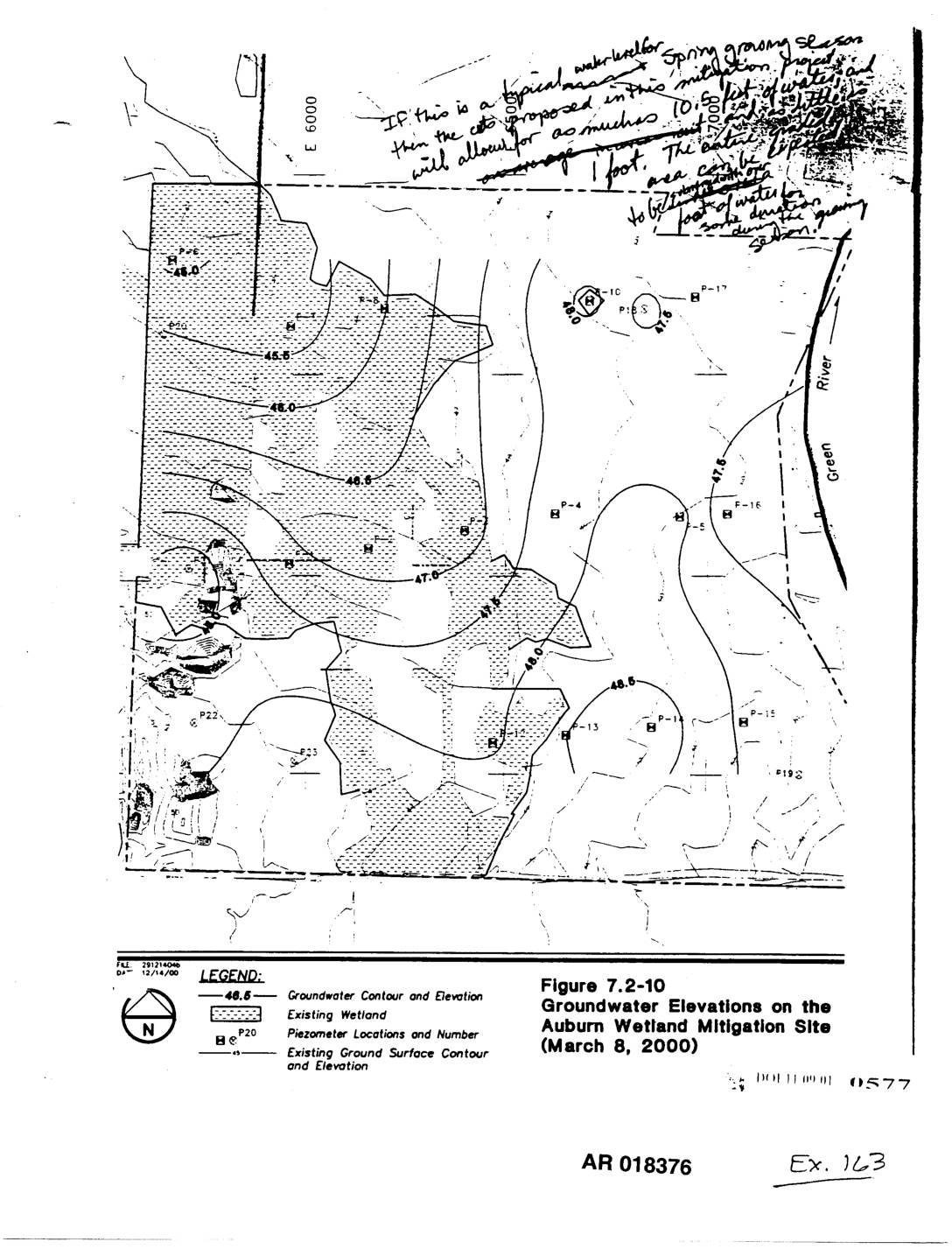
EXH AR018376: Groundwater Elevations on the Auburn Wetland Mitigation Site (March 8, 2000)
Figure 7.2-10 showing groundwater contour elevations on the Auburn Wetland Mitigation Site as of March 8, 2000. Map displays piezometer locations (P-1 through P-23), groundwater contour lines with elevations ranging from approximately 45.5 to 48.5 feet, existing wetland areas, and existing ground surface contours near the Green River. Handwritten annotations reference spring groundwater levels, 0.15-foot