TagArmy Corp of Engineers(124)
-
 1998-09-02
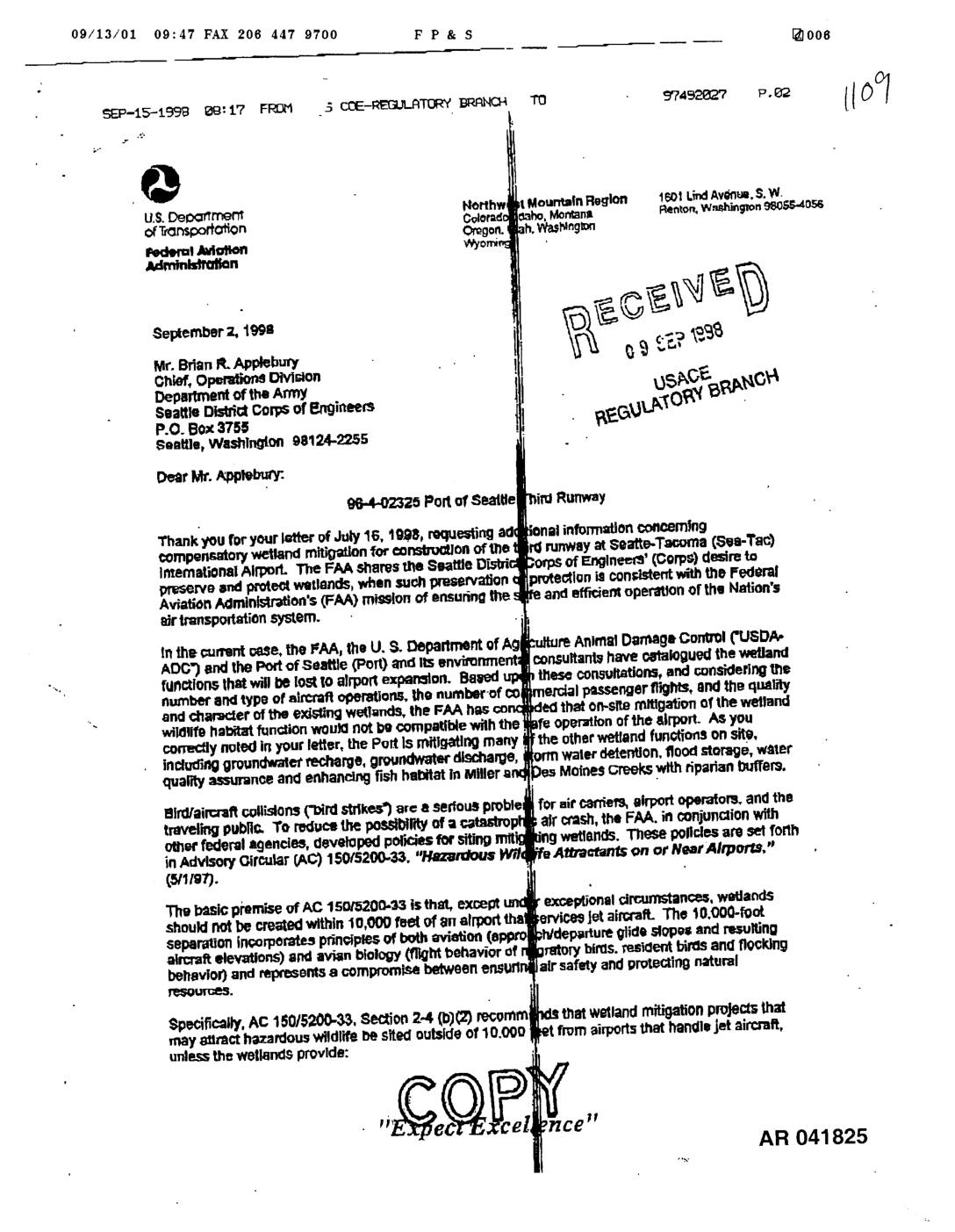
EXH AR041825: FAA Letter to U.S. Army Corps of Engineers Regarding Port Of Seattle Third Runway Wetland Mitigation
FAA Northwest Mountain Region letter dated September 2, 1998, from FAA to Brian R. Applebury, Chief Operations Division, Seattle District Corps of Engineers, regarding permit application 96-4-02325 for Port Of Seattle Third Runway at Seattle-Tacoma International Airport. Letter addresses compensatory wetland mitigation, bird/aircraft strike hazard, Advisory Circular AC 150/5200-33 ‘Hazardous Wildlife Attractants on or Near -
 1998-04-20
EXH AR035981: Comment Binder B — Letters to the Corps and Ecology During Second Public Comment Period (April–April 1998)
Port of Seattle Comment Binder B for Seattle-Tacoma International Airport Master Plan Update, containing letters submitted to the U.S. Army Corps of Engineers during the second public comment period (April 9–20, 1998) and comments to Washington State Department of Ecology during the entire public comment period (December 19, 1997–April 29, 1998). Includes a letter dated -
 1998-04-15
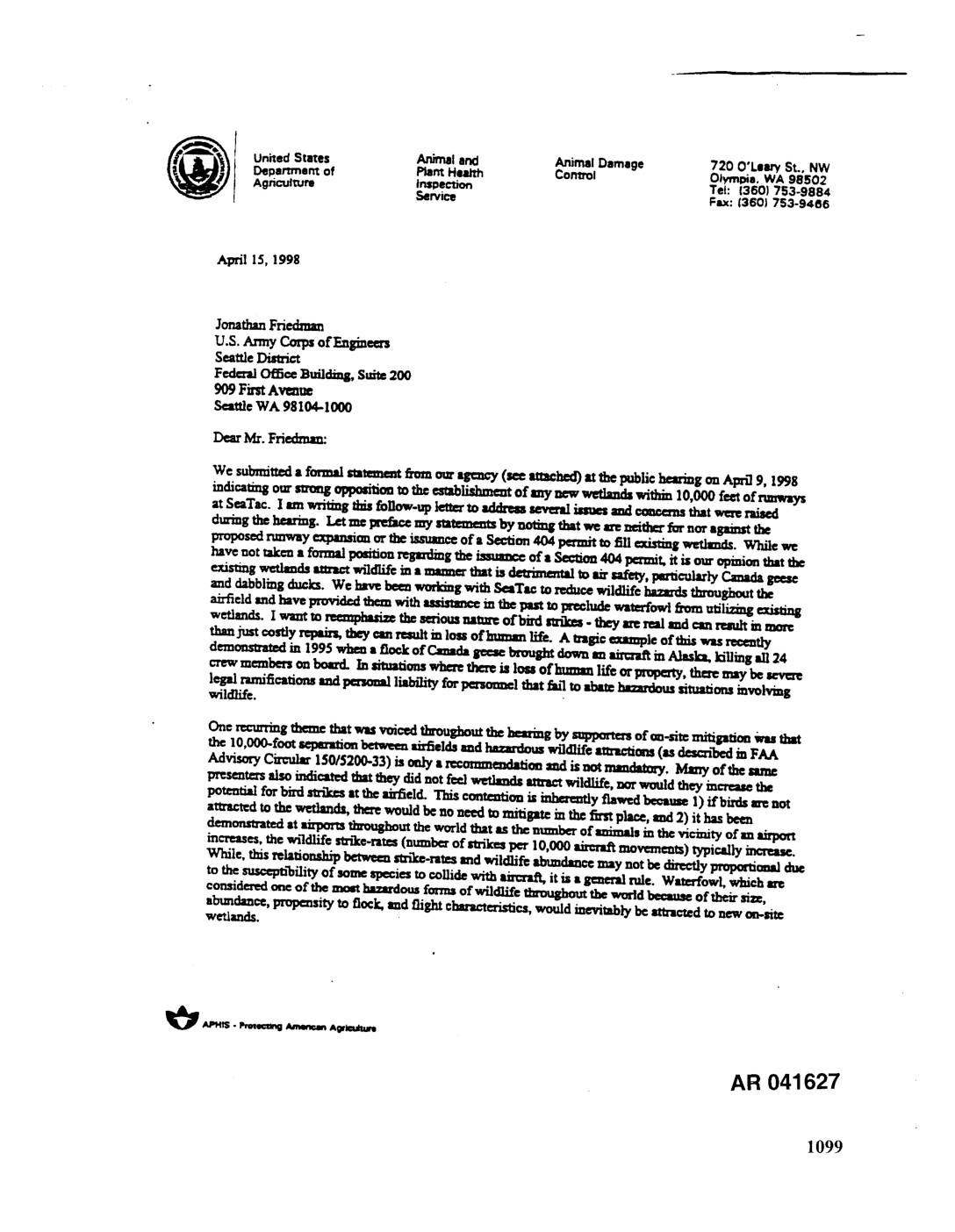
EXH AR041627: USDA APHIS Animal Damage Control Letter to U.S. Army Corps of Engineers Opposing New Wetlands Within 10,000 Feet of Sea-Tac Airport Runways
Letter dated April 15, 1998 from J. Gary Oldenburg, USDA Animal and Plant Health Inspection Service (APHIS) Animal Damage Control, State Director WA/AK/HI/Pacific Islands, to Jonathan Friedman, U.S. Army Corps of Engineers Seattle District, follow-up to public hearing of April 9, 1998. Strongly opposes establishment of any new wetlands within 10,000 feet of runways at -
 1998-04-09
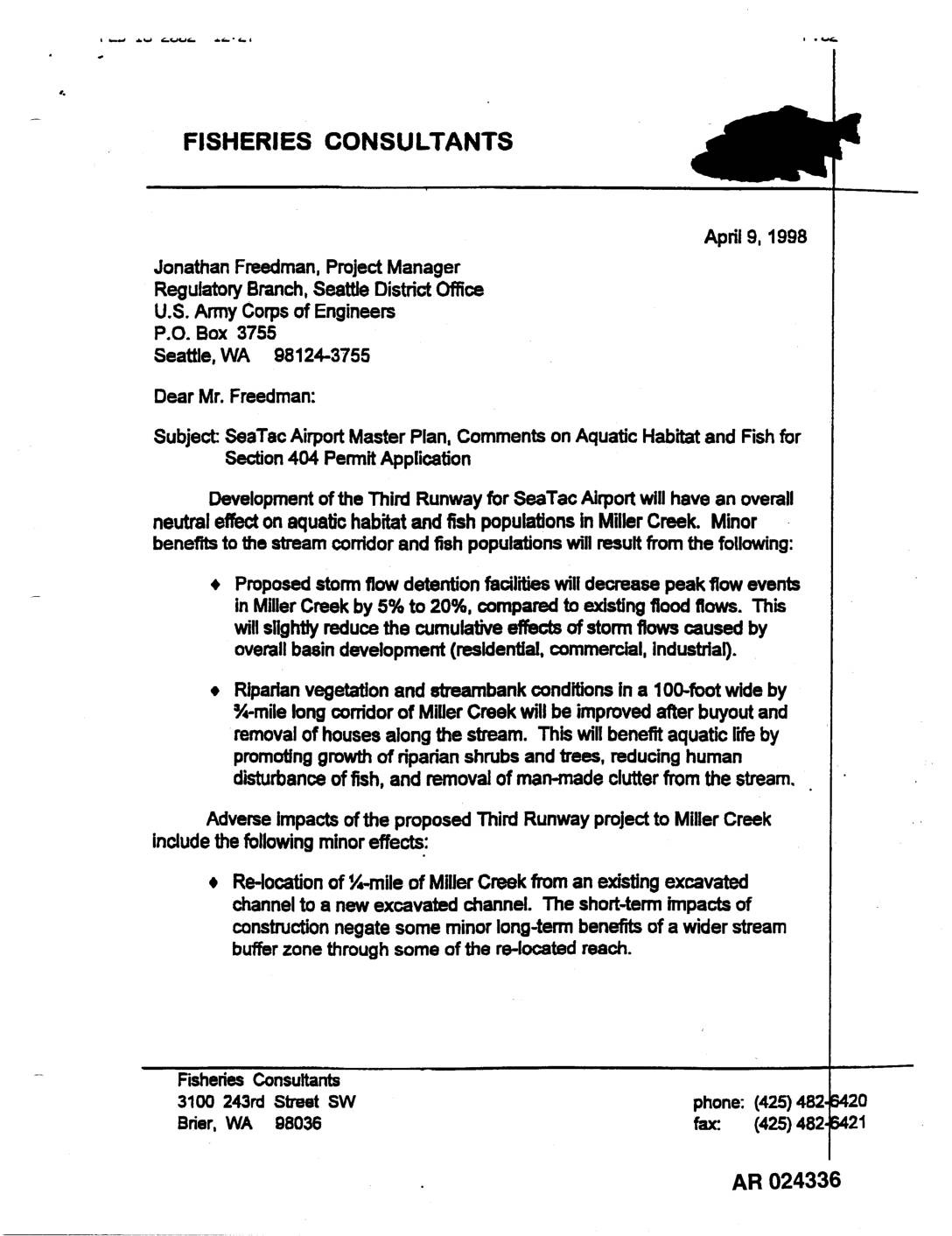
EXH AR024336: Fisheries Consultants Letter to Army Corps – STIA Third Runway Aquatic Habitat & Fish Impacts, Miller Creek
A 1998 letter from Fisheries Consultants to the U.S. Army Corps of Engineers concludes that SeaTac Airport's proposed Third Runway will have an overall neutral effect on aquatic habitat and fish populations in Miller Creek. Minor benefits are expected from new storm flow detention facilities, which will reduce peak flood flows by 5–20%, and from a planned 100-foot-wide stream buffer created through residential buyouts along the creek. Adverse impacts are limited to the temporary disruption of a quarter-mile creek relocation and an approximate 8% reduction in late-summer low stream flows due to increased paved surfaces and wetland fill. -
 1998-04-09
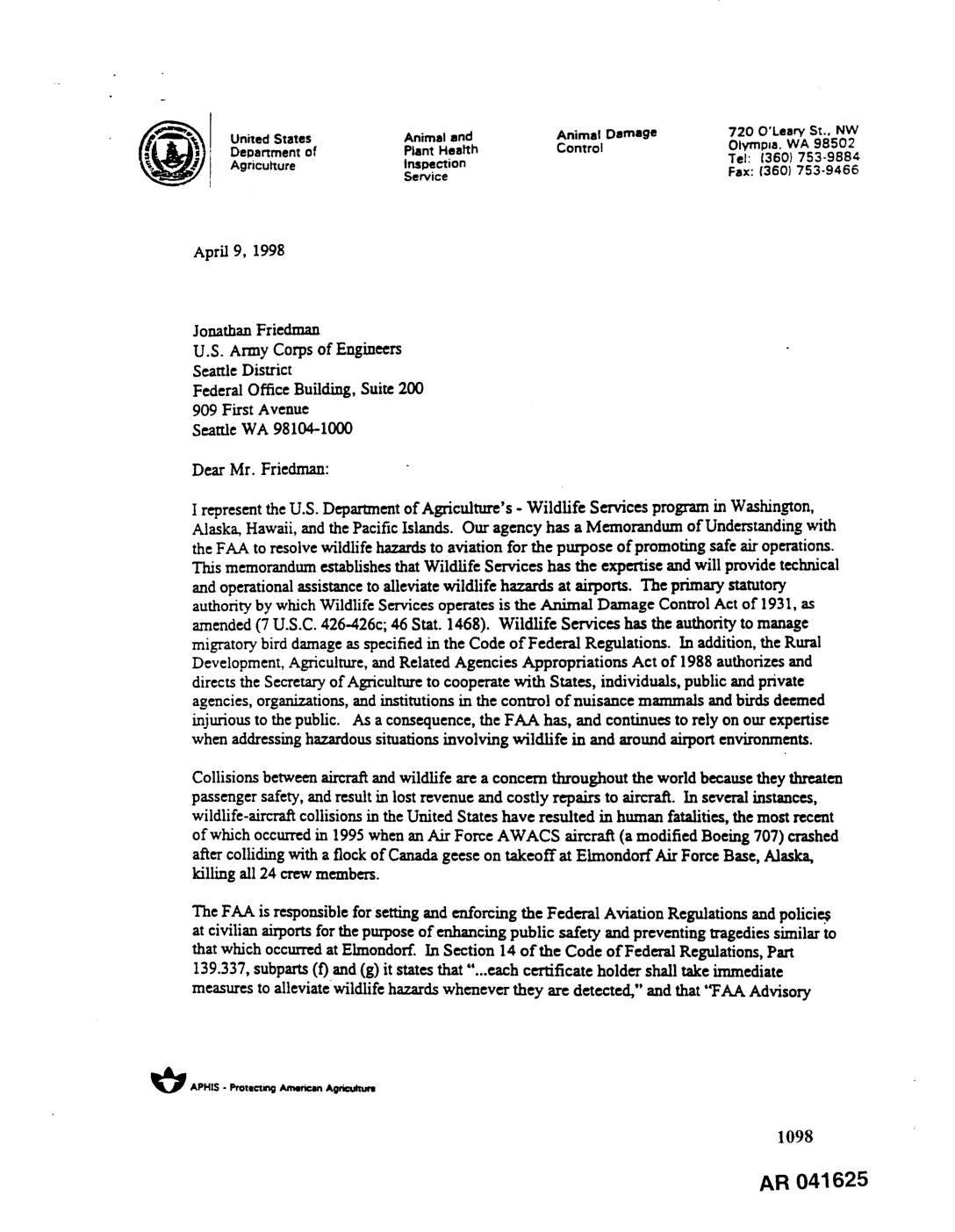
EXH AR041625: Letter from USDA Wildlife Services to U.S. Army Corps of Engineers Regarding Wetland Mitigation at Sea-Tac Airport
April 9, 1998 letter from Gary Oldenburg, USDA Animal and Plant Health Inspection Service (APHIS) Wildlife Services State Director for WA/AK/HI/Pacific Islands, to Jonathan Friedman, U.S. Army Corps of Engineers Seattle District, regarding wildlife hazards at Sea-Tac Airport. Argues that wetland mitigation measures at SeaTac Airport should be conducted off-site, citing FAA Advisory Circular 150/5200-33 -
 1998-04-09
EXH AR035307: Comment Binder A — Third Runway Corps/Ecology Public Comments, December 1997–April 1998
Comment Binder A compiled by Port of Seattle for Sea-Tac Airport (Seattle-Tacoma International Airport) third runway project, containing letters submitted to the U.S. Army Corps of Engineers during the initial comment period (December 19, 1997 to January 20, 1998) and comments from the joint Corps/Ecology public hearing held April 9, 1998. Includes a January 15, -
 1997-12-19
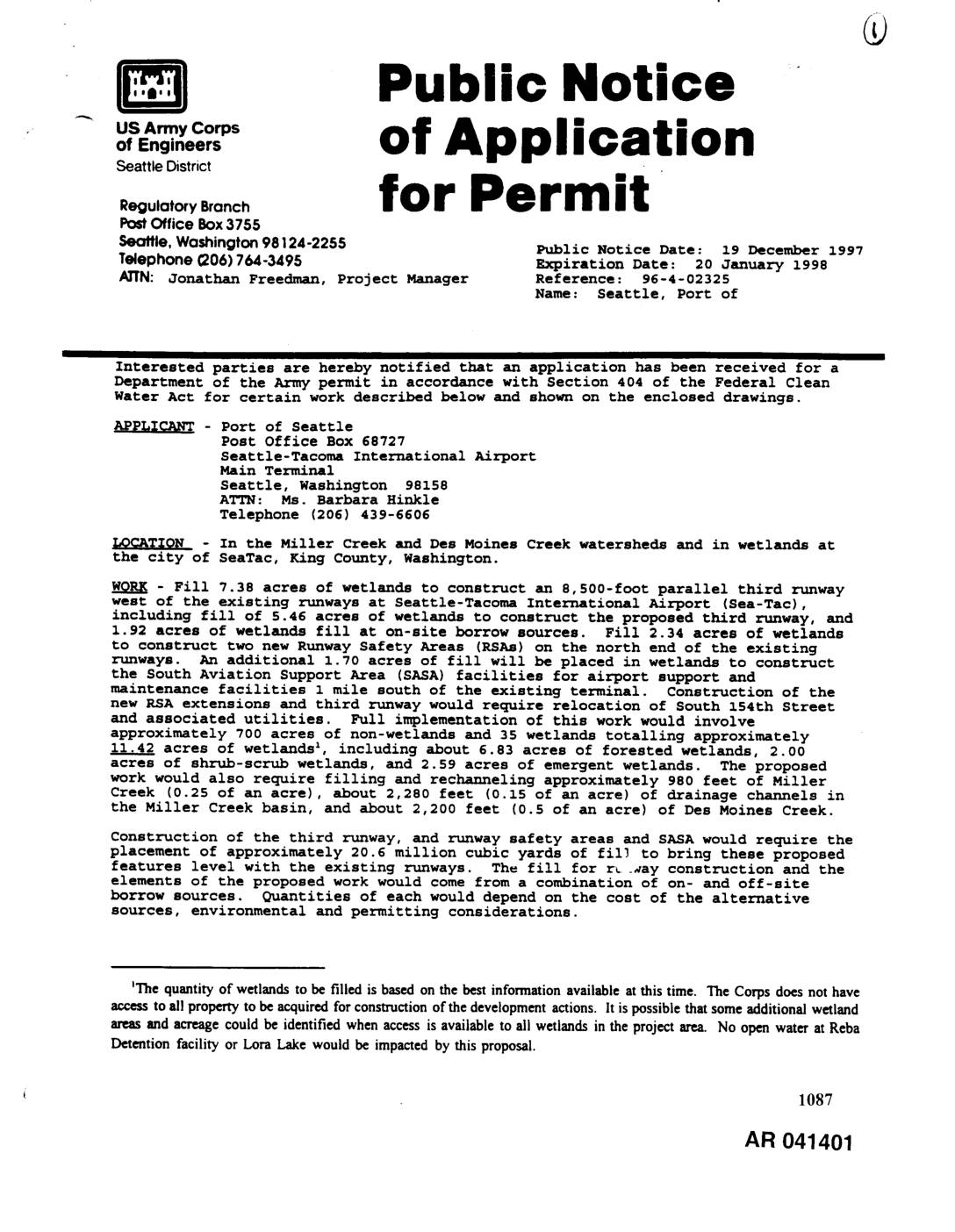
EXH AR041401: US Army Corps of Engineers Public Notice of Application for Permit — Port Of Seattle Third Runway, Sea-Tac Airport
US Army Corps of Engineers Seattle District public notice of permit application 96-4-02325, filed by Port Of Seattle (contact: Barbara Hinkle, (206) 439-6606) under Section 404 of the Federal Clean Water Act. Proposes filling 7.38 acres of wetlands to construct an 8,500-foot parallel third runway at Seattle-Tacoma International Airport (Sea-Tac), plus 2.34 acres for Runway -
 1997-09-12
EXH AR023208: Sediment Characterization Hamm Creek Restoration Project Duwamish Turning Basin
This 1997 report by Science Applications International Corporation characterizes sediment quality in the Duwamish Turning Basin near Seattle, Washington, as part of the Hamm Creek Restoration Project. It presents results from chemical testing, biological bioassays, and sediment sampling to evaluate contaminant levels and compare them against sediment management standards. The study was prepared for the U.S. Army Corps of Engineers, Seattle District. -
 1996-12-18
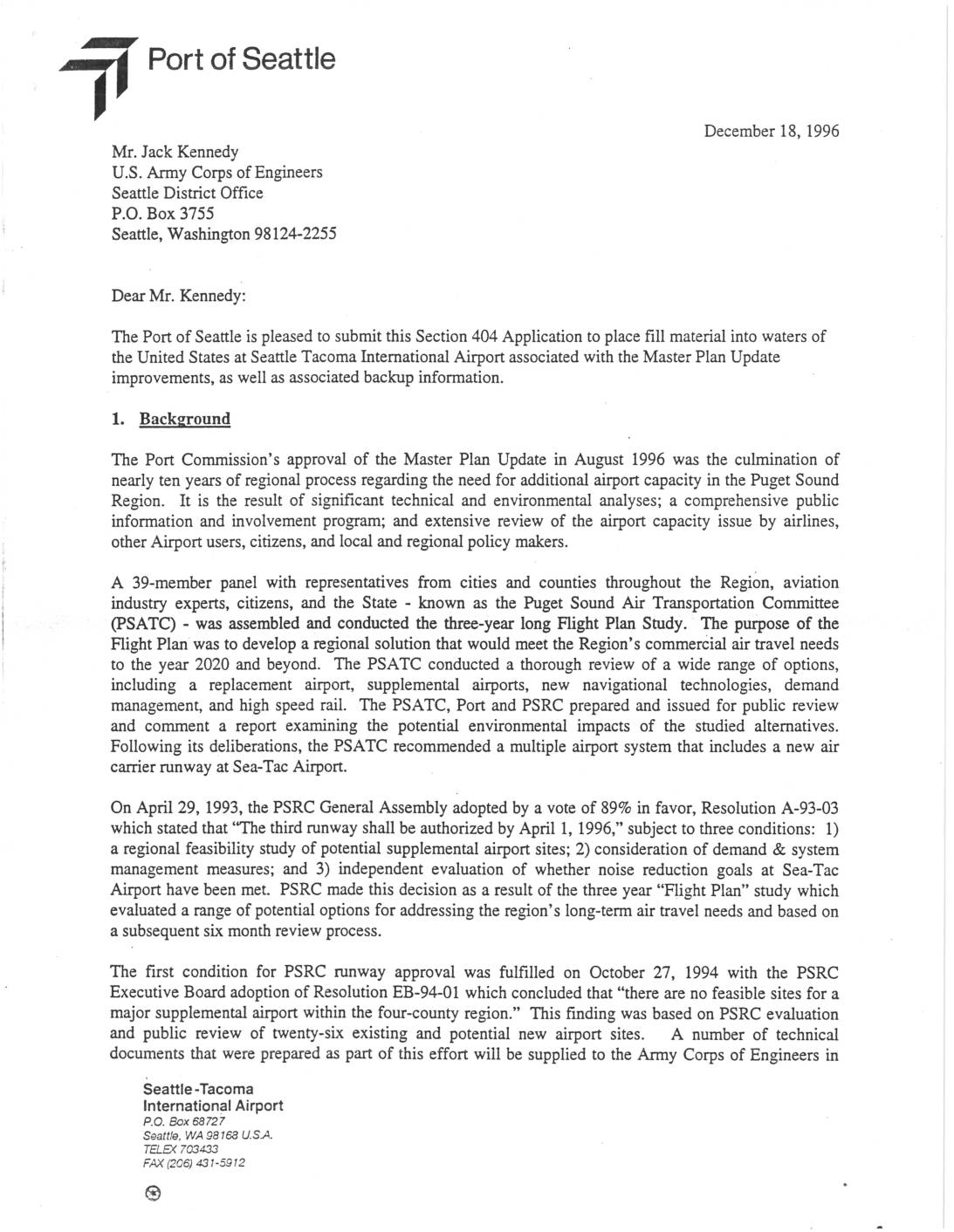
Section 404 Permit Application: Port Of Seattle to U.S. Army Corps of Engineers for Sea-Tac Airport Third Runway Fill Material
In December 1996, the Port of Seattle submitted a Section 404 permit application to the U.S. Army Corps of Engineers to place fill material in waters of the United States as part of Sea-Tac Airport's Master Plan Update, which included construction of a third parallel runway. The application explains that the new runway, located 2,500 feet west of the existing 16R/34L runway, was needed to reduce severe arrival delays during poor weather conditions, which were costing airlines approximately $42 million annually. The project was the outcome of nearly a decade of regional planning, including the PSRC's Flight Plan Study, which evaluated numerous alternatives before recommending the runway expansion as the best solution for the region's long-term air travel needs. -
 1996-12-18
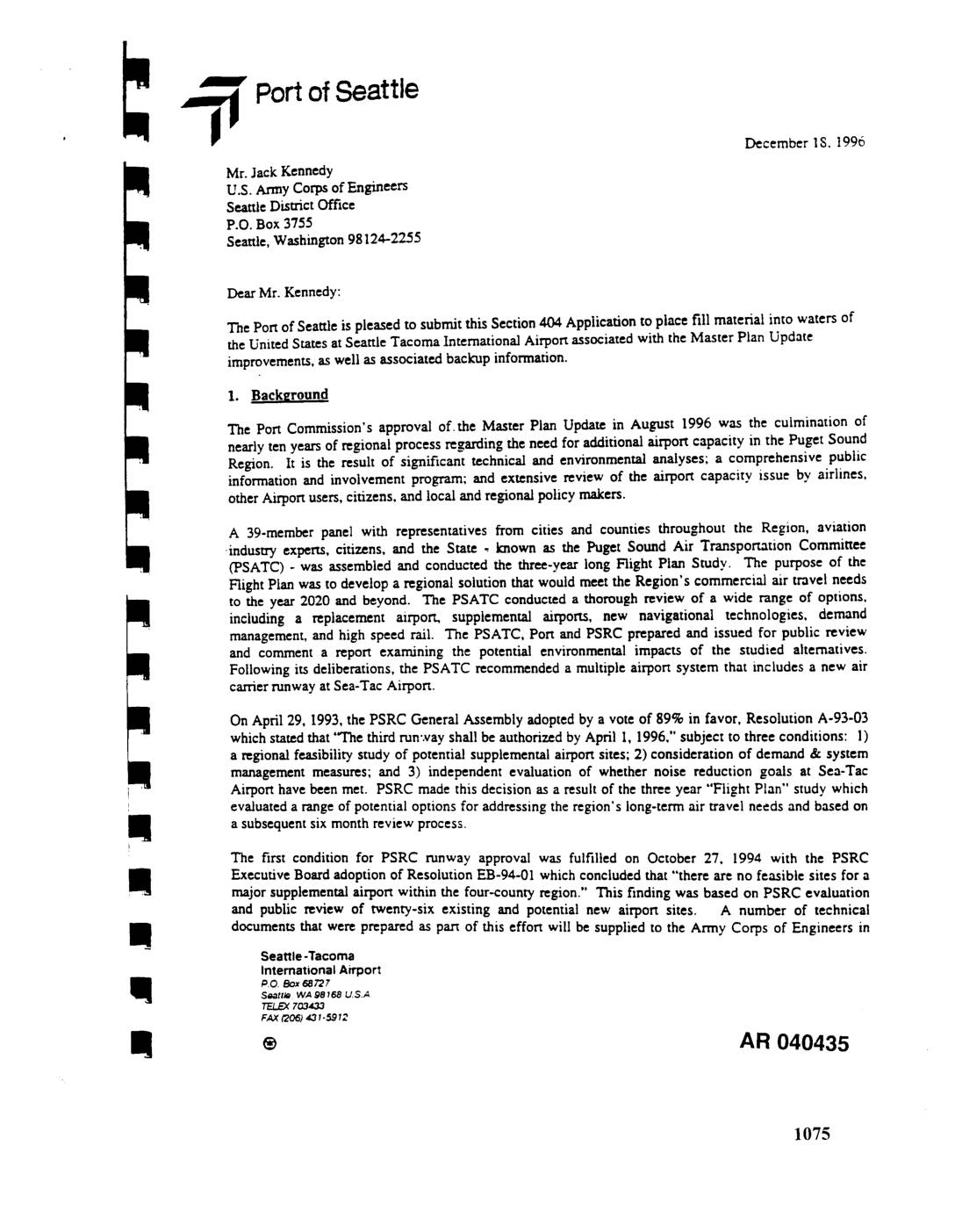
EXH AR040435: Port Of Seattle Section 404 Application Letter — Third Runway Master Plan Update
Letter dated December 18, 1996 from Barbara Hinkle, Senior Environmental Specialist, Port Of Seattle, to Jack Kennedy, U.S. Army Corps of Engineers, Seattle District Office, submitting a Section 404 Application to place fill material into waters of the United States at Seattle-Tacoma International Airport associated with the Master Plan Update. Covers background on the Puget