TagAirports(53)
-
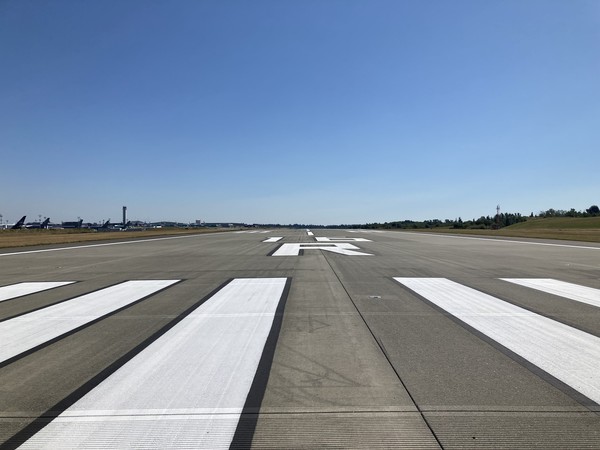
Paine Field Runway Threshold View
A ground-level view looking down an airport runway from the threshold, showing standard white runway markings including threshold stripes and a runway designation number. Airport infrastructure and aircraft are faintly visible in the far background. -
 2022-10-17
NASAO comments on draft FAA policy regarding processing land use changes on federally acquired or federally conveyed airport land
The National Association of State Aviation Officials (NASAO) submitted comments to the FAA in October 2022 regarding a draft policy on land use changes at federally acquired or conveyed airport land. NASAO raised concerns about lengthy lease review processes, the lack of defined timelines for approvals, and unclear procedures for lease renewals and extensions. The letter also questioned how the policy would affect existing leases and called for greater consistency across FAA regions. -
 2021-12-24
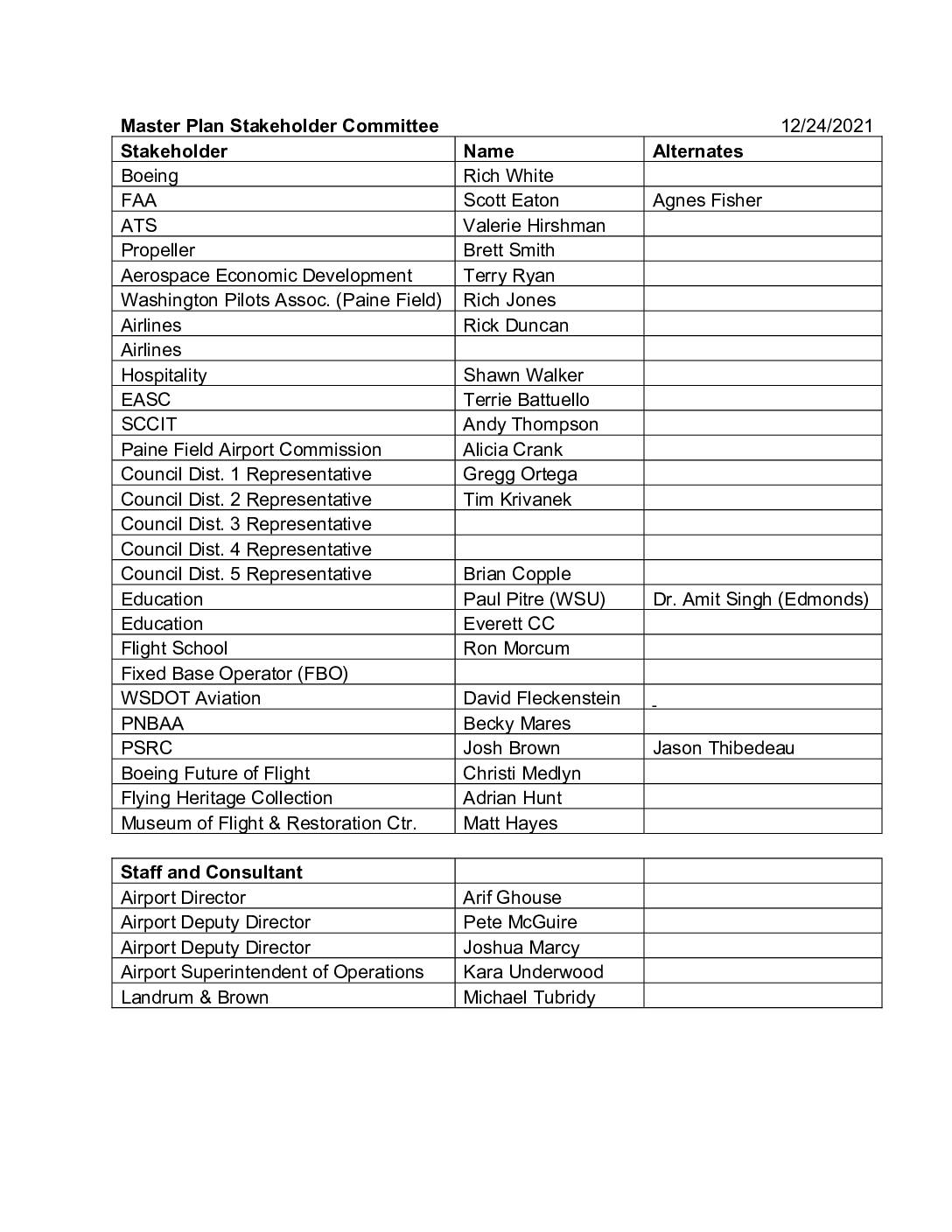
Paine Field Master Plan Stakeholder Committee
A comprehensive list of stakeholders and their representatives for a Master Plan Stakeholder Committee, including representatives from Boeing, FAA, airlines, local government districts, education institutions, and aviation organizations. The document also includes staff and consultant information with airport directors and operations personnel. -
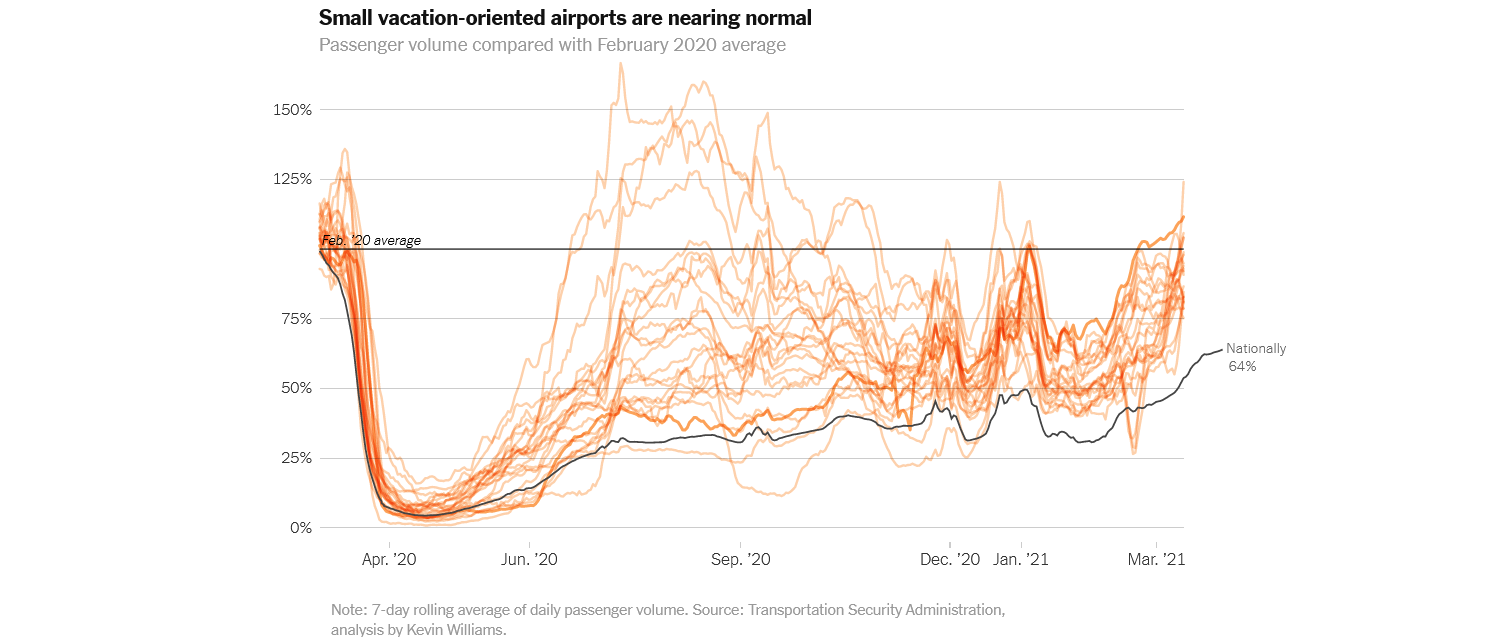
TSA Passenger Volume at Small Vacation Airports vs. National Average, Apr 2020–Mar 2021
Chart from Transportation Security Administration data, analyzed by Kevin Williams, showing 7-day rolling average daily passenger volume at small vacation-oriented airports compared to the February 2020 baseline. As of approximately March 2021, the national average stood at 64% of pre-pandemic levels, while many small vacation airports had recovered to or above the February 2020 average. -
 2021-03-13
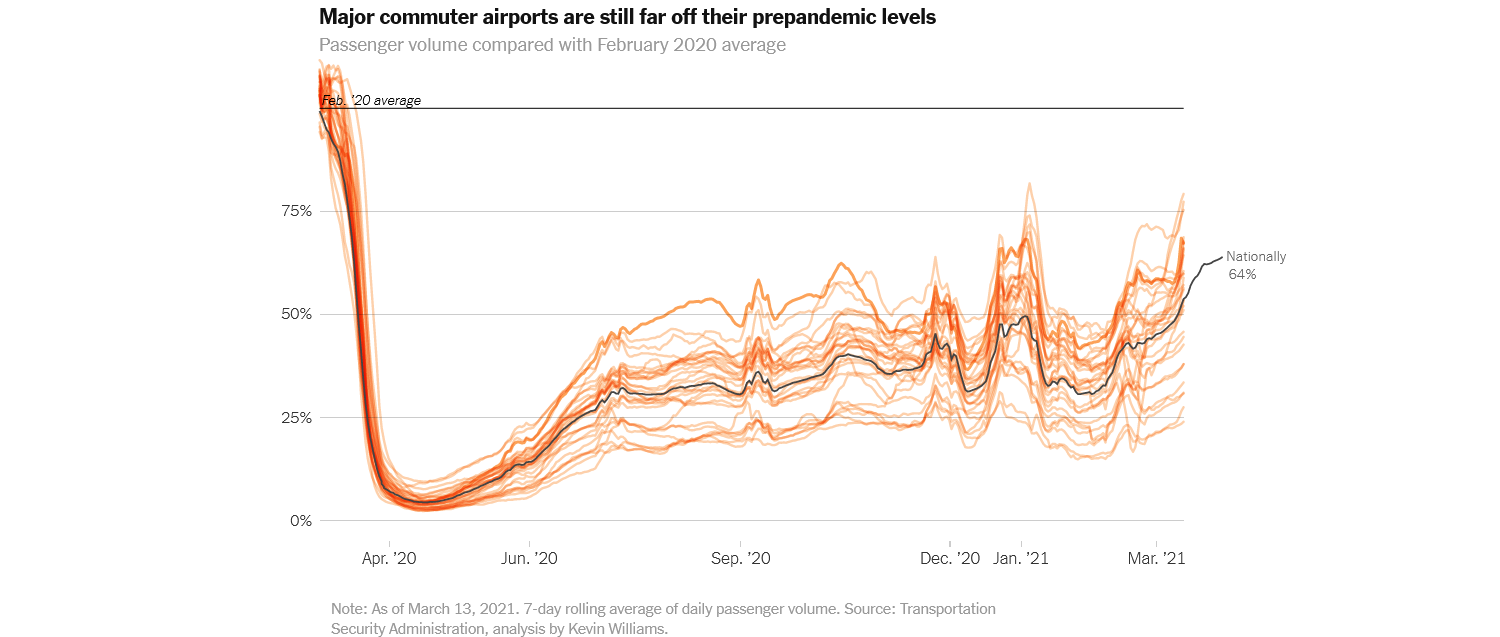
TSA Passenger Volume at Major Commuter Airports vs. Pre-Pandemic Levels, March 2021
Chart from Transportation Security Administration data (analyzed by Kevin Williams, as of March 13, 2021) showing 7-day rolling average of daily passenger volume at major commuter airports compared to February 2020 average. National passenger volume reached 64% of pre-pandemic levels by mid-March 2021, with individual airports shown as orange lines ranging from approximately 25% to 75% of pre-pandemic levels. -
Why Airports Die
The distinctive design of the Pan-Am Worldport at JFK International Airport, built in 1960, wasn’t enough to save it from the wrecking ball. Dmitri Kessel/The LIFE Picture Collection via Getty Images Anthony Paletta 12:07 PM ET Expensive to build, hard to adapt to other uses, and now facing massive pandemic-related challenges, airport terminals often live -
 2019-01-01
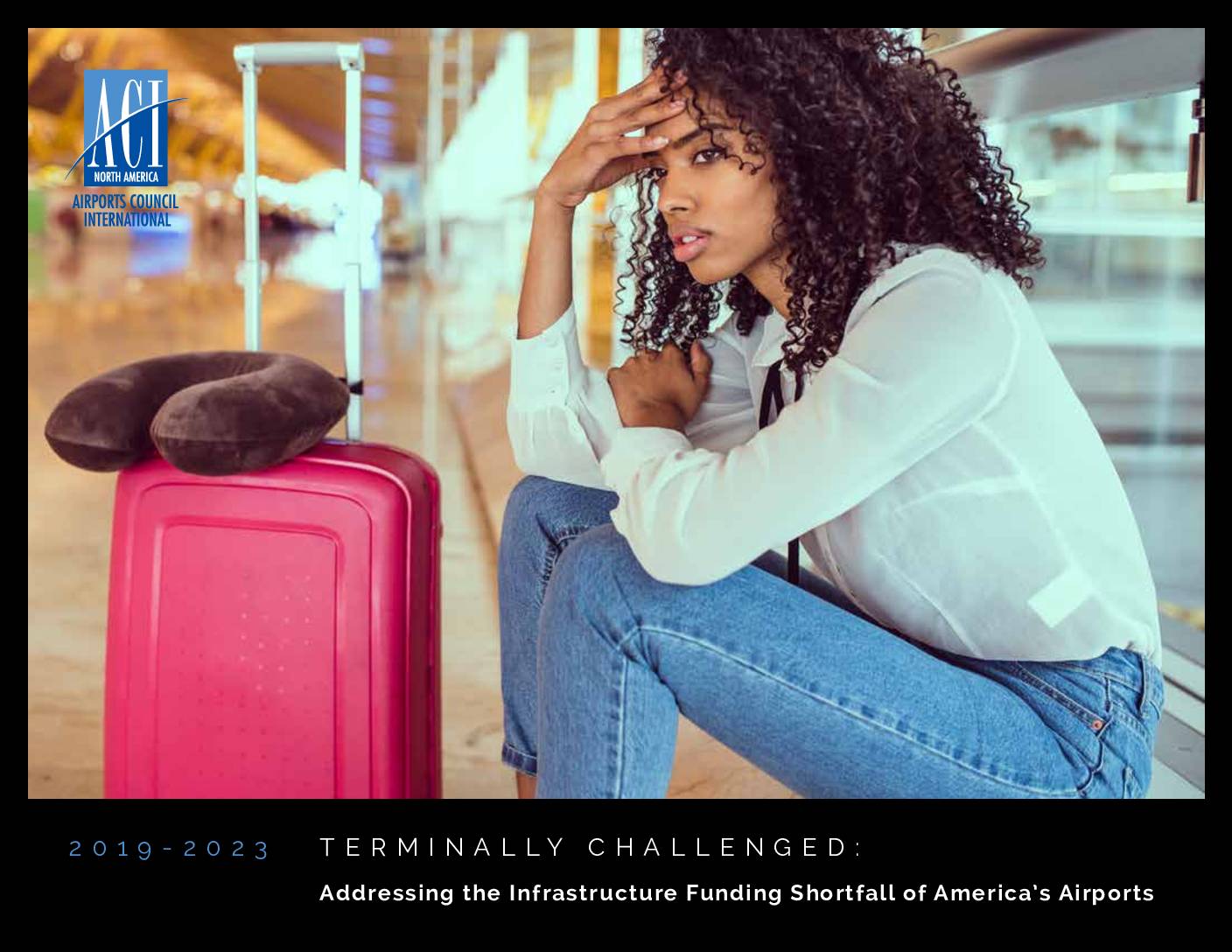
Terminally challenged: Addressing the infrastructure funding shortfall of America’s airports
This Airports Council International – North America (ACI-NA) report, covering 2019–2023, examines the gap between what U.S. airports need to spend on infrastructure and the funding currently available to them. It estimates total development costs by airport size, project type, and location, and compares ACI-NA findings with FAA projections. The report highlights growing pressures from rising construction costs, increasing passenger and cargo demand, and insufficient federal funding mechanisms. -
Why American airports don’t sell anything you actually need?
Woe betide the traveler who forgets her toiletries case, gets peckish, or has a headache at a US airport. At best, she might find tiny container of Advil or $10 packet of almonds in a Hudson News outlet, sandwiched between a Cinnabon and an Auntie Anne’s Preztels. But why is there no CVS or Walgreens -
 2017-07-01
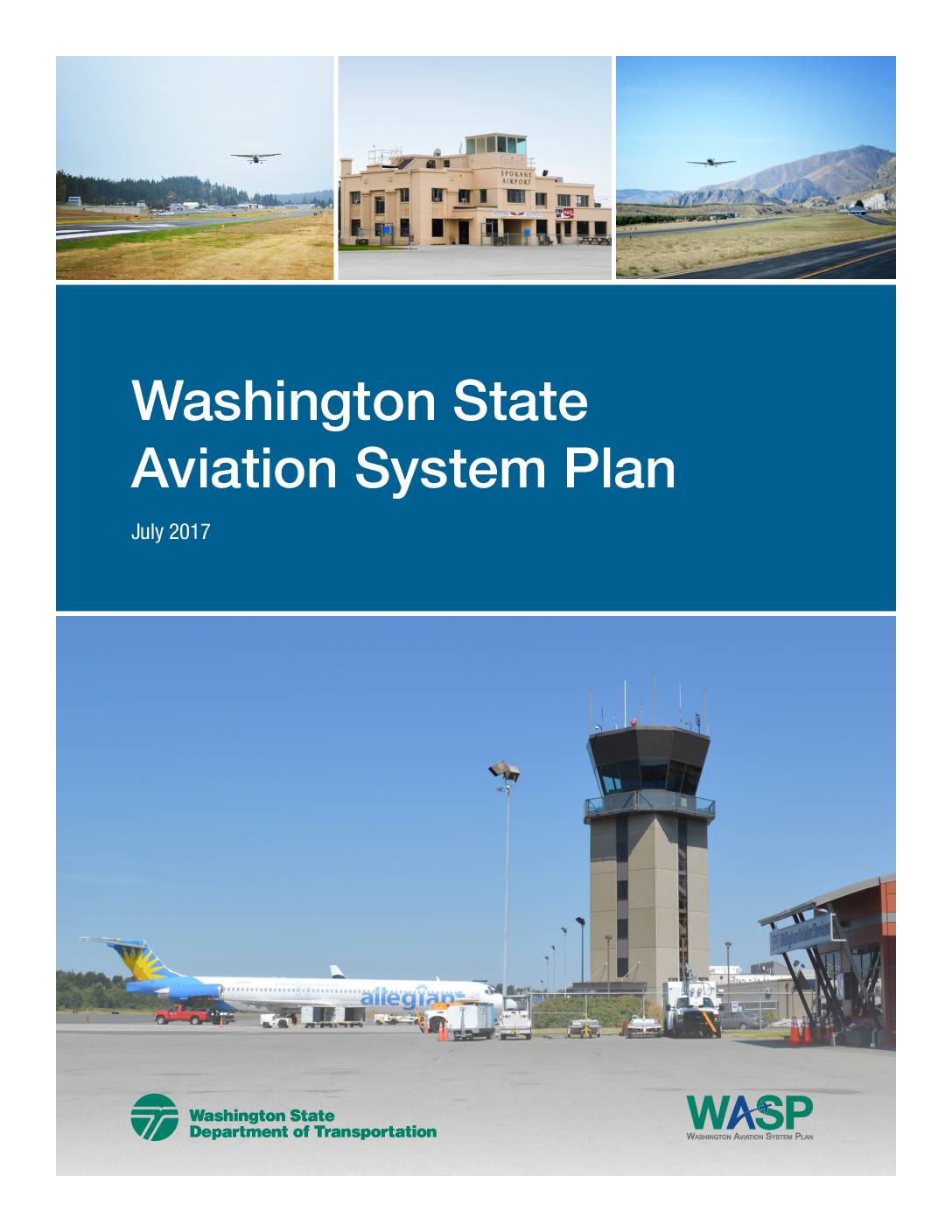
Washington State Aviation System Plan
The Washington State Aviation System Plan (WASP), published in July 2017 by the Washington State Department of Transportation (WSDOT), provides a comprehensive assessment of the state's airport system, covering infrastructure inventory, safety, economic development, and long-term planning goals. The plan examines runways, taxiways, landside facilities, and aviation services across both federally recognized and non-NPIAS airports throughout Washington State. Funded in part by a Federal Aviation Administration planning grant, it serves as a guiding framework for aviation investment and policy decisions statewide. -
 2017-02-01
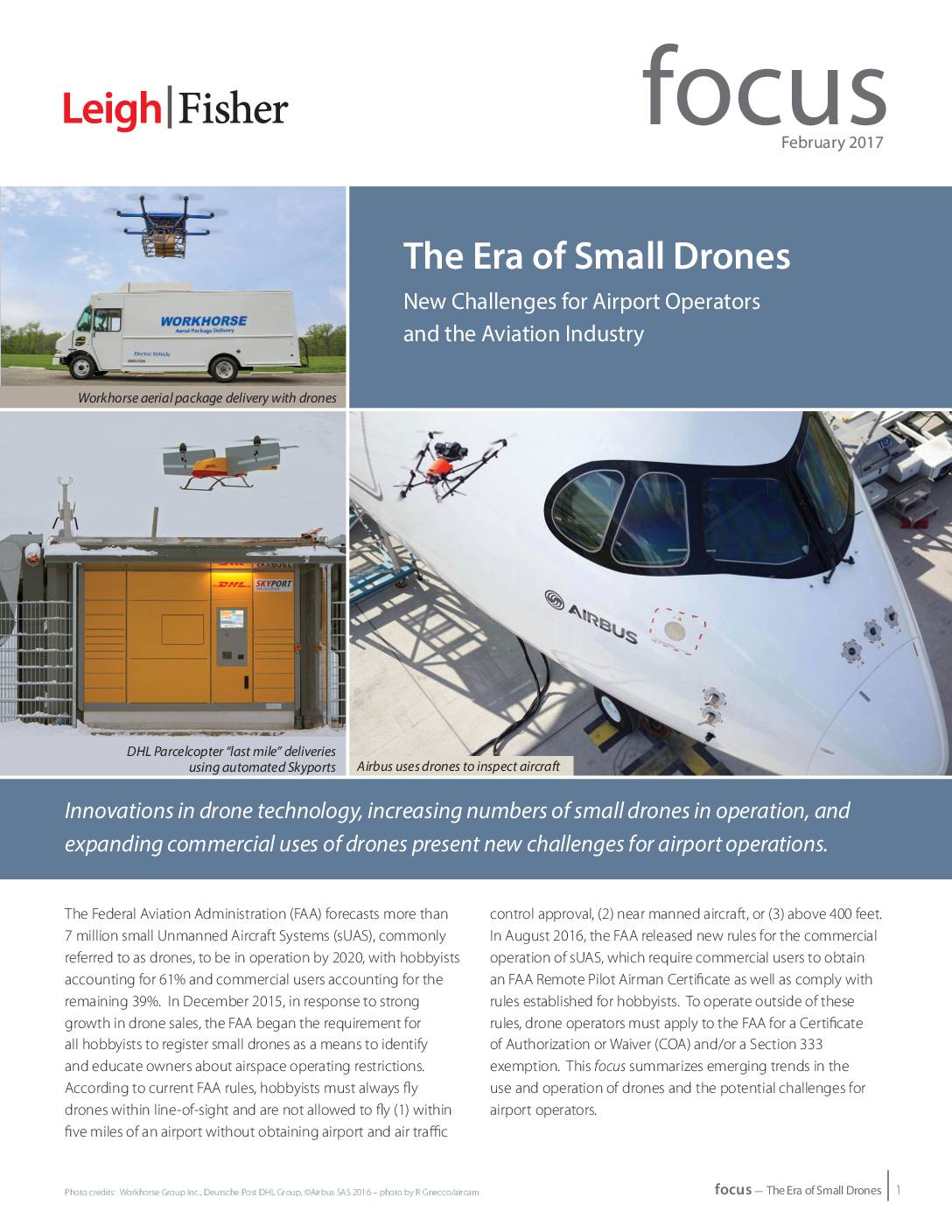
The era of small drones: New challenges for airport operators and the aviation industry
This 2017 industry report examines the rapid growth of small drones (sUAS) and the challenges they pose for airport operators, noting that the FAA projected over 7 million drones in operation by 2020. It outlines FAA registration requirements, commercial operating rules, and restrictions such as the prohibition on flying within five miles of an airport without prior approval. The report also highlights increasing drone sightings near airports and aircraft, and discusses industry initiatives aimed at safely integrating drones into national airspace.