TagAirport(197)
-
 2000-02-25
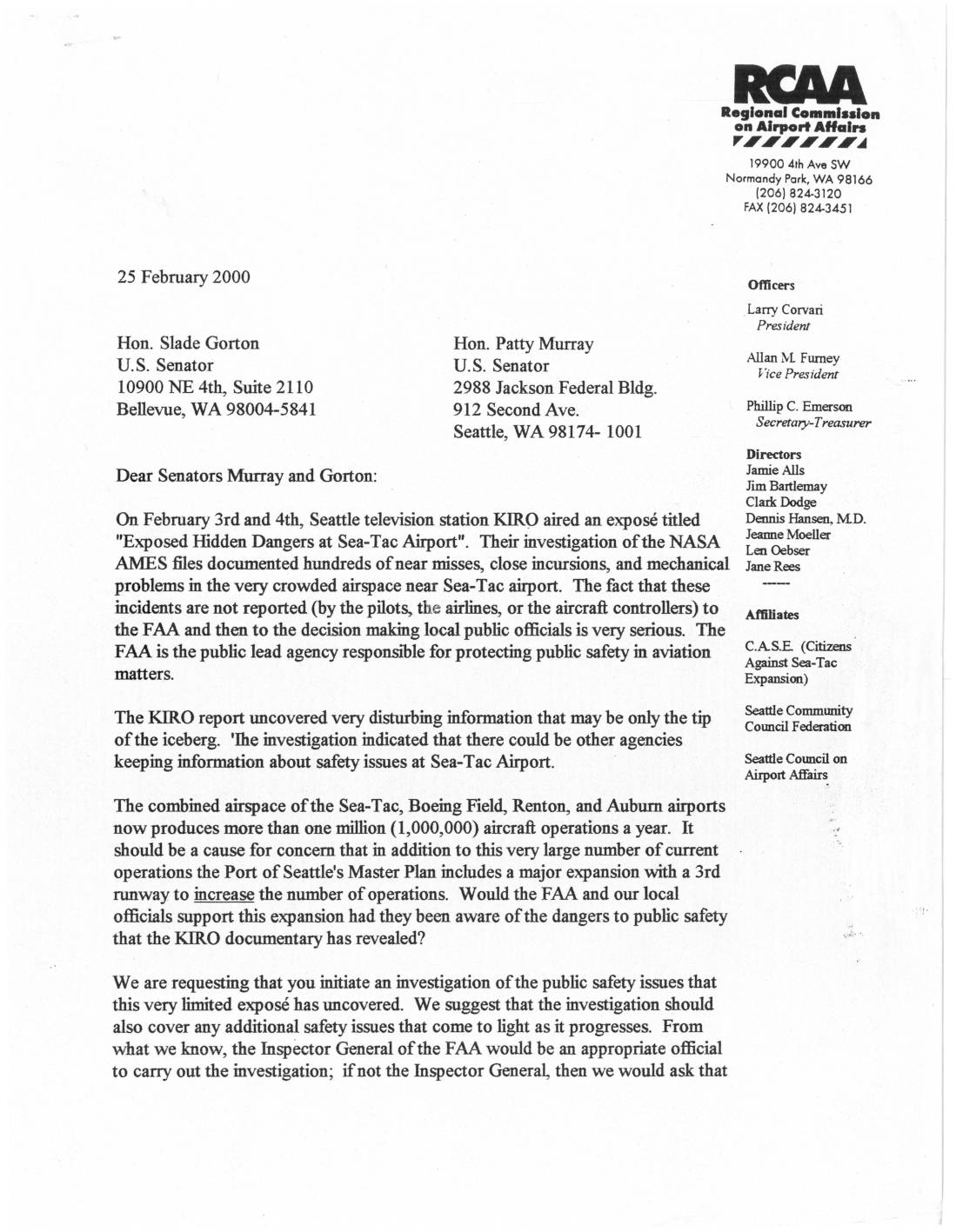
Letter to U.S. Senators Gorton and Murray Regarding Sea-Tac Airport Safety Issues
In February 2000, the Regional Commission on Airport Affairs (RCAA) wrote to U.S. Senators Patty Murray and Slade Gorton urging an investigation into aviation safety concerns at Sea-Tac Airport, following a KIRO-TV news report that revealed hundreds of unreported near-misses, runway incursions, and mechanical problems documented in NASA AMES files. The RCAA argued that these hidden dangers raised serious questions about the Port of Seattle's plans to expand the airport with a third runway. The letter also requested a moratorium on expansion-related construction permits until a full safety investigation — ideally led by the FAA Inspector General — could be completed. -
 2000-01-01
EXH AR043247: Preliminary Data Summary — Airport Deicing Operations
EPA report (EPA 821-R-00-001, January 2000) presenting a preliminary data summary of airport deicing operations. Covers aircraft and pavement deicing/anti-icing fluids including ethylene glycol-based compounds, fluid types, fluid application methods, variables affecting fluid use, nonchemical deicing methods, and NPDES/Clean Water Act wastewater concerns. Data collected via 1993 screener questionnaire, airport/vendor/POTW mini-questionnaires, EPA site visits, EPA -
 1999-12-01
EXH AR026410: Wildlife Hazard Management Airports — Manual Airport Personnel
This 1999 manual, prepared jointly by the Federal Aviation Administration and the U.S. Department of Agriculture, provides airport personnel with guidance on managing the safety risks posed by wildlife at airports. It covers topics including the FAA National Wildlife Strike Database, the roles of various federal agencies, and strategies for reducing bird and animal strikes on aircraft. The manual draws on strike records from 1990–1998 to illustrate the frequency, types, and impacts of wildlife encounters with aircraft. -
 1997-05-01
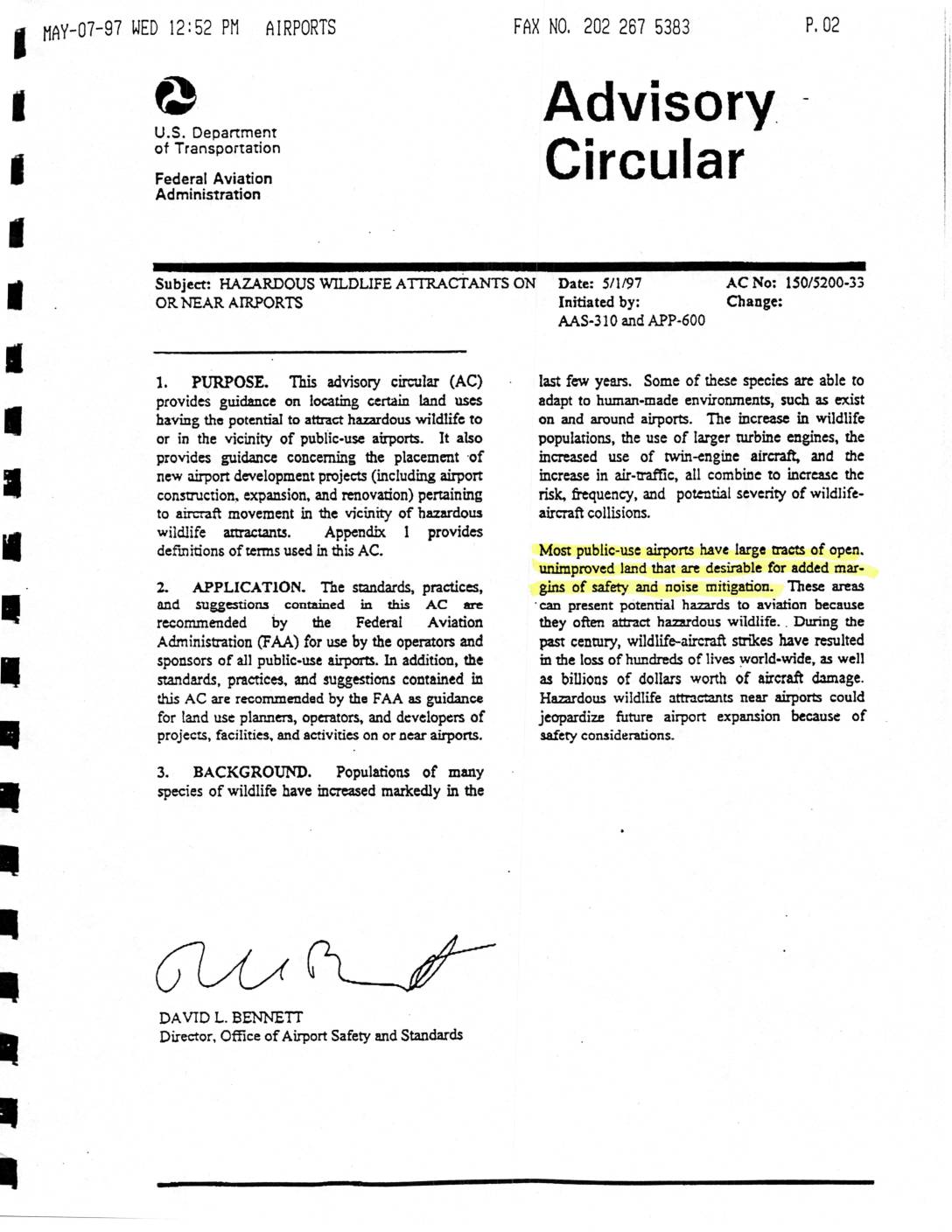
EXH AR1080: Advisory Circular AC 150/5200-33 — Hazardous Wildlife Attractants On or Near Airports
FAA Advisory Circular AC 150/5200-33, dated 5/1/97, initiated by AAS-310 and APP-600, signed by David L. Bennett, Director of Office of Airport Safety and Standards. Provides guidance on locating land uses that attract hazardous wildlife to or near public-use airports. Covers siting criteria: 5,000 feet separation for piston-powered aircraft airports, 10,000 feet for turbine-powered aircraft -
 1997-05-01
Advisory circular: Hazardous wildlife attractants on or near airports
This 1997 FAA Advisory Circular provides guidance on identifying and managing land uses near public airports that attract hazardous wildlife, such as waste disposal sites, wastewater treatment facilities, and wetlands. It recommends minimum separation distances — 5,000 feet for piston-powered aircraft airports and 10,000 feet for turbine-powered aircraft airports — between wildlife attractants and aircraft movement areas. The document notes that gulls, waterfowl, and raptors are among the most common wildlife involved in damaging aircraft strikes, and urges airport operators, land use planners, and developers to avoid practices that increase wildlife hazards near airports. -
 1996-07-11
1996 Amendment to the Metropolitan Transportation Plan for the Central Puget Sound Region
In July 1996, the Puget Sound Regional Council General Assembly adopted an amendment to the 1995 Metropolitan Transportation Plan for the Central Puget Sound Region, with updates taking effect August 2, 1996. The amendment includes key changes related to aviation, notably the addition of a new Appendix G outlining air transportation noise reduction measures and the steps for implementing and monitoring them. These changes, which required a formal Port of Seattle resolution to activate, were set to be fully incorporated into the updated Metropolitan Transportation Plan in 1998. -
1996-07-11
1996 Amendment to the Metropolitan Transportation Plan for the Central Puget Sound Region
This is the cover page of the 1996 Amendment to the Metropolitan Transportation Plan for the Central Puget Sound Region, adopted by the Puget Sound Regional Council General Assembly on July 11, 1996. The document is a regional transportation planning record relevant to the Central Puget Sound area, which includes the vicinity of Sea-Tac Airport. -
 1995-06-01
Seattle-Tacoma International Airport data package no. 12: Airport capacity enhancement plan update
This 1995 Federal Aviation Administration report provides detailed technical data supporting the Seattle-Tacoma International Airport Capacity Enhancement Plan Update. Prepared by the FAA Technical Center in Atlantic City, New Jersey, it uses airport capacity and delay simulation analysis to evaluate options for improving airport operations. The information was subject to change as the Design Team's analysis progressed. -
 1992-10-05
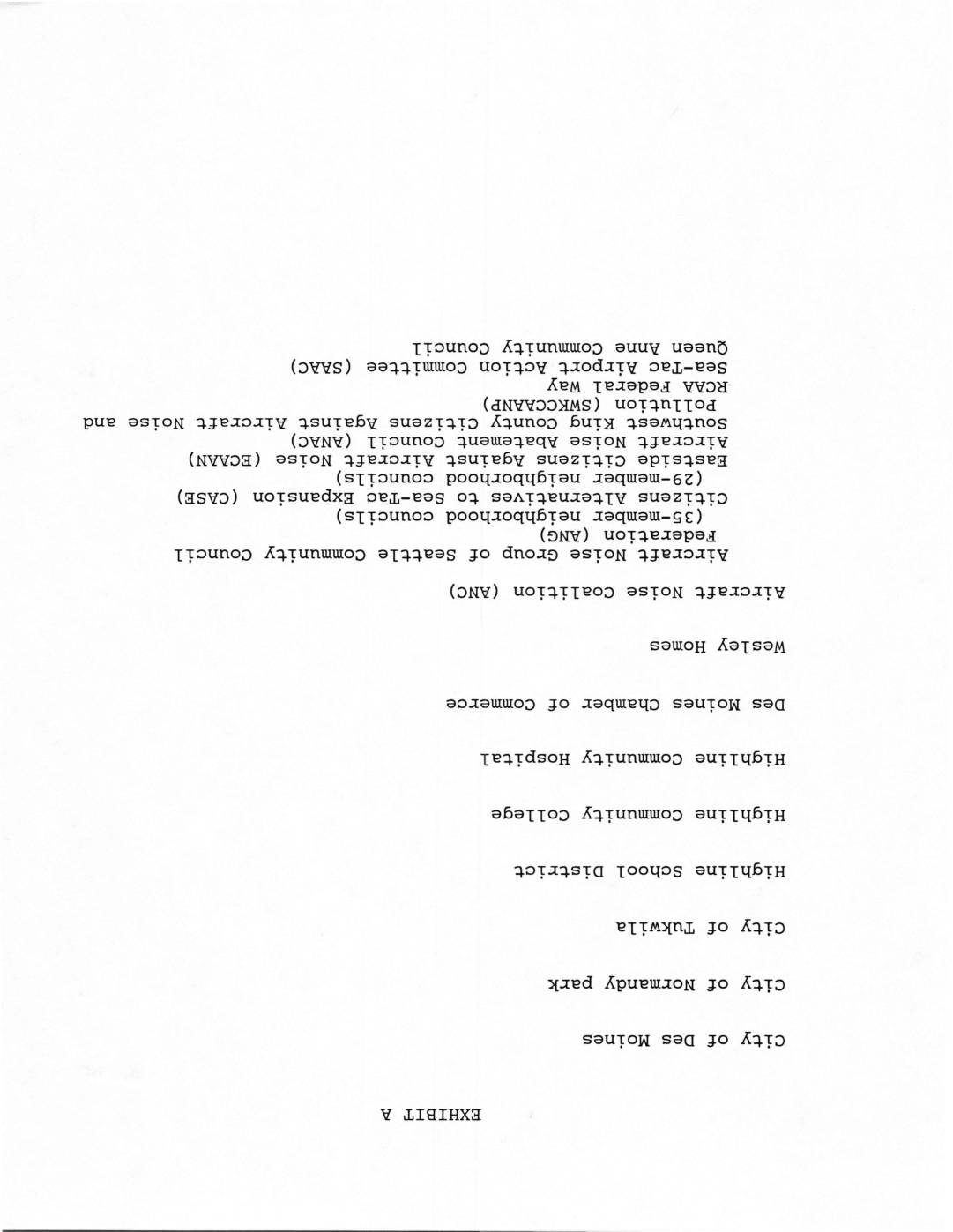
Airport Alternative Committee October 5, 1992 meeting notes
These documents relate to the Airport Alternative Committee's October 1992 meeting, which brought together cities, community organizations, and citizen groups concerned about aircraft noise around Seattle-Tacoma (Sea-Tac) Airport. The committee evaluated criteria and requirements for addressing airport expansion, including minimizing noise impact on the largest number of people, maximizing aircraft and ground safety, and providing 750 operations capacity by the year 2020. Alternative airport sites such as Vancouver, Black Lake, Fort Lewis, Portland, McCord, Arlington, and SeaTac were also discussed. -
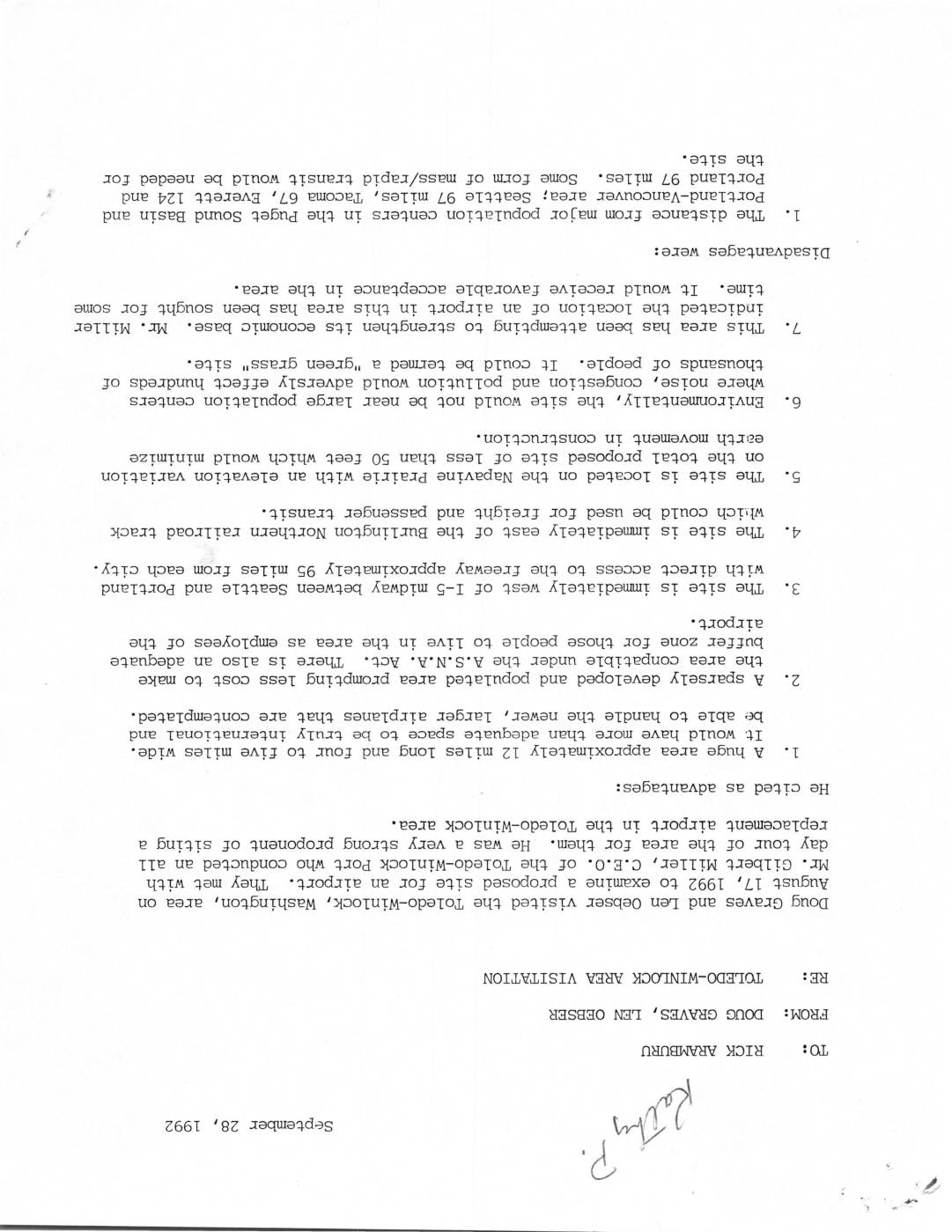 1992-09-28
Toledo-Winlock area visitation
A September 1992 internal memo from Doug Graves and Len Oebser to Rick Aramburu summarizes a site visit to the Toledo-Winlock area of Washington State as a potential location for a new replacement airport. The site was praised for its large size, proximity to the I-5 freeway midway between Seattle and Portland, access to Burlington Northern rail lines, and its sparsely populated surroundings, which would minimize noise and environmental impacts. However, drawbacks noted included its distance from major population centers such as Seattle, Tacoma, Everett, and Portland, which would require some form of mass rapid transit to serve the airport effectively.