TagAirport(197)
-
 2002-10-23
EXH AR37145: Exhibit 1022 Not Present at Time of Scanning
Placeholder page for Exhibit 1022, AR 037145.01, indicating the document was not present at the time of scanning. No substantive content available; administrative record reference only. -
 2002-10-22
EXH AR028289: Exhibit Placeholder — Being Copied, to Be Supplied Later
Administrative Record placeholder page AR 028289 from exhibit file EXH0799028289. Document states the exhibit is still being copied and will be supplied later. No substantive content is present; this is a cover sheet indicating the exhibit contents were pending reproduction at the time of filing. -
 2002-10-22
EXH AR028116: Exhibit Pending — Copy Not Yet Available
Placeholder page bearing Administrative Record number AR028116, indicating the exhibit referenced at this location in the administrative record was still being copied and would be supplied at a later date. No substantive content is present; document serves solely as a filing placeholder within the AR028116 exhibit sequence. -
 2002-10-22
EXH AR028054: Exhibit Pending — Copy Not Yet Available
Placeholder page for Administrative Record exhibit AR028054, indicating the exhibit was still being copied and would be supplied at a later date. No substantive content is present in this document. Filed as EXH0785028054. -
 2002-10-22
EXH AR028053: Placeholder — Exhibit Still Being Copied
Administrative Record placeholder page AR 028053 indicating the exhibit was still being copied and would be supplied later. No substantive content present; document serves as a temporary stand-in within the administrative record filing. -
 2002-10-22
EXH AR027876: Exhibit Placeholder — Still Being Copied
Placeholder page for exhibit AR027876 indicating the document was still being copied and would be supplied later. No substantive content is present. Administrative record reference AR027876. -
 2002-10-22
EXH AR026983: Exhibit Placeholder — Still Being Copied
Placeholder page for exhibit AR 026983, indicating the document was still being copied and would be supplied later. No substantive content is present. Administrative record reference AR 026983. -
 2002-10-22
Exhibit 696: Missing Document Notice
Exhibit 696 placeholder page indicating the document was not present at time of scanning. Administrative record reference AR 026131.01. No substantive content available; document absent from scanning batch. -
 2002-05-01
Financial Analysis For Redevelopment of Northeast Burien Special Plan Area
A financial analysis report prepared by Economic Consulting Services for the City of Burien regarding the redevelopment of the Northeast Burien Special Plan Area. The report was completed in May 2002 and includes economic analysis and consulting services for the redevelopment project. -
 2001-01-01
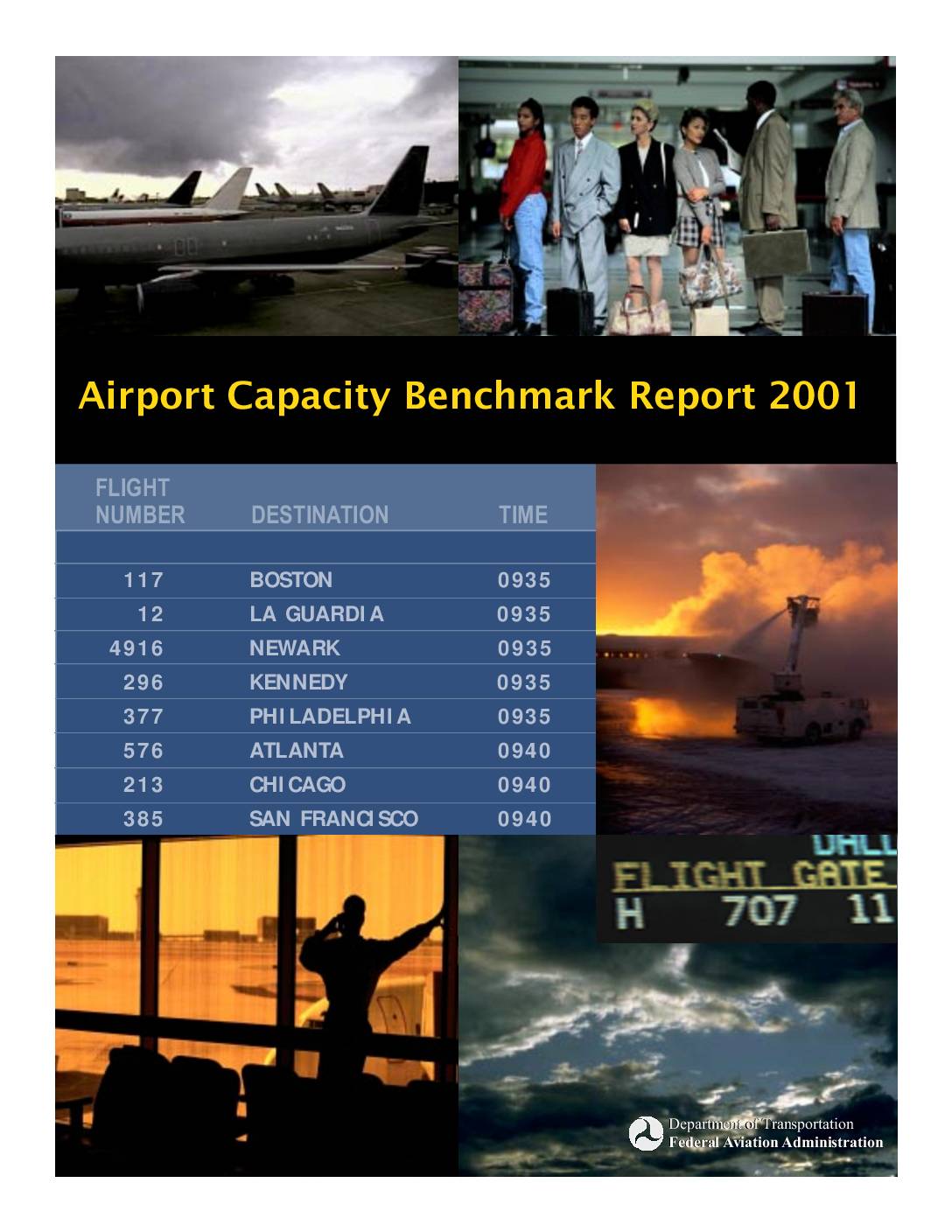
Airport Capacity Benchmark Report 2001
The FAA's Airport Capacity Benchmark Report 2001 measures the maximum number of flights 31 of the nation's busiest airports can handle per hour under both good and adverse weather conditions. The benchmarks were developed between October 2000 and April 2001 by the FAA and MITRE/CAASD to help understand the relationship between airline demand and runway capacity, and to inform long-term aviation policy decisions. While useful as a reference point, the report notes that these benchmarks are starting points for discussion rather than definitive guides for major investment or scheduling decisions.