TagUltrafine Particles(75)
-
 2017-11-15
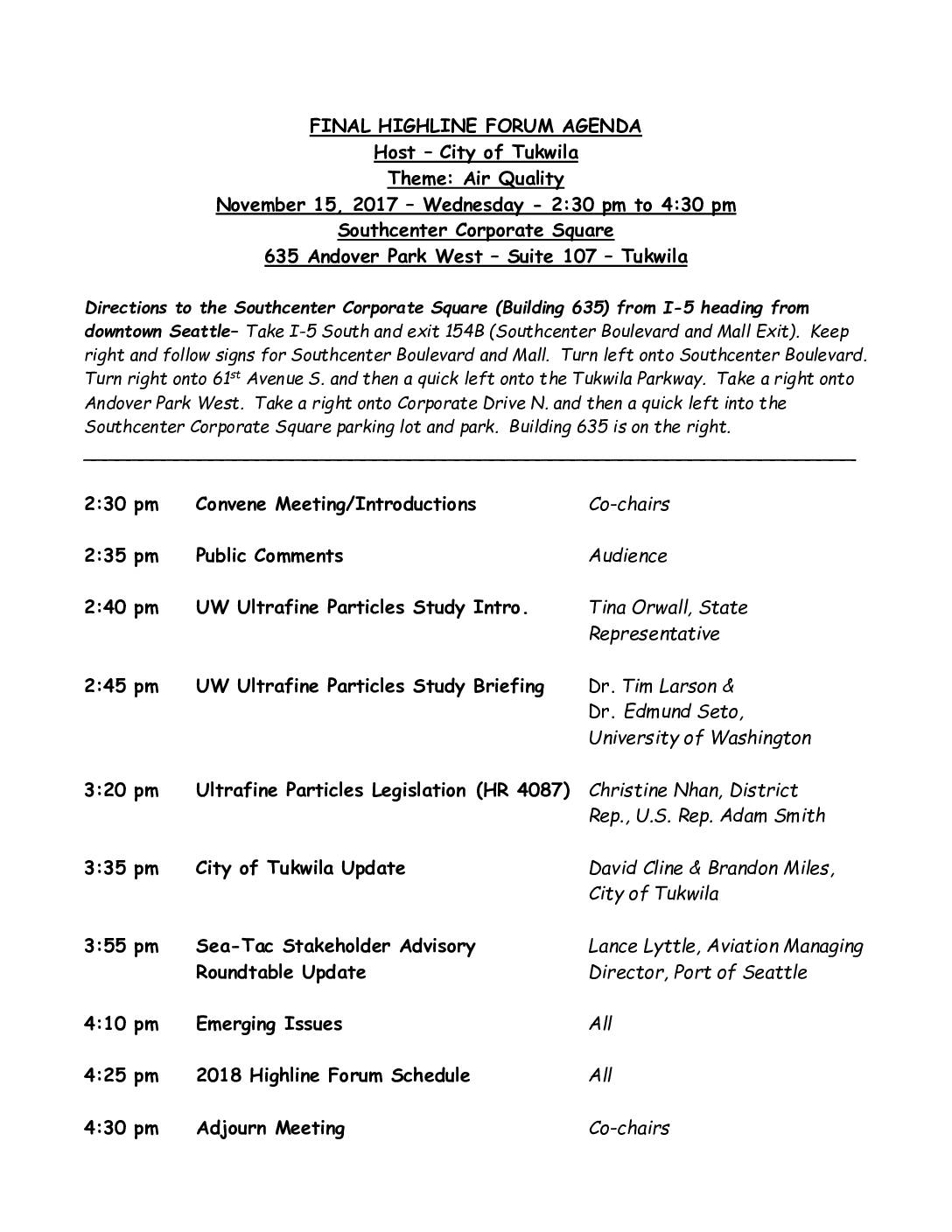
Final Highline Forum agenda: Air quality
The Highline Forum meeting, hosted by the City of Tukwila on November 15, 2017, focused on air quality concerns related to Sea-Tac Airport, featuring a briefing from University of Washington researchers on an ultrafine particles study and a discussion of related federal legislation (HR 4087). The agenda also included updates from the City of Tukwila and the Sea-Tac Stakeholder Advisory Roundtable, presented by Port of Seattle Aviation Managing Director Lance Lyttle. The two-hour session concluded with a discussion of emerging issues and planning for the 2018 Highline Forum schedule. -
 2017-11-15
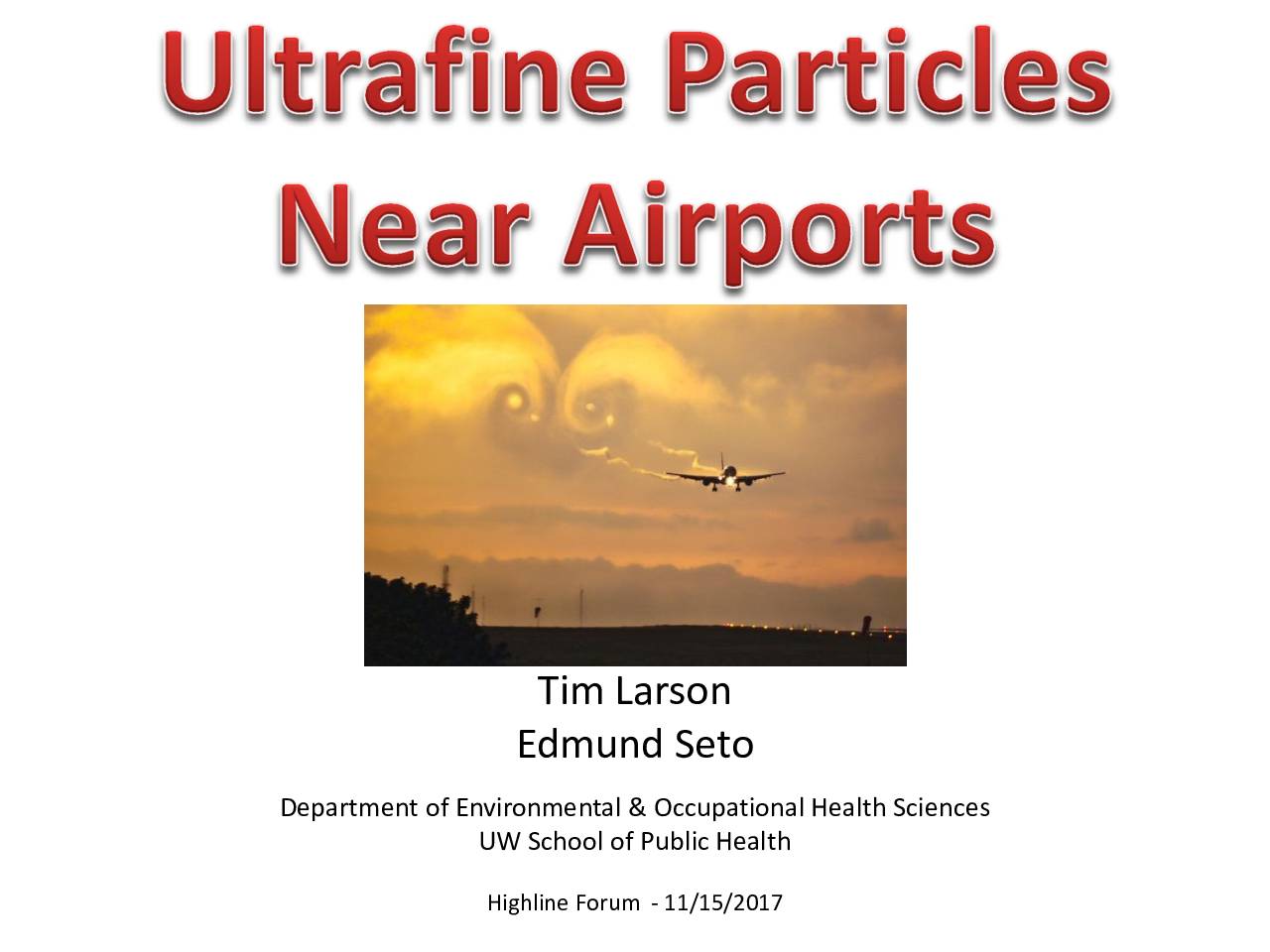
Ultrafine particles near airports
Researchers from the University of Washington School of Public Health were commissioned by Washington State to study ultrafine particle air pollution near Sea-Tac Airport, the busiest international airport in the state. The study, presented in November 2017, required measuring ultrafine particulate matter within ten miles of the airport along flight paths, distinguishing aircraft emissions from other pollution sources, and comparing affected areas to unaffected ones. Findings and recommendations on whether to proceed with a second phase of research were due to the state legislature by December 1, 2019. -
 2017-10-19
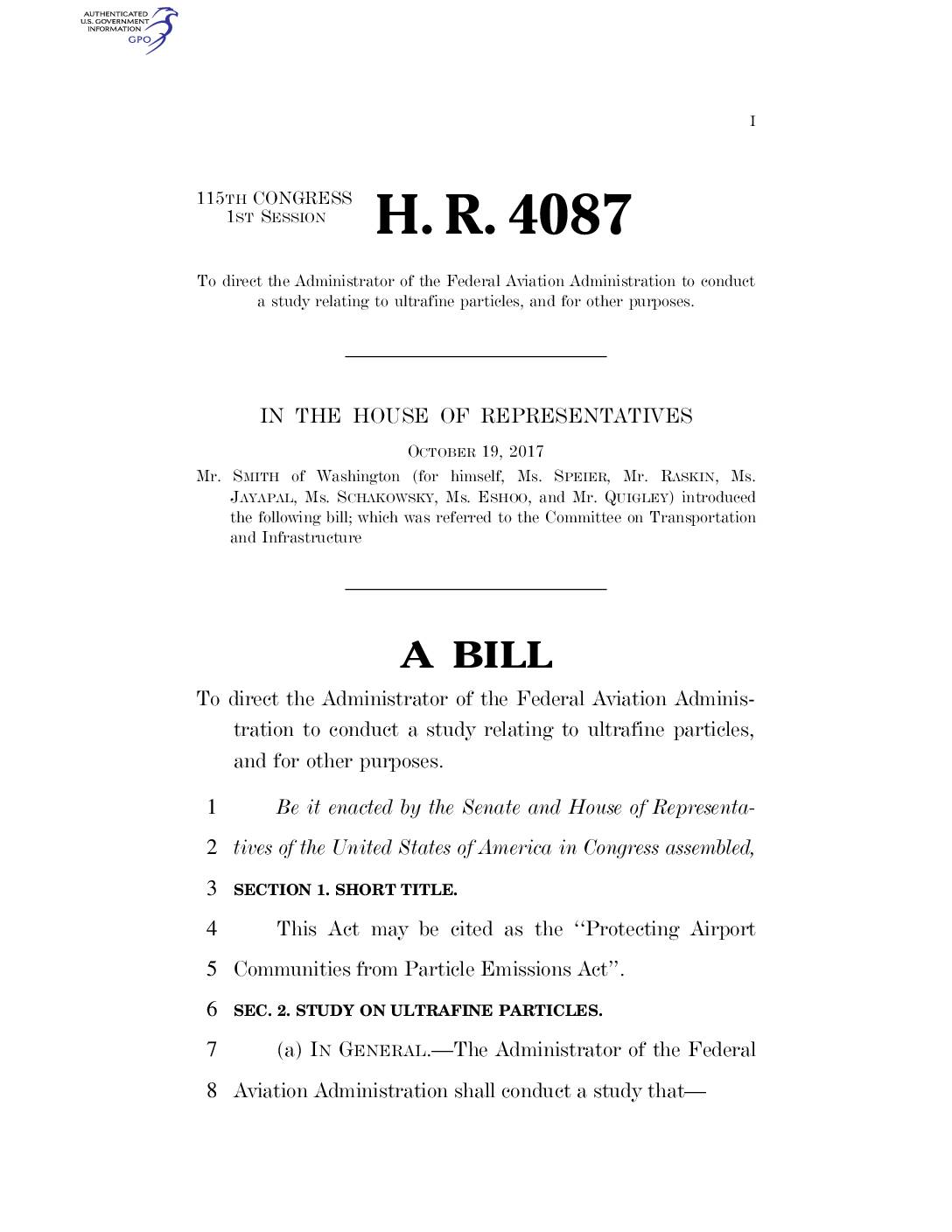
H.R. 4087 – Protecting Airport Communities from Particle Emissions Act
H.R. 4087, the 'Protecting Airport Communities from Particle Emissions Act,' introduced in October 2017, directs the FAA to study ultrafine particles (tiny airborne particles under 100 nanometers) around the 20 busiest U.S. airports, including their health effects on surrounding communities. The study must examine particle sources, concentration patterns, and health impacts such as heart disease, asthma, and nervous system disorders, with special attention to disproportionate effects on communities of color and economically vulnerable residents. The FAA is required to coordinate with the EPA and Department of Health and Human Services and report findings to Congress within two years. -
 2017-09-27
Regional air quality briefing: Highline Forum
A September 2017 regional air quality briefing presented by the Puget Sound Clean Air Agency to the Highline Forum covers air pollution sources, trends in south King County, and efforts to improve air quality in the region. The presentation also introduces an upcoming University of Washington study on ultrafine particle pollution, which is particularly relevant to communities near high-traffic corridors. The agency's vision emphasizes clean and healthy air for all residents regardless of socioeconomic status or location, covering four counties: King, Pierce, Snohomish, and Kitsap. -
 2017-07-26
Air quality initiatives at Sea-Tac Airport
This 2017 presentation by Port of Seattle Sustainability Manager Leslie Stanton outlines air quality initiatives at Seattle-Tacoma International Airport, covering pollution sources, reduction programs, and the Port's environmental goals. It highlights that while the Port has limited regulatory authority, it is pursuing innovative strategies to cut emissions, including efforts around ultrafine particulates and climate-related particulate matter reductions. The presentation also reviews existing air quality studies and identifies next steps for improving air quality in and around Sea-Tac Airport. -
 2017-07-26
Air Quality Initiatives at Sea-Tac Airport
This July 2017 presentation by Port of Seattle Sustainability Manager Leslie Stanton outlines air quality initiatives at Seattle-Tacoma International Airport, covering the types and sources of air pollution, the Port's environmental goals, and efforts to reduce emissions. It highlights that while the Port has limited regulatory authority, it is pursuing innovative programs with multiple benefits and tracking emerging science around ultrafine particulates and particulate matter reductions tied to climate strategies. The document serves as an overview of Sea-Tac's approach to managing and improving local air quality amid growing aviation activity. -
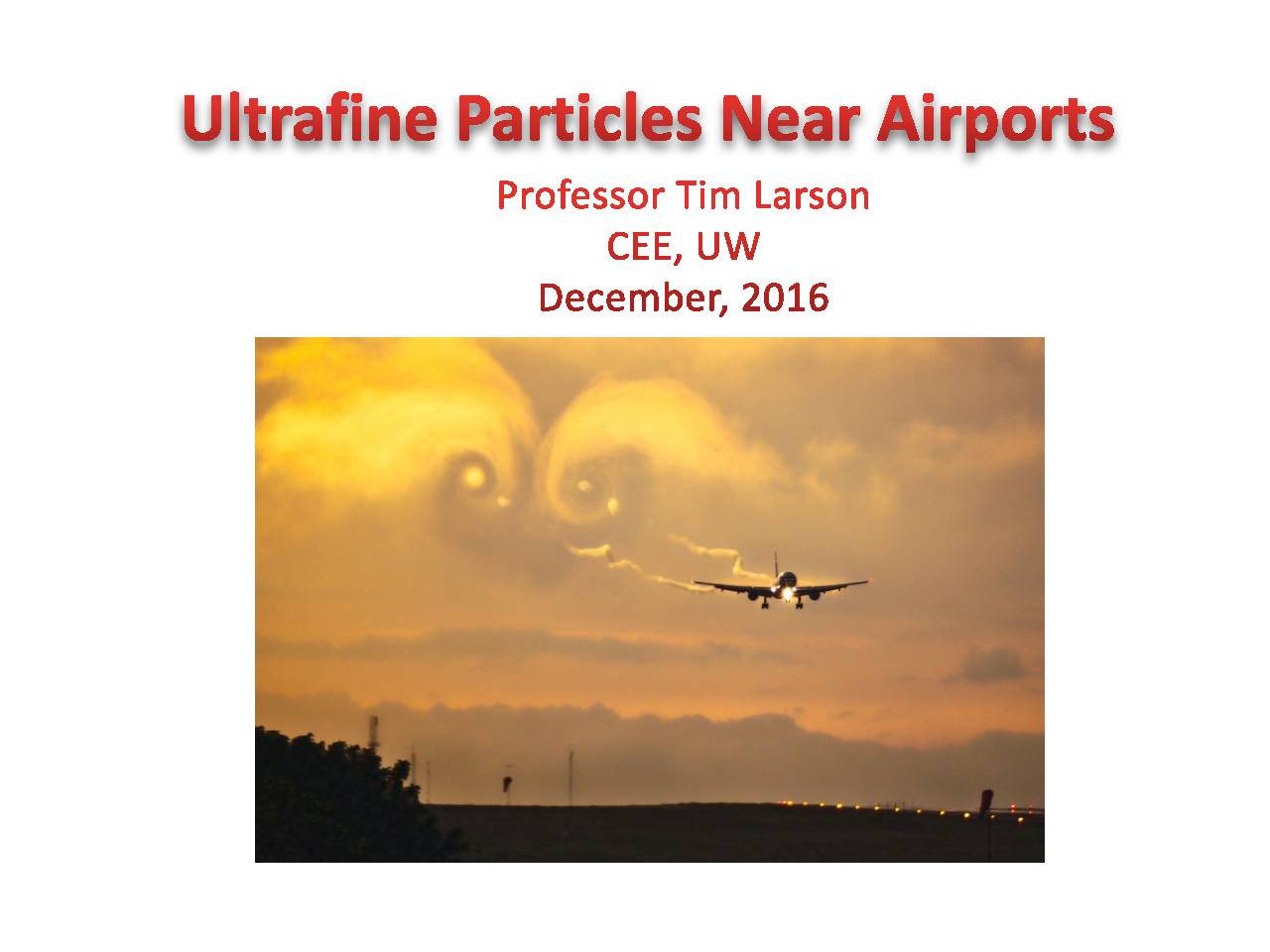 2016-12-27
Ultrafine Particles Near Airports
This December 2016 presentation by University of Washington Professor Tim Larson examines ultrafine particles (UFPs) — tiny airborne particles smaller than 0.1 micrometers — found near airports, including sources such as jet engine exhaust and other combustion products. The research, conducted in collaboration with USC scientists, investigates the concentration and spread of these microscopic particles in communities surrounding airports. The findings are relevant to ongoing discussions about air quality and public health impacts near facilities like Sea-Tac Airport. -
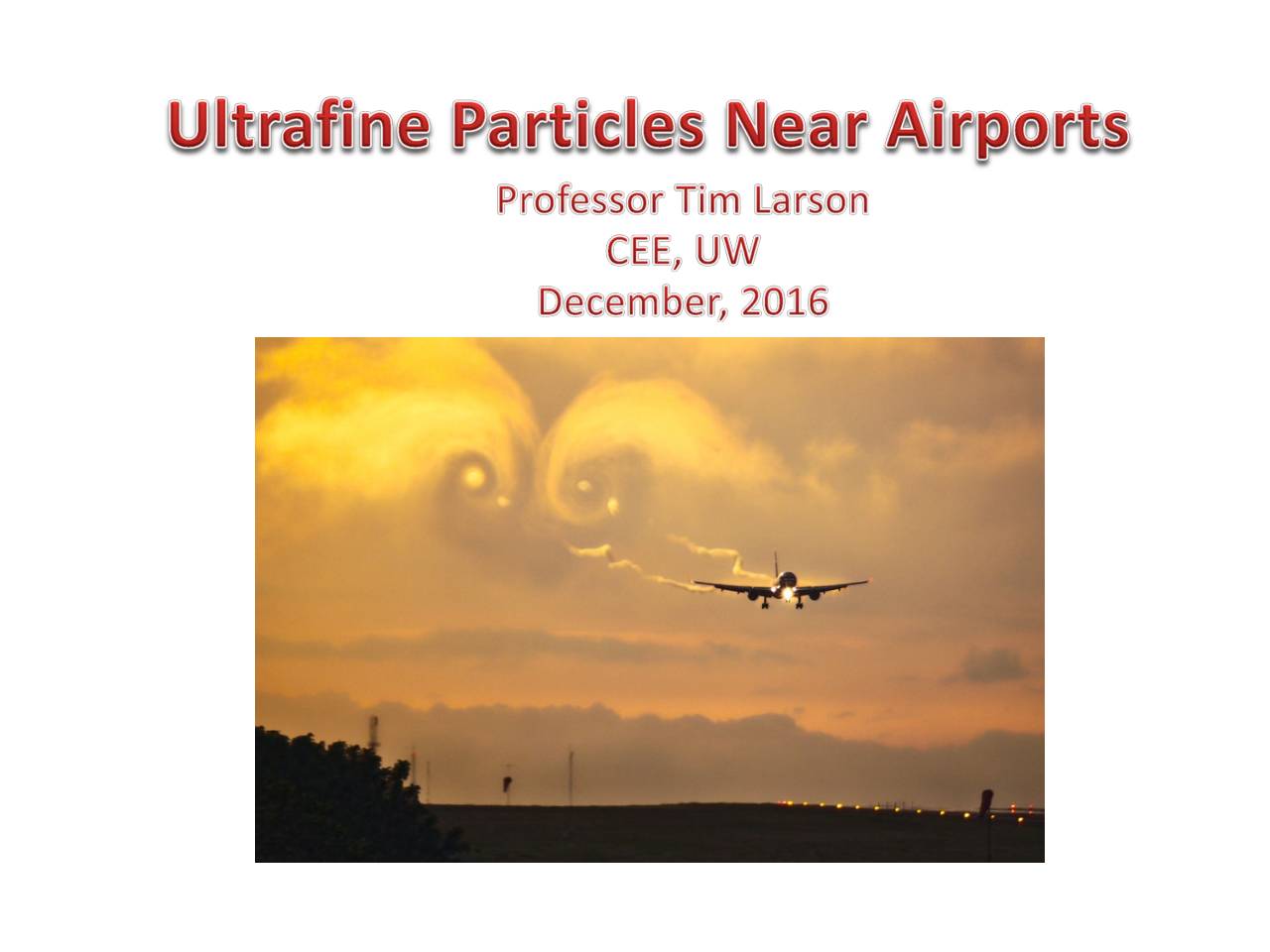 2016-12-01
Ultrafine Particles Near Airports
This December 2016 presentation by University of Washington Professor Tim Larson examines ultrafine particles (UFPs) — tiny airborne particles smaller than 0.1 micrometers — found near airports, with a focus on emissions from aircraft and other combustion sources. Conducted in collaboration with researchers from UW and USC, the study explores how these microscopic particles, which are far smaller than diesel smoke or tobacco smoke particles, may pose environmental and health concerns for communities near airports like Sea-Tac. The research provides scientific context for understanding air quality impacts associated with airport operations. -
 2014-09-03
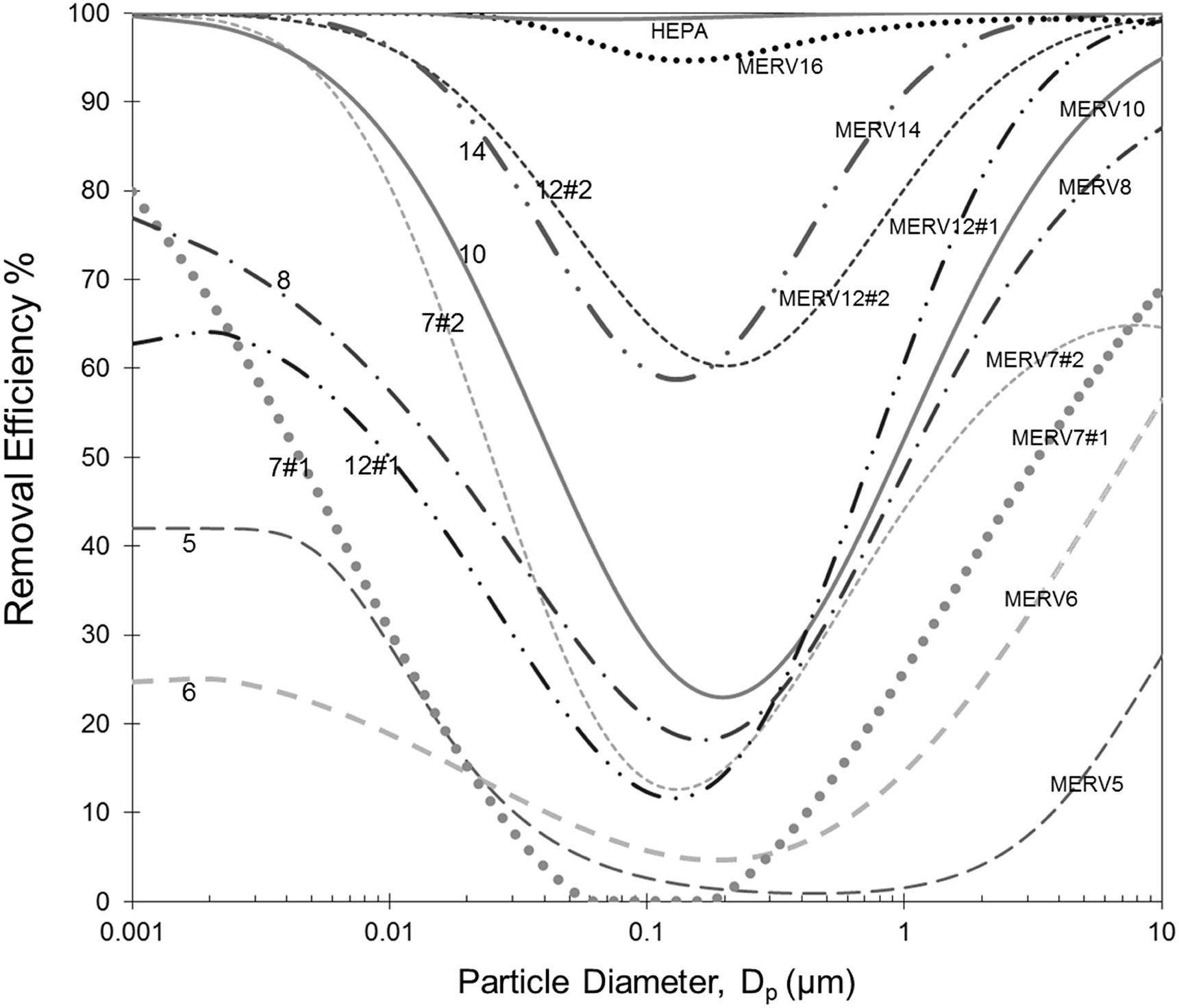
Estimates of HVAC filtration efficiency for fine and ultrafine particles of outdoor origin
Department of Civil, Architectural and Environmental Engineering, Illinois Institute of Technology, Chicago, IL, USA Received 31 July 2014, Revised 26 August 2014, Accepted 3 September 2014, Available online 4 September 2014. Abstract This work uses 194 outdoor particle size distributions (PSDs) from the literature to estimate single-pass heating, ventilating, and air-conditioning (HVAC) filter removal efficiencies -
 2014-05-29
Planes’ exhaust could be harming communities up to 10 miles from LAX
By Dan Weikel and Tony Barboza May 29, 2014 5 AM PT High levels of potentially harmful exhaust particles from jets using Los Angeles International Airport have been detected in a broad swath of densely populated communities up to 10 miles east of the runways, a new air quality study reported Thursday. The research, believed to