Skip to content
  • STNI
  • Statistics
    • Ops and Passengers
      • King County International Airport (Boeing Field) Annual Operations
    • Financials
    • Aviation fuel uplift in the State of Washington 2018 – 2025
      • Aviation Fuel Tax Revenue in the State of Washington 1983-2025
      • Aviation Fuel Uplift at Sea-Tac Airport
    • Air Quality Monitoring
    • Flight Tracking
      • Flow and Flight Tracks
      • Five Year Comparison
      • Busiest Hours and Days
    • SEL Noise Reports & Graphs
      • About The Permanent Noise Monitors
      • Minutes of Quiet by Noise Monitor
      • Noise Events mapped
      • Noise Events (SEL)
    • Runways
    • Employees
    • Real Estate
      • Port Properties and Trees mapped
    • Parking
  • Events
  • Protest
    • Regular Events
    • Legislation 2026
    • Complain about a particular flight
    • Advocacy Organizations
    • Media Outlets
    • People
    • The Port of Seattle
      • Commission Meetings
      • Public Records Requests
      • StART
      • Highline Forum
    • Contact Your Electeds
  • Resources
    • FAQs
      • FAA Occurrences/Accidents/Indents
    • The SAMP
      • SAMP Public Comment Template
        • Two versions of Appendix K: NEPA/SEPA 2018 vs 2023
      • SAMP NTP: 31 projects by the numbers
      • SEPA Draft EIS (2026)
      • SAMP Record of Decision/FONSI (2025)
      • SAMP Draft EA (October 2024)
      • 2018 Scoping
    • Port Packages
      • Port Package Property Costs
      • Port Packages mapped
      • The Port Package Explainer
      • So you want a (first-time) Port Package? Start here
      • Port Package Looker Upper
      • How do I determine if I have a Port Package or Avigation Easement?
      • Progress on Port Package Update legislation
      • Having a Port Package Problem?
      • Port Package Site Visit Follow-Up
    • Document Library
    • Explainers
      • The Airport Law Cheat Sheet
      • The Grant Explainer
    • External Articles
    • History
      • Timeline
      • The Sea-Tac Communities Plan
        • Sea-Tac Communities Plan – Planning Maps
      • PSRC Third Runway Decision Process
    • Studies
    • Videos
  • Stories
  • Mission
  • Subscribe
  • Contact
Scroll down to content

Get InformedStay Informedx

I understand that you will never share my information with anyone, you will only use it to keep me updated on relevant events and that I may unsubscribe at any time.

STNI

STNISea-Tac Noise.Info

  • Solve for Sea-Tac. Solve for every airport.
  • Since 2016, working to obtain justice for everyone living under the flight path.
  • Less Noise. Cleaner Air. Better Public Health. Compensation.
  • Everything you think you know about the airport is wrong.

TagUltrafine Particles(75)

Advanced Search Options

  • Dates
  • Media
    • External Articles
    • Images
    • PDFs
    • Video
    • Audio
  • Order By
  • 2020-10-19

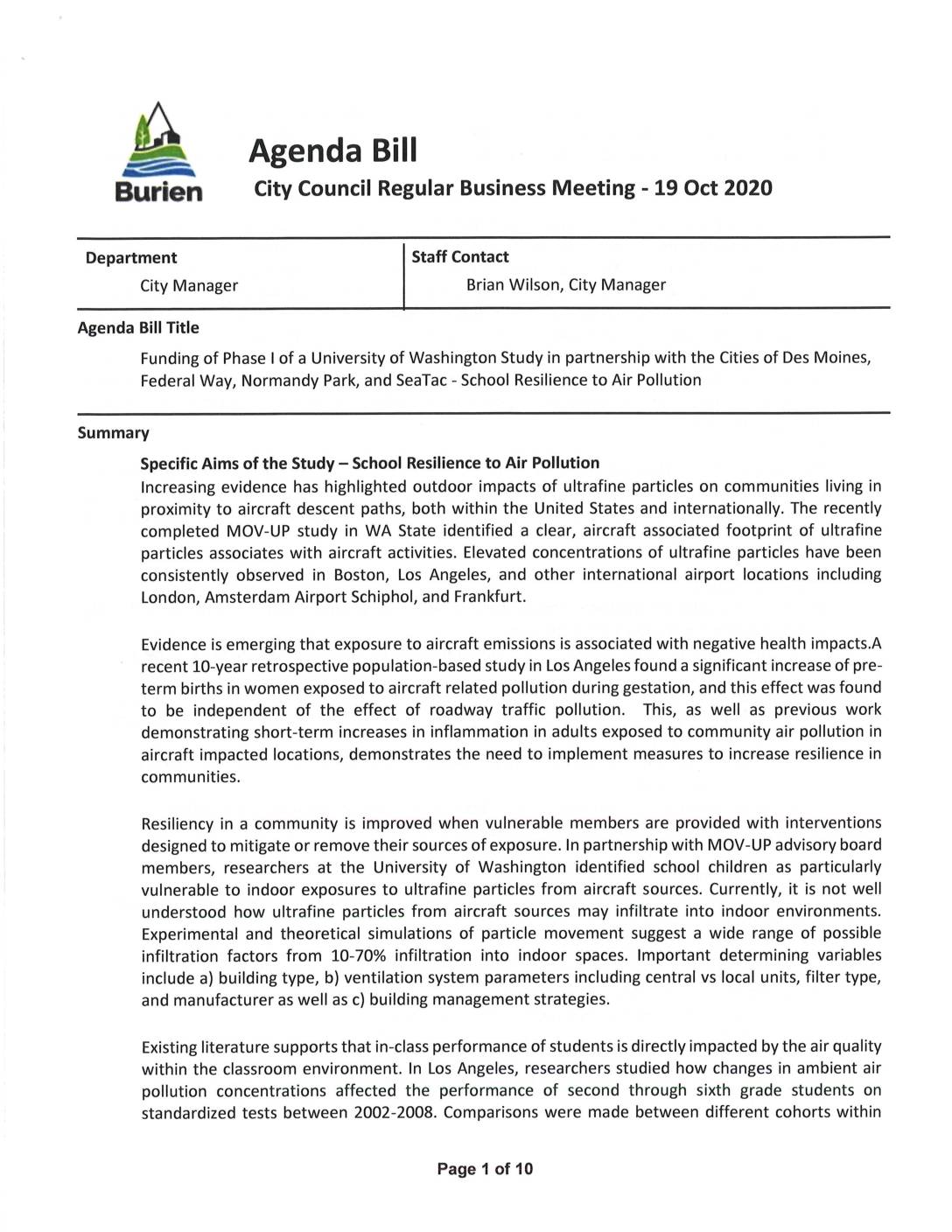
    Funding of Phase I of a University of Washington study in partnership with the cities of Des Moines, Federal Way, Normandy Park, and SeaTac — School resilience to air pollution

    In October 2020, the City of Burien considered joining Des Moines, Federal Way, Normandy Park, and SeaTac in funding a $62,500 University of Washington study examining how ultrafine particles from aircraft emissions penetrate school buildings near Sea-Tac Airport. The first phase of the study would assess the air filtration efficiency of five schools located north and south of the airport, while a proposed second phase ($250,000) would test interventions to improve indoor air quality and measure their impact on student health and academic performance. Each participating city was asked to contribute $12,500, with the City Manager recommending approval of an Interlocal Agreement to move the project forward.
    TagsCity of Burien, indoor air quality, Schools, Ultrafine Particles, University Of WashingtonFolder2020
  • 2020-07-01

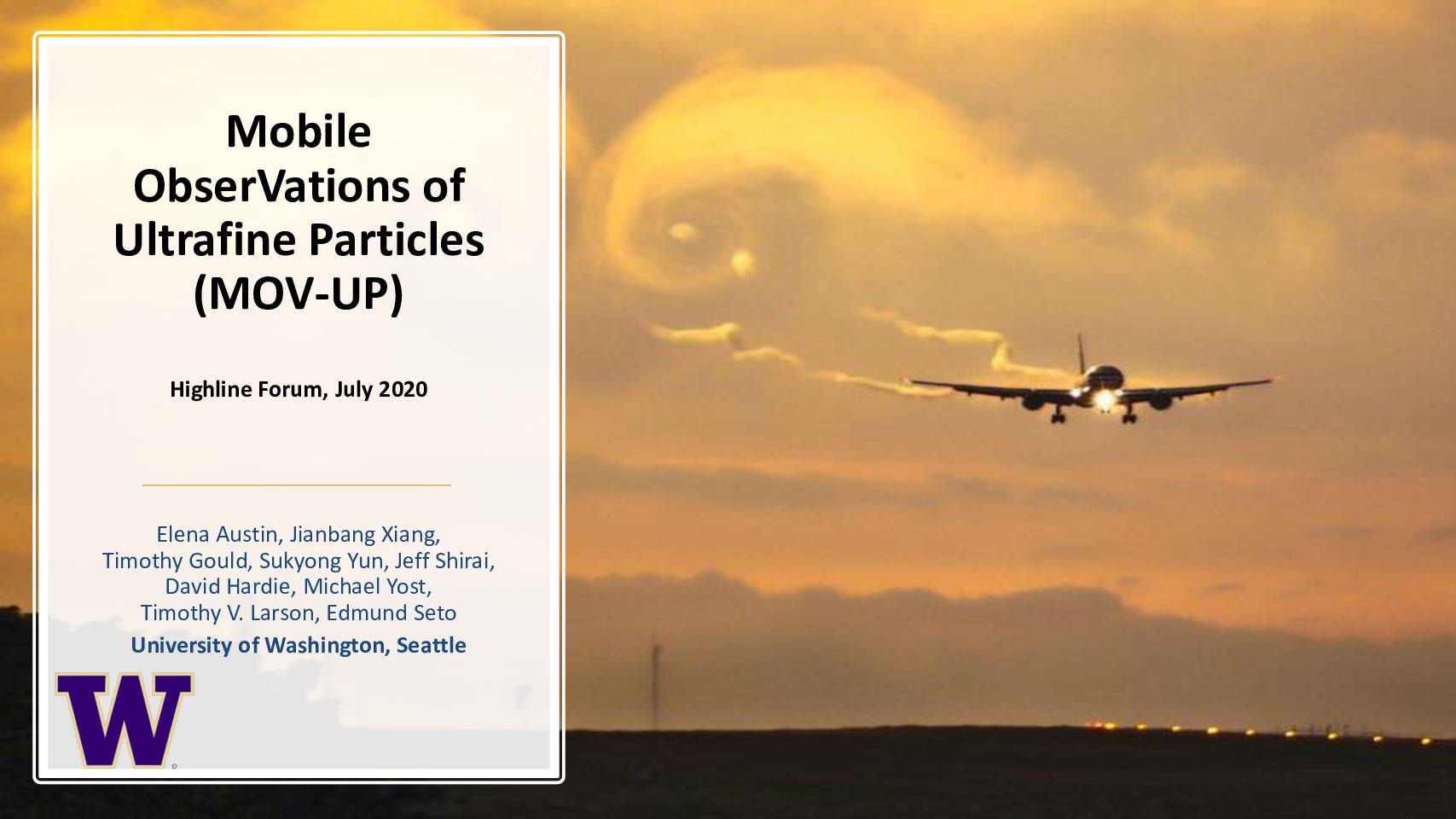
    Mobile ObserVations of Ultrafine Particles (MOV-UP)

    Researchers at the University of Washington conducted the MOV-UP study to measure ultrafine particle (UFP) pollution around Seattle-Tacoma International Airport and the neighborhoods affected by its air traffic. The study aimed to determine how much of the UFP exposure in surrounding communities comes specifically from jet aircraft, which emit extremely tiny particles (under 30 nanometers) along flight paths, versus other sources like diesel vehicles on nearby roads. Findings and community feedback were shared with local governments to inform air quality and noise policy decisions.
    TagsHighline Forum, MOV-UP, Sea-Tac Airport, UFP, Ultrafine Particles, University Of WashingtonFolderHighline Forum 2017
  • 2020-04-01

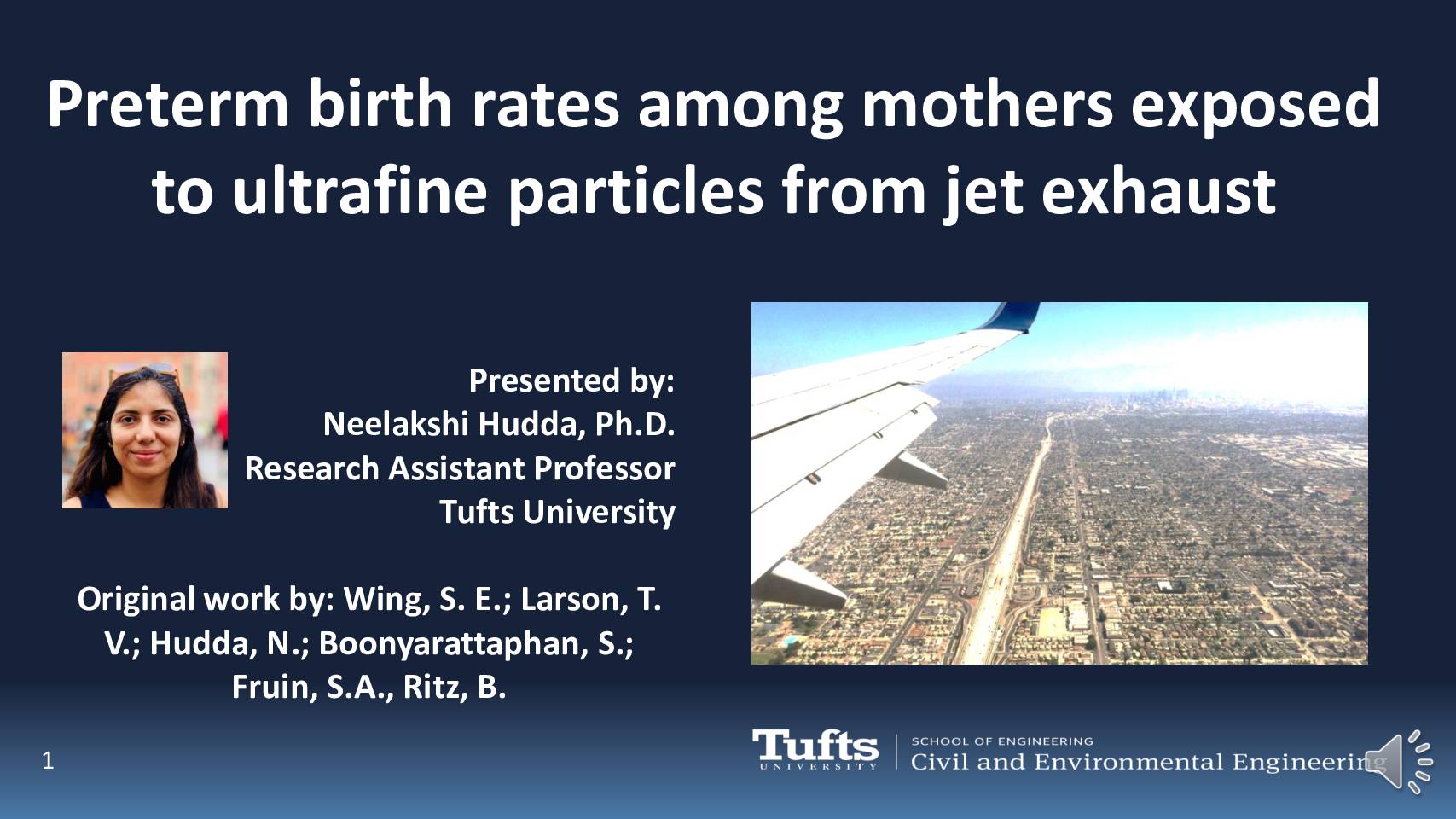
    Preterm birth rates among mothers exposed to ultrafine particles from jet exhaust

    A peer-reviewed study by researchers from Tufts, UCLA, USC, and the University of Washington found that mothers living near airports and exposed to ultrafine particles from jet exhaust face elevated rates of preterm birth. The research, published in Environmental Health Perspectives in 2020, is particularly relevant to communities near large airports like Sea-Tac, where millions of residents live within the impact zone of aircraft emissions. The findings carry significant environmental justice implications, as near-airport communities with high pollution exposure are often among the most vulnerable populations.
    TagsAviation Emissions, Environmental Justice, Health, Neelakshi Hudda, Ultrafine ParticlesFolderHealth
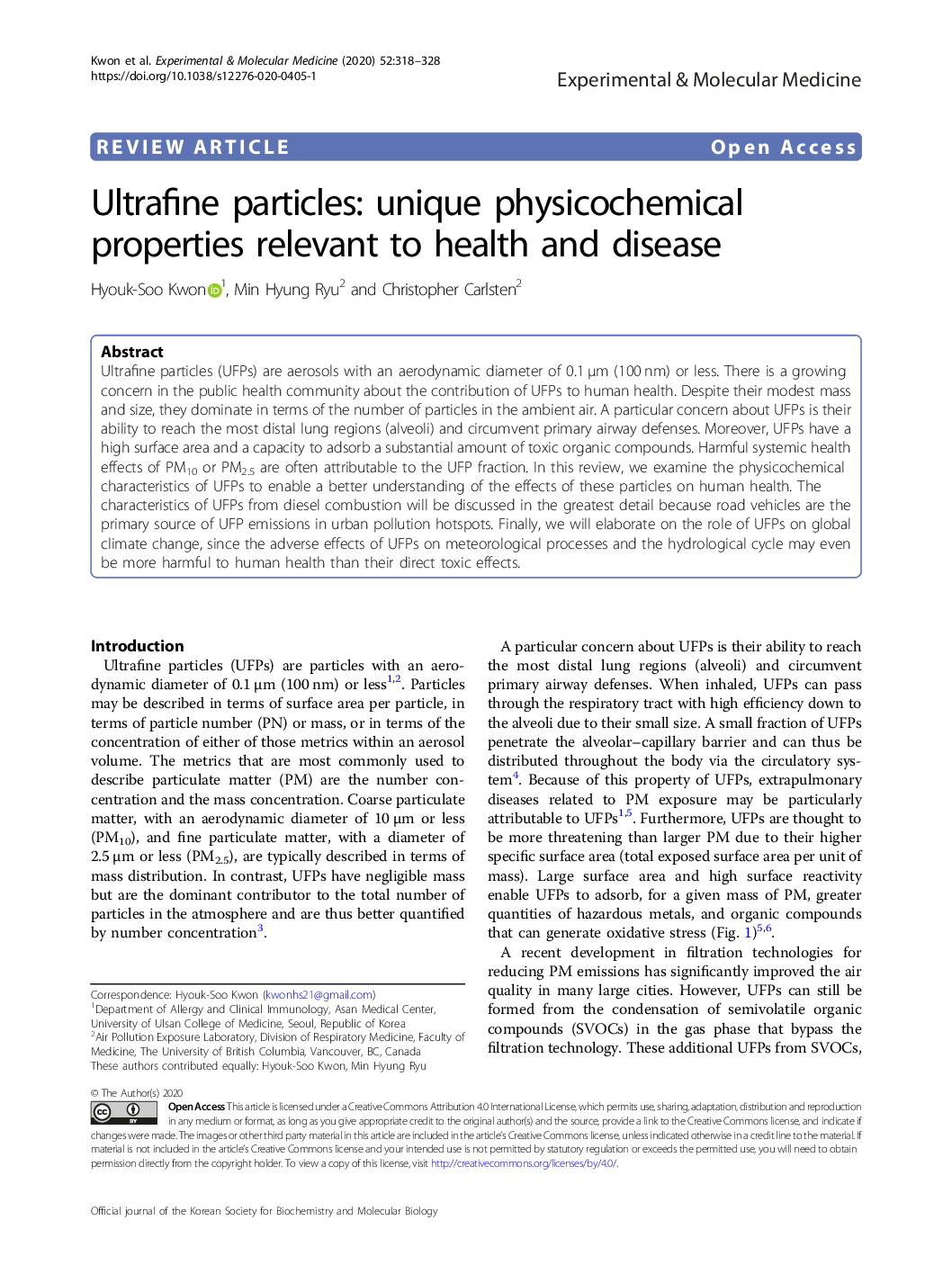
  • Ultrafine particles: unique physicochemical properties relevant to health and disease

    Hyouk-Soo Kwon, Min Hyung Ryu & Christopher Carlsten Experimental & Molecular Medicine volume 52, pages318–328 (2020)Cite this article 15k Accesses 98 Citations 82 Altmetric Metricsdetails Abstract Ultrafine particles (UFPs) are aerosols with an aerodynamic diameter of 0.1 µm (100 nm) or less. There is a growing concern in the public health community about the contribution of UFPs to human health. Despite their modest mass
    CategoriesFrom The Web TagsExperimental & Molecular Medicine, Health, Hyouk-Soo Kwon, Ultrafine ParticlesStudy TopicsUltrafine Particles
  • 2020-03-17

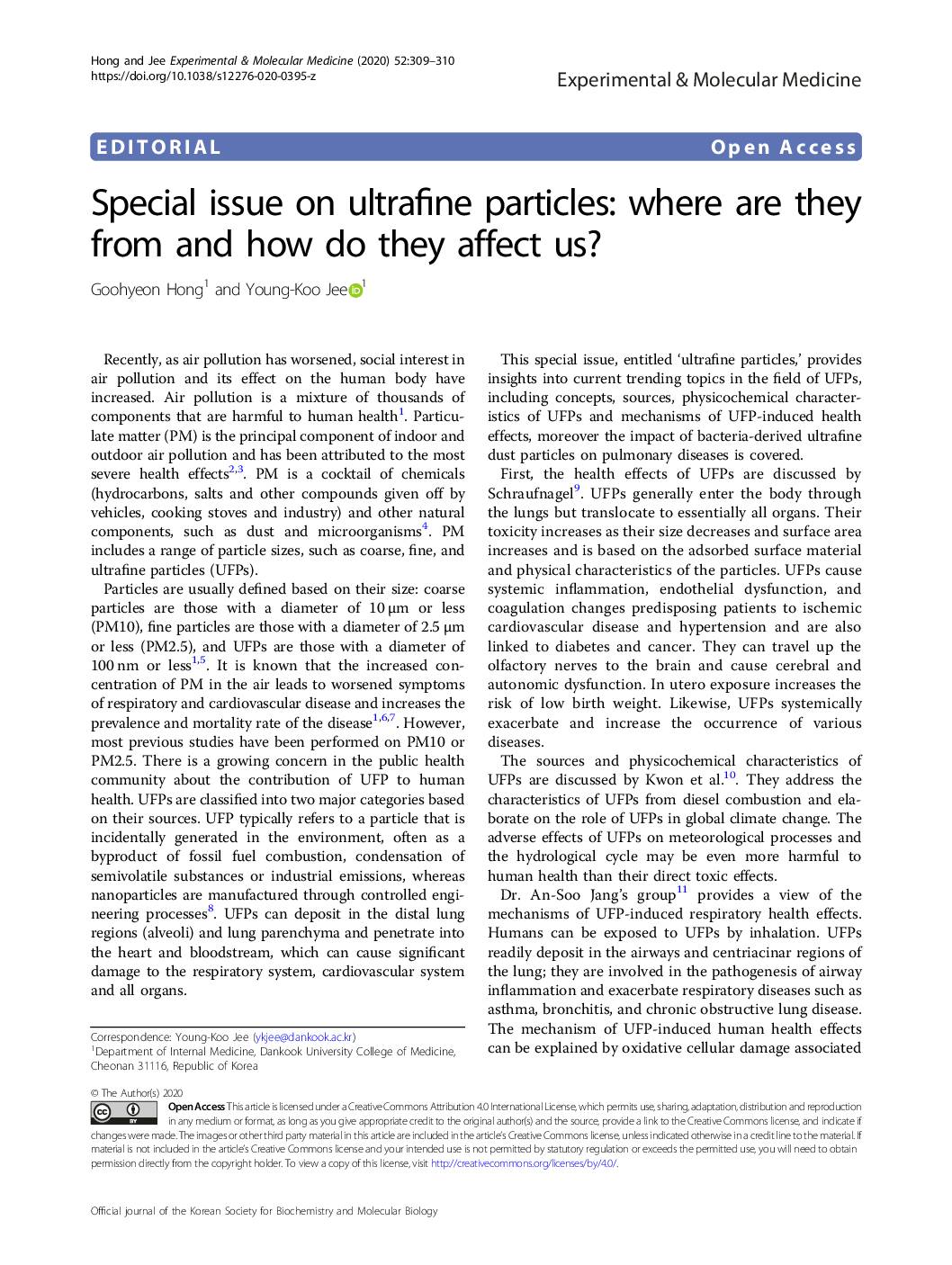
    Special issue on ultrafine particles: where are they from and how do they affect us?

    This editorial introduces a special journal issue examining ultrafine particles (UFPs) — tiny airborne pollutants less than 100 nanometers in diameter produced by fossil fuel combustion, industrial emissions, and other sources. The articles covered explain how UFPs can enter the body through the lungs and travel to virtually all organs, contributing to respiratory disease, cardiovascular problems, diabetes, cancer, and neurological effects. The editors emphasize that while UFPs pose significant health risks, their precise role in many illnesses remains poorly understood, calling for urgent global research into their sources and health impacts.
    TagsExperimental & Molecular Medicine, Health, UFP, Ultrafine ParticlesFolderStudies
  • 2020-01-01

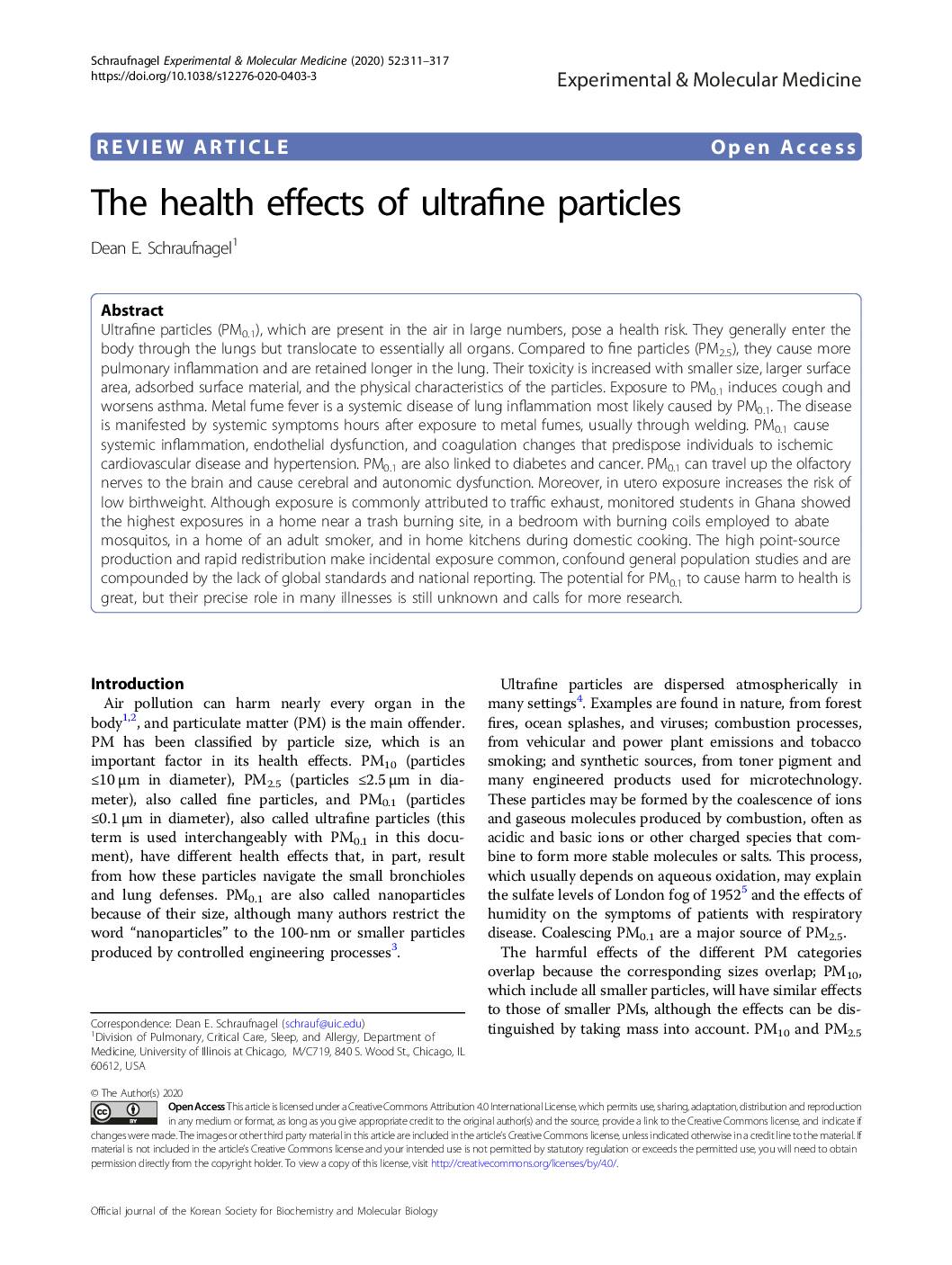
    The health effects of ultrafine particles

    Review article by Dean E. Schraufnagel published in Experimental & Molecular Medicine (2020) 52:311–317, DOI 10.1038/s12276-020-0403-3, examining the health effects of ultrafine particles (PM0.1, also called nanoparticles). Covers PM0.1 sources (traffic exhaust, welding, forest fires, cooking, tobacco smoke), absorption and retention in the lung, translocation to distal organs, pulmonary inflammation, metal fume fever, cardiovascular disease,
    TagsAcademic Journals, Experimental & Molecular Medicine, Health, Ultrafine ParticlesFolderHealthStudy TopicsHealth, Ultrafine Particles
  • 2020-01-01

    Ultrafine particles: unique physicochemical properties relevant to health and disease

    Ultrafine particles (UFPs) are tiny airborne particles 100 nanometers or smaller, produced primarily by diesel combustion from road vehicles. Despite their negligible mass, they vastly outnumber larger particles in the air, can penetrate deep into the lungs and enter the bloodstream, and carry toxic compounds that pose serious health risks. Their emissions also affect rainfall patterns and climate, potentially causing broader public health impacts beyond their direct effects on the human body.
    TagsUFP, Ultrafine ParticlesFolderHealth
  • 2020-01-01

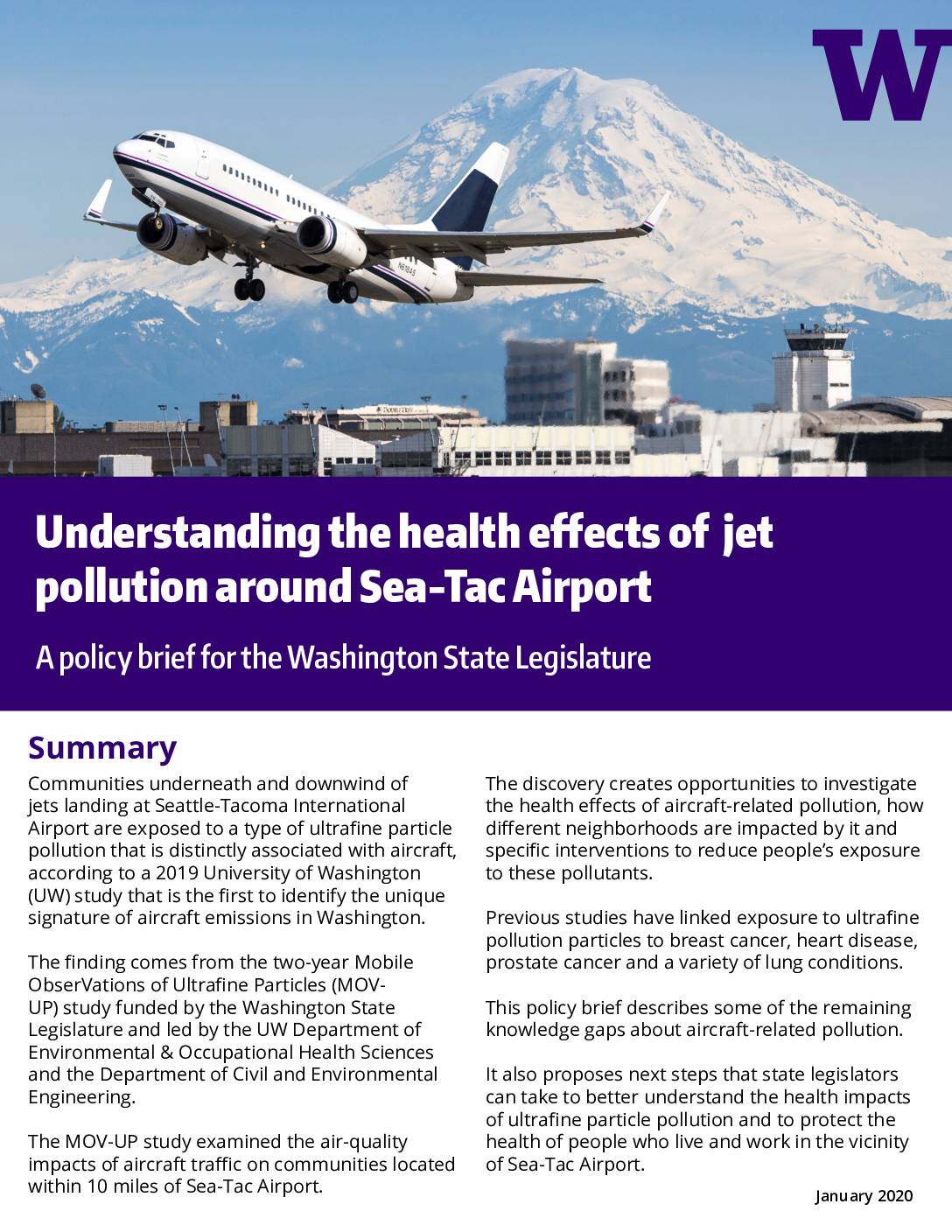
    Understanding the health effects of jet pollution around Sea-Tac Airport

    A 2019 University of Washington study found that communities within 10 miles of Seattle-Tacoma International Airport are exposed to ultrafine particle pollution uniquely linked to aircraft emissions, distinct from roadway traffic pollution. These microscopic particles — 700 times thinner than a human hair — are not currently regulated by federal or state air-quality standards, and prior research has associated them with breast cancer, heart disease, prostate cancer, and lung conditions. The policy brief calls on Washington State legislators to fund a follow-up two-year study to investigate the health impacts on nearby communities, which tend to be poorer and more racially diverse than King County as a whole.
    TagsMOV-UP, Sea-Tac Airport, Ultrafine Particles, University Of Washington, Washington State LegislatureFolderStudies
  • 2019-12-01

    Mobile ObserVations of Ultrafine Particles: The MOV-UP study report

    ★ 32
    The MOV-UP (Mobile ObserVations of Ultrafine Particles) study was a two-year University of Washington research project, funded by the State of Washington, that measured air quality impacts from aircraft traffic on communities living near and beneath the flight paths of Seattle-Tacoma International Airport. Researchers used mobile monitoring methods to collect ultrafine particle data across the affected neighborhoods, working alongside local governments, community members, and an advisory group of agency and city representatives. The findings are intended to inform policymakers and the public about the air pollution risks associated with airport operations in the Seattle-Tacoma region.
    CategoriesKey Documents TagsDEOHS, pollution, UFP, Ultrafine Particles, University Of WashingtonFolderUWDEOHSStudy TopicsAir Quality, Ultrafine Particles
  • The toxic killers in our air too small to see

    Current pollution meters don’t count the very smallest pollutants – nanoparticles. Recent research suggests these tiny toxic substances could be a major cause of illness and death. By Tim Smedley 15th November 2019 A After years of headlines about air pollution, we’ve been misled on a few things about the world’s biggest environmental health problem.
    CategoriesFrom The Web TagsBBC, pollution, UFP, Ultrafine Particles

Posts pagination

Page 1 … Page 3 Page 4 Page 5 Page 6 Page 7 Page 8
Sidebar On/Off

Upcoming Events

  • Part 150 NCP Workshop — Burien
    Add to CalendarMSaturday Oct 17: 10:00am

    Attend a Port of Seattle open house on the Part 150 Study Noise Compatibility Program (NCP). The Part 150 program determines the noise boundary around the airport and opportunities for noise mitigation such as sound insulation.

    [...]
  • Part 150 NCP Workshop — SeaTac
    Add to CalendarMMonday Oct 19: 6:00pm

    Attend a Port of Seattle open house on the Part 150 Study Noise Compatibility Program (NCP). The Part 150 program determines the noise boundary around the airport and opportunities for noise mitigation such as sound insulation.

    [...]
  • Part 150 NCP Workshop — Des Moines
    Add to CalendarMTuesday Oct 20: 6:00pm

    Attend a Port of Seattle open house on the Part 150 Study Noise Compatibility Program (NCP). The Part 150 program determines the noise boundary around the airport and opportunities for noise mitigation such as sound insulation.

    [...]

[See all...]


Help study childhood asthma. Get free HEPA filter!

read more...

Issues

Sea-Tac Airport is currently undergoing the largest and longest expansion in its history, collectively known as the Sustainable Airport Master Plan (SAMP). Some of it you can already hear, but you’re probably not aware of what it all means. Here’s what you need to know.
read more...

Read This!

As the source for federal transportation grants, the Puget Sound Regional Council was charged with developing a system to meet the growing need for commercial aviation. When the search for a second airport failed, they authorized the Port of Seattle to build the Third Runway, with a mandate to develop a noise abatement and mitigation program. In their effort to stop the Third Runway, the ACC argued over every detail of the Port's efforts--including property buyouts and sound insulation. The dispute was meant to be settled by a three member Expert Arbitration Panel. This is their final report. It finds 2-1, that the Port's program was insufficient in several respects. Despite that, funding for the Third Runway was approved by the PSRC, and the 'Port Package' program, proceeded largely unchanged. Expert Arbitration Panel's final decision finding that the Port of Seattle had not shown sufficient reduction in real on-the-ground noise impacts to satisfy noise reduction conditions required for approval of a third runway at Sea-Tac International Airport. The majority decision concluded the Port's noise abatement programs were insufficient despite being impressive in scope.
continue...

  • Sea-Tac Noise.Info
  • Connect with STNI

    • Subscribe
    • Port Package Problem?
    • Donate
    • Podcast
    • Socials
      • Facebook
      • X (Twitter)
      • Bluesky
      • Instagram
  • Learn

    • Frequently Asked Questions
    • Explainers
    • Youtube
    • Research Requests
    • Complain about one flight
  • Goals

    Fulfill the promises of 1976:
    • Compensation
    • Reduced noise
    • Improved air quality
    • Environmental remediation
Login/Register
©2026•Data Privacy

Message

We use cookies to provide basic functionality. We also provide access to search engines in order to provide site analytics. We do not sell or share your data.
V V