TagThird Runway(1084)
-
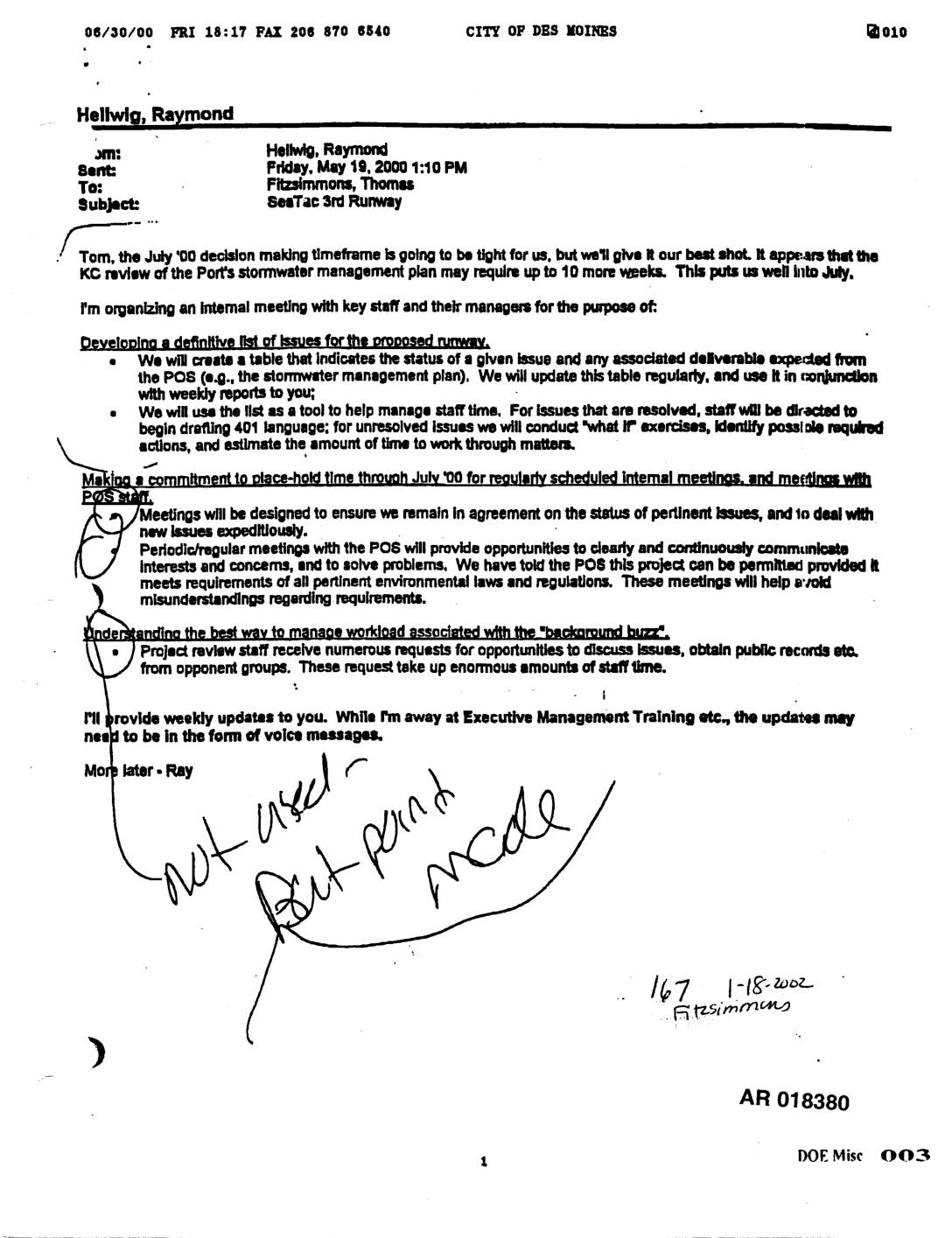 2000-05-19
Exhibit 167: Email from Raymond Hellwig to Thomas Fitzsimmons Re: Sea-Tac 3rd Runway Permitting Timeline
Email dated May 19, 2000 from Raymond Hellwig (City of Des Moines) to Thomas Fitzsimmons regarding the SeaTac 3rd Runway permitting process. Discusses tight July 2000 decision-making timeframe, King County review of Port Of Seattle stormwater management plan requiring up to 10 more weeks, development of a definitive issues list for the proposed runway, drafting -
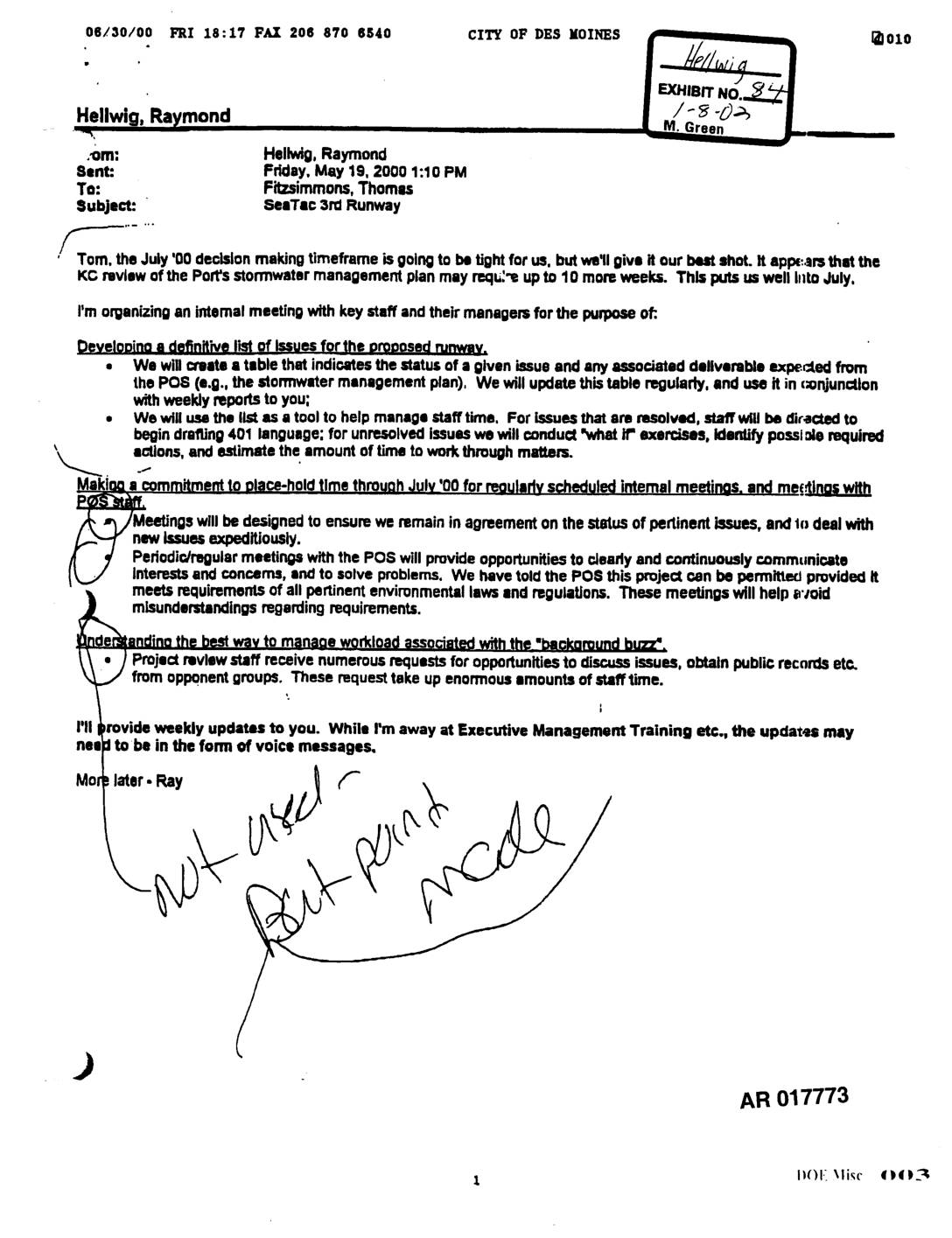 2000-05-19
EXH AR017773: Internal Email — Sea-Tac Third Runway Decision-Making Timeline and Workload Management
Email from Raymond Hellwig to Thomas Fitzsimmons dated May 19, 2000, regarding the SeaTac Third Runway permitting process and July 2000 decision-making timeframe. Discusses King County review of Port Of Seattle stormwater management plan requiring up to 10 more weeks, internal staff meetings to develop a definitive issues list, drafting 401 language for resolved issues, -
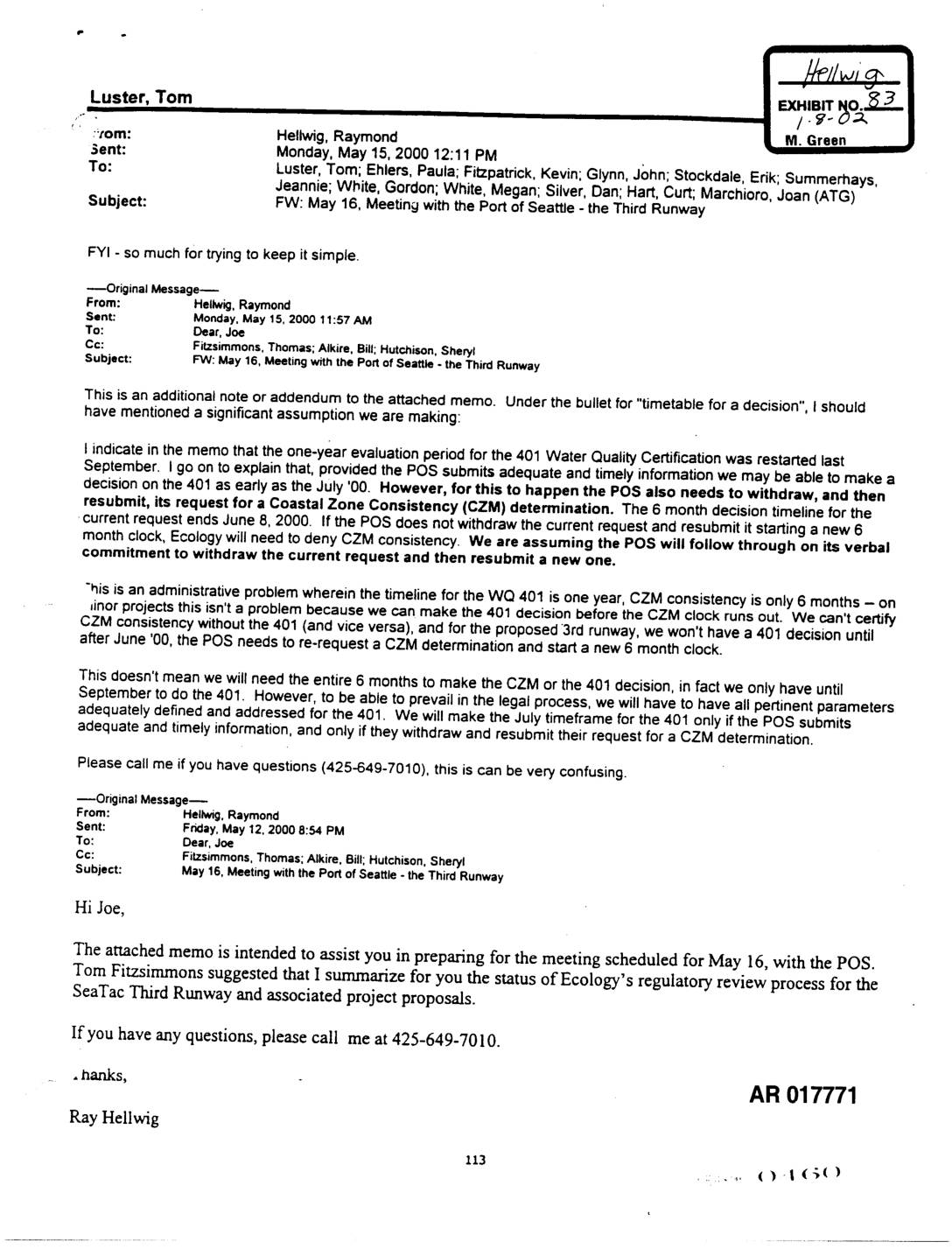 2000-05-15
EXH AR017771: Ecology Internal Email — May 16 Meeting with Port Of Seattle on Third Runway 401 and CZM Review
Raymond Hellwig (Washington State Department of Ecology) emails Joe Dear and colleagues on May 15, 2000, as an addendum to a memo preparing for a May 16 meeting with Port Of Seattle regarding the Sea-Tac Third Runway. Explains that the one-year 401 Water Quality Certification evaluation period restarted September 1999, with a possible July 2000 -
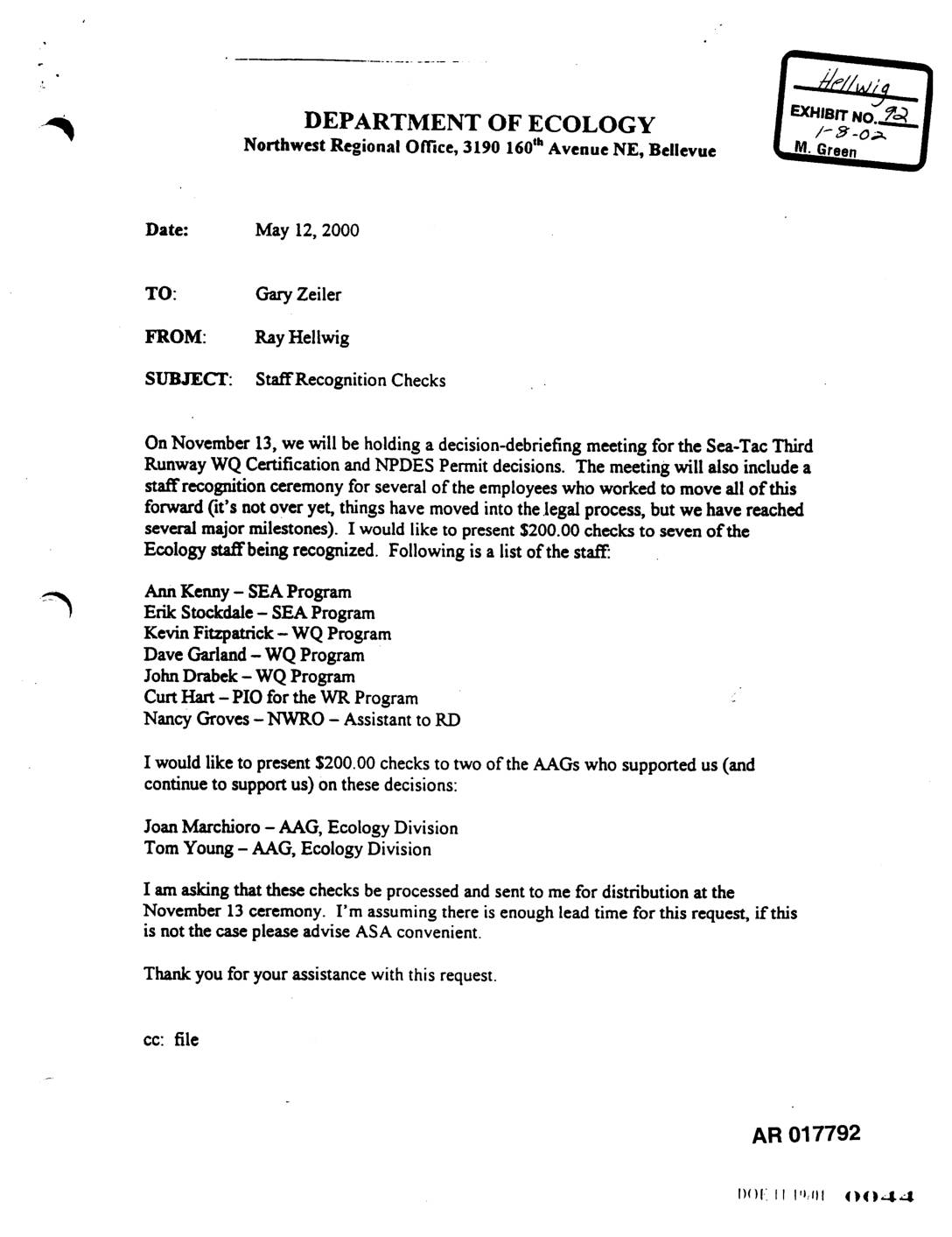 2000-05-12
EXH AR017792: Ecology Staff Recognition Checks — Sea-Tac Third Runway WQ Certification and NPDES Permit
Memo dated May 12, 2000 from Ray Hellwig (Northwest Regional Office, Department of Ecology) to Gary Zeiler requesting $200.00 recognition checks for seven Ecology staff and two AAGs (Joan Marchioro and Tom Young, Ecology Division) involved in the Sea-Tac Third Runway Water Quality Certification and NPDES Permit decisions. Staff recognized include Ann Kenny, Erik Stockdale -
 2000-05-12
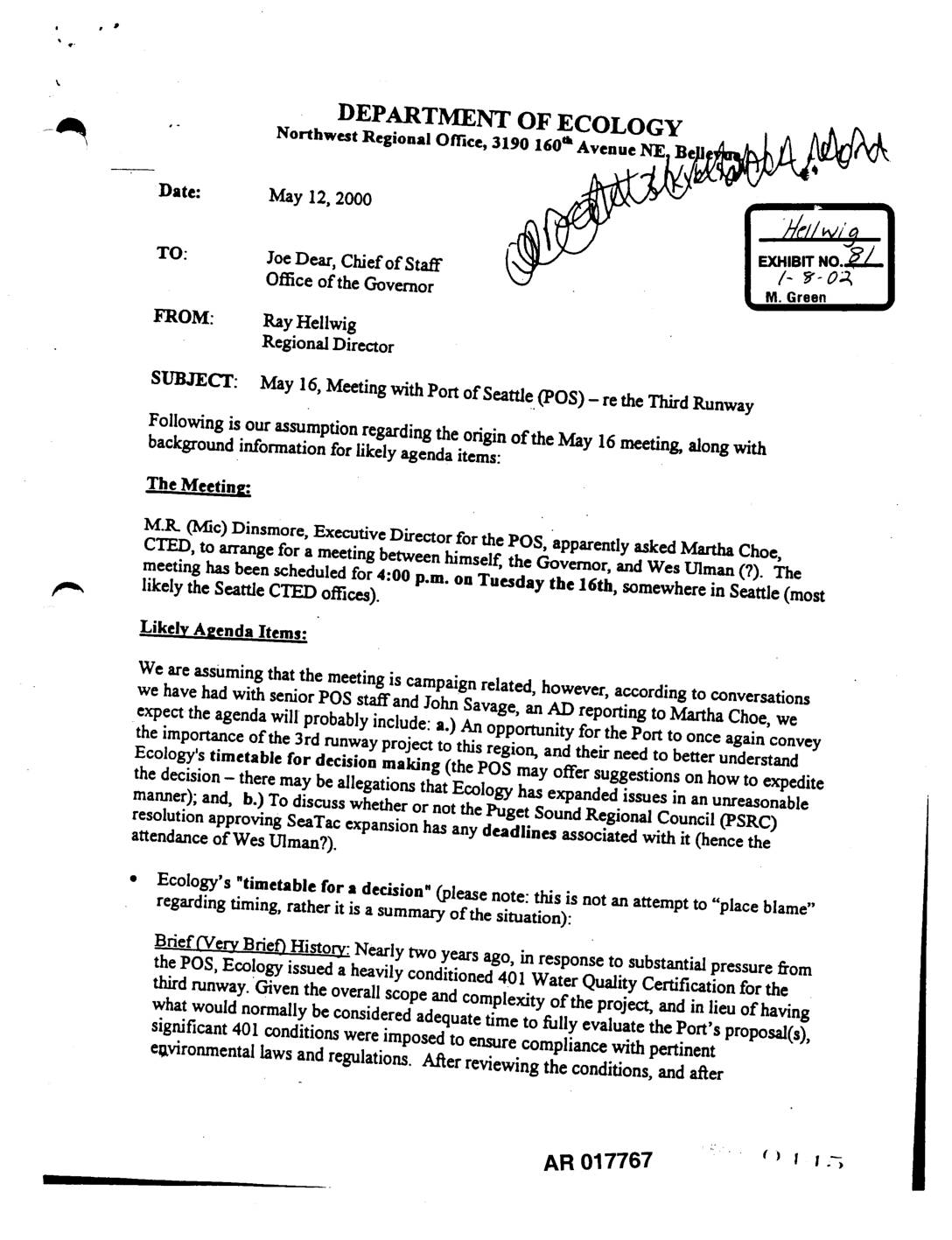
EXH AR017767: Ecology Memo to Governor’s Chief of Staff on May 16 Meeting with Port Of Seattle Re Third Runway
Memo dated May 12, 2000 from Ray Hellwig, Regional Director, Washington Department of Ecology (Northwest Regional Office), to Joe Dear, Chief of Staff, Office of the Governor, regarding a May 16 meeting between Mic Dinsmore (Executive Director, Port Of Seattle), the Governor, and Wes Ulman, arranged by Martha Choe at CTED. Covers Ecology’s 401 Water -
 2000-05-11
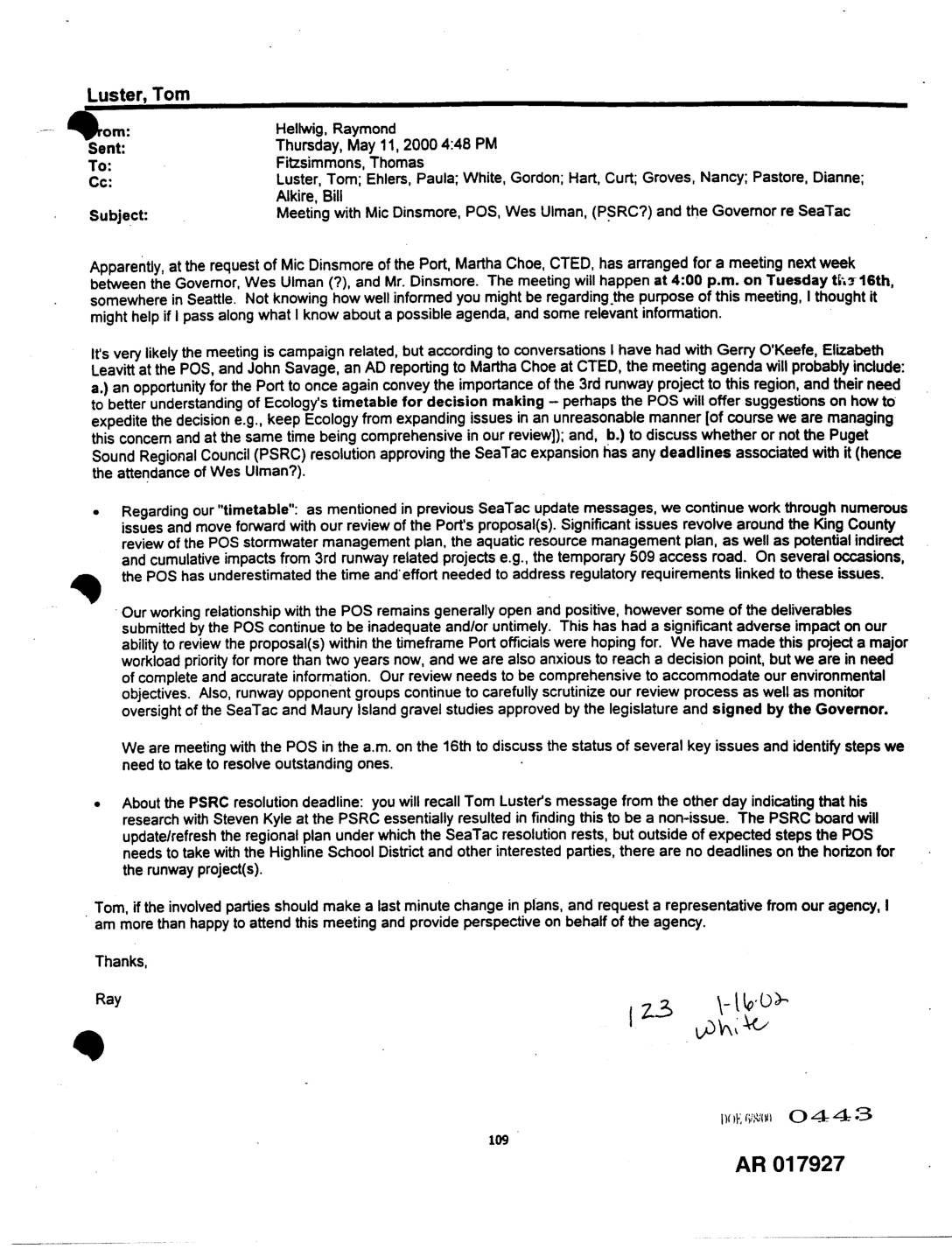
EXH AR017927: Internal Email — Meeting with Mic Dinsmore, Port Of Seattle, Wes Ulman, Puget Sound Regional Council, and Governor re Sea-Tac Airport Third Runway
Internal email from Raymond Hellwig to Thomas Fitzsimmons, copied to Tom Luster and others at Washington State Department of Ecology, dated May 11, 2000 (AR017927). Describes a meeting arranged by Martha Choe (CTED) for May 16, 2000 between Governor, Mic Dinsmore (Port Of Seattle), and Wes Ulman (Puget Sound Regional Council) regarding the Sea-Tac Airport -
 2000-05-11
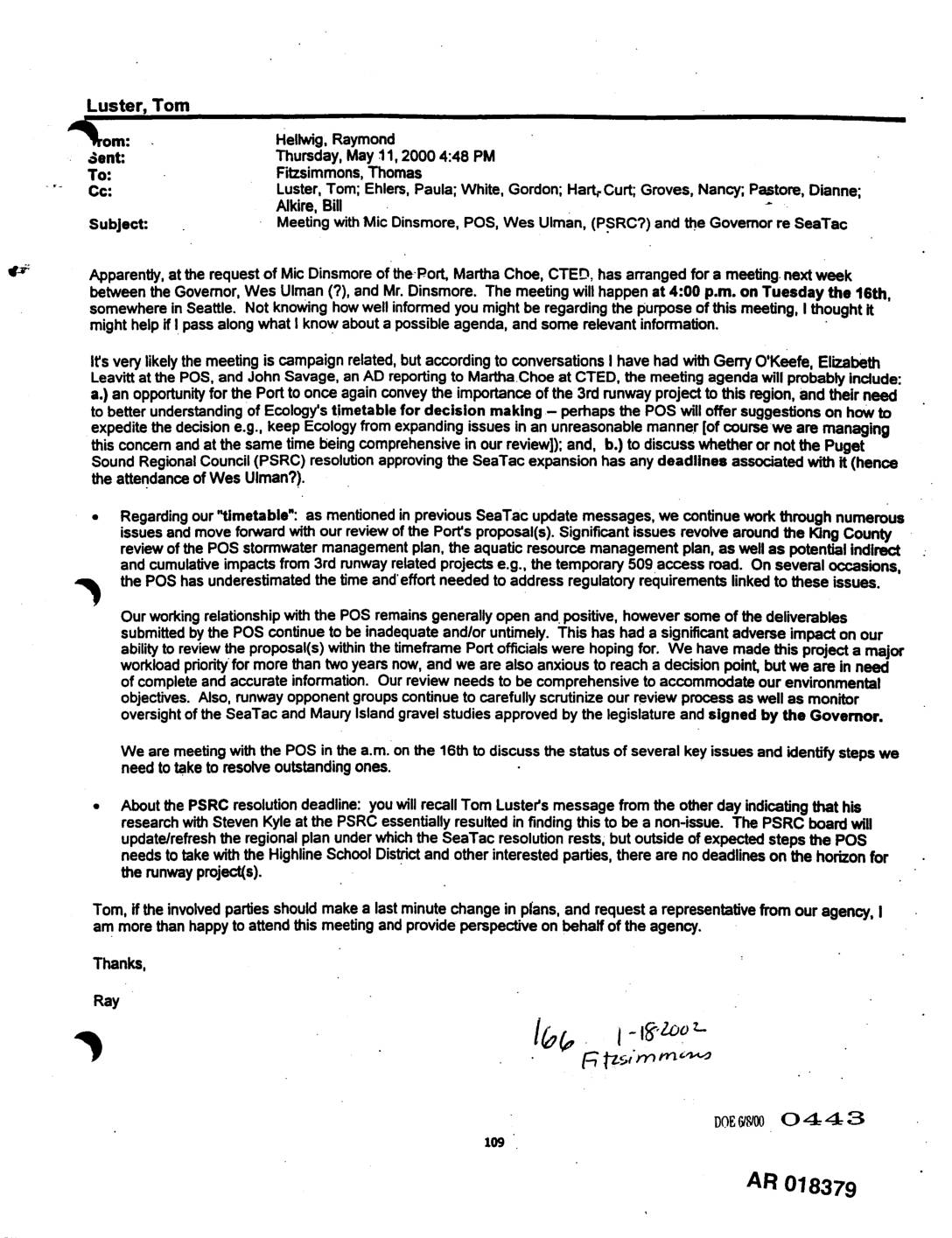
EXH AR018379: Email — Meeting with Mic Dinsmore, Port Of Seattle, Wes Ulman, PSRC, and Governor re Sea-Tac Airport Third Runway
Email from Raymond Hellwig (Ecology) to Thomas Fitzsimmons, copied to Tom Luster and others, dated May 11, 2000, regarding a meeting arranged by Martha Choe (CTED) for May 16, 2000 between Governor Gary Locke, Wes Ulman, and Mic Dinsmore (Port Of Seattle) about the Sea-Tac Airport third runway project. Agenda items include Ecology’s timetable for -
 2000-05-05
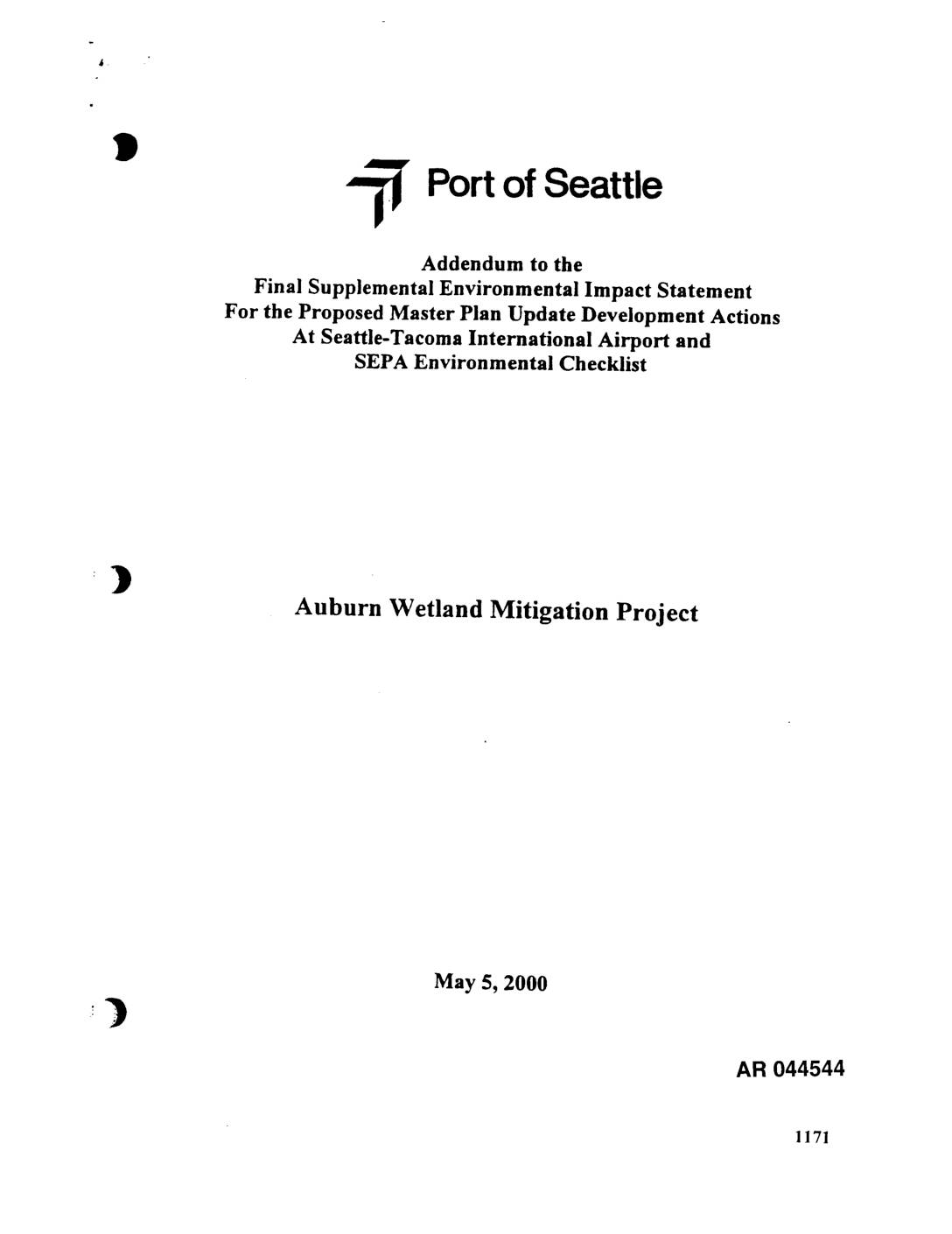
EXH AR044544: SEPA Addendum — Auburn Wetland Mitigation Project, Port Of Seattle Master Plan Update, STIA
Port Of Seattle SEPA Addendum (POS SEPA No. 00-07) dated May 5, 2000, to the Final Supplemental Environmental Impact Statement for the Proposed Master Plan Update Development Actions at Seattle-Tacoma International Airport (STIA), issued jointly by FAA and Port Of Seattle in May 1997. Documents the Auburn Wetland Mitigation Project on an approximately 67-acre parcel -
 2000-05-03
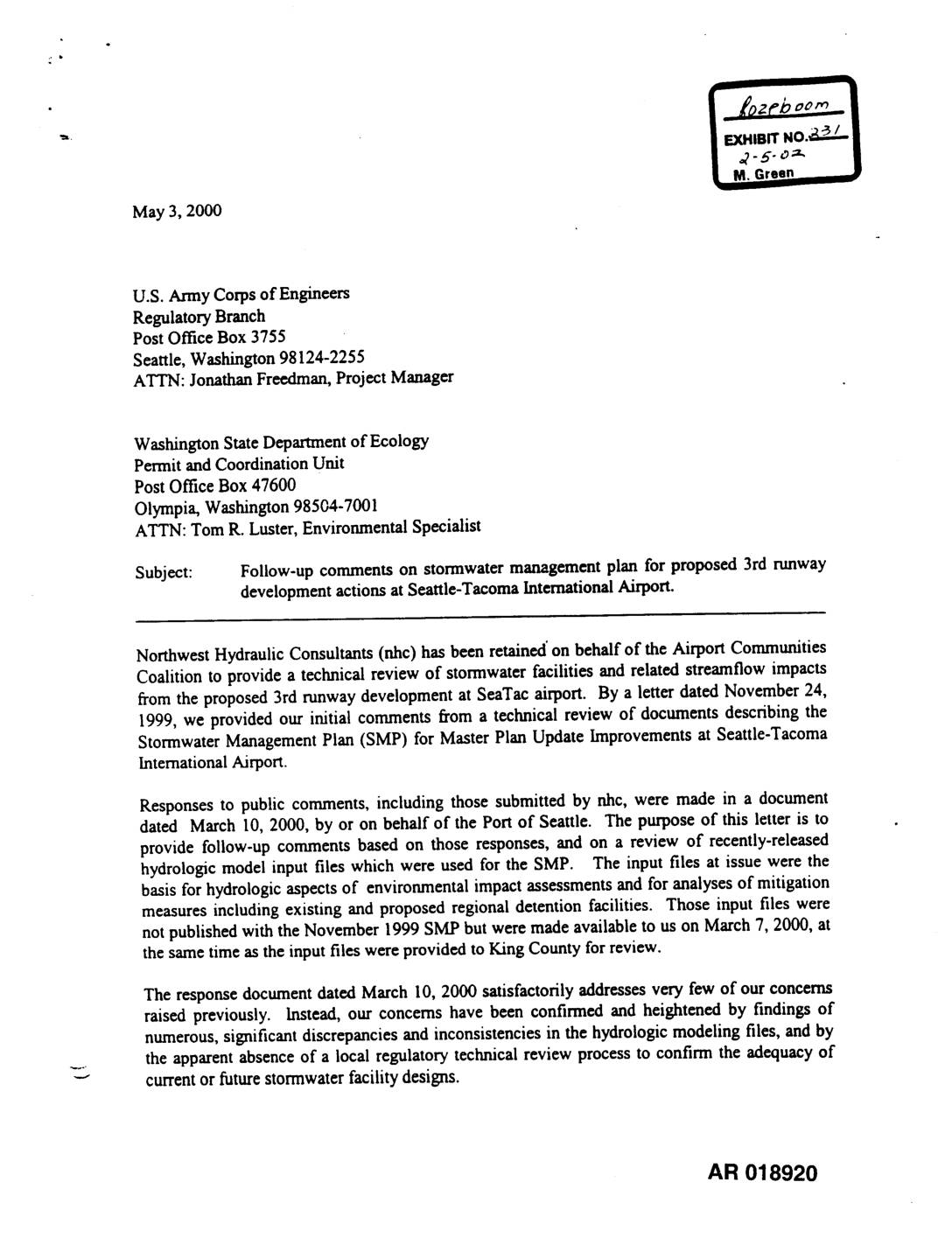
Exhibit 231: Follow-Up Comments by Northwest Hydraulic Consultants on Stormwater Management Plan for Proposed Third Runway at Sea-Tac Airport
Northwest Hydraulic Consultants submitted follow-up technical comments in May 2000 raising serious concerns about flawed stormwater modeling used to assess the impact of a proposed third runway at Seattle-Tacoma International Airport. The consultants identified major inconsistencies in soil-type assumptions and runoff parameters in the hydrologic models, concluding that the Stormwater Management Plan's predictions of detention facility performance were unreliable and required a complete overhaul. The letter also flagged a lack of adequate local regulatory oversight to ensure that Port of Seattle stormwater designs complied with King County surface water standards. -
 2000-05-03
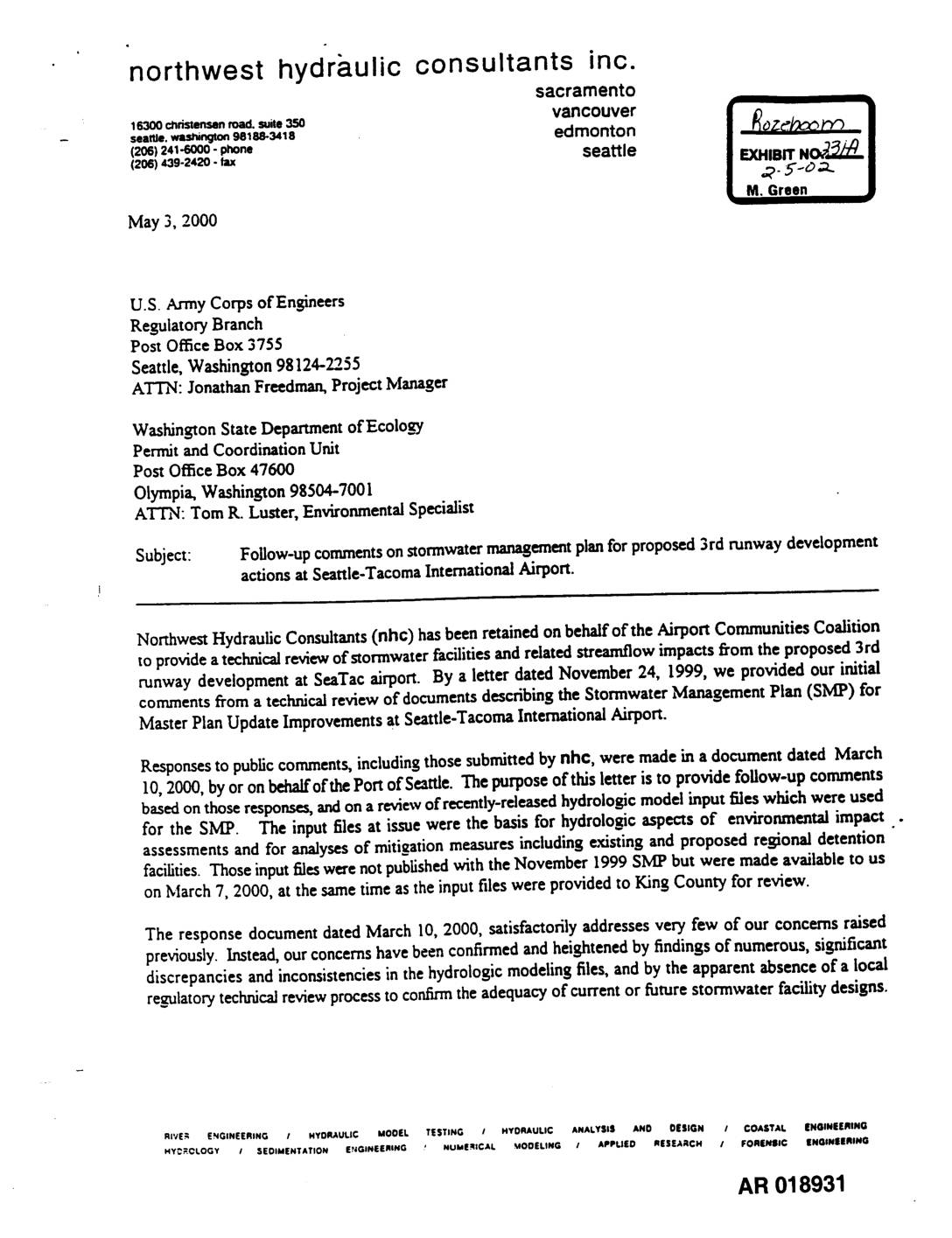
Exhibit AR018931: NHC Follow-Up Comments on Stormwater Management Plan for Proposed Third Runway Development at Seattle-Tacoma International Airport
A technical review by Northwest Hydraulic Consultants, submitted to the U.S. Army Corps of Engineers and Washington State Department of Ecology in May 2000, raises serious concerns about the stormwater management plan for Seattle-Tacoma International Airport's proposed third runway. The report identifies major flaws in the hydrologic modeling used to assess drainage impacts, including inconsistent soil-type assumptions and unreliable flow predictions for Miller Creek. The consultants call for a complete overhaul of the modeling process, independent technical review, and clearer regulatory oversight of the Port of Seattle's stormwater design work.