TagStormwater(373)
-
 2001-04-04
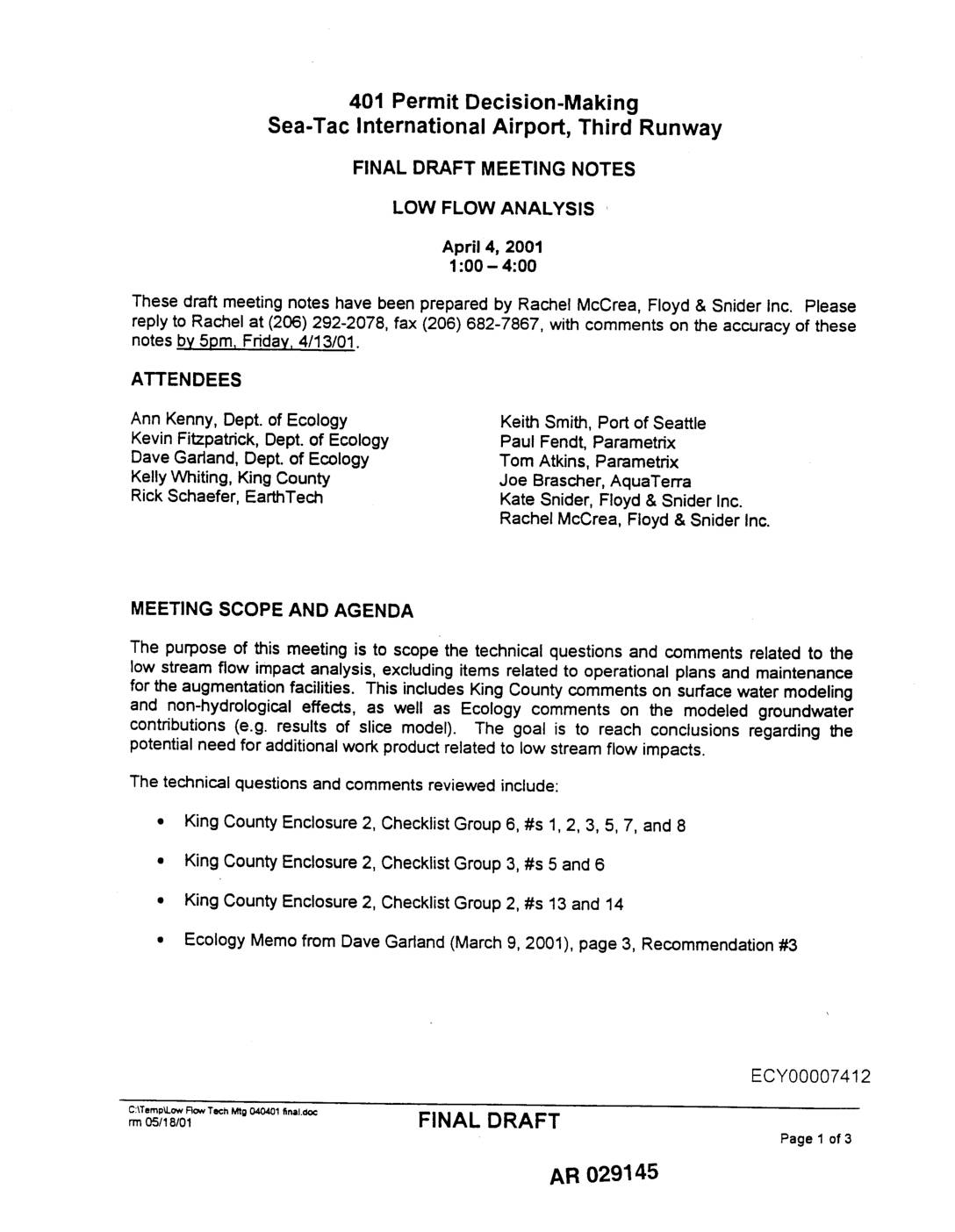
EXH AR029145: 401 Permit Decision-Making, Sea-Tac Airport Third Runway — Final Draft Meeting Notes, Low Flow Analysis
Final draft meeting notes prepared by Rachel McCrea of Floyd & Snider Inc. from a April 4, 2001 technical meeting on low streamflow impact analysis for the Sea-Tac Airport Third Runway 401 Permit Decision-Making process. Attendees included representatives from Washington Dept. of Ecology (Ann Kenny, Kevin Fitzpatrick, Dave Garland), King County (Kelly Whiting), EarthTech (Rick -
 2001-04-01
EXH AR026684: Site-Specific Water Quality Standard Copper Bioassay Status RP
This 2001 draft report by Parametrix, Inc. describes a water quality study conducted for the Port of Seattle to assess the feasibility of meeting state water quality standards following construction of a third runway at Seattle-Tacoma International Airport. The study focused on developing a site-specific water-effect ratio (WER) for copper in Miller, Walker, and Des Moines Creeks by conducting toxicity bioassays on stormwater samples collected during storm events. The report summarizes results from initial screening and range-finding phases, with the final site-specific water quality standard still pending completion at the time of publication. -
 2001-03-26
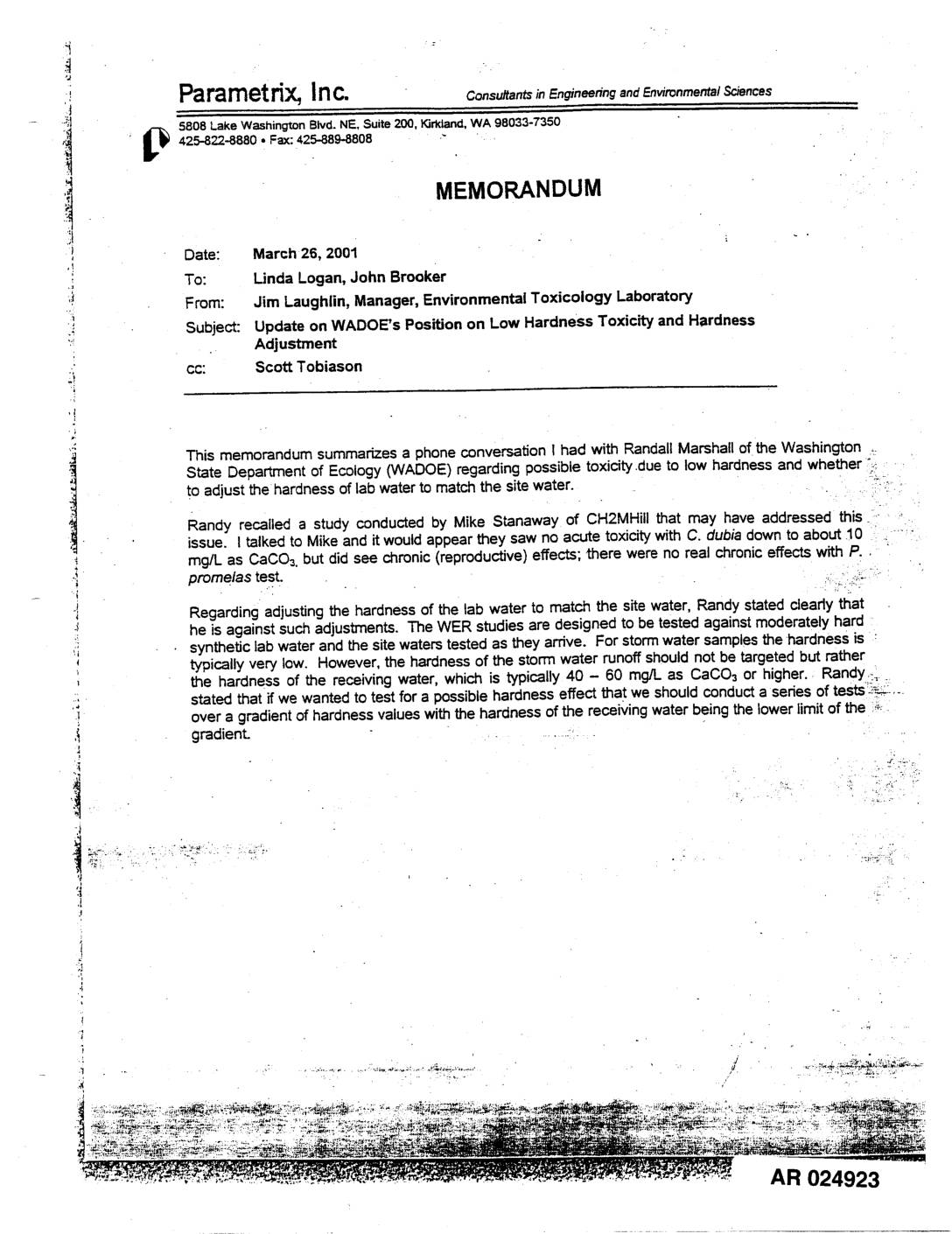
EXH AR024923: Memo WADOE Position Low Hardness Toxicity and Hardness Adjustment
A 2001 internal memo from Parametrix, Inc. summarizes a conversation with the Washington State Department of Ecology (WADOE) about water toxicity testing procedures. The memo reports that WADOE opposes adjusting lab water hardness to match site water, recommending instead that storm water tests target the hardness of the receiving water body, typically 40–60 mg/L as CaCO₃. It also notes that low water hardness (around 10 mg/L) may cause chronic reproductive effects in certain test organisms but not acute toxicity. -
 2001-03-22
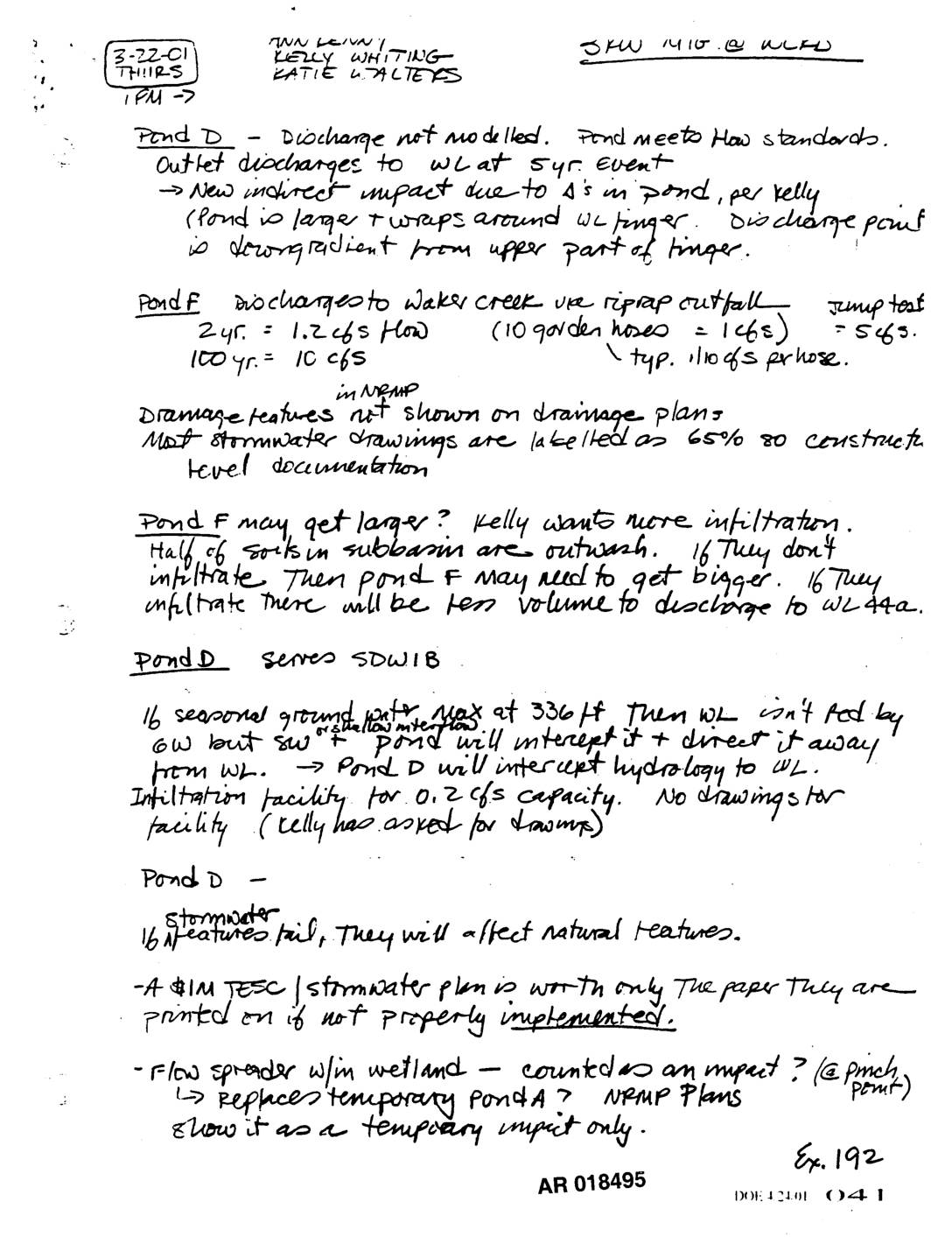
Exhibit 192: Handwritten Meeting Notes on Stormwater Ponds D, F, and G — Wetland Hydrology and Drainage
Handwritten meeting notes dated 3-22-01 (AR 018495–018497, Exhibit 192) from a meeting involving Kelly Whiting, Katie Walters, and others (SKW MIG at WLRD). Notes cover Pond D (discharge not modelled, meets flow standards, indirect impacts to wetlands, SDW1B, seasonal groundwater at 336 ft, infiltration facility 0.2 cfs), Pond F (discharges to Walker Creek via riprap -
 2001-03-22
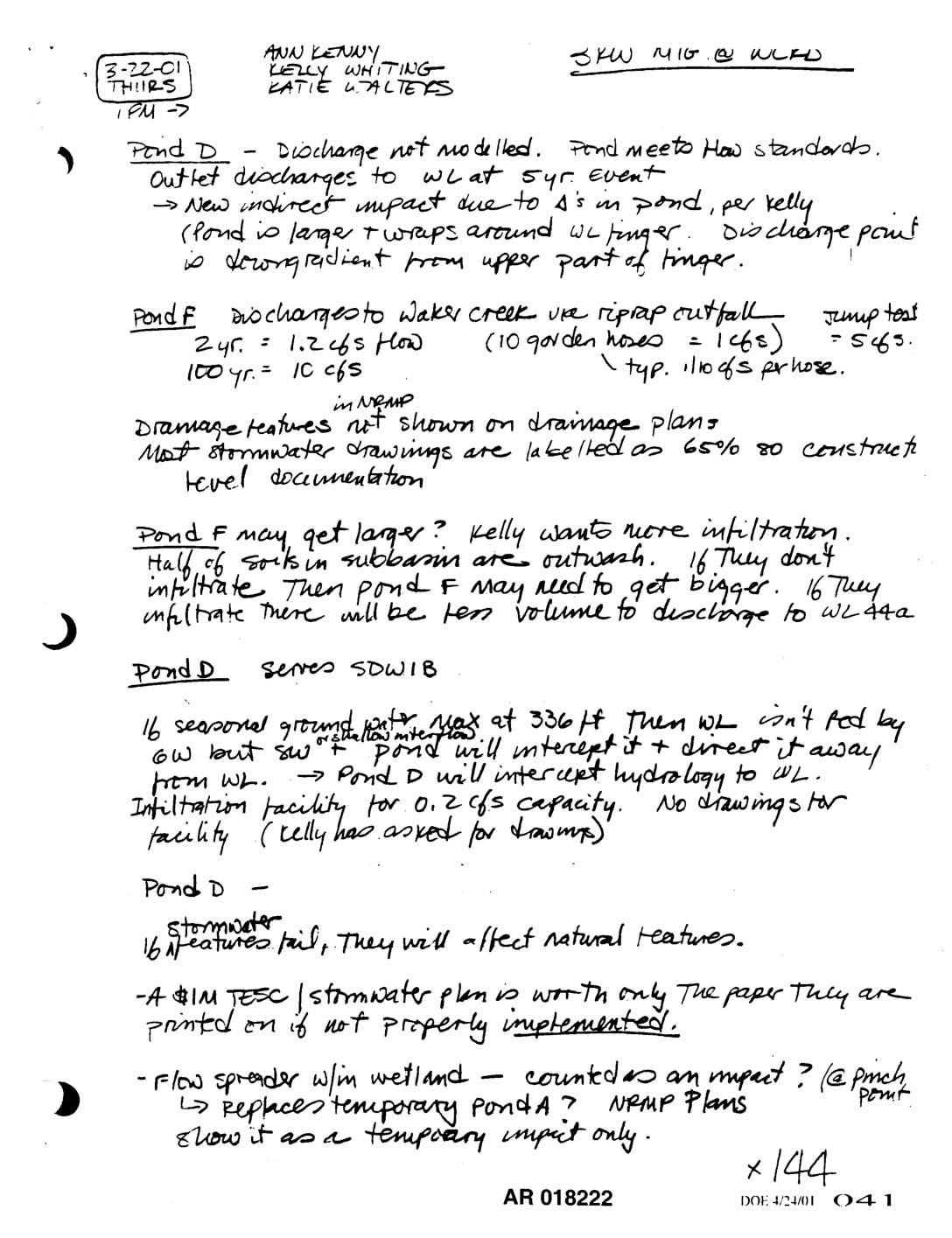
EXH AR018222: Handwritten Meeting Notes — Pond D, Pond F, Pond G Stormwater and Wetland Review, 3-22-01
Handwritten meeting notes dated 3-22-01 (AR018222–AR018224), participants Ann Kenny, Kelly Whiting, Katie Walters, at SKW MIG/WCED. Notes cover stormwater pond analysis including Pond D (discharge not modelled, serves SDWIB, 0.2 cfs infiltration facility capacity, seasonal groundwater at 336 ft, intercepts hydrology to wetland), Pond F (discharges to Walker Creek via riprap outfall, 2-yr flow 1.2 -
 2001-03-21
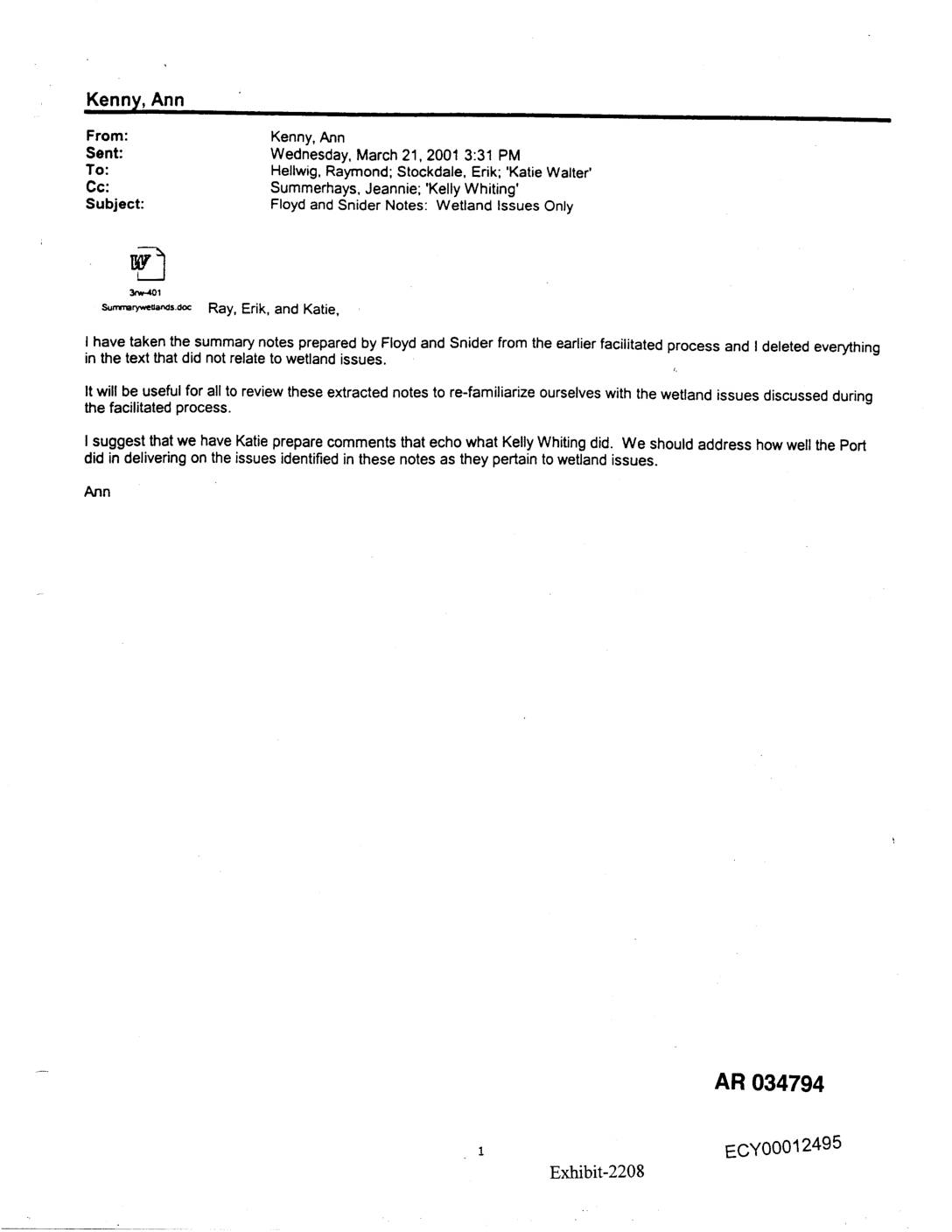
Exhibit 2208: Ann Kenny Email and Sea-Tac Airport Third Runway 401 Permit Negotiations Meeting Notes Summary (Wetland Issues Only), October–December 2000
Email from Ann Kenny to Raymond Hellwig, Erik Stockdale, and Katie Walter (cc: Jeannie Summerhays, Kelly Whiting), dated March 21, 2001, transmitting Floyd & Snider Inc. Meeting Notes Summary (AR 034794, ECY00012495, Exhibit 2208) covering Sea-Tac Airport Third Runway 401 Permit negotiations on wetland issues only, October 2 through December 8, 2000. The summary documents -
 2001-03-14
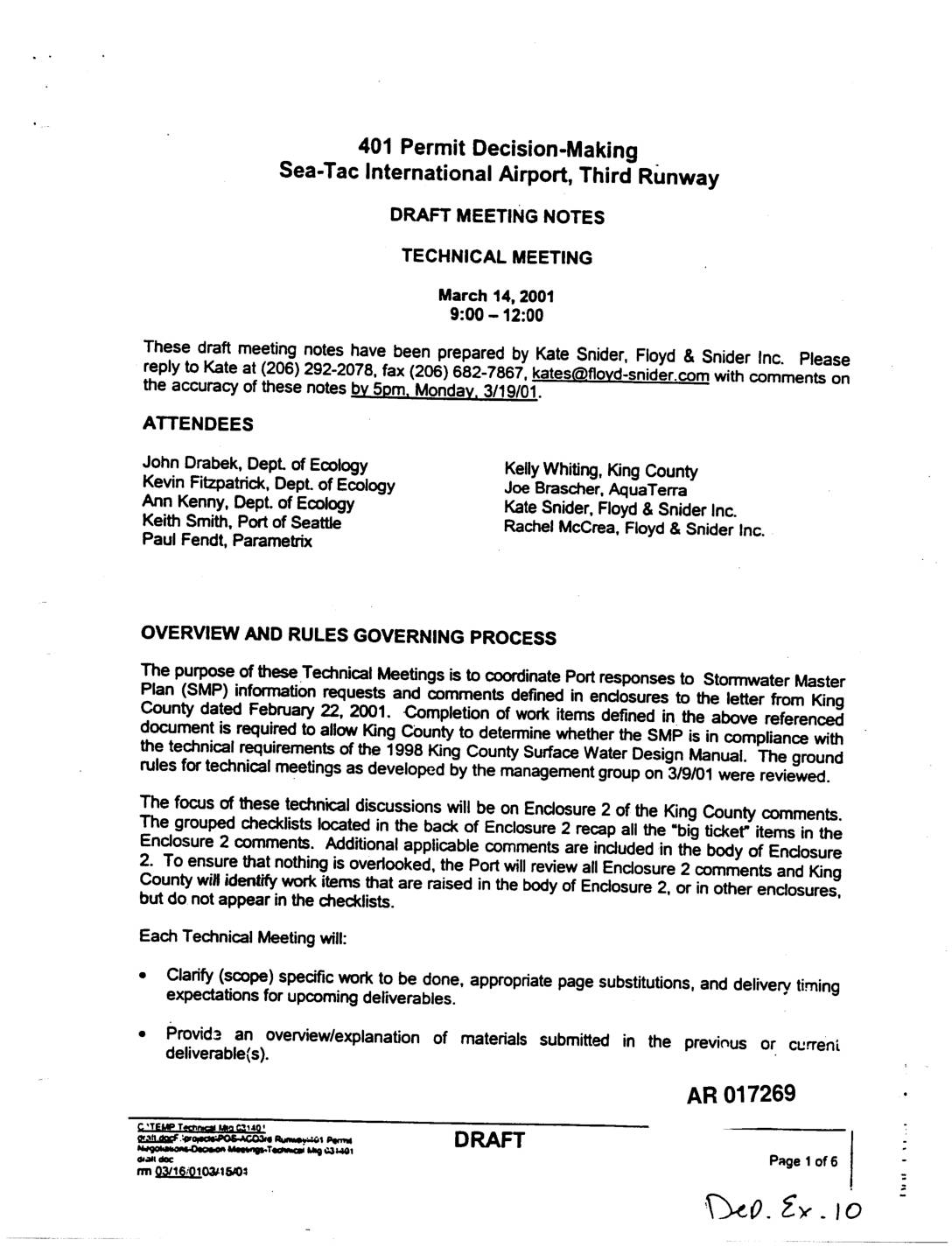
EXH AR017269: 401 Permit Decision-Making, Sea-Tac Airport Third Runway — Draft Technical Meeting Notes, March 14, 2001
Draft meeting notes prepared by Kate Snider of Floyd & Snider Inc. for a Technical Meeting held March 14, 2001 regarding 401 Permit Decision-Making for Sea-Tac International Airport Third Runway. Attendees included representatives from Washington State Department of Ecology (John Drabek, Kevin Fitzpatrick, Ann Kenny), Port of Seattle (Keith Smith), King County (Kelly Whiting), AquaTerra -
 2001-03-14
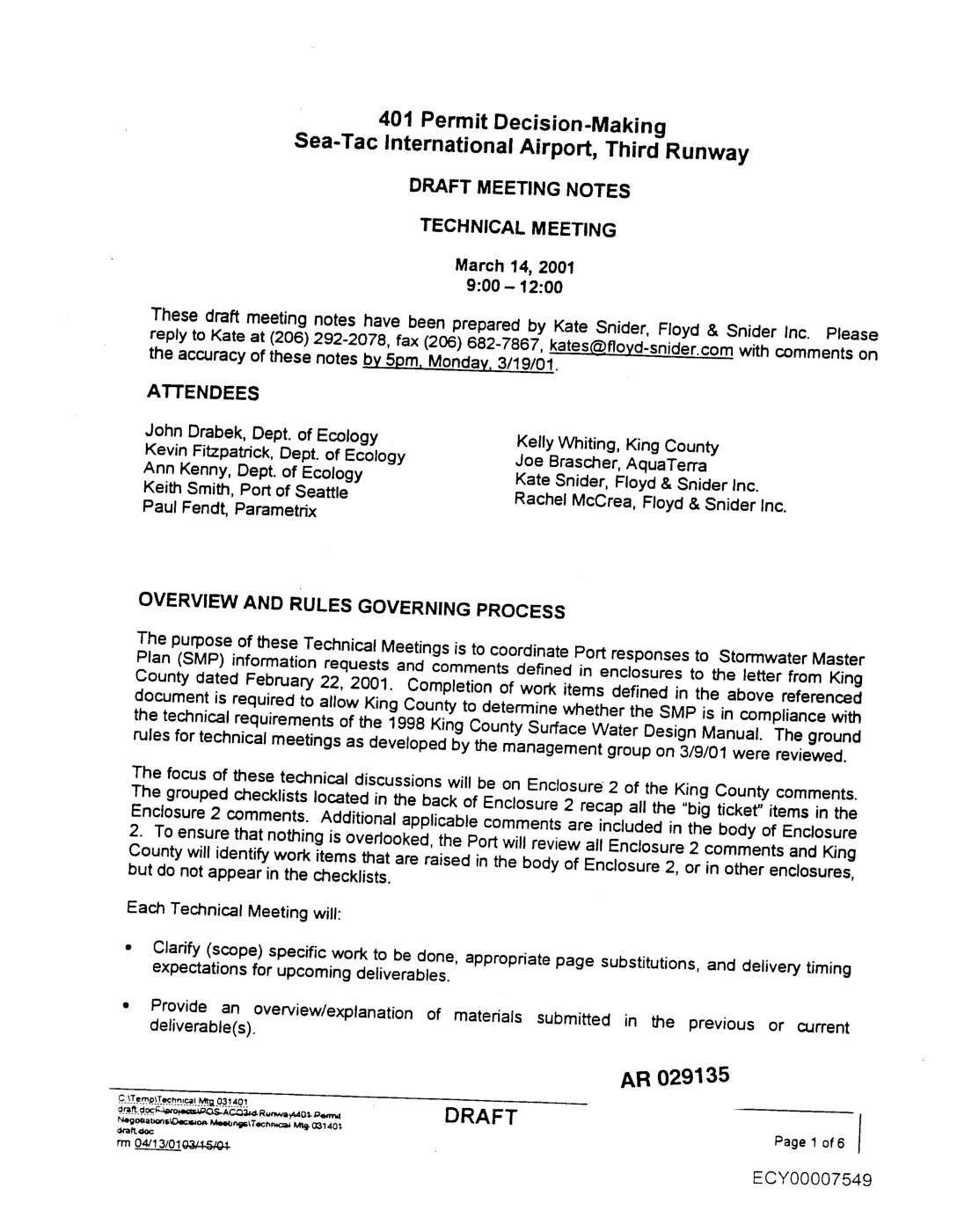
EXH AR029135: Draft Technical Meeting Notes — 401 Permit Decision-Making, Sea-Tac Airport Third Runway, March 14, 2001
Draft meeting notes prepared by Kate Snider of Floyd & Snider Inc. for a technical meeting held March 14, 2001 regarding 401 Permit Decision-Making for the Sea-Tac International Airport Third Runway. Attendees included representatives from the Washington State Department of Ecology (John Drabek, Kevin Fitzpatrick, Ann Kenny), Port of Seattle (Keith Smith), King County (Kelly -
 2001-03-12
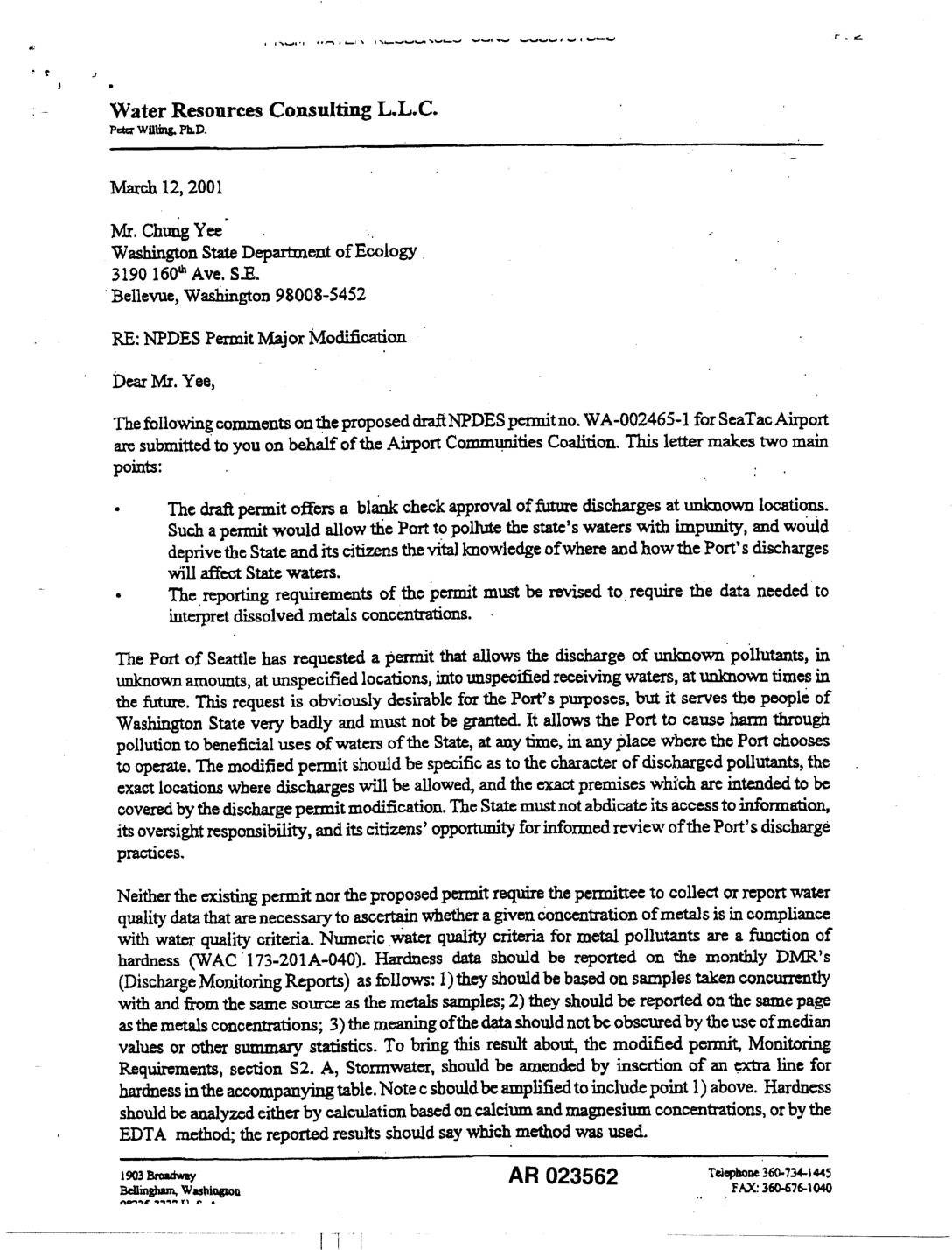
EXH AR023562: ACC Comment Letter NPDES Permit Major Modification STIA
A March 2001 letter from Water Resources Consulting LLC to the Washington State Department of Ecology raises concerns about a proposed NPDES permit modification for SeaTac Airport, arguing that the draft permit gives the Port of Seattle a 'blank check' to discharge pollutants at unspecified locations into unnamed water bodies without adequate public oversight. The letter also criticizes the airport's stormwater monitoring reports for obscuring potential water quality violations by mishandling hardness data used to evaluate dissolved metals concentrations. The author urges the Department of Ecology to require specific discharge locations and proper concurrent hardness reporting before issuing the modified permit. -
 2001-03-09
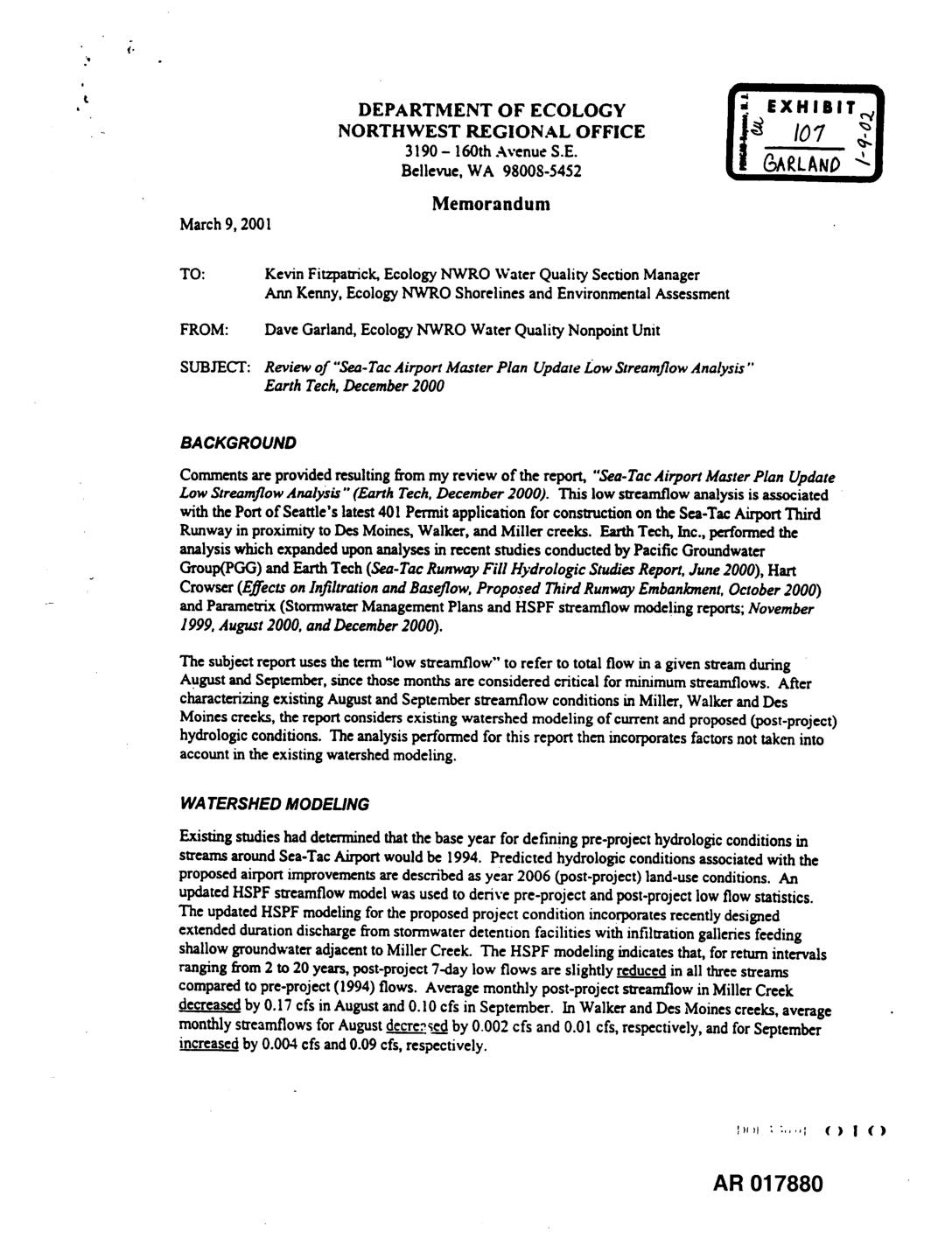
Exhibit 107: Ecology Memorandum — Review of Sea-Tac Airport Master Plan Update Low Streamflow Analysis (Earth Tech, December 2000)
Memorandum dated March 9, 2001, from Dave Garland, Ecology NWRO Water Quality Nonpoint Unit, to Kevin Fitzpatrick and Ann Kenny, reviewing the Earth Tech December 2000 report ‘Sea-Tac Airport Master Plan Update Low Streamflow Analysis.’ The memo evaluates HSPF streamflow modeling and supplemental analyses for Miller Creek, Walker Creek, and Des Moines Creek in connection