TagSea-Tac Airport(1855)
-
 2023-05-01
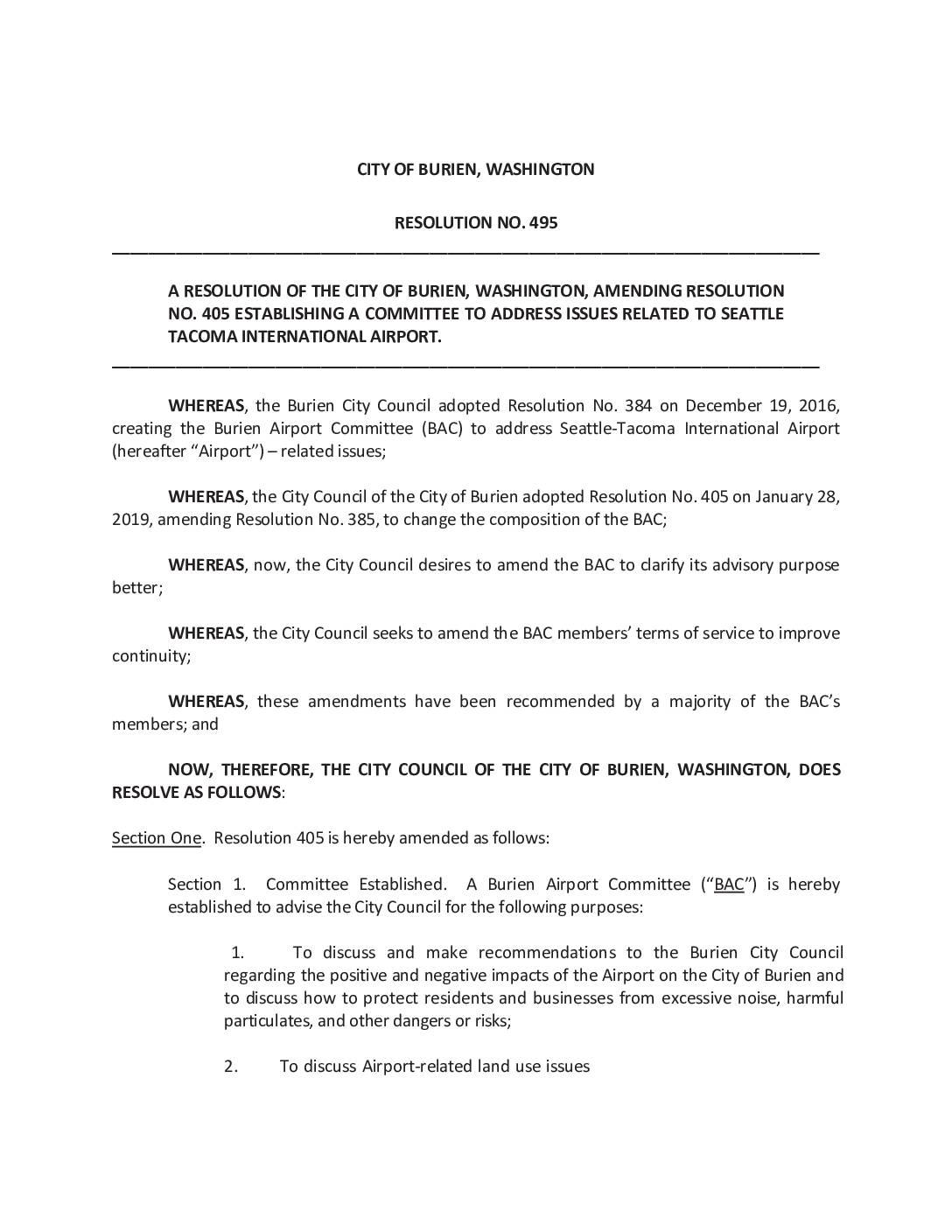
Resolution No. 495: A resolution of the City of Burien, Washington, amending Resolution No. 405 establishing a committee to address issues related to Seattle Tacoma International Airport
The City of Burien, Washington passed Resolution No. 495 on May 1, 2023, updating the structure and purpose of its Burien Airport Committee (BAC), an advisory body focused on Seattle-Tacoma International Airport issues. The resolution clarifies the BAC's role in advising the City Council on airport noise, harmful particulates, land use, traffic impacts, and related agreements with the Port of Seattle. It also adjusts committee membership rules, setting terms of two years for up to six resident and business representatives alongside one to three Councilmembers. -
 2023-04-24
Stop Runaway Spending at Sea-Tac: WATT Campaign Mailer
This campaign mailer from the Washington Alliance of Taxpayers and Travelers (WATT) opposes the Port of Seattle's plan to build a third runway at Sea-Tac Airport, calling it a billion-dollar 'boondoggle' that would take four years to construct and burden the region with overwhelming truck traffic. The group warns that the project would require moving 26 million cubic yards of dirt via 2,000 trucks per day through neighborhoods across the Puget Sound region, and that taxpayers could face property tax increases of over 60% if airline fees fall short of covering costs. Residents are urged to contact the Port of Seattle and mail in an attached postcard to oppose the runway expansion. -
 2023-04-24
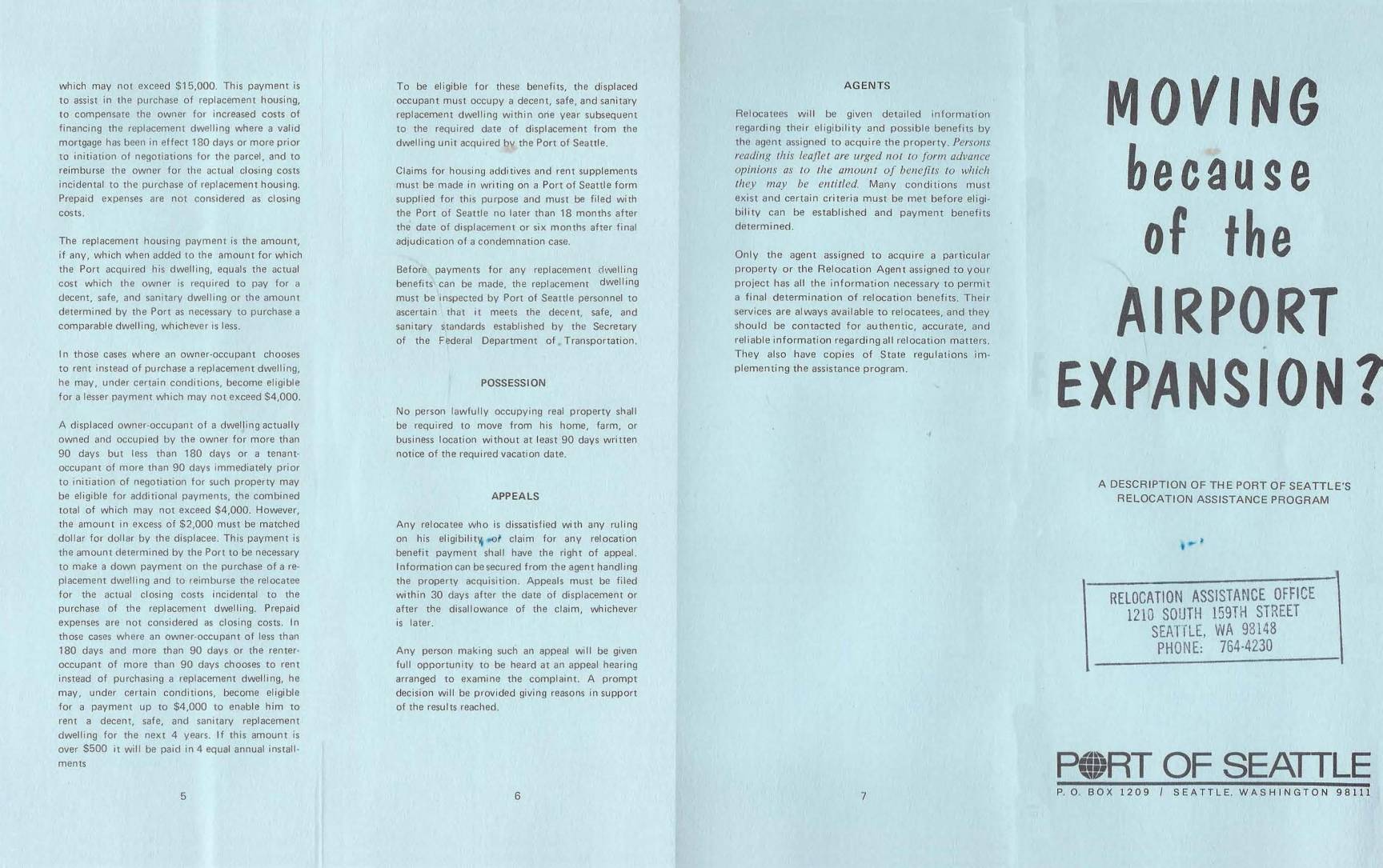
Moving Because of the Airport Expansion? A Description of the Port Of Seattle’s Relocation Assistance Program
A DESCRIPTION OF THE PORT OF SEATTLE'S RELOCATION ASSISTANCE PROGRAM -
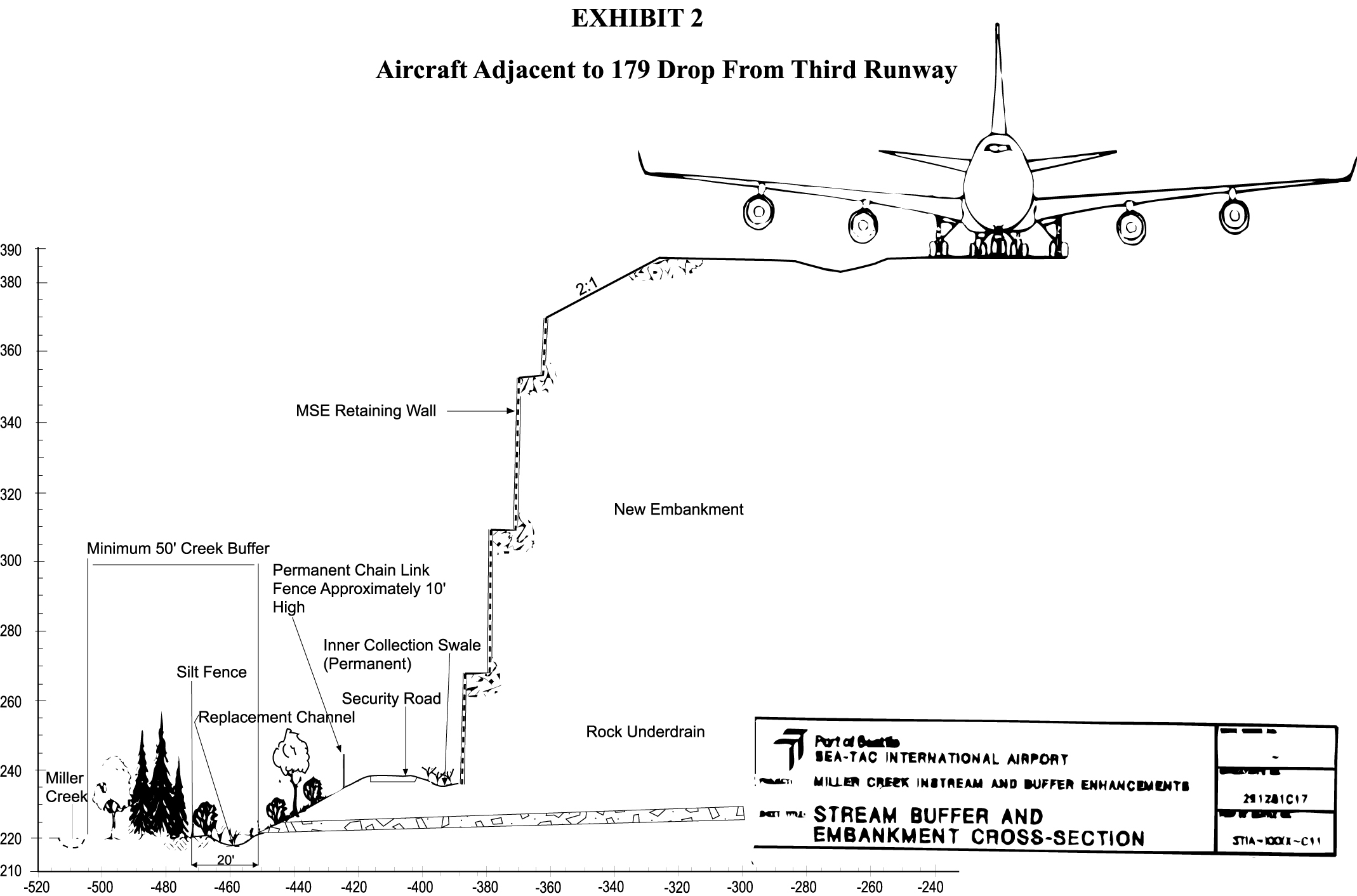
MSE wall cross-section, Miller Creek buffer — Third Runway embankment
Engineering cross-section drawing labeled 'Exhibit 2: Aircraft Adjacent to 179 Drop From Third Runway,' produced by the Port of Seattle / Sea-Tac International Airport for the Miller Creek Instream and Buffer Enhancements project. The drawing (sheet 291Z81C17, detail S11A-XXXI-C11) shows the embankment profile with an MSE retaining wall, replacement channel, silt fence, security road, rock underdrain, and a minimum 50-foot creek buffer for Miller Creek, with elevation and horizontal scales and a wide-body aircraft silhouette for scale reference. -
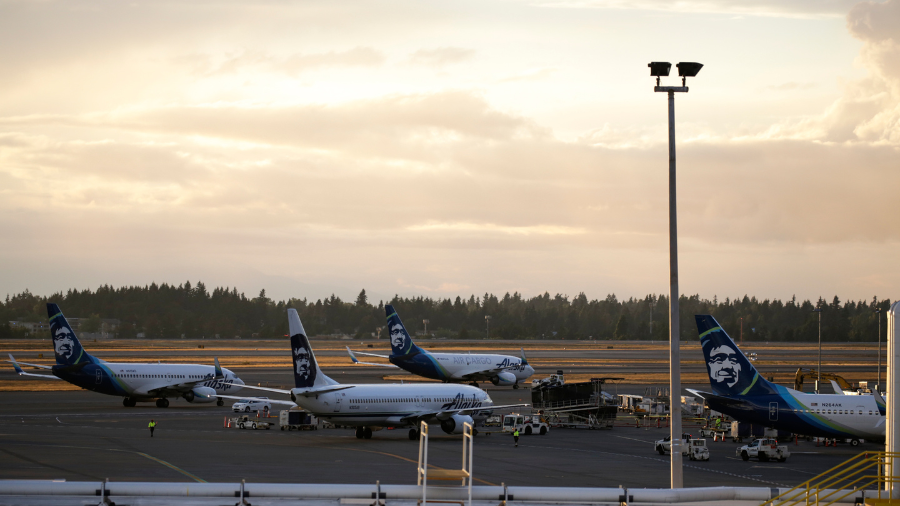
Alaska Airlines Jets Parked at Gates at Sea-Tac Airport
Multiple Alaska Airlines commercial jet aircraft are parked at gates at Sea-Tac Airport, identifiable by the airline's distinctive logo and livery on the tails. Ground support vehicles and personnel are visible on the tarmac, with the scene photographed at dusk or dawn. -
 2023-04-24
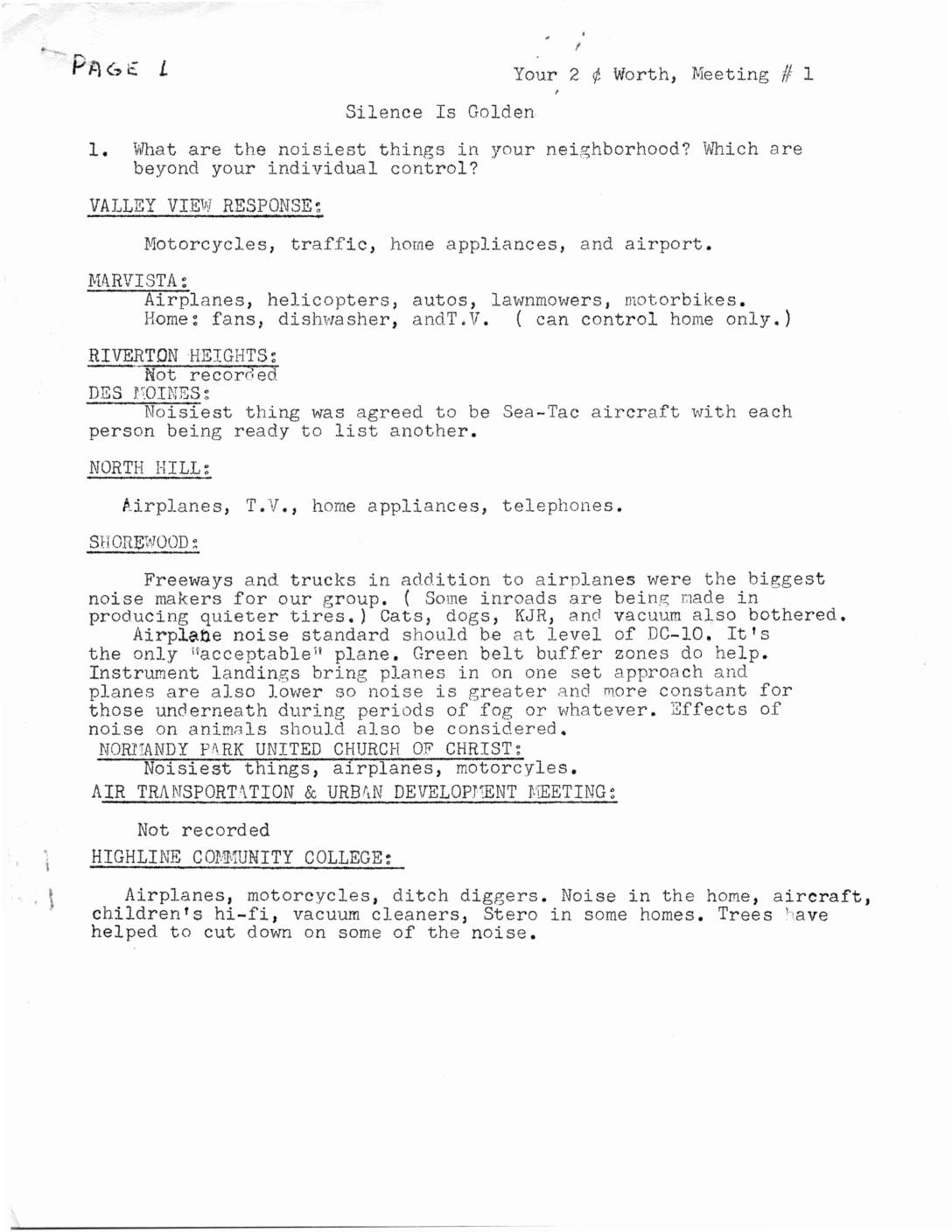
Your 2¢ Worth, Meeting #1: Silence Is Golden — Community Noise Survey Responses
This document summarizes community meeting responses collected under the 'Silence Is Golden' initiative, in which residents from neighborhoods near Seattle-Tacoma International Airport identified their biggest noise concerns and discussed the airport's value to the region. Across multiple community groups, Sea-Tac aircraft noise was consistently ranked as the top disturbance, alongside motorcycles, freeways, and household appliances. Participants also offered suggestions for making the airport a greater community asset, including better landscaping, viewing areas, quieter aircraft engines, fair property buyout programs for heavily impacted zones, and improved amenities such as restaurants and cultural exhibits. -
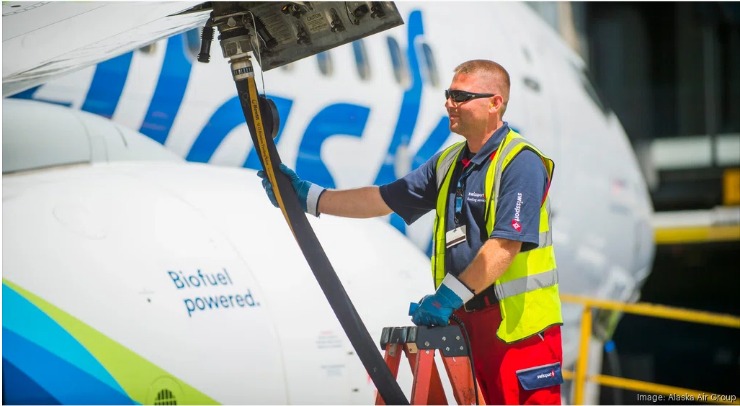
Alaska Airlines Biofuel-Powered Aircraft Refueling
A ground crew member wearing a high-visibility vest refuels an Alaska Airlines aircraft labeled 'Biofuel powered.' at what appears to be a tarmac fueling operation. The image is credited to Alaska Air Group, indicating this is an official promotional or documentary photo related to Alaska Airlines' sustainable aviation fuel initiatives. -

Sea-Tac Airport Control Tower Cab Interior with Radar and Flight Data Displays
Interior view from an airport control tower cab showing radar and flight data display screens on the console. The windows overlook a large airport apron and runway complex, with aircraft and terminal buildings visible below under a clear sky. -
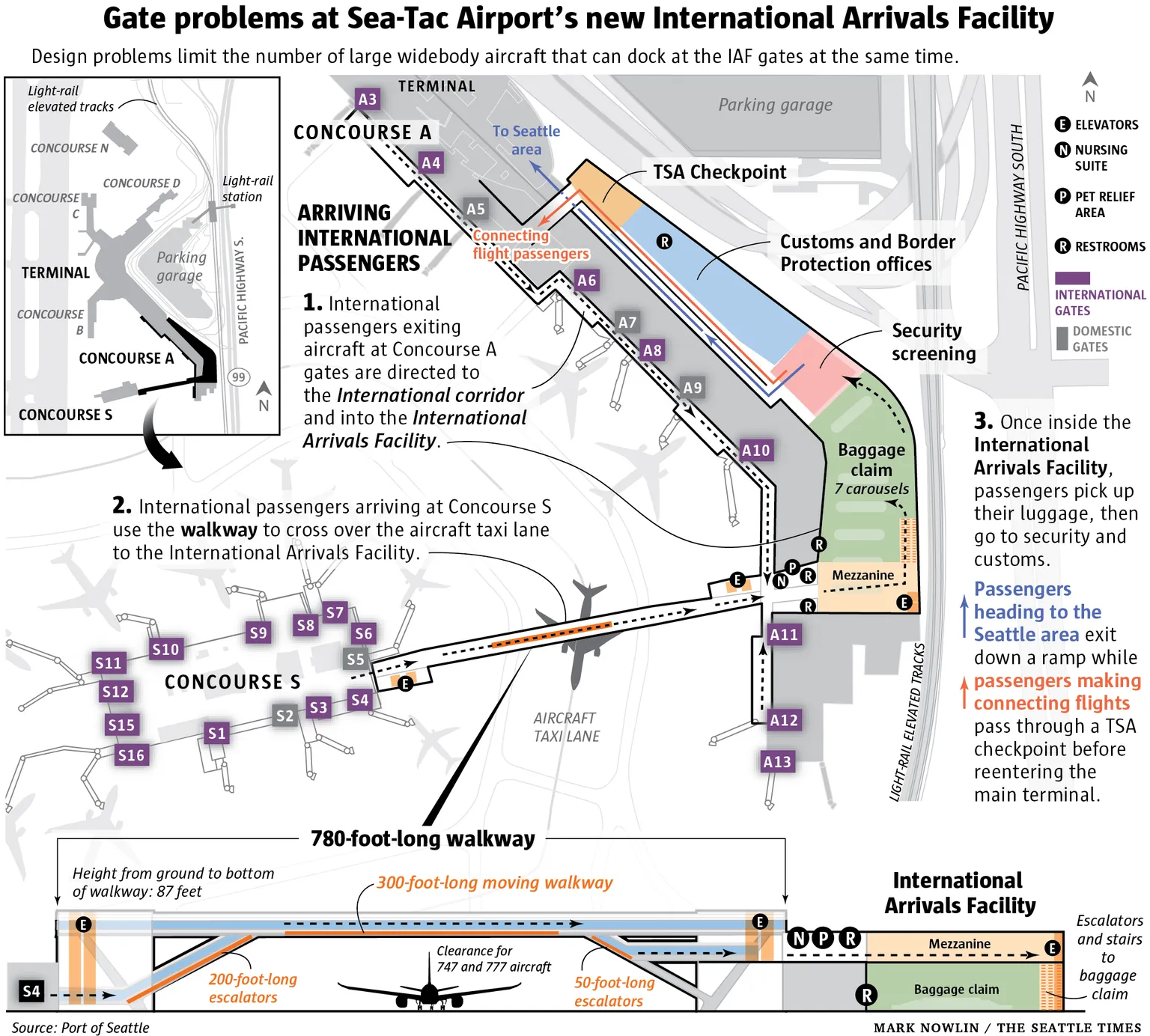
Seattle Times Infographic: Sea-Tac Airport IAF Gate Layout Limits for Large Widebody Aircraft
An infographic published by The Seattle Times (credited to Mark Nowlin, sourced from Port of Seattle) illustrating design problems at Sea-Tac Airport's new International Arrivals Facility, showing how gate layout limits large widebody aircraft from docking simultaneously. The diagram details the 780-foot-long walkway connecting Concourse S to the IAF, baggage claim carousels, customs and border protection flow, and passenger routing for both Seattle-bound travelers and connecting flight passengers. -
 2023-04-06
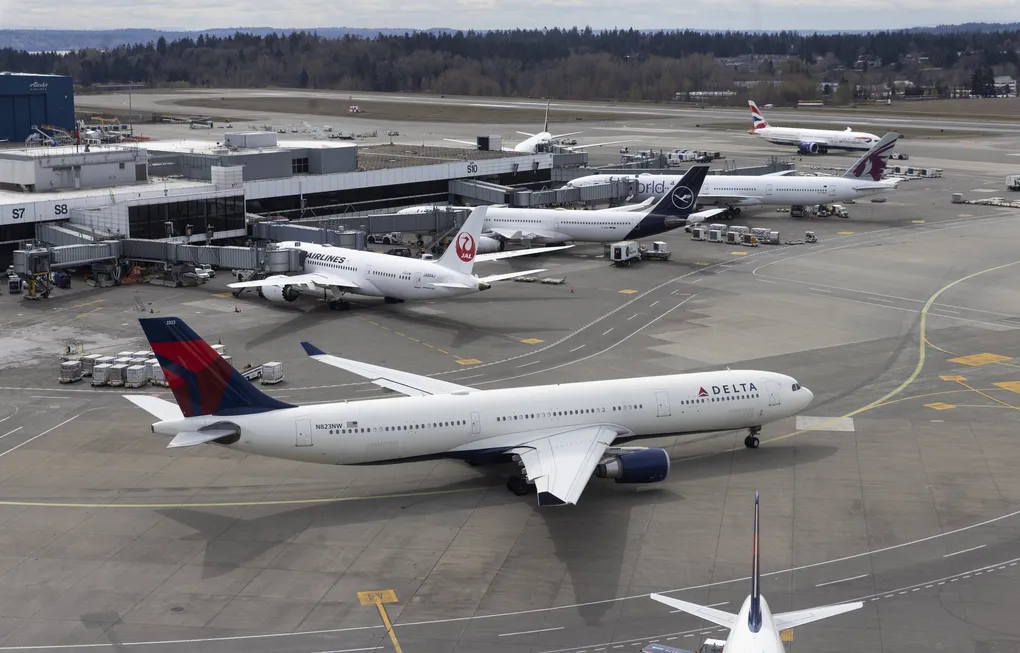
Delta Air Lines Airbus A330 Taxiing at Sea-Tac Airport International Terminal
A Delta Air Lines Airbus A330 (registration N623NW) taxis on the apron at Seattle-Tacoma International Airport, with gates S7–S10 visible in the background. Aircraft from JAL (Japan Airlines), Lufthansa, British Airways, and Qatar Airways are parked at the international terminal gates.