TagSea-Tac Airport(1835)
-
 2013-09-24
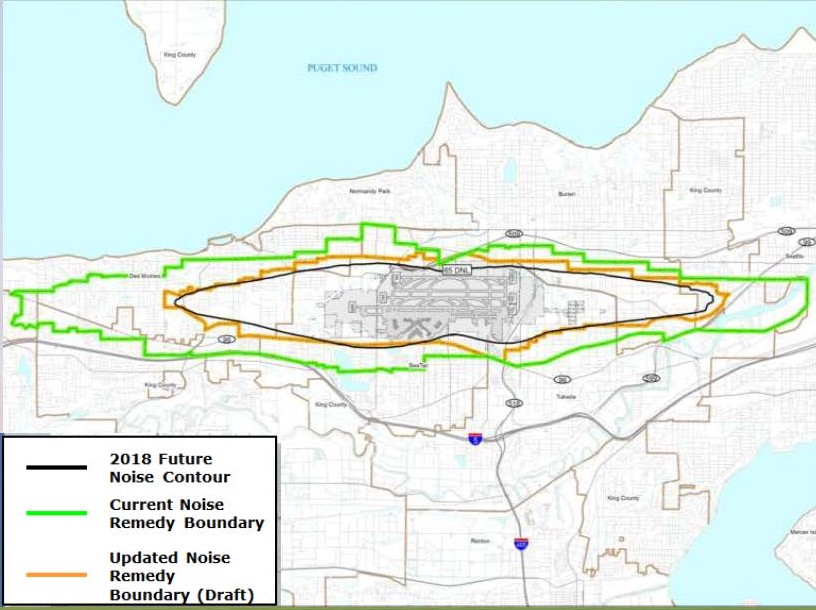
Part 150 Noise Boundary Zones Map — Sea-Tac Airport Commission Presentation
Map showing three overlapping noise boundary zones around Seattle-Tacoma International Airport: the 2018 Future Noise Contour (black), the Current Noise Remedy Boundary (green), and the Updated Noise Remedy Boundary in draft form (orange). The map covers the surrounding communities including Des Moines, Normandy Park, Burien, SeaTac, and Tukwila, adjacent to Puget Sound. -
 2013-09-24
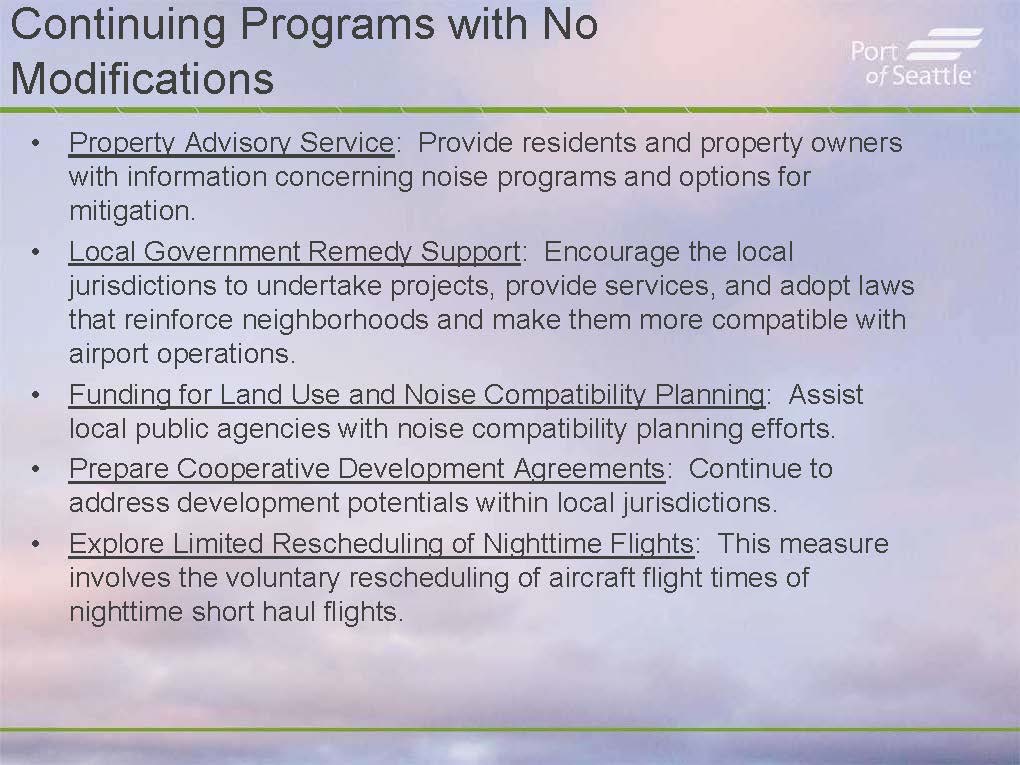
Port Of Seattle Part 150 Study — Continuing Noise-Mitigation Programs Requiring No Modification (Page 7, September 24, 2013)
A Port of Seattle presentation slide listing five continuing noise-mitigation programs requiring no modifications: Property Advisory Service, Local Government Remedy Support, Funding for Land Use and Noise Compatibility Planning, Prepare Cooperative Development Agreements, and Explore Limited Rescheduling of Nighttime Flights. The slide is branded with the Port of Seattle logo and relates to Sea-Tac Airport noise compatibility planning efforts. -
 2013-09-24
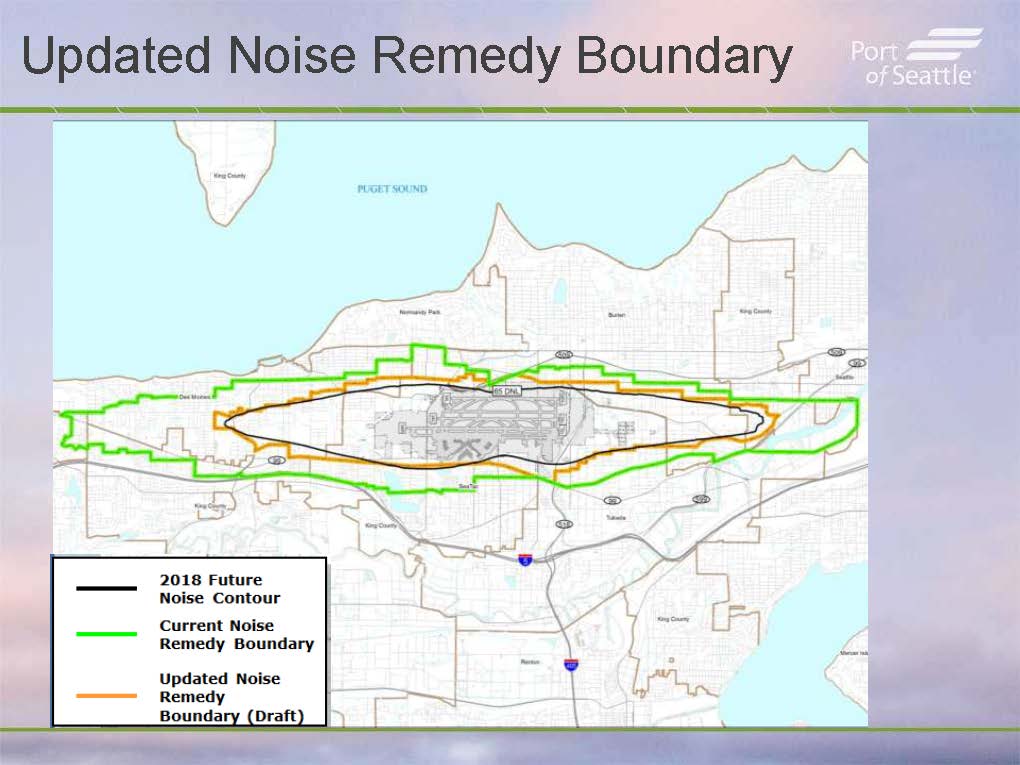
Updated Noise Remedy Boundary Map — Port Of Seattle Commission Presentation (September 24, 2013) — Slide 2
A Port of Seattle presentation slide titled 'Updated Noise Remedy Boundary' showing a map of the Sea-Tac Airport area with three overlaid boundaries: the 2018 Future Noise Contour (black), the Current Noise Remedy Boundary (green), and the draft Updated Noise Remedy Boundary (orange). The map covers surrounding communities including Des Moines, Burien, Normandy Park, and Tukwila along Puget Sound. -
 2013-09-24
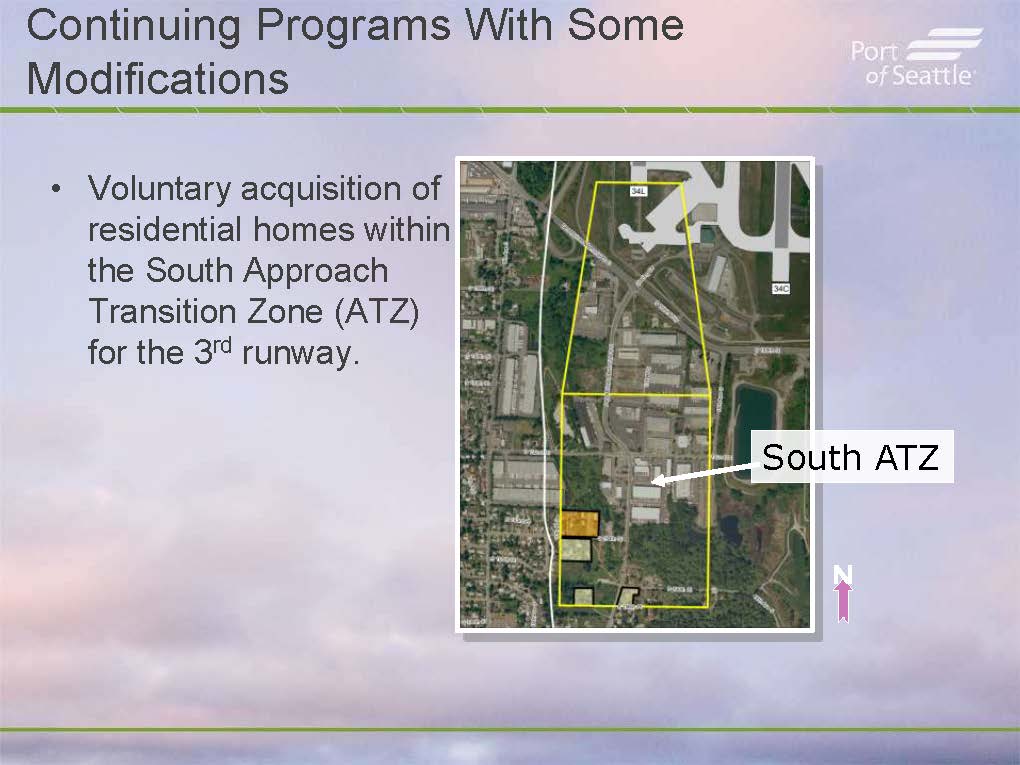
Port Of Seattle Part 150 Commission Presentation — Slide 5: Continuing Programs With Modifications and South ATZ Voluntary Acquisition (September 24, 2013)
A Port of Seattle presentation slide titled 'Continuing Programs With Some Modifications' describes the voluntary acquisition of residential homes within the South Approach Transition Zone (ATZ) for Sea-Tac Airport's 3rd runway. An aerial map highlights the South ATZ boundary in yellow, located south of the airport's runways 34L and 34C. -
 2013-09-24
Part 150 Noise Compatibility Program Update — Commission Presentation, September 24, 2013 (Page 1)
Title slide for a Part 150 noise compatibility program update presentation for Seattle-Tacoma International Airport (Sea-Tac), produced by the Port of Seattle. The slide is labeled '7b' and includes the Port of Seattle logo with its tagline 'Where a sustainable world is headed,' along with imagery of the Seattle skyline, an Alaska Airlines aircraft, cargo containers, and marina boats. -
 2013-09-24
Port Of Seattle Part 150 Commission Presentation — Closing Slide (Page 16, September 24, 2013)
A 'Thank you' closing slide from a Port of Seattle presentation, featuring the Port of Seattle logo and tagline 'Where a sustainable world is headed.' The slide includes thumbnail images of fishing boats, an Alaska Airlines aircraft, shipping containers, and the Seattle skyline with the Space Needle visible. -
 2013-09-24
Resolution No. 3683: 2013 FAR Part 150 Noise and Land Use Compatibility Study Update for Seattle-Tacoma International Airport
Resolution No. 3683 is a Port of Seattle Commission decision concluding the 2013 update to the FAR Part 150 Noise and Land Use Compatibility Study for Seattle-Tacoma International Airport. The resolution directs Port staff to submit updated Noise Exposure Maps to the FAA and adopt a range of noise-reduction measures, including school sound insulation, preferential nighttime runway use, and voluntary rescheduling of short-haul flights. It builds on previous noise studies approved in 1985, 1993, and 2000, following a public comment period and environmental review conducted in 2013. -
 2013-09-24
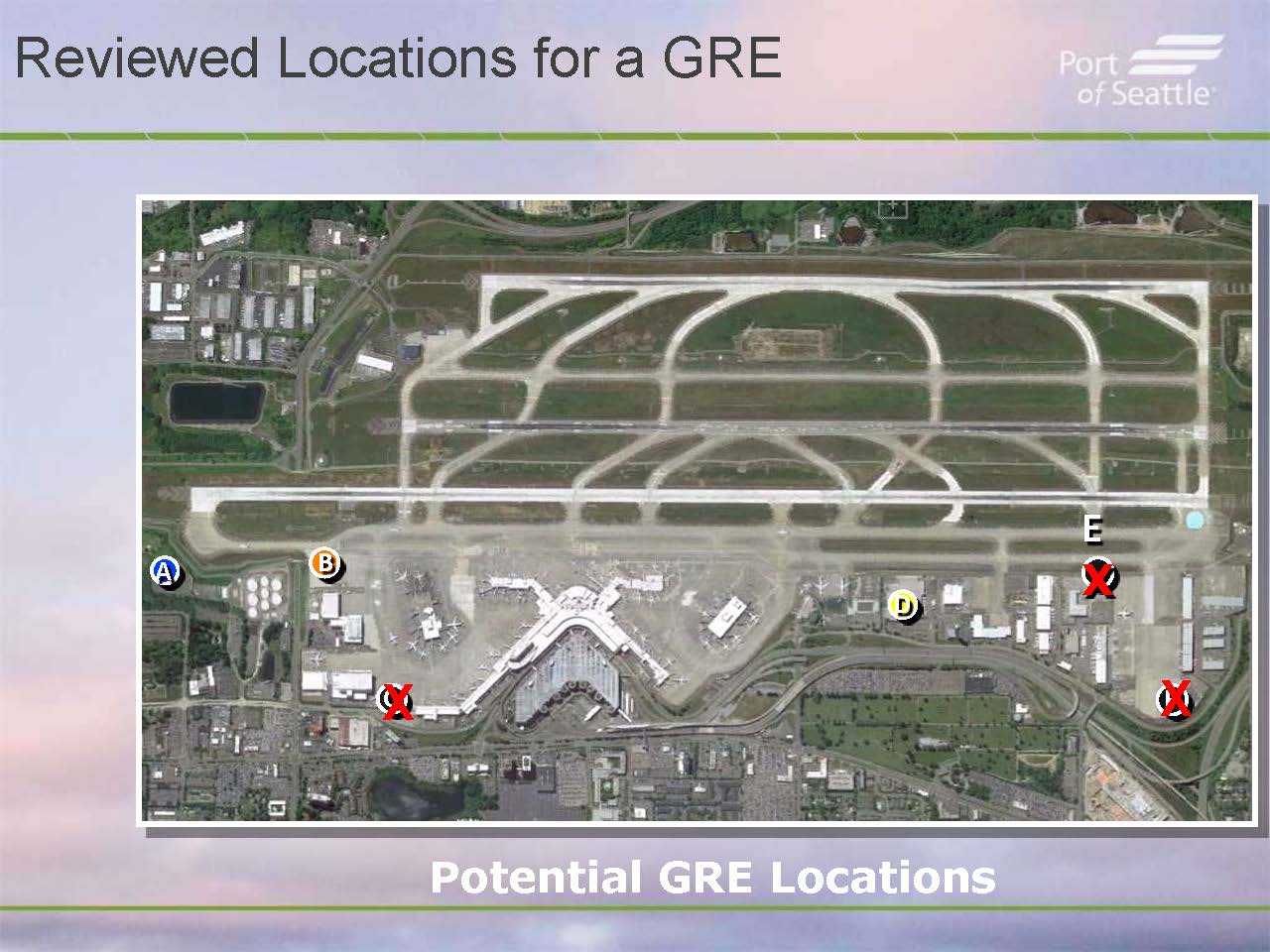
Part 150 GRE Candidate Site Review — Sea-Tac Airport Commission Presentation (Slide 11, September 24, 2013)
A Port of Seattle presentation slide titled 'Reviewed Locations for a GRE' shows an aerial satellite image of Seattle-Tacoma International Airport with five candidate sites (A, B, C, D, E) marked; locations C, E, and F are crossed out in red, indicating they were eliminated from consideration. The slide caption reads 'Potential GRE Locations.' -
 2013-09-24
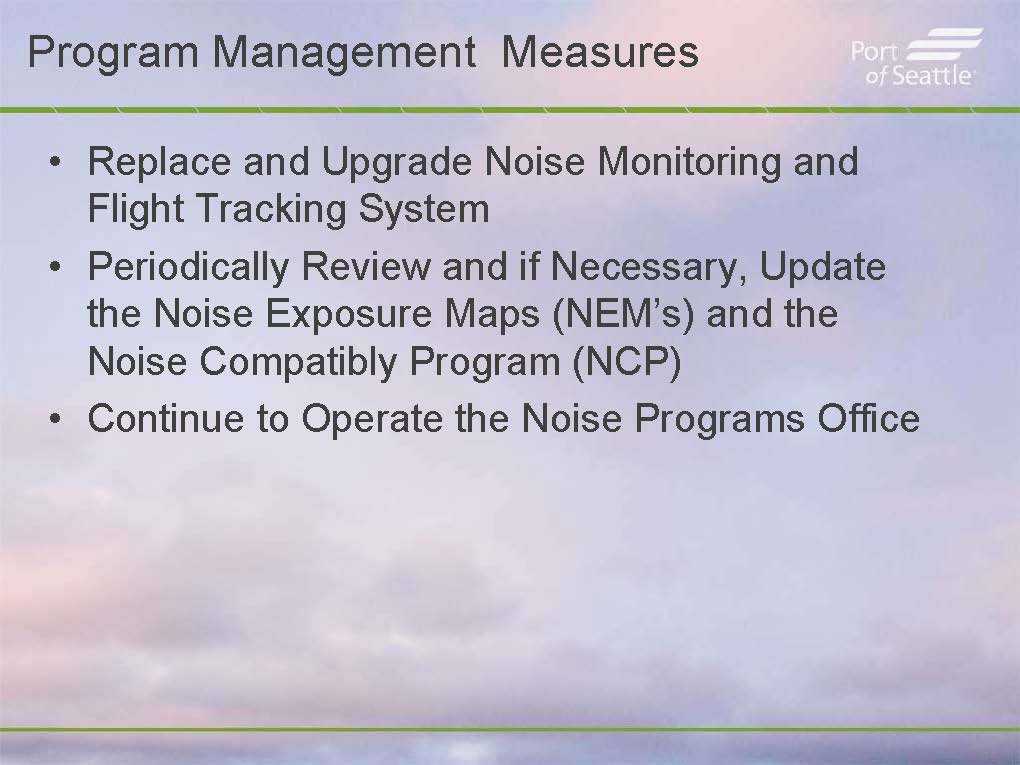
Port Of Seattle Commission Presentation: Part 150 Program Management Measures — Slide 12 (September 24, 2013)
A Port of Seattle presentation slide titled 'Program Management Measures' outlining three noise management actions at Sea-Tac Airport: replacing and upgrading the Noise Monitoring and Flight Tracking System, periodically reviewing and updating Noise Exposure Maps (NEMs) and the Noise Compatibility Program (NCP), and continuing to operate the Noise Programs Office. -
 2013-09-09
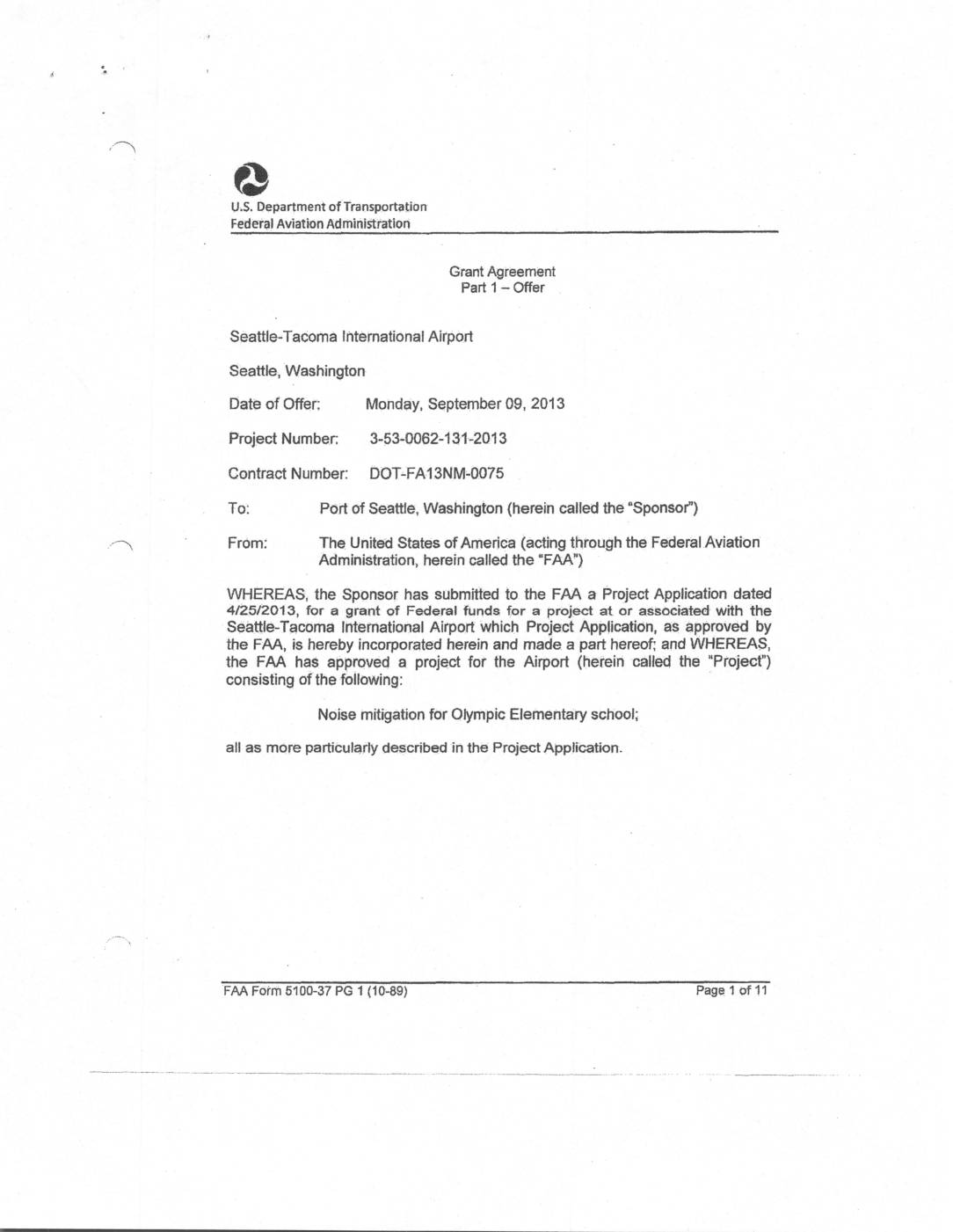
Grant agreement: Noise mitigation for Olympic Elementary school, Seattle-Tacoma International Airport
This 2013 FAA grant agreement provides up to $3,900,000 in federal funding to the Port of Seattle for noise mitigation at Olympic Elementary School near Seattle-Tacoma International Airport, with the federal government covering 80% of allowable project costs. The agreement, offered September 9, 2013, outlines conditions including the Sponsor's responsibility to complete the project without undue delay, recover any misused federal funds, and comply with federal assurances and anti-trafficking provisions.