TagRCAA(206)
-
 2022-09-12
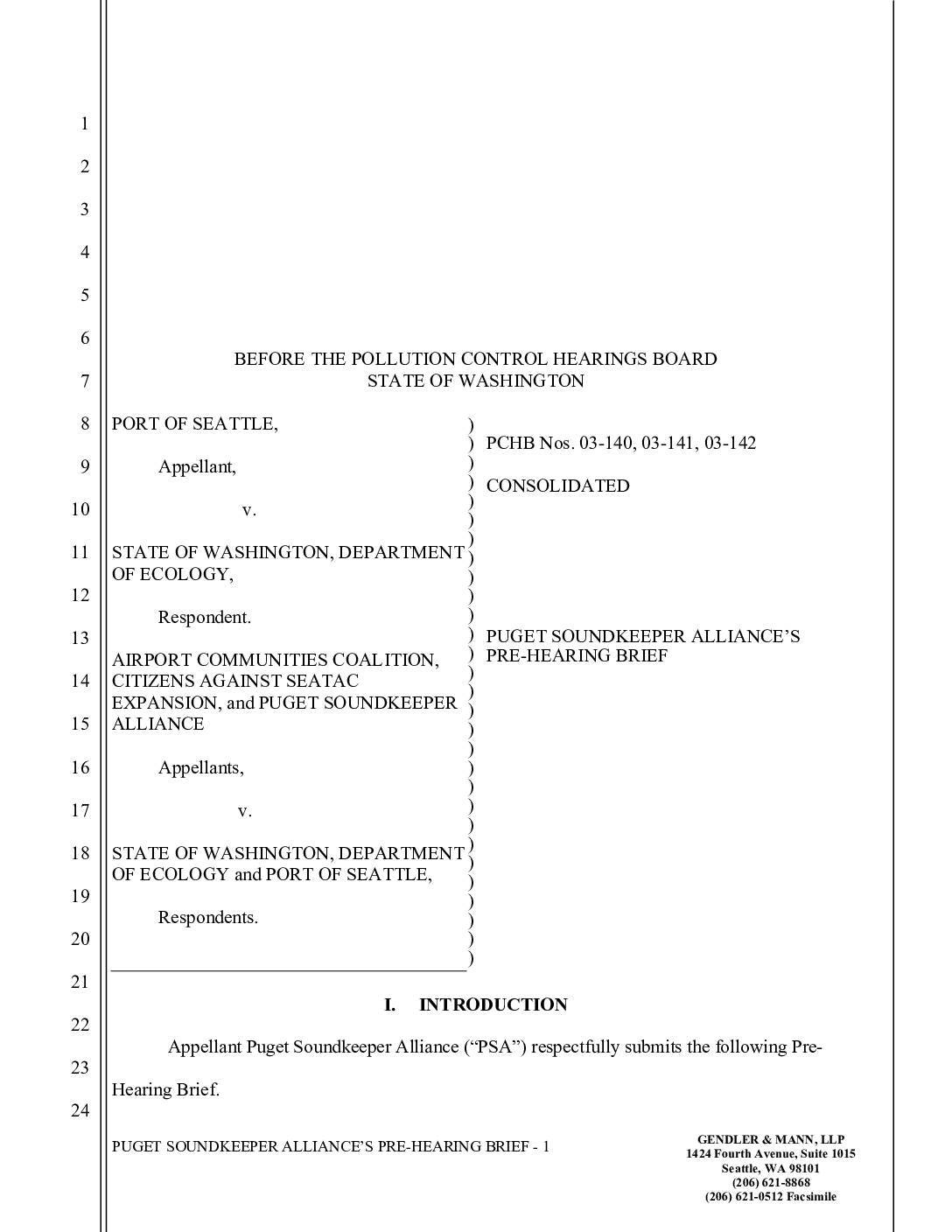
Puget Soundkeeper Alliance’s pre-hearing brief
The Puget Soundkeeper Alliance challenged the 2003 water discharge permit issued to Seattle-Tacoma International Airport, arguing that the Port of Seattle had been releasing harmful pollutants — including aircraft de-icing fluids — into Puget Sound without proper treatment or enforceable limits for nearly a decade. The group contended that Washington State's Department of Ecology improperly extended the airport's compliance deadline beyond the legally allowed 10-year period, pushing it from 2004 to 2007. The case centered on whether the permit violated both Washington State law and the federal Clean Water Act. -
 2022-09-12
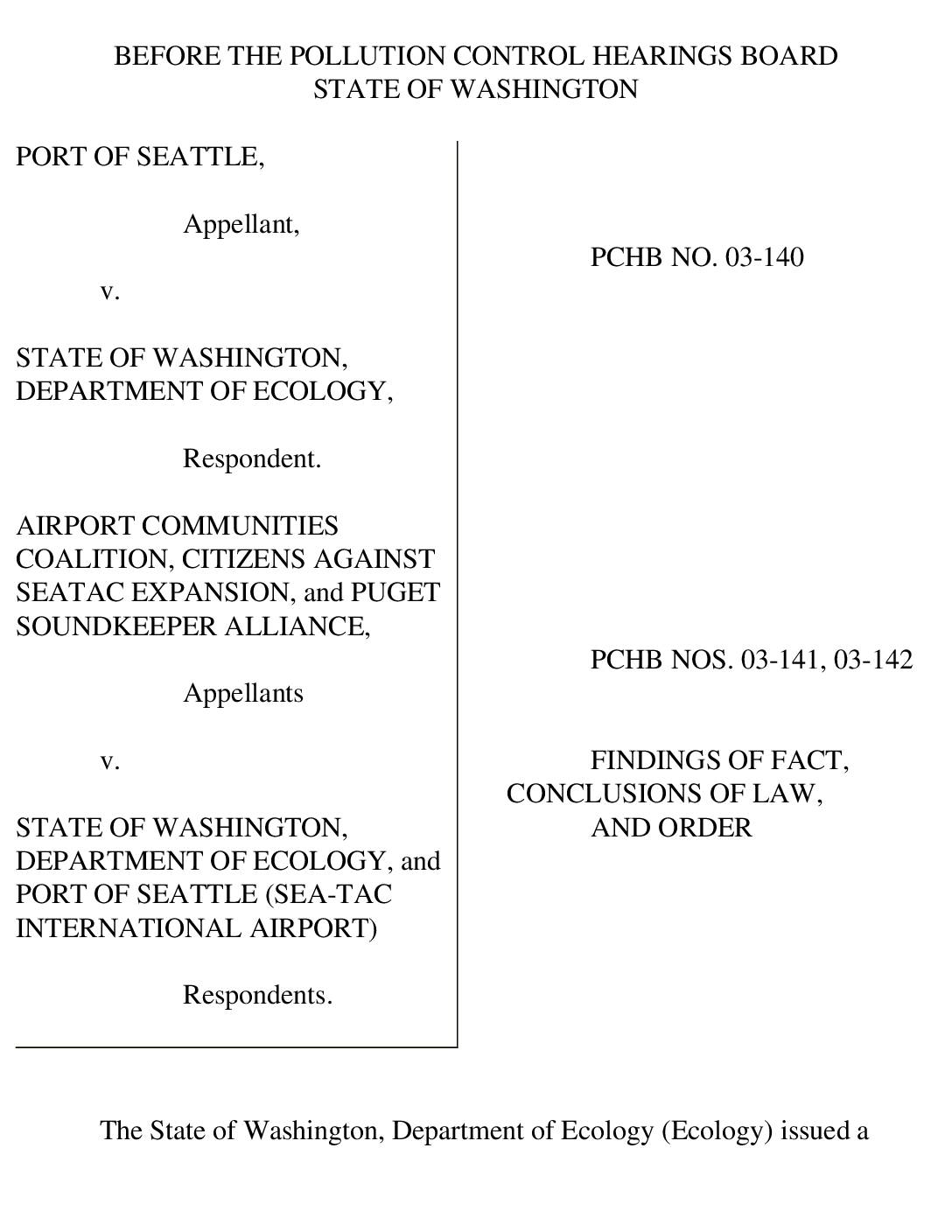
Findings of fact, conclusions of law, and order: Port Of Seattle v. State of Washington, Department of Ecology
In 2003, Washington State's Department of Ecology issued a water pollution permit (NPDES No. 002465-1) for Sea-Tac International Airport, which was then challenged by multiple parties including the Port of Seattle and several community groups. The appeals, heard in July 2004, centered largely on concerns about aircraft deicing and anti-icing chemicals being discharged into Puget Sound and nearby waterways, where they can deplete dissolved oxygen levels critical to aquatic life. The Pollution Control Hearings Board reviewed the permit's terms and conditions to determine whether adequate environmental protections were in place. -
 2022-09-12
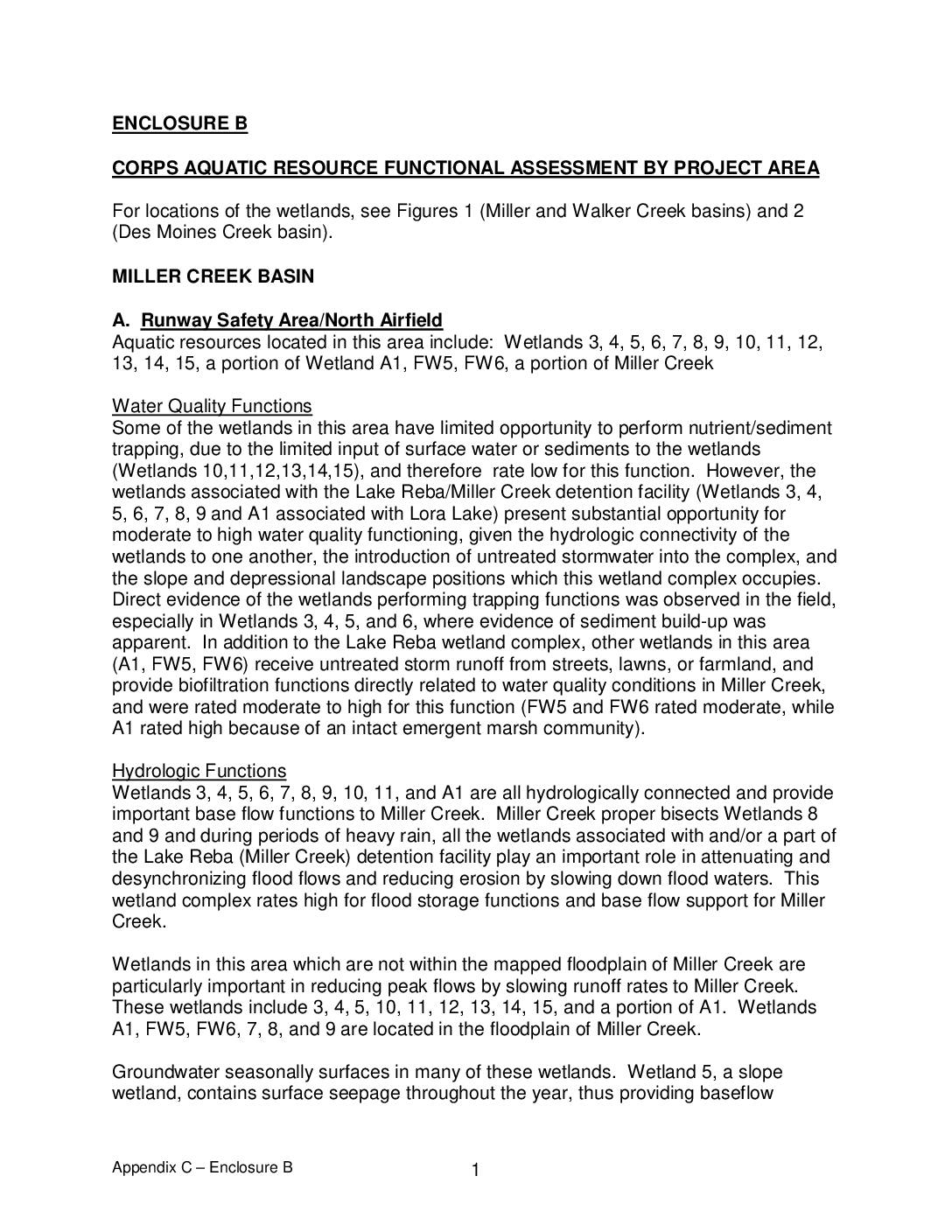
Corps aquatic resource functional assessment by project area
This document assesses the ecological functions of wetlands and aquatic resources in the Miller Creek and related basins near Sea-Tac Airport, evaluating their roles in water quality, flood storage, and wildlife habitat. Wetlands in the Runway Safety Area and Vacca Farm areas are rated across functions such as nutrient trapping, groundwater exchange, and habitat for fish, waterfowl, amphibians, and small mammals. The assessment finds that interconnected wetland complexes like Lake Reba provide high-value flood attenuation and baseflow support for Miller Creek, while farmed wetlands perform at lower functional levels due to sparse vegetation and agricultural runoff. -
 2022-09-12
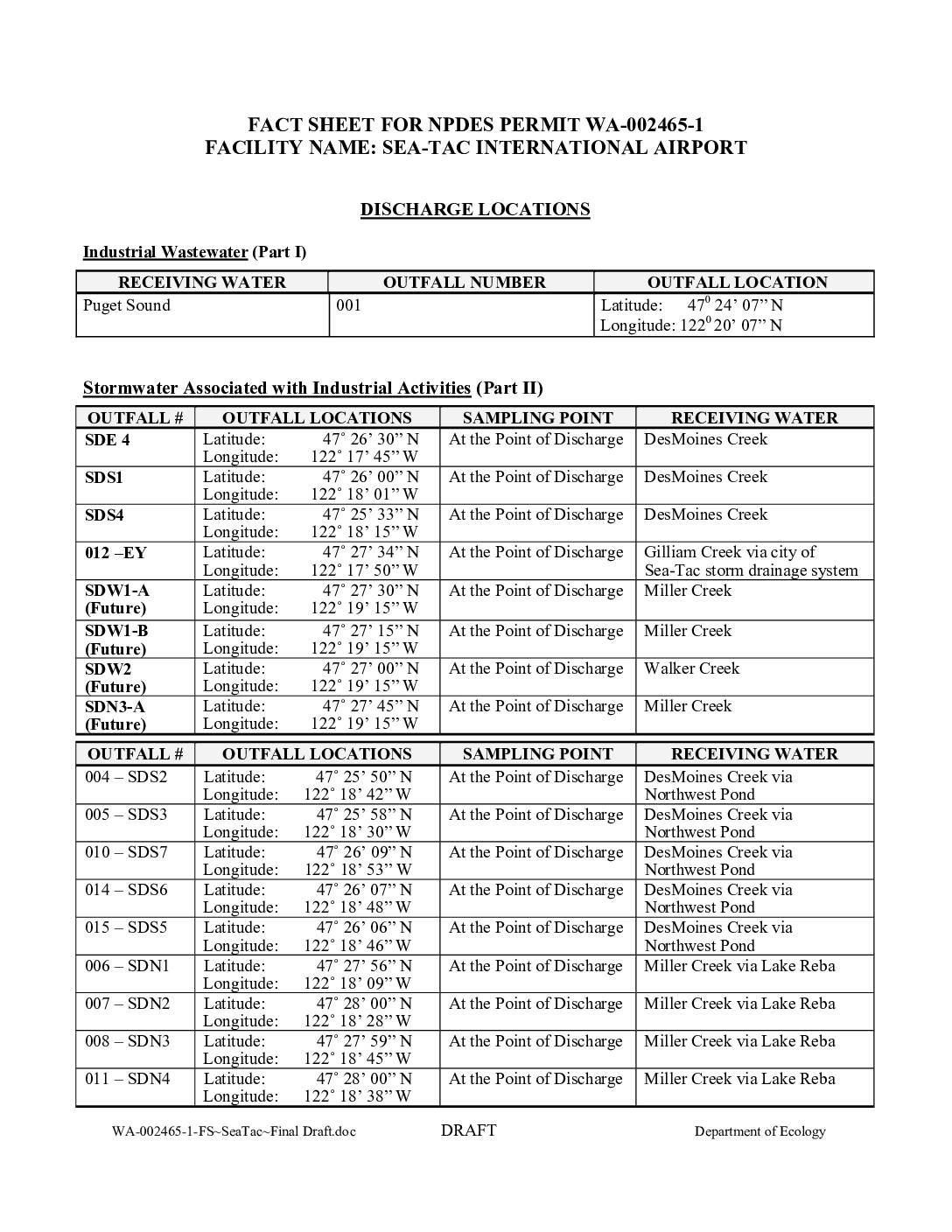
Fact sheet for NPDES permit WA-002465-1, Sea-Tac International Airport
This document is an NPDES (National Pollutant Discharge Elimination System) permit fact sheet for Sea-Tac International Airport, issued by the Washington State Department of Ecology. It details the locations of numerous water discharge outfalls across the airport property, covering industrial wastewater, stormwater from industrial activities, and stormwater from construction activities. The discharges flow into several local waterways including Des Moines Creek, Miller Creek, Walker Creek, Gilliam Creek, and Puget Sound. -
 2022-09-12
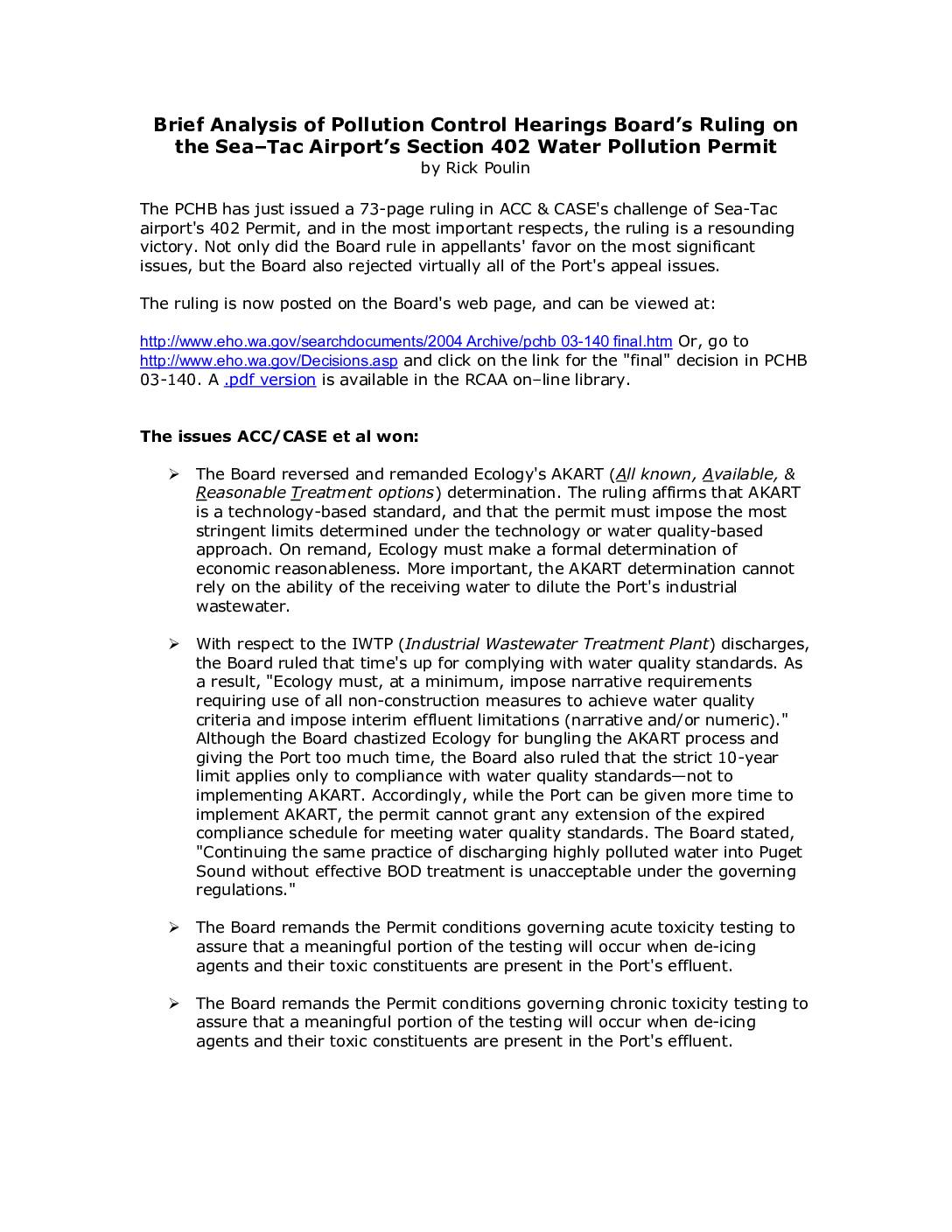
Brief analysis of Pollution Control Hearings Board’s ruling on the Sea–Tac Airport’s Section 402 water pollution permit
The Pollution Control Hearings Board ruled largely in favor of community groups ACC and CASE in their challenge to Sea-Tac Airport's water pollution permit, ordering stricter wastewater treatment standards and rejecting most of the Port's appeals. Key victories included requiring the airport to meet long-overdue water quality standards for its industrial wastewater discharged into Puget Sound, mandating improved toxicity testing during de-icing season, and directing a professional wetlands analysis of Lake Reba. Of the seven final directives issued by the Board, six favored the community appellants and only one favored the Port. -
 2022-09-12
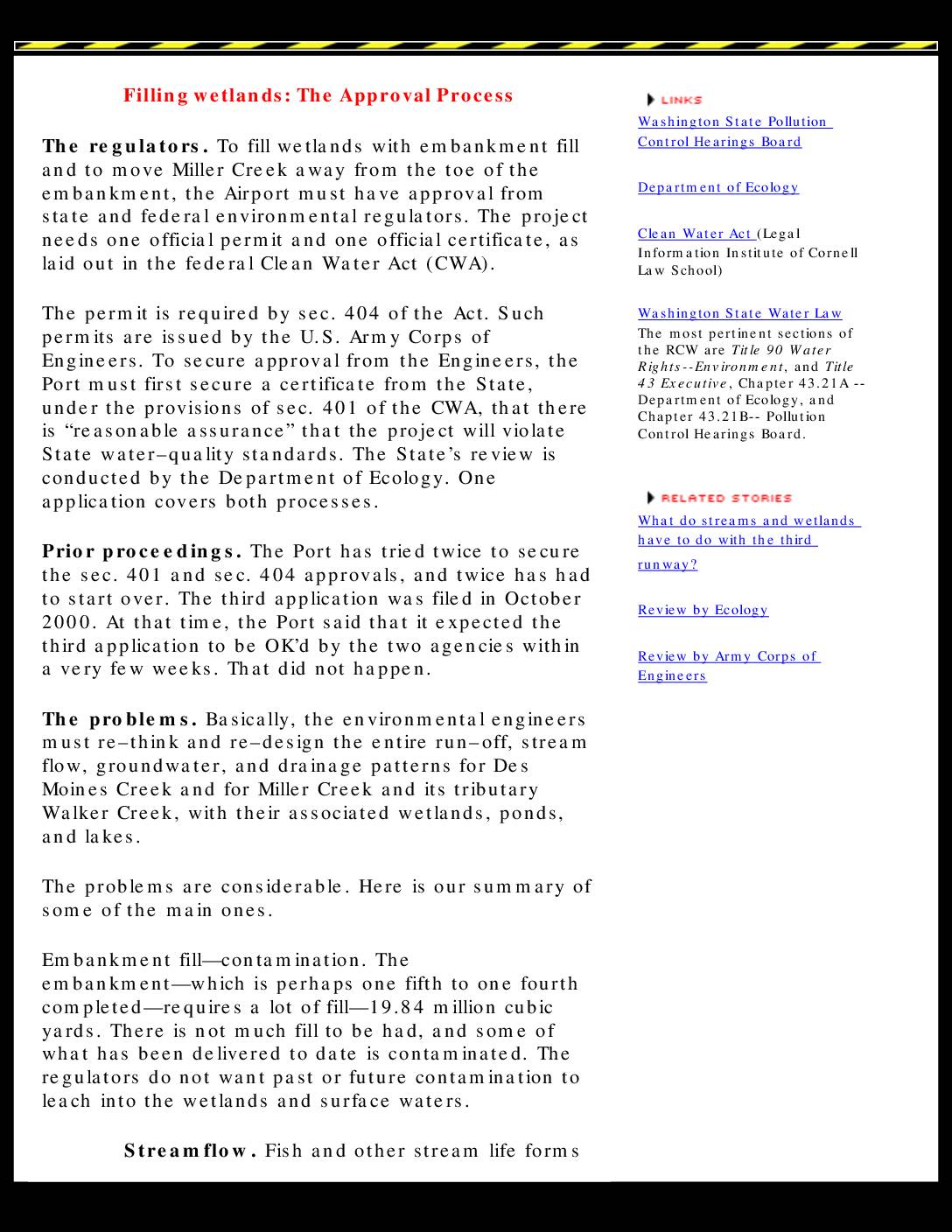
Filling wetlands: The approval process
This document explains the regulatory approval process required for filling wetlands as part of Sea-Tac Airport's third runway expansion, which requires both a federal permit under Section 404 of the Clean Water Act and a state certificate under Section 401. The Port of Seattle filed its third application in October 2000 after two previous attempts failed, facing significant environmental obstacles including contaminated fill material, threats to stream flow and salmon habitat, destruction of nearly 20 acres of wetlands, flooding risks, embankment stability concerns in an earthquake-prone area, and existing pollution levels that already exceed allowable limits. The U.S. Army Corps of Engineers must also weigh the public need for the project against these environmental harms, raising broader questions about whether the expansion is justified at all. -
 2022-09-12
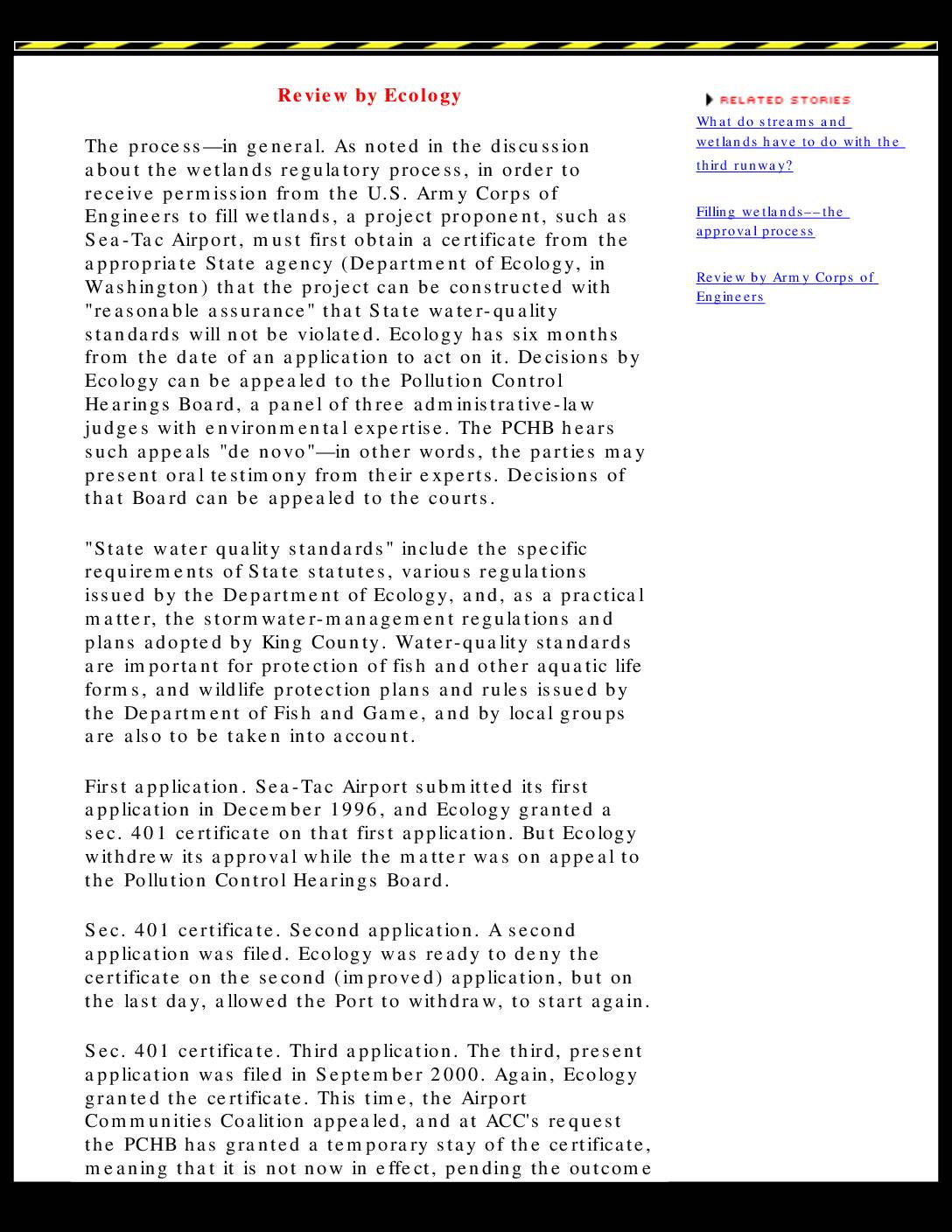
Review by Ecology
This document explains the Washington State Department of Ecology's review process for Sea-Tac Airport's applications to fill wetlands as part of its third runway project. Sea-Tac submitted three separate applications between 1996 and 2000, with the third ultimately receiving a Section 401 water-quality certificate that was later put on hold after the Airport Communities Coalition appealed. The Pollution Control Hearings Board identified three key concerns driving the stay: contaminated fill material, insufficient water rights for dry-season stream flow, and inadequate wetlands mitigation plans. -
 2022-09-12
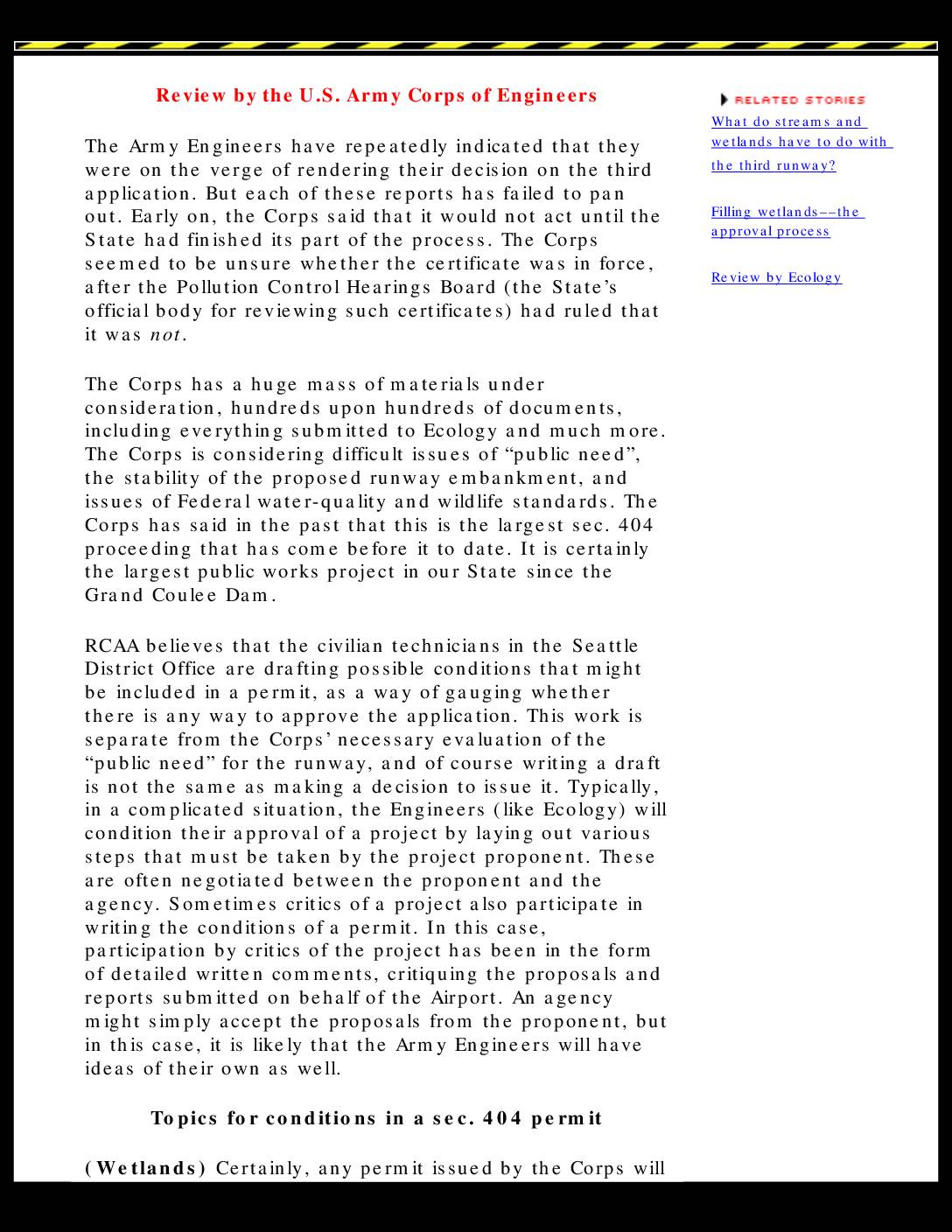
Review by the U.S. Army Corps of Engineers
The U.S. Army Corps of Engineers has been reviewing a permit application related to a proposed third runway at Sea-Tac Airport, described as the largest Section 404 proceeding the Corps had handled and the biggest public works project in Washington State since the Grand Coulee Dam. Key issues under consideration include the replacement of lost wetlands, streamflow impacts, and the seismic stability of the proposed runway embankment. No deadline exists for the Corps to render its final decision, though draft permit conditions were reportedly being prepared by civilian technicians in the Seattle District Office. -
 2022-09-12
Functional assessment, impact and mitigation plan review to the record of decision for Seattle, Port of (1996-4-02325)
This U.S. Army Corps of Engineers document reviews the environmental impact of construction projects at Seattle-Tacoma International Airport, including the Third Runway and related Master Plan Update improvements, focusing on impacts to wetlands and waterways. The Corps conducted an independent assessment of wetland functions and evaluated whether the Port of Seattle's proposed mitigation plans adequately compensated for the destruction or alteration of aquatic resources. After finding the Port's initial December 2000 mitigation plan insufficient, the Corps worked with the Port to develop a revised plan, accepted in November 2001, that better addressed the loss of wetland functions caused by airport construction. -
 2022-09-12
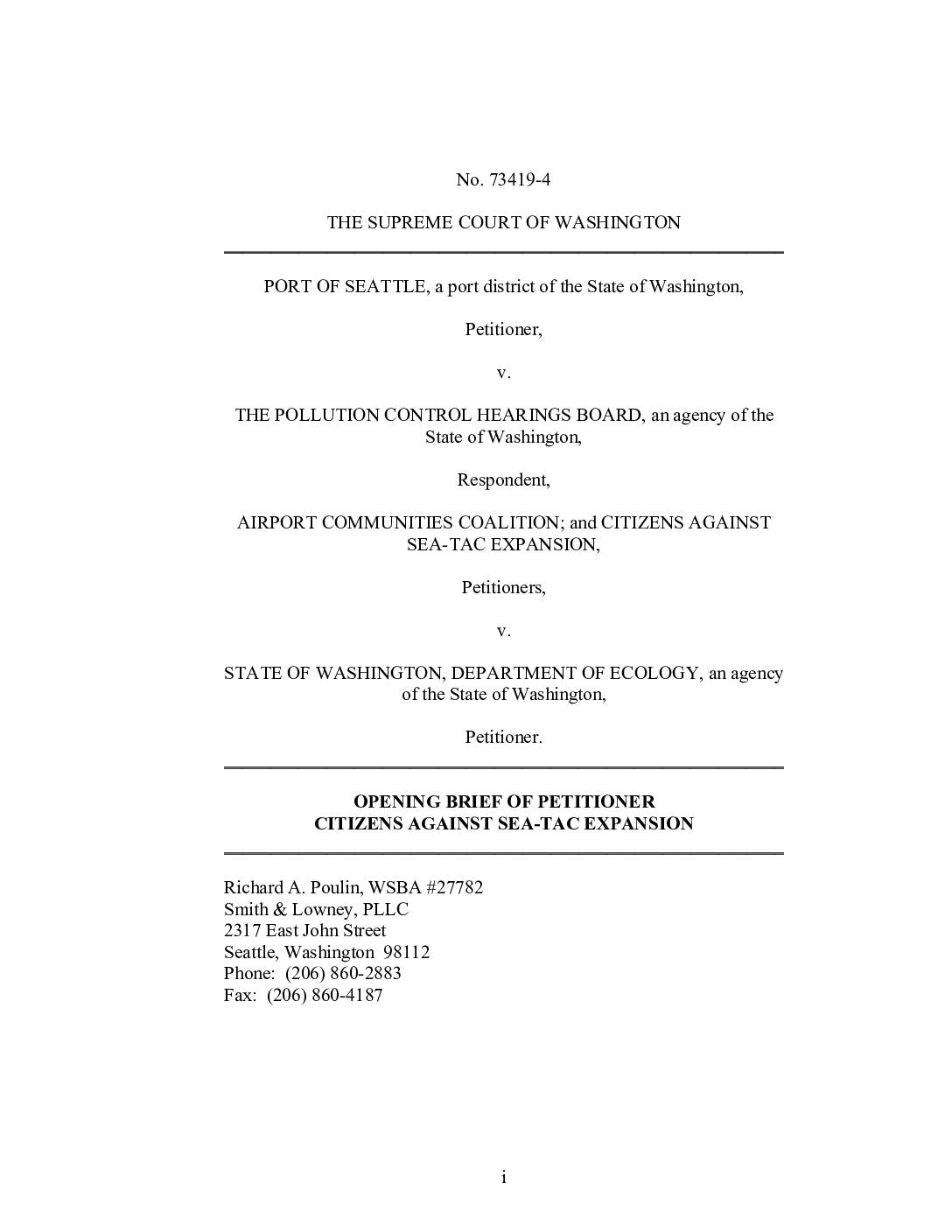
Opening brief of petitioner Citizens Against Sea-Tac Expansion
This legal brief was filed by Citizens Against Sea-Tac Expansion before the Washington Supreme Court, challenging a decision by the Pollution Control Hearings Board regarding the expansion of Seattle-Tacoma International Airport. The group argues that state regulators improperly allowed the Port of Seattle to rely on future, unwritten stormwater permits as proof that airport runoff would meet water quality standards, and that regulators wrongly pre-authorized pollution mixing zones in nearby waterways without sufficient oversight. The case centers on whether proper environmental protections were in place before approving the airport expansion project.