TagRCAA(206)
-
 2023-08-27
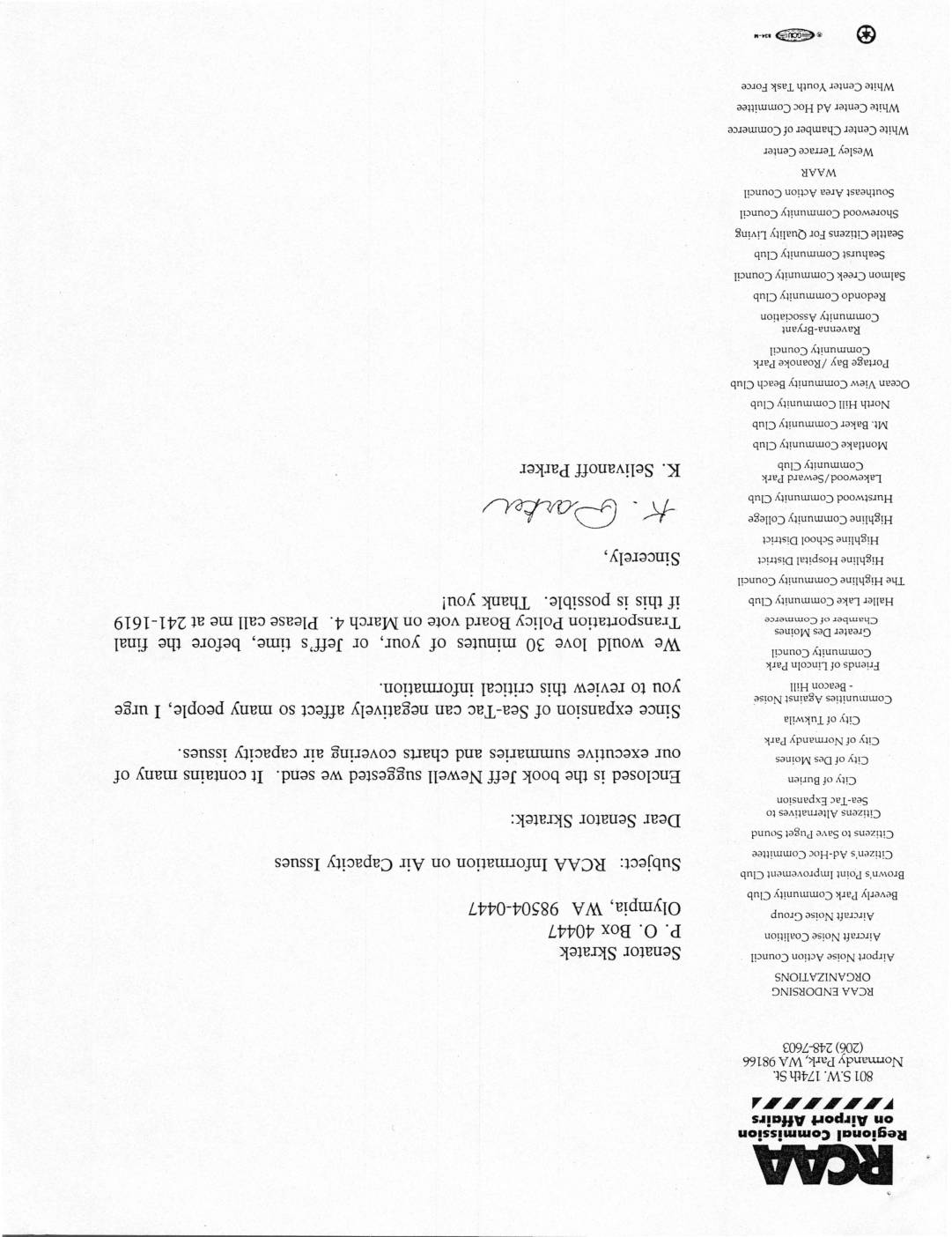
RCAA information on air capacity issues
A letter from the Regional Commission on Airport Affairs (RCAA) to Senator Skratek urges review of air capacity issues related to Sea-Tac Airport expansion, noting that the expansion could negatively affect many people. The letter encloses a book suggested by Jeff Newell containing executive summaries and charts covering air capacity issues, and requests 30 minutes of the Senator's time before the final Transportation Policy Board vote on March 4. The letter is endorsed by a wide range of community organizations, cities, and advocacy groups opposed to or concerned about Sea-Tac expansion. -

-
 2023-07-22
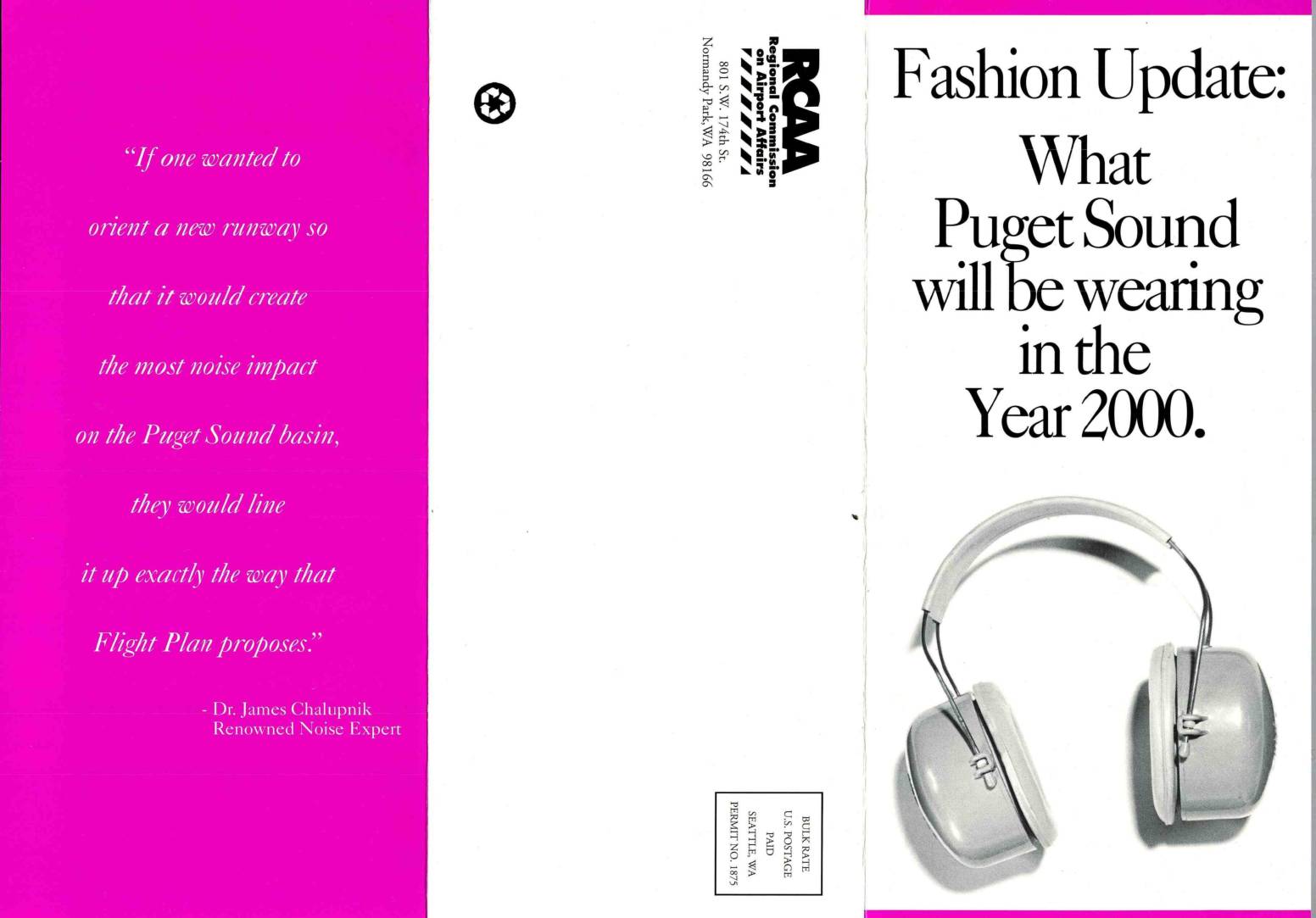
Fashion update: What Puget Sound will be wearing in the year 2000
This brochure, published by the Regional Commission on Airport Affairs (RCAA), argues against the Port of Seattle's 'Flight Plan' proposal to add a third runway at Sea-Tac International Airport. It highlights existing noise burdens on South End communities—where jet noise already averages 65 Ldn and reaches up to 105 decibels—and warns that the expansion would add 120,000 more flights annually by 2020, consuming 12% of residents' daily lives with jet noise. The document cites health experts and a renowned noise specialist, Dr. James Chalupnik, to advocate for alternative solutions such as remote airports and high-speed rail instead of expanding the urban airport. -
 2023-07-22
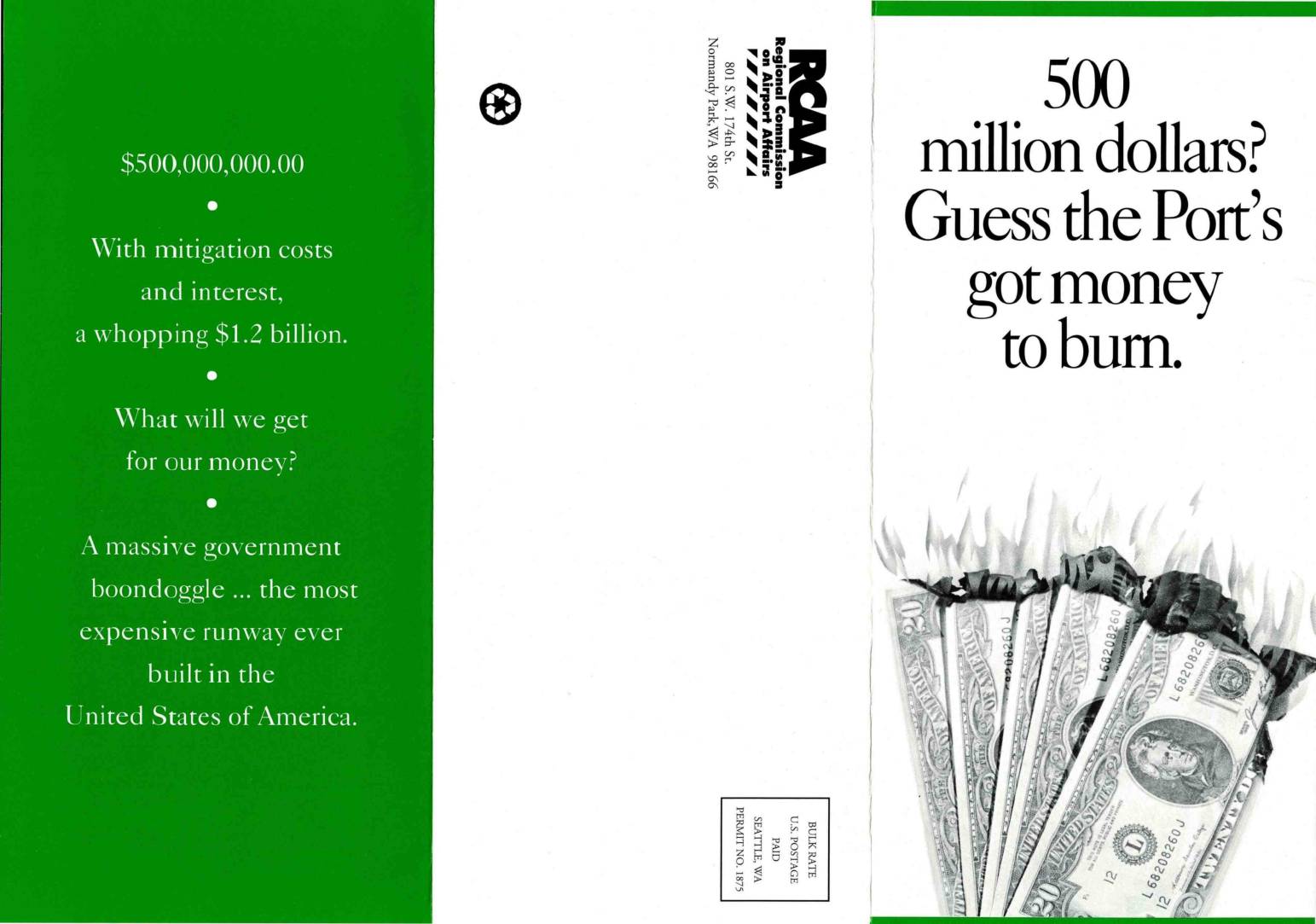
500 million dollars? Guess the Port’s got money to burn.
This pamphlet from the Regional Commission on Airport Affairs (RCAA) opposes a proposed third runway at Seattle-Tacoma International Airport, arguing that construction costs alone could exceed $500 million and balloon to $1.2 billion when mitigation and interest are included. Economists cited in the document warn that the true total cost could approach $2 billion when factoring in school insulation, declining property values, and other indirect impacts on surrounding communities. The RCAA contends that taxpayers and airline passengers would bear up to 92% of the cost while receiving a runway that generates less than 1% return on the public's investment. -
 2023-07-22
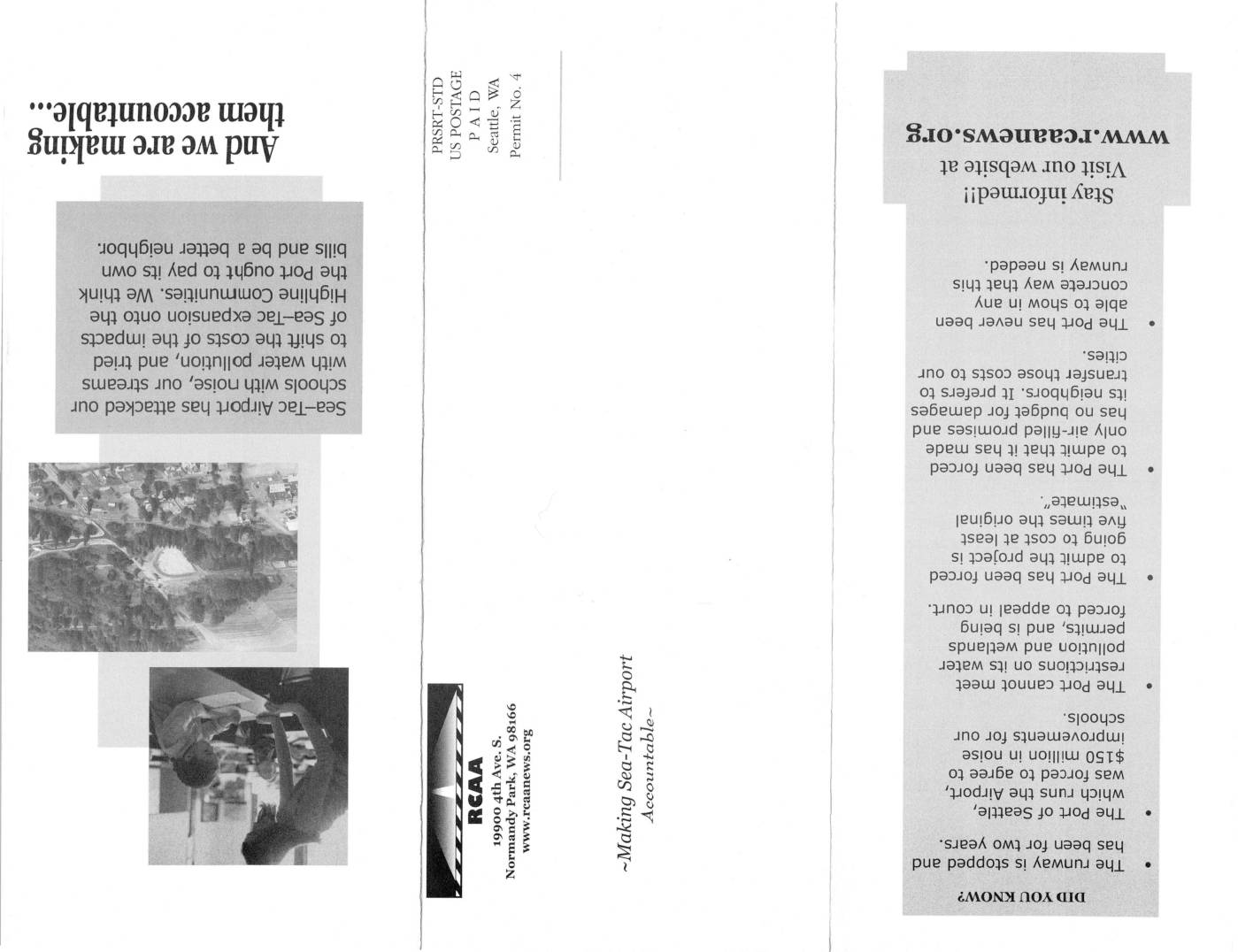
Making Sea-Tac Airport accountable
This community newsletter from the RCAA (Residents for a Cleaner Airport Area) outlines how Highline-area communities near Seattle's Sea-Tac Airport have held the Port of Seattle accountable for noise, water pollution, and runaway construction costs on a proposed third runway. Key victories include a $150 million noise-mitigation settlement for Highline schools, a court-ordered halt to third-runway construction due to unmet environmental permit requirements, and improved water quality in local streams. The document urges residents to stay engaged, warning that the Port continues to pursue runway expansion despite being $3 billion in debt and facing ongoing legal and environmental challenges. -
 2023-04-24
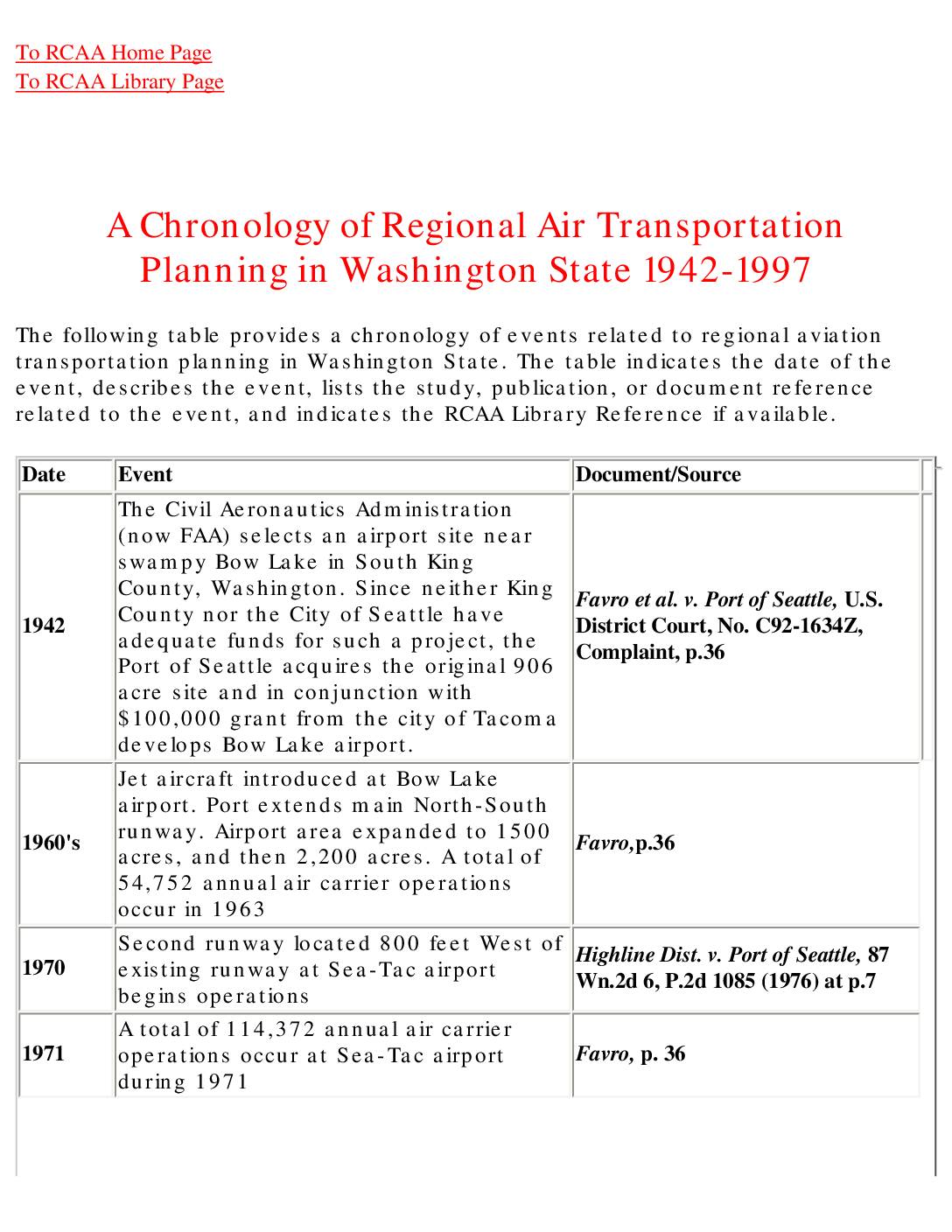
A chronology of regional air transportation planning in Washington State 1942-1997
This document traces the history of regional air transportation planning in Washington State from 1942 to 1997, covering key milestones such as the original selection of the Bow Lake airport site, runway expansions, and noise-related lawsuits against the Port of Seattle. It highlights repeated policy decisions—including the 1973 Sea-Tac Communities Plan and the 1985 Master Plan Update—that explicitly ruled out new runways and major site expansions at Sea-Tac International Airport. The chronology also documents growing community concerns about aircraft noise, vibration, and smoke, reflected in legal actions and environmental impact studies throughout the period. -
 2023-04-24
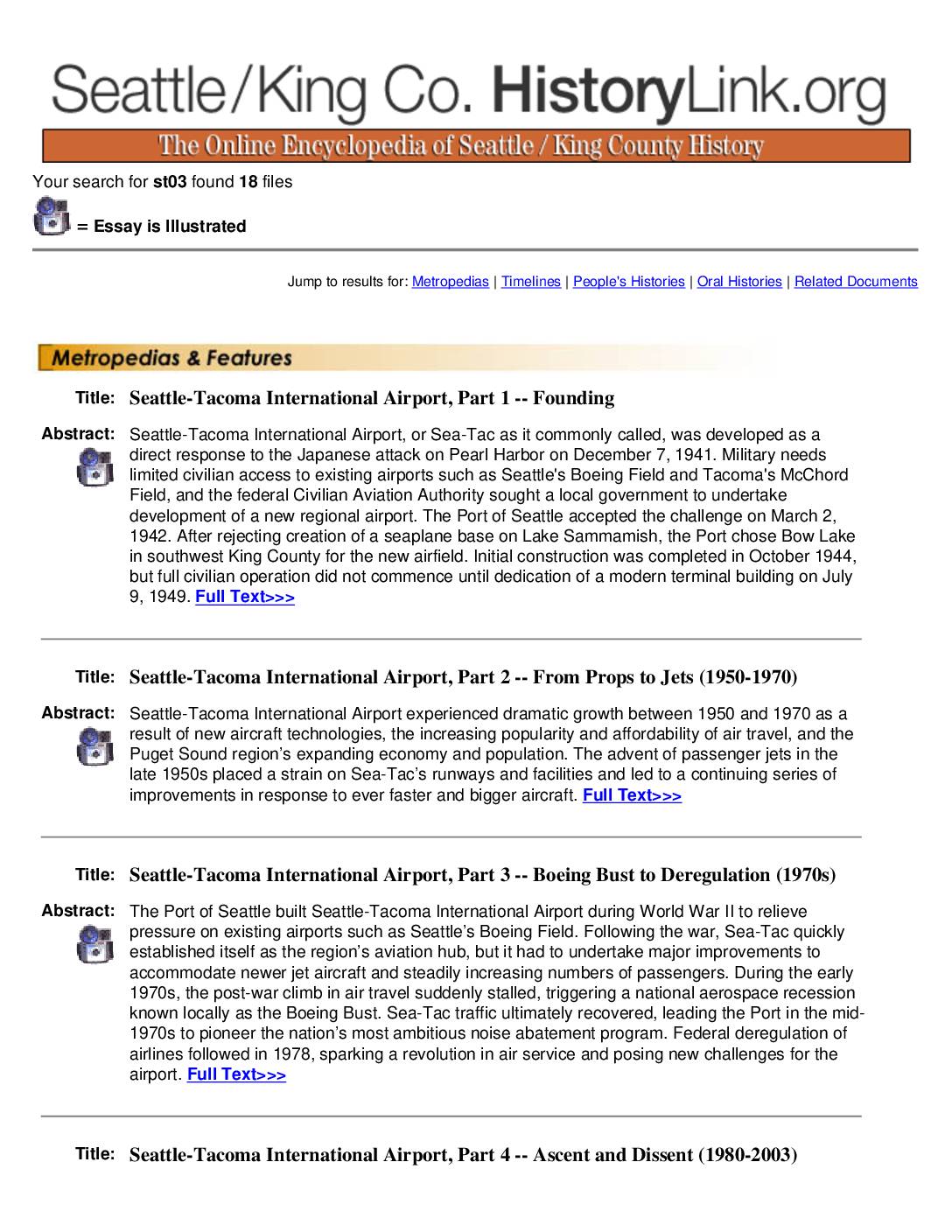
Seattle-Tacoma International Airport history search results (st03)
This collection of essays and timeline entries from HistoryLink.org traces the full history of Seattle-Tacoma International Airport, from its origins as a World War II-era civilian airport built by the Port of Seattle to the complex debates of the 1980s–2000s over adding a third runway. Key topics include the airport's rapid growth during the jet age, the economic disruptions of the Boeing Bust, and the federal deregulation of airlines in 1978. A central focus is the prolonged public and political battle over noise impacts and runway expansion, which drove up the third runway's projected cost from $430 million to $1.1 billion and delayed its completion by nearly a decade. -
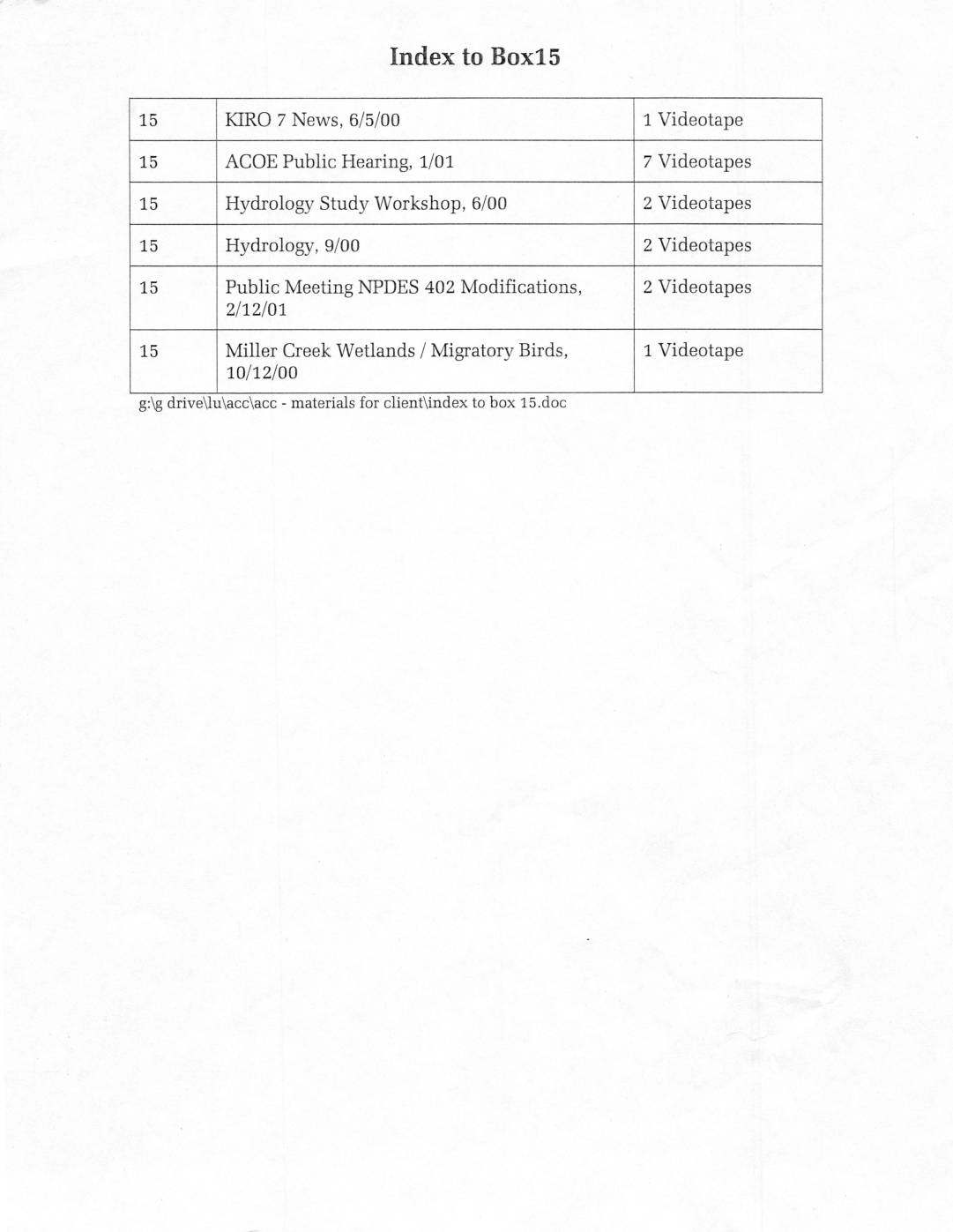
Index to Box15
Box 15 is an archival collection of videotapes documenting environmental and regulatory proceedings related to the Sea-Tac Airport area, recorded between 2000 and 2001. The collection includes footage of a KIRO 7 news segment, an Army Corps of Engineers public hearing, hydrology study workshops, and a public meeting on NPDES 402 stormwater permit modifications. Also included is a videotape focused on Miller Creek Wetlands and migratory birds, totaling 15 videotapes across six subject categories. -
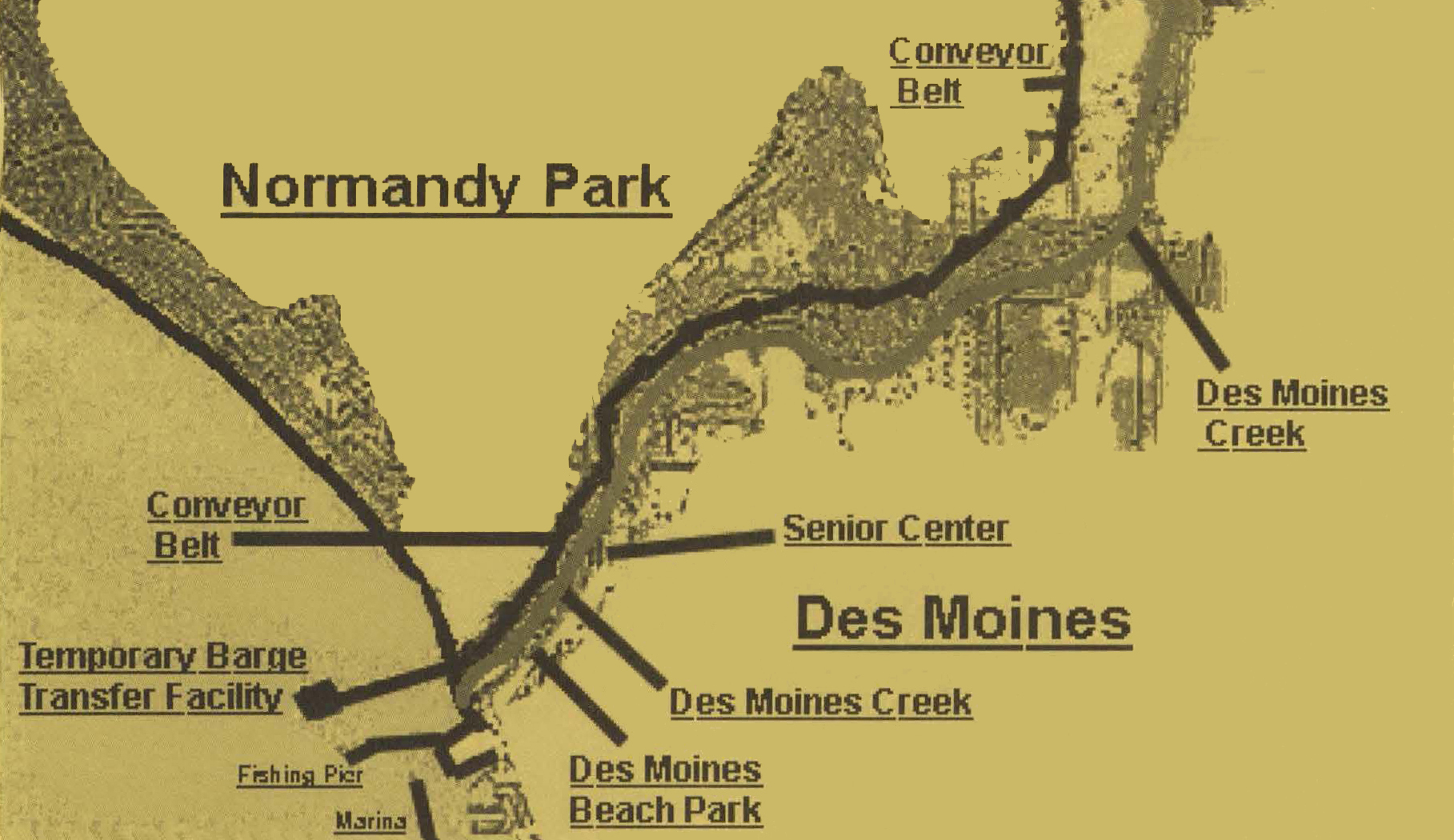
RCAA yellow one page flyer conveyor 2001 graphic
A map showing the Des Moines and Normandy Park area along Puget Sound, labeling infrastructure including two Conveyor Belt routes, a Temporary Barge Transfer Facility, Senior Center, Des Moines Creek, Des Moines Beach Park, Fishing Pier, and Marina. This appears to be a planning or environmental document related to construction logistics, likely associated with Sea-Tac Airport expansion or runway construction requiring barge-based materials transport. -
 2022-09-12
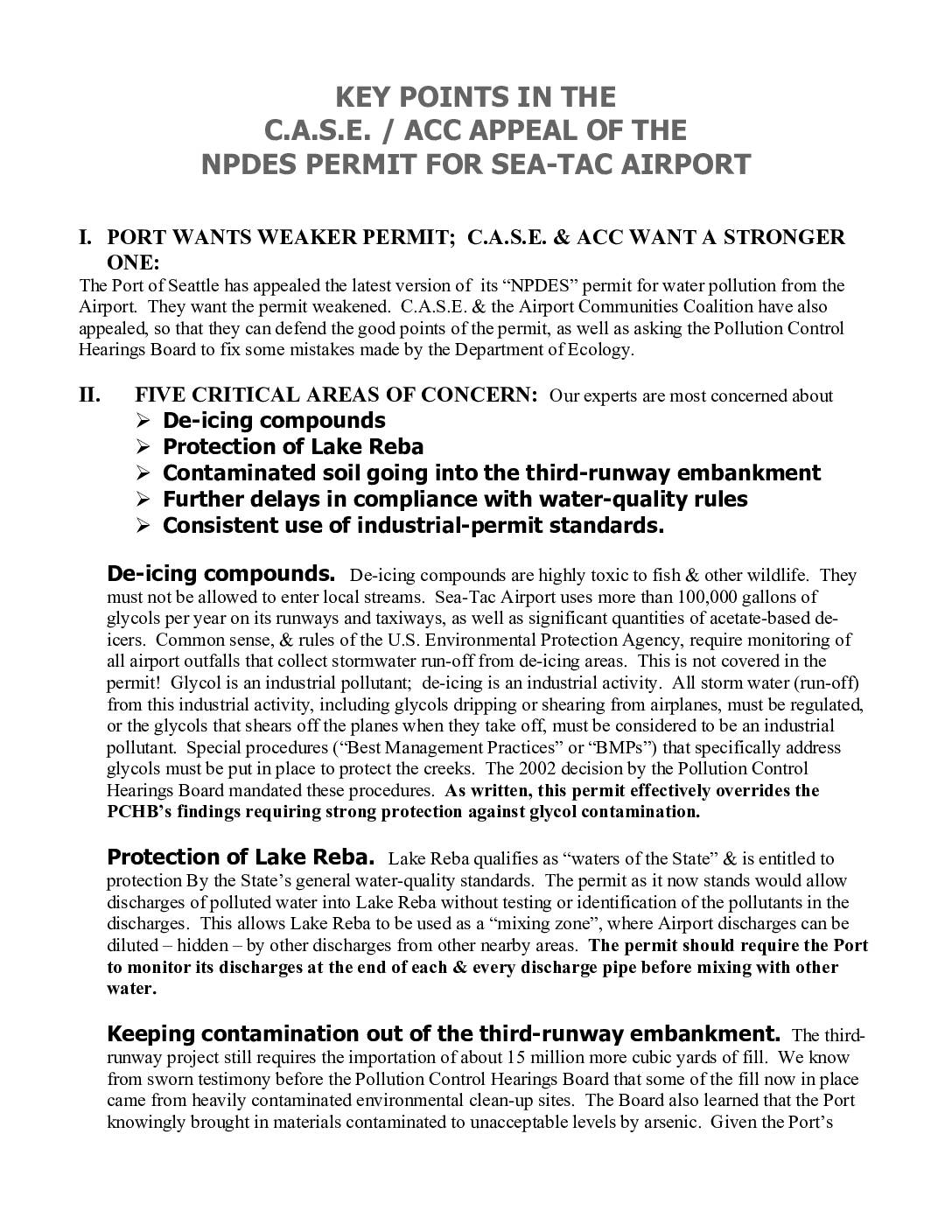
Key points in the C.A.S.E. / ACC appeal of the NPDES permit for Sea-Tac Airport
Community groups C.A.S.E. and the Airport Communities Coalition have appealed Sea-Tac Airport's water pollution permit, pushing for stronger environmental protections while the Port of Seattle seeks to weaken it. Their key concerns include toxic de-icing chemicals entering local streams, inadequate protection of Lake Reba, contaminated soil used in the third-runway construction, and years of delayed compliance with clean-water standards. The groups argue the permit fails to meet legally required industrial pollution controls and undermines previous rulings by the Pollution Control Hearings Board.