TagPort Of Seattle(2405)
-
 2001-04-01
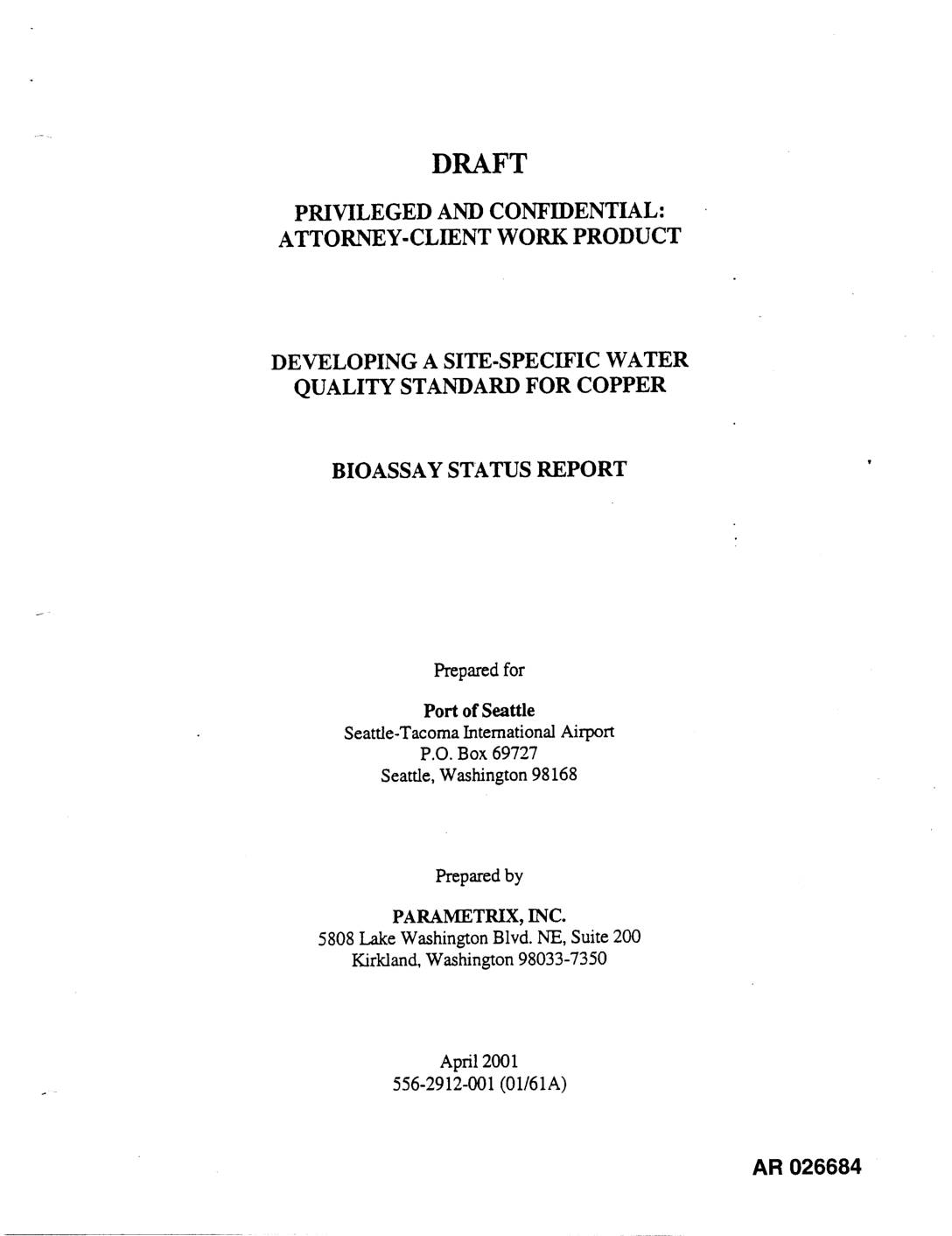
EXH AR026684: Site-Specific Water Quality Standard Copper Bioassay Status RP
This 2001 draft report by Parametrix, Inc. describes a water quality study conducted for the Port of Seattle to assess the feasibility of meeting state water quality standards following construction of a third runway at Seattle-Tacoma International Airport. The study focused on developing a site-specific water-effect ratio (WER) for copper in Miller, Walker, and Des Moines Creeks by conducting toxicity bioassays on stormwater samples collected during storm events. The report summarizes results from initial screening and range-finding phases, with the final site-specific water quality standard still pending completion at the time of publication. -
 2001-03-30
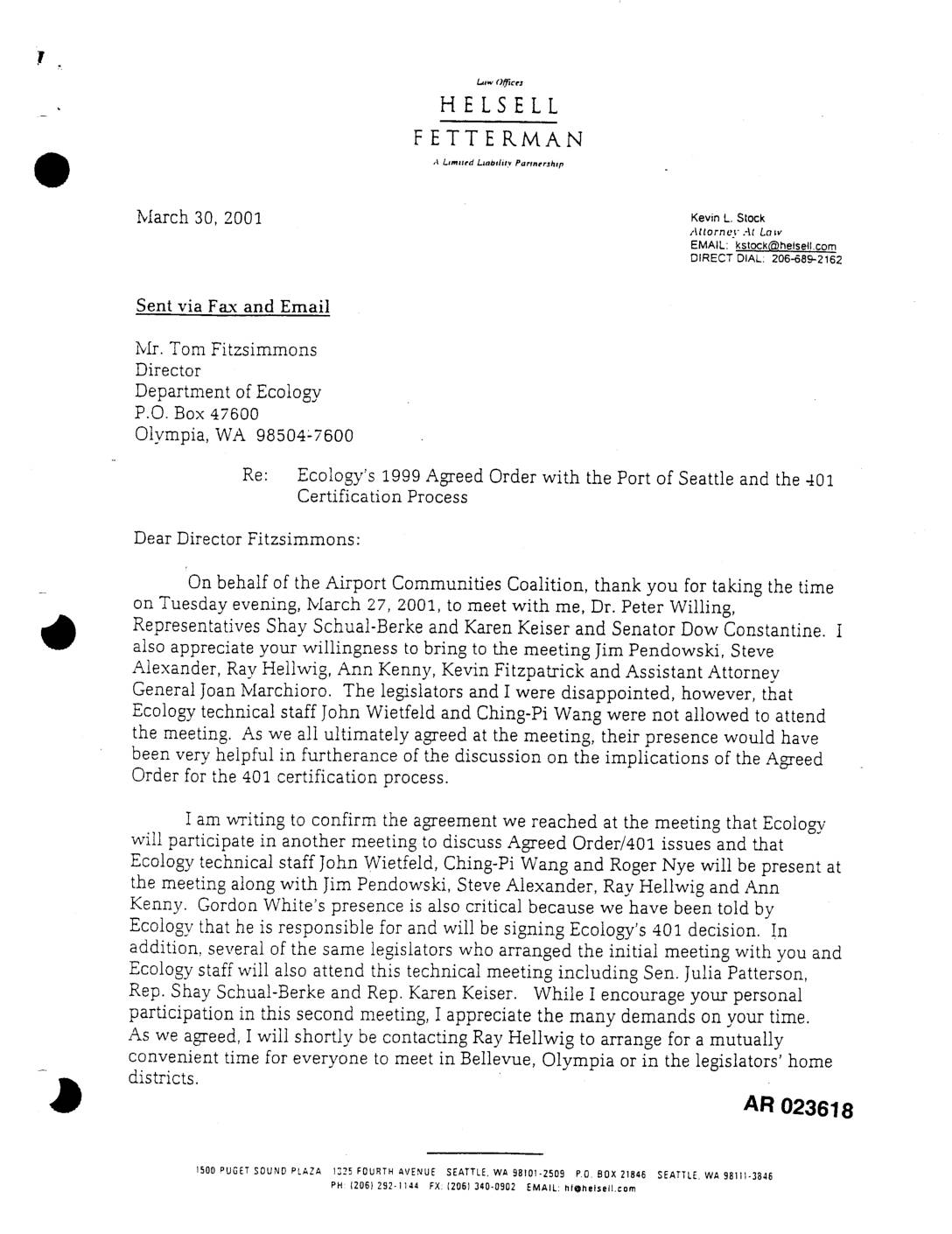
EXH AR023618: Letter Kevin L. Stock (Helsell Fetterman) to Dir. Tom Fitzsimmons (Ecology) Re: 1999 Agreed Order & 401 Certification Process
In this March 30, 2001 letter, attorney Kevin L. Stock of Helsell Fetterman writes to Washington State Department of Ecology Director Tom Fitzsimmons on behalf of the Airport Communities Coalition, confirming agreements reached at a March 27 meeting regarding Sea-Tac Airport expansion. The letter asserts that Ecology's 1999 Agreed Order with the Port of Seattle must be fulfilled before a Section 401 water quality certification can legally be issued, and confirms Ecology's commitment to hold a follow-up technical meeting with key staff and legislators present. The ACC argues that strong scientific and legal grounds preclude issuing a defensible 401 certification until the Port completes its obligations under the Agreed Order. -
 2001-03-30
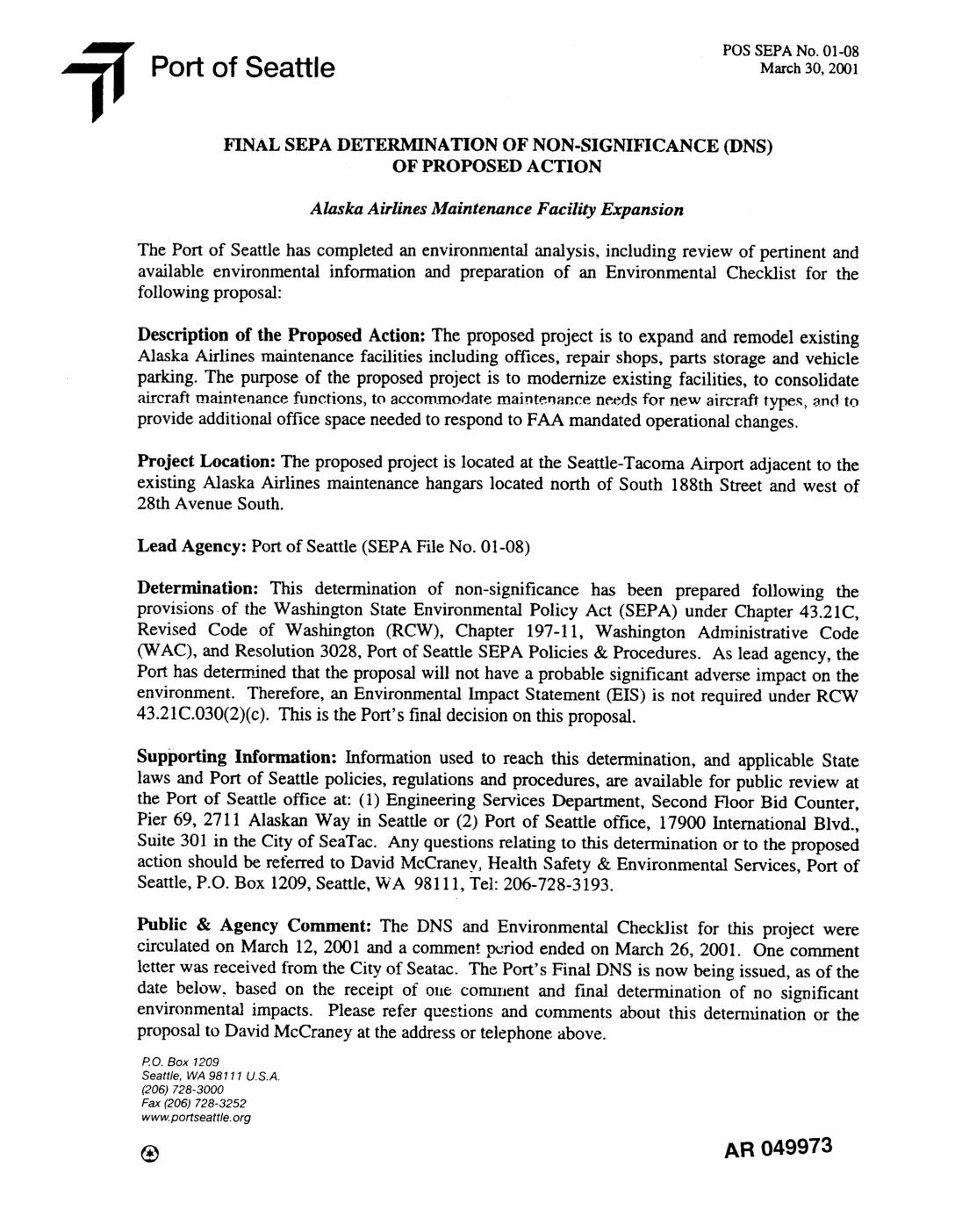
EXH AR049973: Final SEPA Determination of Non-Significance (DNS) — Alaska Airlines Maintenance Facility Expansion
Port of Seattle Final SEPA Determination of Non-Significance (DNS), POS SEPA No. 01-08, dated March 30, 2001, for the Alaska Airlines Maintenance Facility Expansion at Seattle-Tacoma Airport, north of South 188th Street and west of 28th Avenue South. The proposed project expands and remodels existing Alaska Airlines maintenance facilities including offices, repair shops, parts storage, -
 2001-03-28
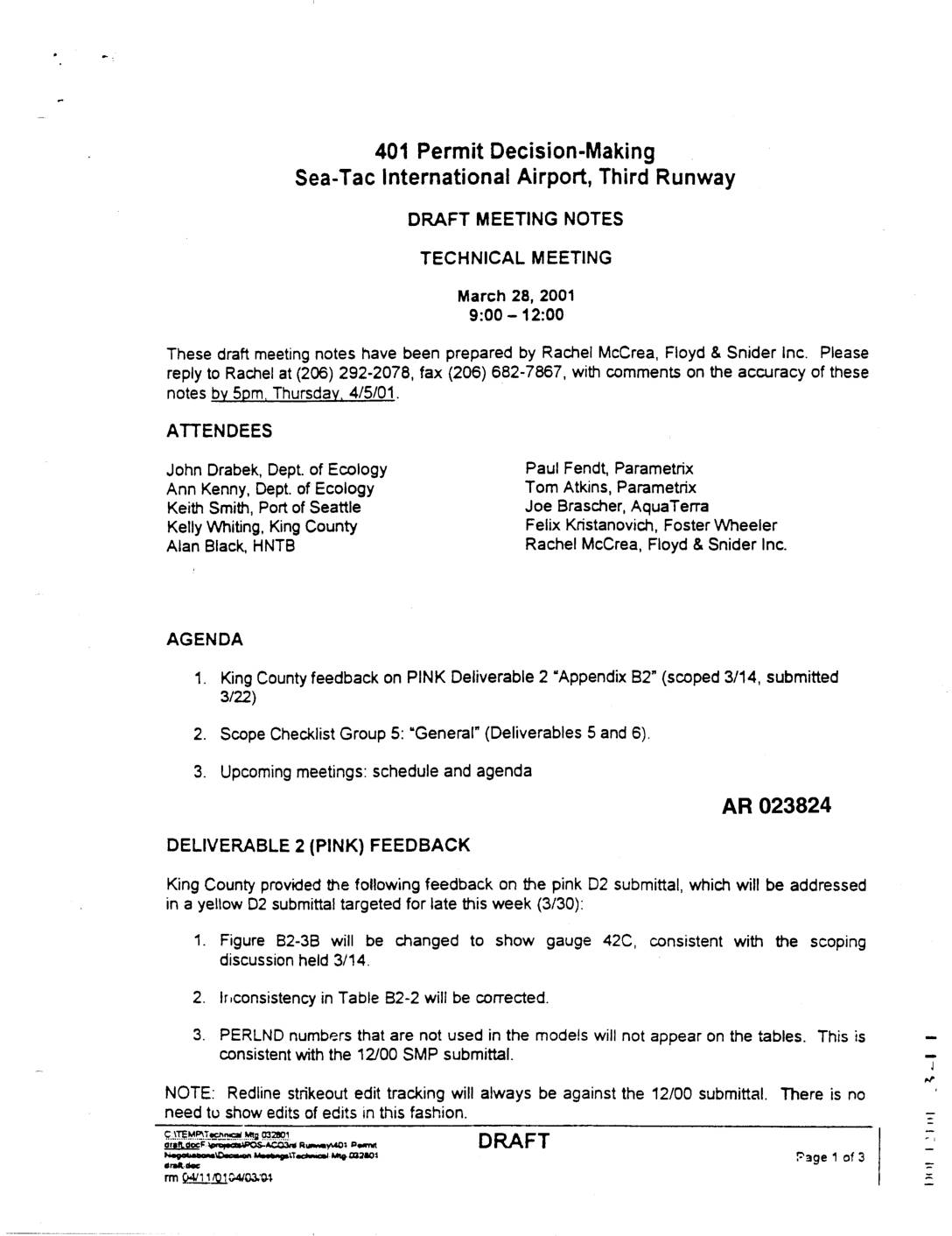
EXH AR023824: Draft Technical Meeting Notes – 401 Permit Decision-Making, STIA Third Runway, Mar 28, 2001
These draft meeting notes from March 28, 2001 document a technical meeting regarding the 401 Permit Decision-Making process for Sea-Tac International Airport's Third Runway project. The meeting covered feedback on stormwater management deliverables, including corrections to hydrological modeling tables and figures, as well as scoping discussions for upcoming deliverables related to vault structural feasibility and maintenance documentation. Representatives from the Department of Ecology, King County, Port of Seattle, and several consulting firms attended, with follow-up meetings scheduled for early April 2001. -
 2001-03-26
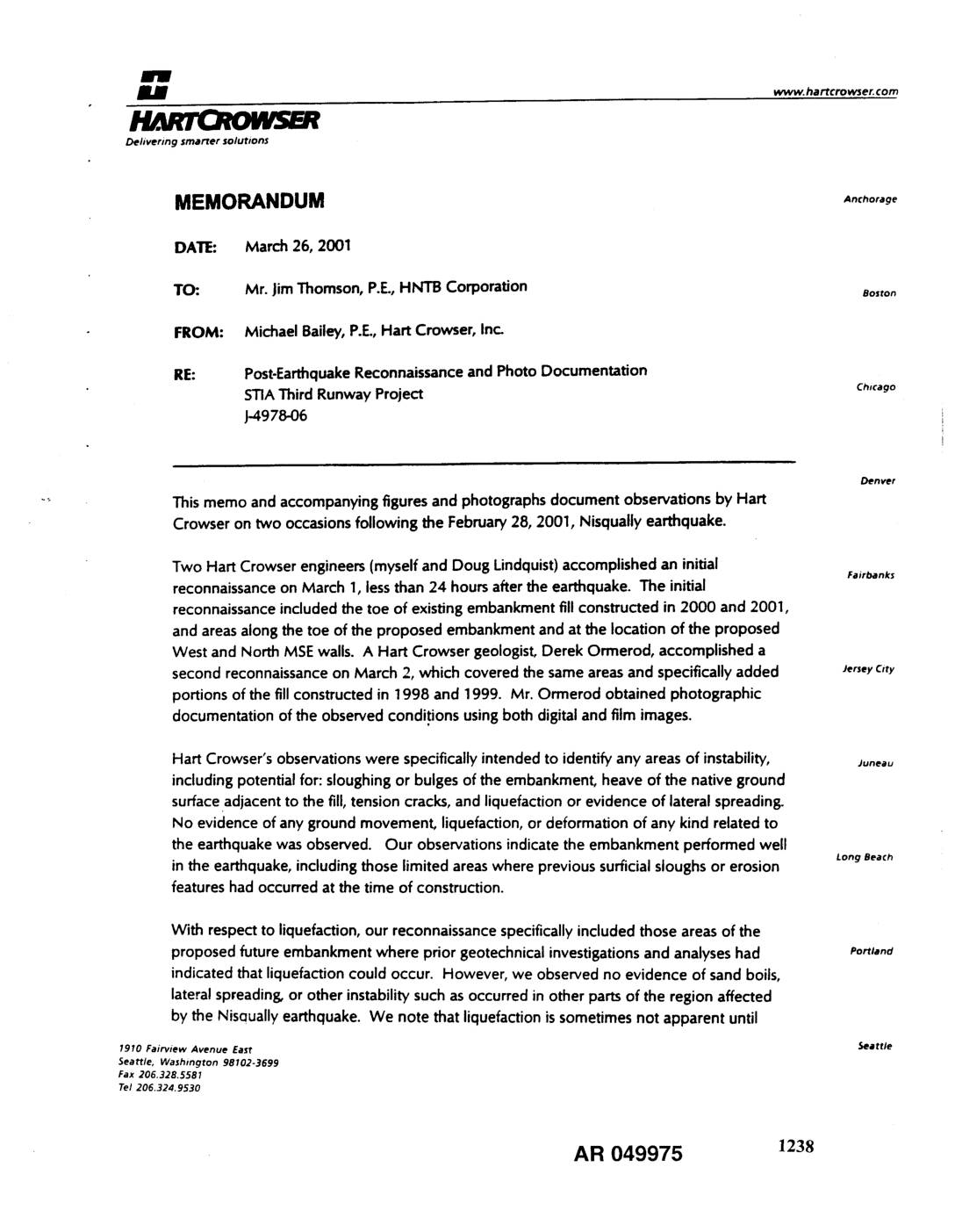
EXH AR049975: Post-Earthquake Reconnaissance and Photo Documentation — STIA Third Runway Project
Memorandum from Michael Bailey, P.E., Hart Crowser, Inc. to Jim Thomson, P.E., HNTB Corporation, dated March 26, 2001, documenting post-earthquake reconnaissance at the Sea-Tac Airport (STIA) Third Runway Project site (project J-4978-06) following the February 28, 2001, Nisqually earthquake. Two reconnaissance visits on March 1 and March 2, 2001 by Hart Crowser engineers Doug Lindquist -
 2001-03-26
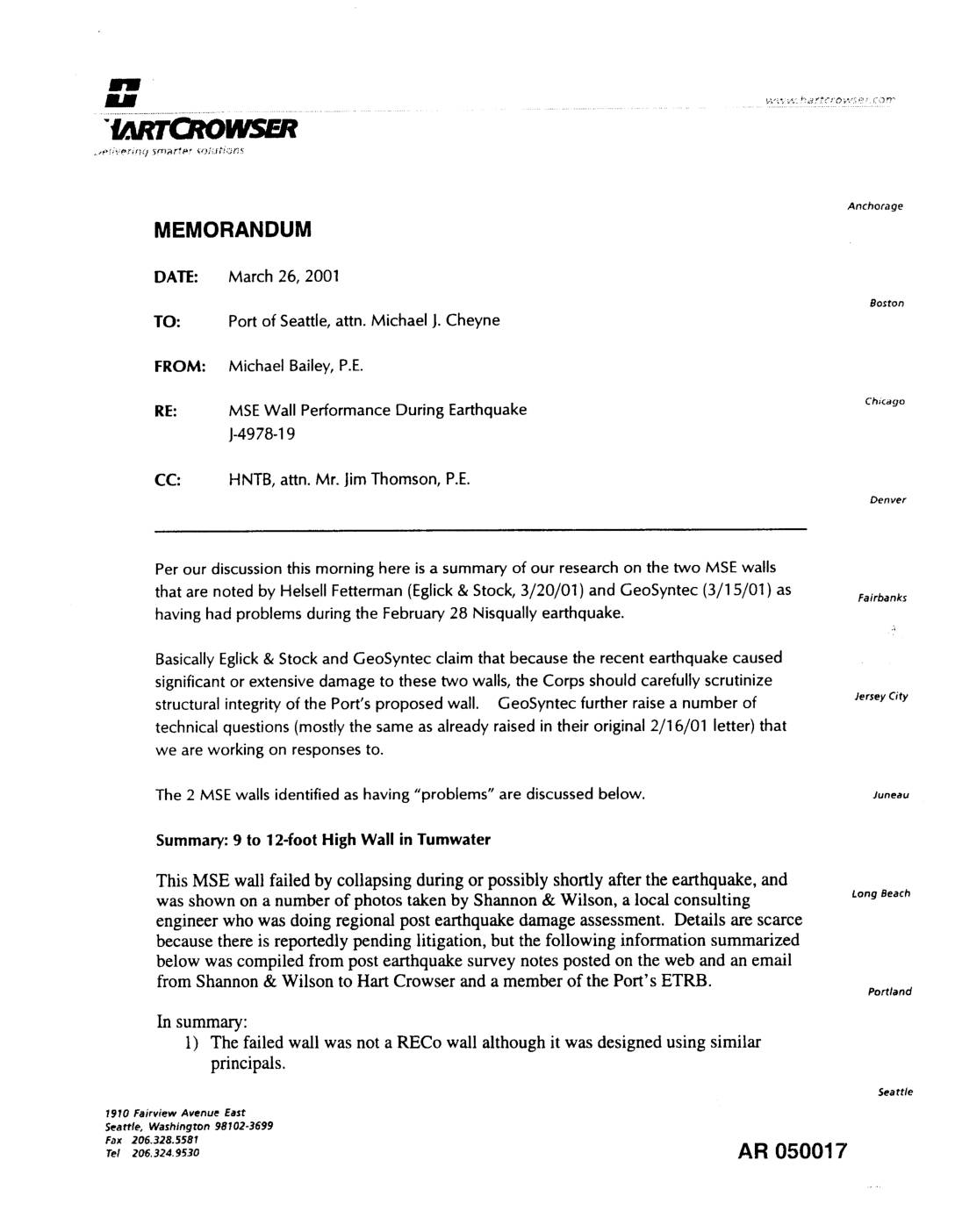
EXH AR050017: MSE Wall Performance During Earthquake — Hart Crowser Memorandum to Port Of Seattle
Hart Crowser memorandum (J-4978-19) from Michael Bailey, P.E., to Port Of Seattle attn. Michael J. Cheyne, CC HNTB attn. Jim Thomson, P.E., dated March 26, 2001, summarizing MSE (Mechanically Stabilized Earth) wall performance during the February 28 Nisqually earthquake. Discusses two MSE walls identified by Helsell Fetterman (Eglick & Stock 3/20/01) and GeoSyntec (3/15/01) as -
 2001-03-26
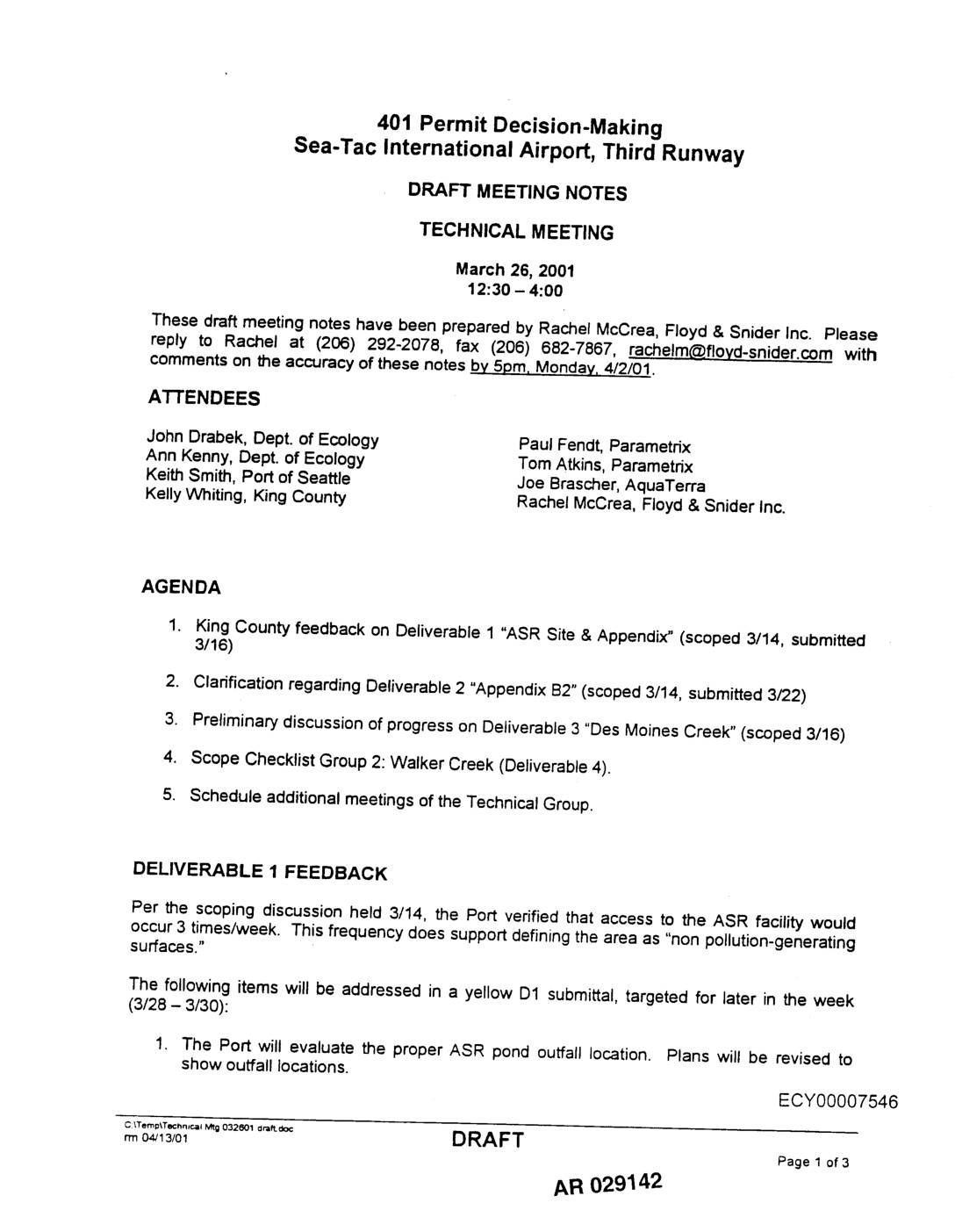
EXH AR029142: Draft Technical Meeting Notes — 401 Permit Decision-Making, Sea-Tac Airport Third Runway, March 26, 2001
Draft meeting notes prepared by Rachel McCrea of Floyd & Snider Inc. for a 401 Permit Decision-Making Technical Meeting held March 26, 2001, regarding the Sea-Tac International Airport Third Runway. Attendees included John Drabek and Ann Kenny (Dept. of Ecology), Keith Smith (Port Of Seattle), Kelly Whiting (King County), Paul Fendt and Tom Atkins (Parametrix), -
 2001-03-21
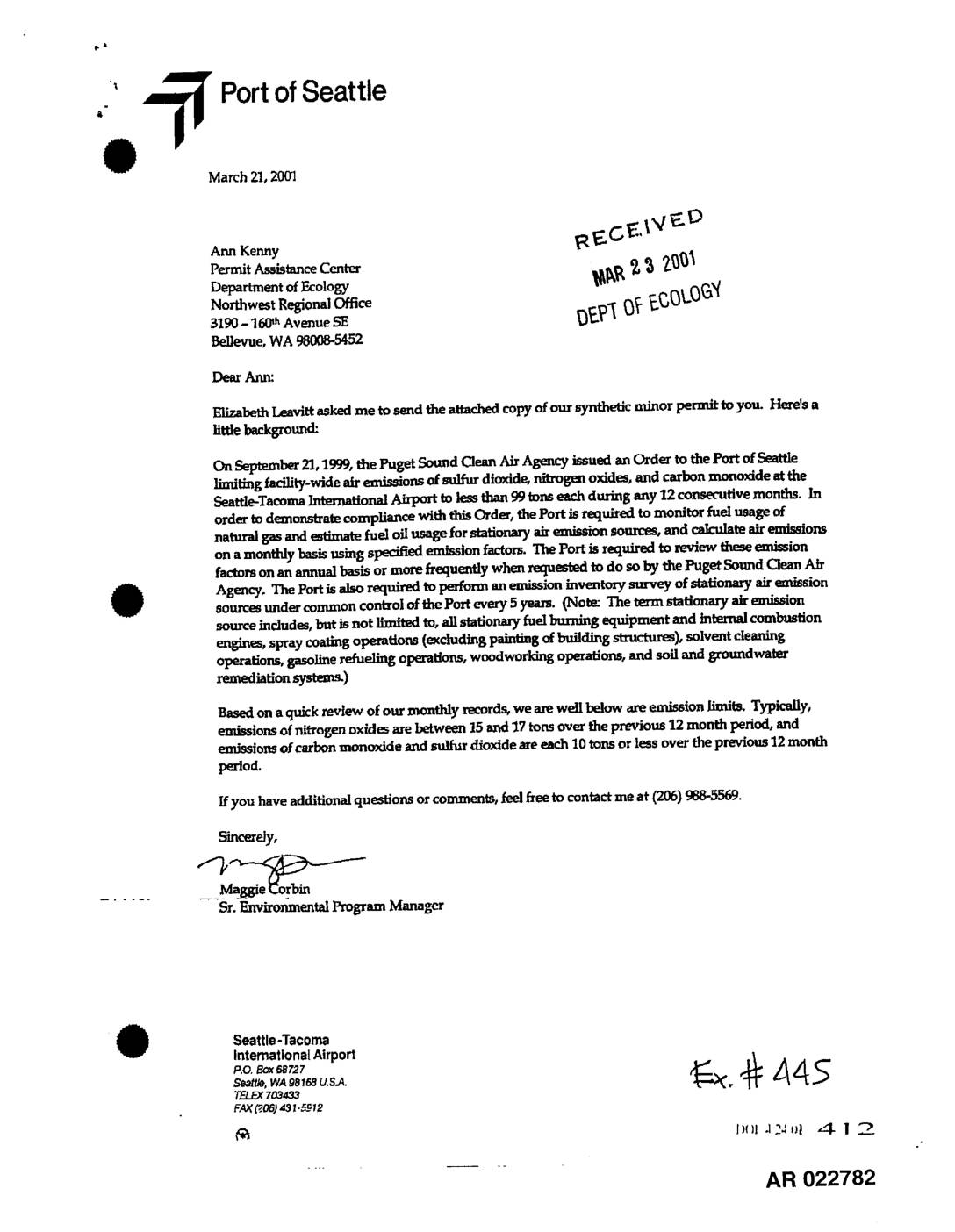
EXH 445: Letter to Ecology Transmitting Synthetic Minor Permit and PSCAA Order No. 7777 STIA Air Emissions
In September 1999, the Puget Sound Clean Air Agency issued an order limiting facility-wide air emissions of sulfur dioxide, nitrogen oxides, and carbon monoxide at Seattle-Tacoma International Airport to less than 99 tons each per any 12-month period. The Port of Seattle is required to monitor fuel usage, calculate monthly emissions using specified factors, and maintain rolling records for at least five years. A March 2001 letter from the Port's Environmental Program Manager confirms emissions were well within limits, with nitrogen oxides typically running 15–17 tons and both carbon monoxide and sulfur dioxide at 10 tons or less over the previous 12-month period. -
 2001-03-21
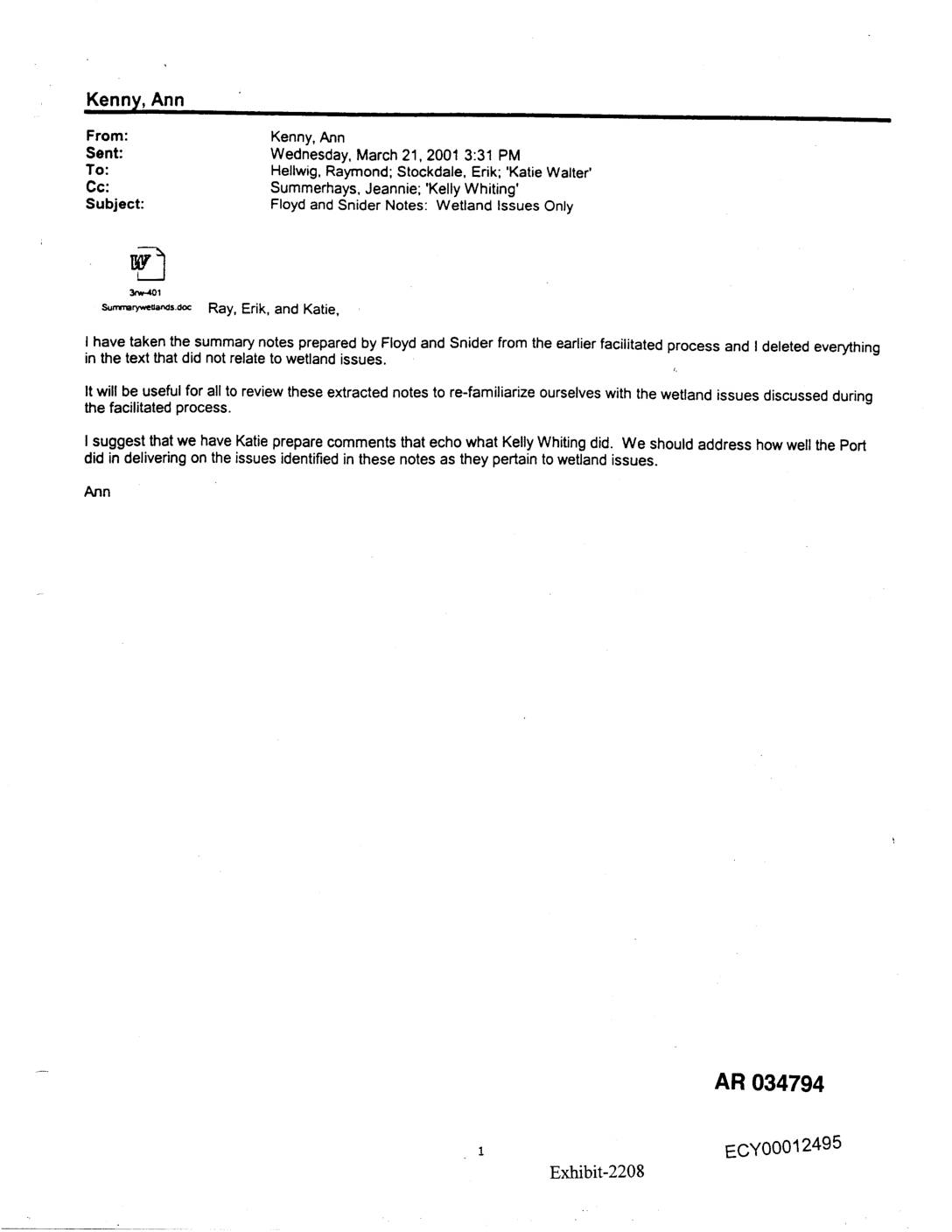
Exhibit 2208: Ann Kenny Email and Sea-Tac Airport Third Runway 401 Permit Negotiations Meeting Notes Summary (Wetland Issues Only), October–December 2000
Email from Ann Kenny to Raymond Hellwig, Erik Stockdale, and Katie Walter (cc: Jeannie Summerhays, Kelly Whiting), dated March 21, 2001, transmitting Floyd & Snider Inc. Meeting Notes Summary (AR 034794, ECY00012495, Exhibit 2208) covering Sea-Tac Airport Third Runway 401 Permit negotiations on wetland issues only, October 2 through December 8, 2000. The summary documents -
 2001-03-21
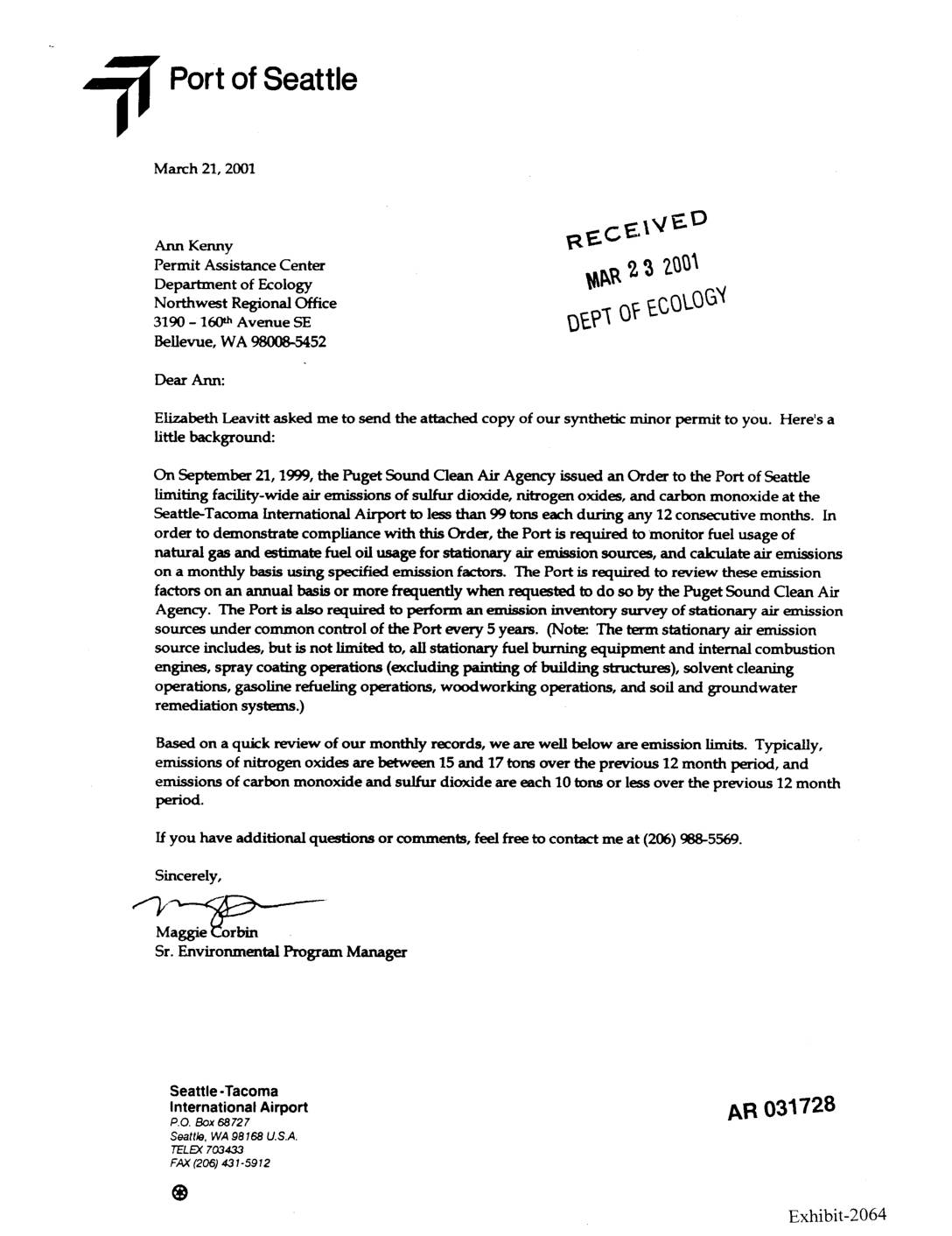
EXH AR031728: Port Of Seattle Letter to Ecology Transmitting Synthetic Minor Permit and PSCAA Order for Sea-Tac Airport Air Emissions
Letter dated March 21, 2001 from Maggie Corbin, Sr. Environmental Program Manager, Port Of Seattle Seattle-Tacoma International Airport, to Ann Kenny at the Washington Department of Ecology Northwest Regional Office, transmitting a synthetic minor permit. Background: Puget Sound Clean Air Agency (PSCAA) issued Order dated September 21, 1999 (Construction No. 7777, Registration No. 21408) limiting