TagPort Of Seattle Commission(302)
As the owner/operator of Sea-Tac Airport, following Commission meetings is a must. https://meetings.portseattle.org/
-
 1990-05-03
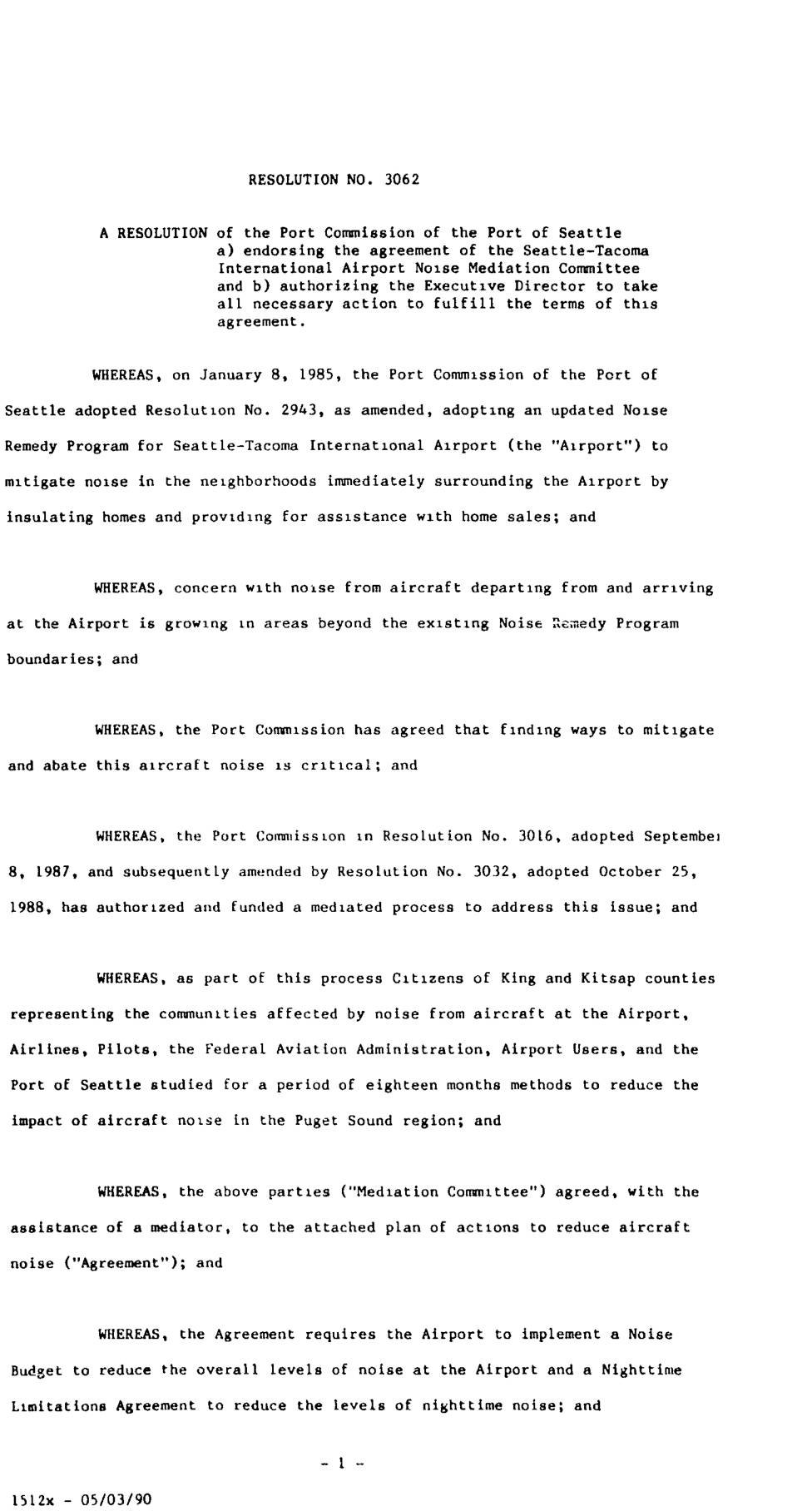
Resolution No. 3062: Endorsing the agreement of the Seattle-Tacoma International Airport Noise Mediation Committee
In 1990, the Port of Seattle's Port Commission passed Resolution No. 3062, endorsing an agreement reached by the Seattle-Tacoma International Airport Noise Mediation Committee after 18 months of study by community representatives, airlines, pilots, the FAA, and airport users. The agreement established a Noise Budget and Nighttime Limitations program aimed at reducing aircraft noise levels by at least 50% by 2001 compared to a 1989 baseline, while also expanding the existing Noise Remedy Program to insulate more homes and remove financial burdens from homeowners. The resolution authorized the Executive Director to implement the agreement's terms, including revising airport regulations, entering noise limitation agreements with airline tenants, and installing a Noise Management System to monitor compliance. -
 1988-10-25
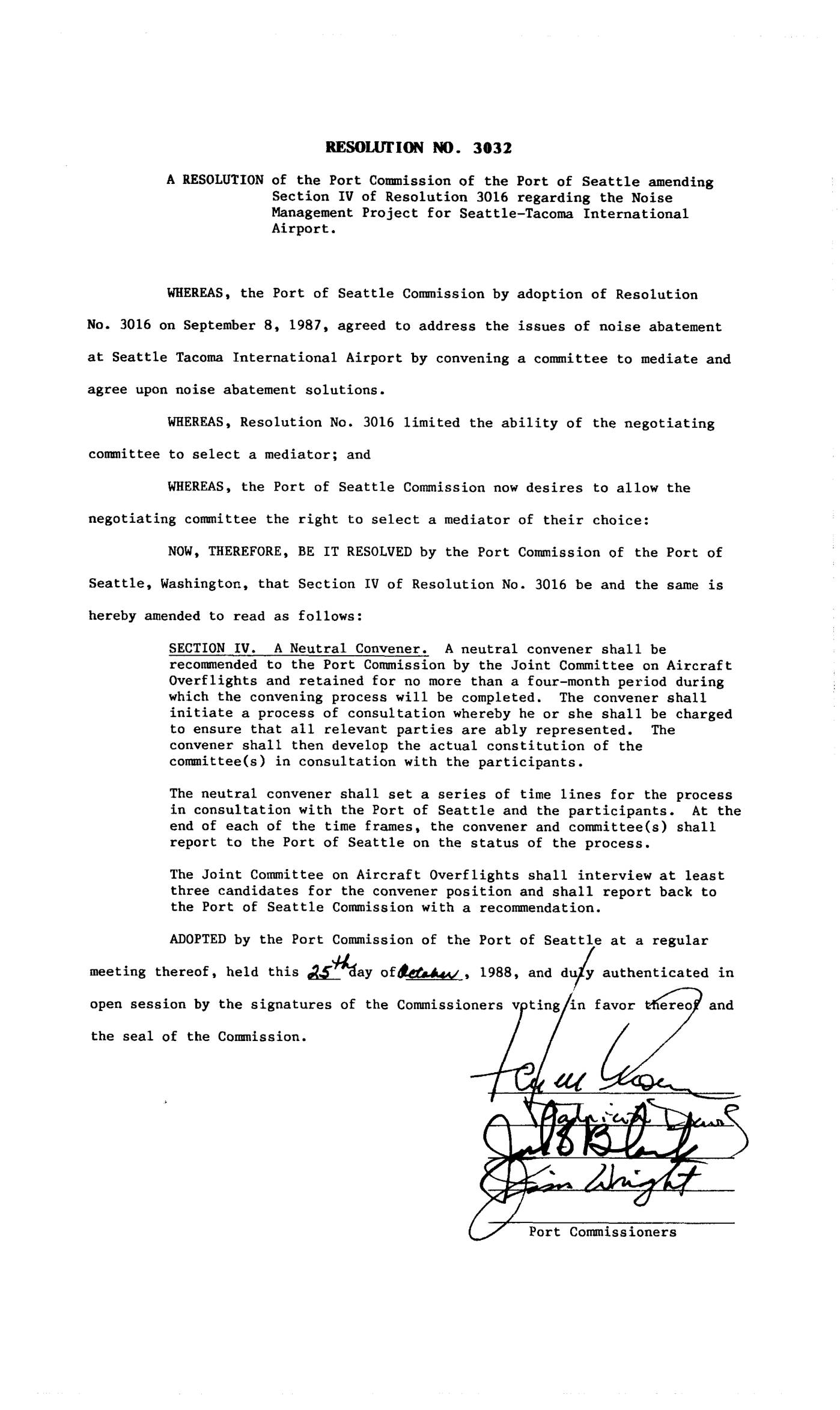
Resolution No. 3032: Amending Section IV of Resolution 3016 regarding the Noise Management Project for Seattle-Tacoma International Airport
Resolution No. 3032, adopted by the Port of Seattle Commission on October 25, 1988, amends an earlier resolution (No. 3016) concerning noise management at Seattle-Tacoma International Airport. The key change gives the negotiating committee—known as the Joint Committee on Aircraft Overflights—the freedom to select their own neutral convener (mediator) from at least three interviewed candidates, rather than being restricted as under the previous rules. The chosen convener would be retained for up to four months to organize a mediation process, ensure all relevant parties are represented, and report regularly to the Port Commission on progress. -
 1985-09-24
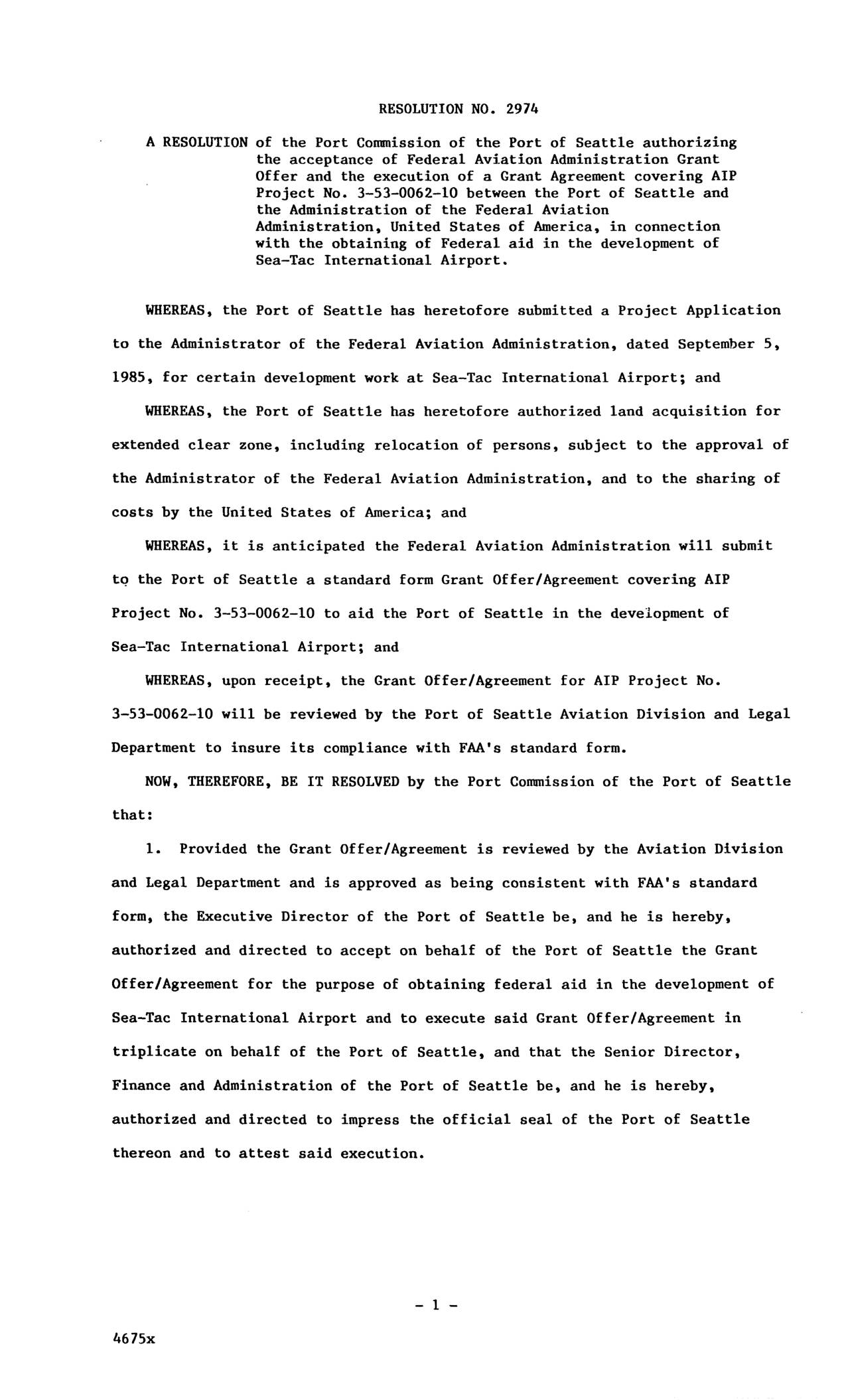
Resolution No. 2974: Authorization to accept FAA grant offer for AIP Project No. 3-53-0062-10
In September 1985, the Port of Seattle's Port Commission passed Resolution No. 2974, authorizing acceptance of a Federal Aviation Administration grant (AIP Project No. 3-53-0062-10) to fund land acquisition and relocation of residents in the extended clear zone around Seattle-Tacoma International Airport. The grant agreement, issued under Contract No. DOT-FA85NM-0062, covered nine specific land parcels (J-54, J-56, J-114, J-141, J-144, J-146, J-149, J-150, and J-151) adjacent to the airport. The resolution directed the Port's Executive Director to execute the agreement on the Port's behalf, provided it met FAA standard form requirements. -
 1984-08-28
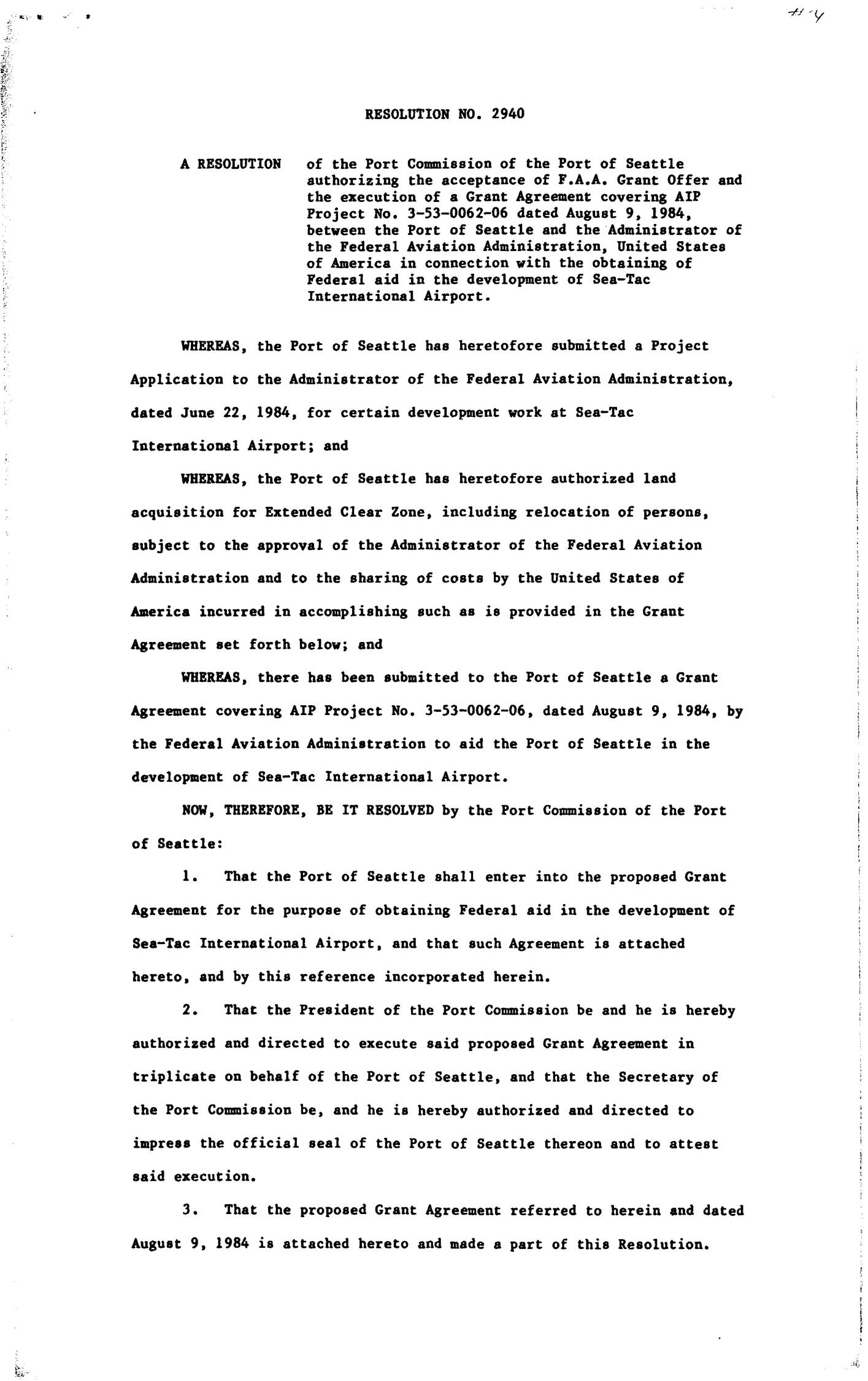
Commission Resolution no. 2940 FAA Grant AIP Clear Zone land acquisition
A resolution authorizing the Port of Seattle to accept an FAA grant offer and execute Grant Agreement for AIP Project No. 3-53-0062-06 to obtain federal aid for Sea-Tac International Airport development, specifically for land acquisition in Extended Clear Zone areas and relocation of persons. The resolution was adopted by the Port Commission on August 28, -
 1983-11-08
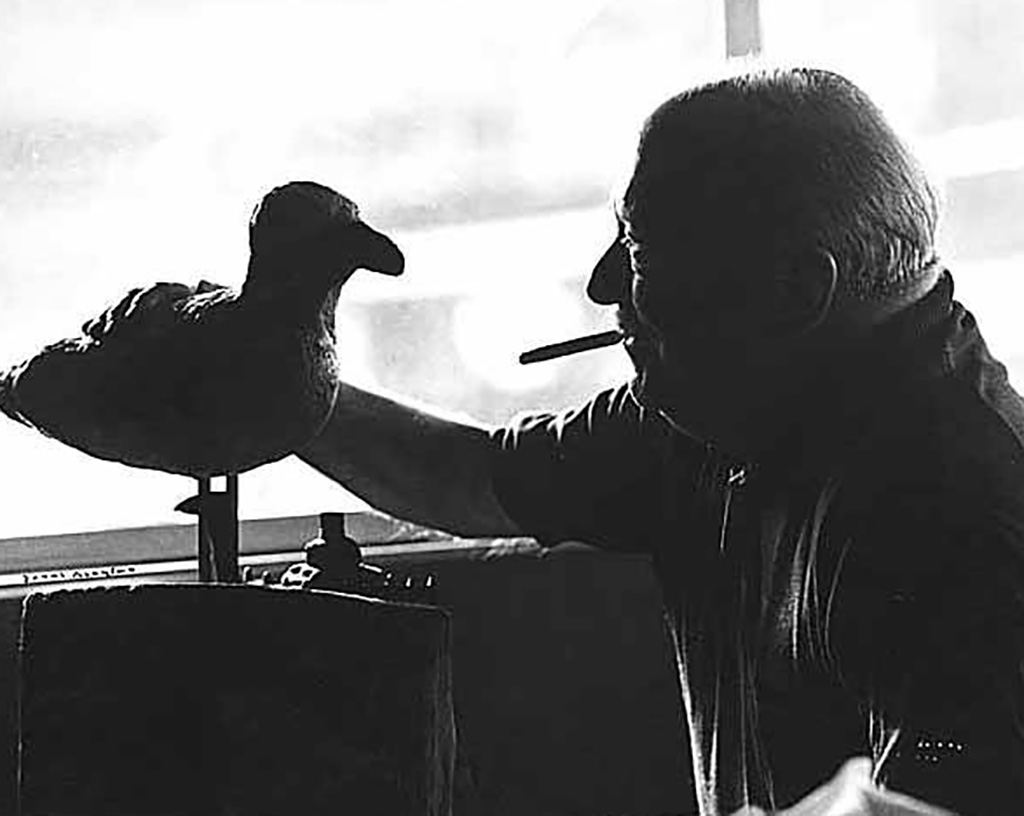
Ivar Haglund is elected, unintentionally, to the Seattle Port Commission on November 8, 1983
Posted 6/27/2000 HistoryLink.org Essay 2511 On November 8, 1983, Seattle restaurateur and celebrity Ivar Haglund (1905-1985) is unintentionally elected to a six-year term on the Seattle Port Commission, after he files to run as a publicity gag. He was annoyed by boxcars that blocked the view of Elliott Bay from his Acres of Clams restaurant. -
 1983-05-24
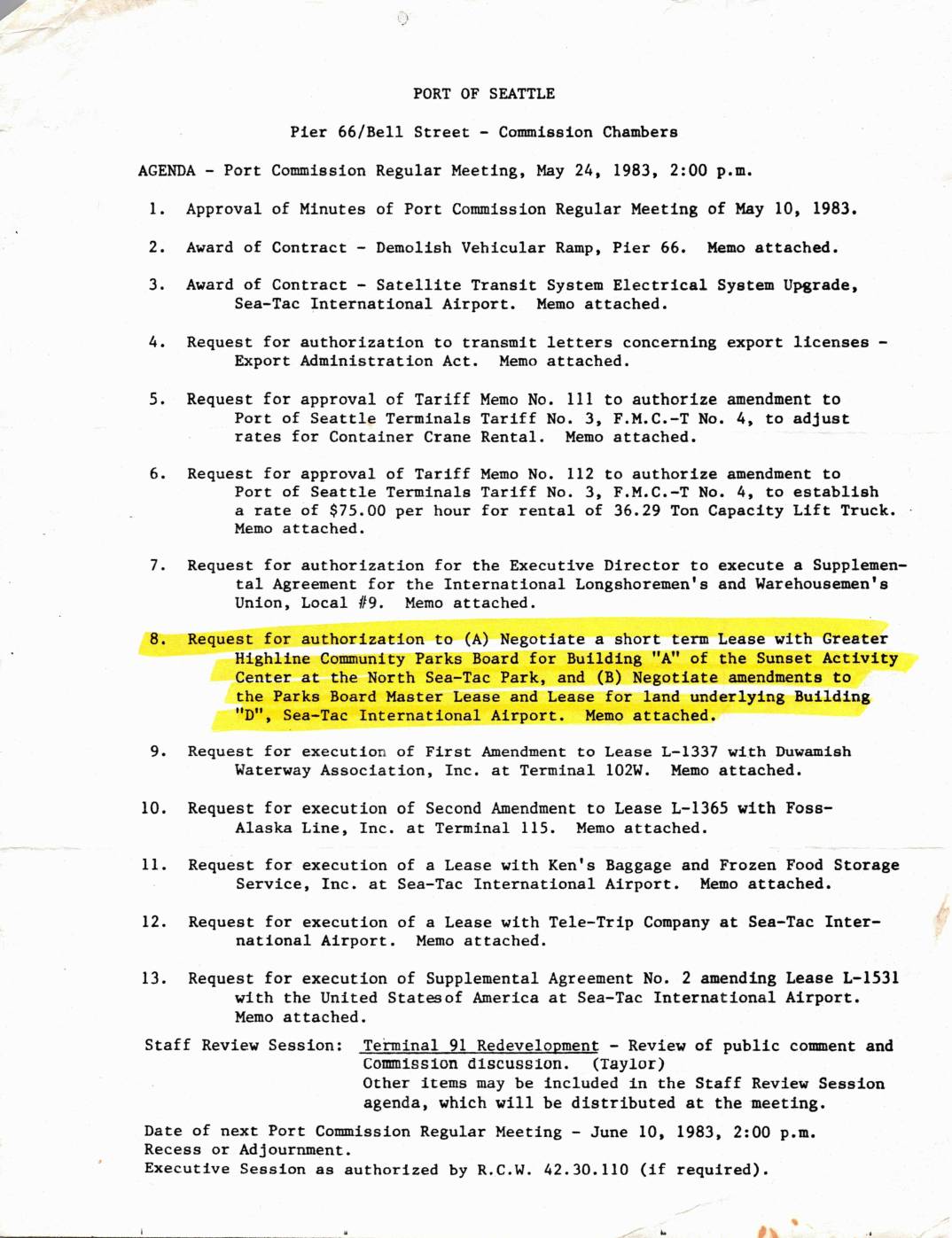
Agenda – Port Commission regular meeting, May 24, 1983
This is the agenda for the Port of Seattle Commission Regular Meeting held on May 24, 1983, covering a range of business items related to Sea-Tac International Airport and port terminals. Airport-related items include a contract award for a Satellite Transit System Electrical System Upgrade, lease negotiations with the Greater Highline Community Parks Board for facilities at the North Sea-Tac Park, and lease agreements with several companies operating at Sea-Tac. A Staff Review Session on Terminal 91 Redevelopment, including public comment and Commission discussion, was also scheduled. -
 1979-08-11
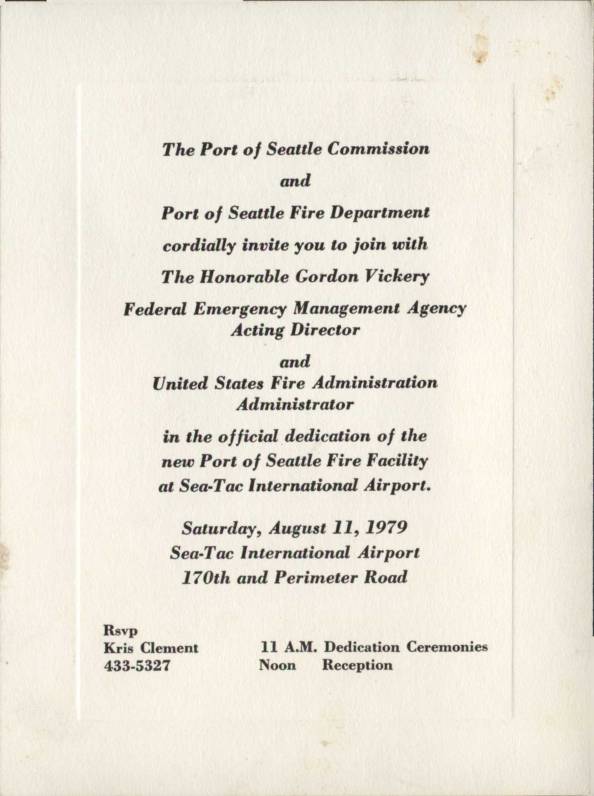
Invitation: Dedication of New Port Of Seattle Fire Facility at Sea-Tac International Airport
This is a formal invitation from the Port of Seattle Commission and Port of Seattle Fire Department to the official dedication of a new fire facility at Sea-Tac International Airport, held on Saturday, August 11, 1979. The event featured Gordon Vickery, Acting Director of the Federal Emergency Management Agency and Administrator of the United States Fire Administration, as a distinguished guest. Dedication ceremonies were scheduled for 11 A.M., followed by a noon reception at the airport's 170th and Perimeter Road location. -
 1979-02-09
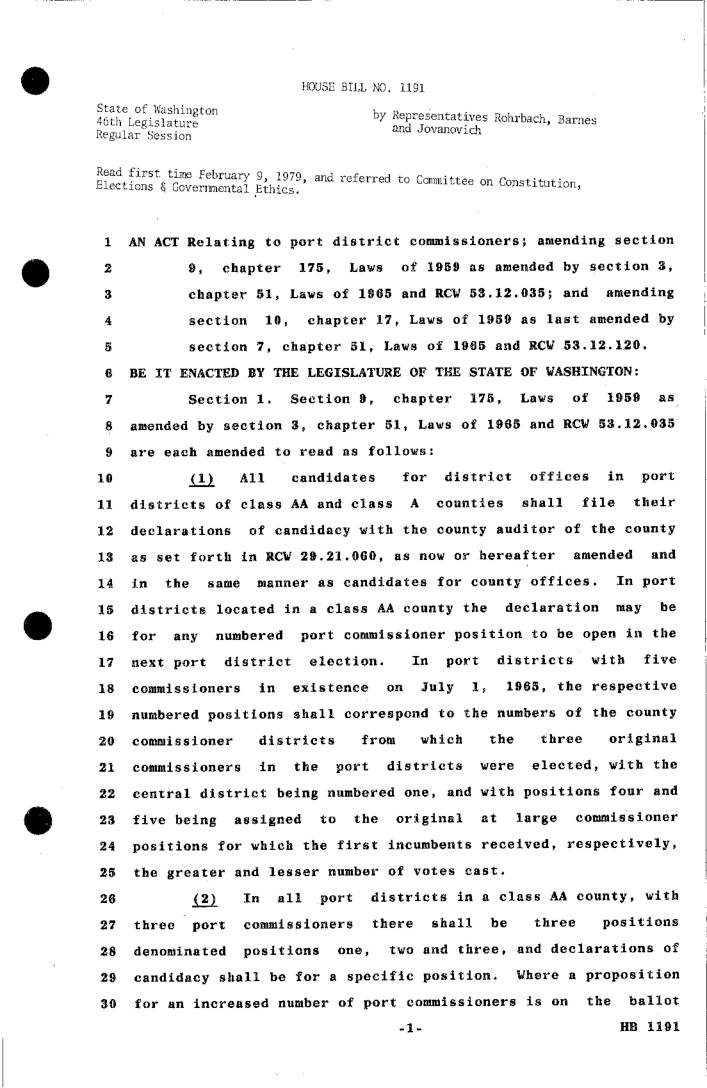
House Bill No. 1191: An act relating to port district commissioners
House Bill 1191, introduced in Washington State's 46th Legislature in 1979, proposed changes to how Port of Seattle commissioners are elected. The bill would put before voters a measure to elect three port commissioners from geographic commissioner districts and two additional commissioners chosen at large from the port district as a whole. It also established that in class AA counties with nine councilmanic districts, like Seattle, there would be three port commissioner districts each containing three councilmanic districts. -
 1974-02-28
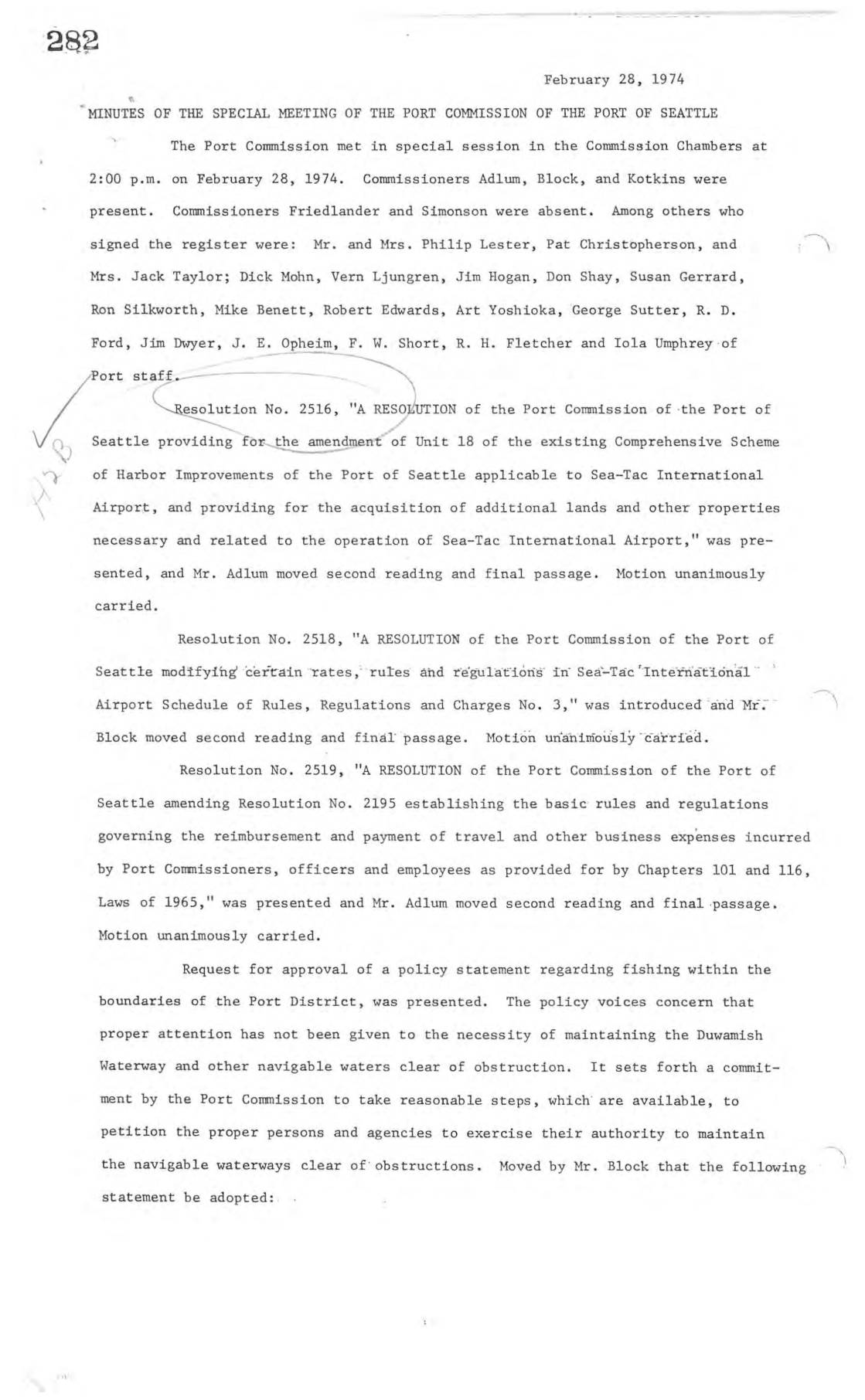
Minutes of the special meeting of the Port Commission of the Port Of Seattle
Minutes from February 1974 Port of Seattle Commission meetings document the adoption of Resolution No. 2516, which authorized the Port to acquire approximately 421 acres of land north and south of Sea-Tac International Airport through condemnation or negotiation. A public hearing drew significant community attendance, including residents of the Zone 3 area near the airport, who expressed support for the plan while requesting that the southern boundary be extended to S. 216th Street. The meetings also addressed related airport operational matters, including modifications to airport rules and charges. -
 1974-02-26
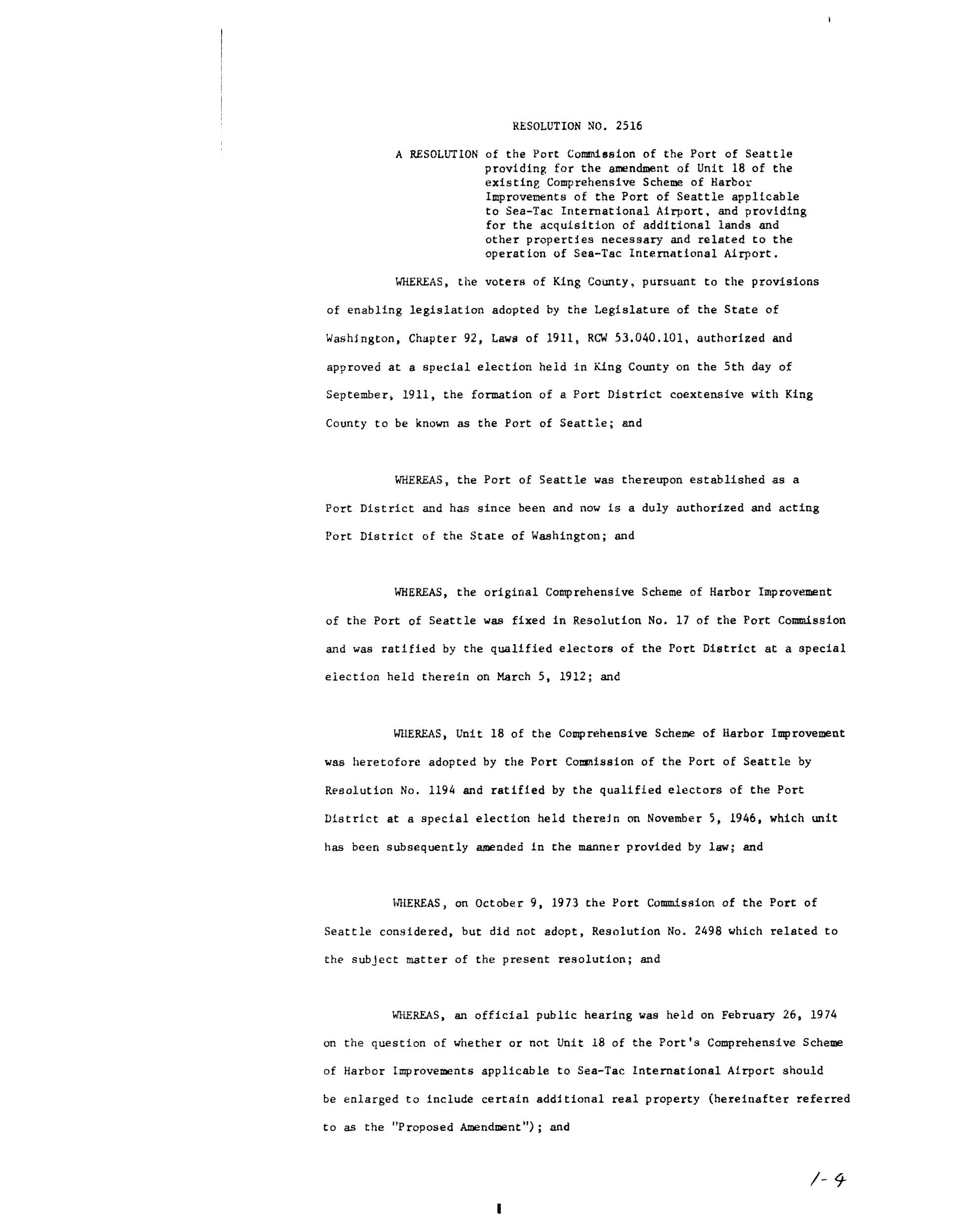
Resolution No. 2516: Amendment of Unit 18 of the Comprehensive Scheme of Harbor Improvements applicable to Sea-Tac International Airport
Resolution No. 2516 of the Port of Seattle Commission authorized the expansion of Unit 18 of the Port's Comprehensive Scheme of Harbor Improvements to include additional land surrounding Sea-Tac International Airport. The resolution directed the Port to acquire these properties—through purchase or eminent domain—to establish runway clear zones, buffer zones, and safety areas for airplane passengers, airport personnel, and neighboring residents. All acquisition proceedings were required to comply with applicable federal, state, and local environmental laws, including the State Environmental Policy Act.