TagPFAS(30)
-
 2024-07-02
Inside Sea-Tac’s efforts to clean up PFAS firefighting foams
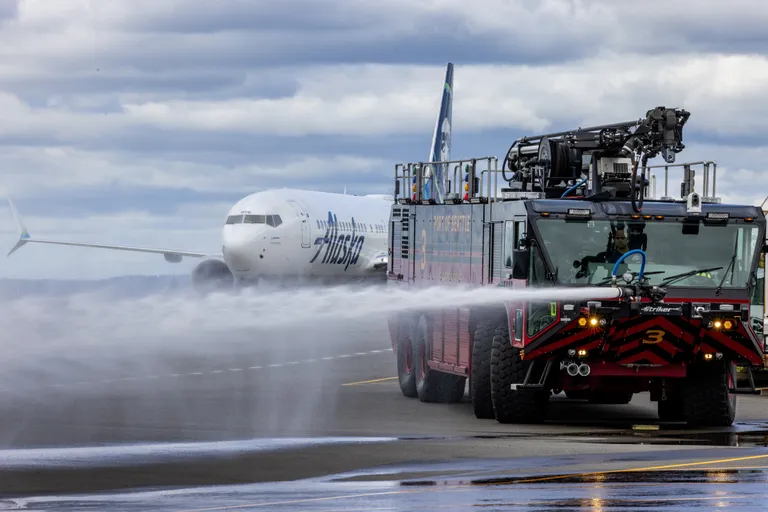
By Isabella Breda and Manuel Villa Seattle Times staff reporters SEATTLE-TACOMA INTERNATIONAL AIRPORT — Taxiing jet engines groaned on the tarmac, their fumes filling the Port of Seattle’s firetruck bays on an early summer day here. Snaking hoses connected tanks and filters in a complex cleanup operation. Over six days, the system flushed a toxic substance -
 2024-06-12
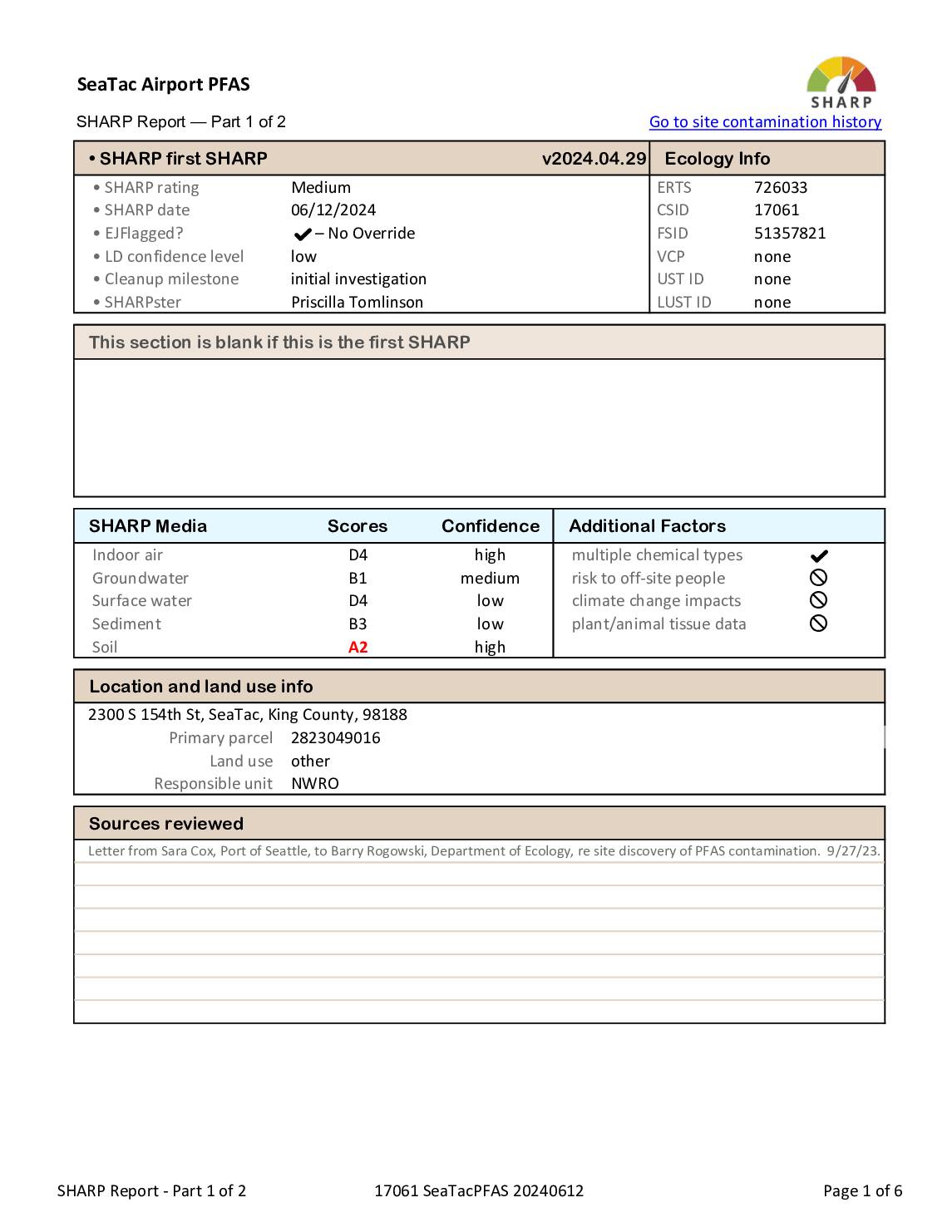
Sea-Tac Airport PFAS SHARP report — part 1 of 2
A SHARP (Site Hazard Assessment Ranking and Prioritization) report for SeaTac Airport covering PFAS contamination identified at four areas: fire station, fuel farm, fire training area, and industrial wastewater system. The report details media scores for groundwater, soil, surface water, sediment, and indoor air, noting concerns about Des Moines Creek and the City of Highline’s -
2023-10-29
PFAS is in the groundwater west of Spokane. What’s known about the contamination is only growing
Oct. 29, 2023 at 6:00 am By Manuel Villa and Isabella Breda Seattle Times staff reporters Times Watchdog stories dig deep to hold power accountable, right wrongs and create change. This work is made possible by The Seattle Times Investigative Journalism Fund. Donate today to support watchdog journalism in our community. SPOKANE COUNTY — Millions of years ago, -
Our Transition to Fluorine-Free Foam
Randy Krause October 2023 The Port of Seattle Fire Department continues on a five-year journey to find the safest, most efficient aircraft firefighting foam (AFFF) replacement and make Seattle-Tacoma International (SEA) one of the first U.S. airports to complete the steps for the transition after federal approval. In 2018, it was obvious the FAA would -
 2023-08-30
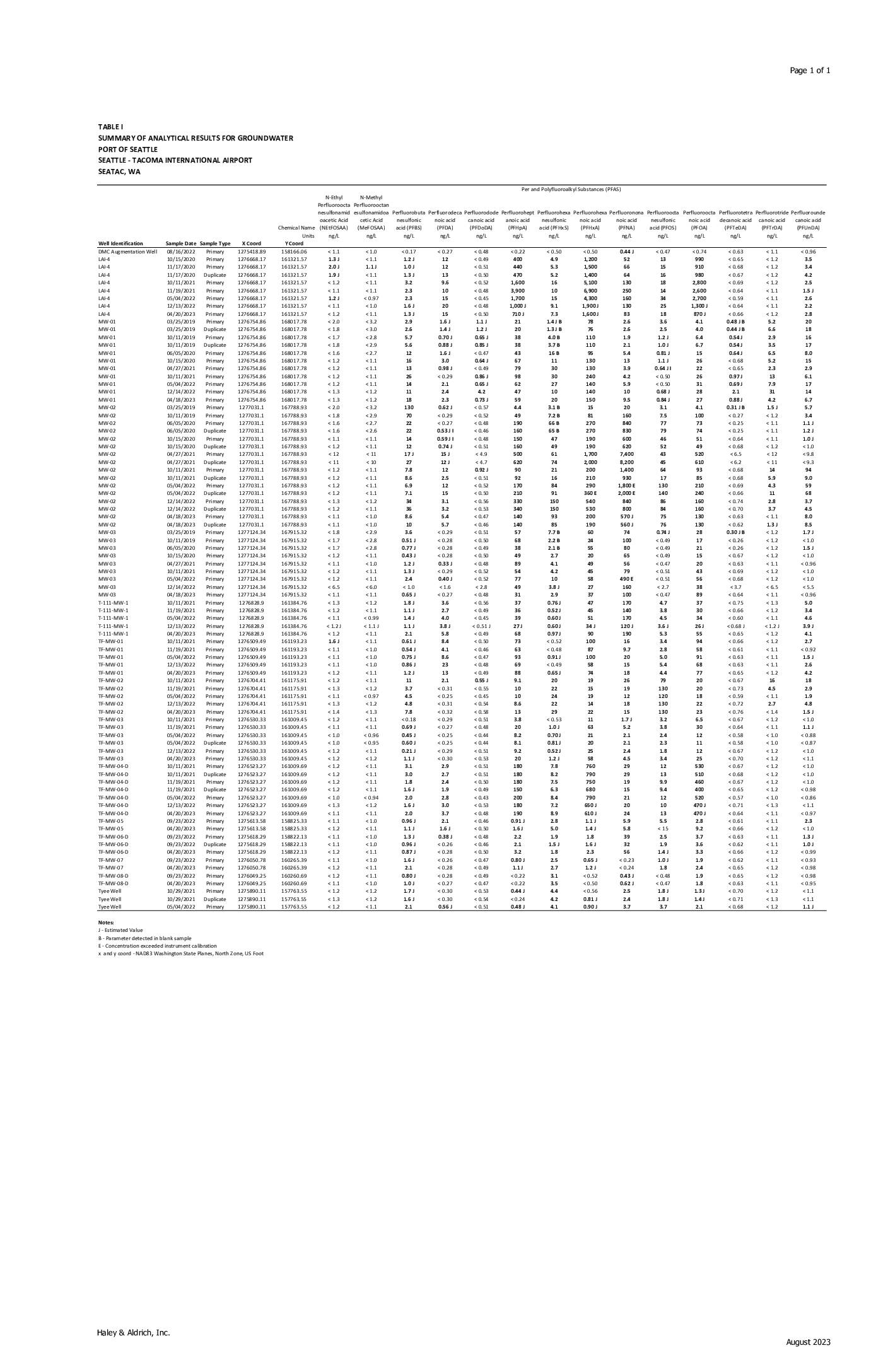
Summary of Analytical Results for Groundwater: Port Of Seattle, Seattle-Tacoma International Airport, Sea-Tac, WA
Table I summarizing analytical results for PFAS (per and polyfluoroalkyl substances) in groundwater at Sea-Tac Airport, prepared by Haley & Aldrich, Inc. in August 2023. Groundwater monitoring wells sampled include LAI-4, MW-01, MW-02, MW-03, T-111-MW-1, TF-MW-01 through TF-MW-08-D, DMC Augmentation Well, and Tyee Well, with sample dates ranging from March 2019 to April 2023. Analytes -
Sea-Tac’s legacy of PFAS chemicals: ‘foam showers,’ sick firefighters and contaminated water
Feb. 12, 2023 at 6:00 am Updated Feb. 12, 2023 at 2:04 pm 1 of 15 | Jason Schnase, a battalion chief of training and safety with the Port of Seattle Fire Department, shows where firefighting foam is stored on an aircraft rescue firefighting vehicle at Sea-Tac Airport. A 3% PFAS/97% water… (Ellen M. Banner / -
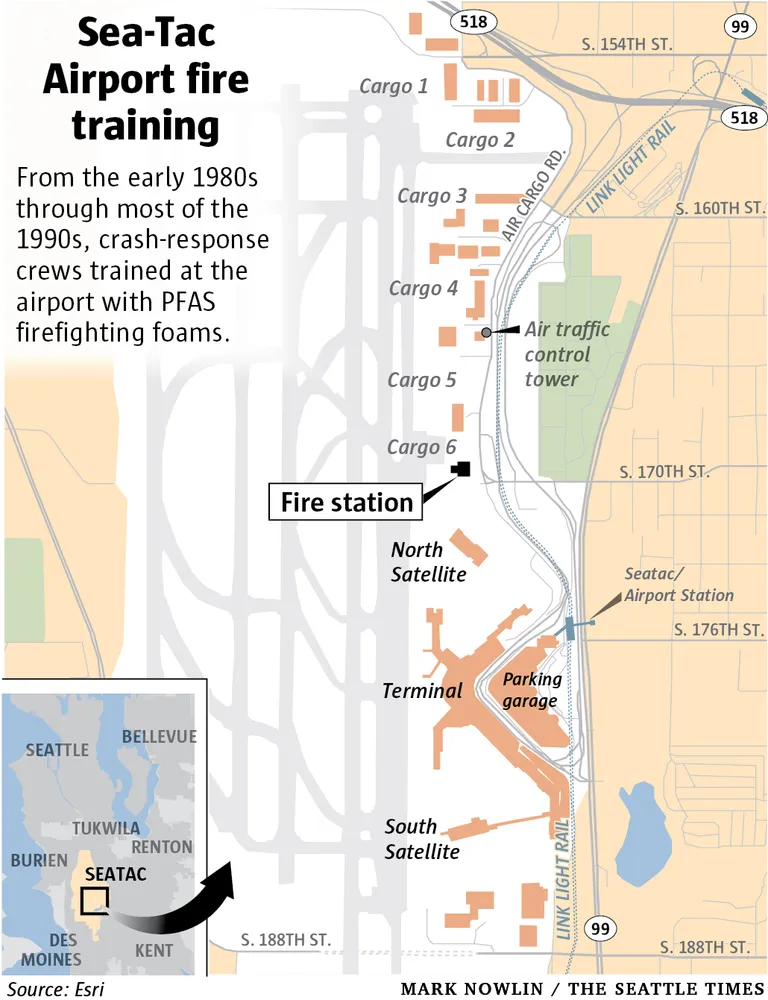
Sea-Tac Airport Map Showing Cargo Facilities, Fire Station, and PFAS Firefighting Foam Training Areas
An infographic by Mark Nowlin published in The Seattle Times, sourced from Esri, showing a map of Seattle-Tacoma International Airport (Sea-Tac) and its cargo facilities, fire station, terminals, and Link Light Rail corridor. The graphic explains that from the early 1980s through most of the 1990s, crash-response crews trained at the airport using PFAS firefighting foams. -
What Airports Need to Know About Potential PFAS Liabilities
Learn more about the latest in PFAS regulations and how Jacobs can help in this article. Over the past several years, there has been a surge in regulatory interest to address the public health and environmental risks from releases of per- and polyfluoroalkyl substances (PFAS), including use of aqueous film-forming foams (AFFF) for firefighting or -
 2018-07-01
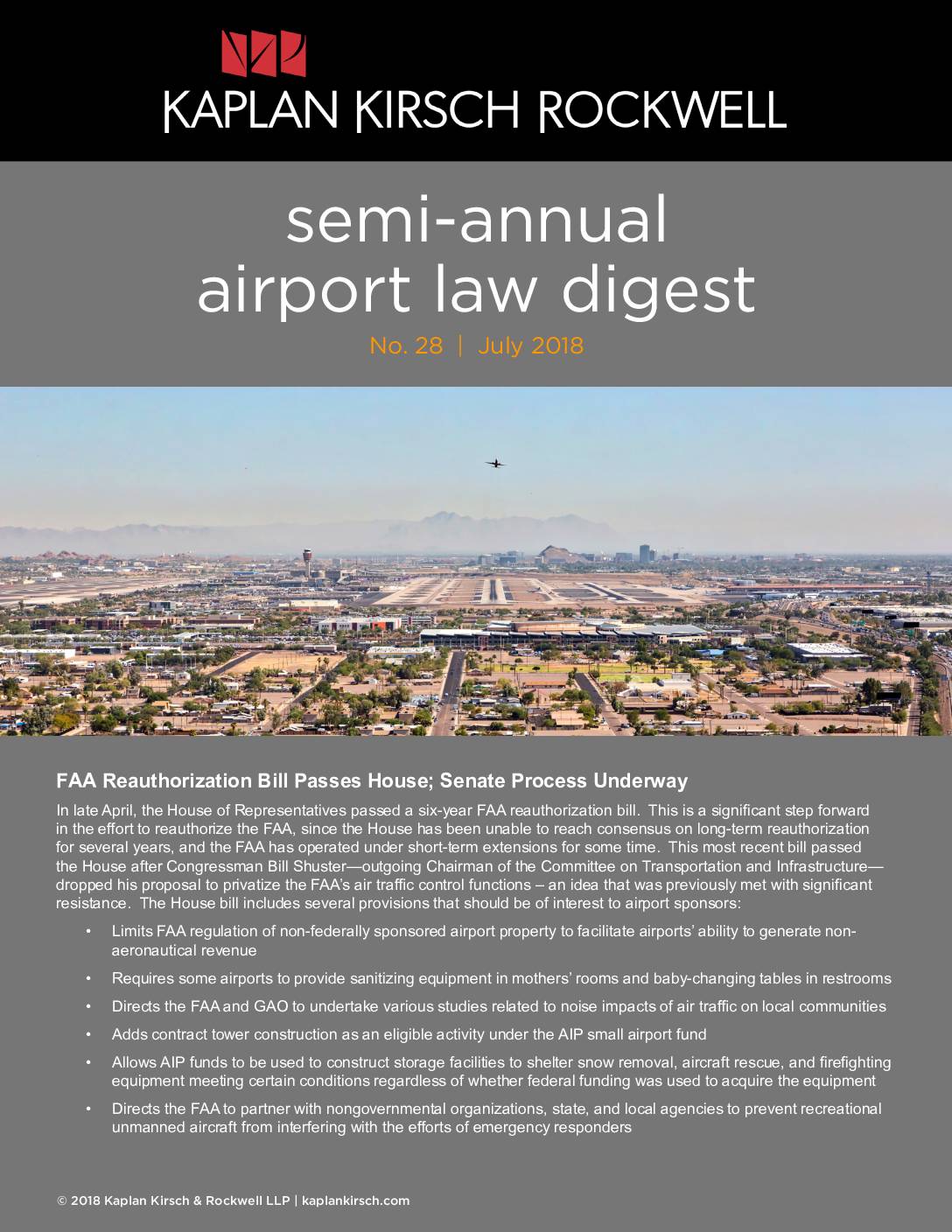
Airport Law Digest No. 28: FAA Reauthorization, AIP Funding, FBO Pricing, and NextGen Updates
This July 2018 airport law digest covers key developments in FAA reauthorization, noting the House passed a six-year bill but Senate action remained pending, with the FAA's authorization set to expire September 30, 2018. The digest also addresses NextGen flight pattern disputes, including ongoing legal challenges relevant to airport noise impacts, such as a pending SoCal Metroplex case and Maryland petitions concerning flight paths at Reagan National and BWI airports. Additional topics include FBO pricing complaints, supplemental Airport Improvement Program funding deadlines, and concerns about firefighting chemical contamination of water supplies near airports. -
 2014-10-13
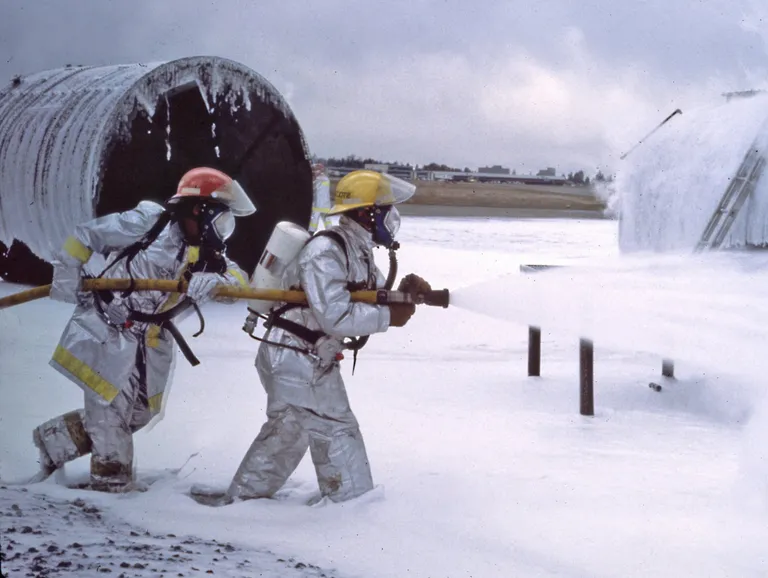
Firefighter PFAS training exercise October 13, 2014
Two firefighters in silver proximity suits and yellow helmets operate a hose line deploying fire-suppression foam across a tarmac area. A large cylindrical aircraft fuselage mockup is visible in the background, consistent with an Aircraft Rescue and Firefighting (ARFF) training exercise at an airport facility.