TagEcology(788)
-
 2001-06-26
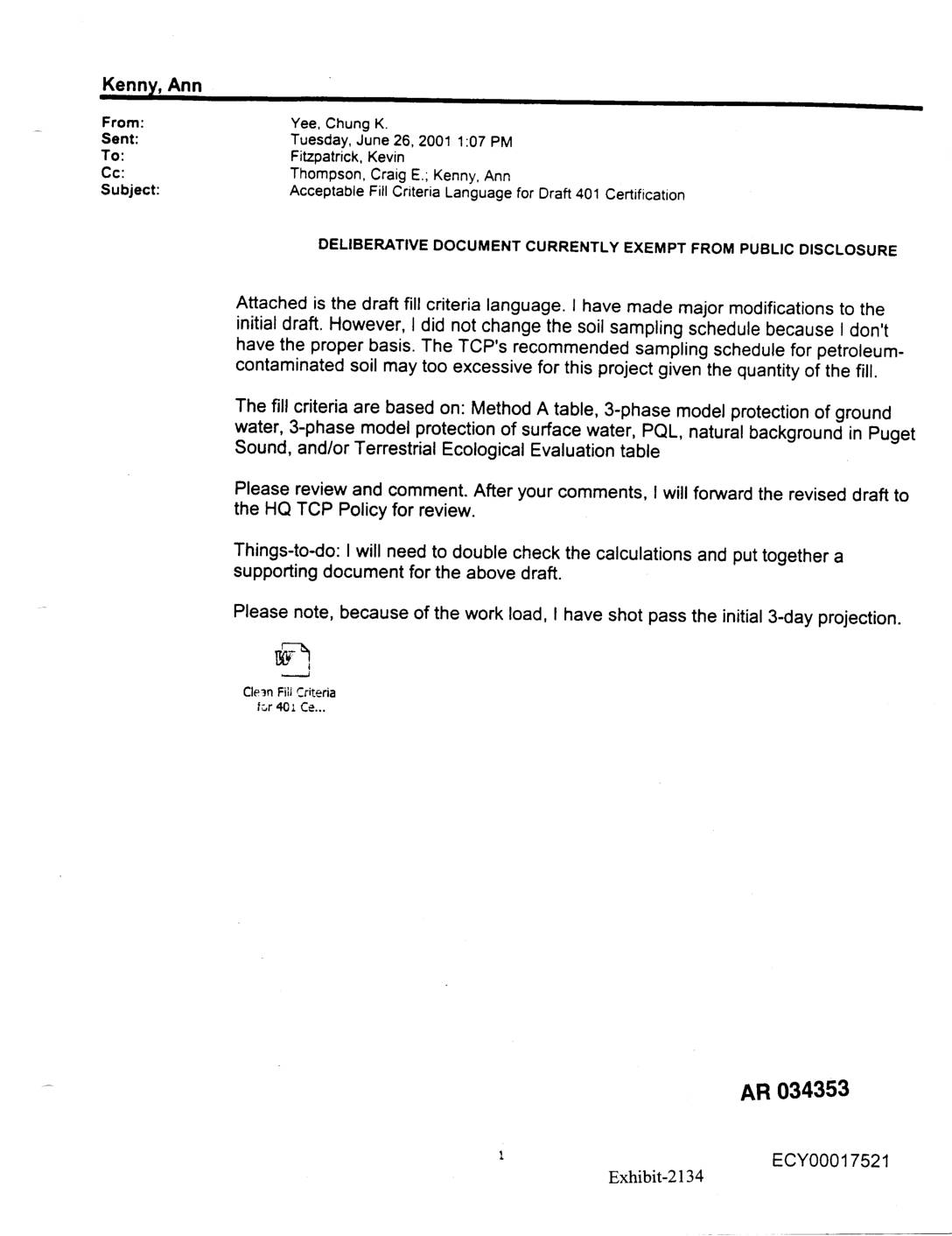
Exhibit 2134 AR034353: Draft 401 Certification — Acceptable Fill Criteria Language for Third Runway Embankment
Email from Chung K. Yee to Kevin Fitzpatrick, cc Craig E. Thompson and Ann Kenny, dated June 26, 2001, transmitting draft fill criteria language for a 401 Certification related to the Port Of Seattle Third Runway embankment project. Fill criteria are based on Method A table, 3-phase model protection of ground water and surface water, -
 2001-06-26
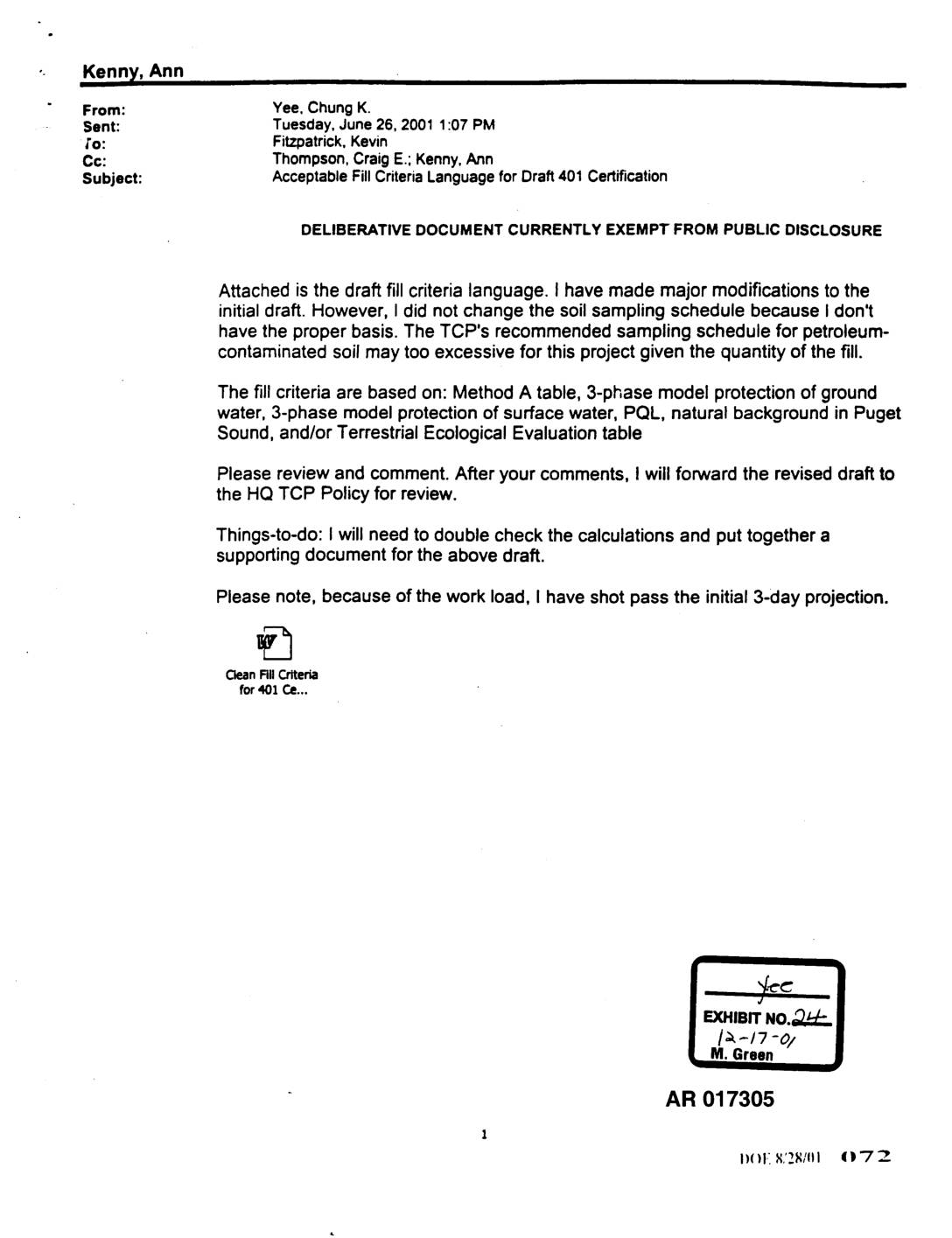
EXH AR017305: Draft 401 Certification — Acceptable Fill Criteria Language for Third Runway Embankment, Port Of Seattle
Email from Chung K. Yee to Kevin Fitzpatrick (cc: Craig E. Thompson, Ann Kenny), dated June 26, 2001, transmitting draft clean fill criteria language for the 401 Certification related to the proposed Third Runway embankment at Sea-Tac Airport. Fill criteria based on Method A table, 3-phase model protection of ground water and surface water, PQL, -
 2001-06-26
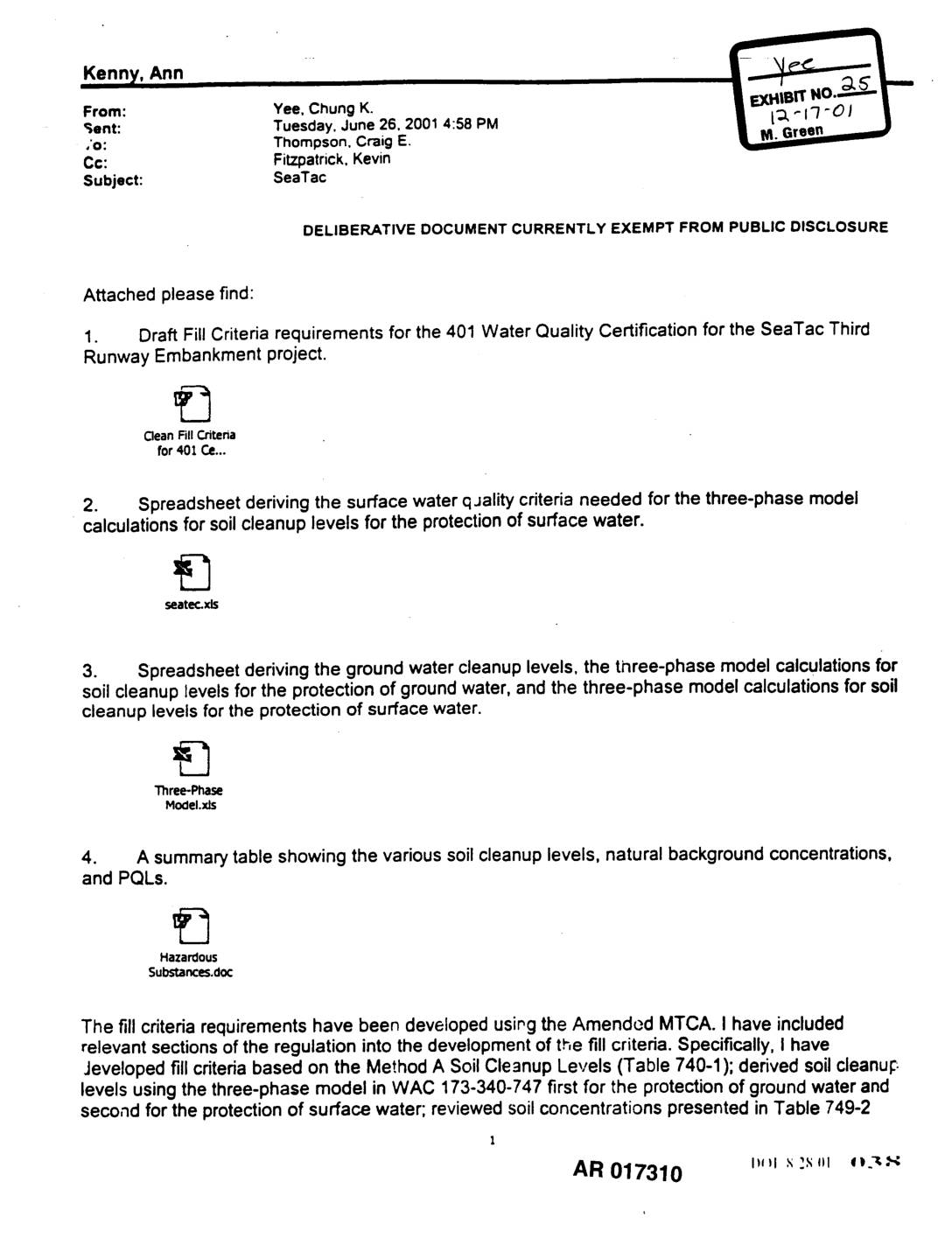
Exhibit 25: Email from Chung K. Yee re Sea-Tac Third Runway Fill Criteria for 401 Water Quality Certification
Email dated June 26, 2001 from Chung K. Yee to Craig E. Thompson and Kevin Fitzpatrick (Ecology) transmitting draft fill criteria requirements for the 401 Water Quality Certification for the SeaTac Third Runway Embankment project. Attachments include: draft clean fill criteria, spreadsheets deriving surface water quality criteria and ground water cleanup levels using three-phase model -
 2001-06-25
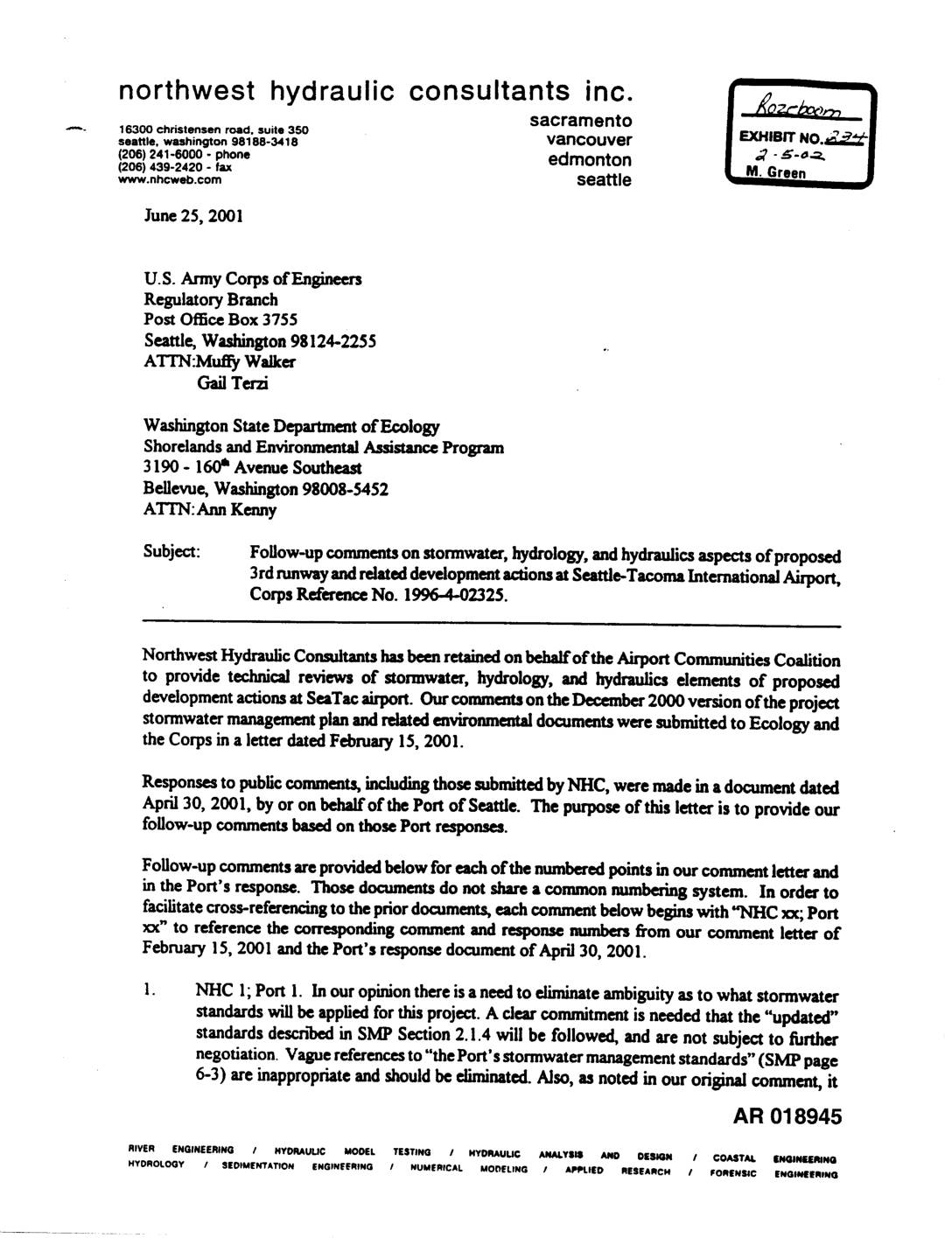
EXH 234: NHC Follow-Up Comments Stormwater Hydrology Hydraulics Proposed Third Runway STIA Corps Ref. 1996-4-02325
Northwest Hydraulic Consultants submitted follow-up technical comments to the U.S. Army Corps of Engineers and Washington State Department of Ecology regarding stormwater, hydrology, and hydraulics concerns related to the proposed third runway at Seattle-Tacoma International Airport. The letter, written on behalf of the Airport Communities Coalition, challenges the Port of Seattle's responses to earlier criticisms, raising unresolved issues about stormwater management standards, independent design review, cost estimates for detention facilities, and the accuracy of hydrological modeling. Key concerns include ambiguity in which stormwater standards will apply, inadequate quality assurance processes, and inconsistencies in the project's Stormwater Management Plan. -
 2001-06-25
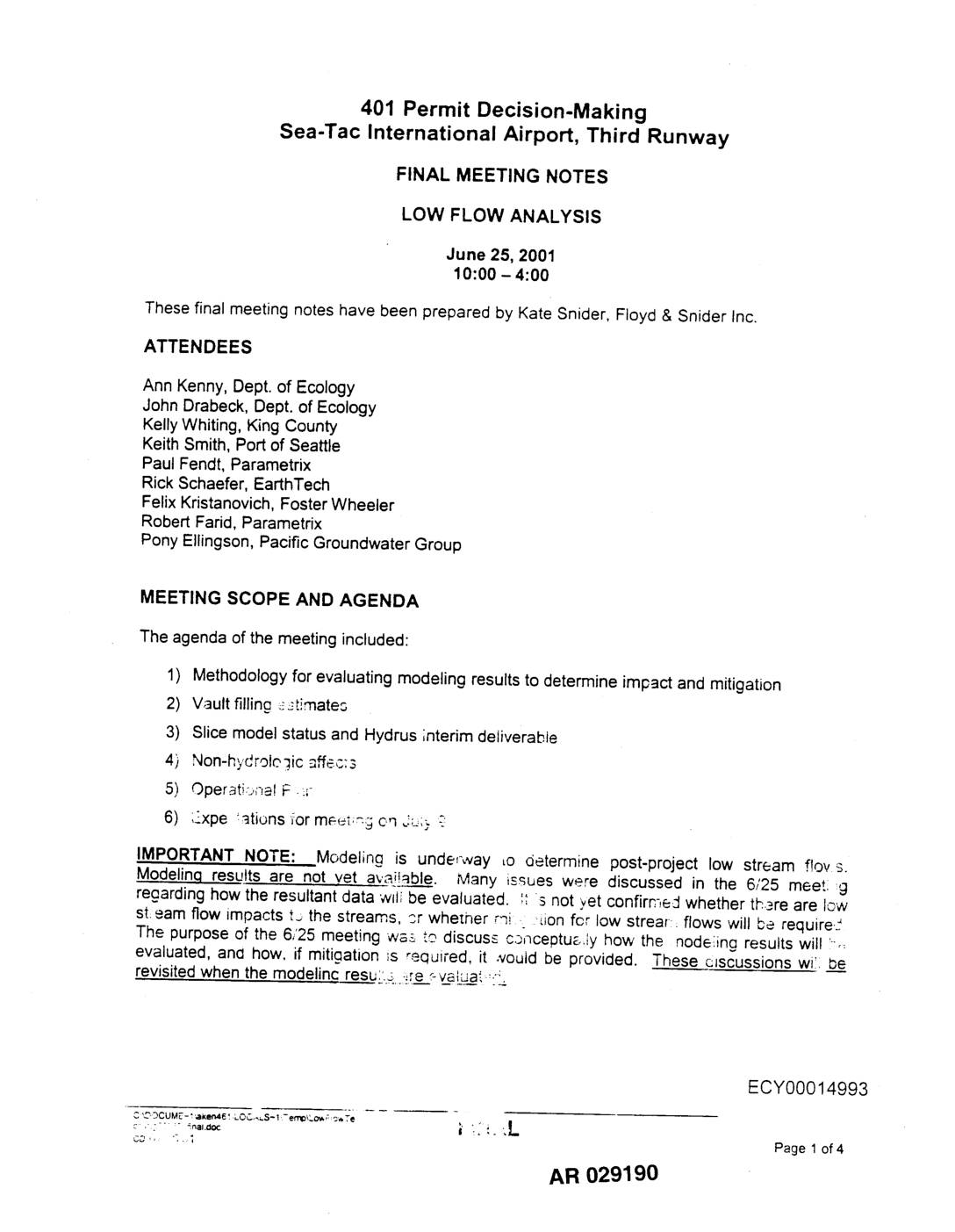
EXH AR029190: 401 Permit Decision-Making, Sea-Tac Airport Third Runway — Final Meeting Notes, Low Flow Analysis, June 25, 2001
Final meeting notes prepared by Kate Snider of Floyd & Snider Inc. for the 401 Permit Decision-Making process for the Sea-Tac International Airport Third Runway project, covering Low Flow Analysis discussions held June 25, 2001. Attendees included representatives from Washington State Department of Ecology (Ann Kenny, John Drabeck), King County (Kelly Whiting), Port of Seattle -
 2001-06-25
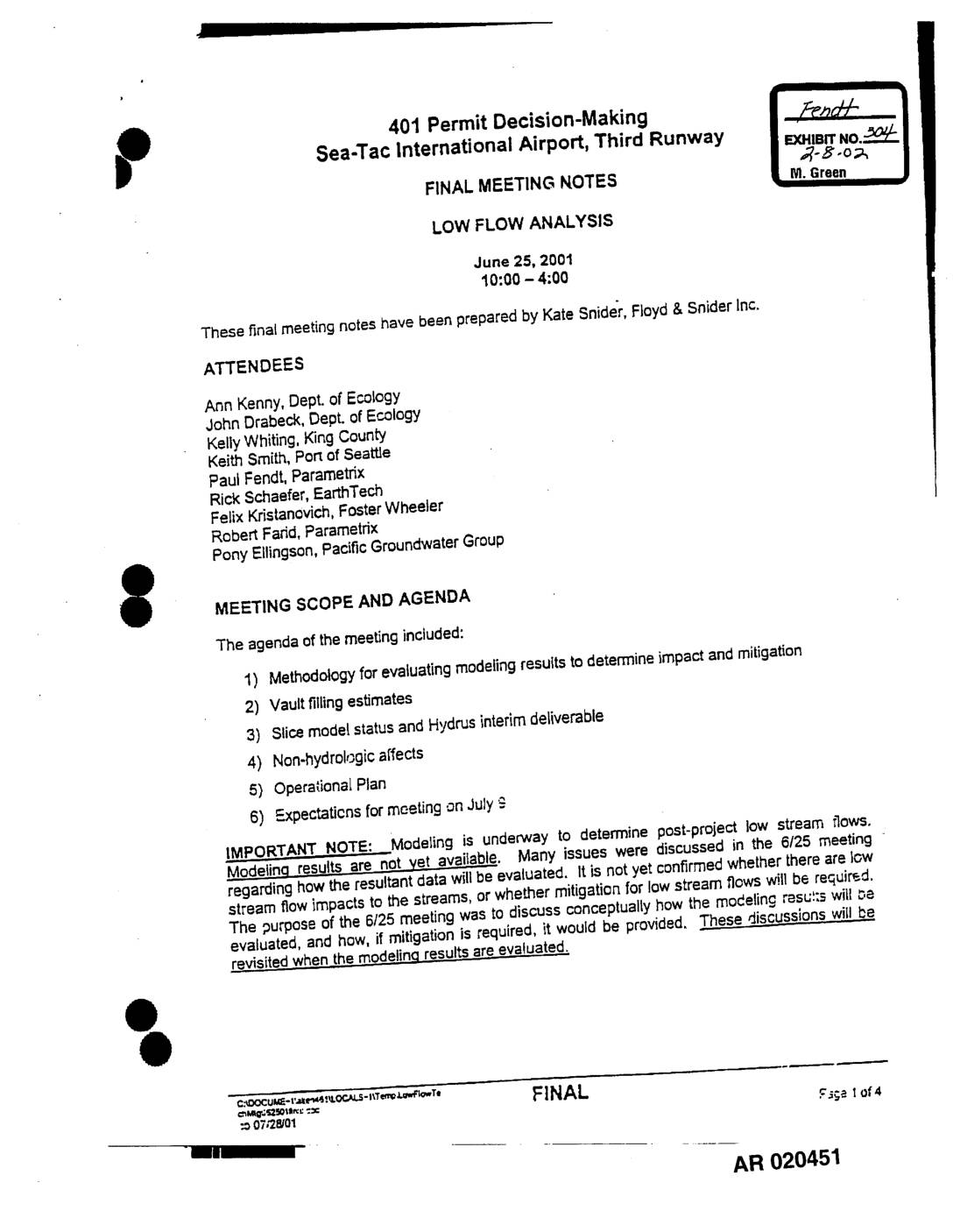
EXH 304: Final Meeting Notes — Low Flow Analysis, 401 Permit, STIA Third Runway (Jun 25, 2001)
These are meeting notes from a June 25, 2001 technical meeting regarding the 401 Permit Decision-Making process for the Sea-Tac International Airport Third Runway project, focused on analyzing low stream flow impacts. Participants from the Department of Ecology, King County, Port of Seattle, and various consulting firms discussed methodologies for evaluating water flow modeling results, vault filling estimates, and potential mitigation requirements for affected streams. Modeling results were not yet available at the time of the meeting, and a follow-up meeting was scheduled for July 9, 2001 to review completed modeling output and determine any required mitigation measures. -
 2001-06-22
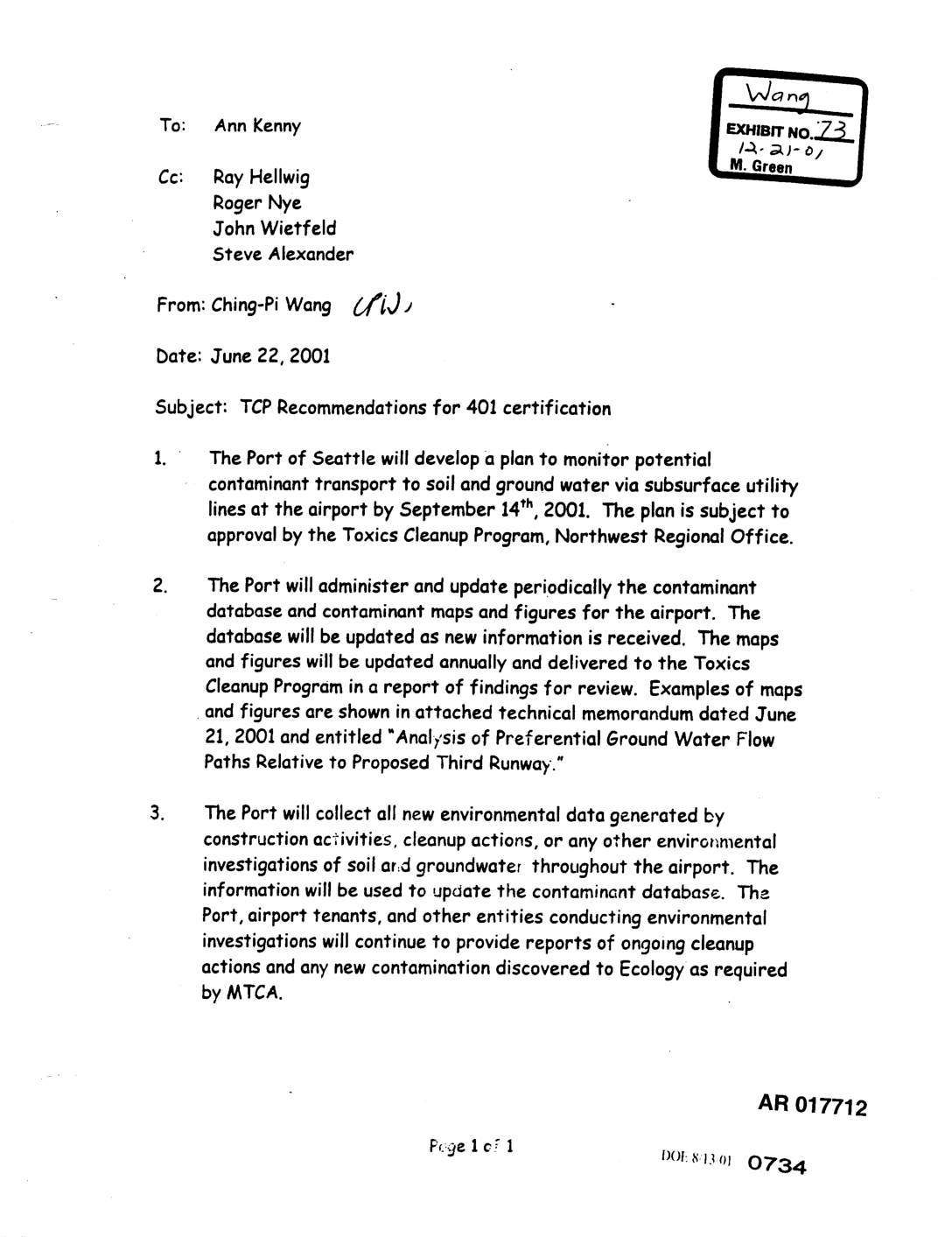
Exhibit 73: TCP Recommendations for 401 Certification — Port Of Seattle Third Runway
Memorandum from Ching-Pi Wang to Ann Kenny (cc: Ray Hellwig, Roger Nye, John Wietfeld, Steve Alexander) dated June 22, 2001, outlining Toxics Cleanup Program (TCP) recommendations for 401 certification related to the Port Of Seattle Third Runway project. Three recommendations: (1) Port Of Seattle to develop a plan by September 14, 2001 to monitor contaminant -
 2001-06-22
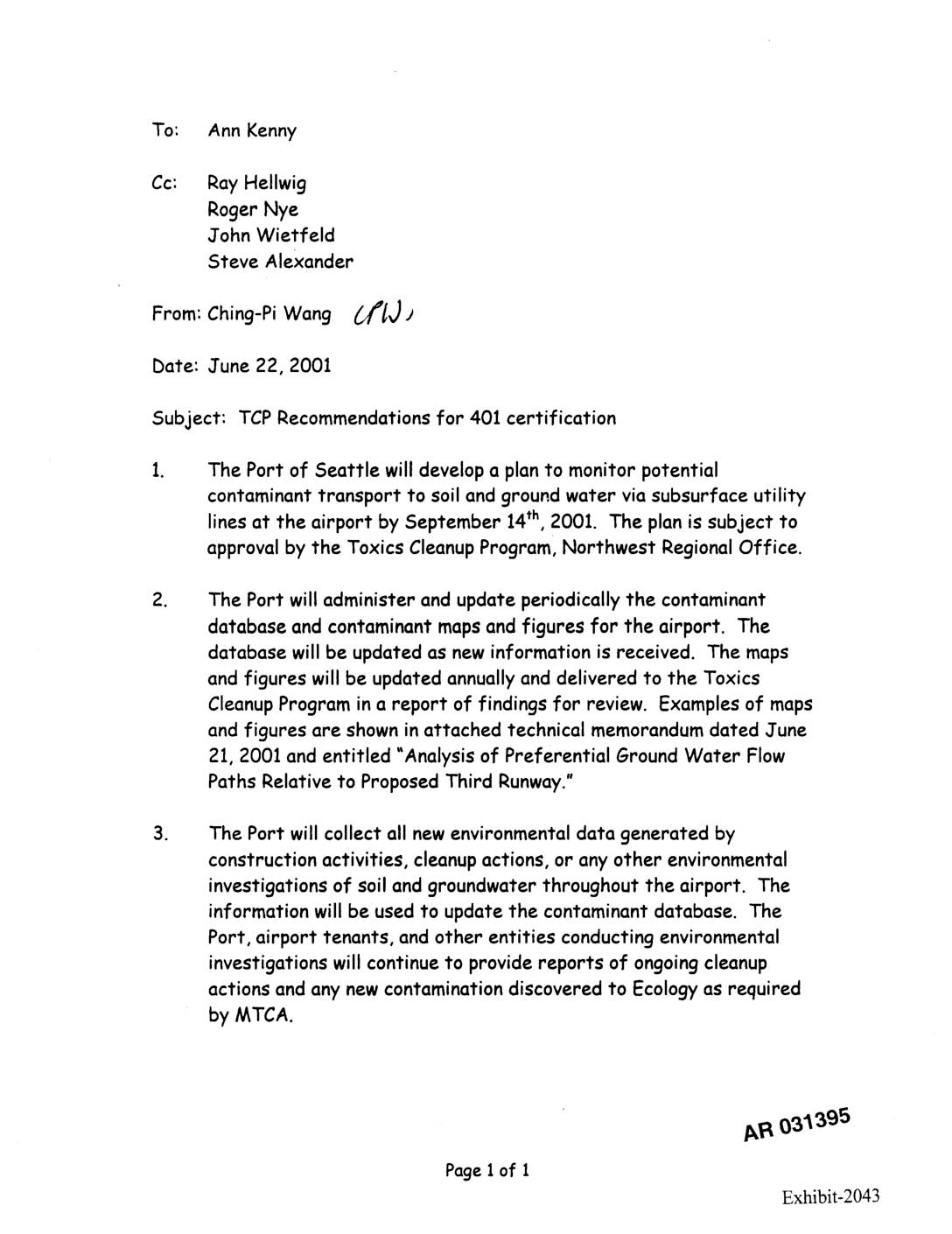
Exhibit 2043: TCP Recommendations for 401 Certification and Analysis of Preferential Ground Water Flow Paths Relative to Proposed Third Runway, STIA
Memo dated June 22, 2001 from Ching-Pi Wang (Toxics Cleanup Program, TCP) to Ann Kenny regarding TCP recommendations for 401 certification related to the proposed Third Runway at Seattle-Tacoma International Airport (STIA). Three recommendations: (1) Port of Seattle to develop a plan by September 14, 2001 to monitor contaminant transport to soil and groundwater via -
 2001-06-21
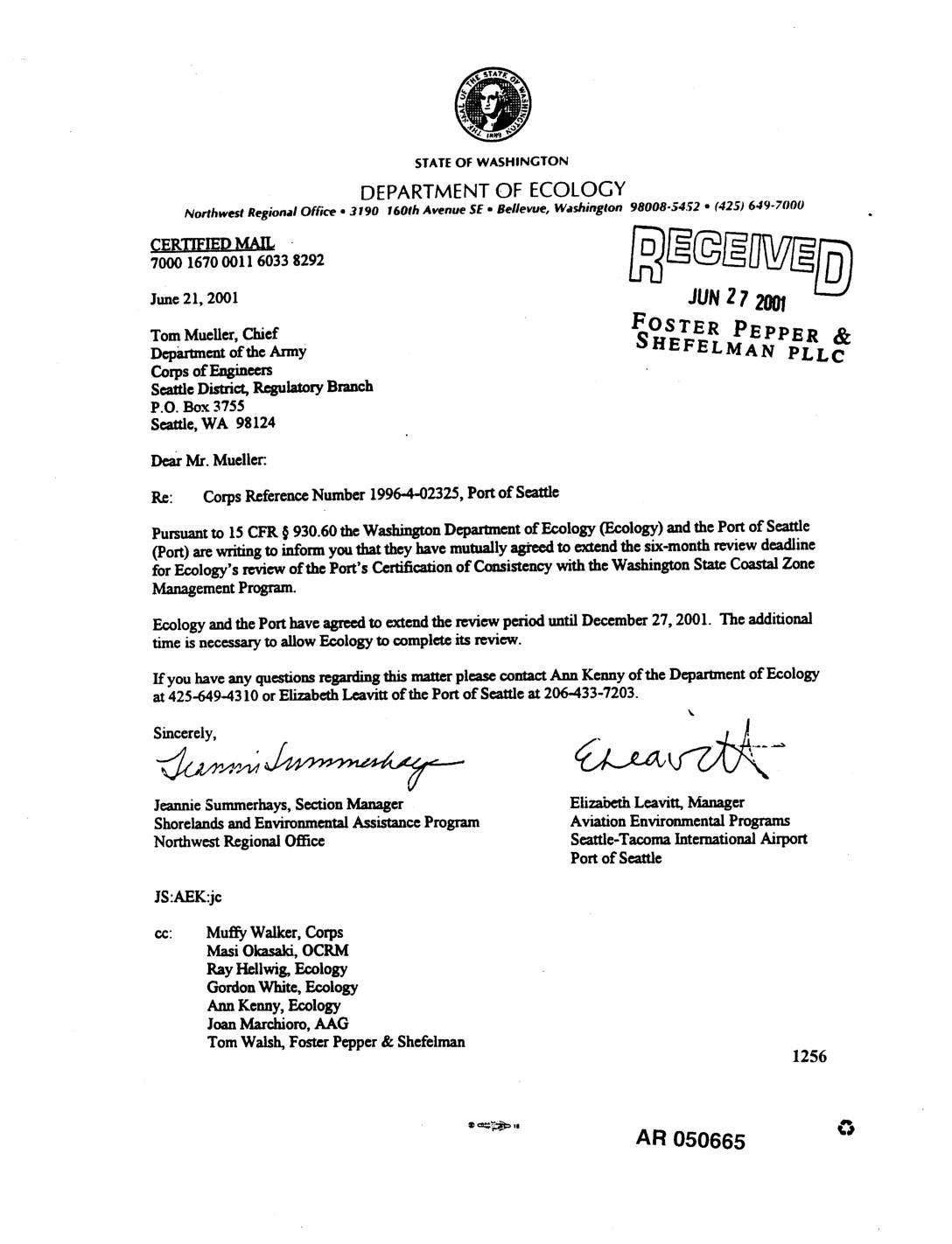
EXH AR050665: Ecology & Port Of Seattle Letter to Army Corps of Engineers Extending Coastal Zone Management Consistency Review Deadline
Letter dated June 21, 2001 from Jeannie Summerhays (Washington Department of Ecology, Northwest Regional Office) and Elizabeth Leavitt (Port Of Seattle, Aviation Environmental Programs, Seattle-Tacoma International Airport) to Tom Mueller, Chief, Department of the Army Corps of Engineers, Seattle District, Regulatory Branch. Pursuant to 15 CFR § 930.60, Ecology and the Port Of Seattle mutually -
 2001-06-19
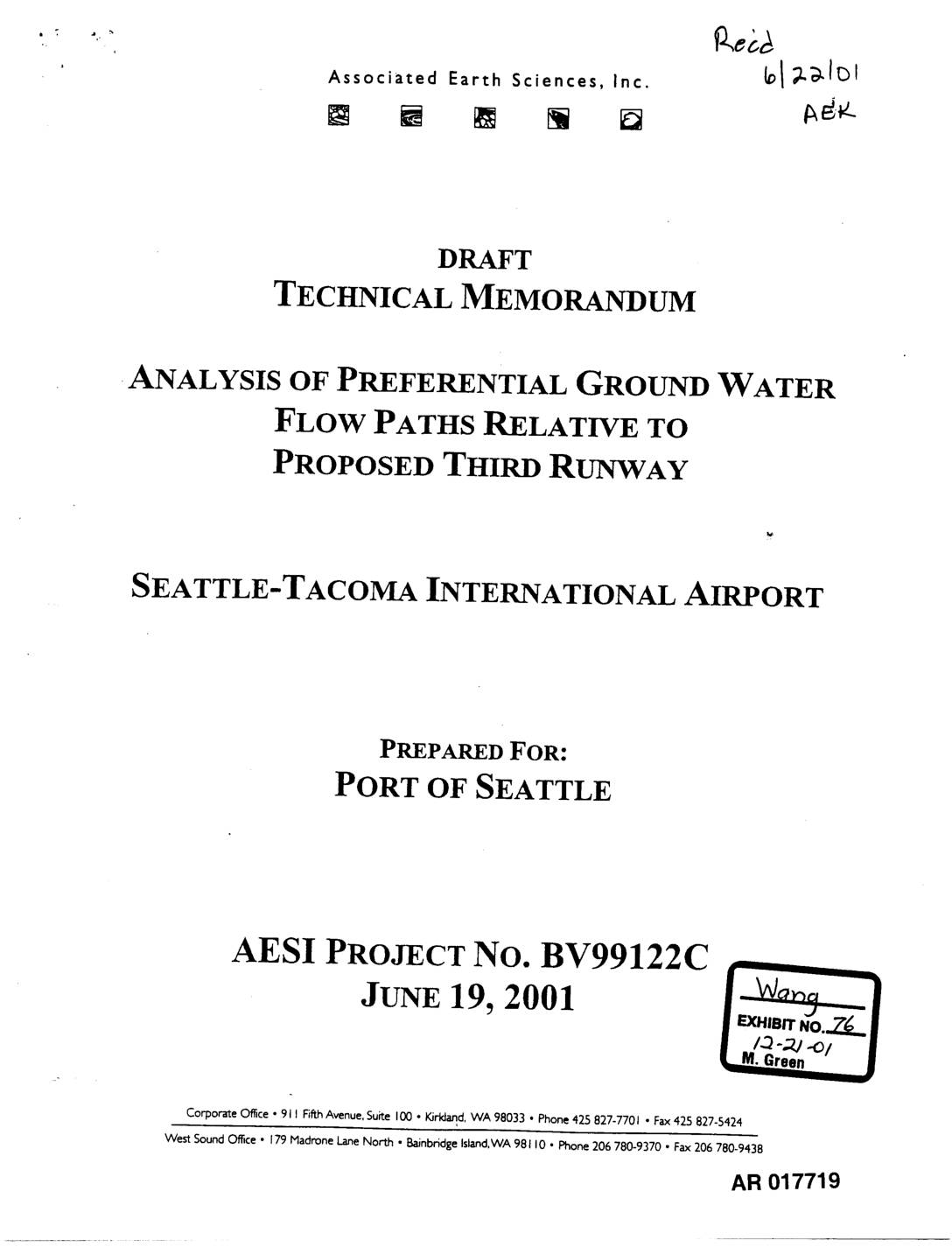
Exhibit 76: Analysis of Preferential Ground Water Flow Paths Relative to Proposed Third Runway, STIA
Draft technical memorandum prepared by Associated Earth Sciences, Inc. (AESI, Project No. BV99122C) for Port Of Seattle, dated June 19, 2001, analyzing preferential ground water flow paths relative to the proposed Third Runway at Seattle-Tacoma International Airport (STIA). Evaluates potential contaminant migration from the Aviation Operations and Maintenance Area (AOMA) to the third runway construction