TagDuwamish River(24)
-
 2023-08-08
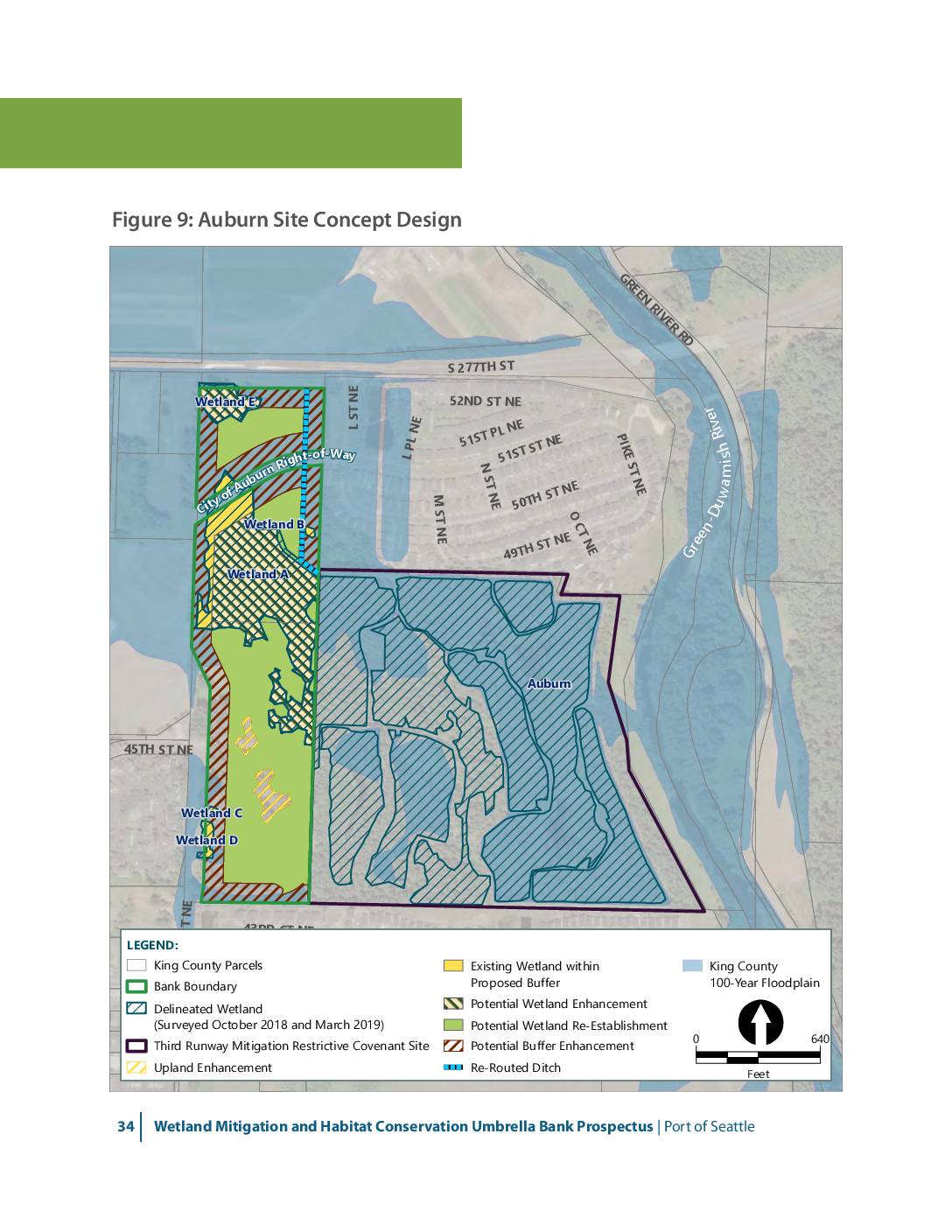
Auburn Wetlands site concept design
This map presents the concept design for the Auburn wetland mitigation site as part of the Port of Seattle’s Wetland Mitigation and Habitat Conservation Umbrella Bank Prospectus. The figure shows five delineated wetlands (A through E) along the Green-Duwamish River, with proposed enhancements including wetland re-establishment, buffer enhancement, upland enhancement, and re-routed ditches. The site -
 2022-07-31
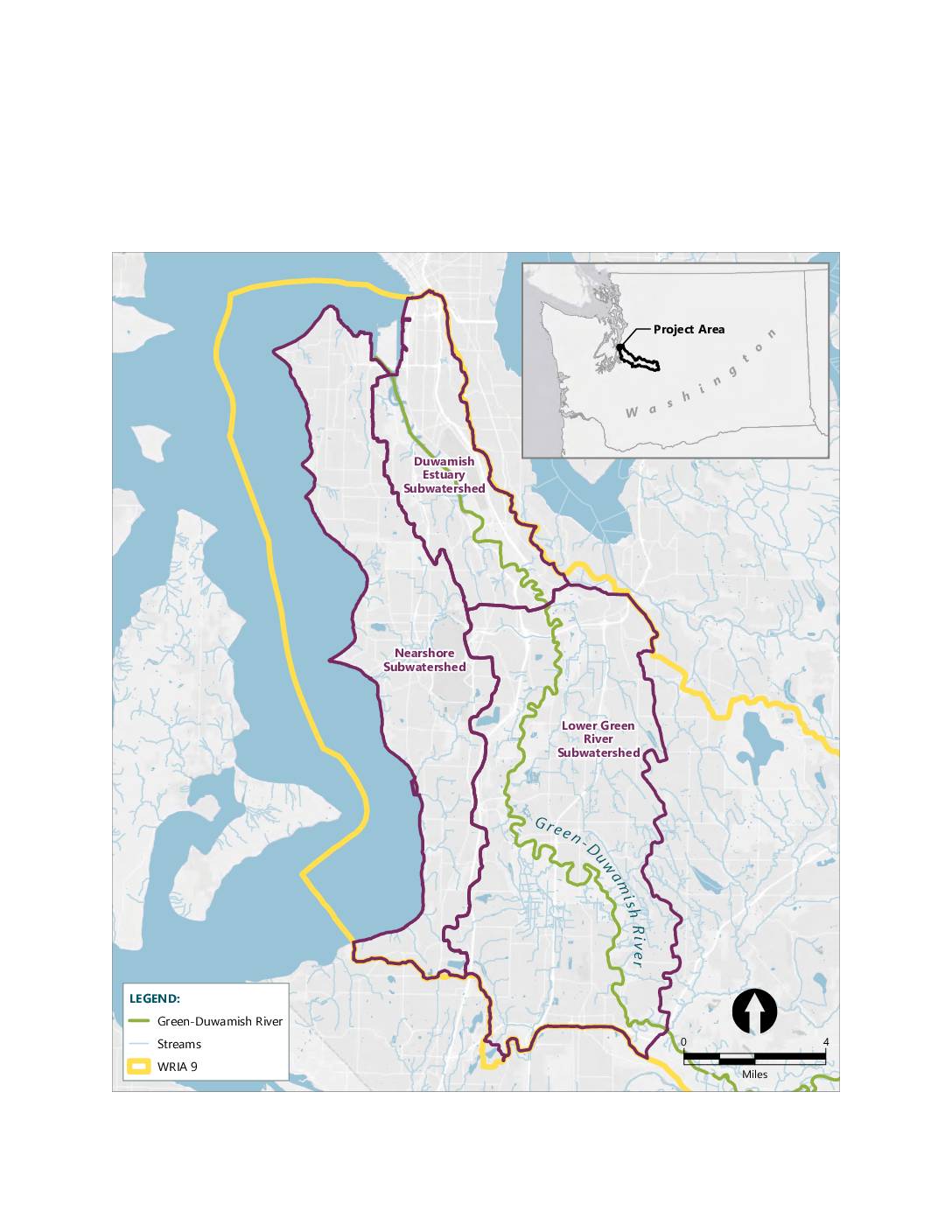
Port of Seattle proposed Mitigation bank service area map
A map showing the mitigation bank service area within WRIA 9 (Water Resource Inventory Area 9), encompassing three subwatersheds: the Lower Green River Subwatershed, the Duwamish Estuary Subwatershed, and the Nearshore Subwatershed. The map displays the Green-Duwamish River and its associated streams in the greater Seattle/King County area of Washington State. An inset map shows -
 2019-12-10
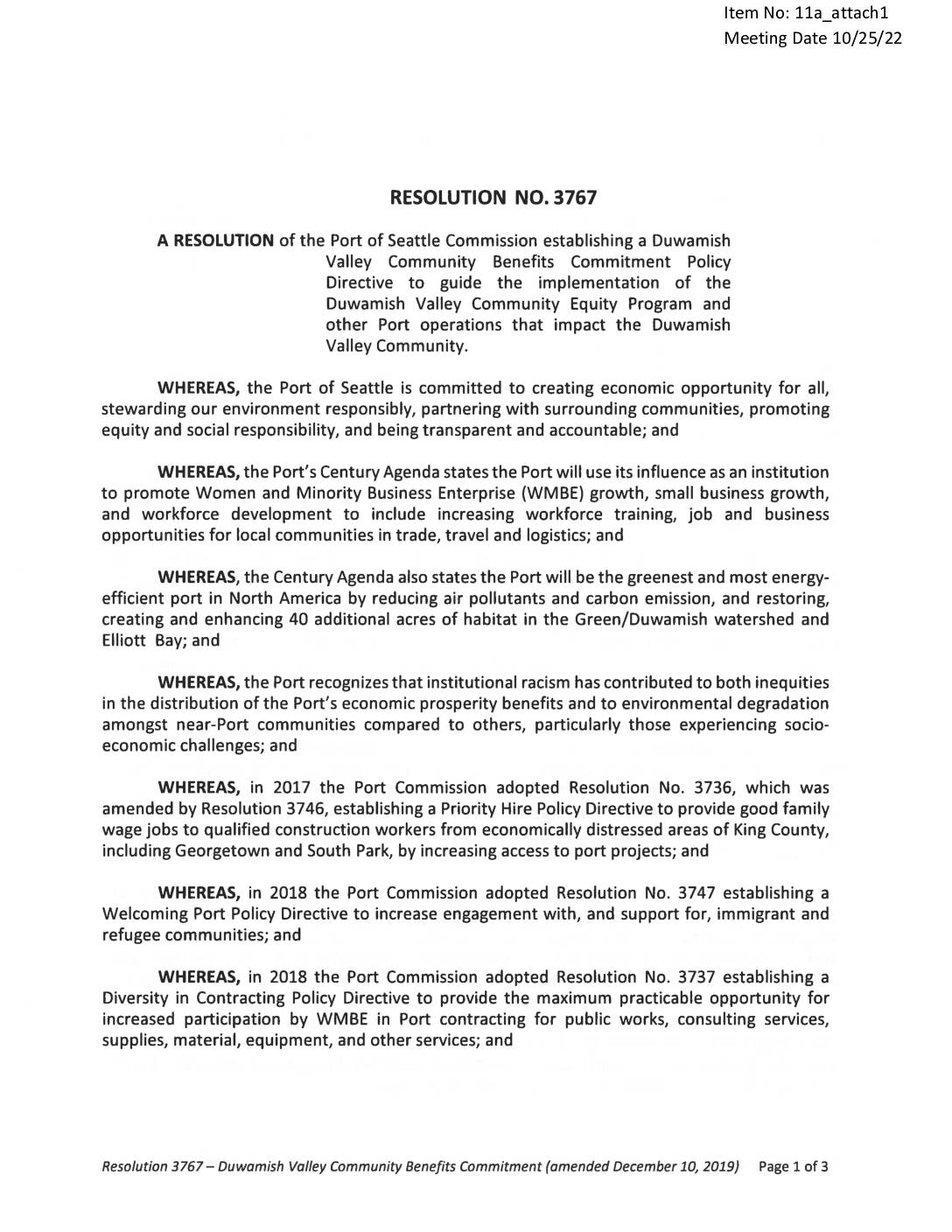
Resolution No. 3767: Duwamish Valley Community Benefits Commitment Policy Directive
Port of Seattle Commission Resolution No. 3767, adopted December 10, 2019 (presented at meeting October 25, 2022), establishing the Duwamish Valley Community Benefits Commitment Policy Directive to guide implementation of the Duwamish Valley Community Equity Program. The resolution references prior resolutions 3736, 3746 (Priority Hire Policy Directive), 3747 (Welcoming Port Policy Directive), and 3737 (Diversity -
2019-12-10
Resolution No. 3767: Duwamish Valley Community Benefits Commitment Policy Directive
Port of Seattle Commission Resolution No. 3767, adopted December 10, 2019 (presented at meeting October 25, 2022), establishing the Duwamish Valley Community Benefits Commitment Policy Directive to guide implementation of the Duwamish Valley Community Equity Program. The resolution references prior resolutions 3736, 3746 (Priority Hire Policy Directive), 3747 (Welcoming Port Policy Directive), and 3737 (Diversity -
 2018-04-10
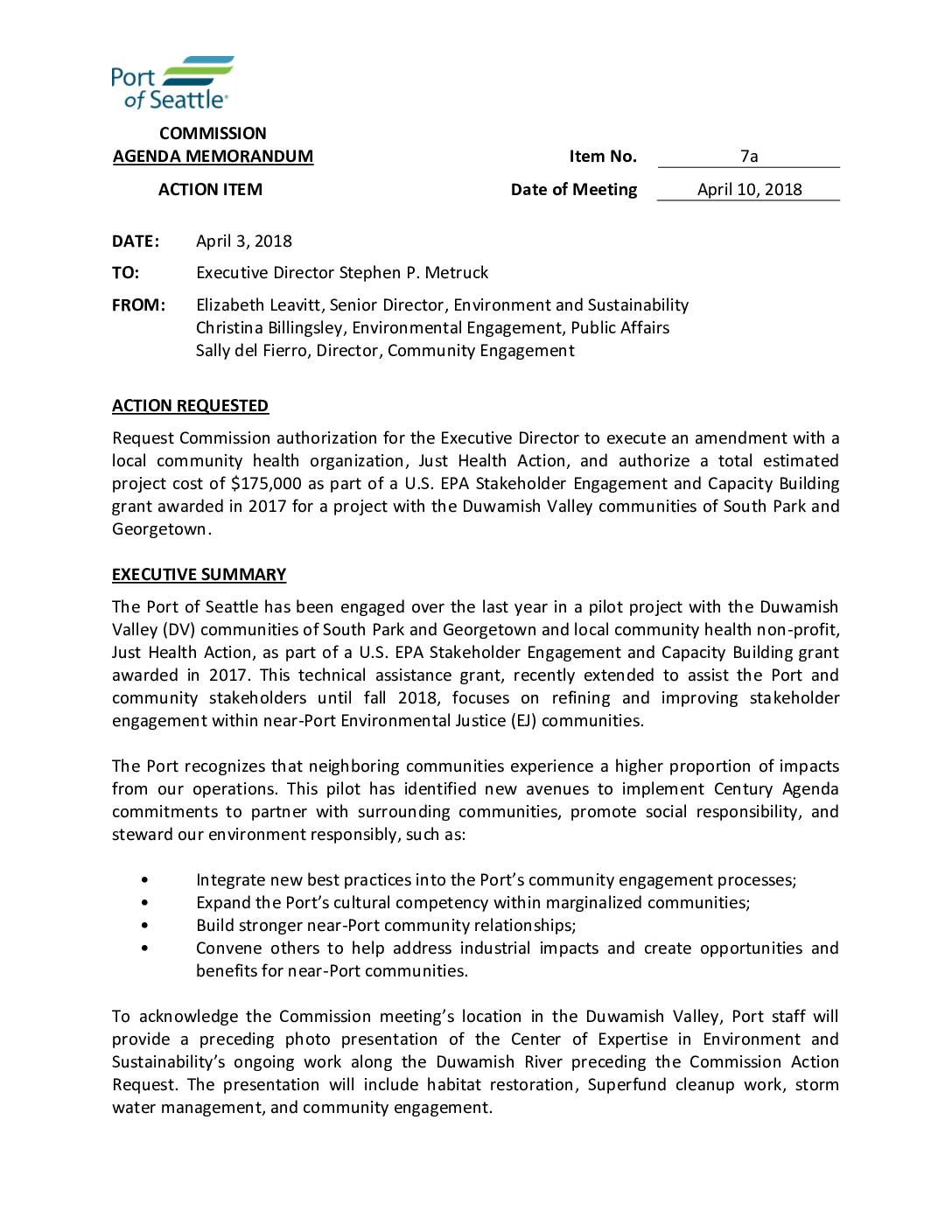
Commission agenda memorandum: Amendment with Just Health Action for Duwamish Valley community engagement project
The Port of Seattle Commission considered a request to amend a contract with Just Health Action, a local community health nonprofit, to continue a pilot project engaging residents of the Duwamish Valley neighborhoods of South Park and Georgetown. The project, supported by a U.S. EPA Stakeholder Engagement and Capacity Building grant awarded in 2017, focuses on improving the Port's community outreach practices and addressing environmental health concerns in low-income and minority communities near Port operations. The total estimated project cost was $175,000, with the amended contract value reaching $224,999. -
 2018-04-10
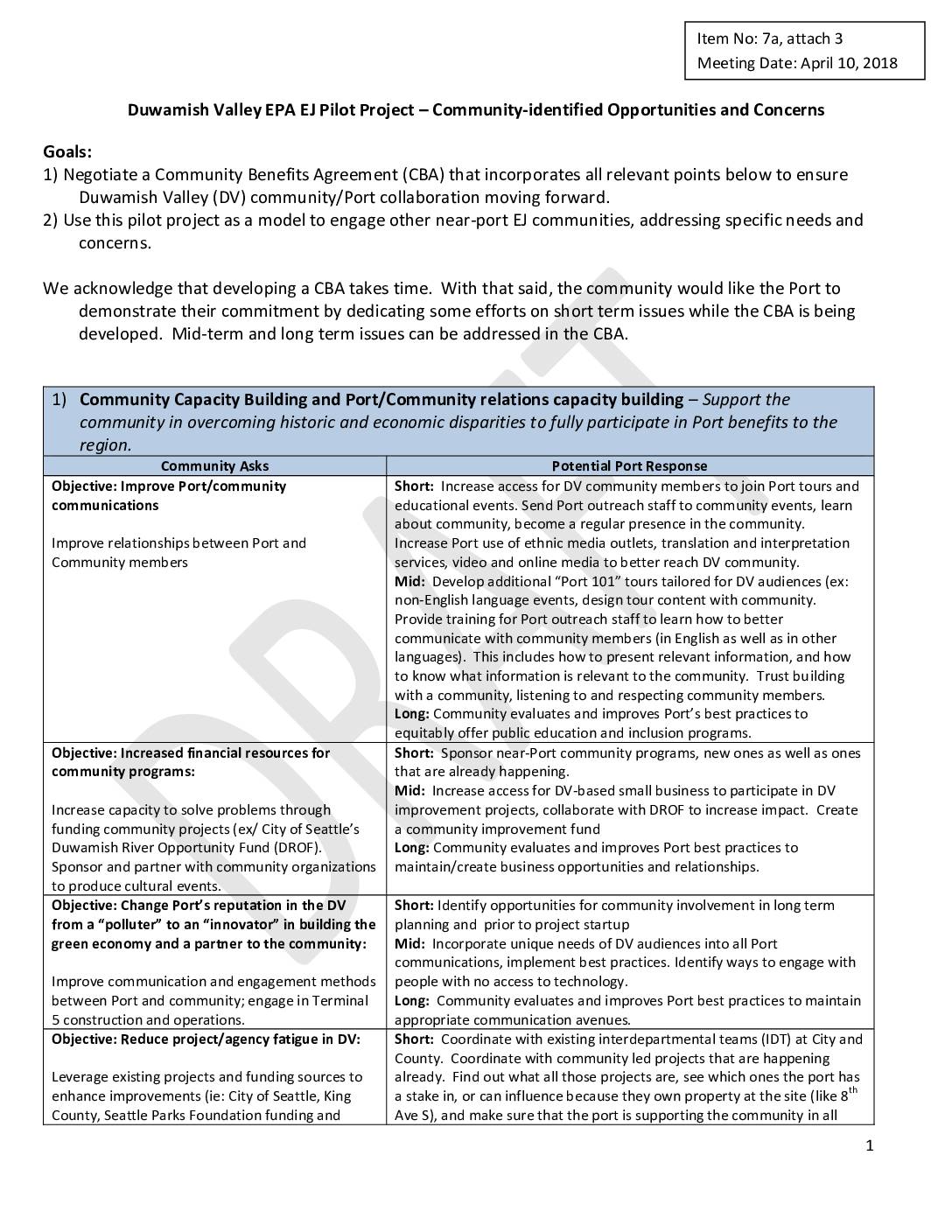
Duwamish Valley EPA EJ pilot project – community-identified opportunities and concerns
This 2018 document outlines community-identified opportunities and concerns from the Duwamish Valley EPA Environmental Justice Pilot Project, focused on improving collaboration between the Port of Seattle and nearby Duwamish Valley residents. It covers goals such as negotiating a Community Benefits Agreement, building community capacity, reducing environmental harms like air pollution and stormwater runoff, and improving green spaces and pedestrian safety. Note: this document addresses Duwamish Valley port and industrial area concerns and does not directly relate to Sea-Tac Airport noise policy. -
 2018-04-10
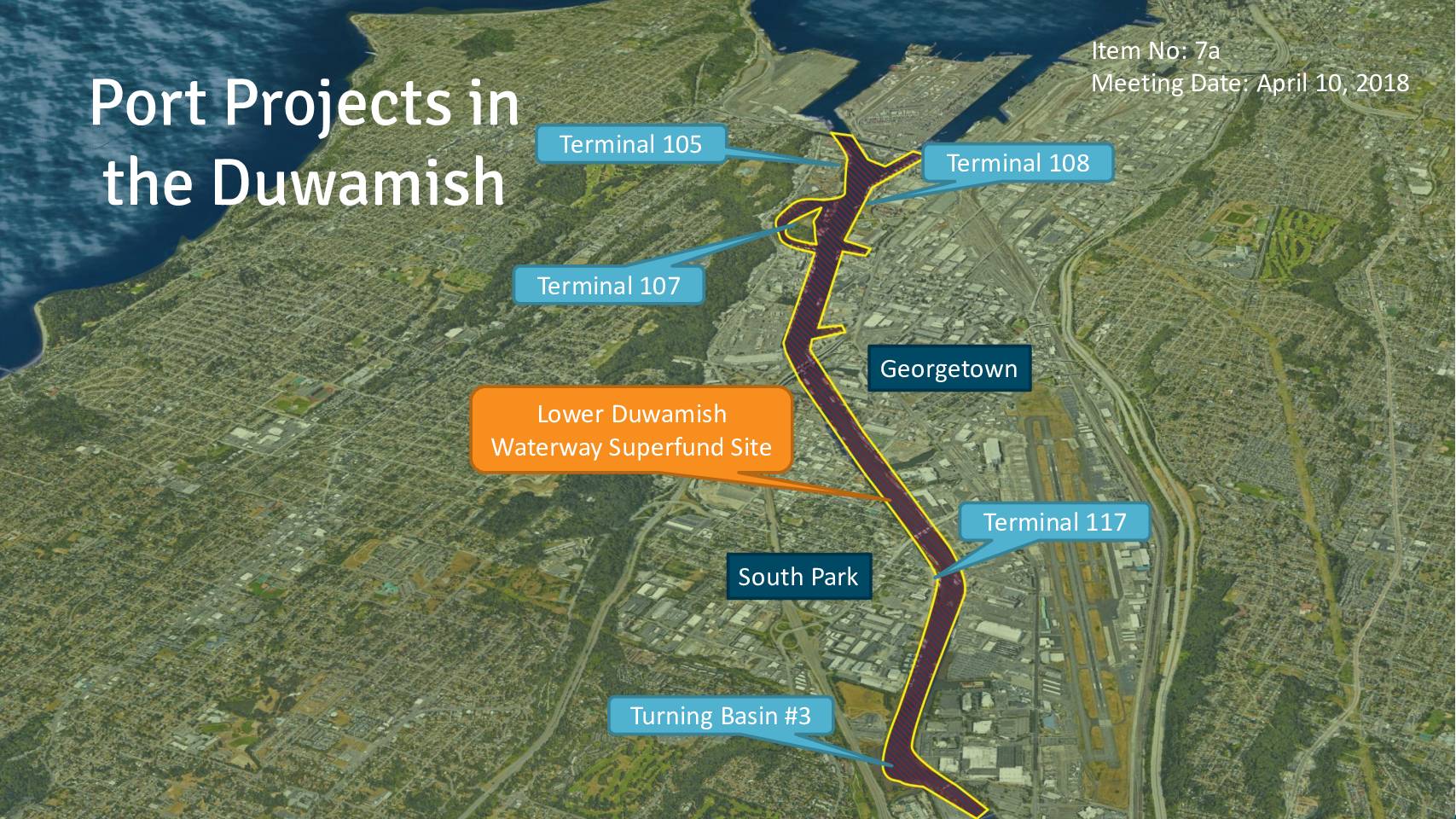
Port projects in the Duwamish
This April 2018 Port of Seattle presentation outlines port and habitat recovery projects along the Lower Duwamish Waterway in Seattle, covering terminals 105, 107, 108, and 117, as well as Turning Basin #3 and the Lower Duwamish Waterway Superfund Site. The document highlights environmental restoration efforts, including shoreline and aquatic habitat improvements near Georgetown and South Park neighborhoods. Terminal 108 is featured as an example of habitat recovery work, showing before-and-after conditions of riparian restoration along the waterway. -
 2015-04-01
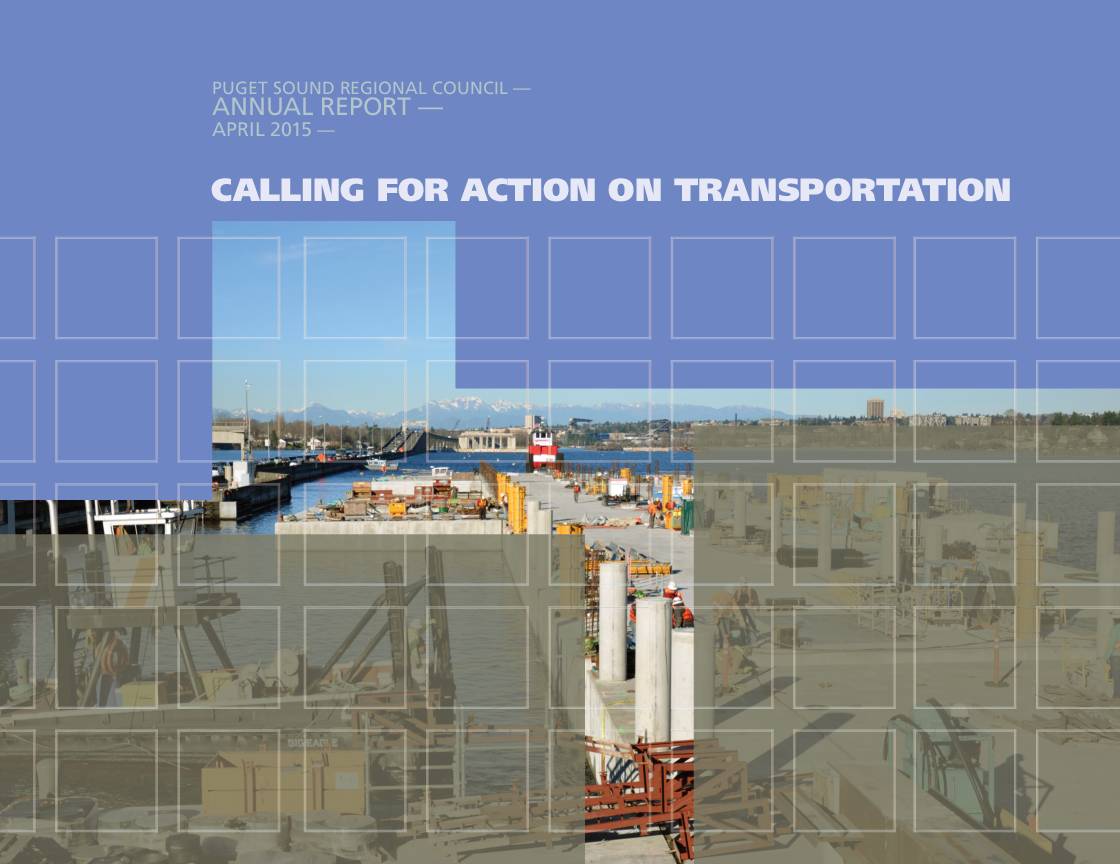
Puget Sound Regional Council Annual Report: Calling for Action on Transportation
The Puget Sound Regional Council (PSRC) 2015 Annual Report highlights regional transportation investments and infrastructure improvements in the greater Puget Sound area. A key focus is the opening of the new South Park Bridge on June 30, which restored a critical crossing over the Duwamish River, supported by more than $24 million in PSRC funding. The report calls for continued action on transportation to support the region's economic centers and approximately 80,000 jobs connected by the new infrastructure. -
 1999-05-02
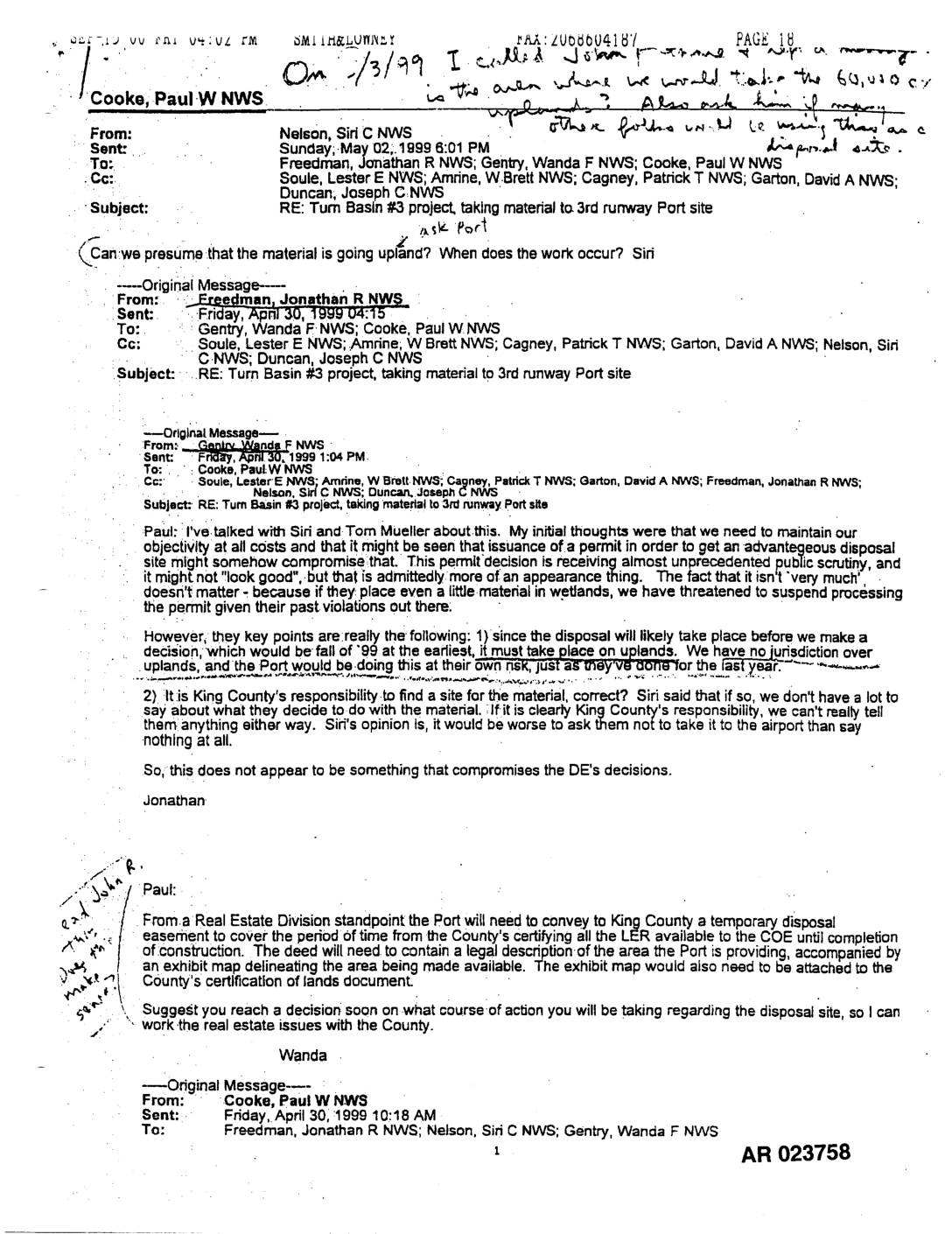
EXH AR023758: Internal NWS Email Chain — Turn Basin #3 Duwamish River Habitat Project, Material Disposal at STIA Third Runway Site
In April–May 1999, U.S. Army Corps of Engineers (NWS) staff exchanged emails debating whether to use a Port of Seattle Third Runway construction site as a disposal area for roughly 60,000 cubic yards of excavated material from the Duwamish River Turn Basin #3 habitat restoration project. Officials weighed whether this arrangement could compromise the Corps' impartiality in its pending permit decision for the Third Runway Project, ultimately concluding it would not, since disposal would occur on upland areas outside Corps jurisdiction and King County bore responsibility for finding a disposal site. The collaboration was seen as potentially saving the habitat restoration project up to $200,000 in disposal costs. -
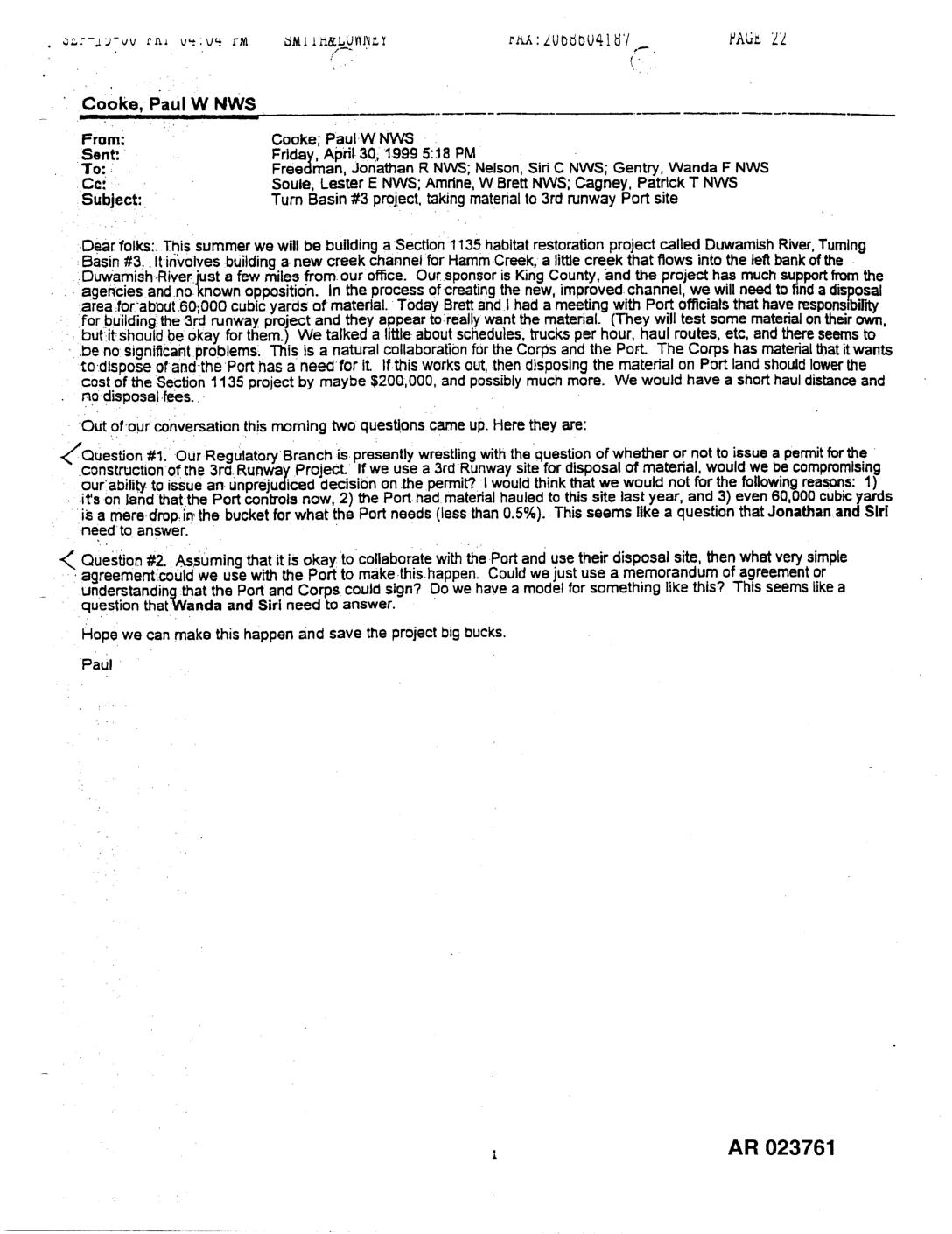 1999-04-30
EXH AR023761: Email Cooke to Freedman et al. — Turn Basin #3 Material Disposal, 3rd Runway Site
A 1999 internal U.S. Army Corps of Engineers email discusses plans to dispose of approximately 60,000 cubic yards of excavated material from a Duwamish River habitat restoration project (Turn Basin #3) at a Port of Seattle site designated for the proposed Third Runway. The email raises concerns about whether this collaboration with the Port could compromise the Corps' ability to issue an impartial permit decision for the Third Runway project, while noting the arrangement could save the restoration project around $200,000 in disposal costs.