TagDes Moines(255)
-
 1999-04-05
Conveyor-belt plan resisted
In April 1999, a proposal to build a temporary two-mile conveyor belt to transport fill material for Sea-Tac Airport's planned third runway met strong resistance from Des Moines residents. The belt was intended to reduce heavy dump truck traffic on South King County roads, but neighbors opposed both the conveyor plan and the runway project itself, packing City Council meetings in protest. The third runway, requiring over 17 million cubic yards of fill, was scheduled for completion by 2005. -
 1999-01-01
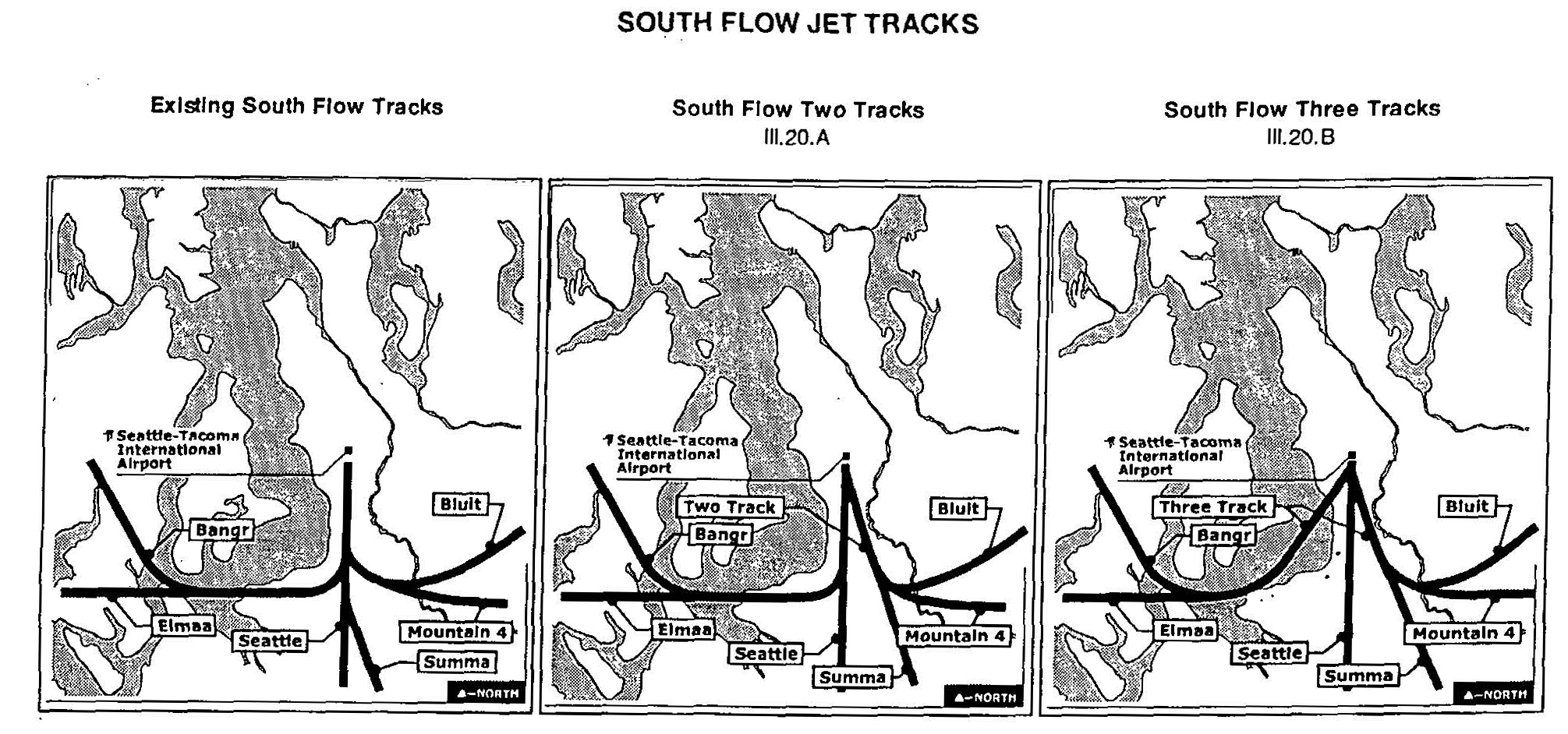
Resolution No. 882 Expressing the Council’s Preference for the South Flow Flight Track, 1999
Three maps comparing existing and proposed south flow jet departure tracks at Seattle-Tacoma International Airport, showing waypoints including Bangr, Bluit, Elmaa, Seattle, Summa, and Mountain 4. The proposed alternatives are labeled 'South Flow Two Tracks' (III.20.A) and 'South Flow Three Tracks' (III.20.B), consistent with an environmental or noise impact study for Sea-Tac Airport. -
 1998-07-01
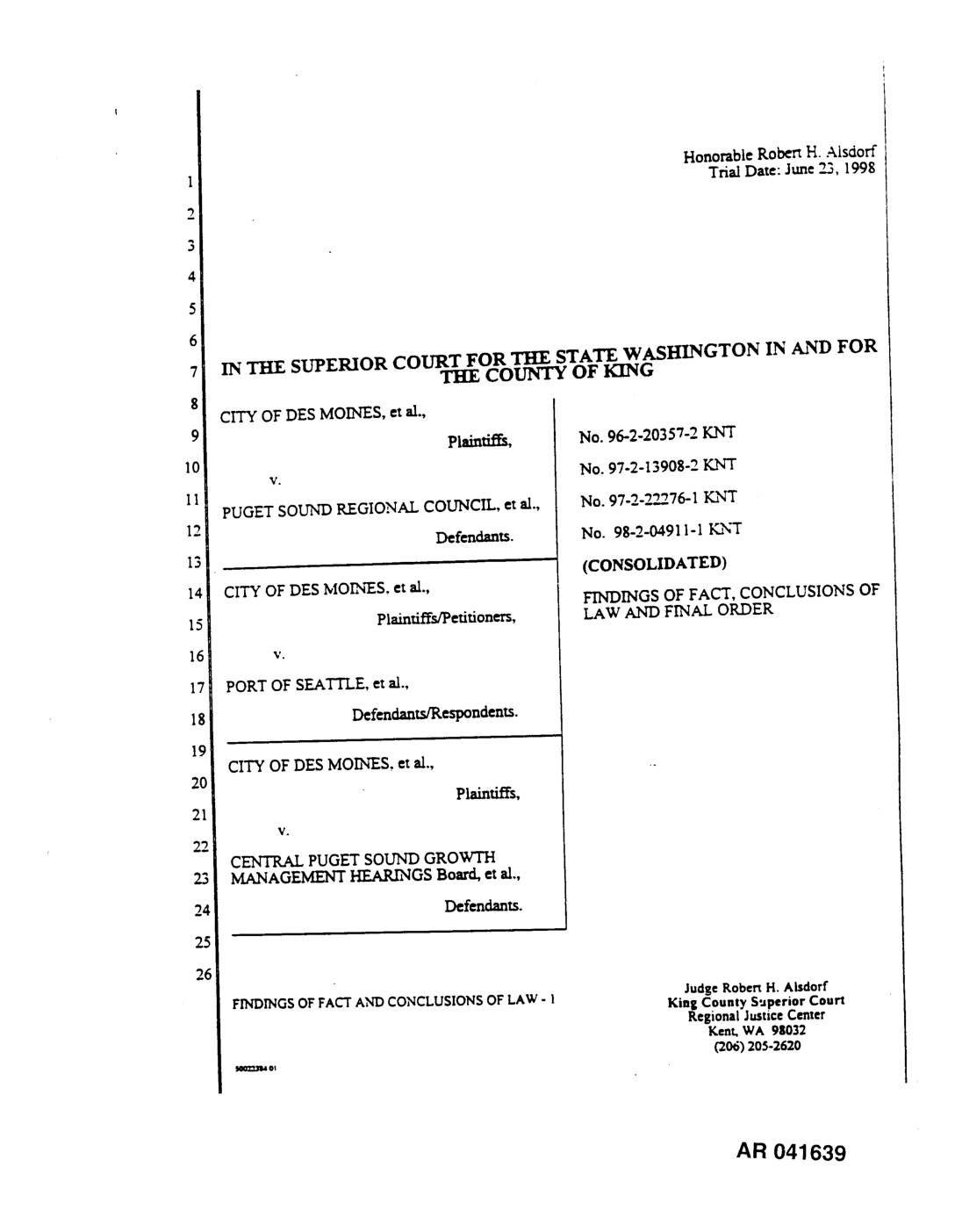
EXH AR041639: Findings of Fact, Conclusions of Law and Final Order — City of Des Moines et al. v. Port Of Seattle et al.
King County Superior Court Findings of Fact, Conclusions of Law and Final Order by Judge Robert H. Alsdorf in consolidated cases No. 96-2-20357-2 KNT, No. 97-2-13908-2 KNT, No. 97-2-22276-1 KNT, No. 98-2-04911-1 KNT. Challenges Port Of Seattle Resolutions 3212 and 3245 approving the Sea-Tac Master Plan Update including construction of a third runway at Seattle-Tacoma -
 1998-03-30
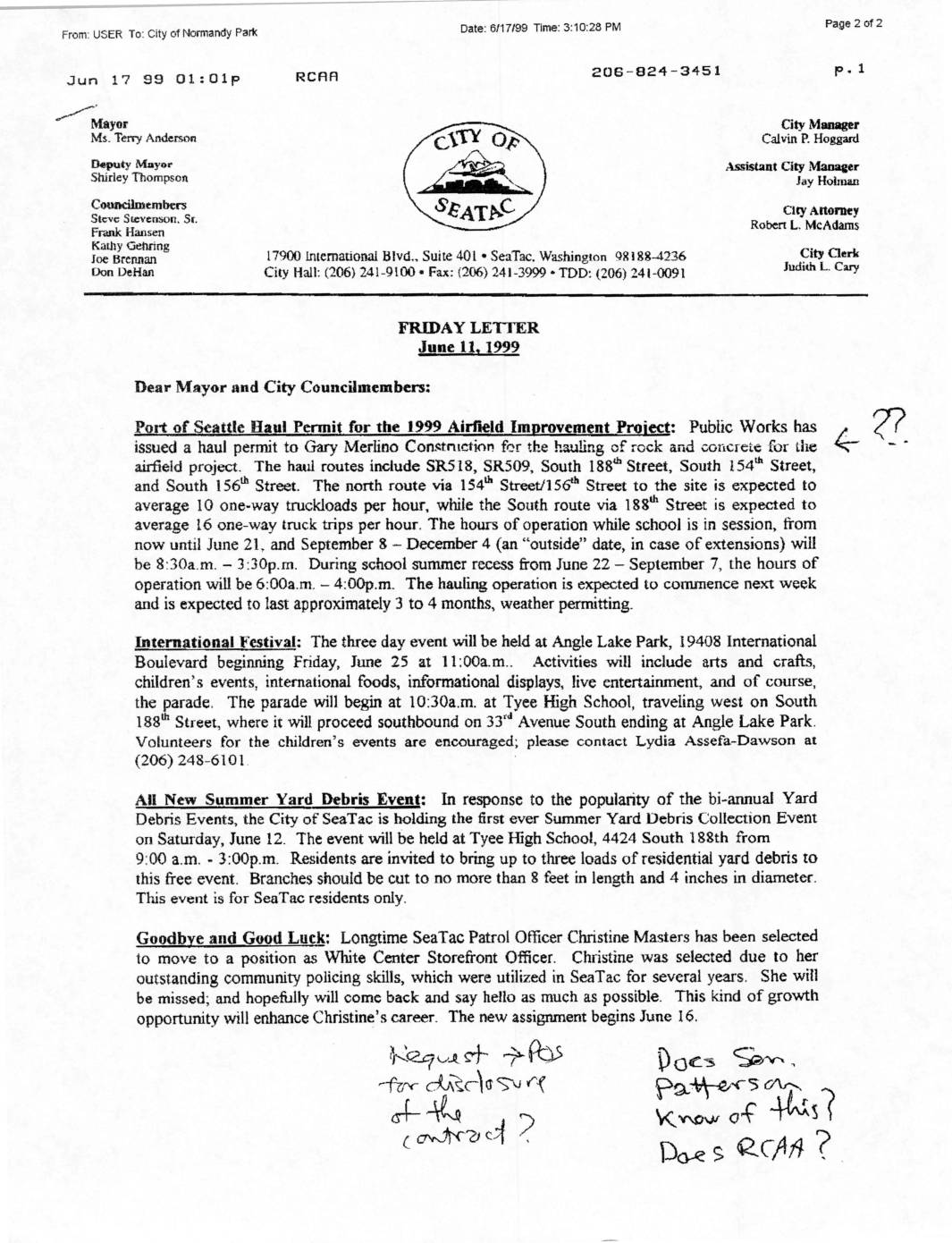
RCAA Letter to City of Des Moines: EMT Conveyor Belt Proposal for Sea-Tac Airport Fill Material Hauling, with Sea-Tac Friday Letter on Port Of Seattle 1999 Airfield Improvement Project Haul Permit
These documents relate to the 1999 Sea-Tac Airport airfield improvement project, including a haul permit issued to Gary Merlino Construction for trucking rock and concrete along designated routes near the airport, with restricted operating hours during the school year. Also included is a 1998 letter from the Regional Commission on Airport Affairs describing a proposal by Environmental Materials Transport LLC to build a temporary barge terminal near Des Moines Creek Beach Park, with a conveyor system to move fill material to Sea-Tac Airport as an alternative to truck hauling. The materials reflect community and municipal concerns about construction traffic, noise, and environmental impact associated with airport expansion activities in the greater Sea-Tac area. -
 1998-02-18
Dirty looks for plan to move third runway dirt – proposal to use conveyer belts met with skepticism
A Lynnwood contractor proposed using conveyor belts instead of trucks to haul the 23 million cubic yards of fill dirt needed for Sea-Tac Airport's third runway construction in the late 1990s. The plan would have barged dirt to Des Moines, then carried it 2.5 miles to the airport via belt, cutting the estimated haul time from five years to two and a half. Des Moines residents, already angry about the runway routing air traffic over their downtown, reacted skeptically and accused the contractor of trying to bribe the city with promises of new parks in exchange for cooperation. -
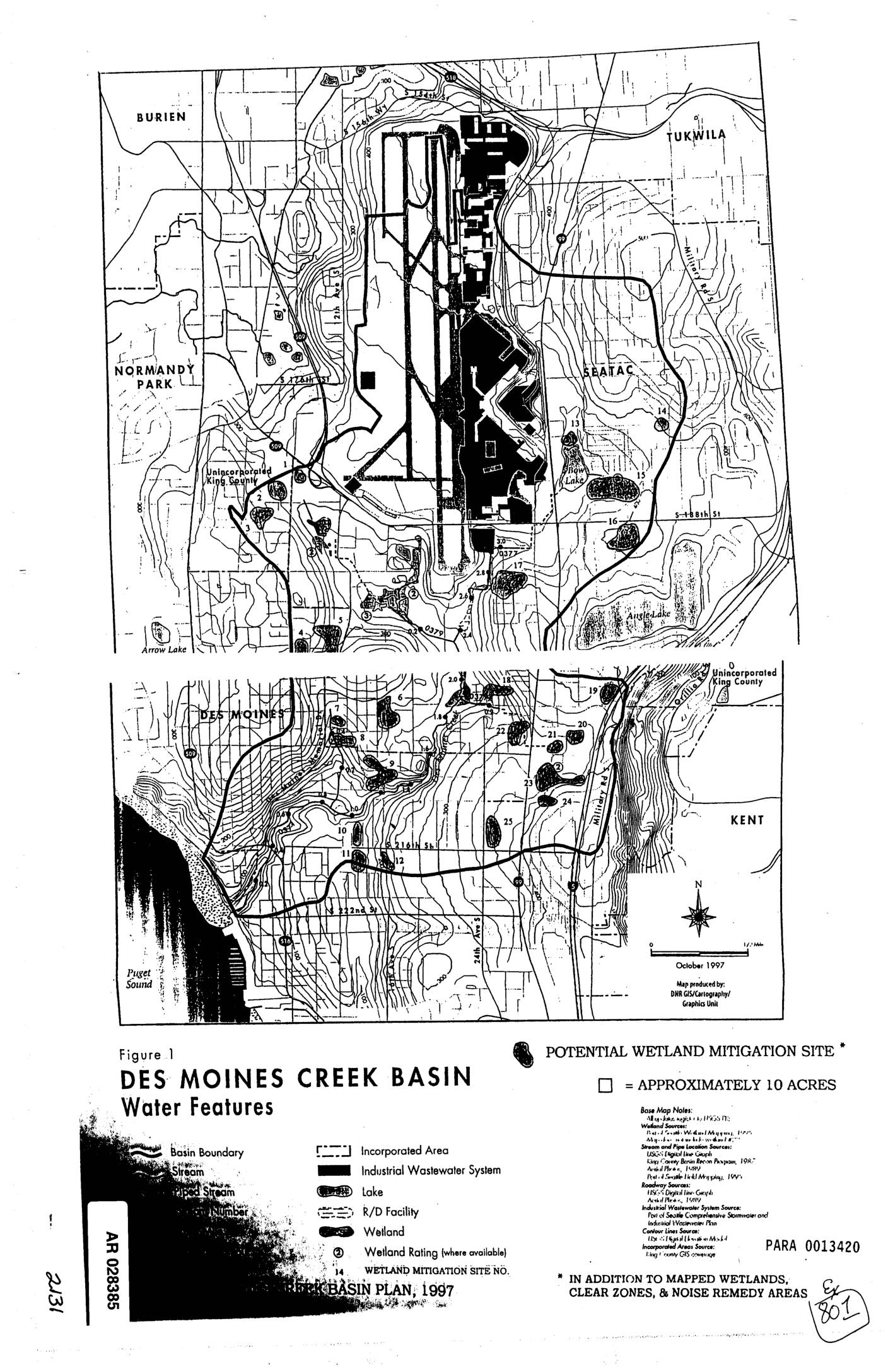 1997-10-01
EXH AR028385: Des Moines Creek Basin Water Features Map — Potential Wetland Mitigation Sites
Figure 1 from the Des Moines Creek Basin Plan (1997), a map produced by DNR GIS/Cartography/Graphics Unit showing water features and potential wetland mitigation sites in the Des Moines Creek Basin. Covers areas including Burien, Normandy Park, SeaTac, Tukwila, Des Moines, Kent, and unincorporated King County. Map legend identifies basin boundary, streams, piped streams, wetlands, -
 1996-08-15
Down-to-earth job: Sea-Tac’s third runway to get its fill of dirt
A 1996 Seattle Times article details the massive earth-moving challenge facing Sea-Tac Airport's planned third runway, which required importing approximately 14.25 million cubic yards of fill dirt at an estimated cost of $120 million to level a corridor of dips and valleys as deep as 145 feet. Port of Seattle planners were exploring multiple options for sourcing and transporting the dirt, including conveyor belts, barges, and rail spurs, while facing legal opposition from nearby cities who argued the project understated environmental and community harm. -
 1996-05-15
Barge in dirt for runway? Idea for filling ravine is built on conveyor, not trucks
In 1996, Lynnwood engineer Hank Hopkins proposed using barges and an electric conveyor belt system to transport the roughly 14 million cubic yards of fill dirt needed to build a third runway at Seattle-Tacoma International Airport, rather than relying on a constant stream of dump trucks. Hopkins argued his patented modular conveyor system would be faster, cheaper, quieter, and less disruptive to surrounding communities than the truck-based approach outlined in the environmental study. The city of Des Moines, which opposed the runway project, was seen as the primary obstacle to approving the conveyor plan, as the system would require city permits that trucking would not. -
 1992-01-09
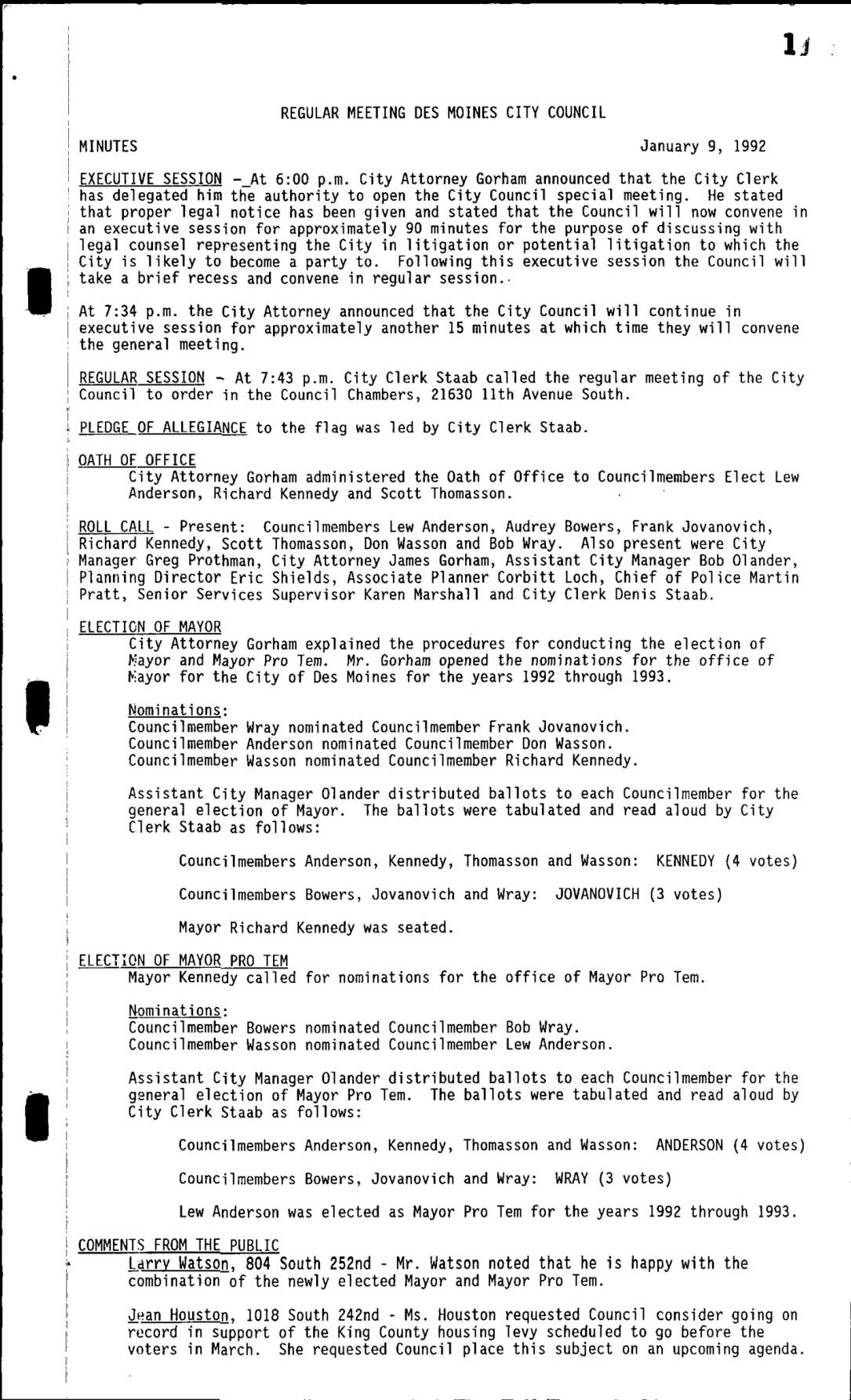
Regular meeting Des Moines City Council minutes
Minutes from the January 9, 1992 Des Moines City Council meeting include discussion of airport-related noise and emissions issues, as Mayor Kennedy distributed a written report from the National League of Cities Congress noting that airport noise and aircraft emissions fall within the domain of the Environment, Energy, and Natural Resources (EENR) Steering Committee. The report also references a vacant seat on the EENR Steering Committee specifically tied to airport issues, including noise and emissions from aircraft, for which the City of Des Moines applied. Membership would require attendance at four EENR Steering Committee meetings per year at a cost of $968 annually for NLC direct member status. -
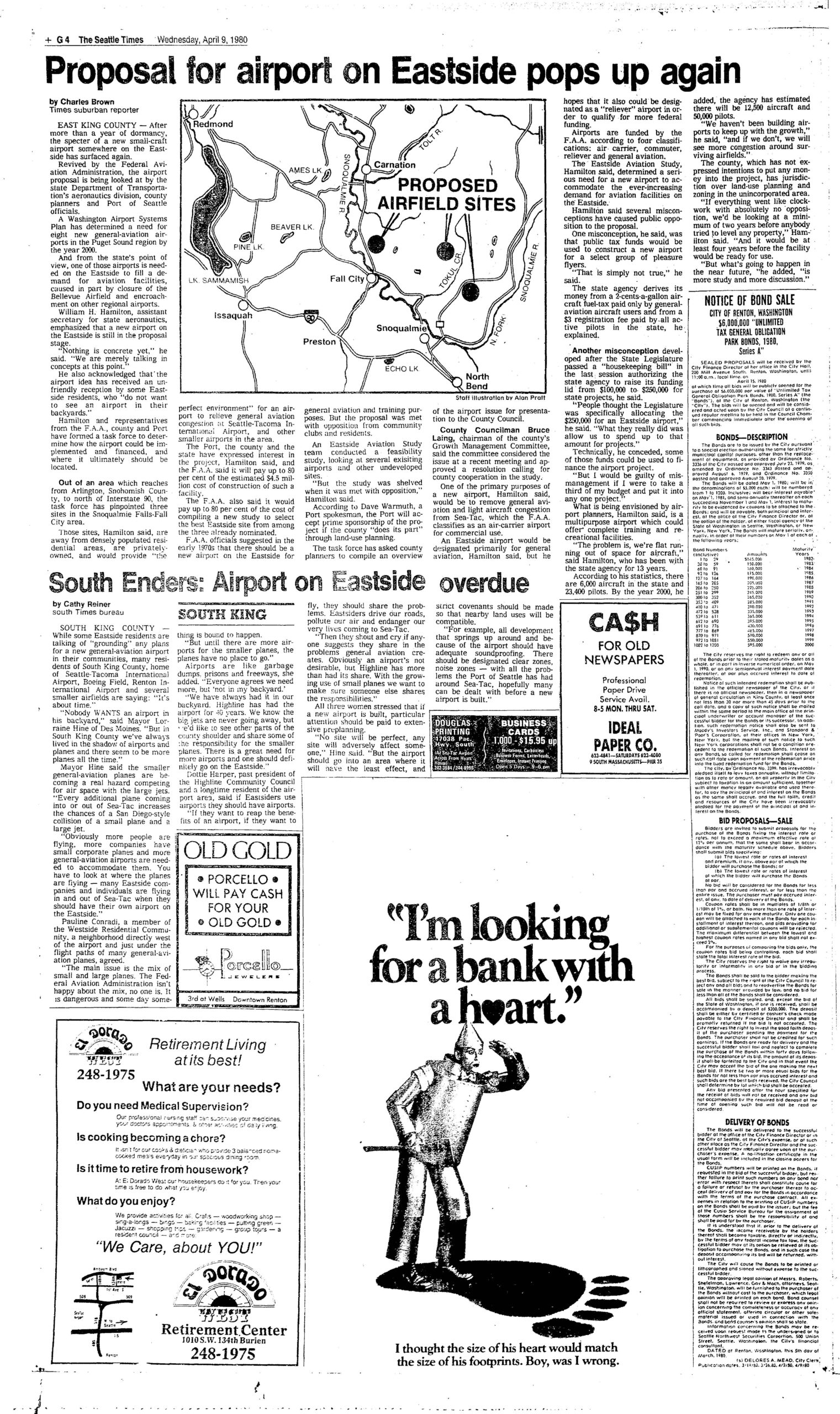
Seattle Times 1980-04-09 pg 107 Eastside Airport Proposal in Carnation (Lorraine Hine Des Moines Mayor)
A full newspaper page from The Seattle Times dated Wednesday, April 9, 1980 (page G4) featuring two articles — 'Proposal for airport on Eastside pops up again' by Charles Brown and 'South Enders: Airport on Eastside overdue' by Cathy Reiner — covering proposals for a new general-aviation airport in East King County, with a map illustrating three proposed airfield sites in the Snoqualmie Valley area near Fall City, Carnation, and North Bend.