TagDes Moines Creek(162)
-
 2000-01-03
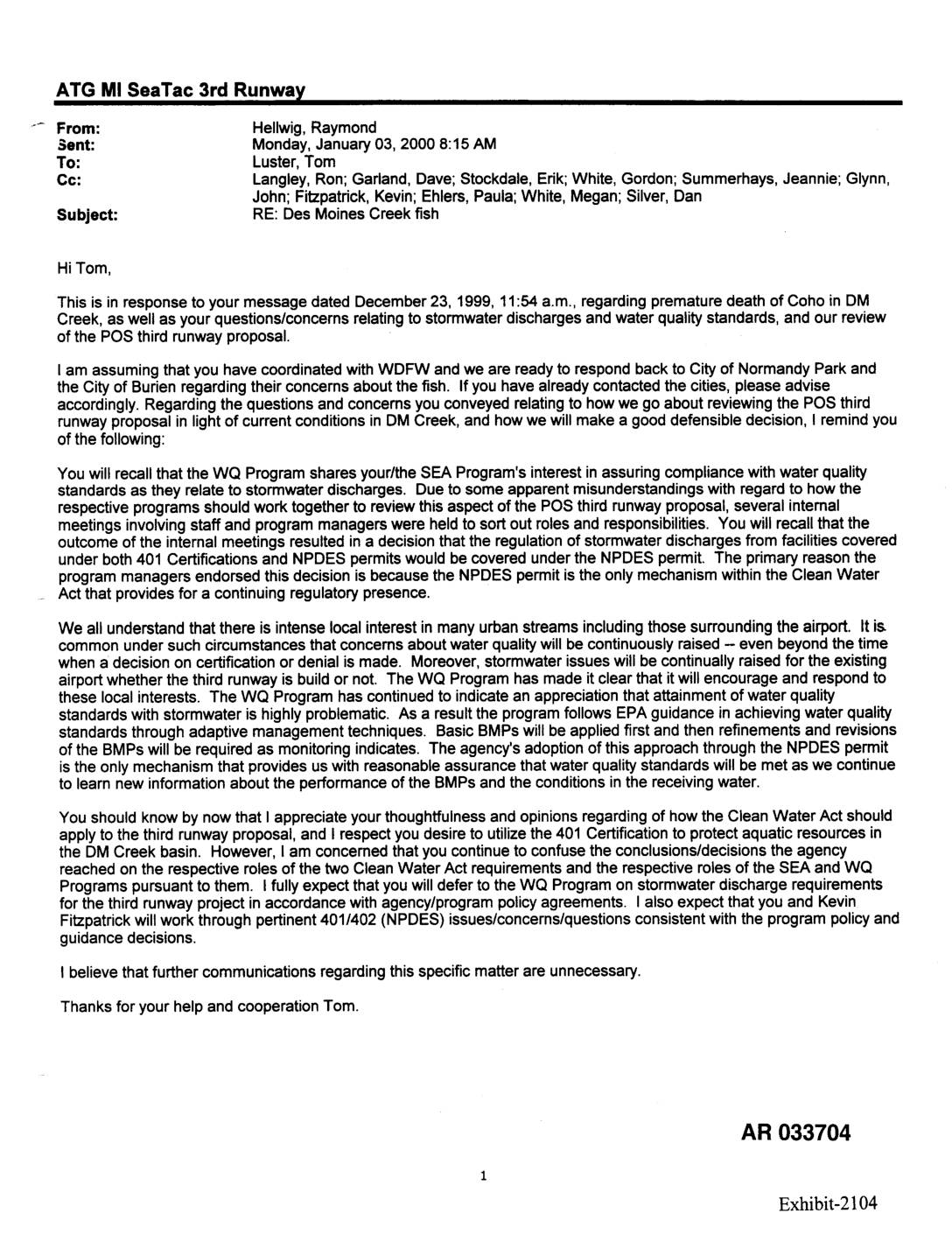
EXH AR033704: Email from Raymond Hellwig to Tom Luster RE: Des Moines Creek Fish and Third Runway Stormwater Review
Email dated January 3, 2000 from Raymond Hellwig (WQ Program) to Tom Luster (SEA Program), cc’d to Ron Langley, Dave Garland, Erik Stockdale, Gordon White, Jeannie Summerhays, John Glynn, Kevin Fitzpatrick, Paula Ehlers, Megan White, and Dan Silver. Responds to Luster’s December 23, 1999 message regarding premature death of Coho salmon in Des Moines Creek -
 2000-01-03
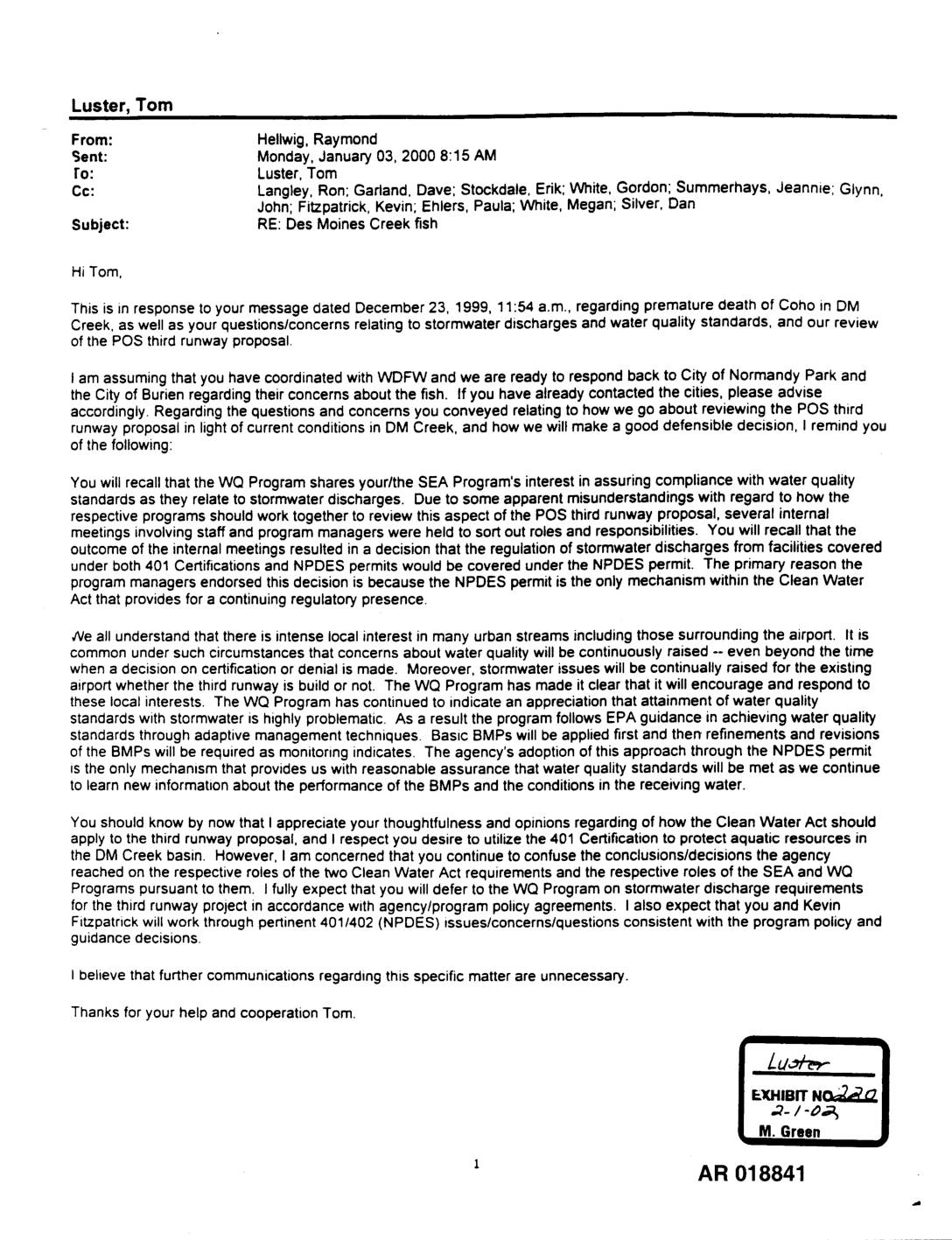
Exhibit 220: Email from Raymond Hellwig to Tom Luster re Des Moines Creek Fish and POS Third Runway Stormwater Review
A January 2000 internal email from EPA's Raymond Hellwig to Tom Luster addresses concerns about premature deaths of Coho salmon in Des Moines Creek near Sea-Tac Airport, in the context of the proposed third runway project. The email clarifies that stormwater discharge regulation will be handled through NPDES permits rather than Section 401 Water Quality Certifications, as the NPDES permit provides the only mechanism for ongoing regulatory oversight under the Clean Water Act. Hellwig directs Luster to defer to the Water Quality Program on stormwater issues and to stop raising the 401 Certification as an alternative avenue for addressing water quality standards. -
 1999-12-01
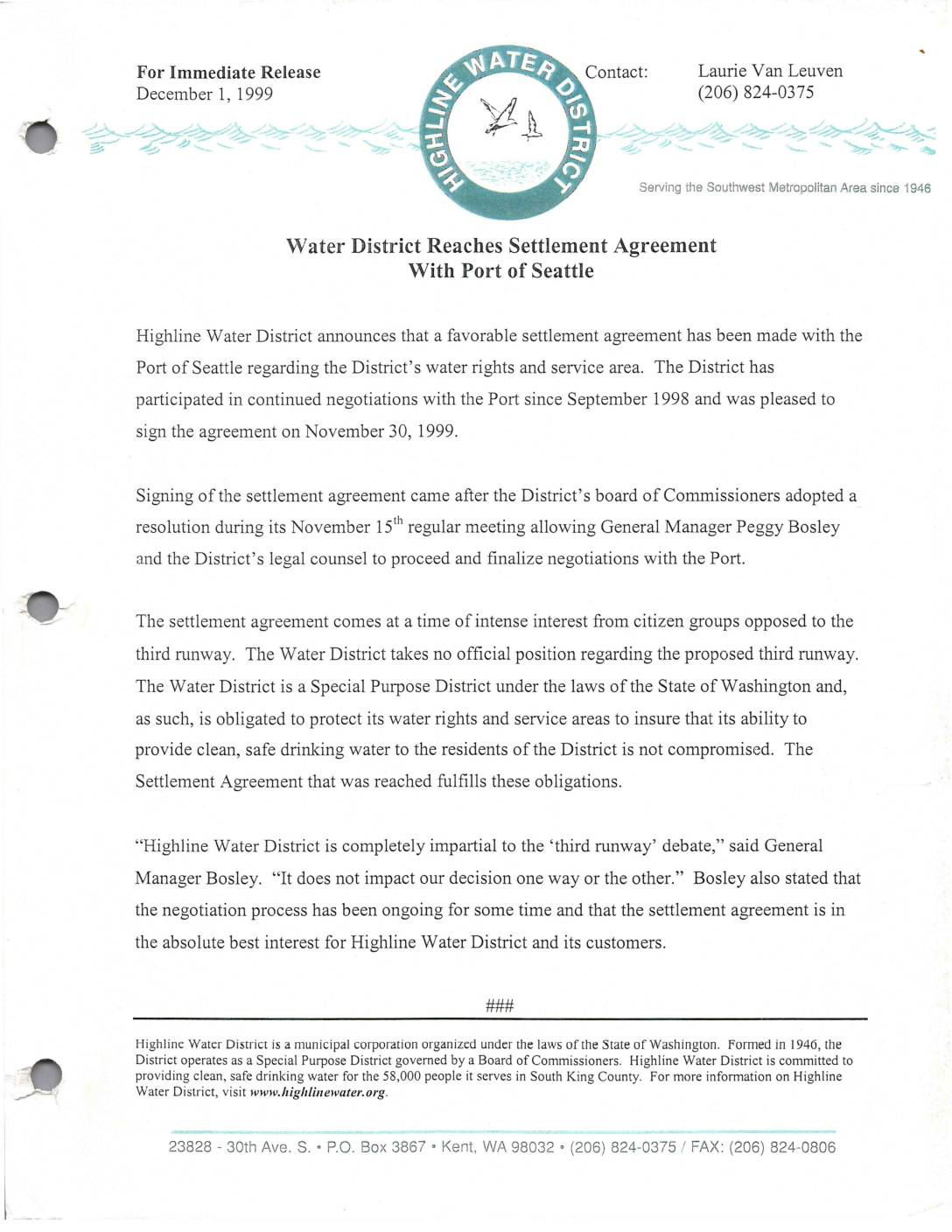
Water District reaches settlement agreement with Port Of Seattle
In November 1999, Highline Water District and the Port of Seattle reached a settlement agreement resolving competing claims over two water rights near Seattle-Tacoma International Airport. Under the deal, the Port retained rights to Well #1 for uses including Des Moines Creek flow augmentation tied to the proposed third runway project, while the District secured rights to a replacement for Well #2 to continue providing drinking water to its 58,000 customers. The District emphasized that the agreement was strictly about protecting its water rights and service area, and that it took no official position on the controversial third runway expansion. -
 1999-11-01
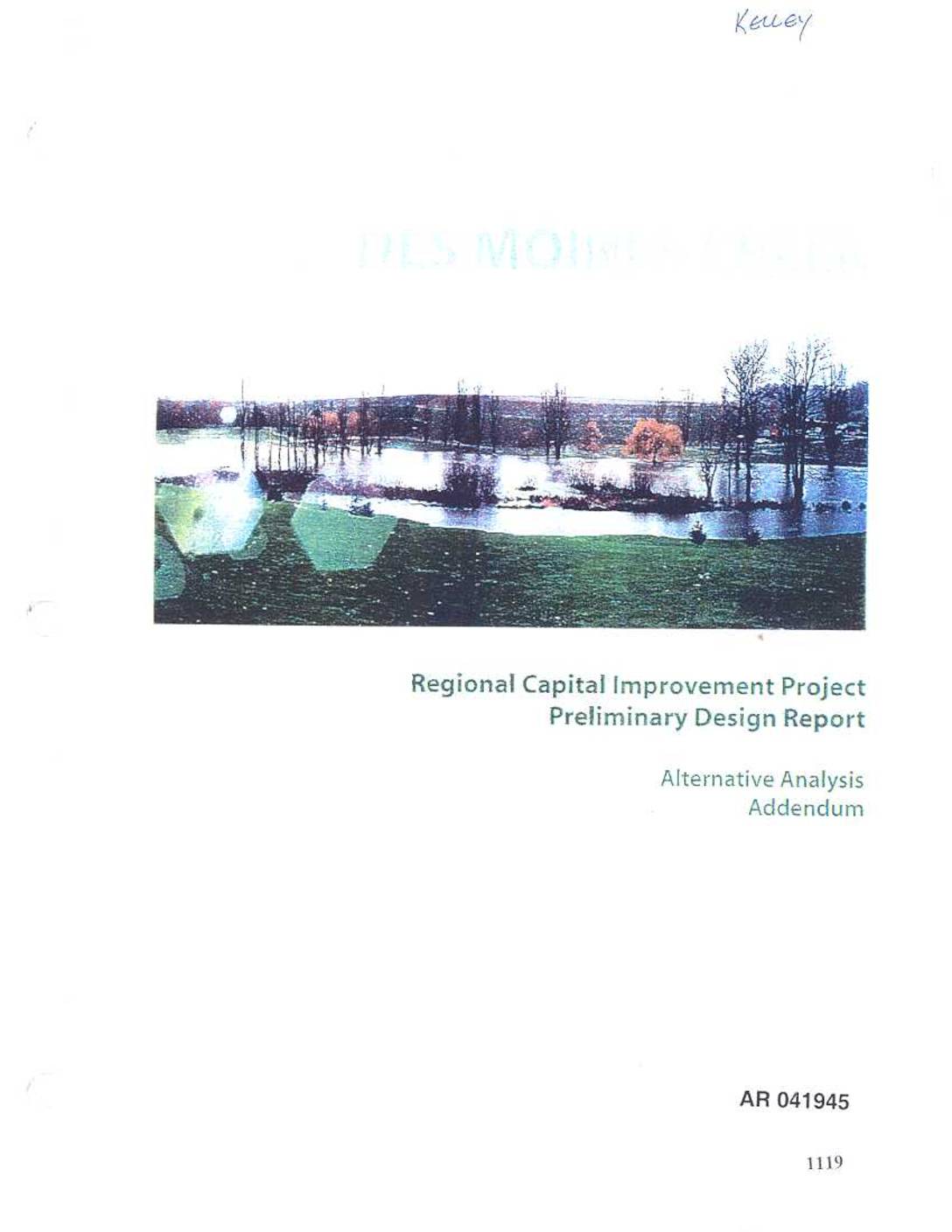
EXH AR041945: Des Moines Creek Regional Capital Improvement Project Preliminary Design Report — Alternative Analysis Addendum
Addendum to the Des Moines Creek Regional Capital Improvement Project Preliminary Design Report, prepared November 1, 1999 by King County Capital Improvement Project Design Team for the Des Moines Creek Basin Committee. Prepared for Tim Heydon (City of Des Moines), Tom Hubbard (Port Of Seattle), David Masters (King County), Don Monaghan (City of SeaTac), and -
 1999-10-21
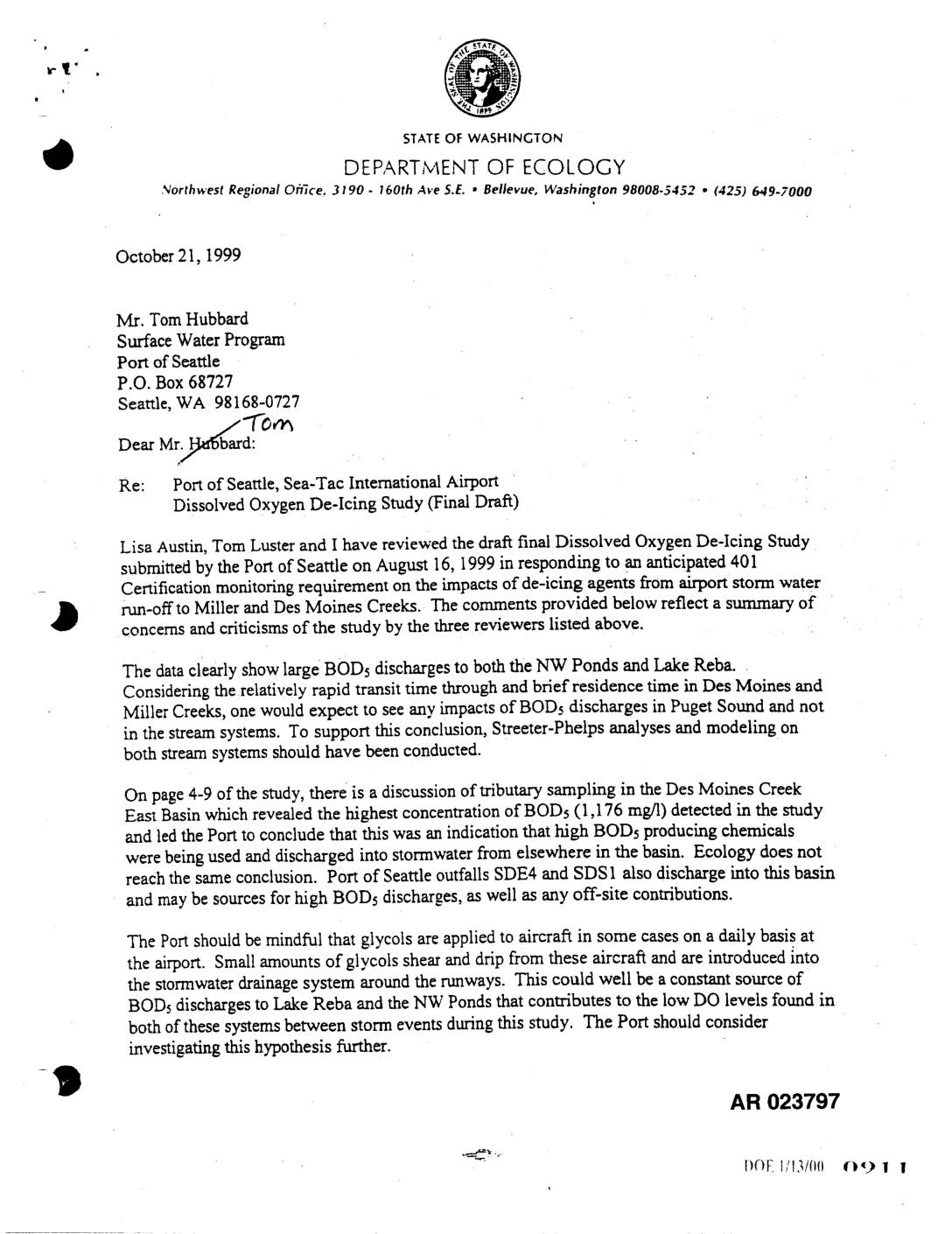
EXH AR023797: Ecology Letter – Dissolved Oxygen De-Icing Study Final Draft, STIA
In this October 1999 letter, the Washington State Department of Ecology reviewed a study by the Port of Seattle examining how de-icing chemicals used at Sea-Tac International Airport affect water quality in Miller and Des Moines Creeks. Ecology found significant deficiencies in the study, including incorrect water quality classifications, too few de-icing events sampled, and inadequate monitoring methods, concluding that dissolved oxygen levels in both creeks frequently failed to meet applicable standards. The agency requested that the Port resubmit the study with corrections before a determination could be made about whether de-icing operations were being properly managed to protect local waterways. -
 1999-10-21
EXH AR042698: Sea-Tac Airport Dissolved Oxygen Deicing Study and Ecology Response Letter
Dissolved Oxygen Deicing Study prepared by Cosmopolitan Engineering Group for Port Of Seattle Sea-Tac International Airport (AR042698, August 1999), examining impacts of de-icing agents from airport stormwater runoff on Miller Creek and Des Moines Creek, including BOD5 discharges to NW Ponds and Lake Reba. Accompanied by Washington State Department of Ecology (NWRO) response letter dated -
 1999-10-20
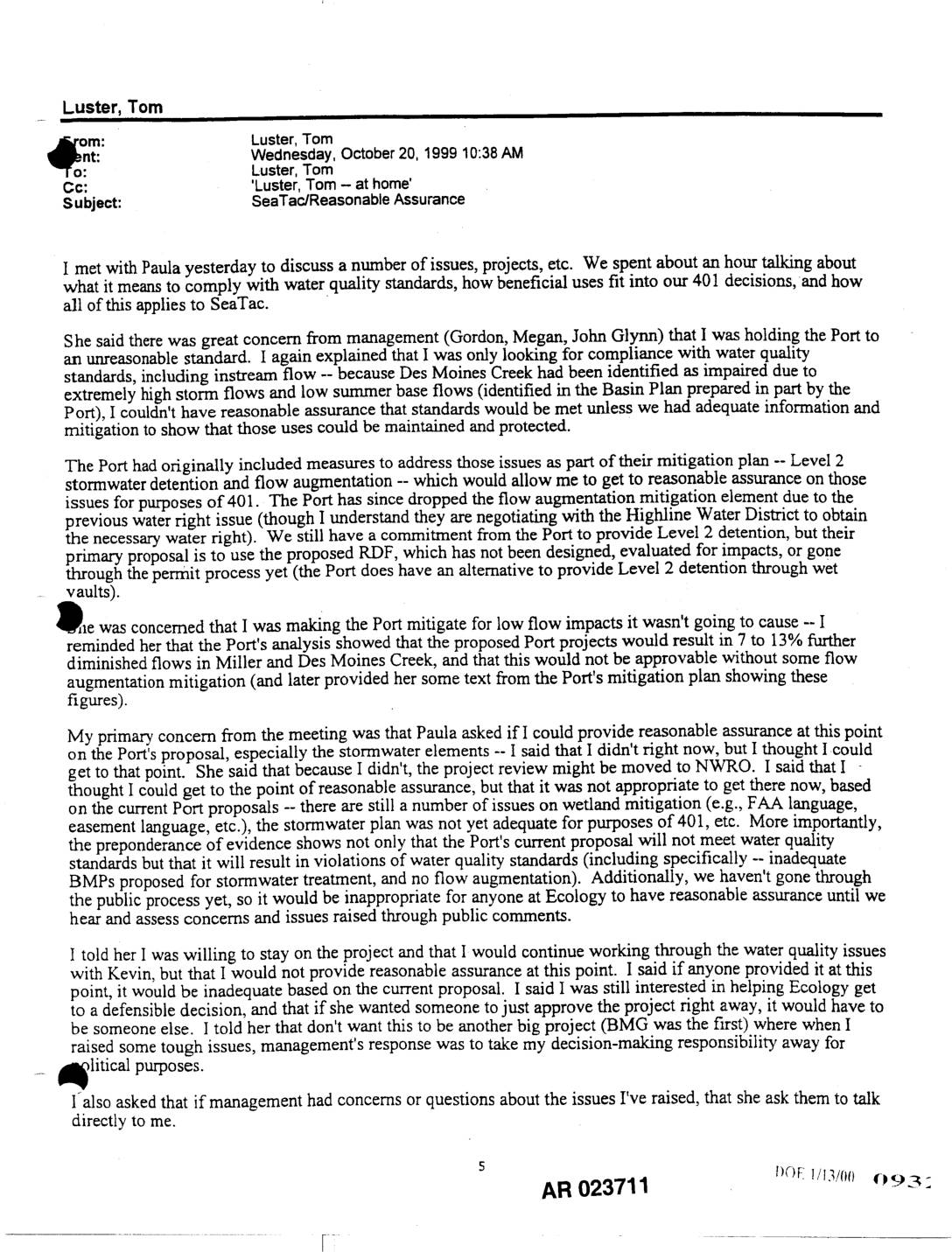
EXH AR023711: Internal Email — Tom Luster on Sea-Tac Third Runway 401 Certification and Reasonable Assurance
In this October 1999 internal memo, Washington State Department of Ecology staffer Tom Luster describes a meeting with his supervisor Paula regarding the agency's water quality review of Sea-Tac Airport expansion. Luster explains that he cannot yet provide 'reasonable assurance' that the Port of Seattle's proposal will meet water quality standards for Des Moines Creek, citing inadequate stormwater treatment plans and the Port's removal of flow augmentation measures from its mitigation plan. He expresses concern that management pressure to approve the project quickly could compromise the integrity of the regulatory review process. -
 1999-09-16
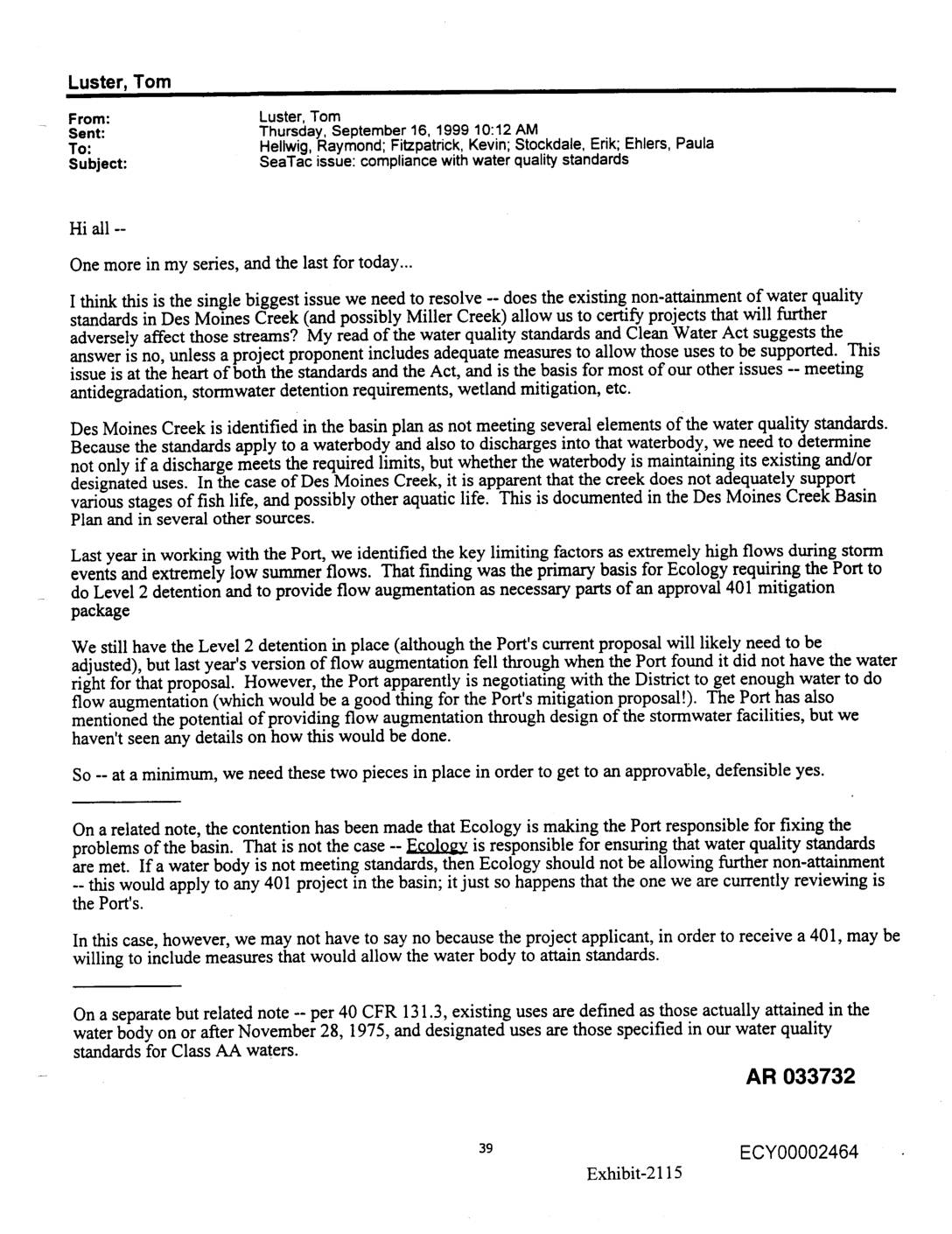
Exhibit 2115: Internal Email — Ecology on Sea-Tac Water Quality Standards Compliance, Des Moines Creek 401 Certification
Internal email from Tom Luster (Ecology) to Raymond Hellwig, Kevin Fitzpatrick, Erik Stockdale, and Paula Ehlers, dated September 16, 1999, regarding SeaTac Airport 401 certification and compliance with water quality standards under the Clean Water Act. Discusses non-attainment of water quality standards in Des Moines Creek and Miller Creek, antidegradation requirements, Level 2 detention requirements, -
 1999-09-16
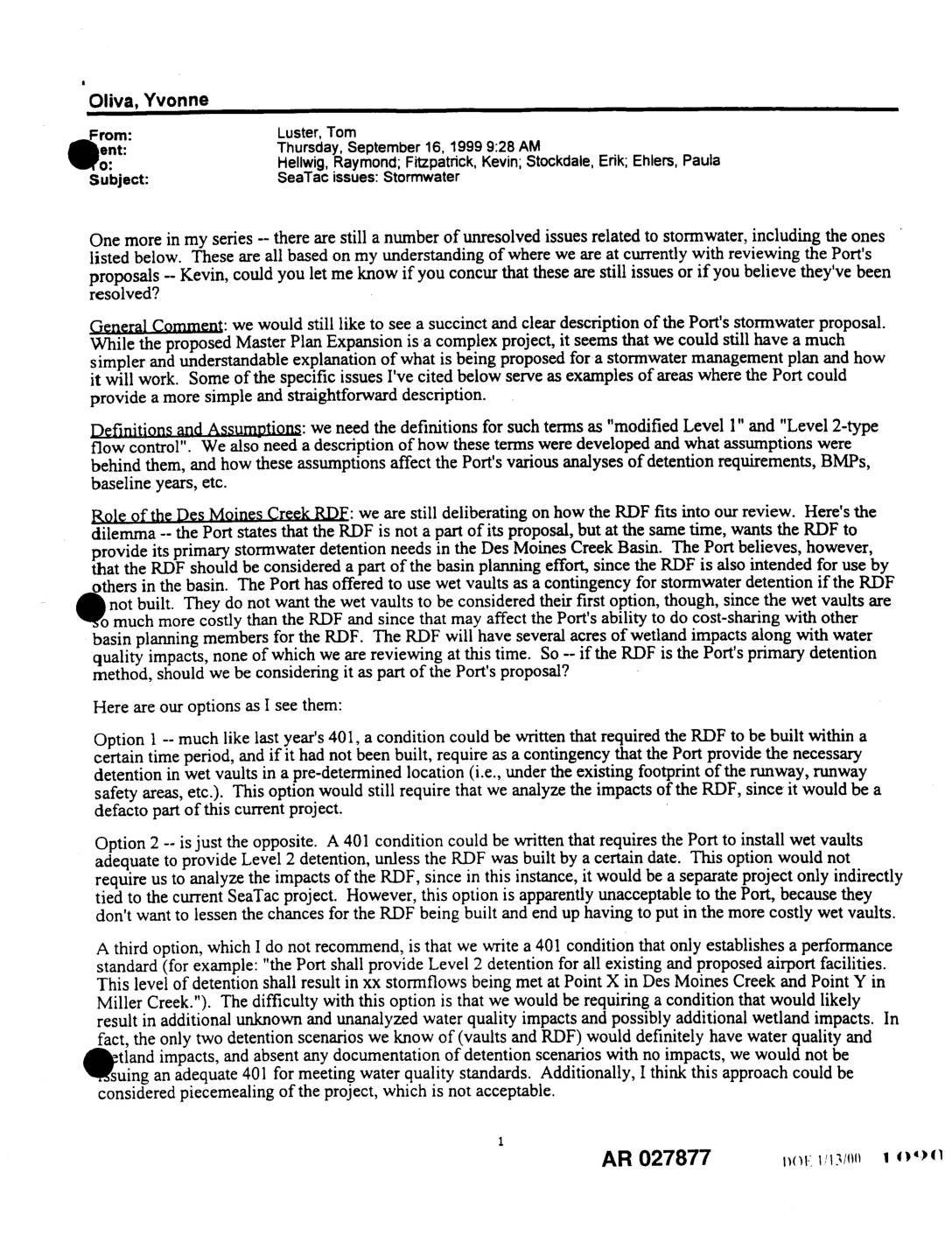
EXH AR027877: Internal Email on Unresolved Sea-Tac Stormwater Issues — 401/CZM Review, Des Moines Creek RDF, and Water Quality BMPs
Internal email from Tom Luster (Washington State Department of Ecology) to Raymond Hellwig, Kevin Fitzpatrick, Erik Stockdale, and Paula Ehlers dated September 16, 1999, outlining unresolved stormwater issues in the 401/CZM review of Port Of Seattle’s Sea-Tac Airport Master Plan Expansion. Topics include: definitions of ‘modified Level 1’ and ‘Level 2-type flow control’; role of -
 1999-09-07
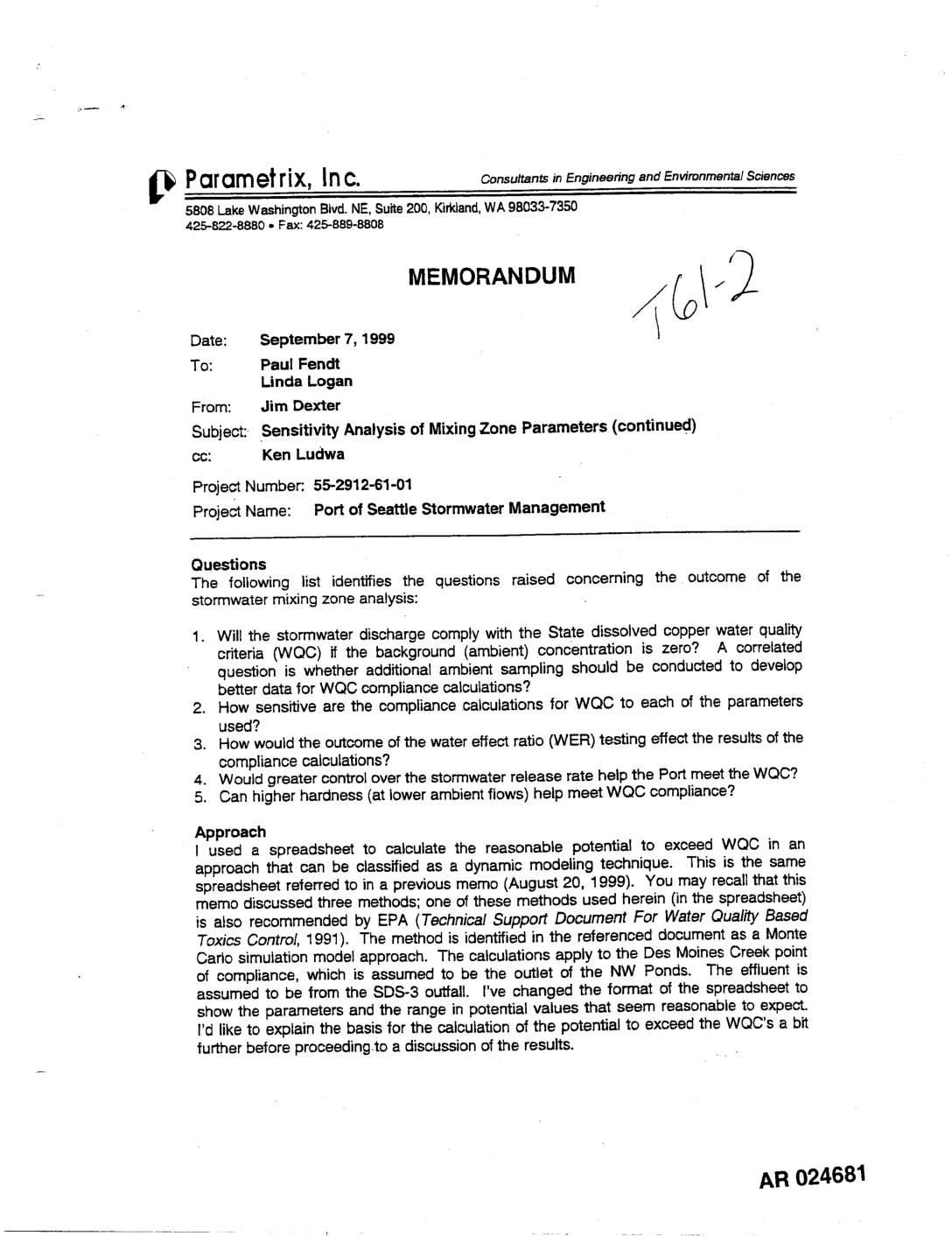
EXH AR024681: Sensitivity Analysis Mixing Zone Parameters (cont.) — Stormwater Mgmt
A 1999 technical memorandum from Parametrix, Inc. analyzes whether stormwater discharged near Des Moines Creek meets Washington State dissolved copper water quality criteria, using a Monte Carlo simulation model. The analysis finds that copper levels in the stormwater effluent consistently exceed water quality standards regardless of background ambient concentrations, with dilution factors generally less than 2. The study evaluates several potential remedies, including increased onsite detention, expanded mixing zones, and water effect ratio adjustments, finding that the Water Effect Ratio (WER) is the most influential factor in achieving compliance.