TagDepartment Of Commerce(40)
-
 2020-05-29
Stantec Sea-Tac Airport Communities Impact Study: Appendix A, Section 5 – Noise & Vibration
This 2020 report examines how noise from Seattle-Tacoma International Airport has changed between 1997 and 2019, focusing on the impact of aircraft takeoffs, landings, and overflights on nearby communities. It explains key noise measurement concepts—including decibels, Sound Exposure Level (SEL), and the Day-Night Average Sound Level (DNL)—and notes that while DNL is the federal regulatory standard used by the FAA, individual SEL events are often what residents find most disruptive. The report highlights a growing tension between how federal agencies measure and regulate aircraft noise and the real-world experience of people living under flight paths. -
 2020-05-29
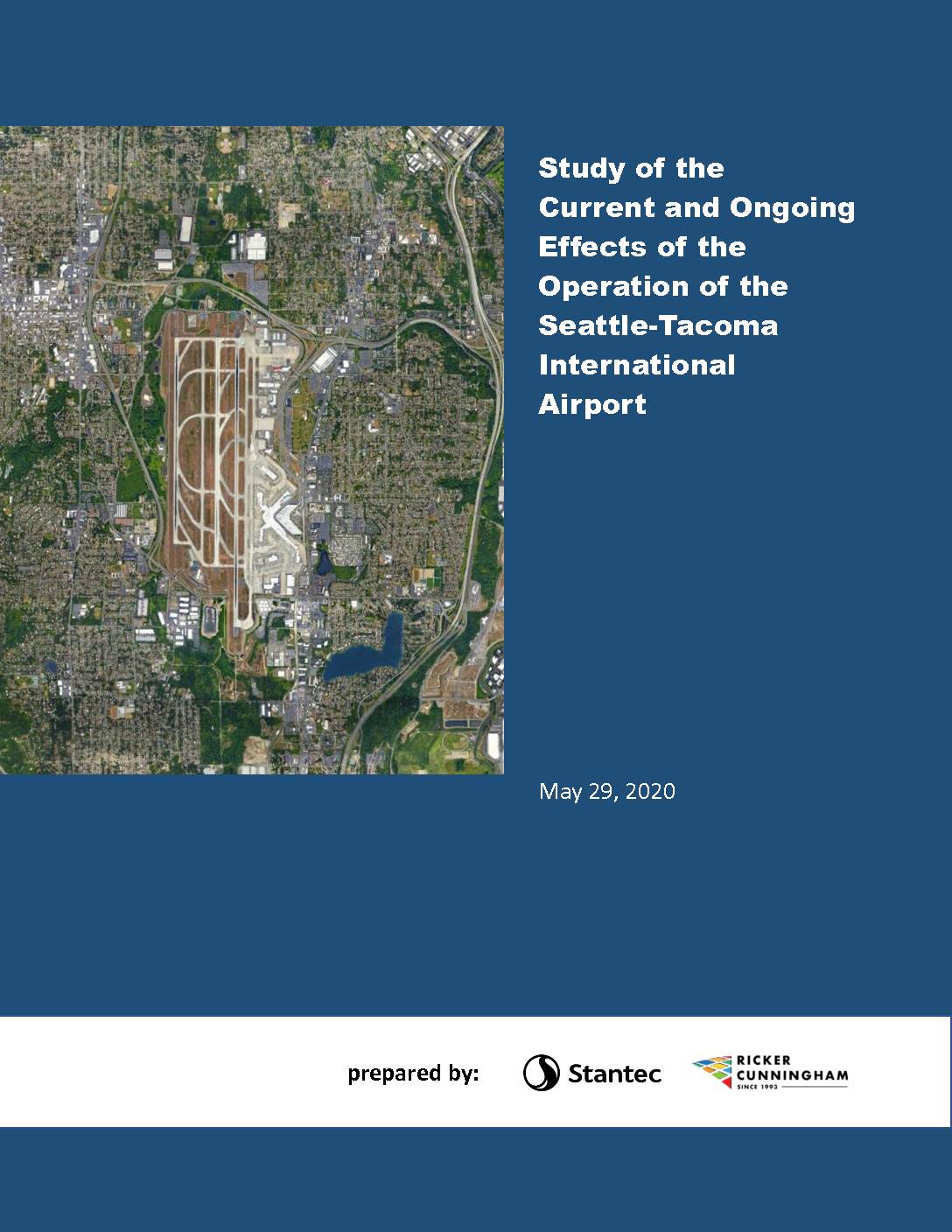
Study of the current and ongoing effects of the operation of the Seattle-Tacoma International Airport
This May 2020 report, prepared by Stantec for the Washington State Department of Commerce under legislative authorization ESSB 6032, examines the current and ongoing effects of operating Seattle-Tacoma International Airport (Sea-Tac). It assesses a range of impacts on surrounding communities resulting from airport operations. The study serves as a key resource for policymakers evaluating noise and other environmental effects associated with Sea-Tac's continued operation. -
 2020-05-29
Stantec Sea-Tac Airport Communities Impact Study: Section 2 – Background (Appendix A, pp. 9–11)
This background section traces the history of Seattle-Tacoma International Airport from its origins as a World War II military airfield to its current status as the eighth busiest U.S. airport, handling 51.8 million passengers in 2019. It covers key milestones including the airport's 1949 opening for commercial service, the controversial addition of a third runway in 2008, and the surrounding communities that have been affected by the airport's growth. The document also outlines the Port of Seattle's future expansion plans under its Sustainable Airport Master Plan, which aims to accommodate nearly 500,000 operations and 56 million passengers annually by 2027. -
 2020-02-28
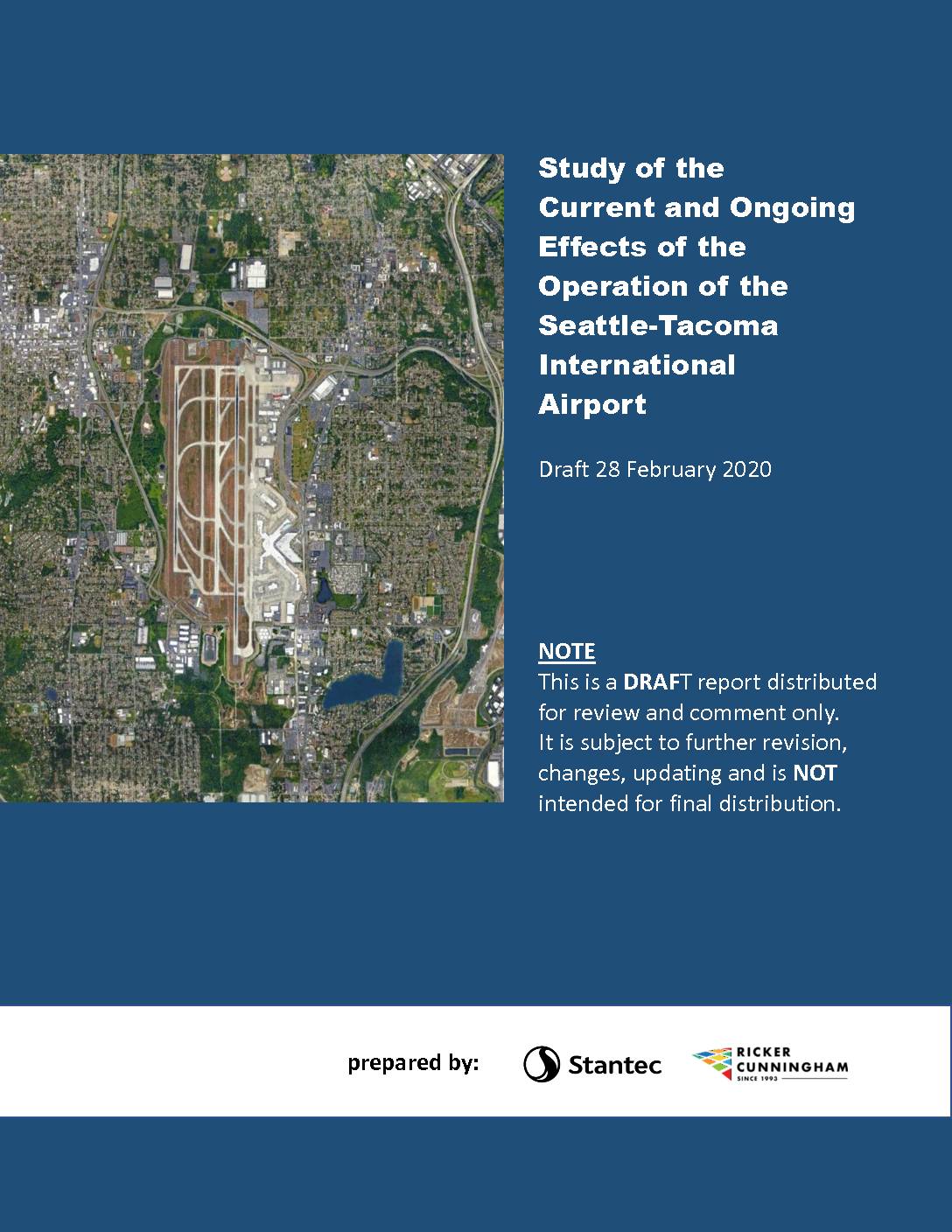
Study of the current and ongoing effects of the operation of the Seattle-Tacoma International Airport
★ 32This draft report, prepared by Stantec and Ricker Cunningham for the Washington State Department of Commerce under ESSB 6032, examines the current and ongoing effects of operating Seattle-Tacoma International Airport (Sea-Tac). It covers the airport's broader impacts on surrounding communities, likely including noise, land use, and environmental concerns. The report was released in draft form on February 28, 2020, for review and comment only, and was not intended for final distribution at that time. -
 2020-01-28
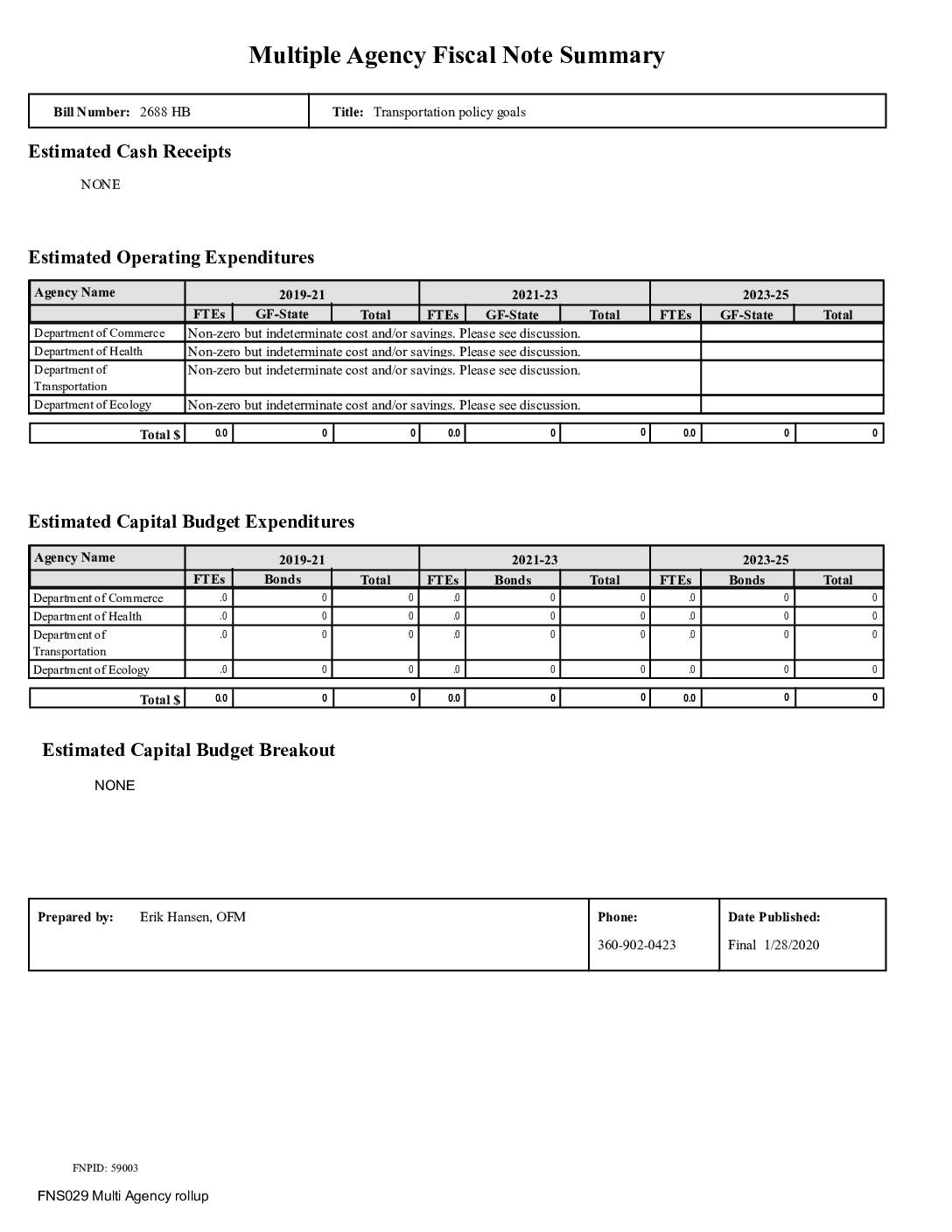
Multiple agency fiscal note summary: Transportation policy goals (HB 2688)
House Bill 2688 proposes changes to Washington State's transportation system policy goals, requiring the Department of Transportation (WSDOT) to evaluate transportation projects submitted to the legislature using updated policy criteria. Multiple state agencies — including the Departments of Commerce, Health, Ecology, and the Interagency Council on Health Disparities — would be required to participate in these project evaluations, along with representatives from vulnerable and highly impacted communities. The fiscal impact on participating agencies is estimated to be non-zero but indeterminate, with the Department of Commerce alone estimating costs of between $21,000 and $35,000 per year. -
 2019-11-27
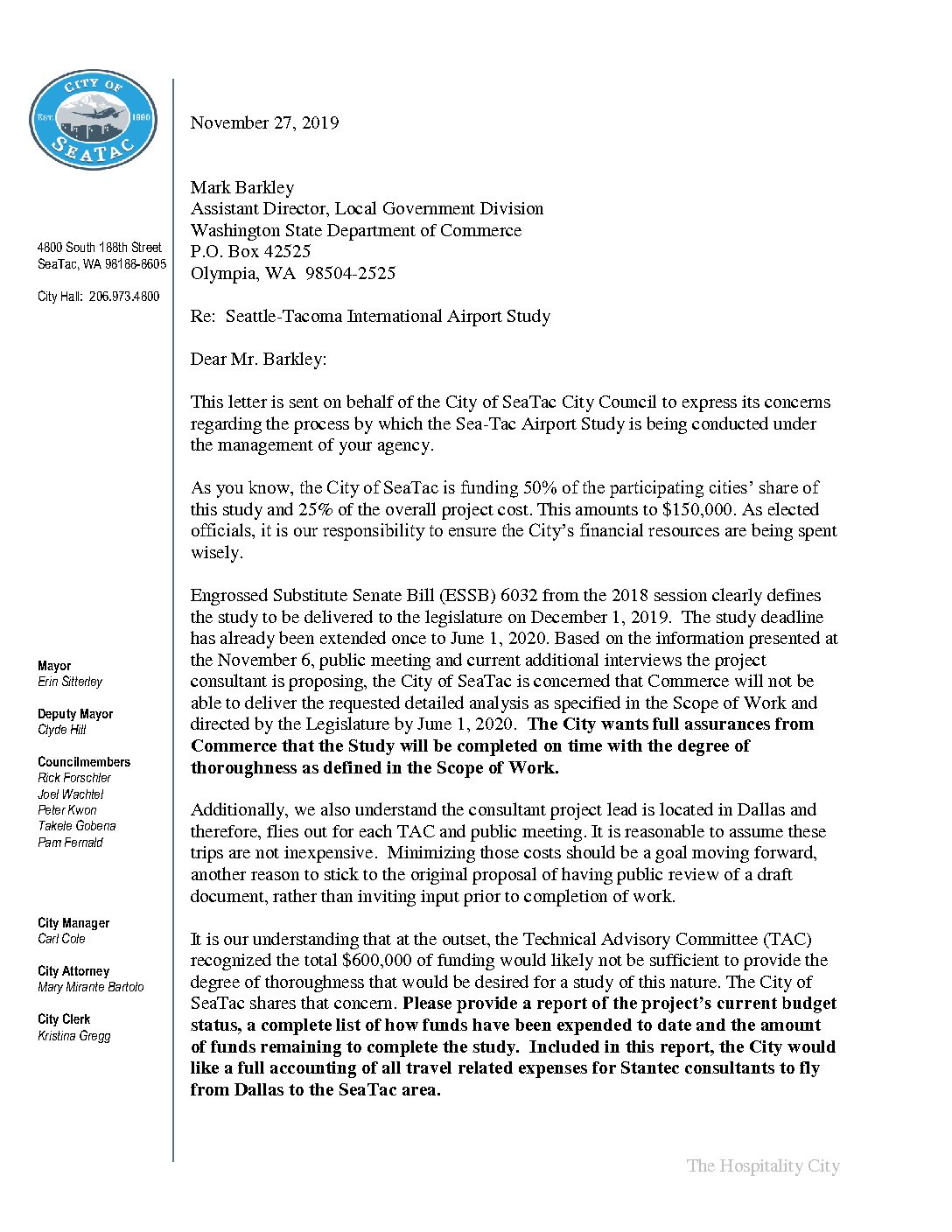
Letter from City of Sea-Tac Mayor Erin Sitterley to Mark Barkley Regarding Seattle-Tacoma International Airport Study
In a November 2019 letter to the Washington State Department of Commerce, SeaTac Mayor Erin Sitterley raised concerns about the management of the state-mandated Seattle-Tacoma International Airport Study, which SeaTac was funding to the tune of $150,000. The city questioned whether the study's consultant, Stantec, had strayed from the original technical scope of work, cited worries about monitoring stations placed outside the defined study area, and expressed doubt that the study could be completed on time and within budget. The letter demanded a full accounting of project expenditures—including consultant travel costs from Dallas—and requested that public input be limited until after a draft report was reviewed by the Technical Advisory Committee. -
 2019-11-27
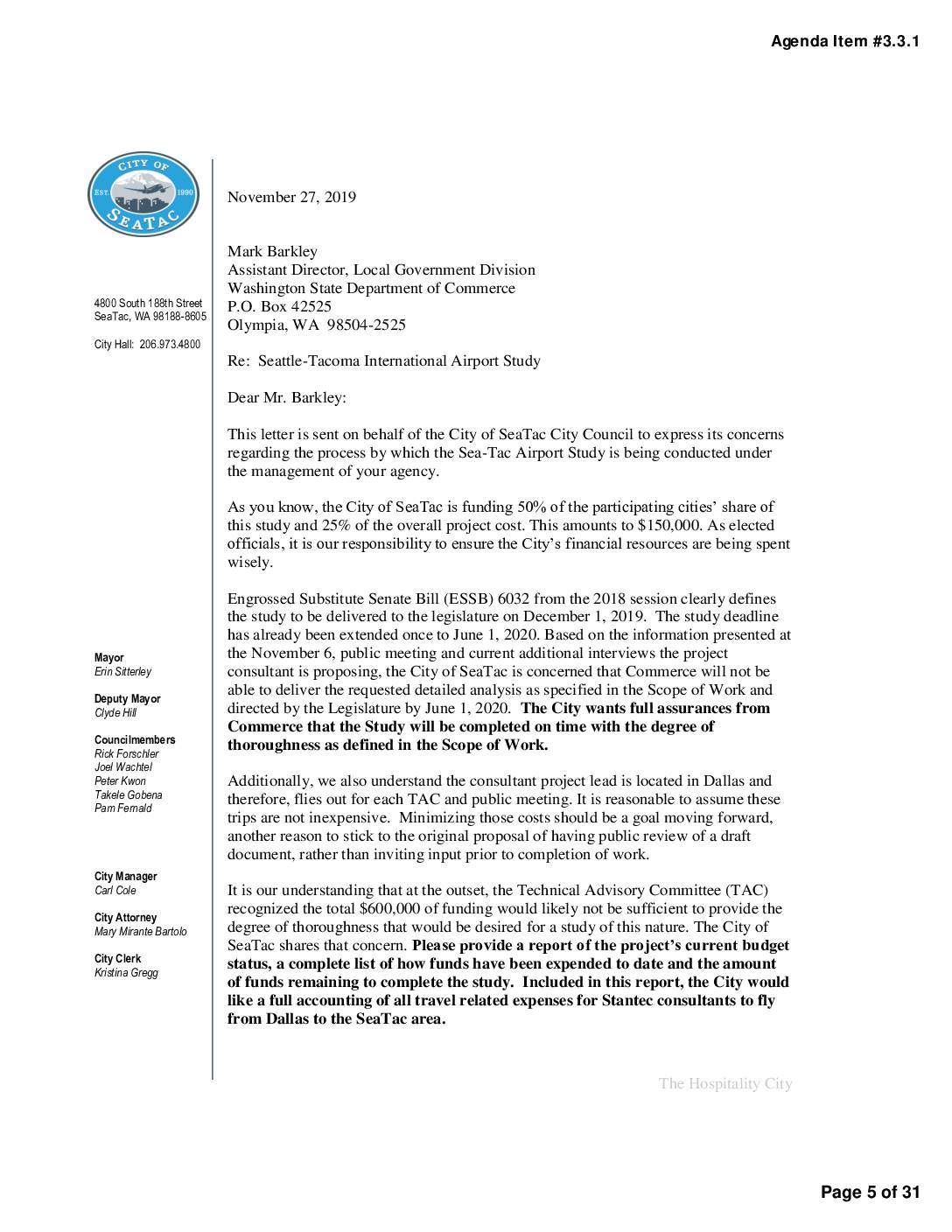
Letter to Washington State Department of Commerce regarding Seattle-Tacoma International Airport Study
In a November 2019 letter to the Washington State Department of Commerce, SeaTac Mayor Erin Sitterley raised concerns about the management of the Seattle-Tacoma International Airport Study, which SeaTac is funding to the tune of $150,000. The city questioned whether consultant Stantec had strayed from the study's original technical scope, flagged potentially wasteful spending on travel from Dallas, and expressed doubt that the study would be completed on time and thoroughly by the June 2020 deadline. The city demanded a full budget accounting and requested that public input be limited until after a draft report was completed and reviewed by the Technical Advisory Committee. -
SeaTac City Council meeting, city questions study of airport
Airport study questioned A letter, lengthily discussed by the Council Tuesday night, was signed by Mayor Erin Sitterley because the Council wants to “express its concerns regarding the process by which the Sea-Tac Airport Study is being conducted under the management” of the state Department of Commerce. Burien and Des Moines have not expressed that -
A Letter To Gary Idleburg re. Commerce Impact Study Public Meeting
Mr. Idleburg is a Senior Planner at the Washington Department Of Commerce and is overseeing the Sea-Tac Airport Impact Study. This letter is in reference to the public meeting held 6 November, 2019 at Burien City Hall. Hi Mr. Idleburg, I wanted to add to my somewhat discombobulated public comment last night. Frankly, I was -
Commerce Study Public Meeting
The public is invited to learn about a study of impacts of Sea-Tac Airport on Wednesday, Nov. 6, 2019 at Burien City Hall. This free, open meeting will run from 7 – 9 p.m. The 2018 Washington State Legislature adopted an operating budget requiring the Department of Commerce to contract for a study of the