TagClean Water Act(245)
-
 2002-10-23
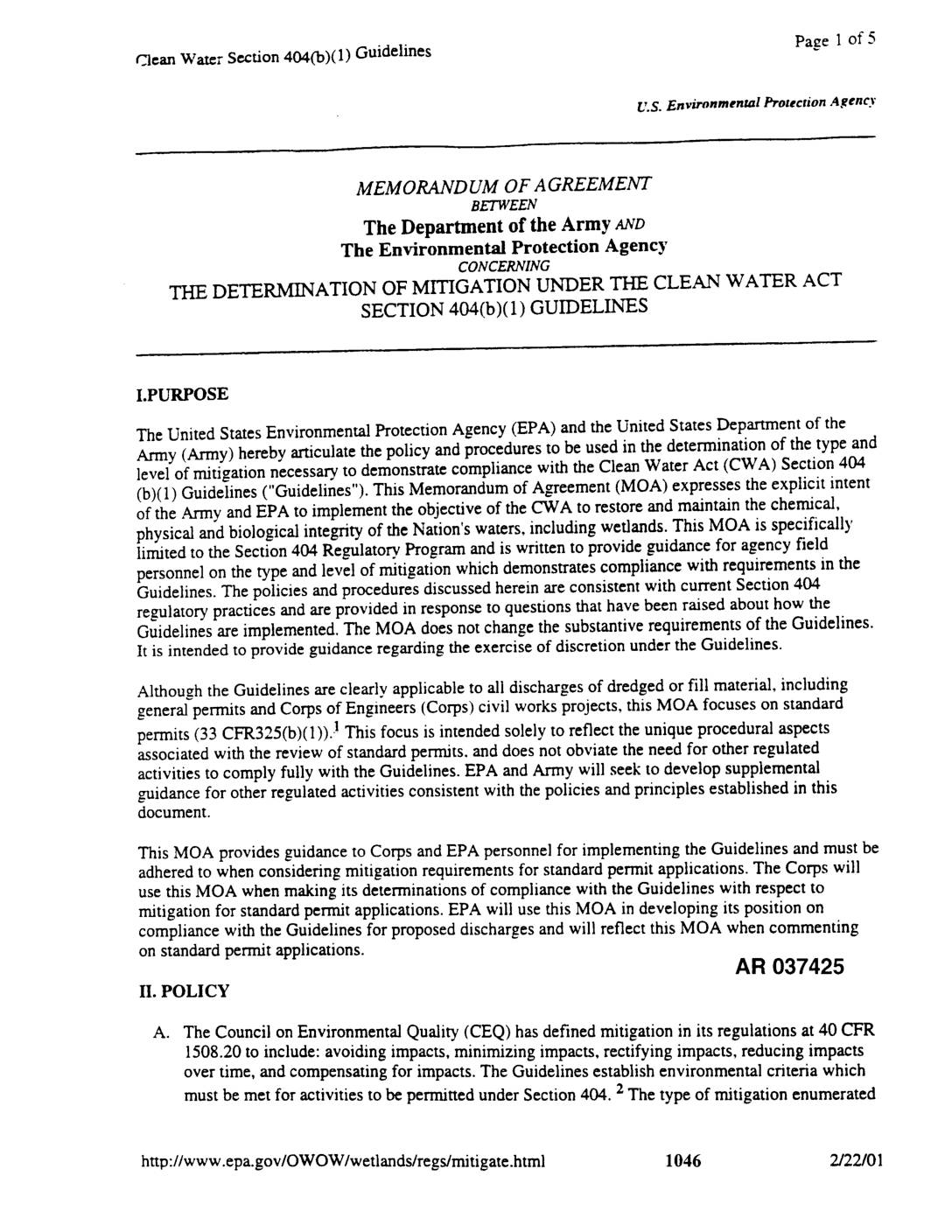
EXH AR037425: Memorandum of Agreement Between the Department of the Army and the Environmental Protection Agency Concerning the Determination of Mitigation Under the Clean Water Act Section 404(b)(1) Guidelines
Memorandum of Agreement (MOA) between the U.S. Department of the Army and the U.S. Environmental Protection Agency (EPA) articulating policy and procedures for determining type and level of mitigation required under Clean Water Act (CWA) Section 404(b)(1) Guidelines. AR037425. Covers three mitigation types: avoidance, minimization, and compensatory mitigation; establishes no net loss of wetlands goal; -
 2002-10-22
EXH AR015669: Direct Testimony of Erik Stockdale on Behalf of Ecology — PCHB No. 01-160
Direct testimony of Erik Stockdale, Senior Wetlands Specialist at Washington State Department of Ecology, submitted in PCHB No. 01-160 before the Pollution Control Hearings Board. Stockdale, a certified Professional Wetlands Scientist, evaluates wetland impacts from Port Of Seattle Master Plan Update projects at Seattle-Tacoma International Airport (STIA). Project will fill 18.37 acres of palustrine freshwater -
 2002-10-22
EXH AR012954: Declaration of Michael Cheyne — Port Of Seattle Third Runway, PCHB 01-133
Declaration of Michael Cheyne, Port Of Seattle project manager for the Sea-Tac third runway construction, filed in PCHB case No. 01-133 (Airport Communities Coalition v. Department of Ecology and Port Of Seattle). Cheyne describes his role overseeing administration, planning, design, and construction of the Sea-Tac third runway as part of the Master Plan Update (MPU). -
 2002-10-22
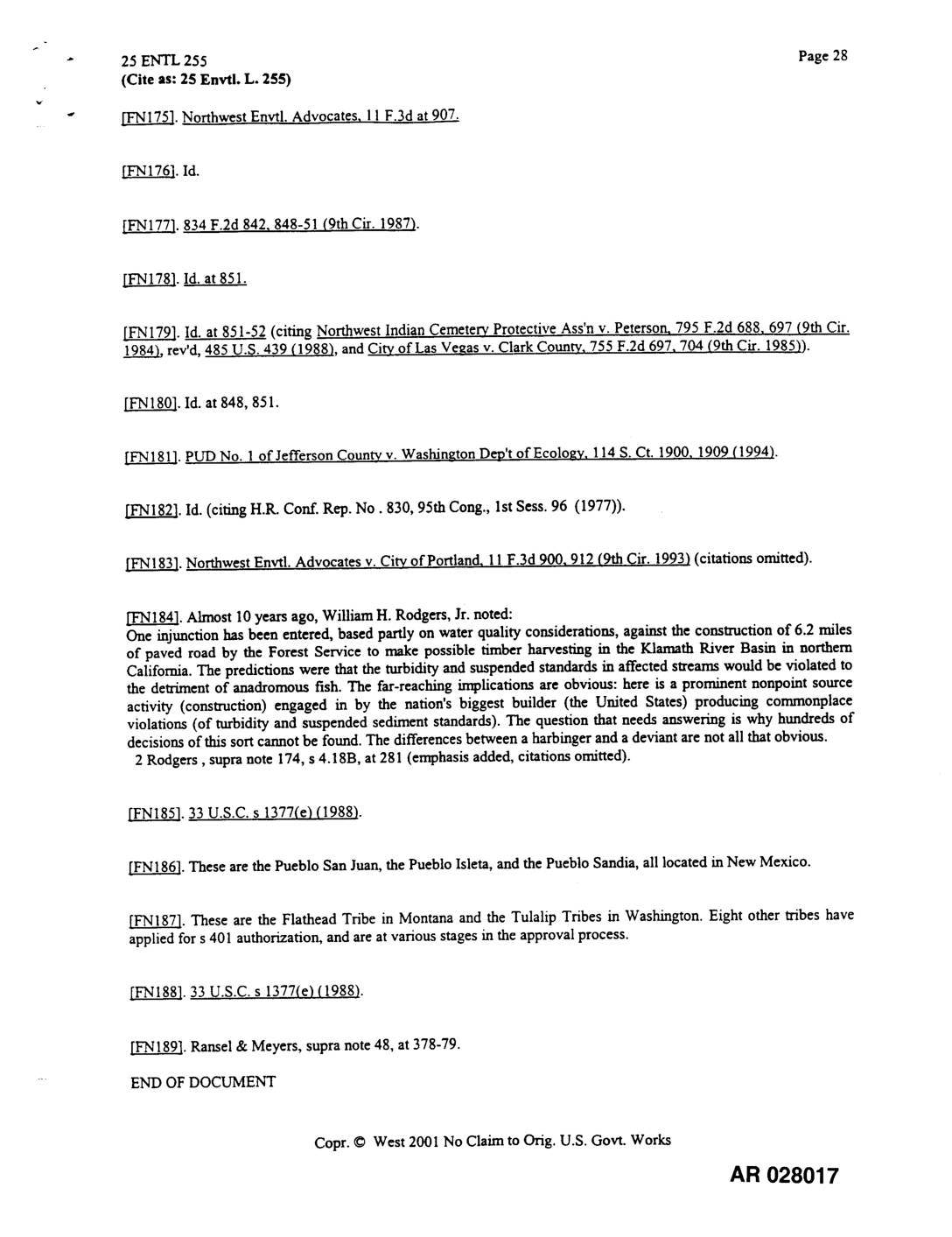
EXH AR028017: 25 Environmental Law 255 — Footnotes on Clean Water Act Section 401, Water Quality Standards, and Nonpoint Source Enforcement
Pages 26-28 of law review article published at 25 Envtl. L. 255, containing footnotes FN148–FN189 covering Clean Water Act (CWA) enforcement topics including: NPDES permitting, nonpoint source pollution, Section 303(d) TMDL lists, Section 401 water quality certification, Section 1313(d), 33 U.S.C. ss 1319, 1341, 1365, 1377(e); cases including Northwest Envtl. Advocates v. City of Portland -
 2002-10-22
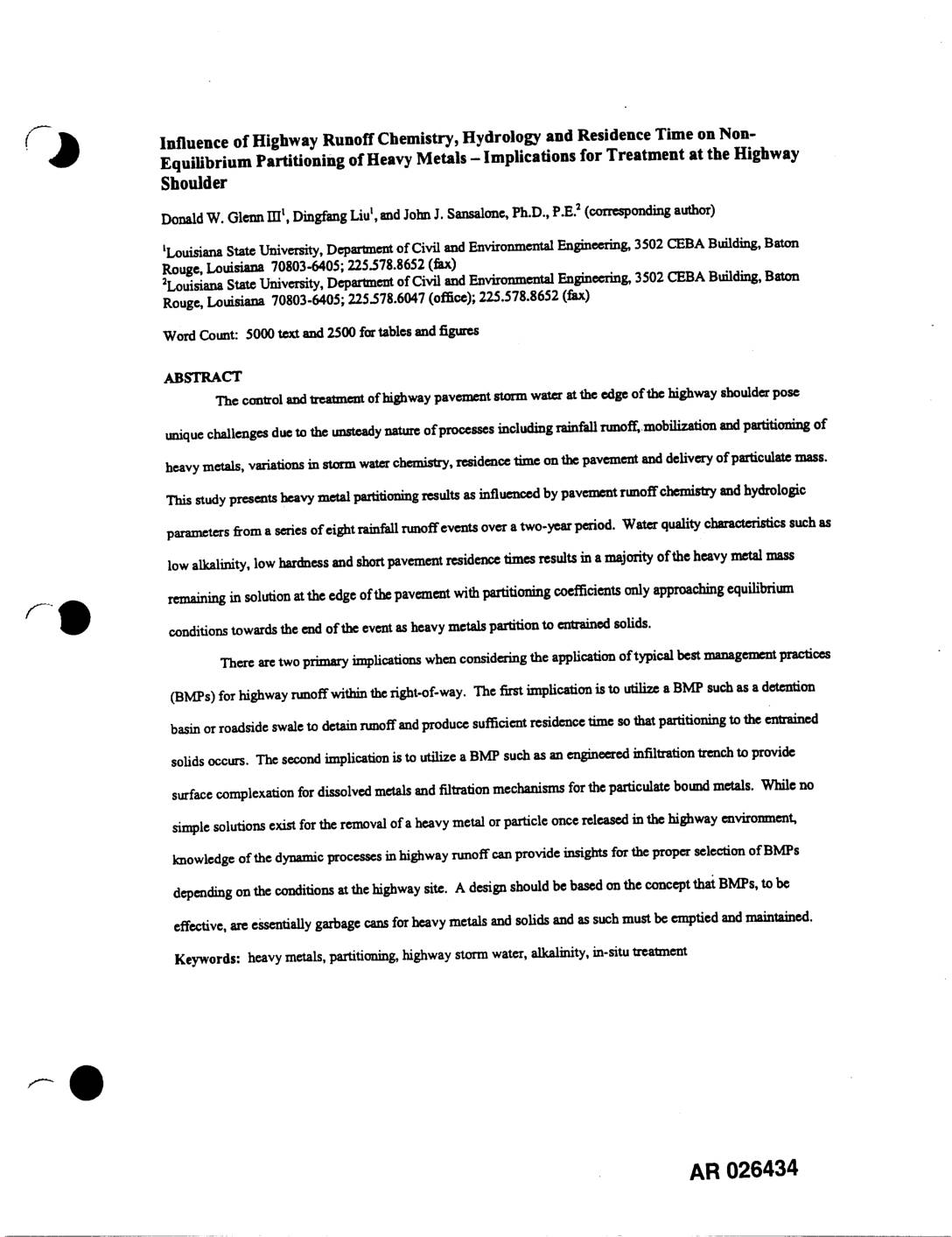
EXH AR026434: Highway Runoff Chemistry Hydrology Residence Time Non-Equilibrium Partitioning Heavy Metals Treatment
This research study examines how heavy metals in highway stormwater runoff behave as water flows off pavement, finding that most heavy metals remain dissolved rather than attaching to solid particles due to low alkalinity and short travel times on the pavement surface. The study, conducted on Interstate 75 in Cincinnati over two years, explores how best management practices like detention basins or infiltration trenches could be used to capture these metals before they reach receiving waters. -
 2002-10-22
EXH AR034586: Compensating for Wetland Losses Under the Clean Water Act
National Research Council publication by the Committee on Mitigating Wetland Losses, Board on Environmental Studies and Toxicology, and Water Science and Technology Board titled ‘Compensating for Wetland Losses Under the Clean Water Act.’ AR034586, Exhibit-2178. Covers mitigation compliance standards including jurisdictional hydrology, wetland delineation, hydrological performance standards, design standards for mitigation sites, USACE wetland filling -
 2002-10-22
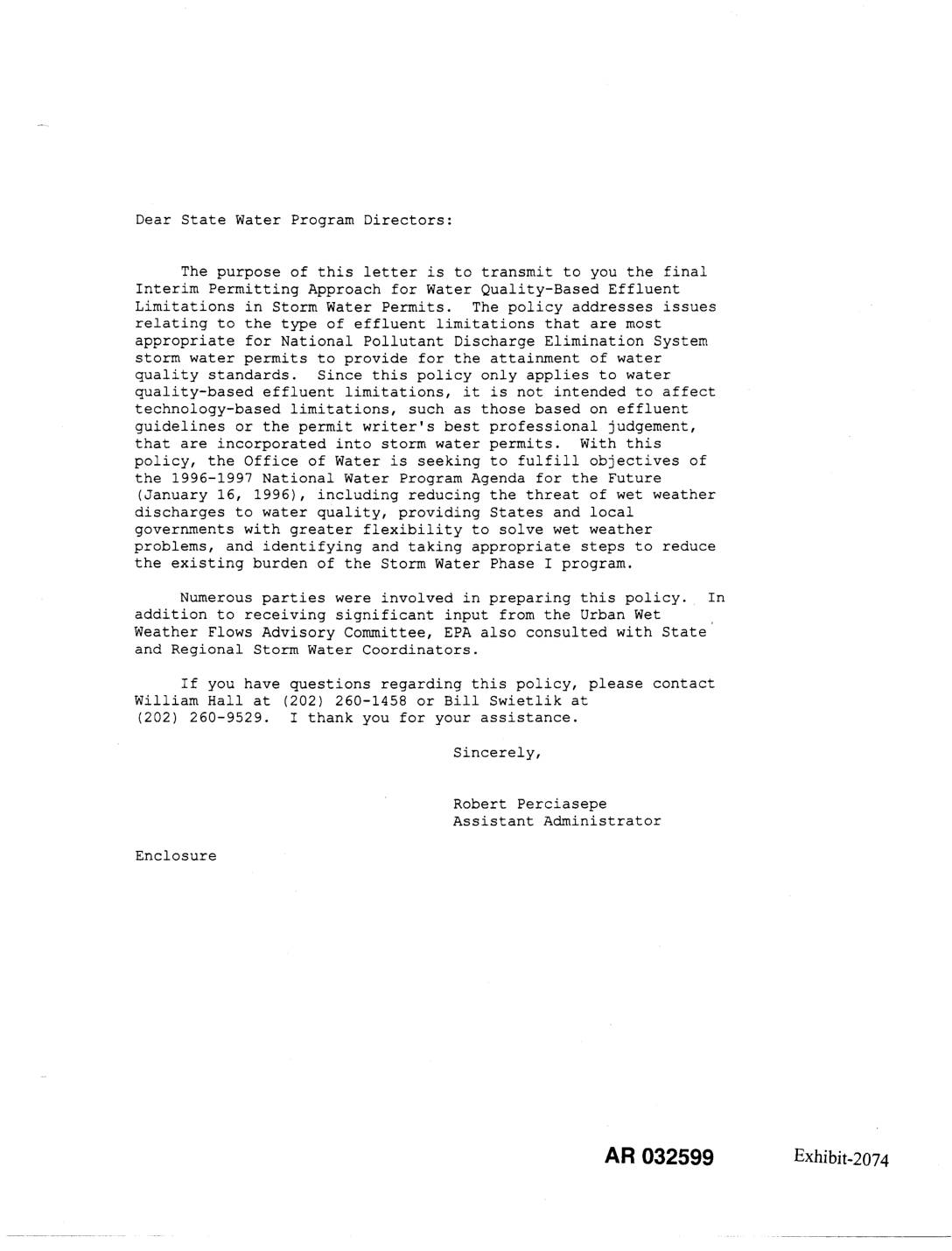
EXH AR032599: Interim Permitting Approach for Water Quality-Based Effluent Limitations in Storm Water Permits
Letter and memorandum from EPA Assistant Administrator Robert Perciasepe transmitting the final Interim Permitting Approach for Water Quality-Based Effluent Limitations in Storm Water Permits to State Water Program Directors and EPA Water Management Division Directors. The policy addresses NPDES storm water permit effluent limitations, adopting best management practices (BMPs) in lieu of numeric water quality-based -
 2002-10-22
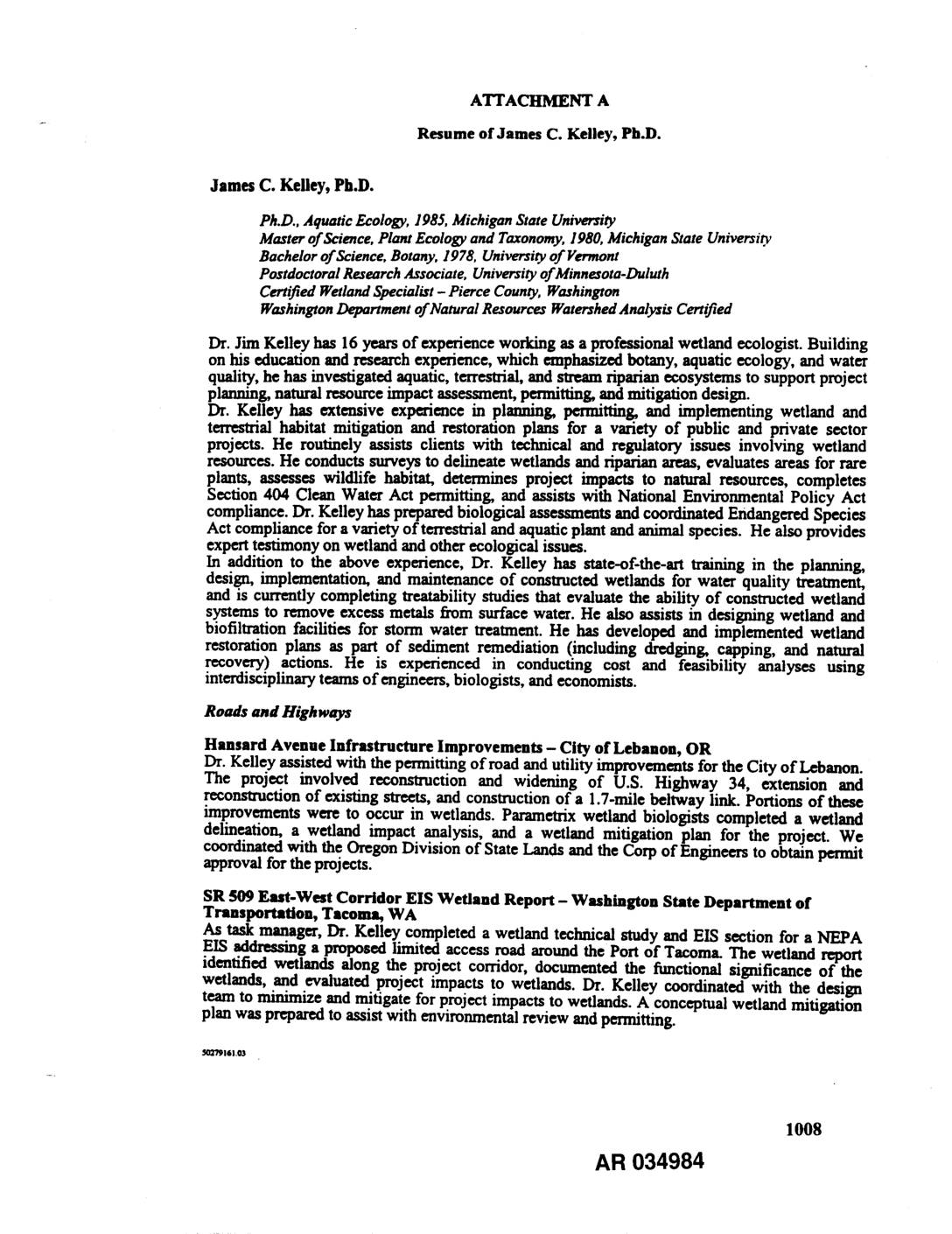
EXH AR034984: Resume of James C. Kelley, Ph.D. — Wetland Ecologist, Parametrix
Resume of James C. Kelley, Ph.D., wetland ecologist with Parametrix, covering 16 years of professional experience in aquatic ecology, wetland delineation, mitigation planning, NEPA compliance, Section 404 Clean Water Act permitting, and Endangered Species Act compliance. Projects include SR 509 East-West Corridor EIS Wetland Report for Washington State Department of Transportation (Port of Tacoma), Port -
 2002-10-21
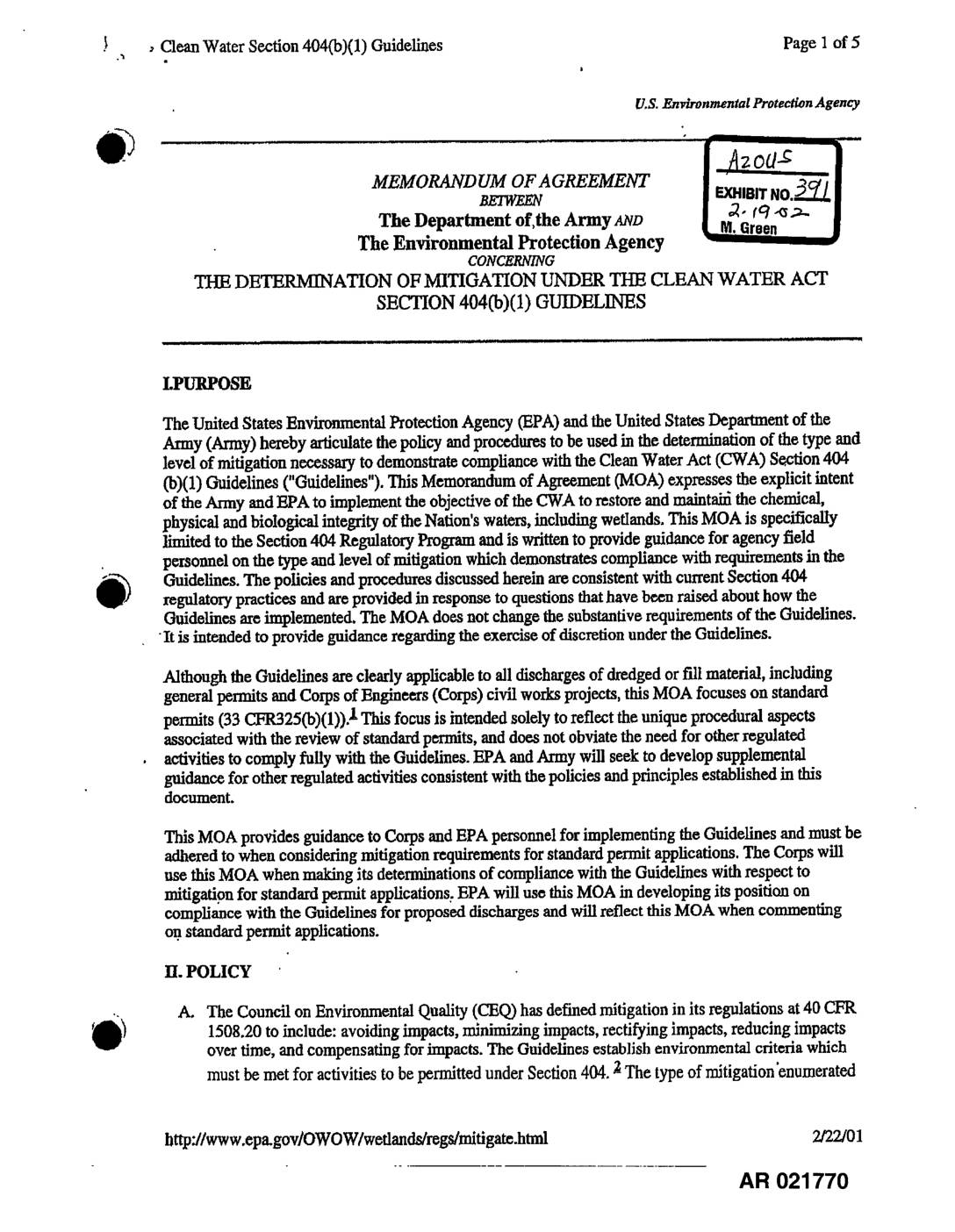
EXH 391: Army-EPA MOA – Mitigation Determination Under CWA Section 404(b)(1)
This 2001 Memorandum of Agreement between the U.S. Army and the EPA outlines the policies and procedures for determining what types of mitigation are required when issuing permits for discharging dredged or fill material into waters under Clean Water Act Section 404. It establishes a three-step mitigation sequence — first avoiding impacts, then minimizing unavoidable impacts, and finally providing compensatory mitigation for any remaining harm — with a goal of no overall net loss of wetlands. The document provides guidance to Army Corps of Engineers and EPA field personnel on how to evaluate standard permit applications in compliance with these environmental protection standards. -
 2002-10-21
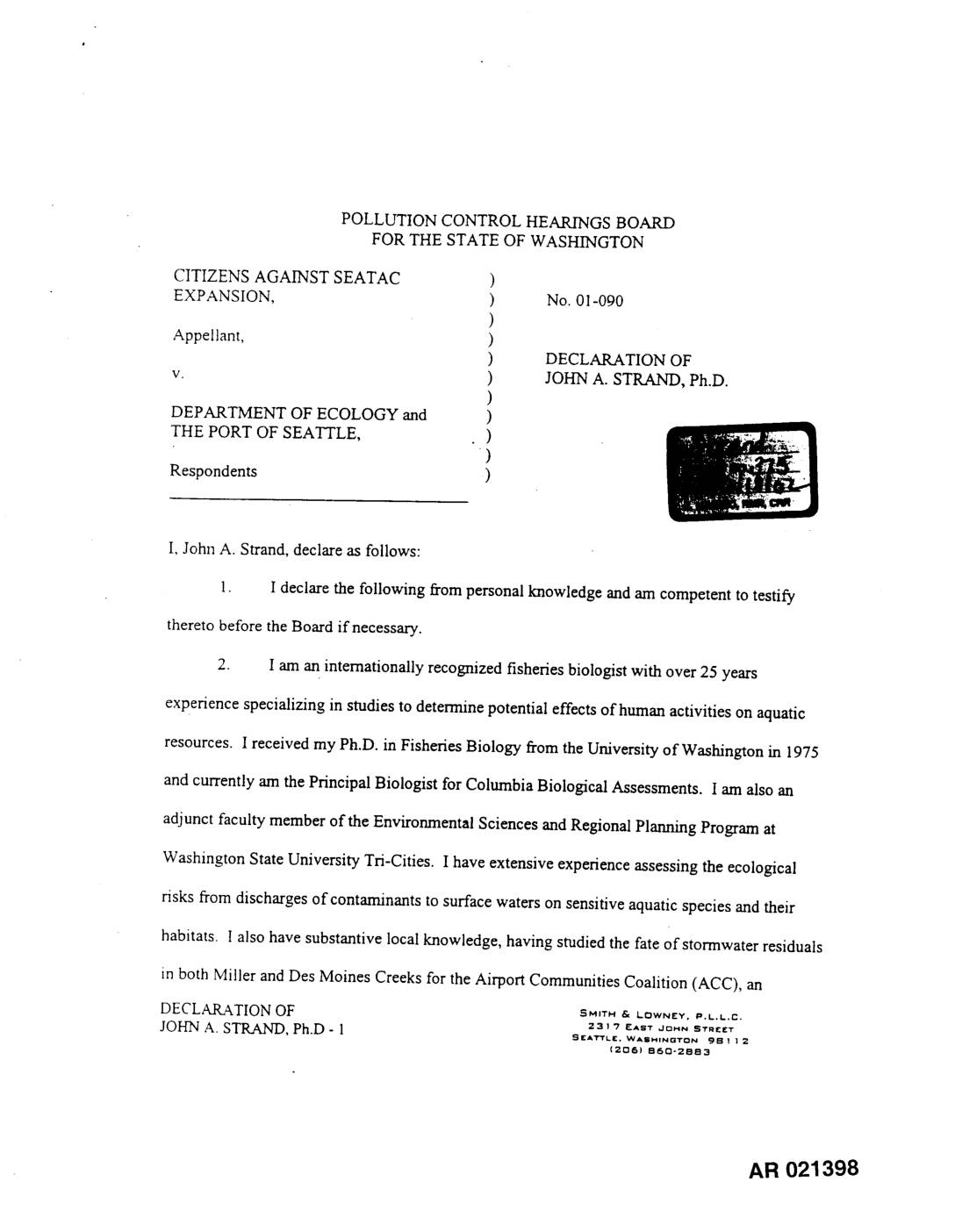
EXH AR021398: Declaration John A. Strand PhD Support CASE Appeal Stay NPDES Major Modification PCHB 01-090
In this 2001 declaration filed with Washington State's Pollution Control Hearings Board, fisheries biologist Dr. John A. Strand argues that proposed modifications to the Port of Seattle's stormwater discharge permit would harm Walker and Gilliam Creeks near Sea-Tac Airport, which support salmon, trout, and other aquatic life. Dr. Strand contends that Ecology failed to identify specific locations of new construction-related stormwater outfalls, denying the public a meaningful chance to assess environmental impacts. He supports a stay of the permit modification until its compliance with the Clean Water Act can be fully reviewed.