TagAirspace Study(26)
-
 1982-09-01
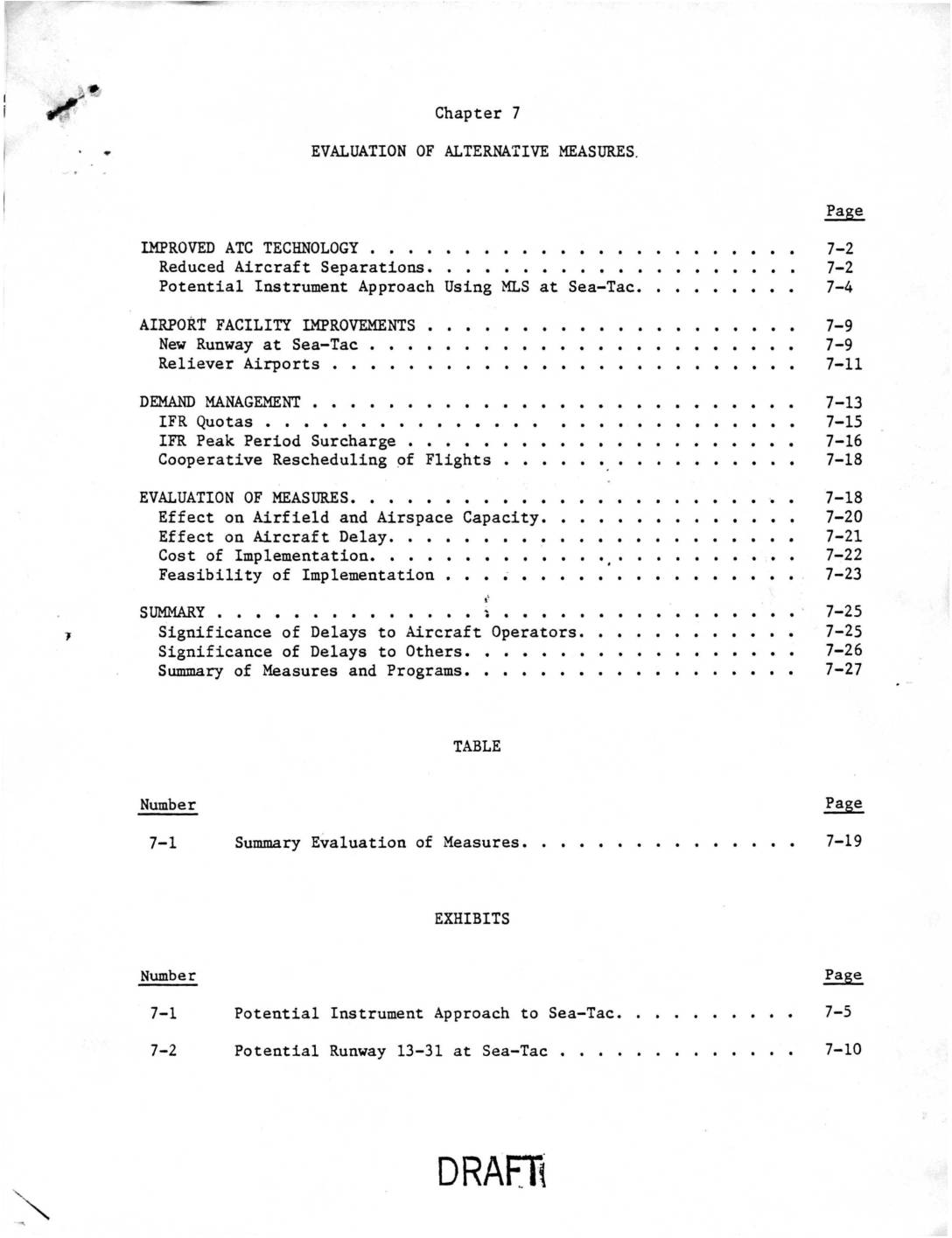
Evaluation of Alternative Measures: Chapter 7
This draft chapter evaluates alternative measures to address growing aircraft delays caused by airspace interactions between Seattle-Tacoma International Airport (Sea-Tac) and Boeing Field, which are projected to worsen significantly from 1990 through 2000. The measures examined include improved air traffic control (ATC) technology, airport facility improvements such as a new runway and reliever airports, and demand management strategies like flight quotas and peak-period surcharges. The chapter emphasizes that, despite delays not being critical until around 1990, immediate planning and commitment from various agencies is necessary given the lengthy implementation timelines involved. -
 1982-07-27
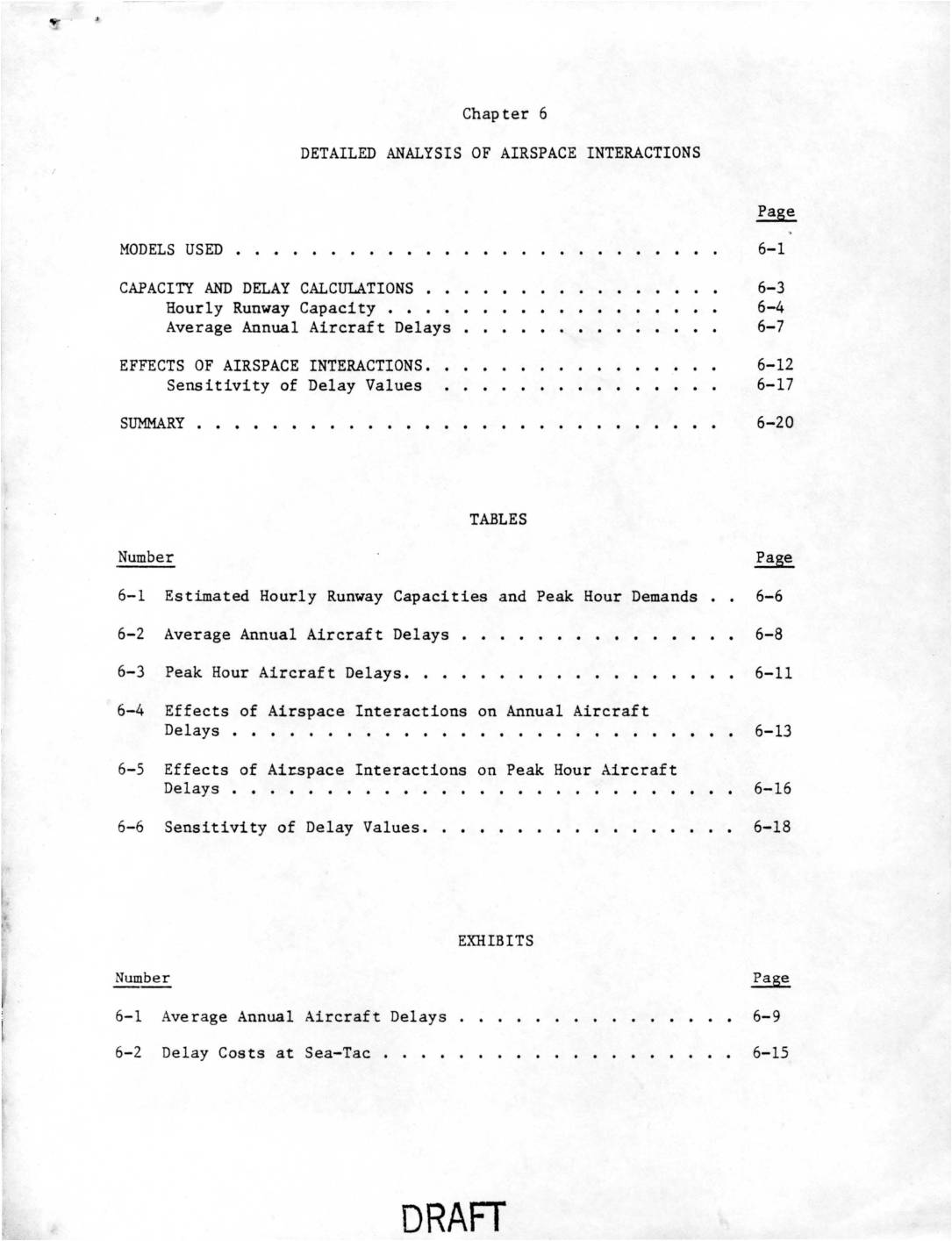
Detailed Analysis of Airspace Interactions – Chapter 6
★ 33Technical analysis of airspace interactions between Sea-Tac Airport and Boeing Field, examining runway capacity models, aircraft delay calculations, and the effects of airspace interactions on airport operations. The document presents detailed capacity and delay calculations using computerized models. -
 1982-05-14
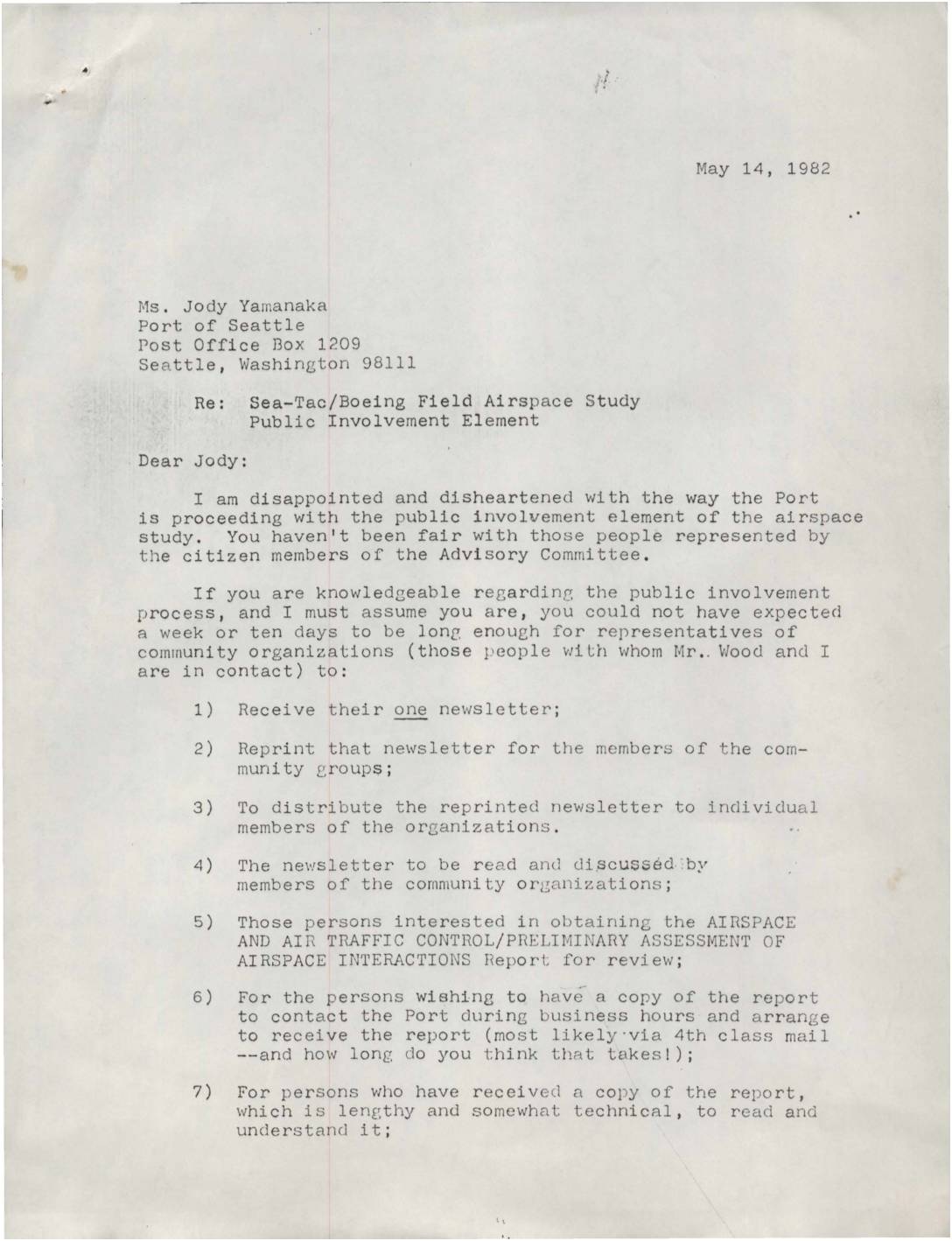
Letter to Port of Seattle Regarding Sea-Tac/Boeing Field Airspace Study Public Involvement
Letter from Rosemary Zeutschel criticizing the Port of Seattle’s inadequate public involvement process for the Sea-Tac/Boeing Field Airspace Study, arguing that insufficient time was provided for community organizations to review technical documents and provide meaningful input. -
 1982-05-01
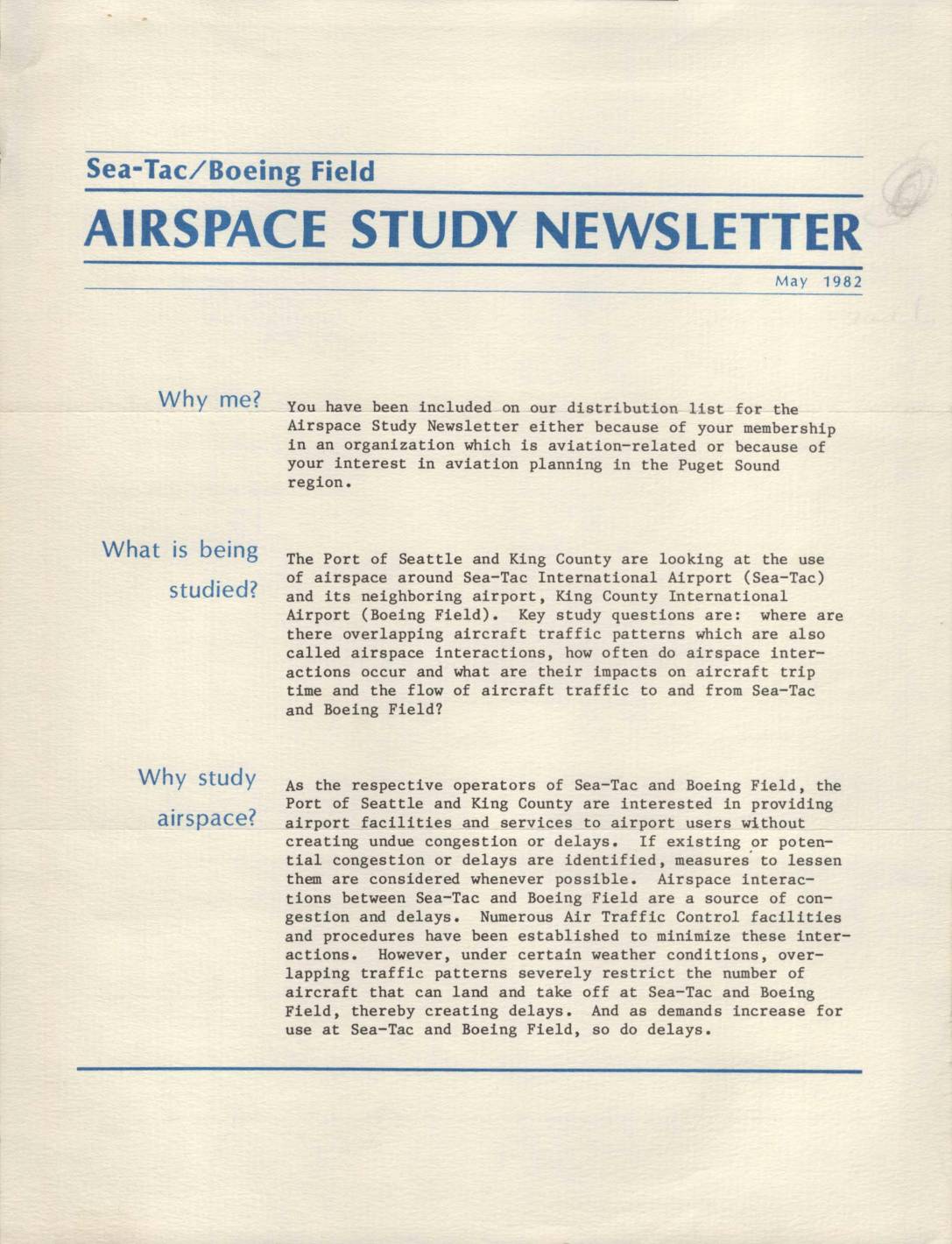
Sea-Tac/Boeing Field Airspace Study Newsletter, May 1982
A May 1982 newsletter from the Port of Seattle and King County describing an airspace study examining overlapping flight patterns between Sea-Tac International Airport and Boeing Field. The study found that delays caused by these overlapping traffic patterns were expected to grow gradually through 1990 and accelerate through 2000, particularly at Sea-Tac. The public was invited to a May 18, 1982 meeting to review preliminary findings and provide input on whether to proceed with identifying solutions to reduce aircraft delays. -
 1982-04-01
Preliminary Assessment of Airspace Interactions: Seattle-Tacoma International Airport and King County International Airport
A 1982 draft working paper prepared by Peat, Marwick, Mitchell & Co. for the Port of Seattle assessed airspace interactions between Seattle-Tacoma International Airport (Sea-Tac) and King County International Airport (Boeing Field). The study analyzed existing and projected airfield capacities, aircraft delays, and the effects of overlapping airspace on both airports, taking into account factors such as air traffic demand, aircraft mix, weather conditions, and runway procedures. Its findings were intended to help the Port of Seattle determine whether more detailed investigation and mitigation measures were needed in a subsequent phase of the study. -
 1982-02-24
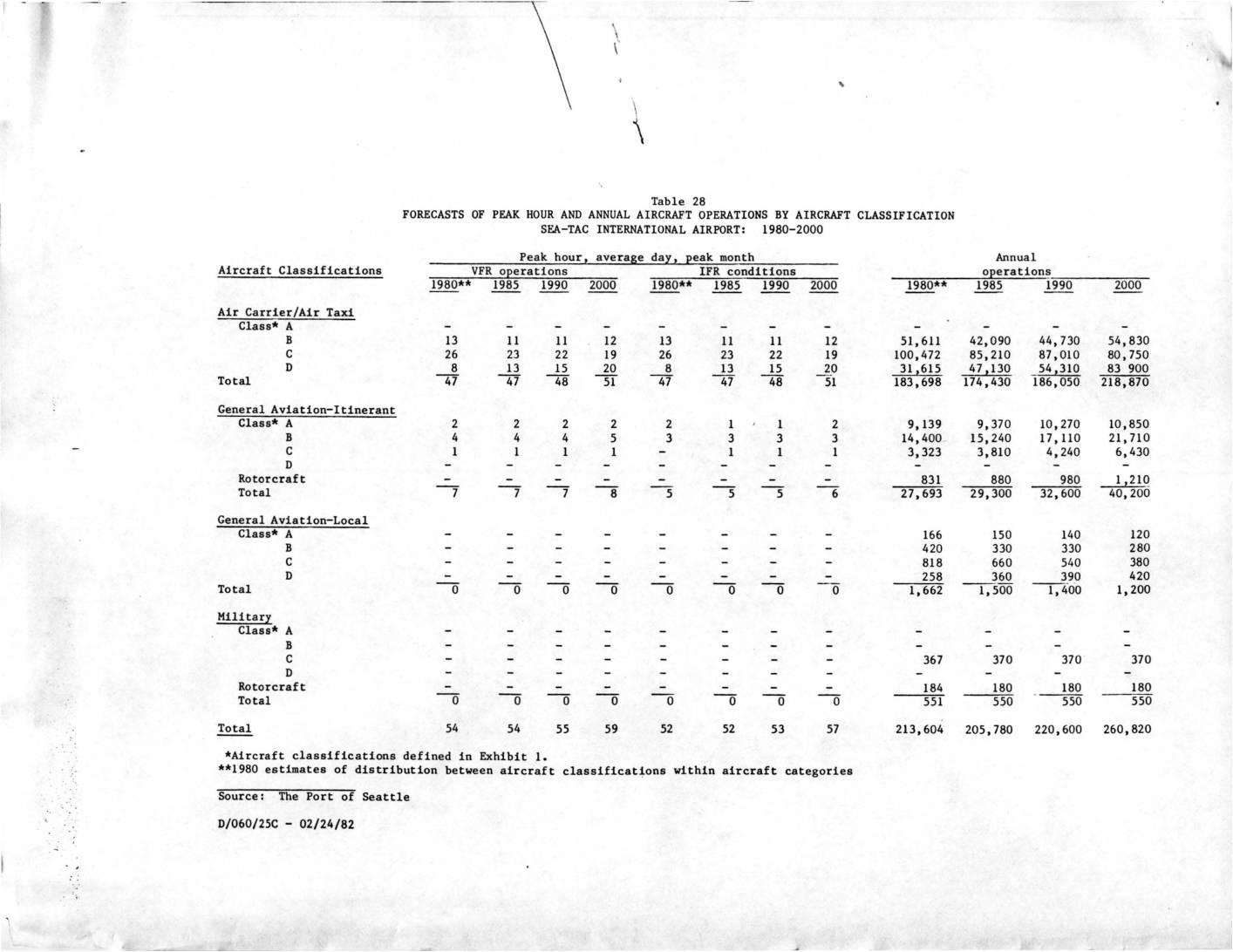
Forecasts of Peak Hour and Annual Aircraft Operations by Aircraft Classification: Sea-Tac International Airport and King County International Airport, 1980–2000
This document presents forecasts of aircraft operations at Seattle-Tacoma (Sea-Tac) International Airport and King County International Airport from 1980 to 2000, broken down by aircraft classification and flight category including air carrier, general aviation, and military. It projects that total annual operations at Sea-Tac will grow from approximately 213,600 in 1980 to over 260,800 by 2000, driven largely by increases in larger Class D air carrier aircraft. Peak hour operation estimates are provided for both Visual Flight Rules (VFR) and Instrument Flight Rules (IFR) conditions, offering planners a detailed basis for noise impact and capacity assessments. -
 1982-02-11
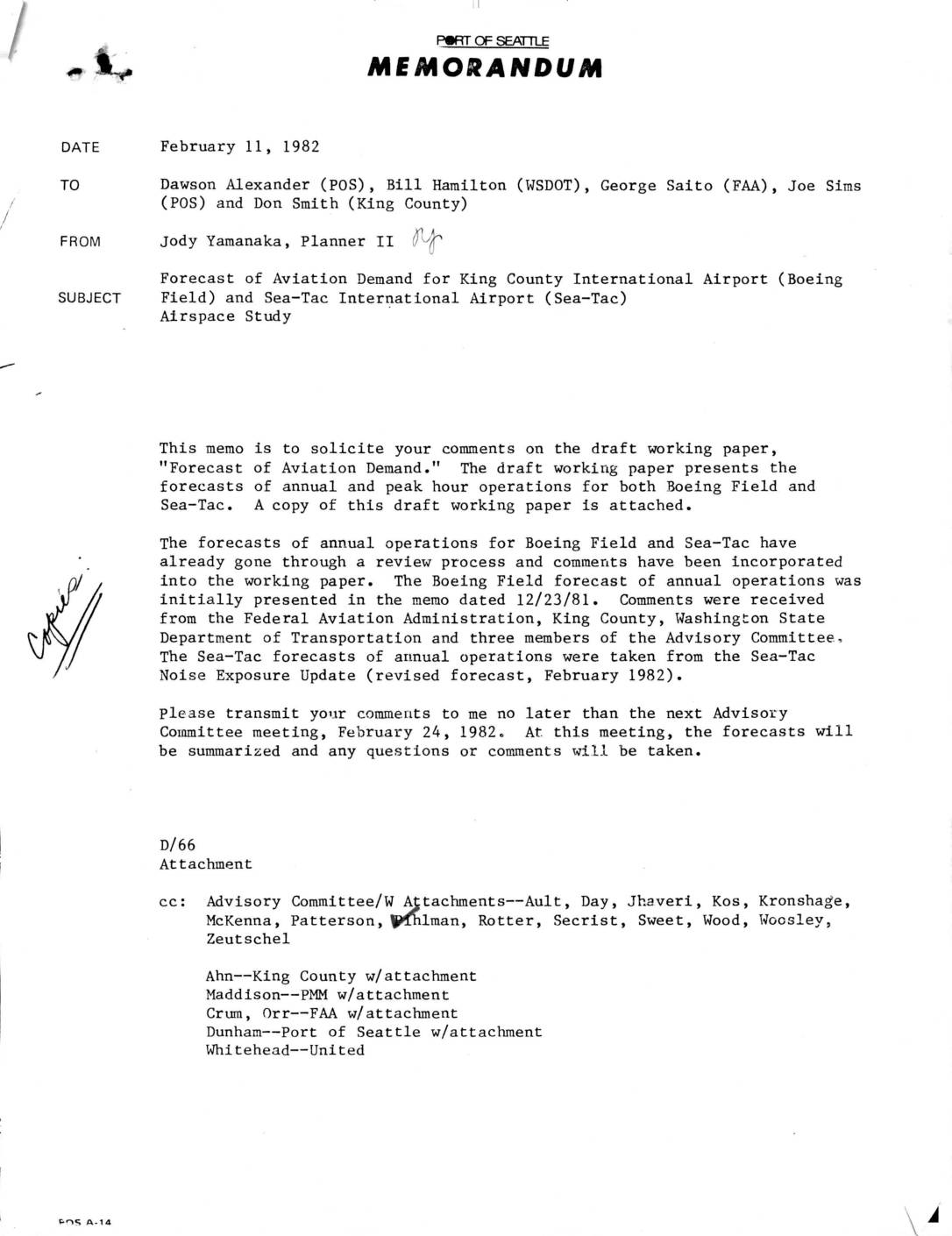
Port Of Seattle Memorandum: Forecast of Aviation Demand for King County International Airport (Boeing Field) and Sea-Tac International Airport — Airspace Study
A 1982 Port of Seattle memorandum presents draft forecasts of aviation demand for Sea-Tac International Airport and Boeing Field, projecting aircraft operations through the year 2000. The forecasts cover annual take-offs and landings as well as peak-hour traffic under both visual and instrument flight conditions, with Sea-Tac's total annual operations expected to grow from roughly 214,000 in 1980 to over 261,000 by 2000. The document was circulated to FAA, King County, and Washington State DOT representatives for review as part of an airspace capacity and noise planning study. -
 1982-02-02
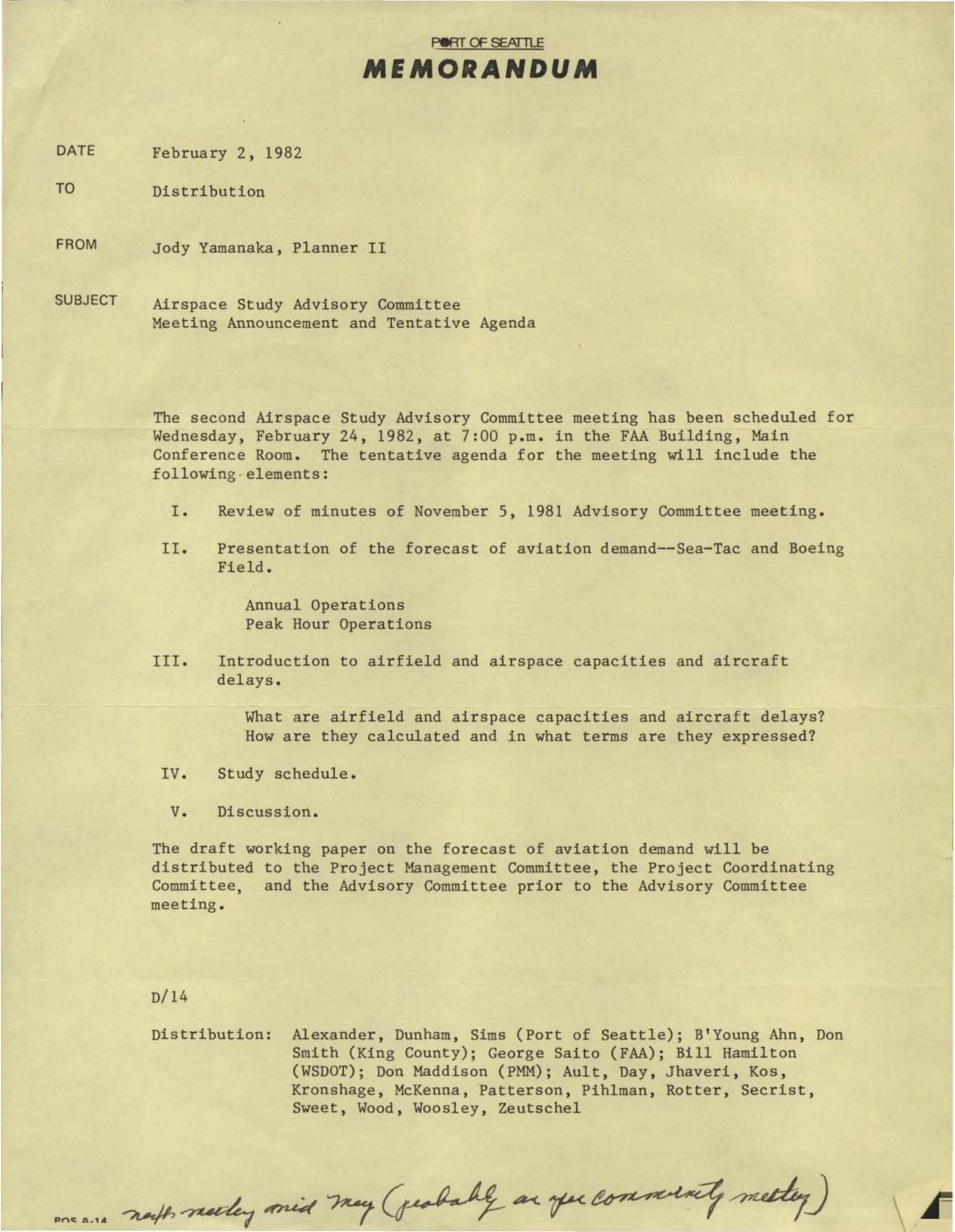
Airspace Study Advisory Committee Meeting Announcement and Tentative Agenda
Port of Seattle memorandum announcing the second Airspace Study Advisory Committee meeting scheduled for February 24, 1982. The agenda includes aviation demand forecasts for Sea-Tac and Boeing Field, discussion of airfield and airspace capacities, and aircraft delays. -
 1982-01-15
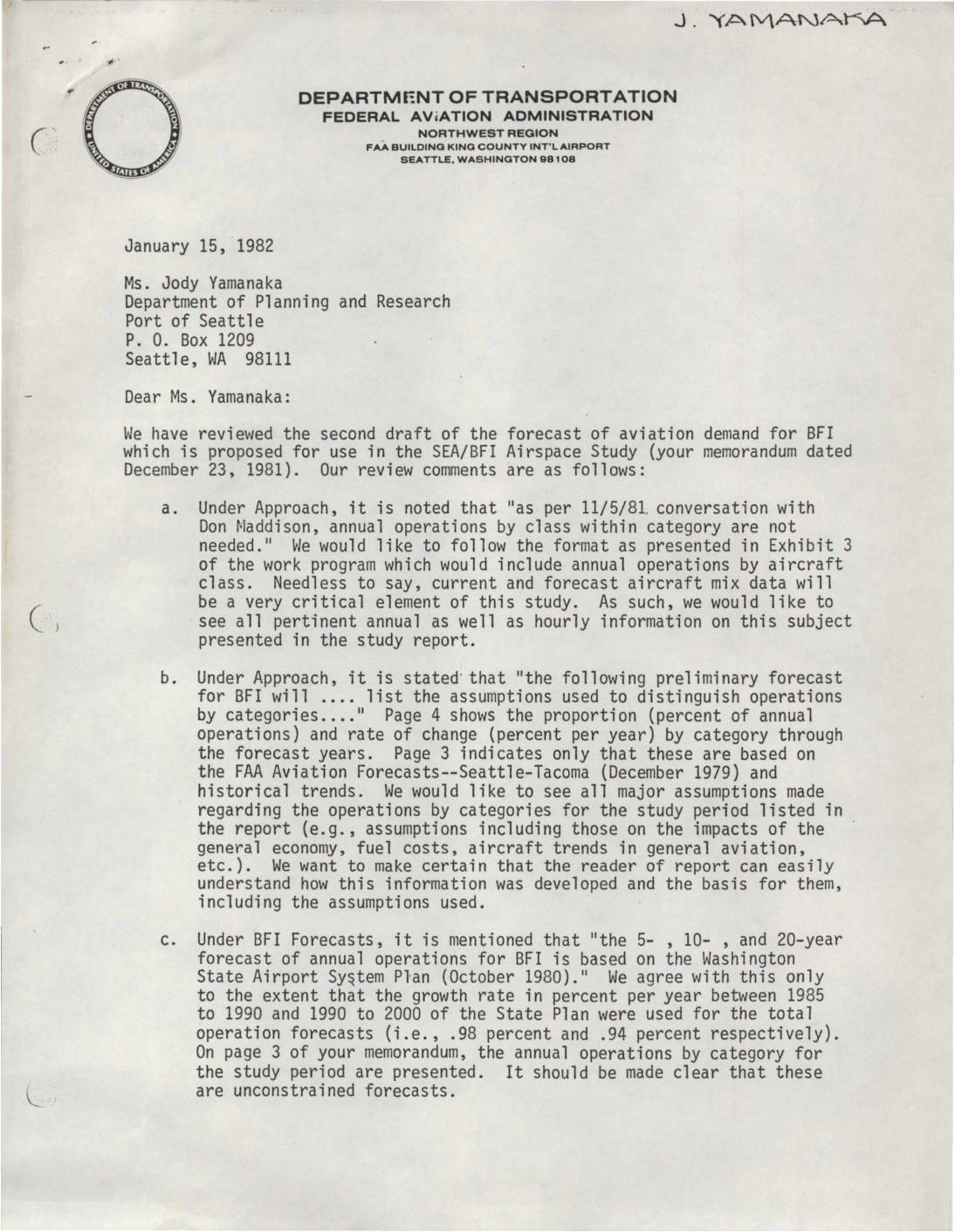
Letter from FAA to Jody Yamanaka, Port Of Seattle, Regarding BFI Aviation Demand Forecast Review
A January 1982 letter from the FAA's Northwest Region to the Port of Seattle reviews a draft aviation demand forecast for Boeing Field (BFI) prepared for the SEA/BFI Airspace Study. The FAA requests that the final report include more detailed aircraft mix data by class, a full list of assumptions behind the forecasts (such as economic conditions, fuel costs, and general aviation trends), and a clear indication that the projections are unconstrained. The agency also recommends presenting both high and low forecast ranges to account for uncertainty, particularly in long-range general aviation projections. -
 1981-11-16
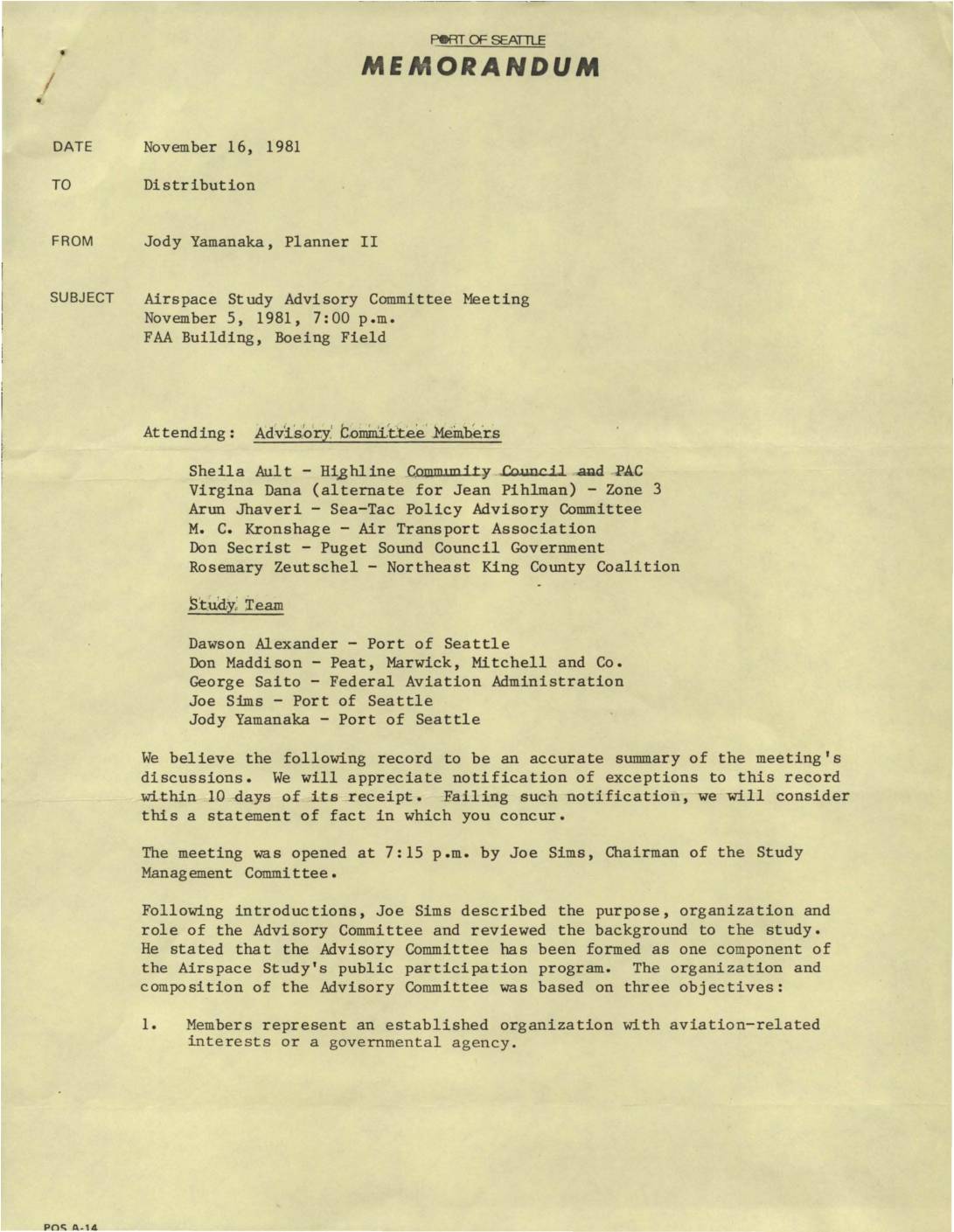
Airspace Study Advisory Committee Meeting November 5, 1981
Meeting minutes from the Airspace Study Advisory Committee discussing the study of airspace interaction between Sea-Tac Airport and Boeing Field. The committee reviewed the study’s purpose, organization, scope, and schedule, with presentations on air traffic control and local airspace structure.