Tagaircraft(224)
-
 2022-11-29
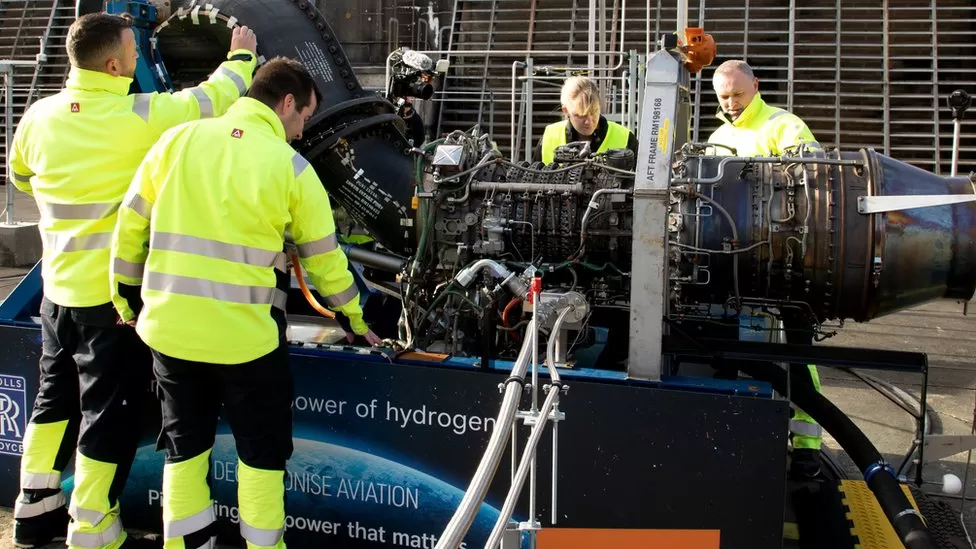
Power of hydrogen – aircraft maintenance demonstration
Rolls-Royce technicians in high-visibility safety gear work on a jet engine mounted on a test stand bearing the Rolls-Royce logo and text referencing 'power of hydrogen' and 'decarbonise aviation.' This appears to be related to Rolls-Royce's hydrogen combustion engine testing program. -
 2022-11-28
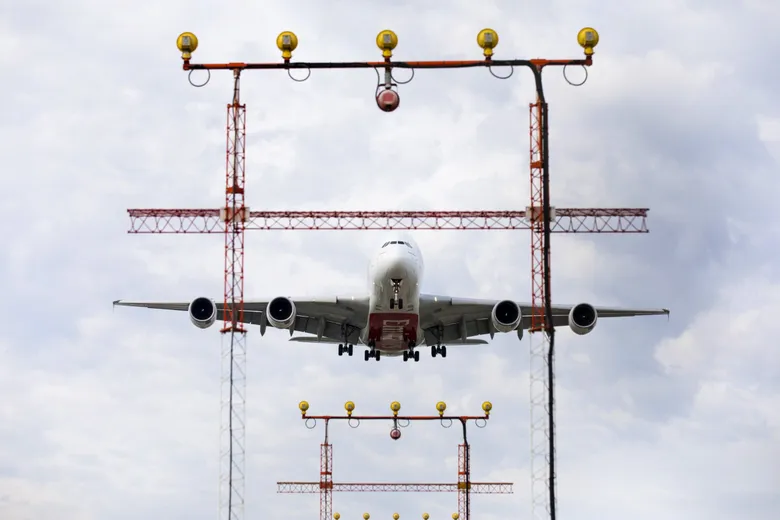
Aircraft Approaching Airport Landing System
A large four-engine widebody aircraft, consistent with an Airbus A380 configuration, is photographed head-on during final approach, framed by a red-and-white approach lighting system (ALS) gantry with yellow omnidirectional lights. Landing gear is fully extended, indicating imminent touchdown. No visible airline livery, watermarks, or location-specific markings are clearly discernible. -
 2022-11-19
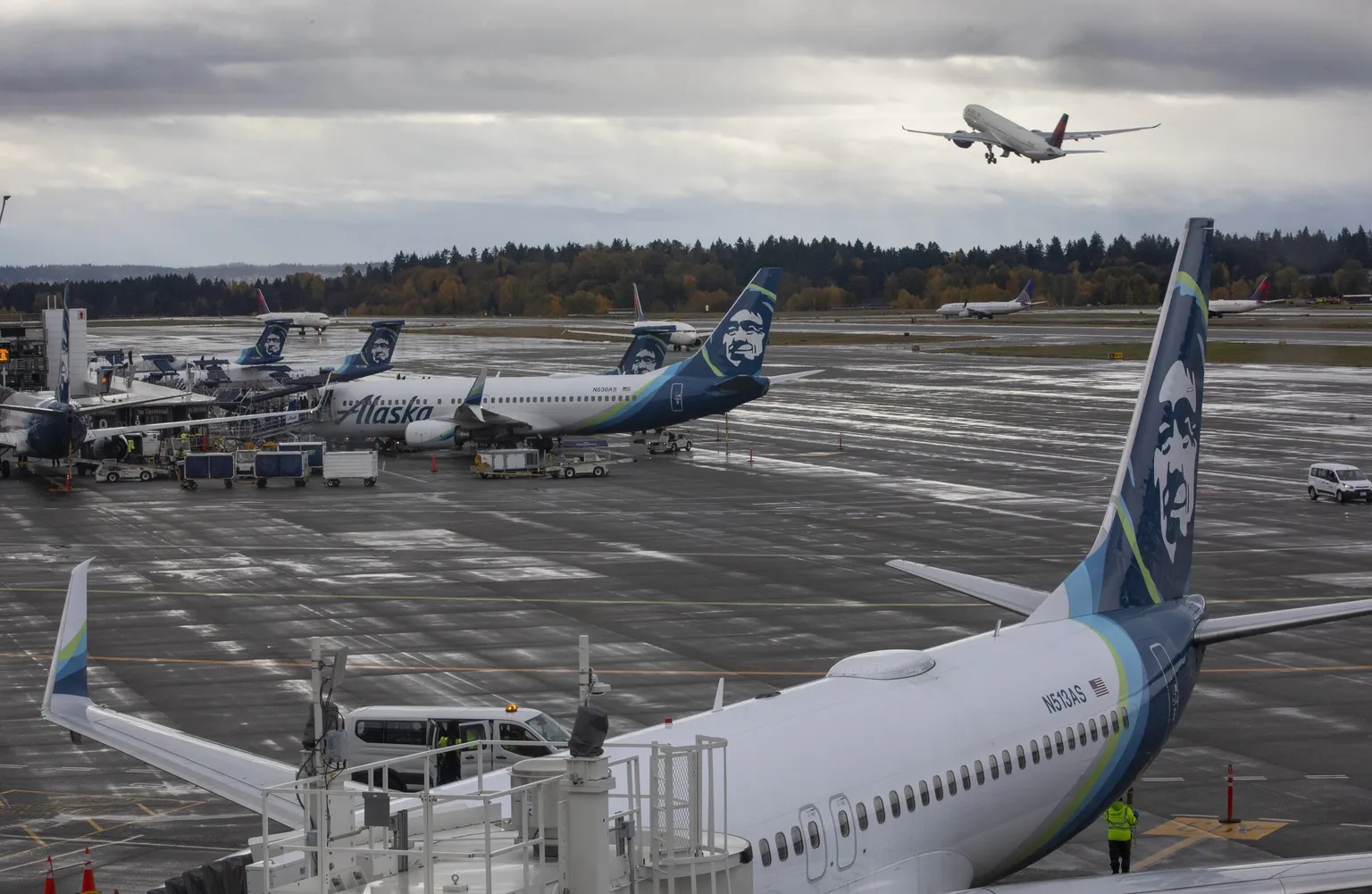
Alaska Airlines Aircraft at Airport Tarmac
Multiple Alaska Airlines Boeing 737 aircraft are shown at gates on the tarmac at Seattle-Tacoma International Airport (Sea-Tac), with tail registration N513AS visible on the foreground aircraft. A departing aircraft, appearing to bear Delta Air Lines livery, climbs out in the background under overcast skies, with autumn foliage visible along the airport perimeter. -
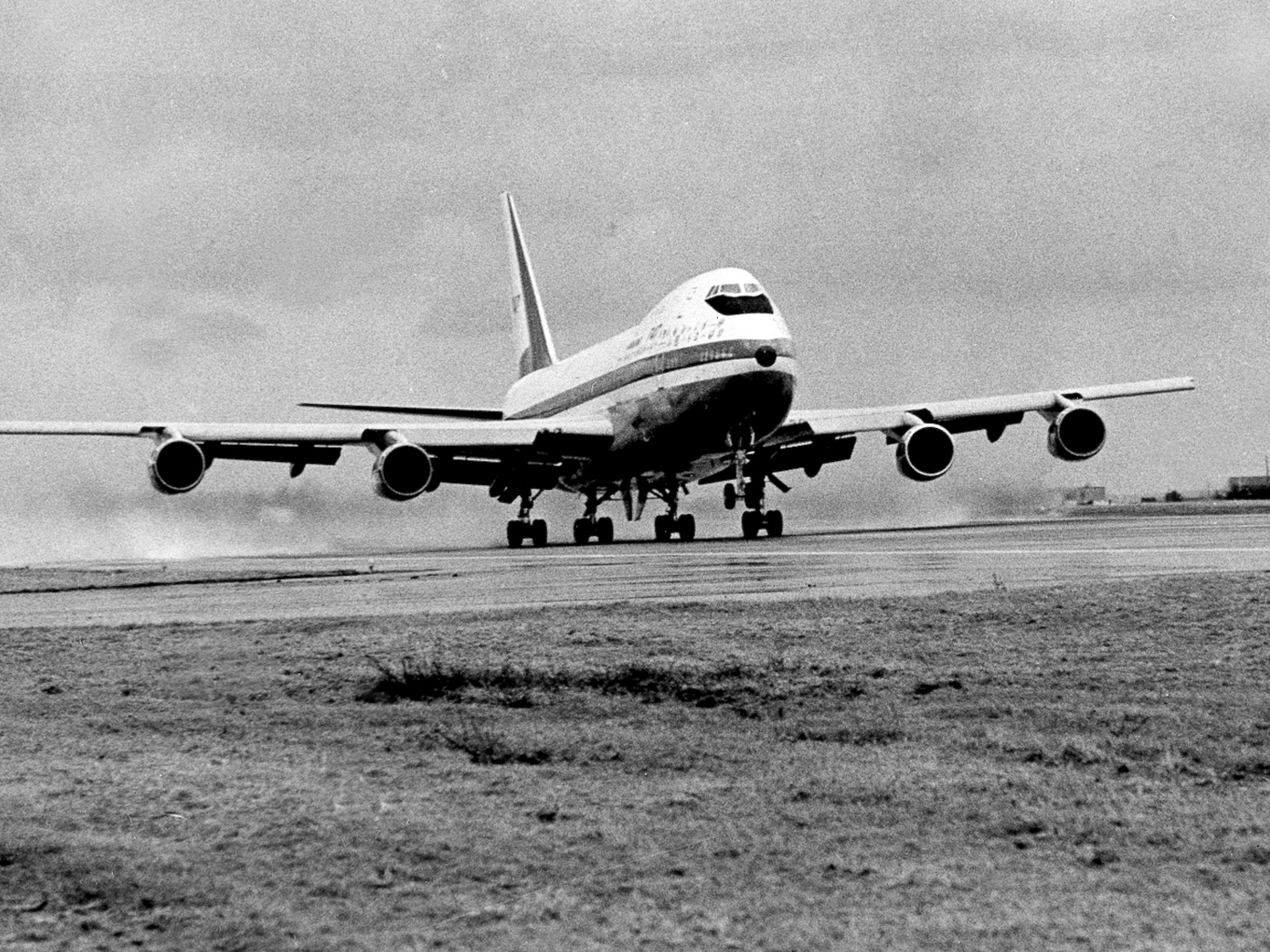
Boeing 747 first flight
A four-engine wide-body jet aircraft, consistent with a Boeing 747, is photographed on a runway with landing gear deployed and engine exhaust/tire smoke visible. The image appears to be from the early 1970s based on photo quality and aircraft livery style, but specific airline markings are not clearly legible. -
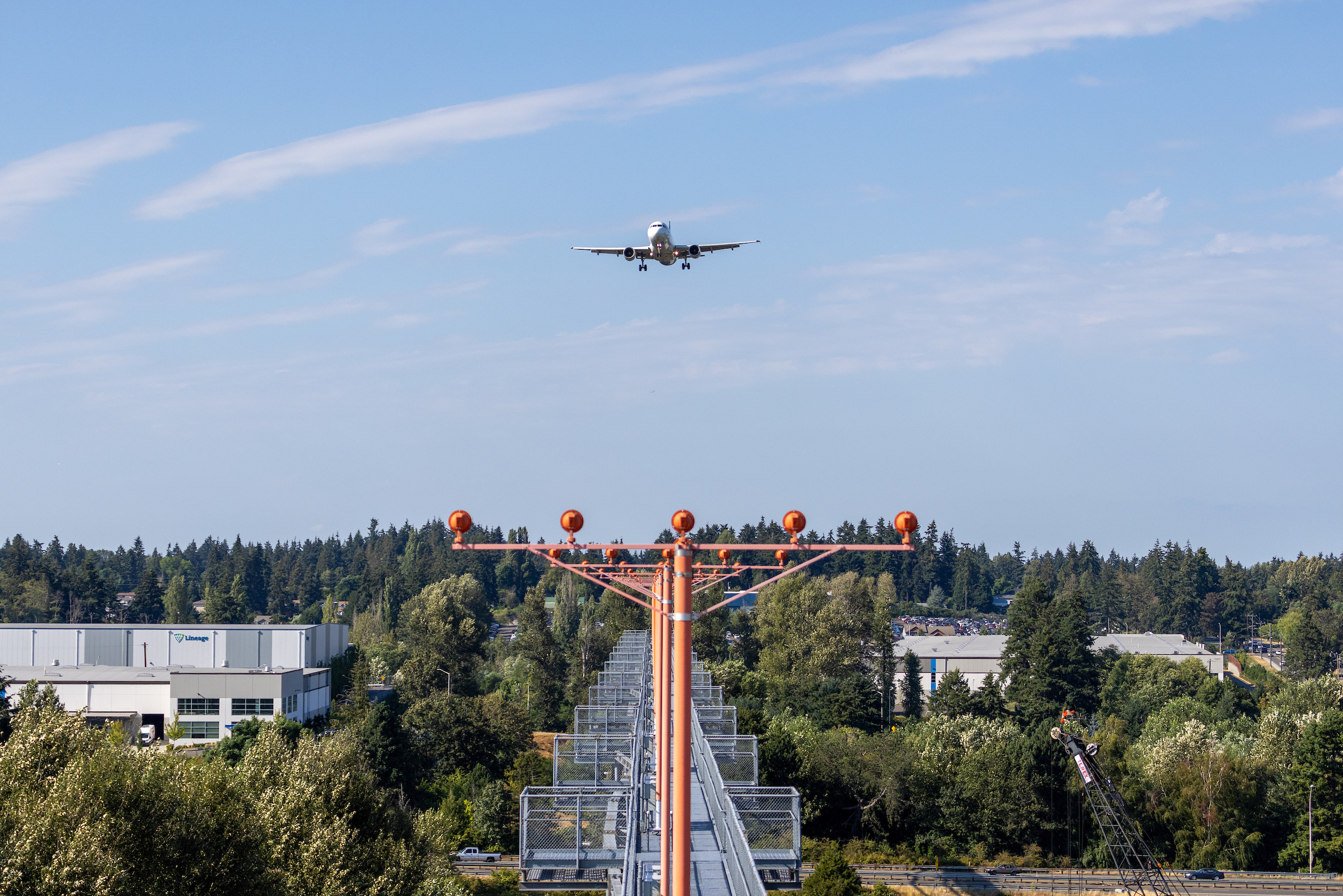
Twin-Engine Commercial Jet on Final Approach to Sea-Tac Airport with ALS Lighting
A twin-engine commercial jet aircraft on final approach is aligned with an Approach Lighting System (ALS) featuring orange crossbar structures and sequenced flasher lights. A 'Lineage' logistics facility is visible in the background left, consistent with the industrial corridor adjacent to Seattle-Tacoma International Airport. -
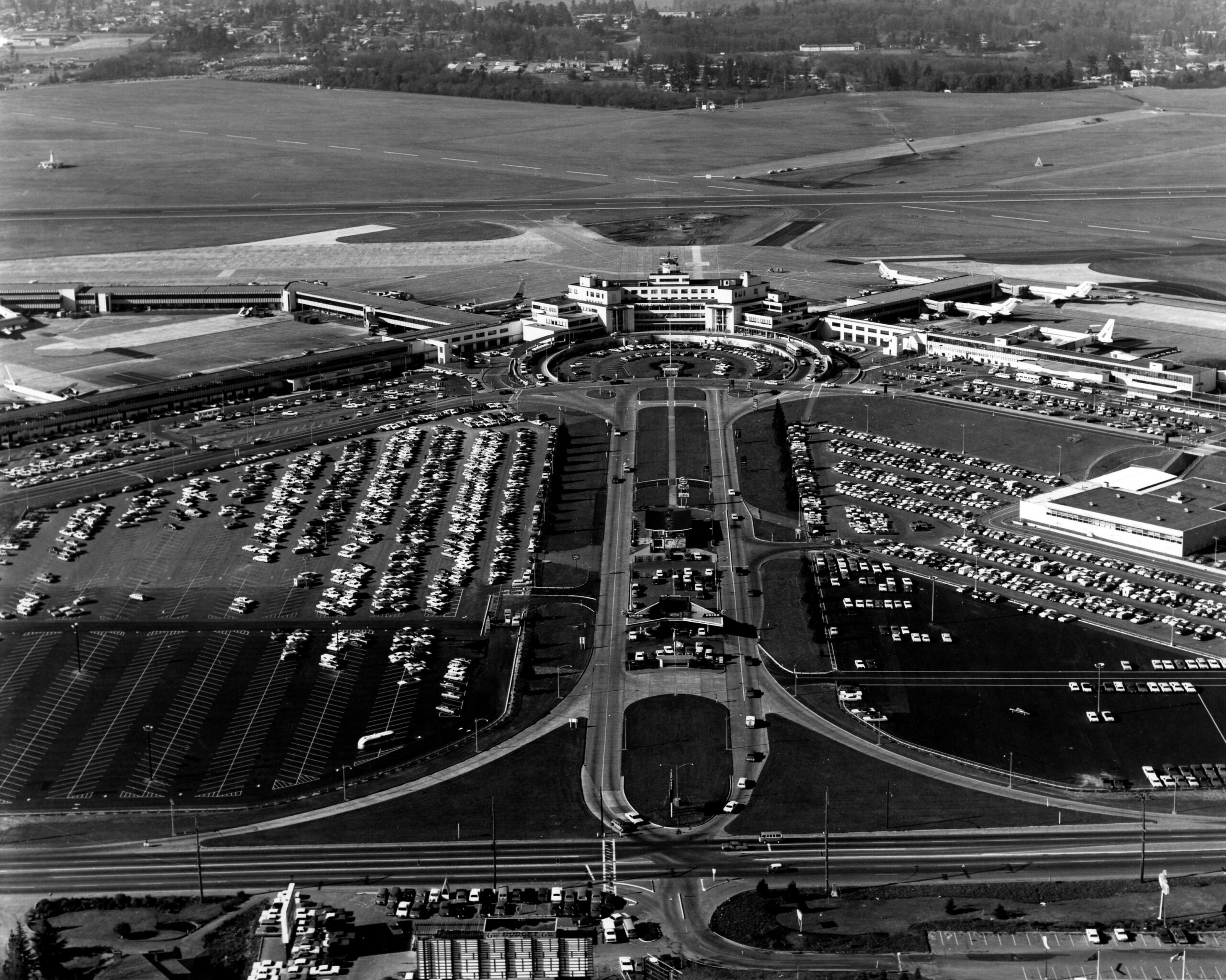
Sea-Tac Airport Aerial View, Mid-Century Layout
Aerial photograph of Seattle-Tacoma International Airport (Sea-Tac) showing the original terminal building with control tower, surrounding parking lots, access roads, and aircraft gates. The image captures the airport's mid-century layout prior to major expansions, consistent with the period shortly after its 1949 opening through the early jet age, with propeller and early jet aircraft visible at the gates. -
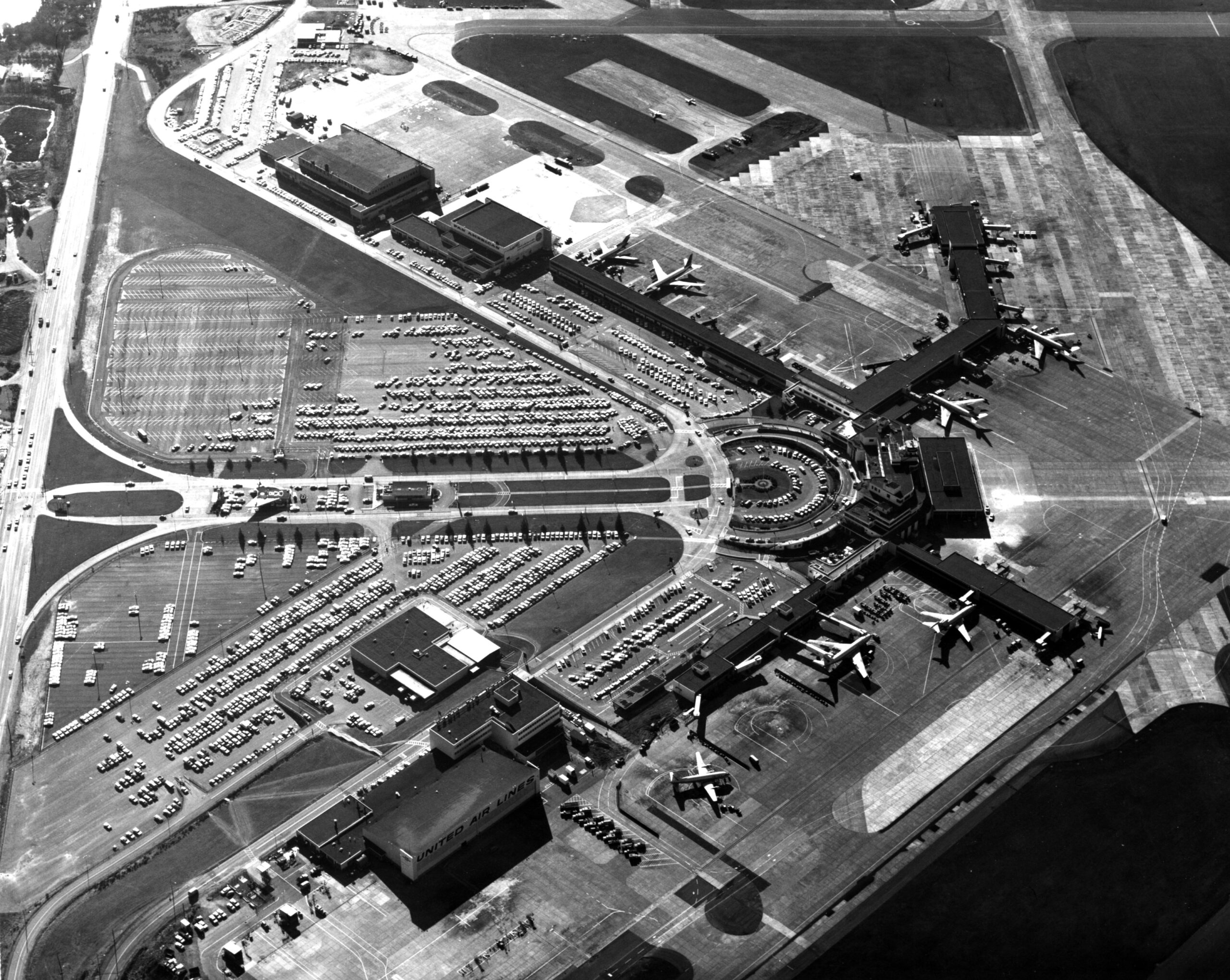
Sea-Tac Airport Aerial View Showing United Air Lines Terminal, circa 1960s
Aerial photograph of Seattle-Tacoma International Airport showing the terminal complex, parking areas, taxiways, and aircraft on the apron. A building in the lower portion of the image is clearly labeled 'United Air Lines,' indicating this photo dates from the jet era of airport operations, likely the 1960s based on the aircraft types and terminal configuration visible. -
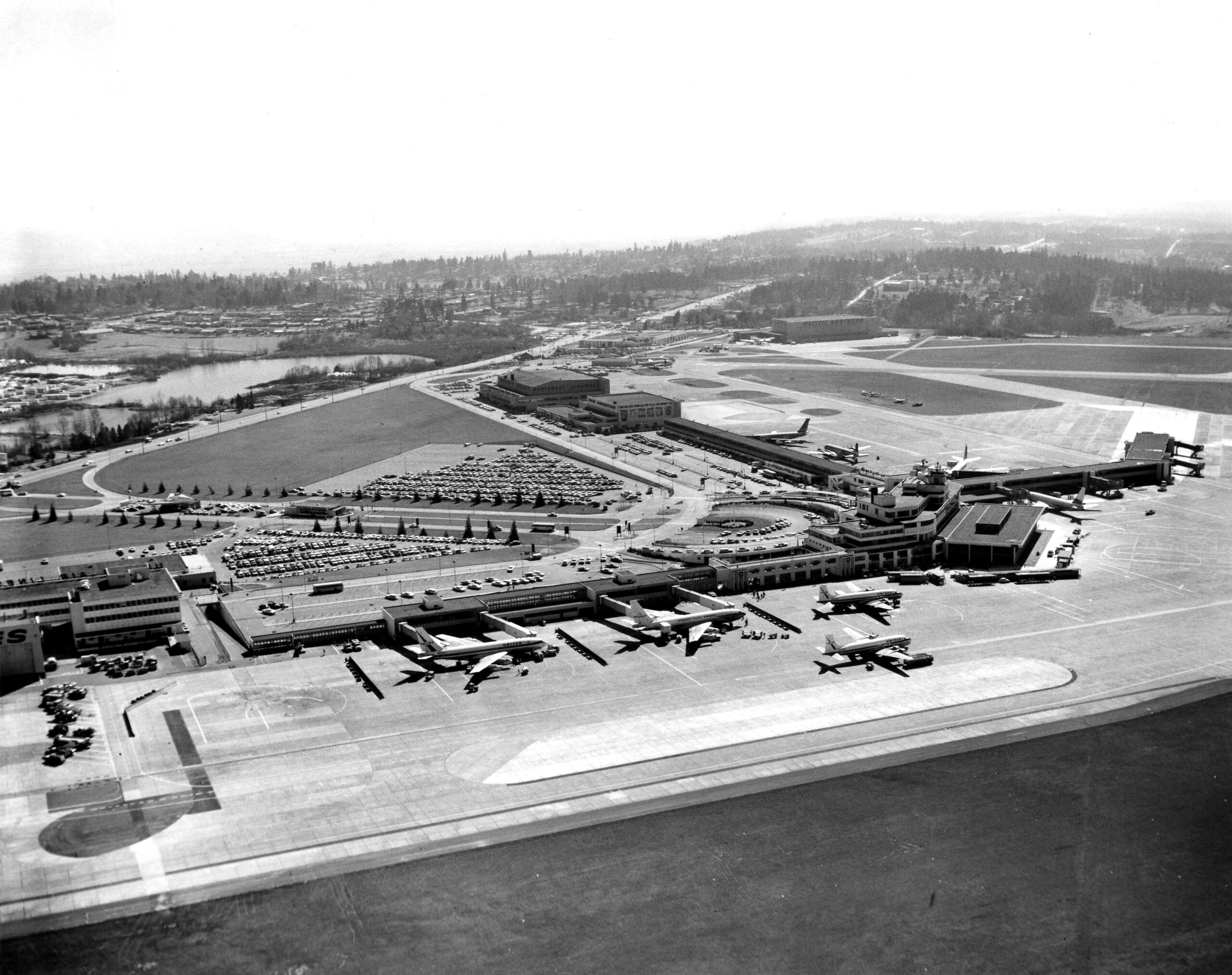
Sea-Tac Airport Aerial View, circa Late 1950s–Early 1960s
Black-and-white aerial photograph showing a commercial airport terminal complex with multiple propeller and early jet aircraft at gates, large surface parking lots, and suburban landscape visible in the background. The layout, runway configuration, and architectural style are consistent with a mid-century Pacific Northwest regional airport, likely dating to the late 1950s or early 1960s. -
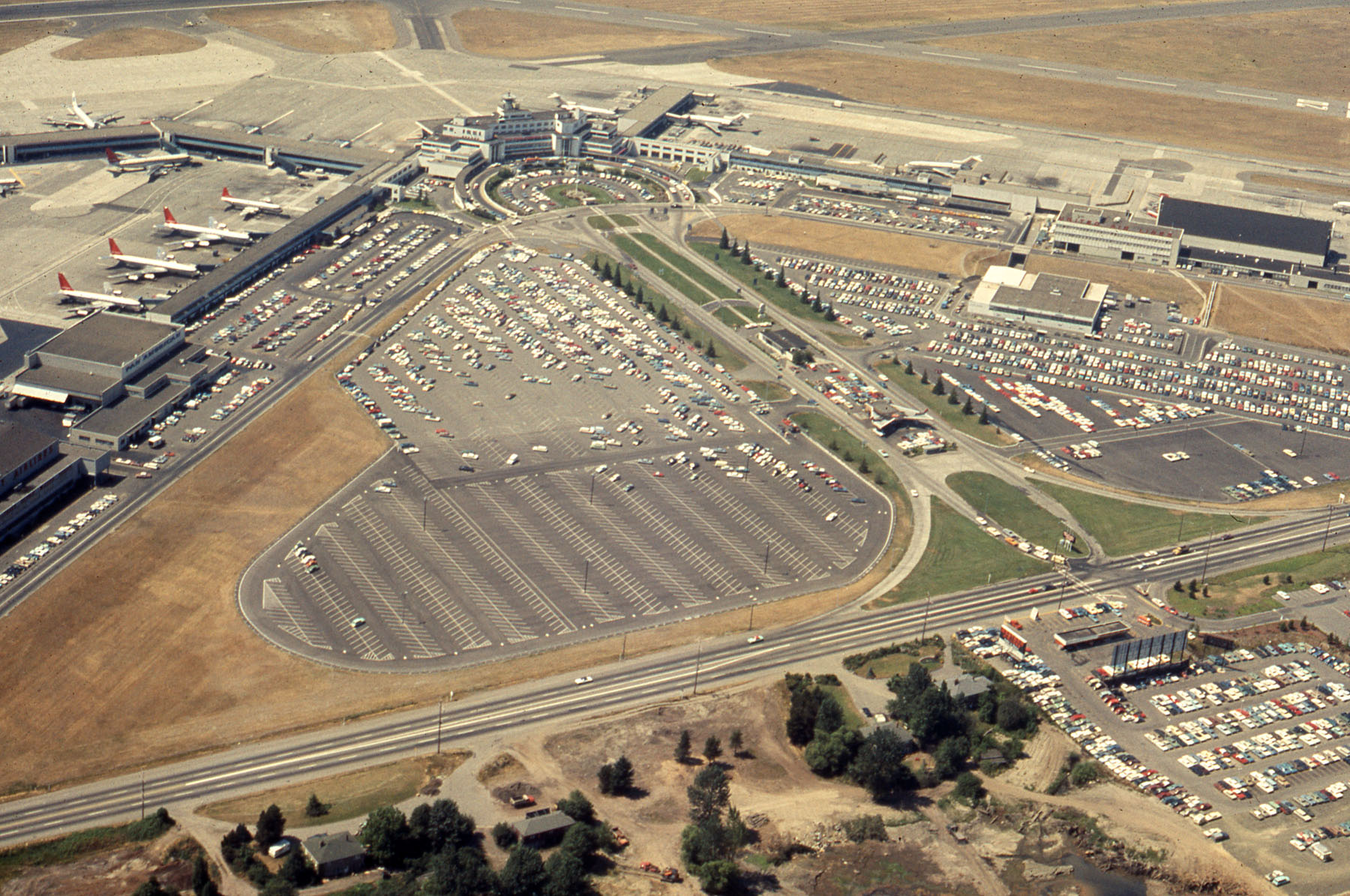
Sea-Tac Airport Aerial View, 1960s–1970s
Aerial photograph showing a large airport terminal complex with multiple aircraft bearing red tail livery consistent with Northwest Airlines, extensive surface parking lots, and runway infrastructure visible in the background. The dry summer conditions, vehicle styles, and airport layout are consistent with a Pacific Northwest hub airport from the 1960s–1970s era, possibly Sea-Tac or Portland International. -
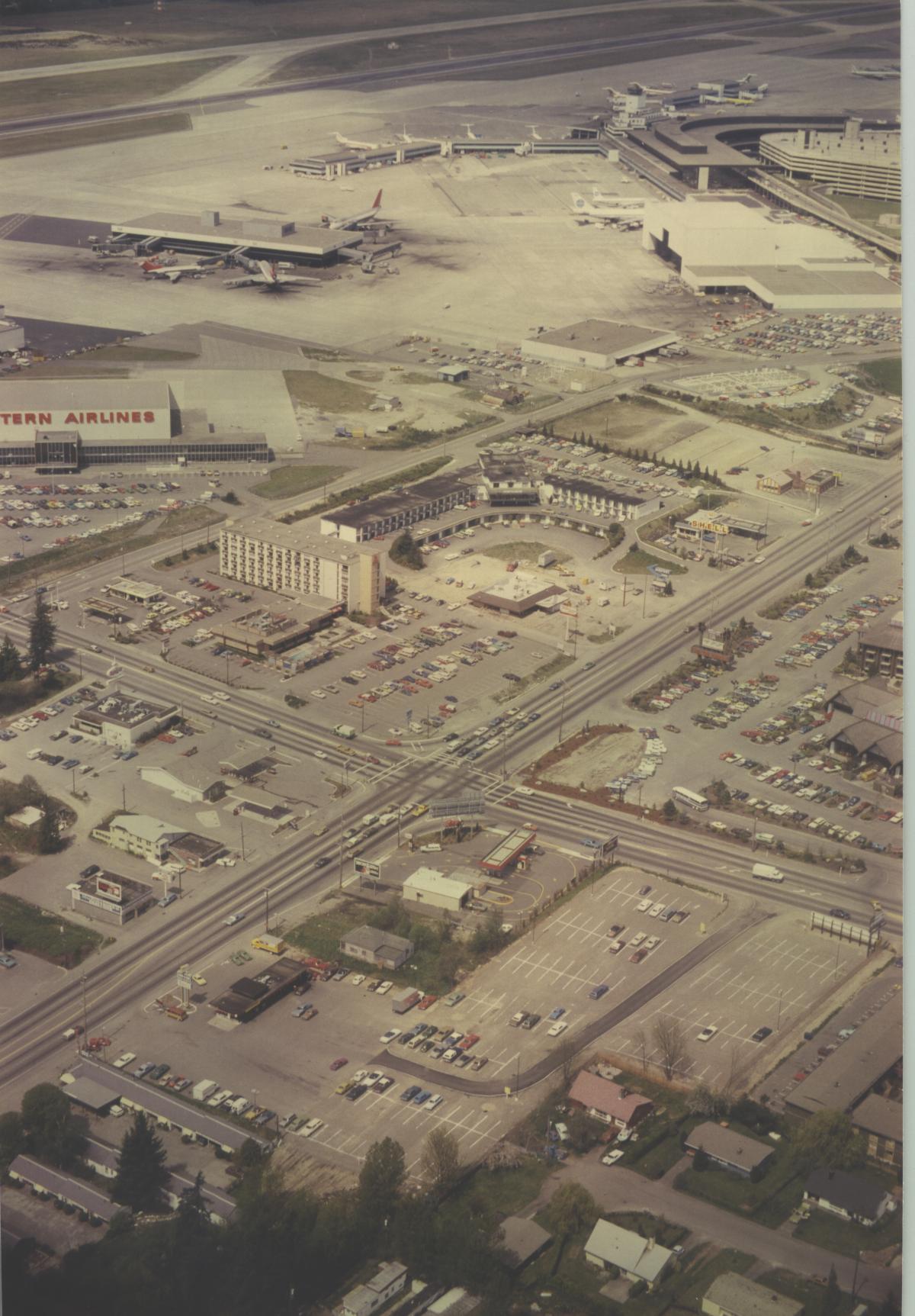
STIA historical south east aerial
Aerial photograph looking north toward Sea-Tac Airport showing terminal buildings, aircraft at gates, and a Western Airlines facility (visible signage on left). The foreground shows the International Boulevard/Pacific Highway South commercial corridor with motels, parking lots, and retail businesses adjacent to the airport.